How to Plan a Sustainable Hiking Trip in 2026 (Full Guide)

Planning a sustainable hiking trip starts with one rule: leave the trail better than you found it. This guide covers how to pick low-impact routes, choose reusable gear, manage waste, respect wildlife, and travel light. You will learn each step in order, from trip research to final pack-out, so your next hike protects the land you walk on.
To plan a sustainable hiking trip, pick a permitted trail near home, follow Leave No Trace, pack reusable food and water gear, and carry out all waste. Choose synthetic or recycled clothing, share rides to the trailhead, and keep group size small to reduce trail damage and wildlife stress.
What Is a Sustainable Hiking Trip?
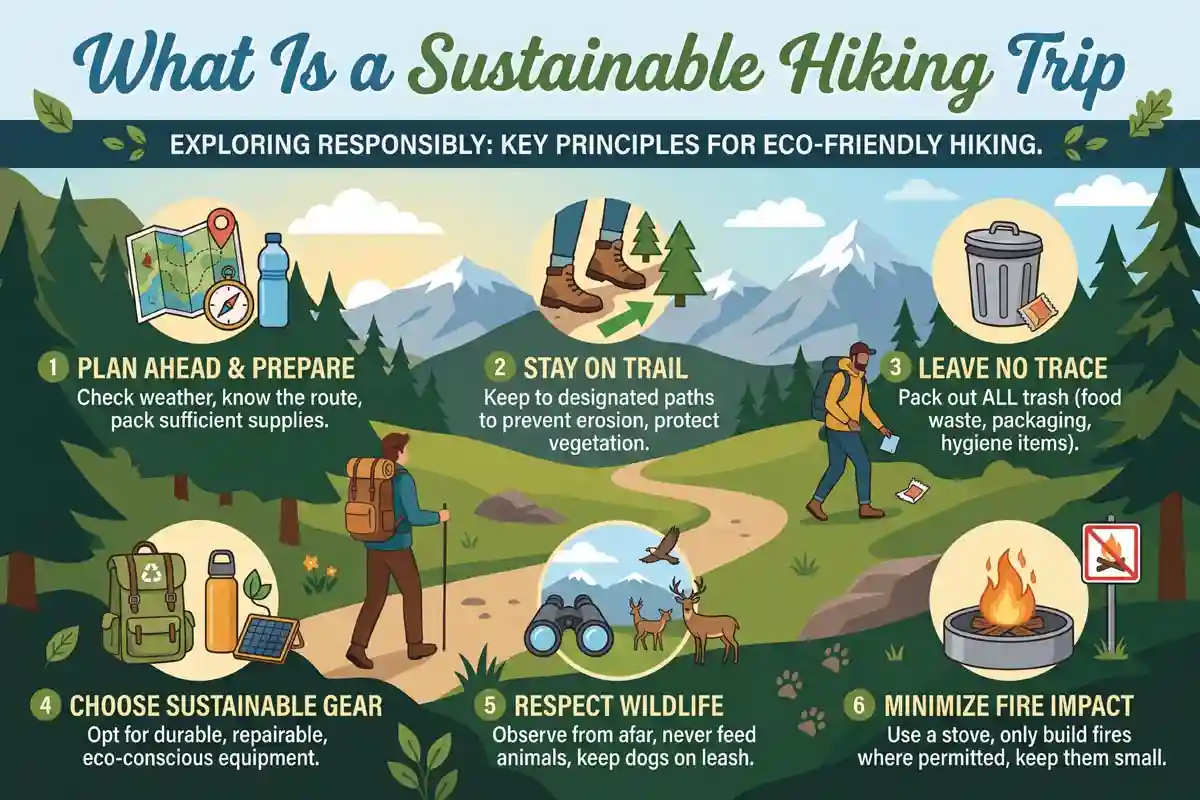
A sustainable hiking trip protects the trail, water, wildlife, and local community while you walk. The hiker reduces waste, follows Leave No Trace ethics, and picks gear and travel methods with a smaller carbon footprint. The goal stays clear: enjoy the route, leave nothing behind, and keep the place ready for the next person.
Why Sustainable Hiking Matters
Trail damage adds up fast. Off-trail walking, food scraps, and poorly handled human waste cause most backcountry impact. Each careless step compacts soil, kills plants, and stresses wildlife. Sustainable habits keep trails open, water clean, and animals safe. They also lower the cost of repairs that parks fund through limited budgets.
When to Plan Your Trip
Plan two to six weeks ahead for popular trails. Permits fill early in summer, so check the agency website months out for national parks and wilderness areas. Shoulder seasons work best. Spring and fall reduce trail crowding, lower wildfire risk, and ease strain on water sources. Avoid hiking during heavy rain when soil erodes faster.
Where to Go: Choose Low-Impact Destinations
The best sustainable hike starts close to home. A short drive cuts fuel use and supports nearby parks. Look for these markers when picking a trail:
- Established, marked trails with durable surfaces
- Active trail maintenance by a club or agency
- Clear permit and group-size rules
- Bear boxes, vault toilets, or pack-out stations
Avoid sensitive areas like alpine meadows, cryptobiotic soil, and stream banks unless trails cross them on built tread. If you are new to route planning, I covered the basics in a guide on planning a day hike without getting lost.
How to Plan a Sustainable Hiking Trip Step by Step
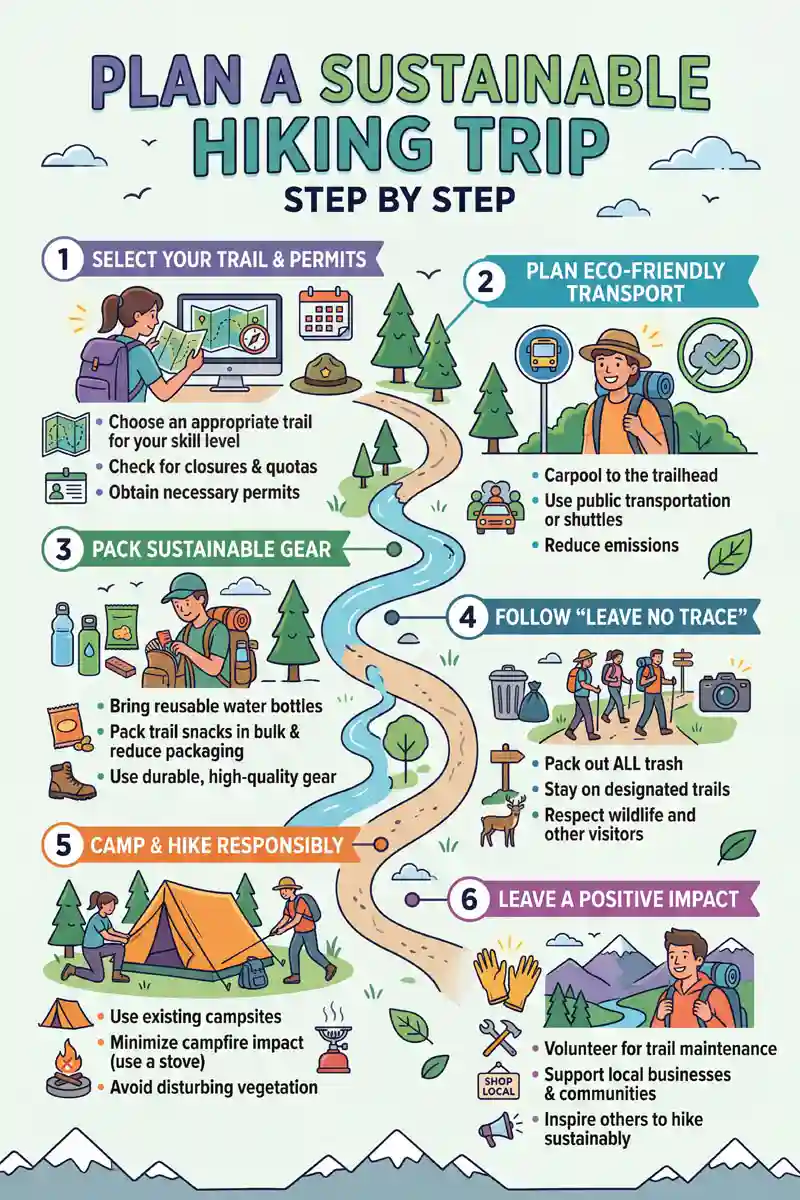
Follow these eight steps from research to return.
1. Research the Trail and Permits
Check the land manager website. Confirm trail status, fire restrictions, group limits, and seasonal closures. Many wilderness areas in the United States cap group size at 12 or fewer. Pull a current map and a backup paper version.
2. Set a Realistic Budget
Sustainable trips often cost less because you reuse gear and travel shorter distances. Track fuel, permits, food, and any rental fees. I broke this down further in my outdoor trip budget article.
3. Build a Small Group
Smaller groups leave less impact. Three to six hikers split gear, share food, and stay quiet on the trail. Carpool or use public transit to the trailhead when routes allow.
4. Pack Reusable, Low-Waste Food
Repackage meals into reusable silicone bags and hard containers. Skip single-use foil pouches when possible. Bring nuts, dried fruit, and tortillas. They produce no wrappers and pack flat.
5. Carry the Right Water System
A 1-liter reusable bottle plus a filter or purifier covers most day hikes. For overnight trips, add a 2-liter reservoir. Filtering local water cuts plastic waste. The EPA confirms that filtration removes most pathogens when used as directed.
6. Choose Lightweight, Durable Gear
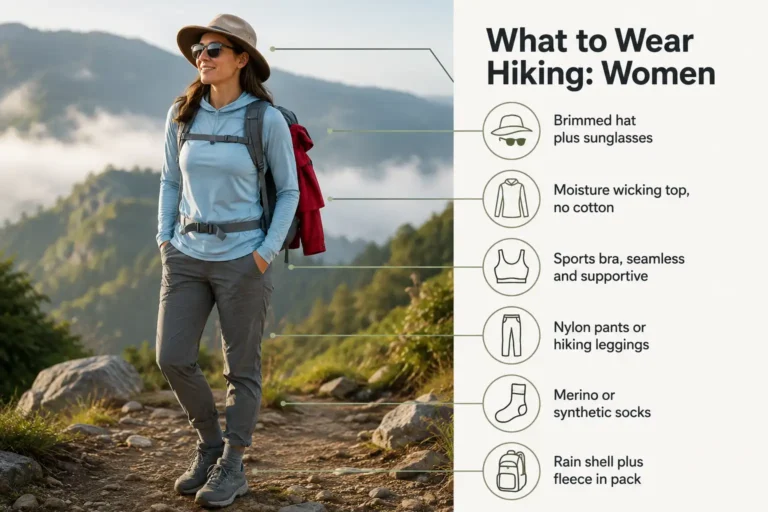
Heavy packs damage trails and knees. Aim for a base weight under 20 pounds for overnight trips. Repair gear instead of replacing it. Look for clothing with recycled polyester or merino wool.
7. Apply Leave No Trace on the Trail
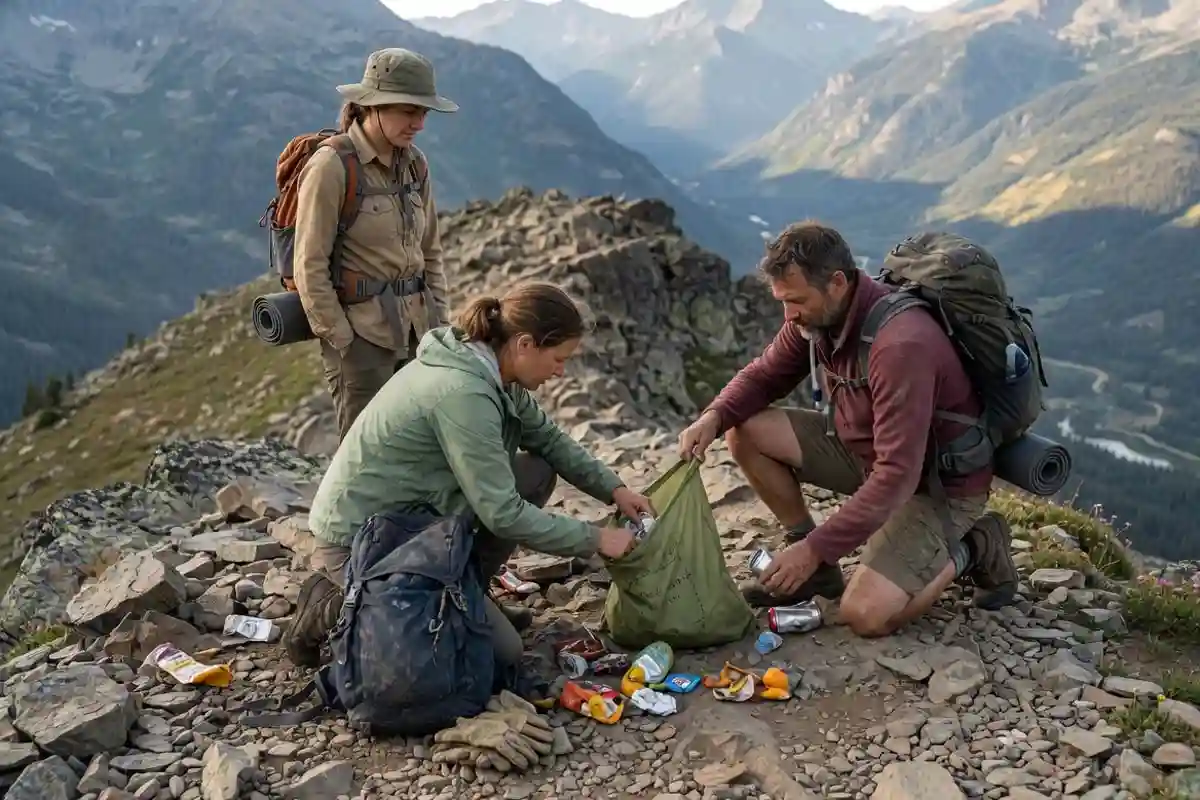
Walk on durable surfaces. Camp 200 feet from water. Pack out all trash, including food scraps and toilet paper. The National Park Service Leave No Trace guide lists the seven principles in full.
8. Pack Out and Reflect
After the hike, sort recyclables, wash gear, and log what worked. Note any trail damage and report it to the land agency. This loop turns one trip into better practice for the next one.
Gear Choices That Reduce Impact
- Stove fuel: refillable canisters or alcohol stoves
- Soap: biodegradable, used 200 feet from water
- Headlamp: rechargeable USB battery
- Trekking poles: rubber tips on rock to reduce scarring
- Tent: PFC-free waterproofing
| Preview |
#1

|
#2

|
#3

|
#4

|
|---|---|---|---|---|
| Title | SLONIK Rechargeable Headlamp | Trekology Trek-Z Collapsible Hiking & Trekking Poles | Big Agnes Copper Spur Backpacking Tent | REDCAMP Mini Alcohol Stove for Backpacking |
| Price |
$6,355.26
See Latest Price
|
$3.18
See Latest Price
|
$339.95
See Latest Price
|
$16.95
See Latest Price
|
| Star Rating |
4.6
(12,315)
|
4.4
(6,505)
|
4.5
(39)
|
4.6
(2,786)
|
A balanced load matters too. I covered weight distribution in a piece on packing a hiking backpack so shoulders don’t hurt.
Common Mistakes to Avoid
- Cutting switchbacks to save time. This kills plant cover and starts erosion gullies.
- Burying trash. Animals dig it up within days.
- Using soap in streams. Even biodegradable soap harms aquatic life when used in water.
- Feeding wildlife. Fed animals lose fear of humans and often get killed.
- Booking peak summer dates. Crowds amplify trail wear.
Safety Notes
Sustainability and safety overlap. Tell someone your route and return time. Carry a printed map and compass as backup. Pack a first aid kit, a lighter, and an emergency blanket. Check the weather forecast for the full trip window. If conditions turn bad, turn around. A canceled hike protects both you and the trail.
For long-day pacing, I shared my own approach in a article on pacing yourself on a long hike.
FAQs on Plan a Sustainable Hiking Trip

What does sustainable hiking mean?
How much water should I carry for a sustainable day hike?
Is solo hiking more sustainable than group hiking?
Can I have a campfire on a sustainable trip?
How do I dispose of human waste on the trail?
Last Notes
A sustainable hiking trip rewards careful planning. Pick a trail close to home, build a small group, pack reusable food and water gear, and follow Leave No Trace from start to finish. Each choice protects the route for the hikers who come after you. Plan well, walk light, and the trail stays open for years.