How Many Camps Are on Mt Everest? South and North Routes

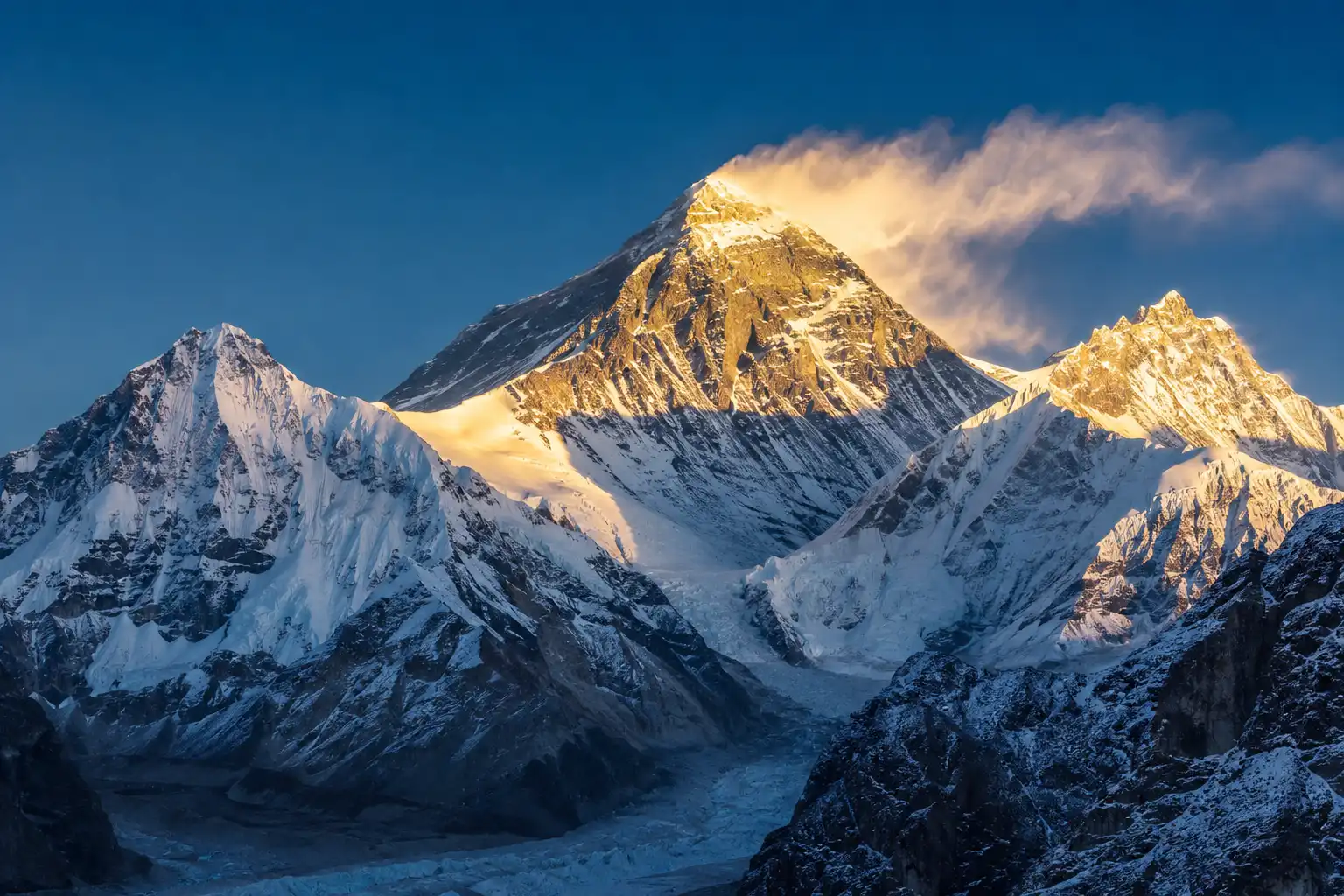
Most climbers I’ve talked to about Everest say the same thing: the summit gets the photos, but the camps do the work. The layout of camps on the mountain isn’t random. Each one sits at a specific altitude for a reason, and the count changes depending on which side you climb. Below, I’ll walk through how many camps exist on Mt Everest, where they sit on each route, and why every single one matters for getting a climber back down alive.
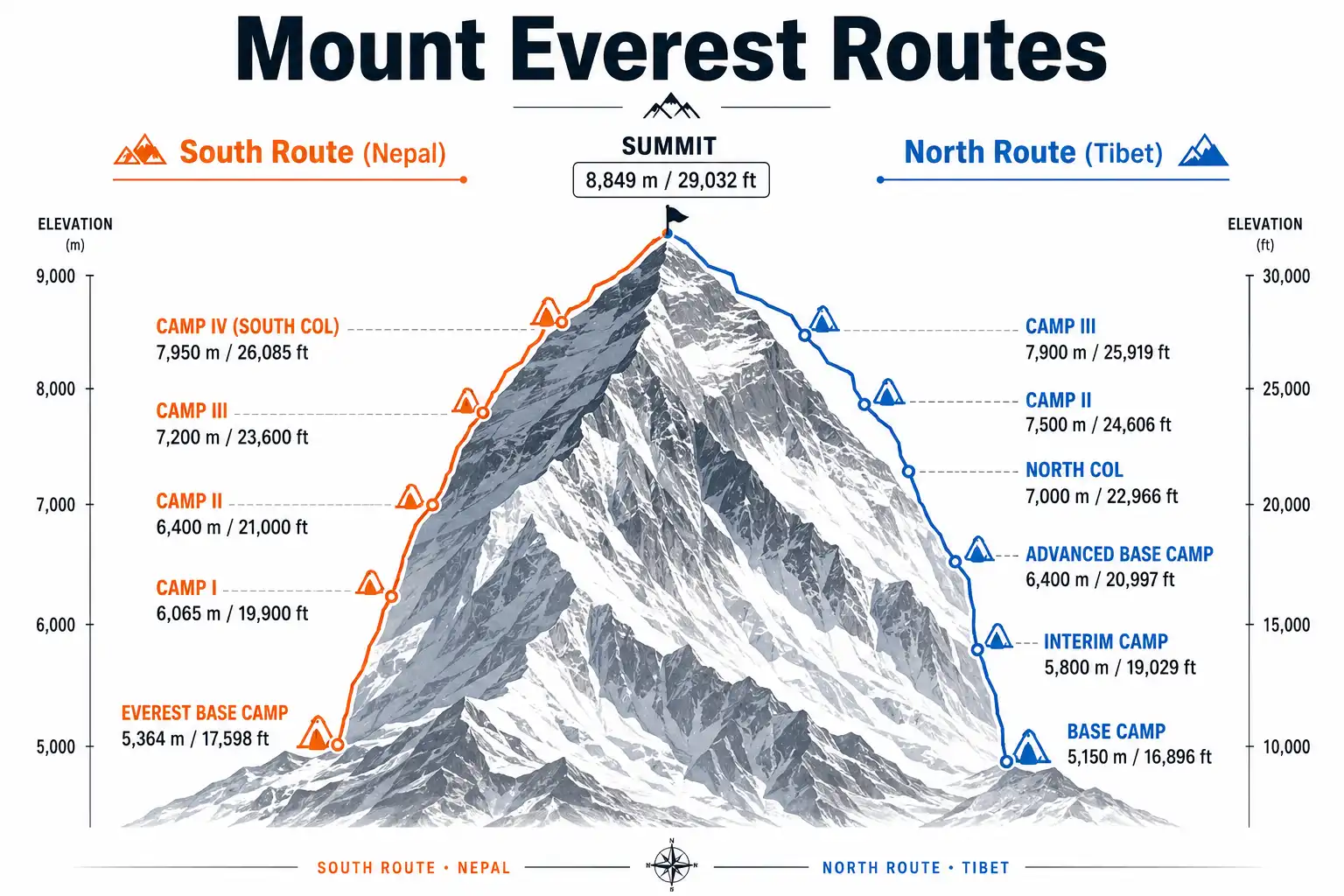
The standard South Col route in Nepal uses 5 camps, counting Base Camp plus 4 high camps. The North Ridge route from Tibet uses 6 camps, because it adds an Intermediate Camp and an Advanced Base Camp between Base Camp and the high camps. So the short answer depends on which side you’re on: 5 on the south, 6 on the north.
The South Col route and its 5 camps
The south side is the busier line up the mountain. It’s also the route Hillary and Tenzing climbed in 1953. Here’s how the camps stack up from low to high.
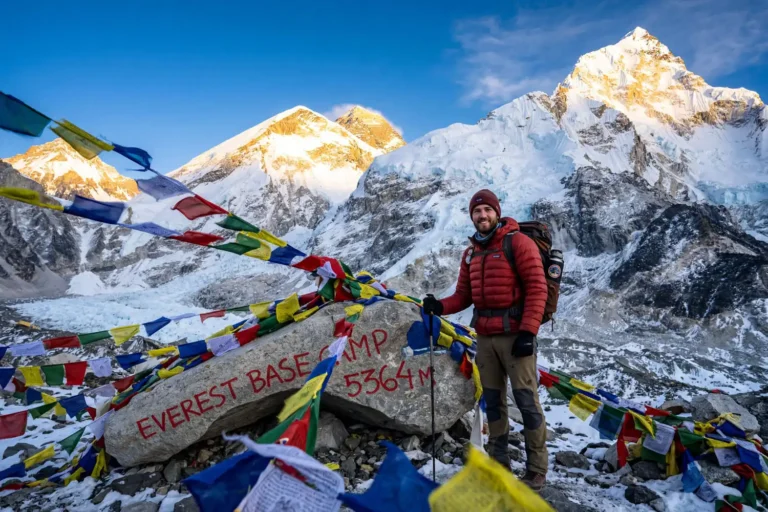
South Base Camp (5,364 m / 17,598 ft)
South Base Camp sits on the Khumbu Glacier in Nepal. This is the gathering point for every expedition before the climbing season starts. Most teams spend several weeks here on and off, moving up and down to acclimatize. The trek in from Lukla usually takes eight to nine days because of the gradual ascent required, and learning to pace yourself on long climbs matters here as much as on any trail at lower elevation.
Camp 1 (around 6,065 m / 19,900 ft)
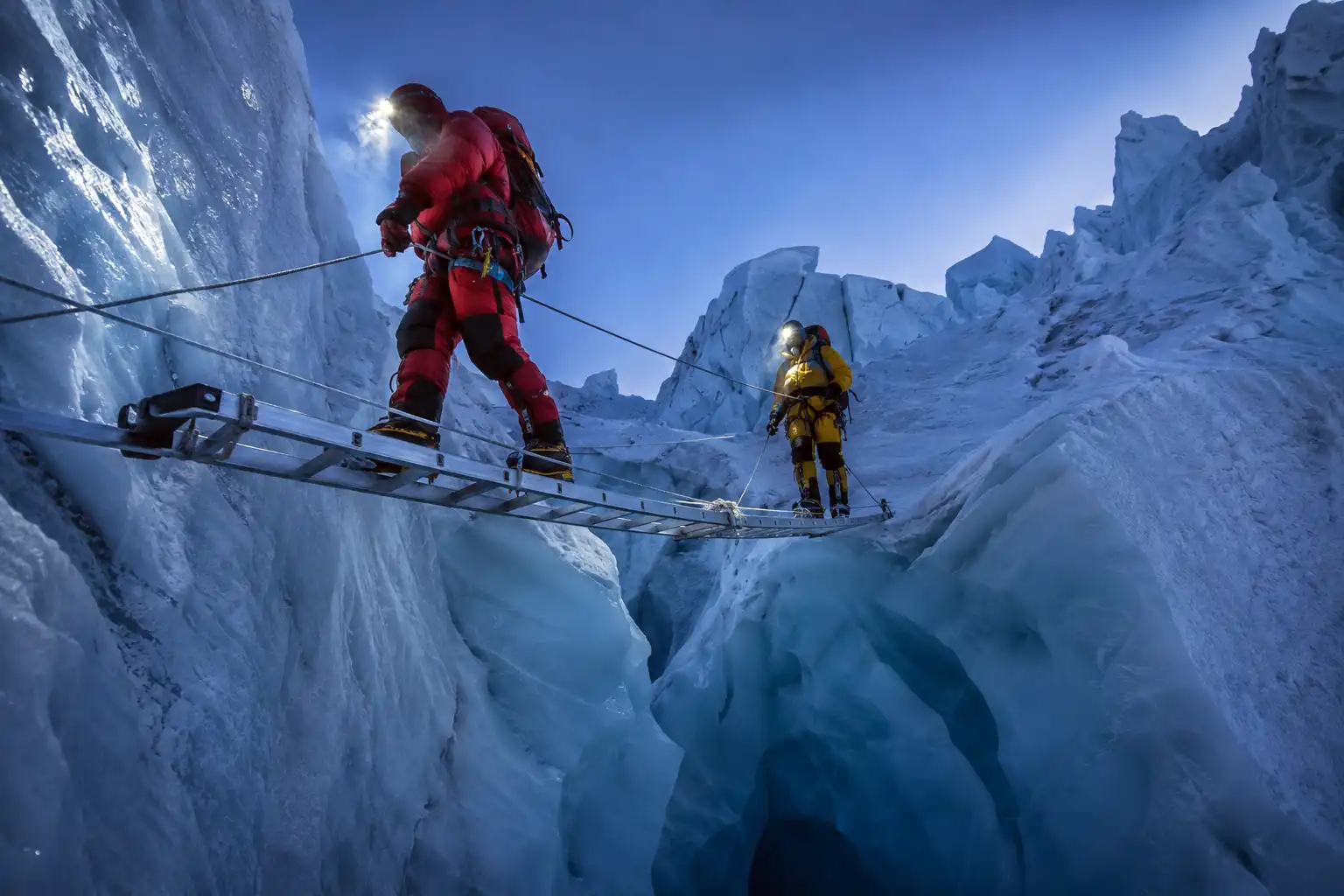
Camp 1 sits just above the Khumbu Icefall in the Western Cwm. The Icefall is the most dangerous stretch of the south route. So climbers usually cross it before sunrise, because cold conditions keep the ice more stable. Once above it, you reach a flat, sun-trapped valley where Camp 1 is pitched.
Camp 2 / Advanced Base Camp (around 6,400 m / 21,000 ft)
Camp 2 is also called Advanced Base Camp on this side. It sits deeper into the Western Cwm, right under the Lhotse Face. Most teams stage their summit push from here, because it has a bigger kitchen and rest setup than the camps above. After several acclimatization rotations, climbers sleep here more than at any other high camp.
Camp 3 (around 7,200 to 7,470 m / 23,500 to 24,500 ft)
Camp 3 is bolted onto the Lhotse Face. The slope is steep and icy, so the tents are cut into platforms on a wall of blue ice. This is where most climbers start using supplemental oxygen. Sleep gets thin here, hunger fades, and the body’s hardest acclimatization fight begins.
Camp 4 / South Col (around 7,920 to 7,950 m / 26,000 ft)
Camp 4 sits on the South Col itself. This is the gateway into the Death Zone, the band of altitude above 8,000 m where the body slowly breaks down. Climbers rest here only a few hours before pushing for the summit, usually leaving around 9 or 10 p.m. for an overnight ascent. The cold and wind at this elevation are brutal, so picking the right shell jacket for mountaineering becomes one of the most important gear calls you’ll make.
The North Ridge route and its 6 camps
The north side is less crowded, but technically tougher in places. The big difference is that it adds two staging camps between Base Camp and the highest camp.
North Base Camp (5,150 m / 16,900 ft)
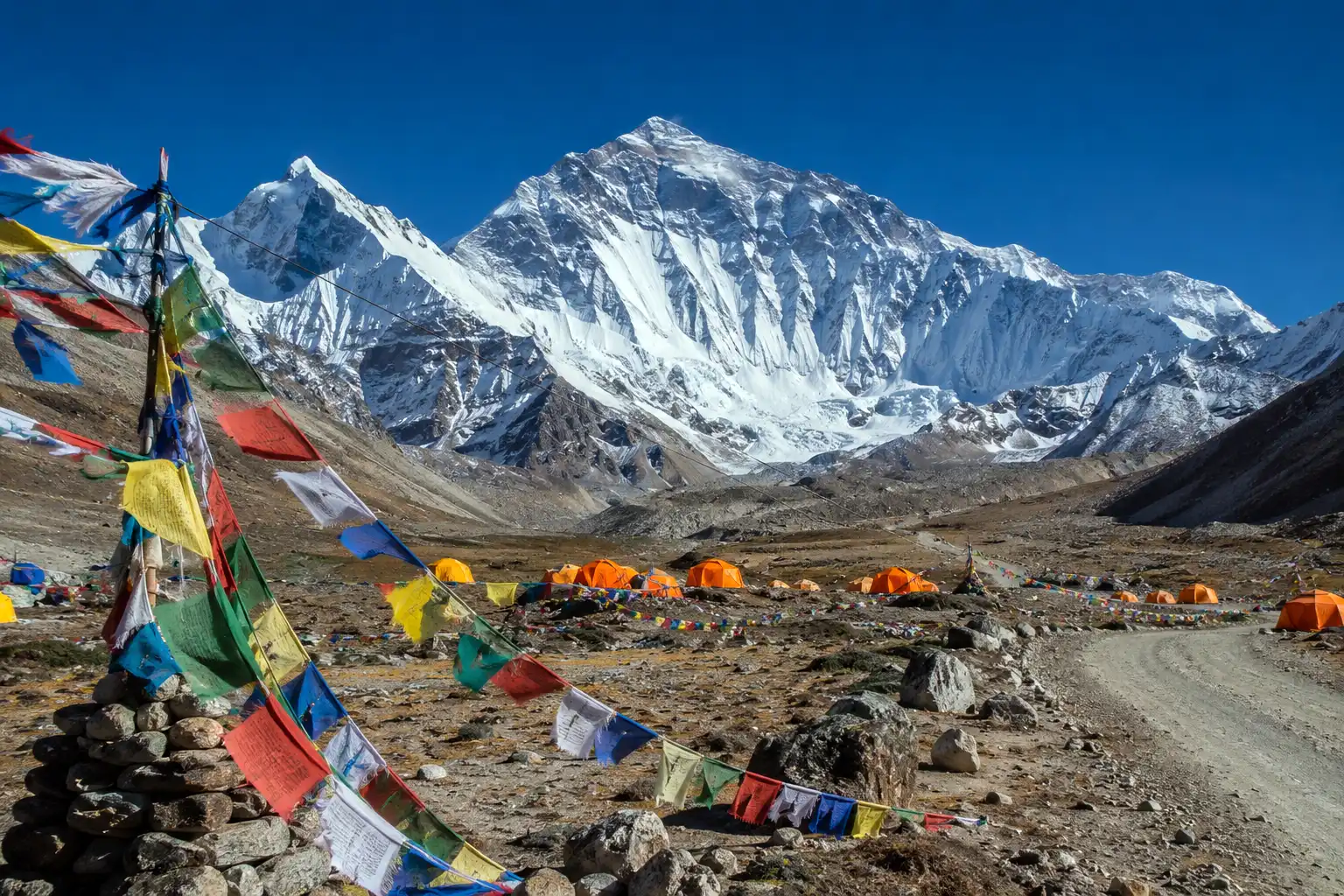
Slightly lower than its southern twin, North Base Camp is reachable by paved road through Tibet. That makes logistics easier. However, the road also means climbers gain altitude faster than they would walking in, so acclimatization needs extra care.
Intermediate Camp (around 5,800 m)
This is a one-night stop between Base Camp and Advanced Base Camp. It helps the body adjust before the next big jump. Teams don’t usually linger here.
Advanced Base Camp / ABC (around 6,400 m)
ABC on the north side does the same job as Camp 2 on the south side. Teams stay for days at a time, run their acclimatization rotations from here, and stage the summit push from this elevation.
Camp 1 / North Col (around 7,000 m)
The North Col is a sharp saddle reached by fixed ropes and a few ladders. Wind here can be punishing, because the col funnels storm air over the ridge.
Camp 2 (around 7,500 to 7,800 m)
This camp clings to the exposed North Ridge. Sleep, water, and food all get harder, and the body burns calories fast even when resting.
Camp 3 (around 8,300 m / 27,230 ft)
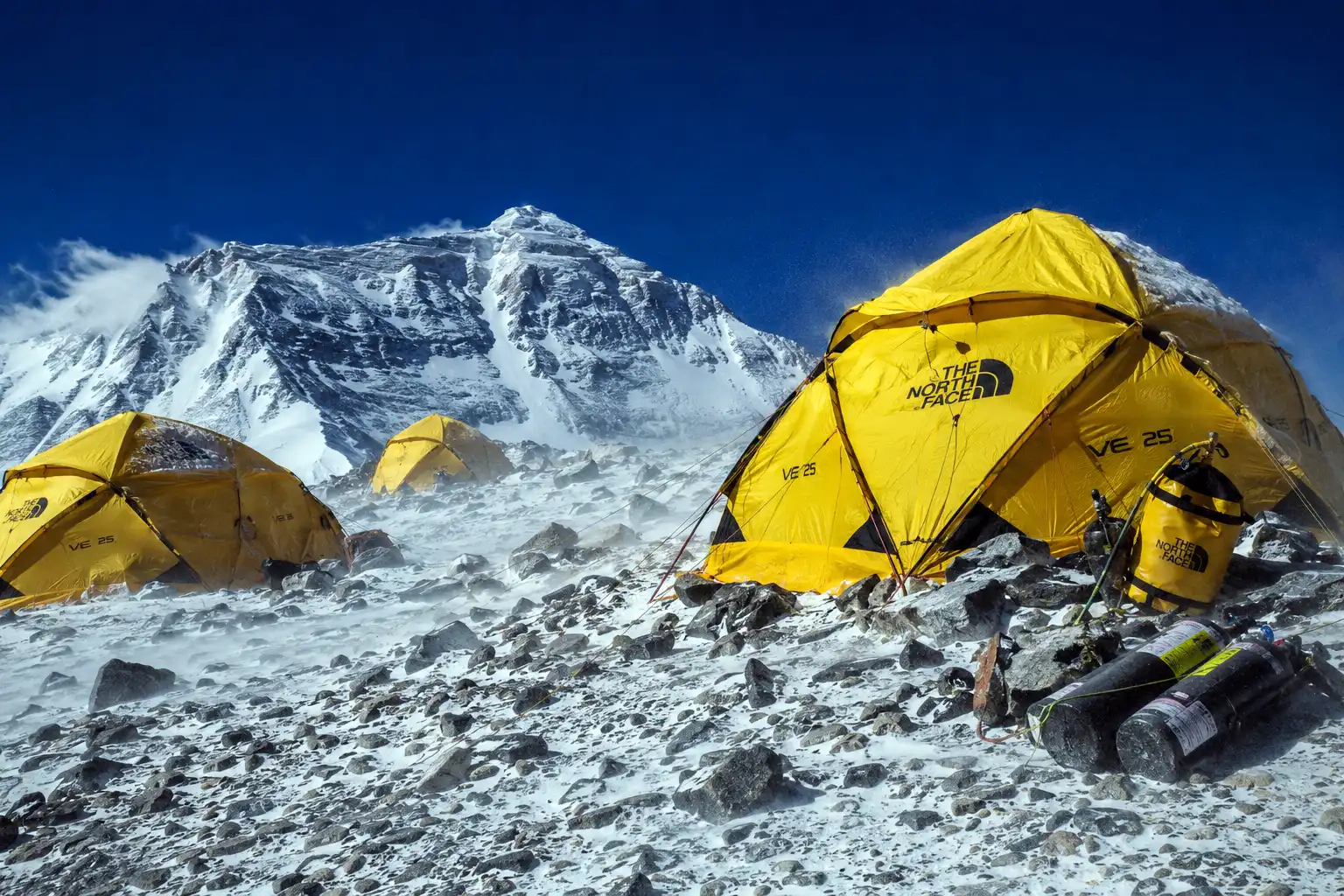
This is the final camp before the summit on the north side. It sits inside the Death Zone. Most teams spend only a few hours here before leaving for the top.
Why does Everest need so many camps?
The camps exist mainly to let climbers acclimatize to the thin air. Everest’s summit sits at 8,848.86 m. If a healthy person flew straight from sea level to that altitude, they would lose consciousness from oxygen starvation in minutes. So spreading the climb across weeks, with repeated trips up and down between camps, gives the body time to make more red blood cells and adjust breathing. This “climb high, sleep low” pattern is the same idea every Himalayan expedition uses. For a deeper read on what altitude does to the body, the CDC’s high-elevation travel and altitude illness guidance is a solid reference.
Camps also serve as supply hubs. Sherpa teams ferry oxygen bottles, food, fuel, and ropes up the route so that climbers don’t have to carry everything themselves. Each camp becomes a small staging point with tents, stoves, and gear caches.
South vs north camps compared
The south side has fewer camps, but it includes the dangerous Khumbu Icefall. The north side has more camps and a longer technical push above 8,000 m, including the famous Second Step rock band. Costs, permits, and weather windows also differ. Historically, the north has allowed slightly more flexible summit attempts. Meanwhile, the south remains the standard choice for first-time climbers using a guided service. Either way, the camp system is what makes both routes possible.
A note on perspective
I’ll be honest. I haven’t climbed Everest, and I’d be careful of anyone who claims to have all the answers about it. What I have learned from climbing in the Bandarban hills around Keokradong and Nafakhum is that even moderate altitude changes pace, hunger, and sleep in ways flatlanders don’t expect. If you’re working toward Himalayan trekking yourself, training physically for high-altitude treks and getting a feel for what counts as serious elevation gain on a regular hike is the right place to start. Also factor in sunscreen for high-altitude conditions, because UV exposure roughly doubles for every 1,000 m of gain.
FAQs about Camps Are on Mt Everest

Can trekkers visit any Everest camps without climbing?
Which Everest camp is in the Death Zone?
How long do climbers stay at each camp?
Final words
So the short answer to how many camps are on Mt Everest is 5 on the south side and 6 on the north side. That count is the framework every expedition runs on, and each camp does a specific job in keeping climbers alive long enough to summit and come back. The mountain hasn’t gotten easier over the decades. However, the camp system has been refined over 70 years of climbing, and for most teams it remains the difference between a safe attempt and a tragic one.