How Long to Walk Everest Base Camp: Full Day-by-Day Guide

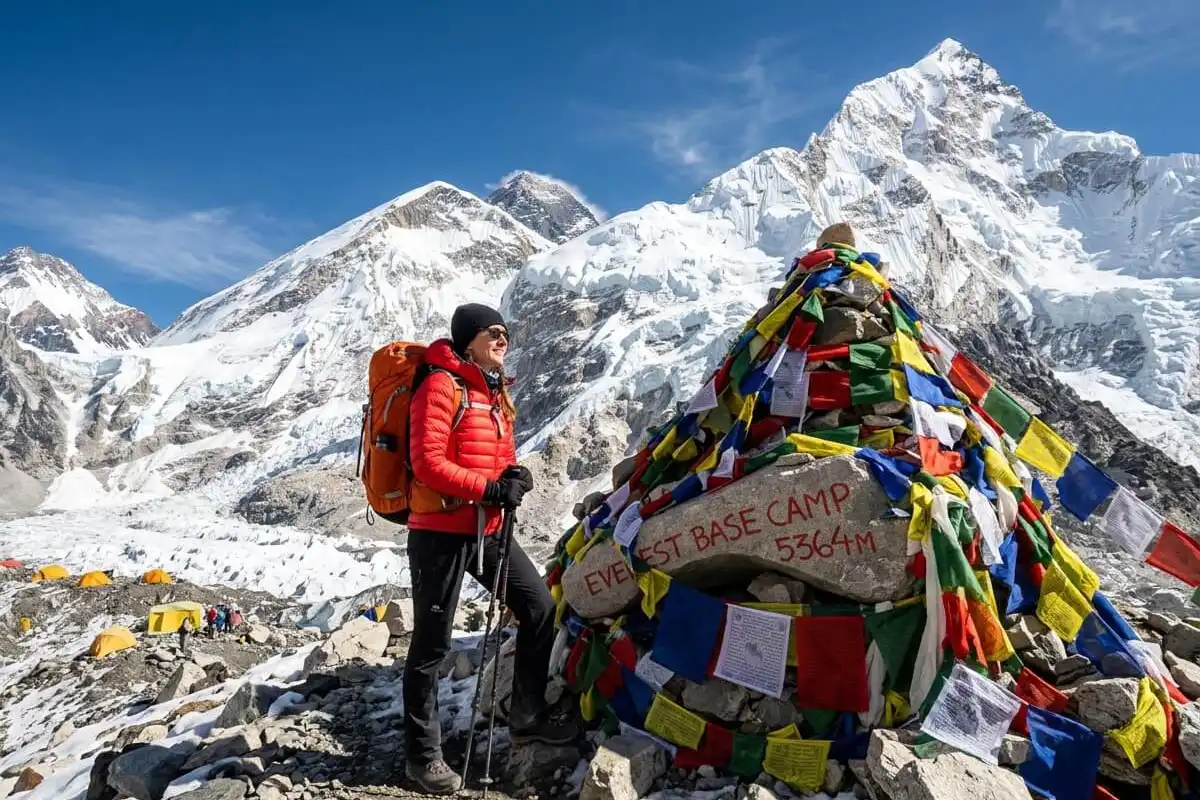
The Everest Base Camp trek takes most people 12 to 14 days round trip from Lukla, with around 80 miles (130 km) of total walking and 5 to 7 hours on foot each day. That figure is not the trail’s length alone. It also includes two full rest days for acclimatization, which are non-negotiable if you want to reach 17,598 feet without altitude sickness pulling you off the mountain.
I have not stood at EBC myself, but trekking friends who have, plus everything I have read on Himalayan trek planning, point to the same numbers. Below is the honest breakdown.
How long does the Everest Base Camp trek take?
Most trekkers walk Everest Base Camp in 12 days, sometimes stretching to 14 when an extra acclimatization day is added. The classic round-trip from Lukla covers roughly 130 km, with daily walks ranging from 3 to 8 hours depending on the section. That slow pace is intentional. Above 3,000 m, your body needs time to adjust, so daily mileage stays modest even when you feel strong.
You can technically do it faster, but rushing is how people end up needing a helicopter rescue.
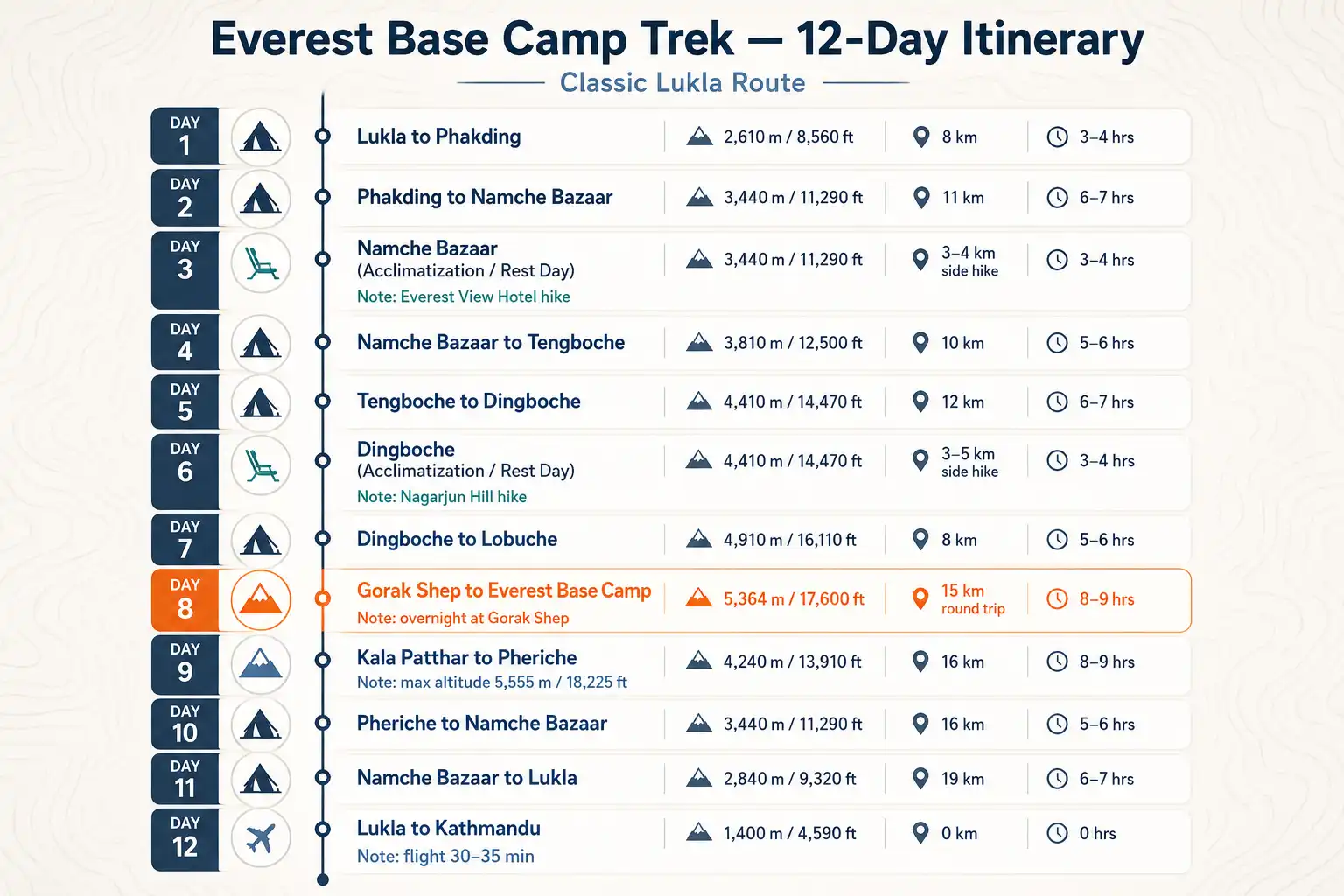
The standard 12-day itinerary
Here is the typical breakdown most teahouse trekkers follow. Distances are approximate.
Day 1: Lukla to Phakding (8 km, 3 to 4 hours)
You land at Lukla airport (2,860 m) and start with an easy downhill afternoon to Phakding (2,610 m). Short day on purpose. Your legs are fresh, but the altitude is already higher than most people are used to.
Day 2: Phakding to Namche Bazaar (11 km, 6 to 7 hours)
A long climbing day ends at Namche (3,440 m). The final two hours are a steep, switchbacked grind up from the Dudh Koshi river. This is where most first-timers feel the altitude bite.
Day 3: Acclimatization at Namche
You stay at Namche but hike up to Everest View Hotel (3,880 m) and back. The rule is “climb high, sleep low,” which gives your body its first real altitude adjustment.
Day 4: Namche to Tengboche (10 km, 5 to 6 hours)
Mostly contouring traverses, then a steep climb to Tengboche (3,860 m), home to the famous monastery.
Day 5: Tengboche to Dingboche (12 km, 5 to 6 hours)
You cross the tree line. The landscape opens up to dry alpine terrain, and Dingboche sits at 4,410 m.
Day 6: Acclimatization at Dingboche
A short hike up Nagarjun Hill (around 5,100 m) before descending back to sleep low. This is the most critical rest day of the trek.
Day 7: Dingboche to Lobuche (8 km, 5 hours)
The climb to Lobuche (4,910 m) passes the Everest memorials at Thukla Pass. Short on miles, heavy on altitude and emotion.
Day 8: Lobuche to Gorak Shep to Everest Base Camp (15 km, 7 to 8 hours)
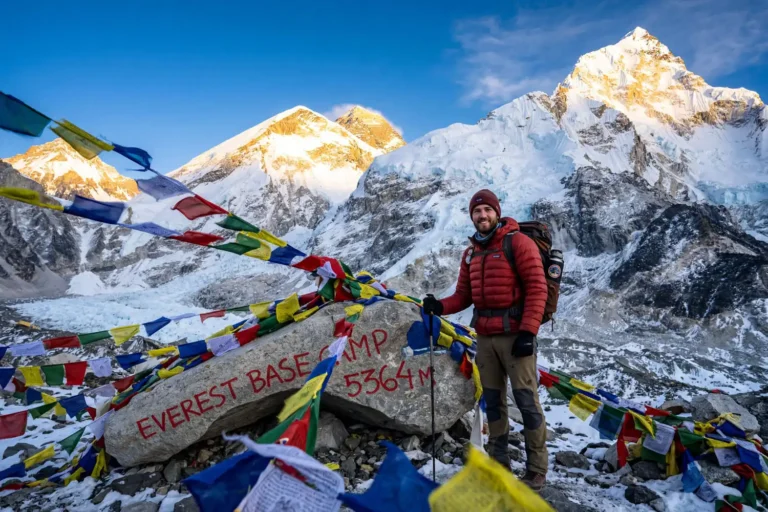
The big day. You walk to Gorak Shep (5,164 m) in the morning, drop your pack, and push on to Everest Base Camp (5,364 m). Then you return to Gorak Shep to sleep.
Day 9: Kala Patthar, then descent to Pheriche (15 km, 7 to 8 hours)
Pre-dawn climb up Kala Patthar (5,545 m) for the best Everest sunrise view, then a long descent to Pheriche (4,240 m).
Days 10 to 12: Descent to Lukla
Three days back down through Tengboche, Namche, and finally Lukla. Faster, but harder on the knees.
Why the trek cannot be rushed
The trail itself is not technical. There is no climbing, no ropes, no glacier travel. What slows everyone down is altitude. At 5,000 m, oxygen levels are roughly half of sea level. Your heart works harder, your sleep suffers, and your appetite drops. Skipping acclimatization days is the single most common reason trekkers fail to reach base camp.
For a sense of how this kind of trek feels physically, my physical training notes for the Kedarnath trek cover the kind of cardio base you need before any high-altitude Himalayan walk.
According to the CDC’s guidance on high-elevation travel and altitude illness, ascent rate matters more than total elevation. Their recommendation is to sleep no more than 500 m higher each night above 3,000 m, with a rest day every 1,000 m. The EBC itinerary follows this pattern exactly.
How many hours per day will you actually walk?
Most days fall between 5 and 7 hours of walking, with breaks. Early days run shorter (3 to 4 hours), and the base camp day is the longest (7 to 8 hours). Pace stays slow on purpose, often around 1.5 to 2 km per hour above 4,500 m. If you have ever wondered how many miles you can safely hike in a day, the EBC answer is humbling. Strong hikers cover under 10 miles on most trek days.
Can you do it faster?
Yes, but I would not recommend it. Express itineraries of 9 to 10 days exist, usually with a helicopter shortcut or a skipped acclimatization day. They double the risk of altitude sickness. A 14-day version with an extra rest day at Dingboche or Lobuche is much safer for first-timers.
Some shorter or longer alternatives:
- Helicopter return from Gorak Shep: trims 3 days off the descent.
- Approach from Jiri: adds about 6 days at the start for a classic walk-in.
- Three Passes trek: extends the trip to 18 to 21 days with EBC included.
What affects your personal pace
Your timing depends on:
- Fitness level. Building the right base before you fly out matters. My notes on the fitness needed for a multi-day backpacking trip are a good starting point.
- Acclimatization response. Some people adjust well, others struggle. There is no way to know in advance.
- Weather windows. Snow or wind can stall a day, especially around the high passes.
- Group size. Solo trekkers move faster than groups of eight.
- Pacing discipline. Going too fast on day one ruins day eight. My breakdown on how to pace yourself on a long hike applies directly here.
When to go
The two main windows are March to May and late September to November. Spring brings blooming rhododendrons and slightly warmer nights. Autumn delivers the clearest skies and the sharpest mountain views. Winter trekking is doable but brutally cold above 4,000 m, and the monsoon (June to early September) makes Lukla flights unreliable.
What to bring for the timing to work
A few items can make or break your daily pace:
- Broken-in boots, because a fresh pair guarantees blisters by day three.
- Proper sun protection for high altitude. UV at 5,000 m is intense, so my breakdown on picking sunscreen for high-altitude hiking covers what actually works.
- Documents sorted ahead of time, including the TIMS card and Sagarmatha National Park permit. For first-time international trekkers, the documents and gear checklist for international hiking is worth reading early.
FAQs

Can you trek EBC without a guide?
What is the success rate of reaching base camp?
Is there cell service or Wi-Fi on the trail?
Final words
So, how long to walk Everest Base Camp? Plan on 12 days minimum, 14 days ideal, with roughly 80 miles of walking spread across short slow days and one big push to 17,598 feet. What makes EBC hard is not the calendar. It is the altitude. Build your fitness, respect the acclimatization days, and the timeline takes care of itself.