How to Dispose of a Small Propane Tank Safely

A small propane cylinder should not go straight from your camp stove into a trash bag. Even when the flame goes out, the container may still hold flammable vapor and pressure. I’ll explain how to handle one-pound camping bottles, find a suitable collection site, and avoid unsafe disposal methods.
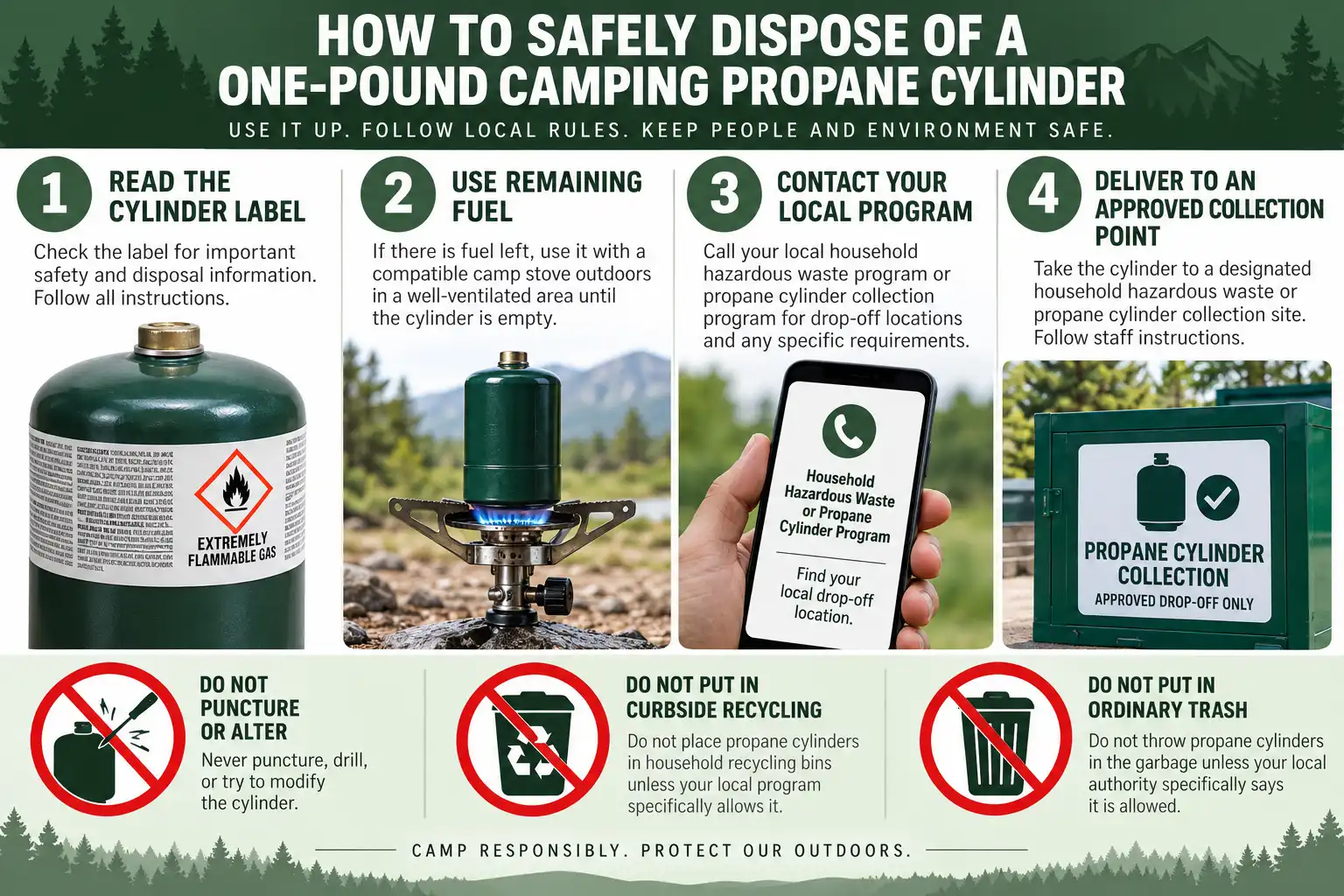
To dispose of a small propane tank, read its label to identify whether it is disposable or refillable. Use any remaining fuel in a compatible outdoor appliance if the cylinder is safe. Then contact your local household hazardous waste program, propane supplier, or cylinder recycler for an approved drop-off. Never puncture it or assume curbside recycling will accept it.
Identify the Type of Propane Cylinder First
Small fuel containers look similar, but they do not all follow the same disposal route. So, check the fuel name, capacity, and refill instructions printed on the label before doing anything else.
| Cylinder type | How to recognize it | Best next step |
|---|---|---|
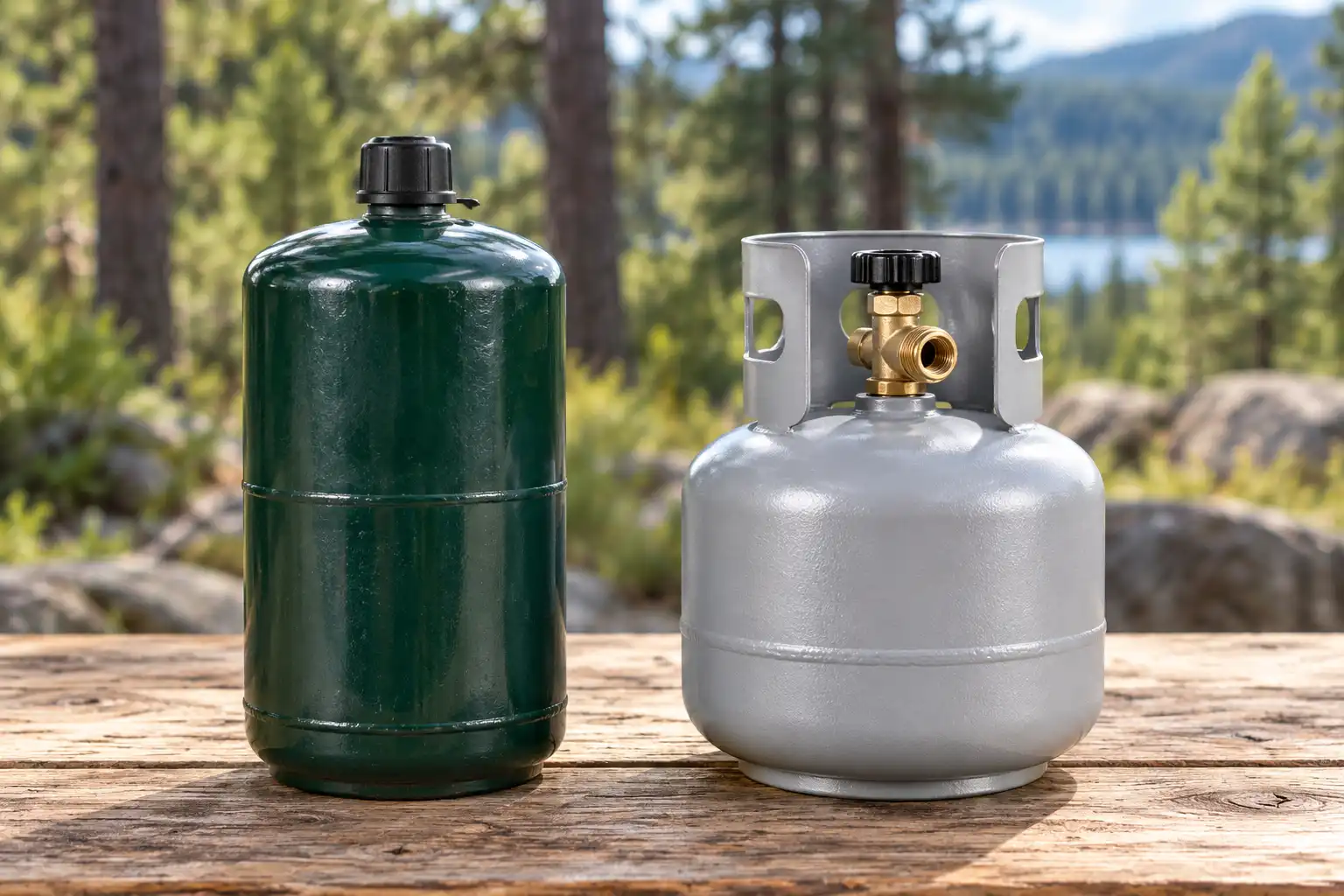
| Disposable one-pound propane bottle | Often a green 16-ounce or 16.4-ounce camping cylinder; may say “nonrefillable” or “DOT-39” | Use safely until empty or ask a collection program to accept the remaining fuel |
| Refillable propane cylinder | Specifically labeled and approved for refilling; available in one-pound and larger sizes | Ask a propane dealer about refilling, exchange, inspection, or retirement |
| Butane or isobutane backpacking canister | Usually a squat, threaded canister that lists a different fuel blend | Check for a collection program that accepts that exact canister type |
Color alone is not enough to identify a cylinder. Also, a larger five- or 20-pound grill tank should not automatically go to the same collection point as a disposable camping bottle.
How to Dispose of Small Propane Tanks in Five Steps
For leaking or damaged cylinders, skip the appliance steps and use the safety advice below.
- Check the label and condition. Confirm that the cylinder contains propane and note whether it is refillable. Look for dents, heavy corrosion, or signs of leakage. Don’t connect a questionable cylinder to a stove.
- Use the remaining fuel normally, when safe. A sound cylinder can power its compatible camp stove outdoors until the flame goes out during normal use. Let the stove cool before disconnecting the cylinder. Don’t release propane directly into the air just to empty it.
- Find a facility that accepts your cylinder. Check local household hazardous waste (HHW) services first. Ask whether they take disposable one-pound bottles, whether partly full cylinders qualify, and whether you need an appointment.
- Prepare for a safe trip. Keep the valve intact; replace its protective cap if supplied. Secure the cylinder upright, keep it away from heat, and follow the facility’s transport directions.
- Use only the approved collection point. Give the cylinder to staff or put it in a clearly designated propane-cylinder container. If the site refuses it, take it home safely and contact another program rather than leaving it beside a bin.
Important: A stove that has stopped burning does not prove the cylinder contains no vapor or pressure. Therefore, don’t drill, crush, cut, or puncture it to make it acceptable to a recycler.
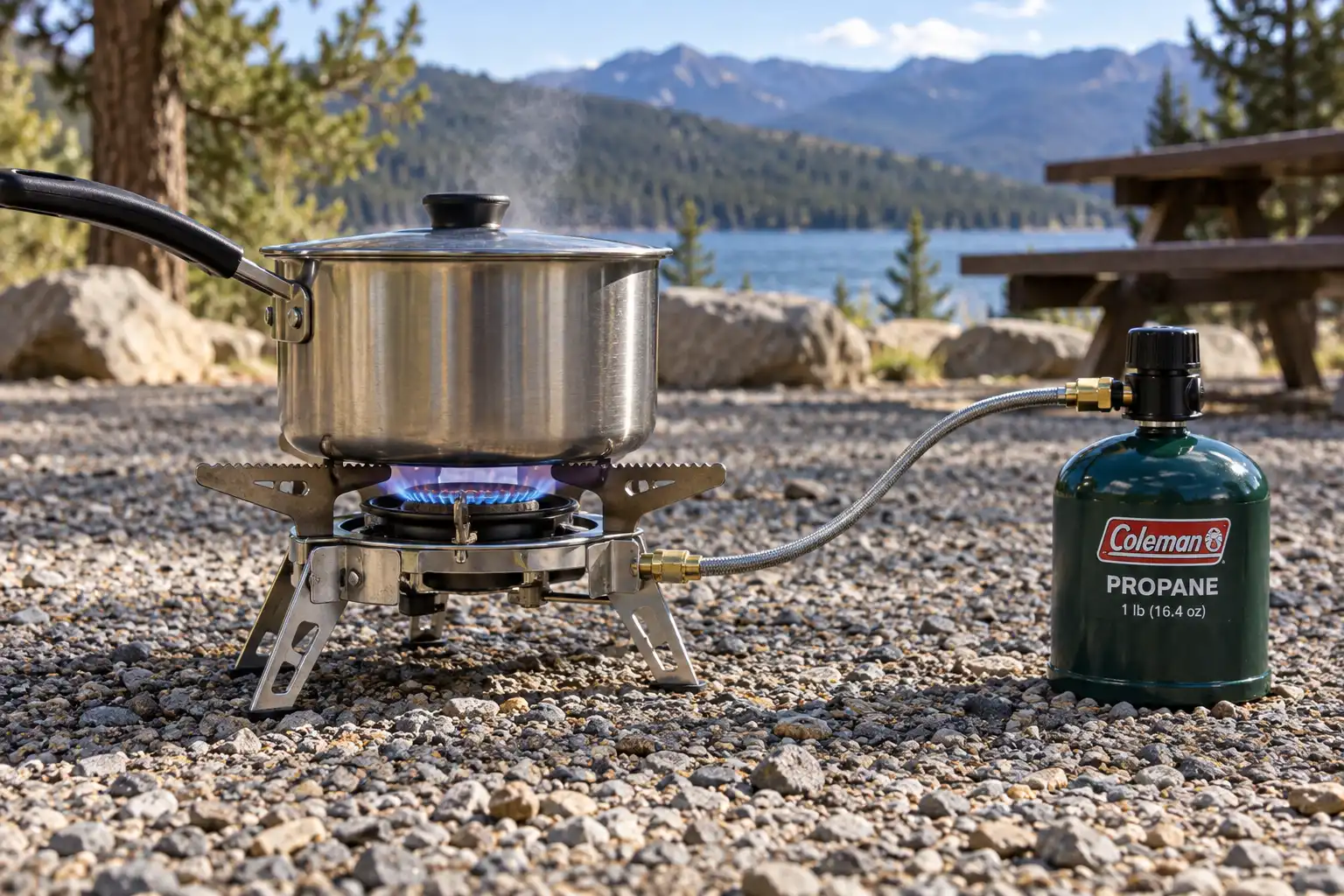
Where to Recycle Propane Tanks Near You
The best location depends on your county, city, and cylinder type. In the United States, I would check these options in order:
- Household hazardous waste facilities: Often the most useful first call, especially for partly full or uncertain cylinders. Confirm size limits and accepted fuels.
- City or county waste departments: They can direct you to a special collection event or an approved processor, even if regular curbside service refuses tanks.
- Campground or national park collection areas: Some parks provide dedicated propane-cylinder cages. However, use them only when signs or staff confirm they accept your bottle.
- Propane dealers, outdoor retailers, and scrap metal yards: Some accept selected cylinders, but a store that exchanges 20-pound grill tanks may refuse disposable one-pound bottles.
For a quicker search, type “one-pound propane cylinder recycling” plus your city or ZIP code. Then call before driving over and ask, “Do you take disposable 16-ounce propane cylinders, including ones with fuel left inside?” Pennsylvania’s environmental department also recommends checking HHW programs and local propane recyclers.
If nobody accepts your cylinder, ask your waste office about the next collection event and store it safely until then. Also, check campsite disposal rules while planning your first camping trip. Otherwise, you may end up carrying an unwanted cylinder to several facilities.
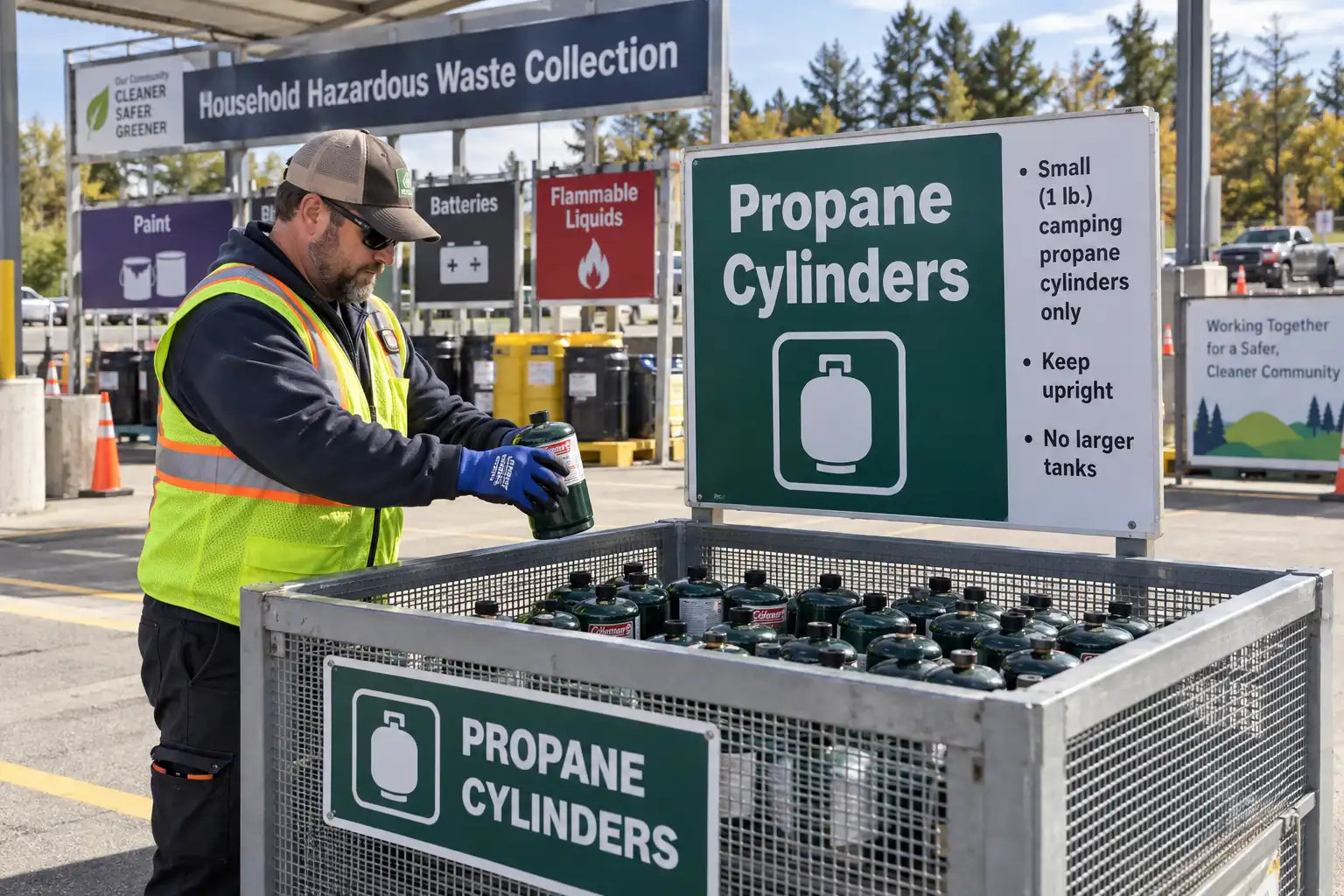
Coleman Propane Tank Disposal and the Discontinued Green Key
Coleman’s common green All-Purpose Propane cylinders contain roughly one pound of fuel and are not refillable. According to Coleman’s disposal guidance, the steel cylinders can be recycled where a local program accepts them. However, Coleman warns that even an empty bottle may remain pressurized and says not to puncture it.
Coleman once included a Green Key tool with some cylinders. It helped release remaining vapor from an already empty bottle and show recyclers that the bottle had been depressurized. However, many recycling programs did not accept Green Key cylinders, so Coleman discontinued the tool.
If you find an old Green Key, don’t assume your local recycler wants you to use it. Instead, ask the recycler first, then follow the original manufacturer instructions for your exact cylinder. Never substitute a screwdriver, nail, or homemade venting tool.
For current Coleman propane tank disposal, use the CylinderSafe local-authority lookup on Coleman’s FAQ page or contact your city waste office directly.
Why Empty Propane Tanks May Still Be Rejected From Trash and Recycling
Steel is recyclable, but a sealed propane cylinder is not ordinary scrap metal. Waste trucks and sorting machines can crush containers, releasing flammable gas or creating a fire hazard. As a result, many curbside recycling programs reject cylinders even when they seem empty.
Regular trash rules are not identical everywhere. For example, King County, Washington allows empty small camping canisters in household garbage, while its hazardous waste facilities also accept certain partially filled containers. Other communities prohibit propane cylinders in trash altogether.
So, never rely on a general internet claim that all empty Coleman bottles belong in the garbage. Use ordinary trash only if your local authority expressly allows that cylinder and its required condition. Likewise, don’t place a propane bottle in a curbside recycling cart unless the program specifically accepts it.
Handling Half-Full, Leaking, or Damaged Propane Tanks
A partly full bottle is not automatically waste. If the cylinder and valve are in good condition, you can keep it for another trip and use it only with an approved appliance. However, if you no longer want it, ask an HHW facility whether it accepts propane left in the container.
Never try to empty a leaking or damaged cylinder by lighting a stove. Don’t open the valve, remove the valve assembly, or release the gas on purpose. Also, avoid burning the cylinder in a campfire or treating it as scrap for a do-it-yourself project.
If you hear escaping gas or smell a strong propane odor, move people away and avoid flames, switches, and other ignition sources. Then contact your propane supplier or local fire department from a safe location. Don’t put a leaking cylinder in your vehicle or attempt a routine drop-off.
Refillable LPG Tank Disposal Follows a Different Route
LPG means liquefied petroleum gas, and propane is a common LPG fuel. However, the right LPG tank disposal method depends on whether the container is designed for refilling.
For a refillable one-, five-, or 20-pound tank, start with a qualified propane supplier. They may refill a sound cylinder, arrange an exchange, or direct an expired or damaged tank to proper recycling. Some household hazardous waste facilities also accept refillable tanks, but size rules vary.
By contrast, a disposable DOT-39 bottle must never be refilled. The U.S. Department of Transportation warns that these cylinders were not built to handle repeated filling.
Store and Transport Used Cylinders Safely
Until you find a drop-off, keep a cylinder upright in a secure, well-ventilated outdoor location, away from flames, direct heat, and children. Don’t store it inside a tent, home, or enclosed shed. Also, don’t leave it in a parked vehicle.
For transport, secure it upright so it cannot roll or strike other gear. Keep its valve closed if it has a manual valve, and protect the connection as the manufacturer instructs. A ventilated cargo area is preferable to the passenger space; never transport a leaking cylinder. Finally, drive directly to the accepting facility and unload promptly.
Air travel is different from a road trip. Propane fuel cylinders do not belong in passenger airline baggage, so check which camping supplies you cannot fly with before you pack.
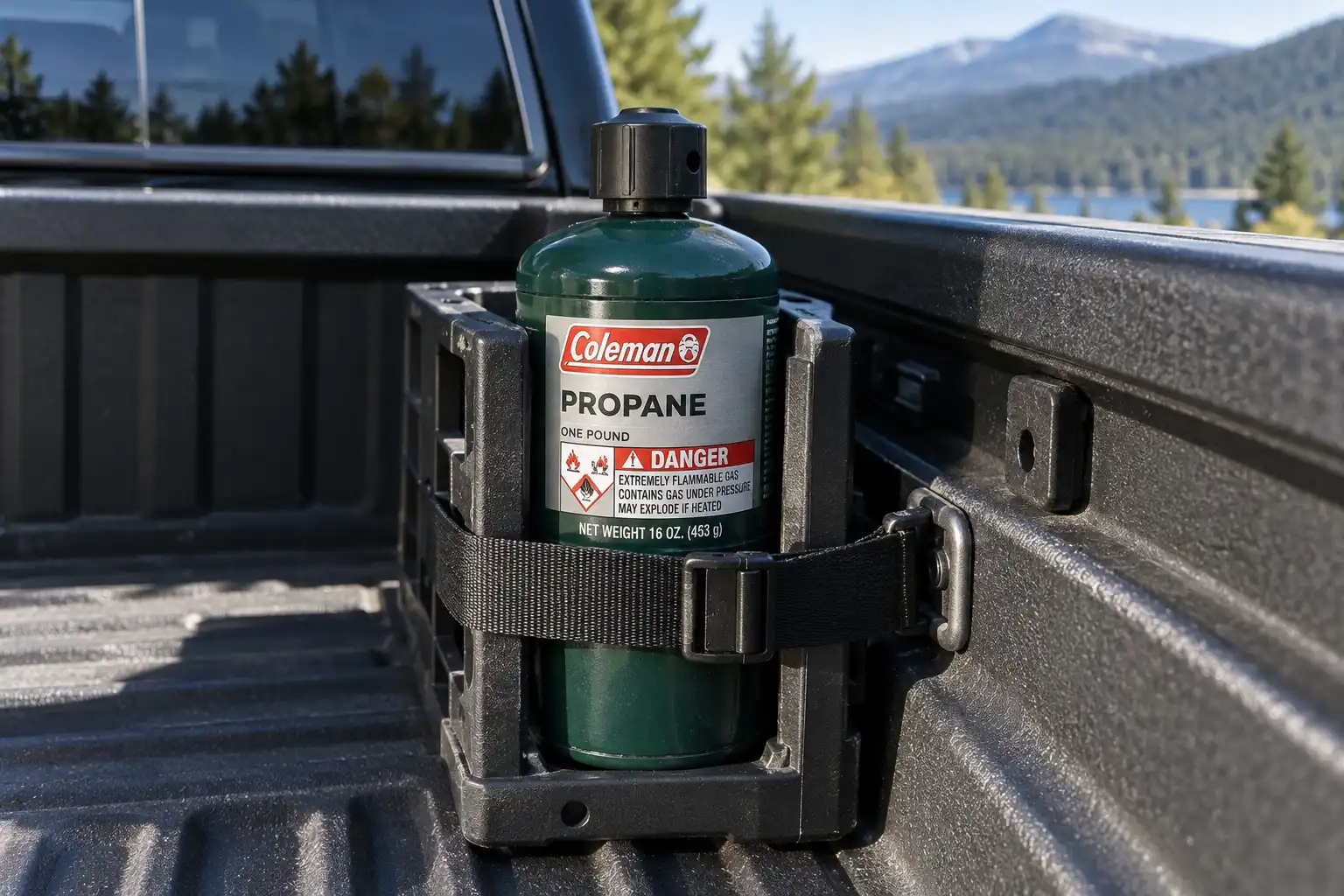
Reduce Propane Cylinder Waste on Future Camping Trips
The easiest container to dispose of is one you never need to throw away. If you camp often, consider a purpose-built, certified refillable one-pound cylinder, provided your stove supports it. Get refilling advice from the cylinder maker or a qualified propane professional, not from improvised adapter videos.
Meanwhile, keep safe, partly used disposable cylinders for future cooking rather than discarding them after one weekend. That is different from refilling a single-use bottle, which you should never do.
I also recommend adding “pack out used fuel cylinders” to your two-night camping checklist. A simple reminder helps prevent empty bottles from being abandoned beside campsites or trailhead bins.
Frequently Asked Questions
Can you throw an empty one-pound propane tank in the trash?
Sometimes, but only when your local waste department explicitly permits it and the cylinder meets its definition of empty; otherwise, flammable vapors left inside can create a hazard for garbage collection workers.
If your local rules are unclear, choose an approved propane collection or HHW program instead.
Can you recycle a propane tank that still contains fuel?
No, not through ordinary curbside or scrap metal recycling, because fuel may still be inside; choose a hazardous waste or propane collection program that explicitly accepts partially filled cylinders instead.
Otherwise, keep an undamaged cylinder for future use or ask a propane supplier for a safe option.
Can you refill a small green Coleman propane tank?
No, Coleman’s common green 16-ounce and 16.4-ounce propane bottles are single-use, and the United States Department of Transportation warns that refilling DOT-39 cylinders can cause gas leaks, fires, or serious injuries.
Instead, purchase a cylinder clearly manufactured and certified for repeated filling if that fits your camping setup.
Final Thoughts
Getting rid of a used propane bottle takes one extra step because disposal rules vary by location. I recommend starting with your local hazardous waste program, then checking propane dealers or campgrounds that collect one-pound cylinders. Use remaining fuel only when the bottle is safe, leave the valve intact, and never assume an apparently empty tank is harmless. A quick call before drop-off protects you, collection workers, and other campers.