Can You Get Bed Bugs From Tent Camping? Risks, Signs, and Fixes

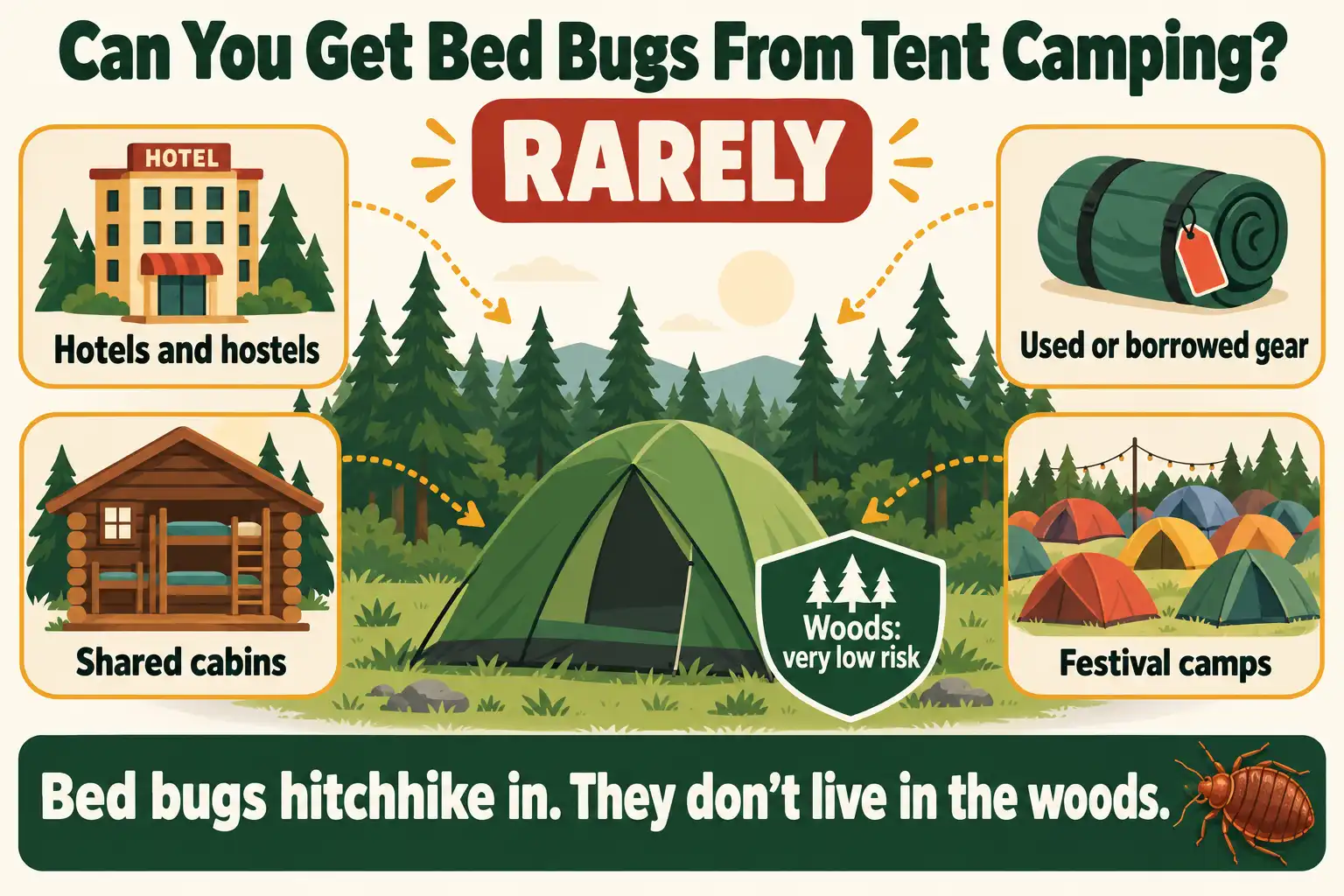
Yes, you can get bed bugs from tent camping, but it doesn’t happen often. When it does, the bugs almost always hitched a ride from somewhere indoors. So if you woke up itchy after a trip, here’s what to check and how to clean your gear.
Bed bugs don’t live in forests, grass, or soil. On a camping trip, they usually come from hotels, hostels, shared cabins, borrowed or secondhand gear, and crowded festival camps. However, a tent that only you use, pitched in the backcountry, carries very little risk.
Do Bed Bugs Live Outdoors in the Woods?
No, bed bugs don’t live in the woods. They feed mainly on people, so they stay close to where we sleep: beds, couches, and the cracks around them. A stray bug can turn up outside on a dumped mattress, but it came from a home, not from nature.
Their wild cousins are a different story. University of Kentucky entomologist Michael Potter notes that some bed bug relatives feed on bats or birds, like swallows. These bugs look very similar and can bite people, especially after their usual hosts leave. That’s one reason I never sleep right under a bat roost in a cave, hut, or old shelter.
How Do Bed Bugs Get Into a Tent?
Bed bugs get into a tent the same way they get into a suitcase: someone carries them in. The CDC explains that they spread by hiding in the seams and folds of luggage, bags, folded clothes, and bedding. So your risk depends on where you and your gear spend the nights around your trip.
| Where you sleep | Relative risk | Why |
|---|---|---|
| Your own tent in the backcountry | Very low | No beds, no crowds, and nobody else’s gear |
| Your own tent at a busy campground | Low | Bugs only arrive on someone’s belongings |
| Festival or group camp | Low to moderate | Shared tents, piled bags, and borrowed blankets |
| Borrowed, rented, or secondhand tent or bag | Depends on the last user | Gear kept in an infested home can carry live bugs |
| Cabins, bunkhouses, and trail shelters | Moderate | Many different people sleep in the same spots |
| Hotels, motels, and hostels on the way | Highest on this list | Constant guest turnover, and even five-star hotels get them |
I based these ratings on how bed bugs spread, not on survey data. Still, the beds you use before and after the trip matter far more than where you pitch your tent.
Lodging is the usual culprit
I treat bed bugs as a lodging problem, not a camping problem. Before a trip to Nafakhum or Remakri, I usually spend a night in a guesthouse in Bandarban or Thanchi. That one night carries more bed bug risk than every night I spend in my tent. The CDC also says your risk rises when you share sleeping spaces where others slept before you. That includes trail shelters, trekking lodges, and campground cabins.
Two sources people forget
The first is your own home. If bed bugs already live there, they can ride out in your pack and come back with you. Then the trip takes the blame. Overnight buses and trains are the second, since the CDC lists both among the places where infestations show up.
Can Bed Bugs Live in a Tent or Sleeping Bag?
Yes, bed bugs can live in a tent or sleeping bag for months. Seams, zipper tracks, mesh pockets, and baffles give them tight places to hide, and they’ll bite whoever sleeps inside. They also prefer fabric over metal and plastic, so your sleeping bag matters more than your cook pot.
Still, gear isn’t a great long-term home for them. Bed bugs need blood to grow and lay eggs, so a few bugs in a stored tent won’t build a big colony. The catch is how long they can wait.
How long can bed bugs survive in stored camping gear?
At normal indoor temperatures, bed bugs usually survive 1 to 4 months without feeding. In cool storage at 55°F (13°C) or below, they may last a year or longer, according to Potter. So bugs that got into your tent on a fall trip may still be alive after a winter in a cold garage.
Bites After Camping: Bed Bugs or Something Else?
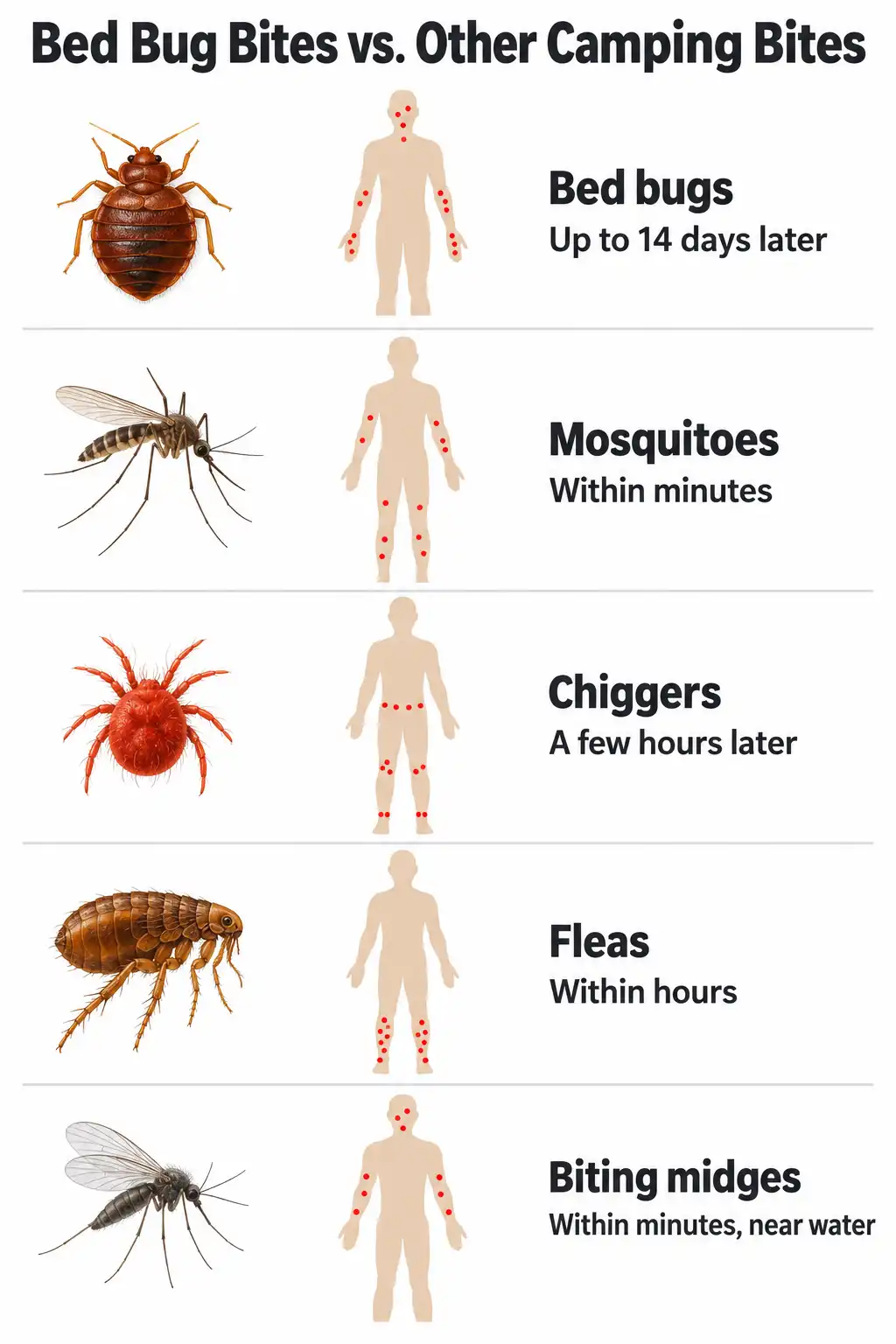
Most itchy bites from a camping trip come from mosquitoes, chiggers, fleas, or biting midges, not bed bugs. In the Bandarban hills, my itchy mornings almost always trace back to mosquitoes. But a few clues can point to bed bugs.
What bed bug bites look like
Bed bug bites look like mosquito bites: small, red, slightly swollen, and itchy. They show up on skin left uncovered while you sleep, such as your face, neck, arms, and hands. Sometimes they form a straight line, although they can also look random.
The timing is what trips people up. Most people notice the marks one to several days after the bite. Some take up to 14 days to react, according to the CDC. As a result, the bites you notice at camp may come from a hotel bed two nights earlier. Also, some people never react at all. Studies cited by Potter put that number at about 30% of people, even after repeated bites.
For relief, the CDC suggests an antiseptic cream or lotion, an antihistamine for the itch, and no scratching. Rarely, bites cause painful swelling or a severe allergic reaction. Know how to handle an allergic emergency at camp before you head out.
Bed bug bites vs. other camping bites
| Biter | Where bites show up | When you notice them | Best clue |
|---|---|---|---|
| Bed bugs | Face, neck, arms, hands | Up to 14 days later | You slept in a hotel, lodge, or borrowed bag |
| Mosquitoes | Any exposed skin | Within minutes | You heard them at dusk or dawn |
| Chiggers | Sock line, waistband, behind knees | A few hours later | You walked through grass or brush |
| Fleas | Ankles and lower legs | Within hours | Pets or animal bedding nearby |
| Biting midges | Exposed skin | Within minutes | You camped near water |
Bites alone can’t prove bed bugs, though. You need to find the bugs or their signs, so check your gear and bed before you treat anything. And if the table points to mosquitoes, put your effort into keeping mosquitoes off you on the trail instead.
How to Check Your Camping Gear for Bed Bugs
Check your gear outside in daylight, and go over every seam, fold, and zipper. Pitch the tent and lay the sleeping bag on a white sheet so dark specks stand out. A flashlight helps in deep folds. Also, slide the edge of a plastic card along the seams to push hidden bugs into view.
Signs of bed bugs
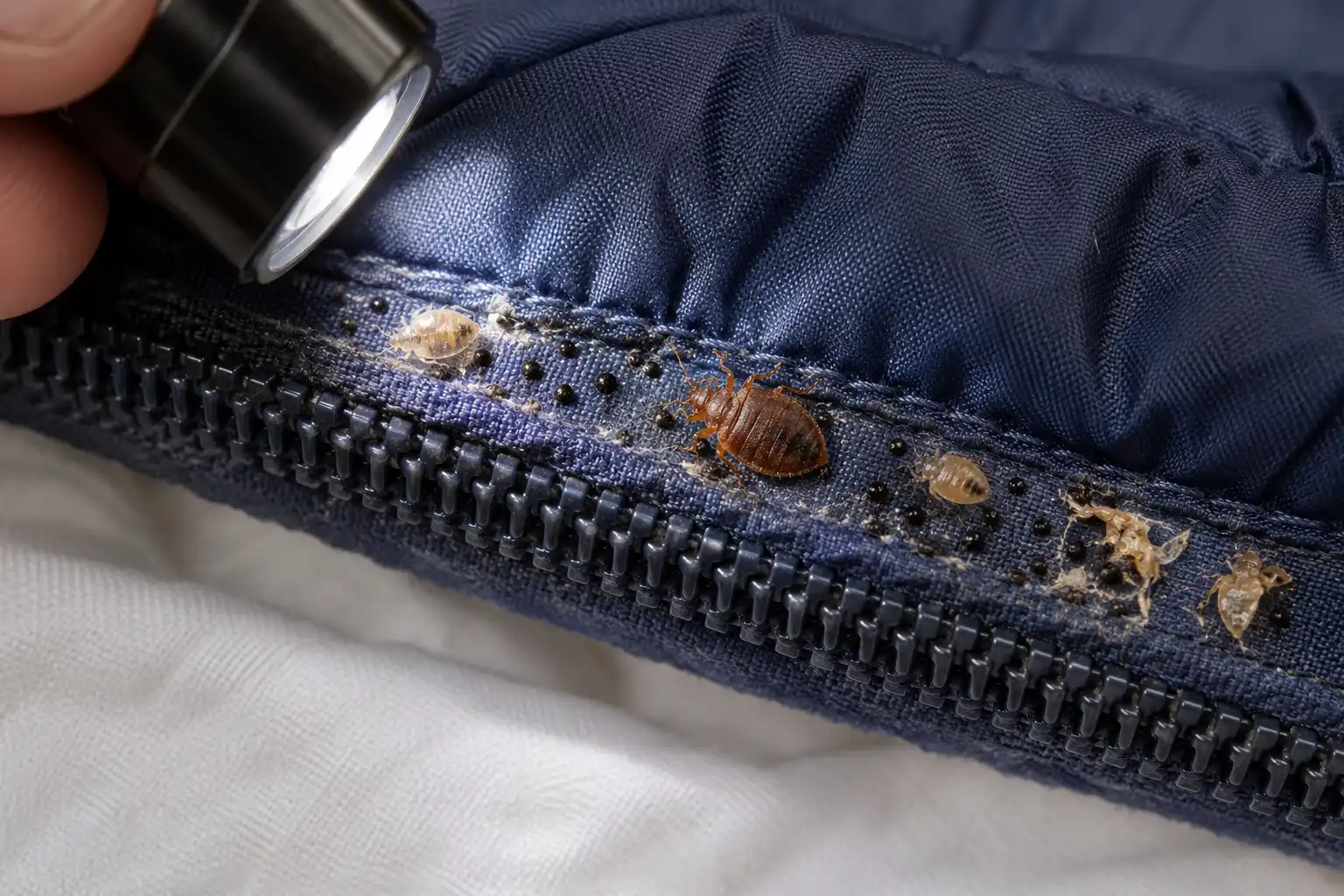
- Live bugs: Adults are flat, oval, and reddish-brown, like an apple seed, and about 3/16 inch (5 mm) long. Nymphs look similar but smaller and paler.
- Dark spots: Dried droppings look like marker dots along seams.
- Rusty smears: Crushed bugs leave reddish stains.
- Shed skins: Growing nymphs leave behind tan, empty shells.
- Eggs: These are tiny, whitish, and hard to see without a magnifier.
Don’t count on smell, either. The sweet, musty odor people mention usually shows up only in heavy infestations. If you find a bug and aren’t sure what it is, seal it in a zip bag. In the U.S., your local extension office can identify it at no cost, according to the EPA.
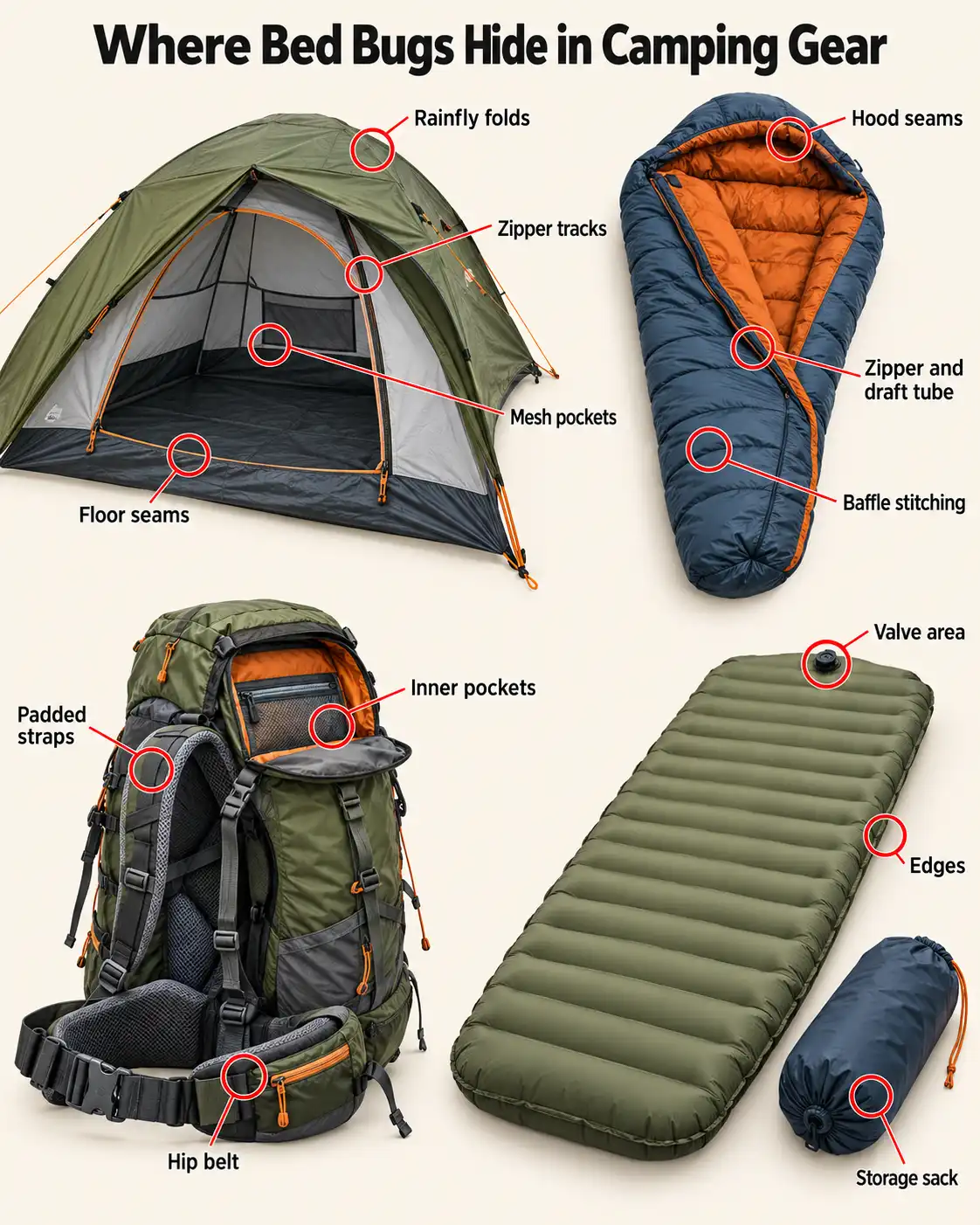
Where bed bugs hide in camping gear
- Tent: floor seams and corners, zipper tracks, mesh pockets, the gear loft, and rainfly folds
- Sleeping bag: the zipper and draft tube, hood seams, baffle stitching, and the stuff sack
- Backpack: padded straps, the hip belt, inner pockets, and the back panel
- Sleeping pad: the area around the valve, the edges, and its storage sack
- Pillow and clothes: seams, folds, and cuffs
Start with the hood end of your sleeping bag. Entomologists tell travelers to check the pillow end of a hotel bed first. The same logic applies to your bag.
How to Keep Bed Bugs Out of Your Camping Gear
Most prevention happens off the trail, in the places you sleep before and after camping. A few habits at each stage keep hitchhikers out of your tent and your home.
Before you use someone else’s gear
Check borrowed, rented, and secondhand gear outside, before it goes into your car or home. Look for the signs listed above. If you can’t inspect it well, run the soft pieces through a hot dryer or freeze them first. University of Kentucky entomologists give similar advice for any secondhand clothing or fabric.
At hotels, hostels, and lodges
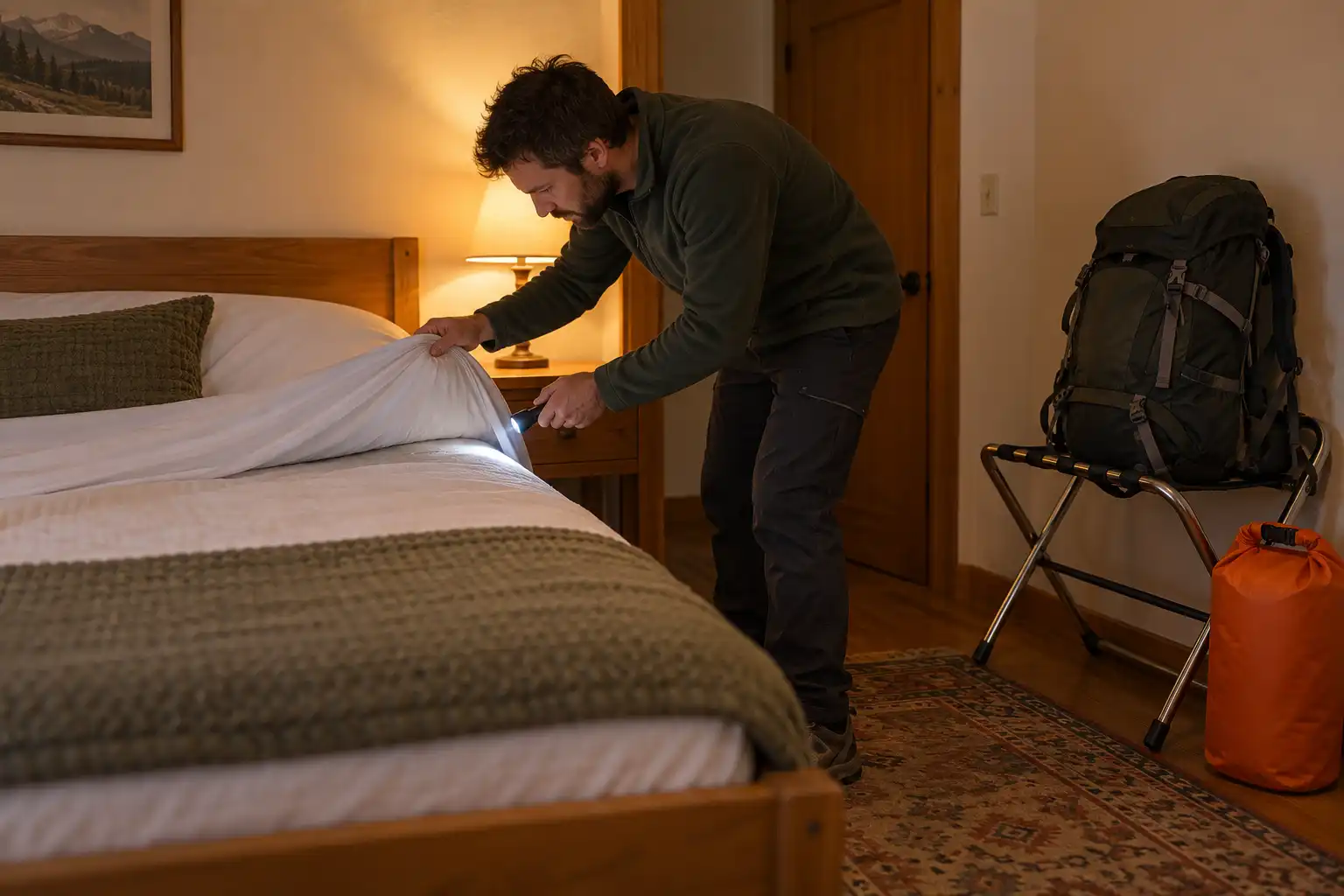
Potter suggests a few quick habits for travelers, and they work just as well before a camping trip:
- Check the sheets and mattress seams at the head of the bed with a flashlight before you unpack.
- Keep your pack on a luggage rack or table, off the bed and floor.
- Leave your tent and sleeping bag sealed in a dry bag or trash bag for the whole stay.
- Ask for a room in another part of the building if you spot bugs.
If you sleep in your own bag on lodge beds, heat-treat it once you’re home.
At camp
- Keep your bedding to yourself, since swapped sleeping bags and shared blankets move bugs between people.
- At crowded festivals, add a couple of heavy trash bags to your festival camping kit. Then seal your bedding in them while you’re out.
- Store clothes and bedding in zipped bags, not loose piles. The habits that keep a tent bug-free at night also leave a stray bed bug fewer places to hide.
When you get home
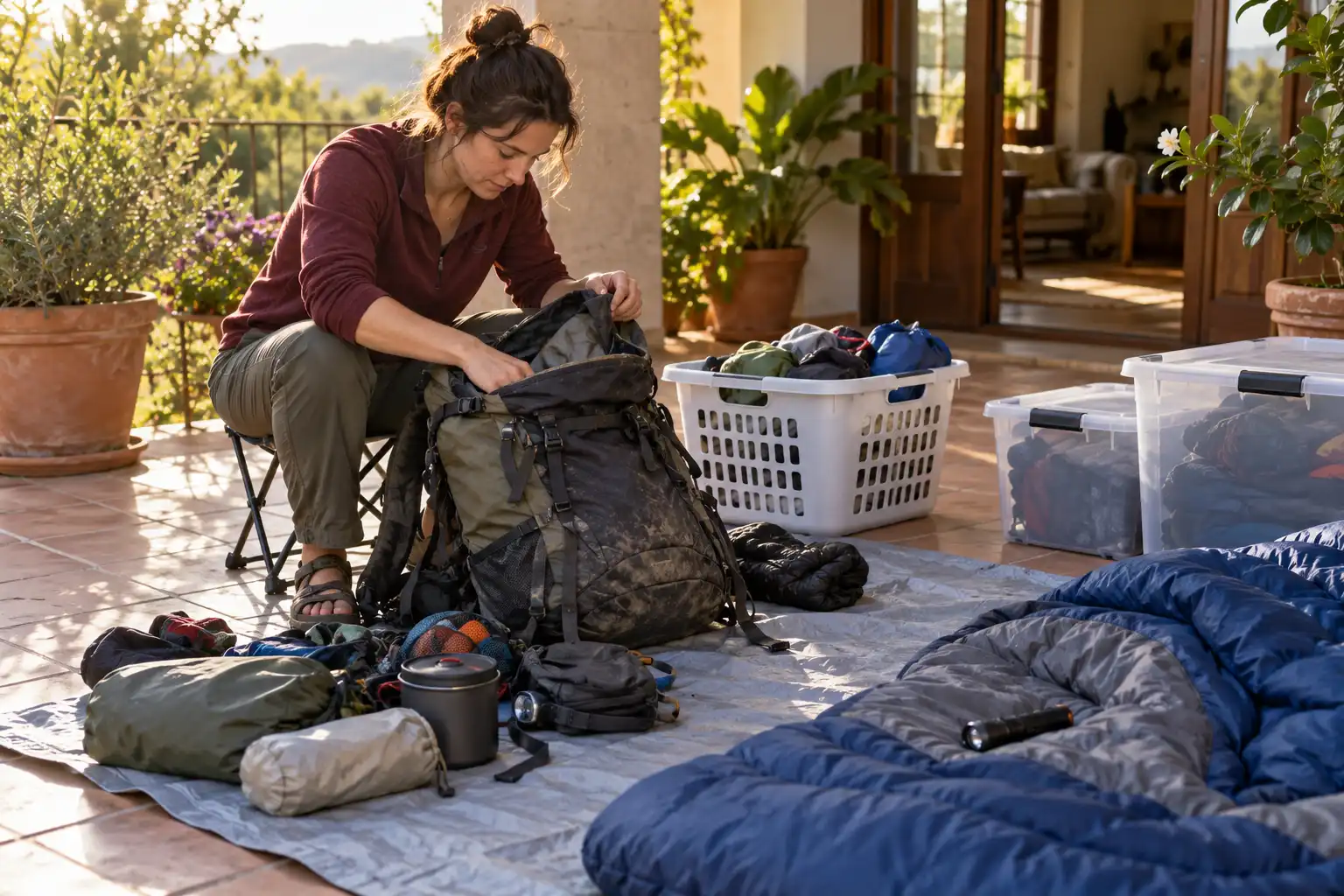
How you unpack decides whether a hitchhiker reaches your bedroom. I always unpack outside on the veranda, never on my bed or sofa. After that, I follow three steps:
- Put clothes, liners, pillowcases, and stuff sacks straight into the dryer.
- Inspect the tent, sleeping bag, and pack using the checklist above.
- Store clean gear in sealed plastic bins away from your bedroom. Never keep it under the bed, a favorite bed bug hiding spot.
How to Kill Bed Bugs in Camping Gear
Heat and deep cold both kill bed bugs, so match the method to what each piece of gear can handle.
| Gear | Best method | Tips |
|---|---|---|
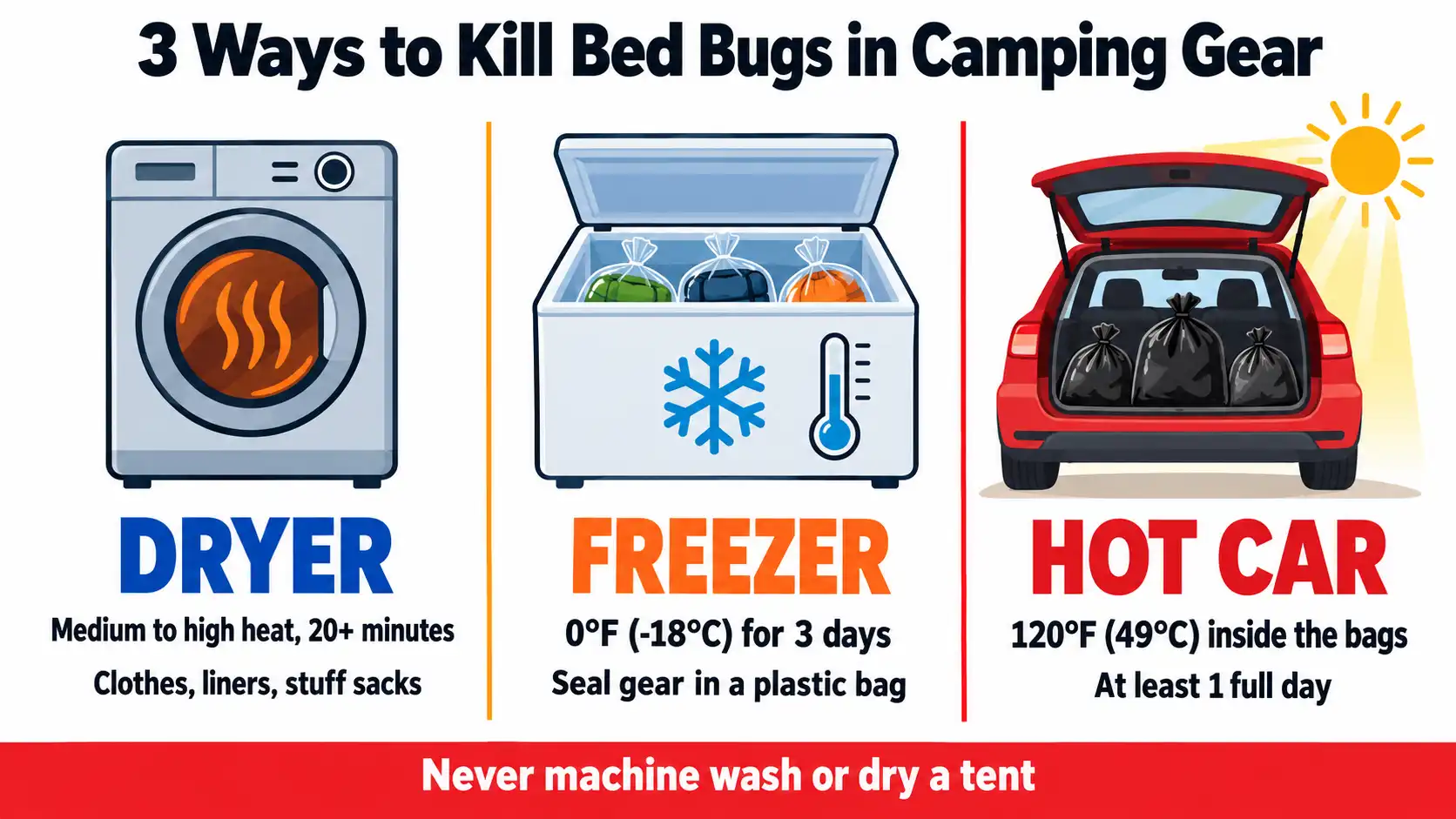
| Clothes, liners, stuff sacks | Dryer | Medium to high heat for at least 20 minutes |
| Sleeping bag | Large dryer or freezer | Medium heat if the label allows; otherwise, freeze it |
| Backpack | Freezer, or dryer if the tag allows | Empty every pocket first |
| Tent and rainfly | Freezer or hot car | Never machine wash or dry a tent |
| Sleeping pad | Freezer | Heat can damage many pads |
| Stove, pots, cooler | Inspect and wipe | Bed bugs prefer fabric, so hard gear is low risk |
You don’t need to wash anything first, because the dryer heat does the killing. Bulky sleeping bags take longer to heat through, so give them 30 minutes or more in a big front-loading dryer. If the bag needs a wash anyway, follow the steps for washing a sleeping bag safely. Tents are different, though. Tumbling and high heat can peel seam tape and damage the waterproof coating.
Freezing works for almost anything
The EPA says to seal items in a plastic bag and keep them in a freezer at 0°F (-18°C) for three days. Many home freezers don’t get that cold, so check yours with a thermometer first. Pack items loosely so the cold reaches the middle. Afterward, let the bag warm up before you open it, so moisture forms on the plastic instead of your tent.
A hot car works in summer
For gear that won’t fit in a freezer, Potter suggests a closed car parked in hot sun. Pack the gear loosely in black trash bags and leave it for at least a day. Use a thermometer to confirm the middle of the bags reaches 120°F (49°C). The EPA warns that results depend on your climate, so save this for hot, sunny weeks. For tents, I stop at a day or two, because long, high heat is hard on waterproof coatings.
Vacuuming helps, but skip the bug bombs
Before freezing or heating, run a vacuum crevice tool slowly along tent and pack seams. Bed bugs can survive the trip through the hose. So seal the contents in a plastic bag and toss it in an outdoor trash can. Also, skip bug bombs, rubbing alcohol, and bleach. Entomologists warn that these don’t work well against bed bugs and can cause fires or other harm.
If you find bed bugs during a trip
Seal your sleeping bag, liner, and clothes in trash bags right away, and keep them sealed until you get home. On the drive back, put the bags in the trunk, not on the seats. Then head straight to the dryer or freezer when you arrive.
When to call a pest control pro
Call a licensed pest control company with bed bug experience if you find bugs in your bed, couch, or bedroom. At that point, the problem has moved past your gear. Early detection and treatment make an infestation easier to control, according to the CDC, so don’t wait.
Frequently Asked Questions
Can my dog bring bed bugs into the tent?
It’s unlikely. Bed bugs can bite dogs, but they don’t live on animals the way fleas and ticks do. After feeding, they crawl off to hide. So your dog’s blanket or bed carries more risk than the dog does. Toss it in the dryer with your other bedding.
Will freezing nights on a winter trip kill bed bugs?
Not reliably. Bed bugs need steady cold, and temperatures below 32°F (0°C) take one to two weeks to kill them. Daytime temperatures often climb back above freezing, too. Besides, while you’re inside your sleeping bag, it stays warm enough for any bugs hiding in it.
Does bug spray keep bed bugs away?
No, not reliably. Repellents made for mosquitoes and ticks don’t seem to work as well on bed bugs, according to Potter. He also advises against putting repellent on at bedtime. Instead, check where you sleep and treat your gear.
Do bed bugs spread disease?
No. As far as the CDC and other health experts know, bed bugs don’t spread disease to people. The bugs can carry germs, but researchers haven’t proven that they pass them to humans. They mostly cause itching and lost sleep.
Should You Worry About Bed Bugs When Camping?
Not much. Bed bugs don’t live in the woods. In fact, your own tent in the backcountry is one of the safest beds on any trip. The real risk comes from hotels, hostels, lodges, and borrowed gear. So check every bed you use on the way, keep your bedding sealed, and unpack outside when you get home. If a few ride along anyway, a dryer, freezer, or hot car can stop them before they reach your bedroom.