How to Dispose of Grey Water When Camping: The 200 Foot Rule

Grey water is the dirty wash water you produce at camp, and tipping it out in the wrong spot does real damage. Here I cover where it should go and how far from water you need to be. I also explain the rules for campgrounds, backcountry sites, and RVs.
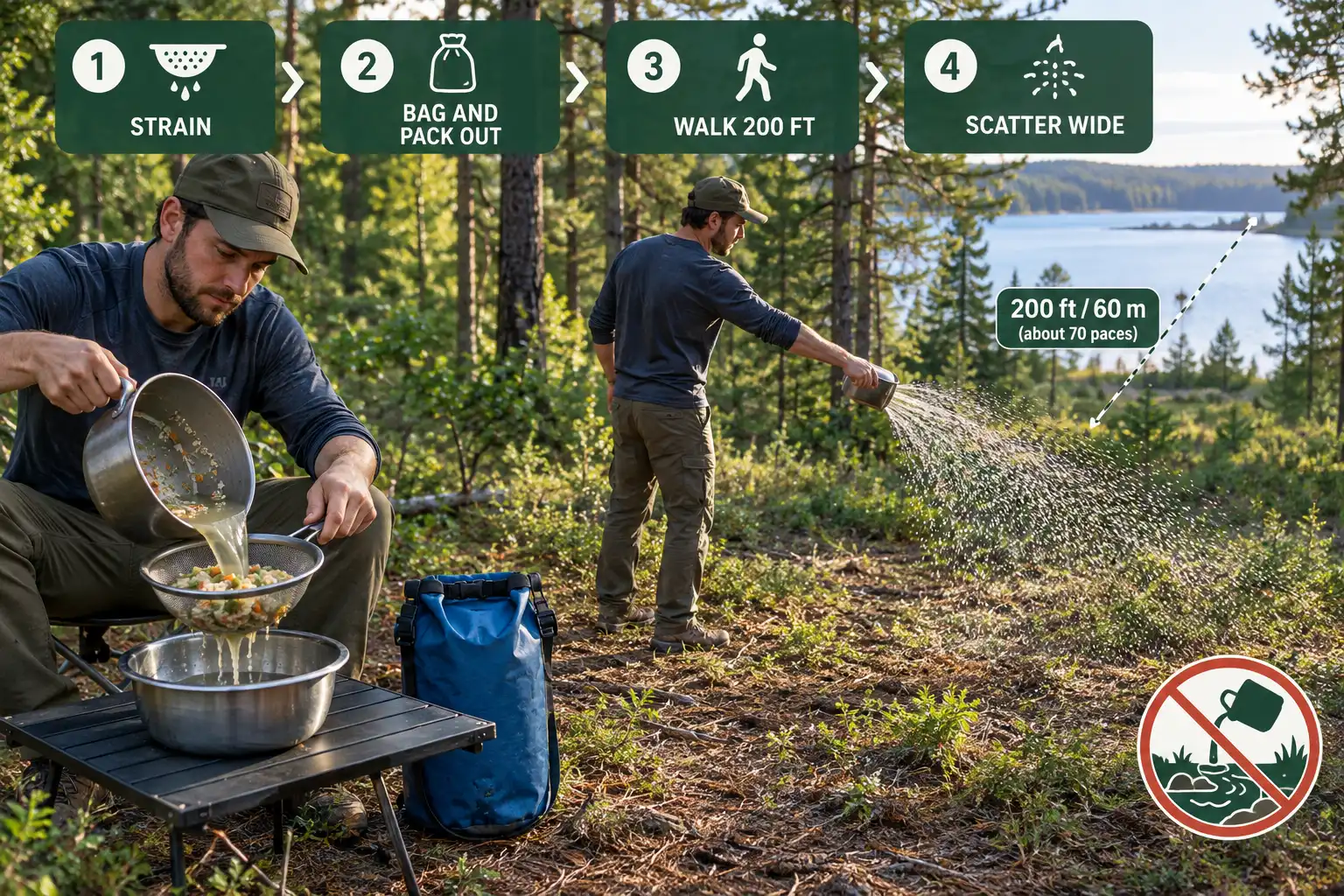
Strain the food particles out of your wash water first, bag them, then pack them out with your trash. After that, use a campground utility sink or grey water station if one exists. Otherwise carry the water at least 200 feet from any lake, stream, camp, or trail, and scatter it wide across absorbent ground.
What counts as grey water when camping?
Grey water is any wastewater you make at camp except toilet waste. Dishwater counts. So does pot rinse water, shower runoff, laundry water, and the water you spit out after brushing your teeth. Toilet waste is black water instead, and that follows completely separate rules.
You will see both spellings on signs. “Grey water” and “gray water” mean the same thing, though American agencies usually print it as gray water.
The liquid looks harmless. However, it carries three things that cause trouble outdoors. First, food particles teach animals that campsites hold food. Second, cooking oils coat soil and slow the way it drains. Third, soap surfactants lower the surface tension of water, which kills the aquatic insects that feed fish and frogs.
Volume matters as well. One camper tipping out a small dishpan barely registers on the land. Meanwhile, a popular site soaking up dozens of dumps a week turns sour, soggy, and thick with flies.
Where should you dump grey water when camping?
Use a facility built for the job whenever one exists, and only scatter water on open ground when nothing else is available. Leave No Trace ranks the choices in that order, and campground rules usually back it up.
Work down this list:
- A campground utility sink or dishwashing station.
- Any dedicated grey water disposal unit, which larger campgrounds often provide.
- The dump station, which is the right place for any RV or trailer tank.
- A flush toilet, but only when staff give you the go ahead.
- Strained water scattered at least 200 feet from water, camp, and trails.
Posted rules always outrank general advice. Therefore read the site board or ask a host before you assume scattering is fine. Many developed campgrounds ban ground dumping outright, because the same patch of dirt takes a hit every night of the season.
Your options also change with the type of site. Facilities and expectations differ quite a bit between campgrounds and remote backcountry sites, so check what your site provides before dinner rather than after.
The strain and scatter method step by step
- Scrape and wipe first. Get the leftovers off your plates with a spatula or a paper towel before any water touches them. Less residue means less grey water.
- Wash in a basin, never in the stream. Carry water away from the source in a pot or a collapsible bowl.
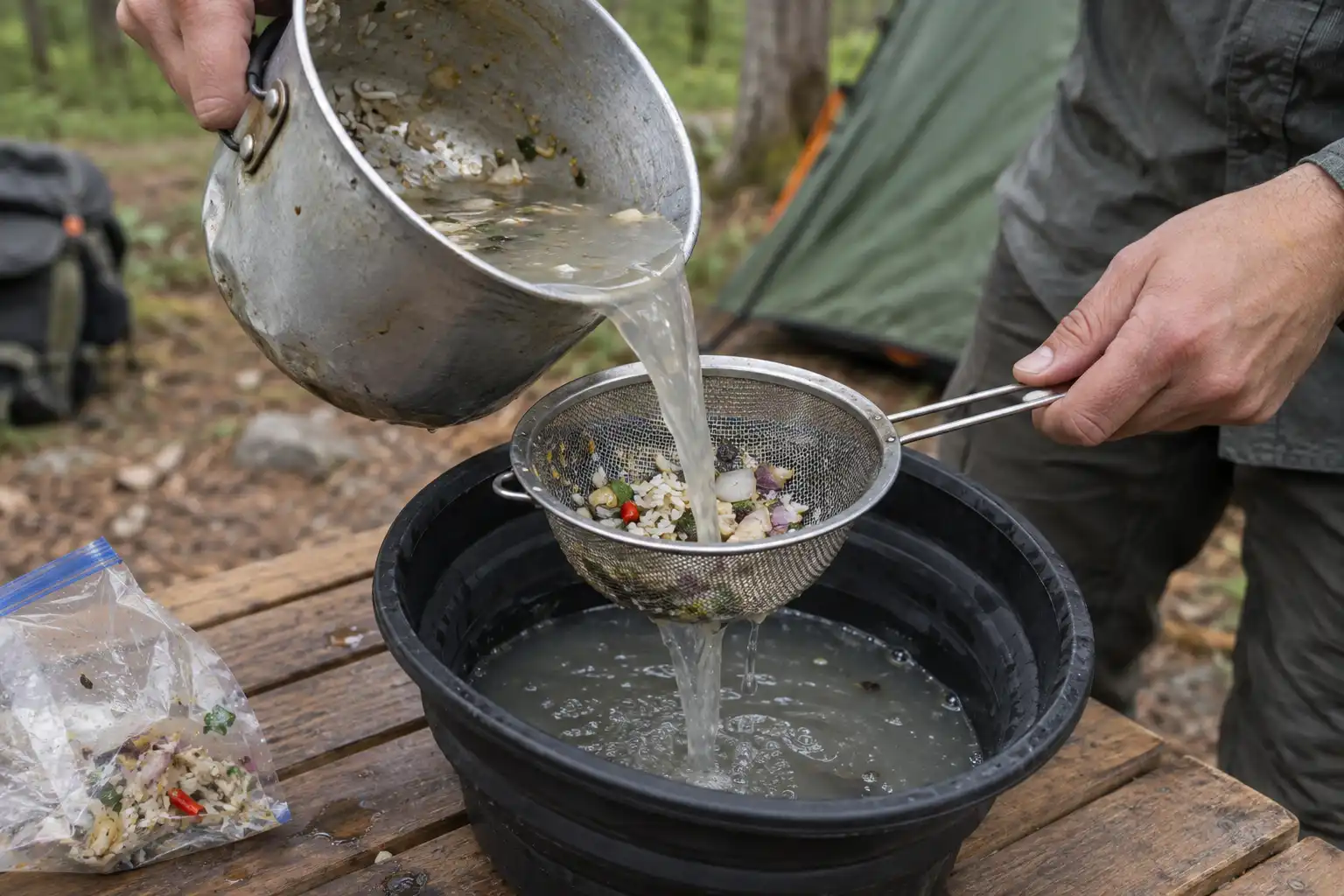
- Strain the water. Pour it through a fine mesh strainer, a bandana, or a square of window screen into a second container.
- Bag the solids. Put every scrap into a sealed bag and pack it out. Buried food scraps still pull in animals, so store food out of reach at camp and treat the strainer contents the same way.
- Walk 200 feet out. Move away from water, camp, and the trail before you pour anything.
- Broadcast, do not pool. Fling the water in a wide arc across leaf litter or soil. A wide spray soaks in and breaks down. One concentrated puddle sits there and stinks.
- Treat the rinse water the same. Whatever you use to clean the strainer and basin is grey water too.
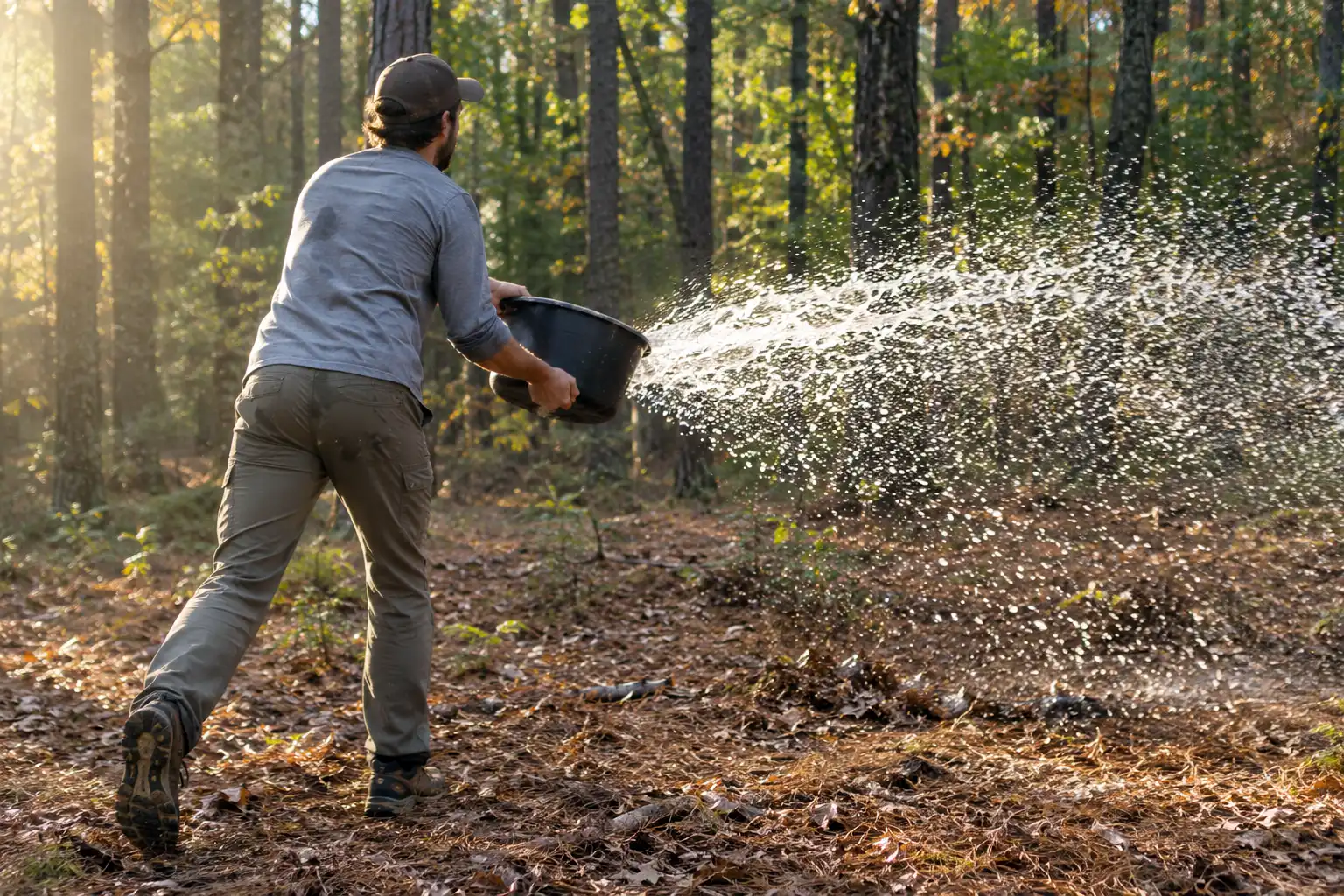
How far from water should grey water go?
At least 200 feet, which works out to roughly 70 adult paces or about 60 meters. Leave No Trace applies that same buffer to washing, scattering dishwater, and digging catholes. Keep the distance from your camp and from the trail as well, not just from the lake.
Go further than 200 feet in a few situations. Sloping ground sends water back downhill, so move well to the side of any drainage. Thin, rocky soil filters poorly. Heavily used sites already hold everyone else’s wash water.
Bear country calls for extra care. Bears follow food smells from a long way off, so scatter your dishwater well downwind of where you sleep. I keep that distance honest in hill camps back home too, because wild pigs show up fast once they smell rice water. If a black bear wanders into your campsite, a clean kitchen and a distant scatter zone keep the visit short.
That buffer protects drinking water for everyone downstream, including you. Soil needs room to filter soap and food before anything reaches groundwater. Even so, treat what you collect, since purifying water you gather in the backcountry stays necessary regardless.
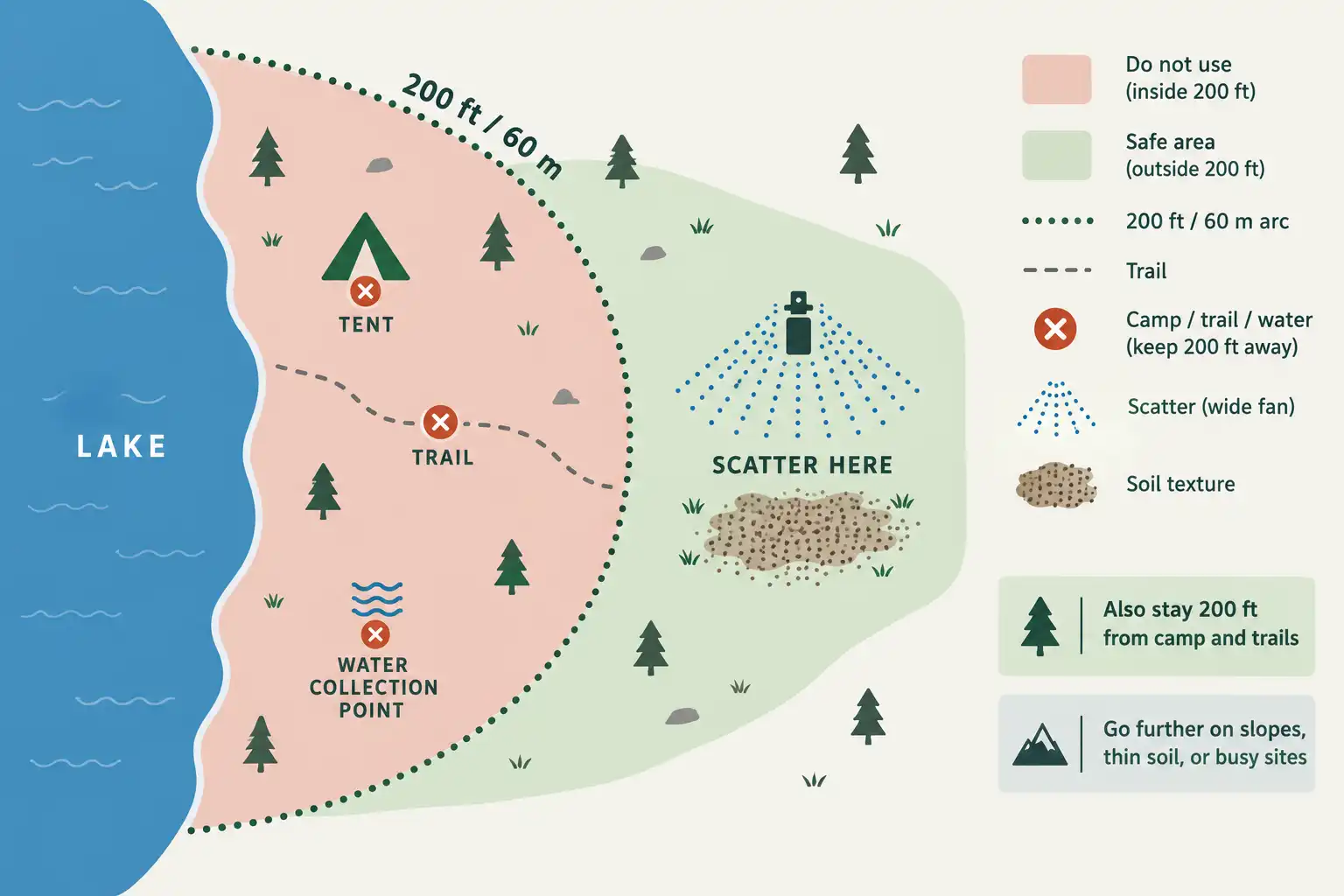
Grey water rules in developed campgrounds
Developed campgrounds almost always want your grey water in a facility, not on the ground. Some provide a utility sink, others install a dedicated grey water disposal unit, and a few allow strained water down a flush toilet. Look for signage at the restroom block or the dump station.
The reason is repetition. Your site hosts a different group every night through the season. Food residue, grease, and soap build up in that one square yard. The result is smell, soggy soil, insects, and animals that learn to check the site. Poorly drained wet patches also breed the sort of swarm that makes keeping flies off your camp kitchen a lost cause.
Bear-managed parks go further. Several direct campers to carry all wash water to a designated sink rather than tip it out at the site. That instruction usually appears on the sheet you sign at check in, so read it before you cook.
Do not improvise a drain either. Digging a sump at a developed site counts as digging, which most parks prohibit, and the hole becomes someone else’s problem next week.
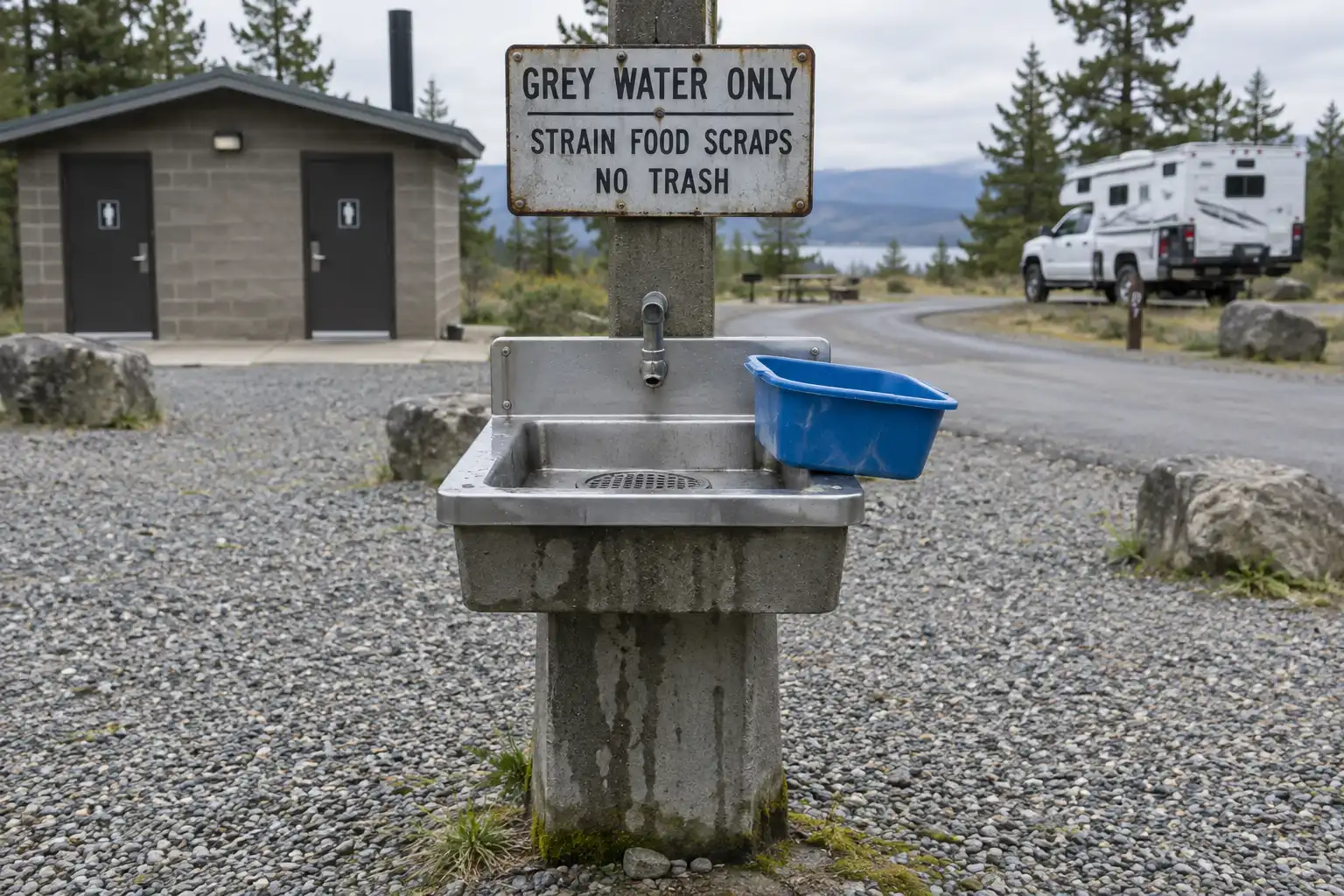
RV and trailer grey tanks are a different matter
Never drain an RV grey tank on the ground. Use a dump station instead. The issue is volume, since a dishpan holds a couple of quarts while a grey tank holds 30 to 50 gallons.
Federal rules are blunt about it. Forest Service regulation 36 CFR 261.11 covers garbage, sewage, and waste water alike. You must either carry it off the site or use a receptacle the agency provides. The same section also prohibits placing anything in or near a stream or lake that may pollute it. National Park Service sanitation rules likewise send trailer waste water to designated facilities only.
BLM land carries its own wording, and field offices often apply stricter local orders on top. So do not read one general clause as blanket permission.
Dump stations are easier to find than most new RV owners expect. They turn up at RV parks, public campgrounds, rest areas, truck stops, and some gas stations. Fees range from free to roughly 20 dollars.
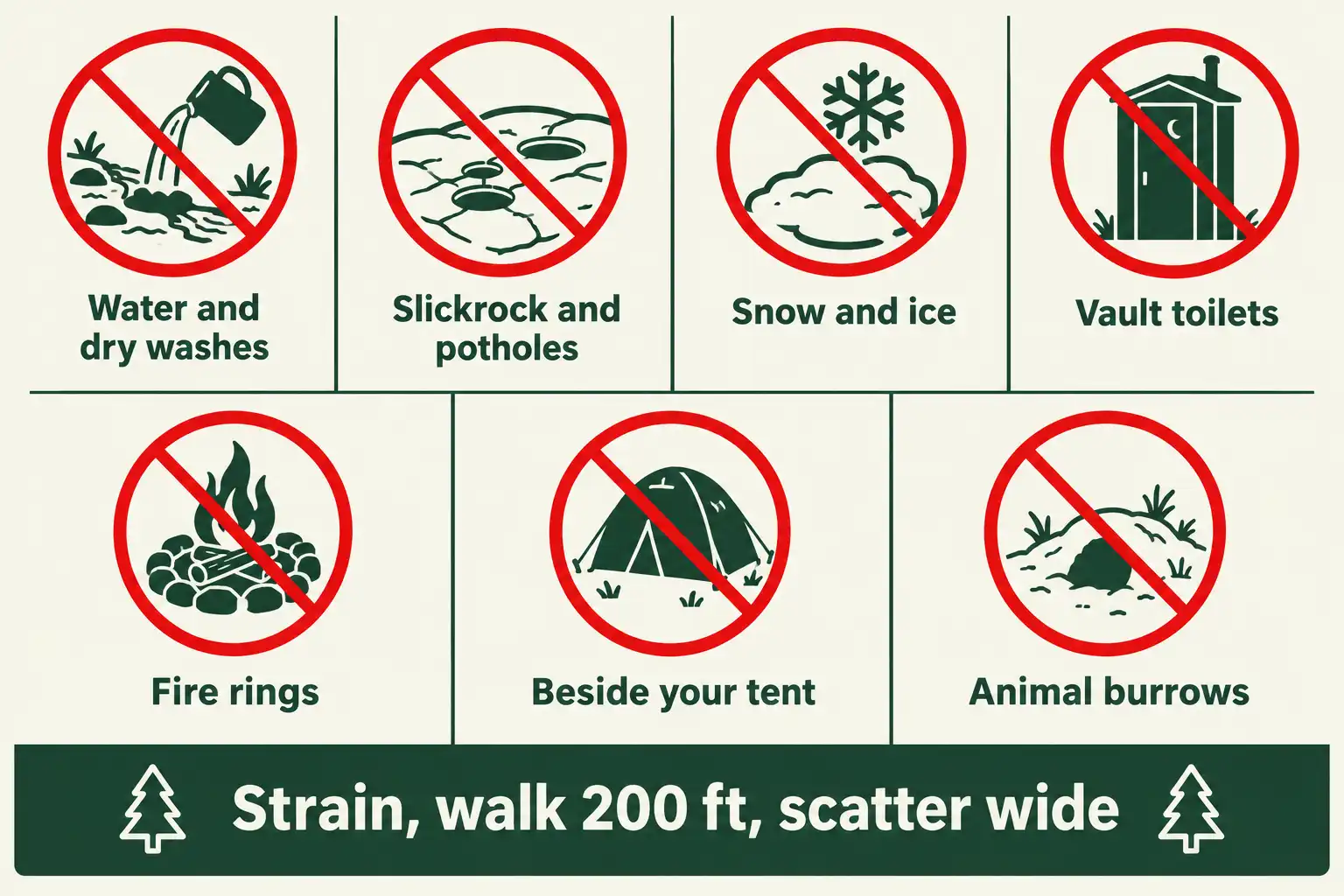
Places you should never pour grey water
- Into or near any water. Lakes, streams, springs, marshes, and dry washes are all off limits, even with biodegradable soap.
- On bare rock or slickrock. Nothing filters it, so it runs straight into the nearest crack or pothole. Desert potholes hold tiny ecosystems that soap wipes out.
- On snow. Snow holds the residue in place, then releases all of it into the melt stream at once.
- In a vault toilet. Most sites prohibit this, because extra liquid disrupts the composting process and raises pumping costs.
- In the fire ring. Food-scented ash attracts animals, and wet ash is unpleasant for the next group.
- Right beside your tent or kitchen. Wet, food-scented ground next to where you sleep invites everything you do not want.
- Down an animal burrow. It looks like a convenient hole. It is somebody’s home.
Also skip the dig-a-hole habit unless the land manager specifically sanctions a sump at that site. Otherwise a strained, wide scatter beats a buried puddle almost every time.
Snow, desert, and river trips need different handling
Fragile ground changes the math, so adjust your method to the terrain.
Snow and alpine zones give you almost no working soil. Cold slows the microbes that break soap down, and meltwater then carries residue downhill in spring. Therefore use the smallest amount of unscented soap possible, or skip soap entirely, and follow whatever the local ranger district specifies.
Desert camping brings the same problem for different reasons. Soil is thin, microbes are sparse, and potholes sit in the rock collecting whatever lands nearby. Scatter on durable ground well away from washes, or carry the water out when the permit says so.
River corridors often run on written rules. Several permitted stretches require boaters to strain dishwater first. The strained liquid then goes into the main current of the river, never a back eddy. Boaters pack out every solid scrap. Most river offices also ban soap in side streams and springs outright.
Read the permit conditions for your specific stretch, because these rules differ from one river office to the next.
How to make less grey water in the first place
Less wash water means less to dispose of, and that is the easiest win available here.
- Cook one pot meals. Fewer pans means less scrubbing. A single pot dinner for four leaves almost nothing behind.
- Serve accurate portions. Leftover food becomes food waste, which then becomes strainer contents.
- Wipe before washing. A rubber spatula and a paper towel remove most of the mess dry.
- Drink the rinse. Many backpackers pour a little hot water into the pot, swirl it, and drink it. Nothing to dispose of at all.
- Use two small basins. Wash in one, rinse in the other, and you use a fraction of a running rinse.
- Skip greasy menus on fragile ground. Oil is the hardest residue to handle responsibly.
On short trips I often finish the whole evening with under a liter of wash water. That fits in one wide scatter and takes about a minute to handle properly.
Does biodegradable soap make grey water safe?
No. Biodegradable soap still needs soil microbes to break down, so the label does not make your wash water harmless. The process takes time and the right bacterial conditions, and in water those compounds persist for a while.
Cold, dry, alpine, and desert ground slows that breakdown further, sometimes for months. Therefore the label changes nothing about the 200 foot rule.
Some soap habits that make disposal cleaner:
- Use a few drops rather than a squeeze.
- Pick unscented formulas for bear country.
- Go soap-free for water-only cleanups, which handles most meals.
- Rinse with a bottle over soil instead of in a lake.
FAQs about grey water disposal

Can you dump dishwater in a campground fire pit?
Is burying grey water in a hole better than scattering it?
How do you strain dishwater without a strainer?
Can you pour grey water down a storm drain?
Leaving the site clean
Grey water disposal takes about two extra minutes, and it protects the water everyone downstream drinks. Strain it, bag the solids, then use a sink or station when one exists. When it does not, walk 200 feet from water, camp, and trail, and fling the water wide instead of dumping it in one spot. Read the posted rules at every site, because those beat any general guidance, including mine. Build the habit once and you leave the site exactly as you found it.