Tips on What to Wear When Camping in the Summer

Summer camping clothing has one job: keep you cool, dry, and protected without slowing you down. After plenty of hot trips around Kaptai Lake and the Bandarban hills, I’ve learned what actually works when the air is heavy and the sun sits close. This guide covers fabrics, layers, footwear, sun gear, and bug protection so you can pack a kit that handles real heat, sudden rain, and chilly nights without overpacking.
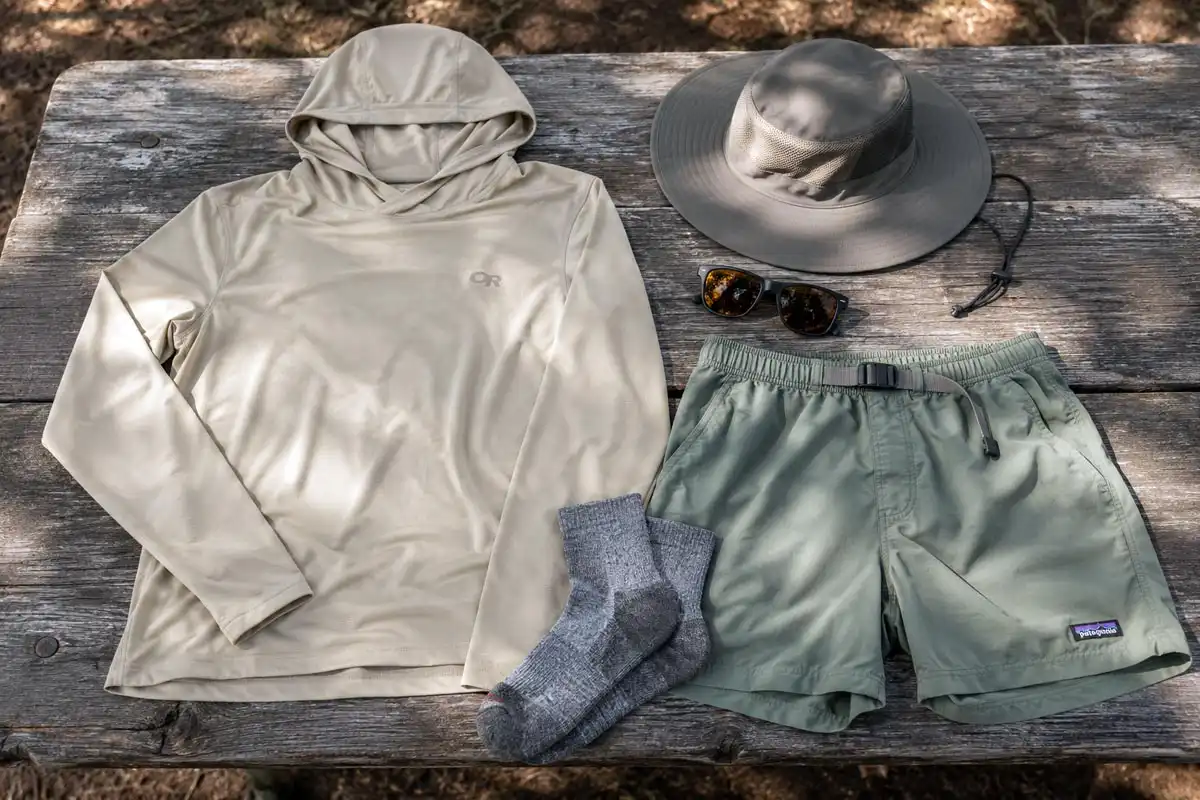
For summer camping, wear loose, light-colored, moisture-wicking shirts and pants made from synthetic blends or merino wool. Pair them with breathable trail shoes, quick-dry socks, a wide-brim hat, sunglasses, and a packable rain shell. Also skip cotton, pack one warm layer for nights, and treat clothing with permethrin if bugs are bad.
Fabrics That Actually Work in Summer Heat
Fabric matters more than the outfit itself. I learned this the hard way on a humid trek to Nafakhum, because my cotton tee stayed soaked for hours after a river crossing.
The fabrics I trust for summer:
- Polyester and nylon blends. They dry fast, wick sweat, and weigh almost nothing.
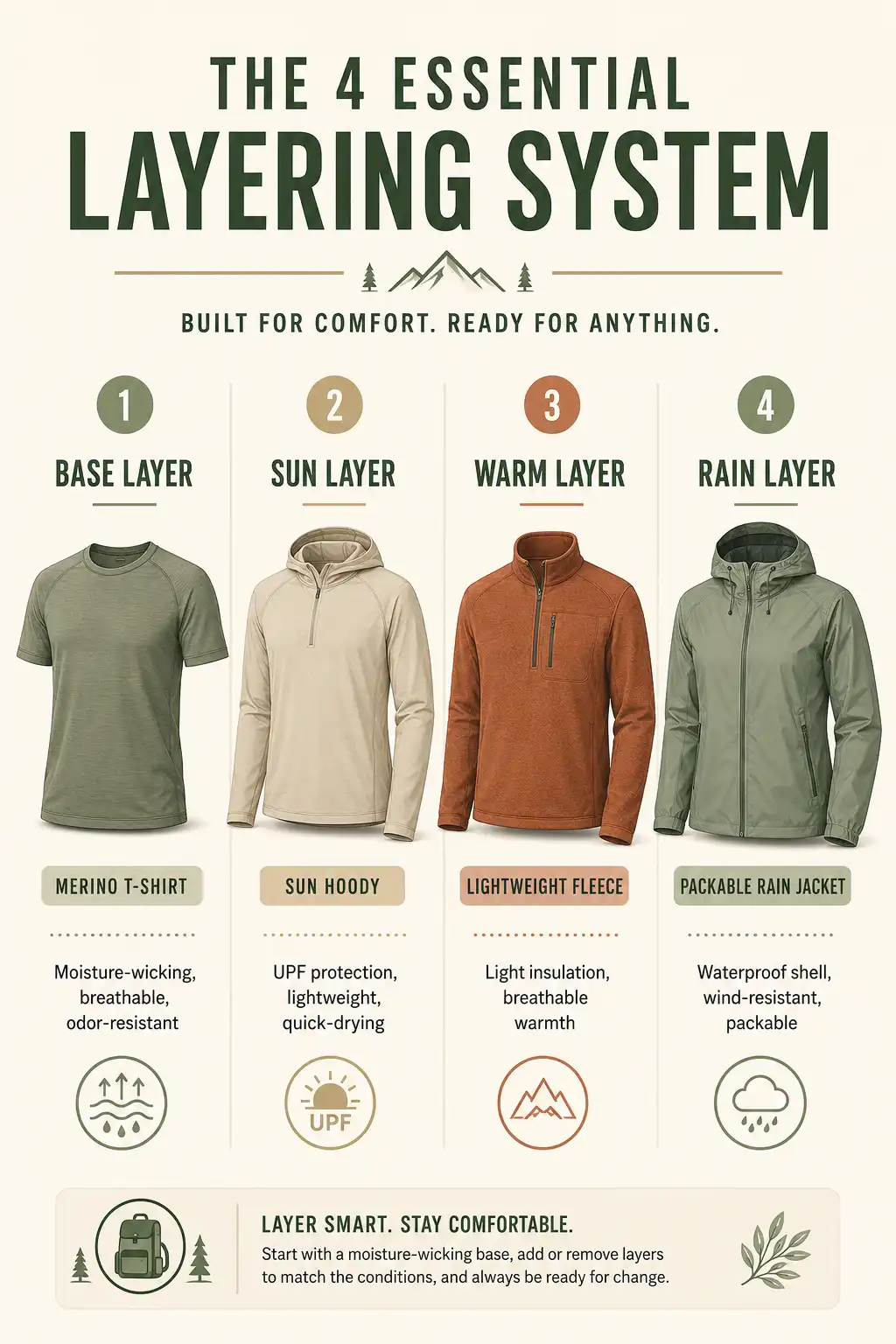
- Lightweight merino wool. It breathes well, resists odor on multi-day trips, and stays comfortable even when damp.
- Bamboo and Tencel blends. These are soft and breathable, and great for sensitive skin.
Cotton is the one to avoid. It soaks up sweat, holds it against your skin, and chills you fast if temperatures drop or rain hits. So even on the hottest day, leave cotton tees at home.
Top Layers: Shirts and Sun Hoodies
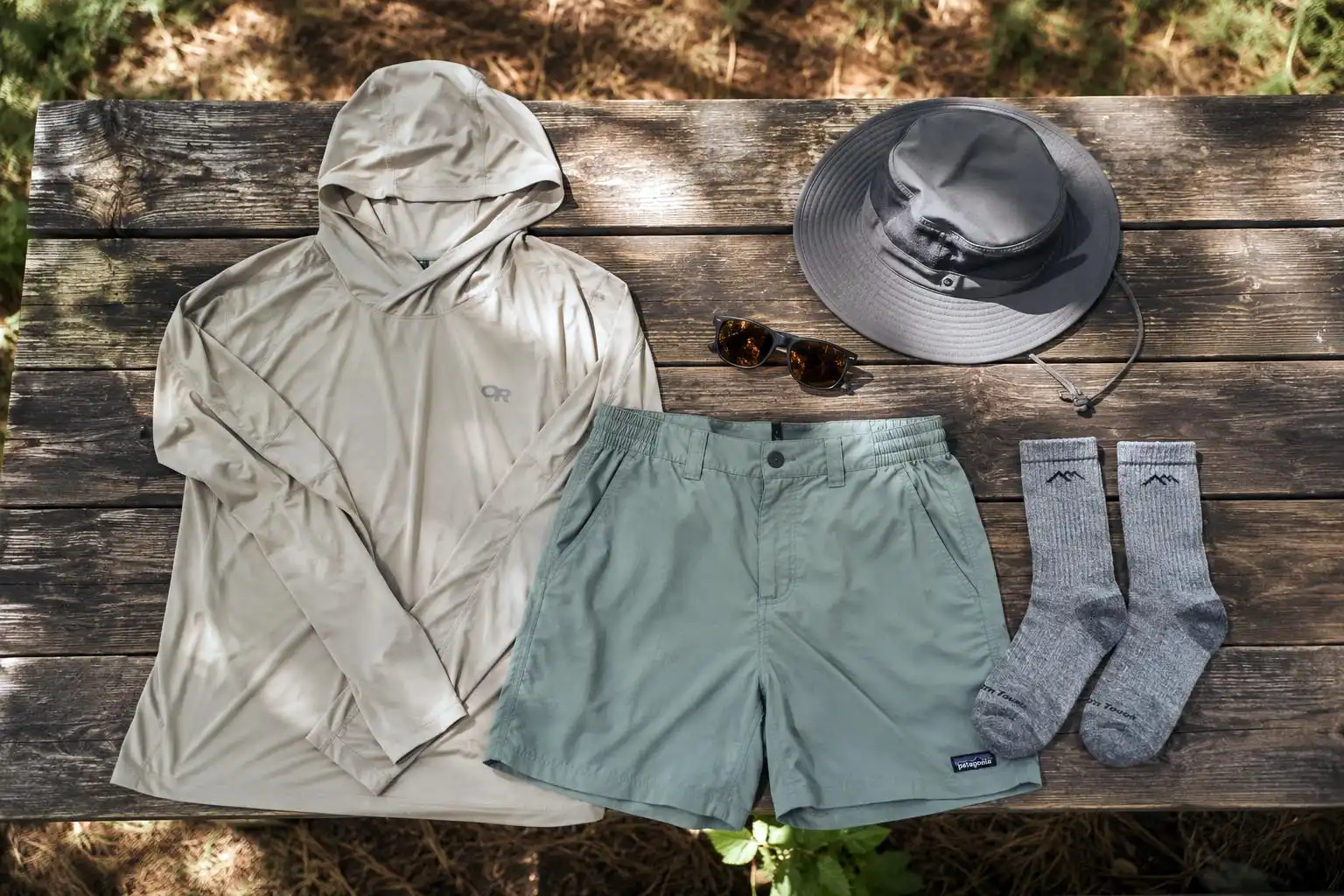
Start with a short-sleeve technical tee for camp and easy trails. Then add a long-sleeve sun hoody for hiking, paddling, or sitting around a smoky fire. A loose sun hoody often feels cooler than a short-sleeve shirt, because it blocks direct sun from your arms and neck.
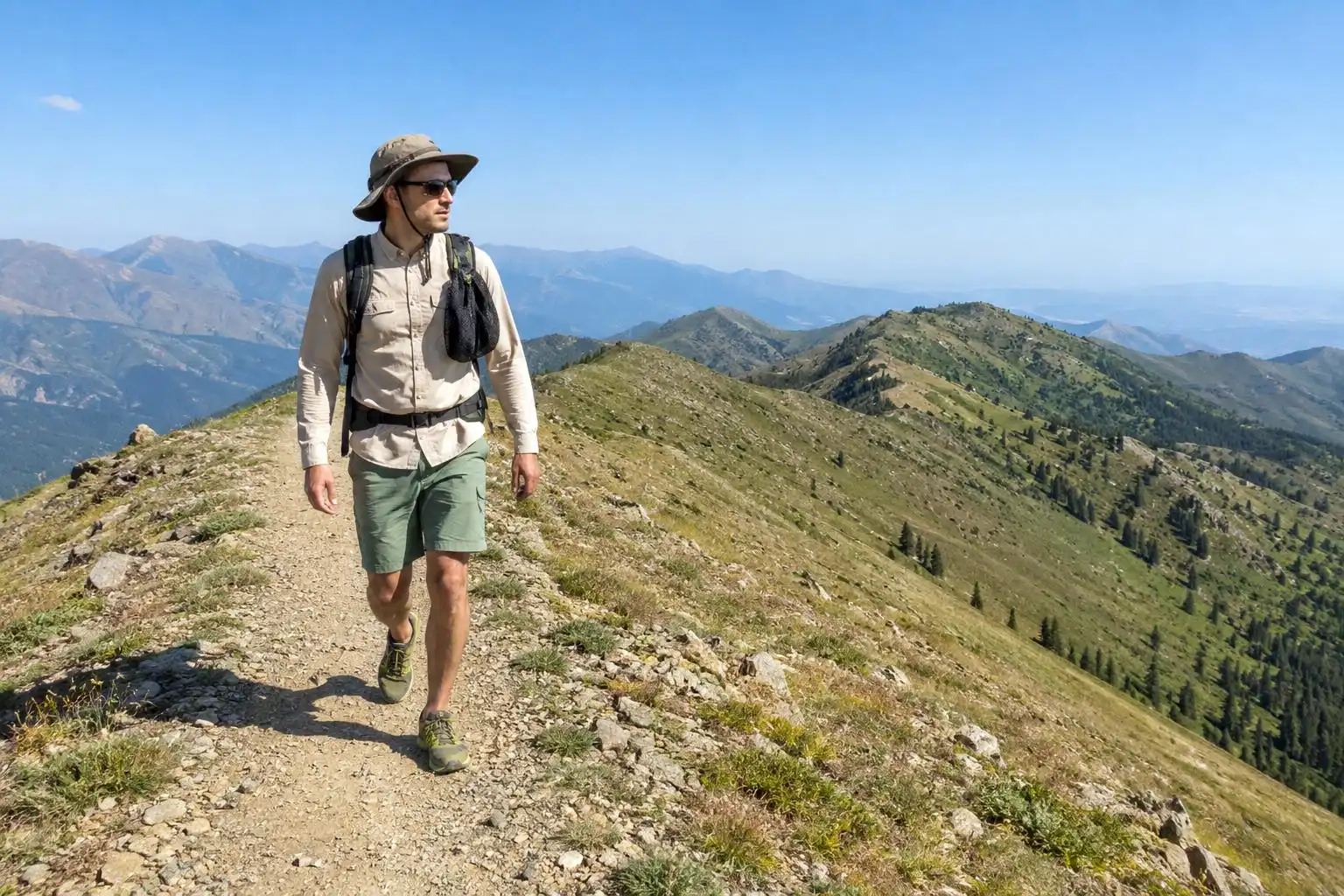
Also look for shirts with a UPF 30 or higher rating if you spend long hours under open sky. Light colors like sand, sage, and pale blue reflect more heat than black or navy.
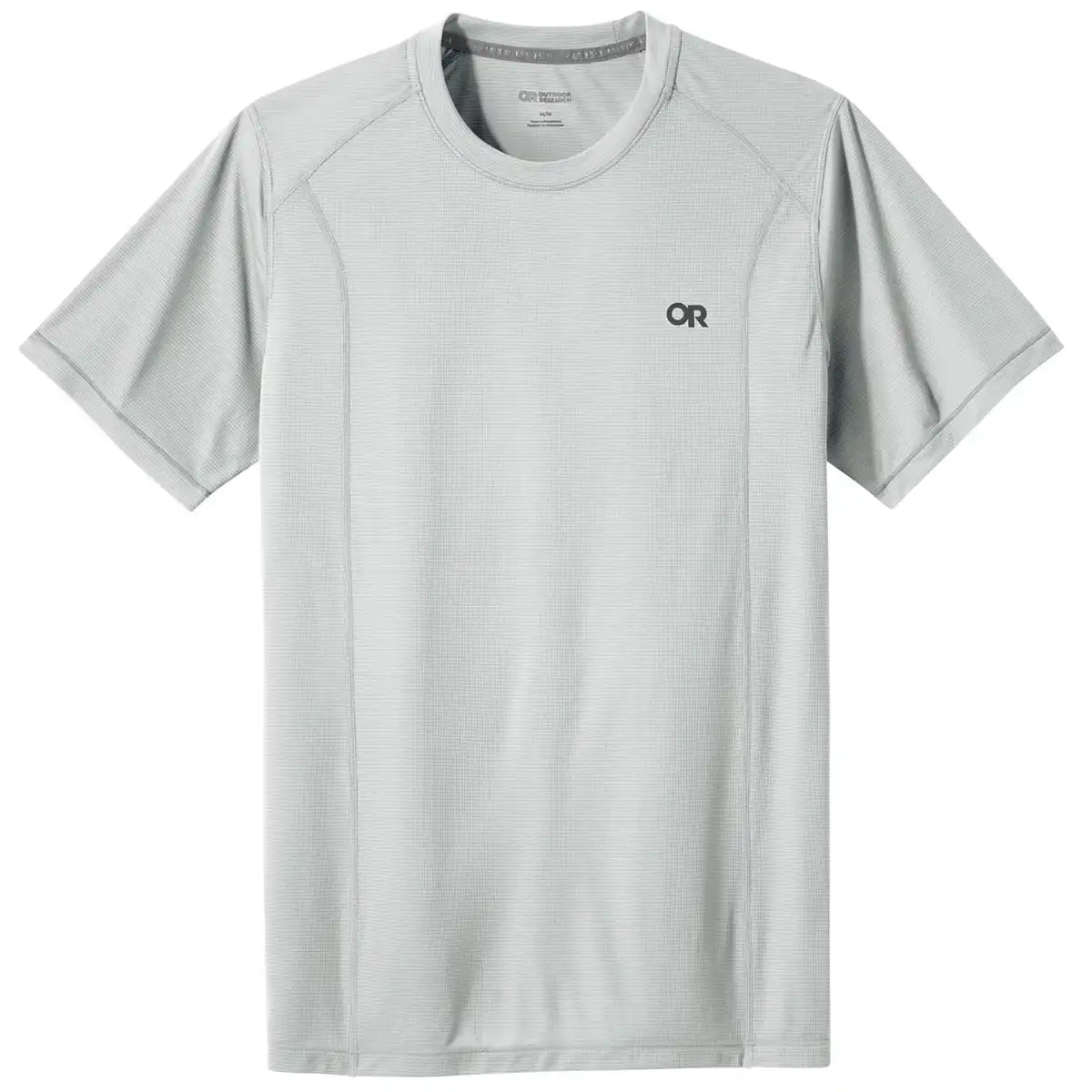
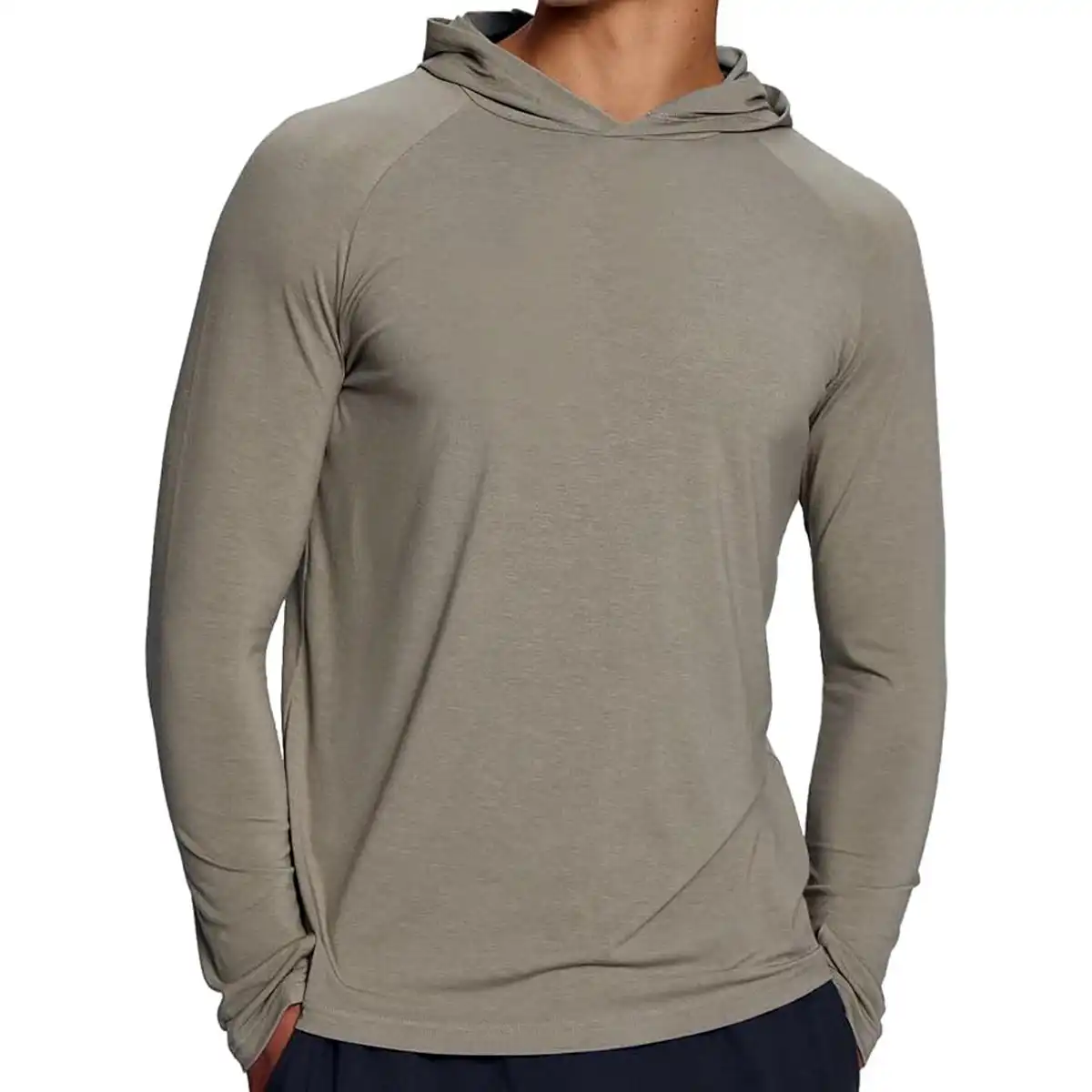
For evenings, pack one lightweight fleece or a packable down vest. Summer nights in the hills get cooler than most people expect, especially near rivers and at higher elevations.
Bottoms: Shorts, Pants, or Both
Bring both if you have room. Quick-dry hiking shorts work for hot afternoons and water crossings, while lightweight nylon pants protect against sun, brush, and mosquitoes after dark.
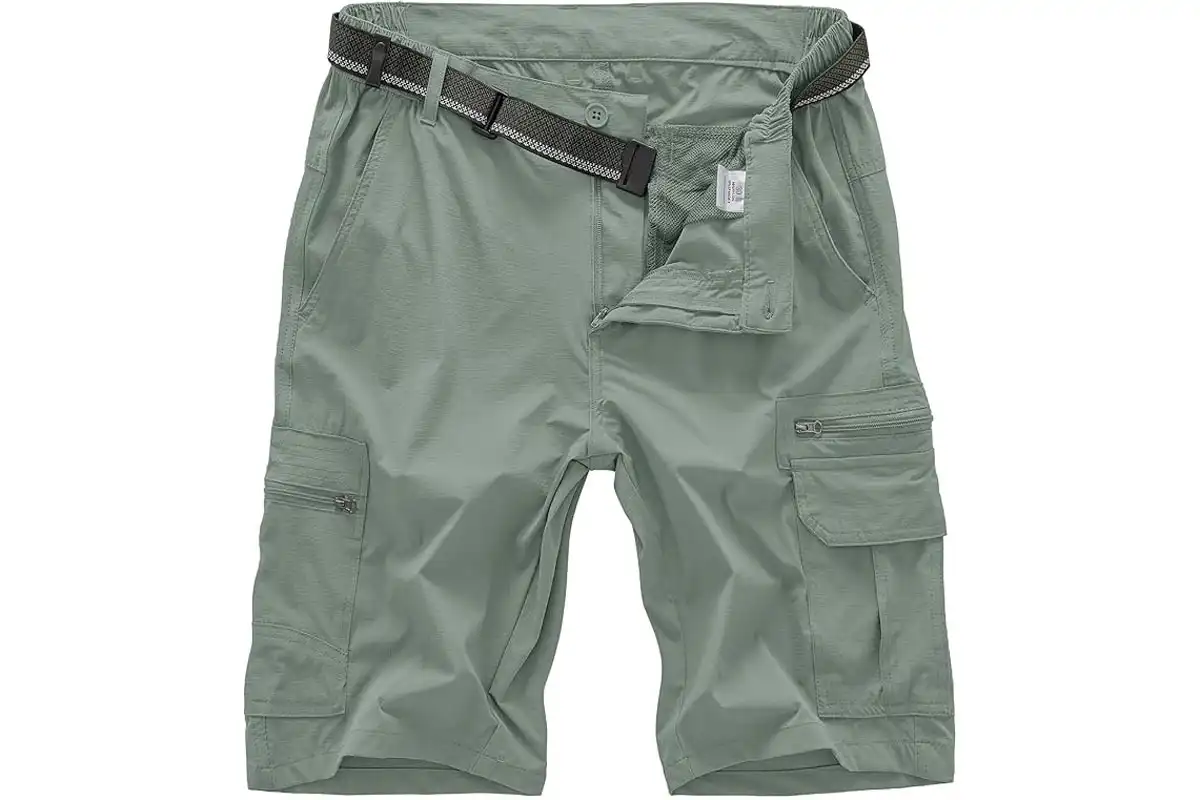
Convertible pants with zip-off legs sound clever, but the zippers chafe on long days. Personally, I’d rather carry one pair of shorts and one pair of pants. Also choose pants with a gusseted crotch for free movement and a few zippered pockets for small items.
If you sweat heavily, look for bottoms with mesh-lined vents on the thighs. They make a real difference on uphill climbs in still air. For more on managing heat while moving, my notes on staying safe while hiking in extreme heat cover pace, hydration, and timing.
Footwear and Socks
Hot weather is when foot care matters most. Sweaty feet blister fast, and wet socks turn a fun day into a painful one.
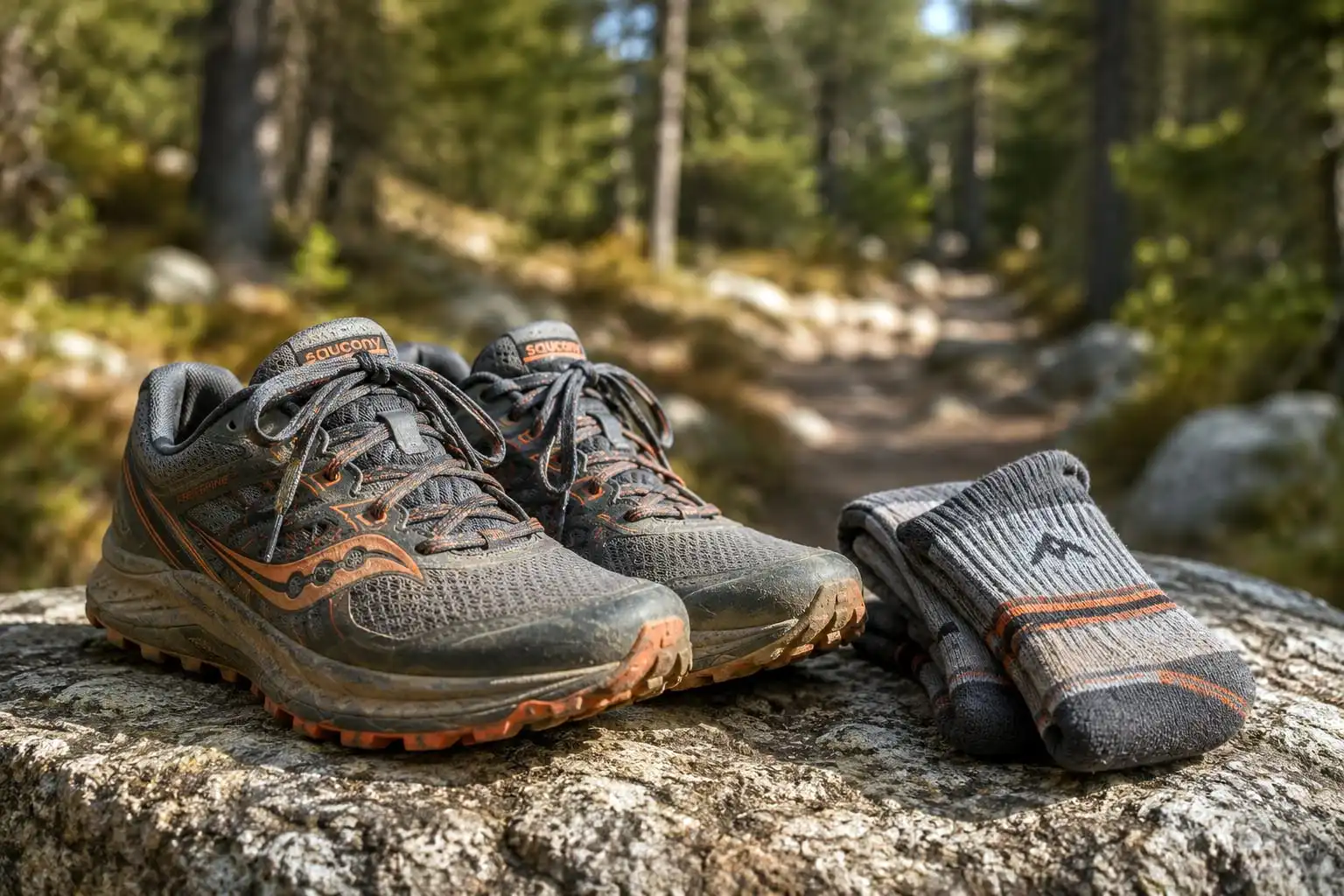
For most summer camping, trail running shoes or low-cut hiking shoes work better than full boots. They breathe, drain quickly after stream crossings, and dry overnight. However, if you’re carrying a heavy pack on rocky ground, mid-cut boots give more ankle support. My breakdown of hiking shoes versus boots for beginners explains when each makes sense.
For socks, skip cotton again. Instead, merino wool or synthetic running socks wick moisture and reduce friction. Also carry at least two pairs so one can dry on your pack while you wear the other. If your feet are prone to hot spots, my tips on preventing blisters on long hikes cover taping, lacing, and sock layering.
Finally, bring camp sandals or lightweight slides for the evening. After ten hours in shoes, your feet need air.
Sun Protection You Actually Wear
Sunscreen helps, but clothing is your first line of defense. A wide-brim hat beats a baseball cap, because it shades your ears, neck, and the sides of your face. Also look for one with a chin strap so wind doesn’t take it.
Sunglasses with UV 400 protection are non-negotiable on water and at altitude. For lens categories, my piece on choosing sunglasses for mountain trips goes deeper.
Sun exposure is strongest between roughly 10 a.m. and 4 p.m., so I plan harder hiking before or after that window when I can. For an official reference on outdoor sun safety, the CDC’s sun safety guidance is a solid source.
Bug Protection Built Into Your Outfit
Mosquitoes and biting flies can ruin a summer trip. The fix is partly clothing:
- Loose long sleeves and long pants keep bugs off skin without overheating.
- Permethrin-treated clothing repels mosquitoes, ticks, and chiggers for weeks. Treat shirts, pants, and socks at home a day before the trip.
- A head net weighs almost nothing and saves your sanity at dusk near water.
For more on managing bugs at camp, see my notes on keeping flies away during summer camping and dealing with mosquitoes on the trail.
What to Sleep In
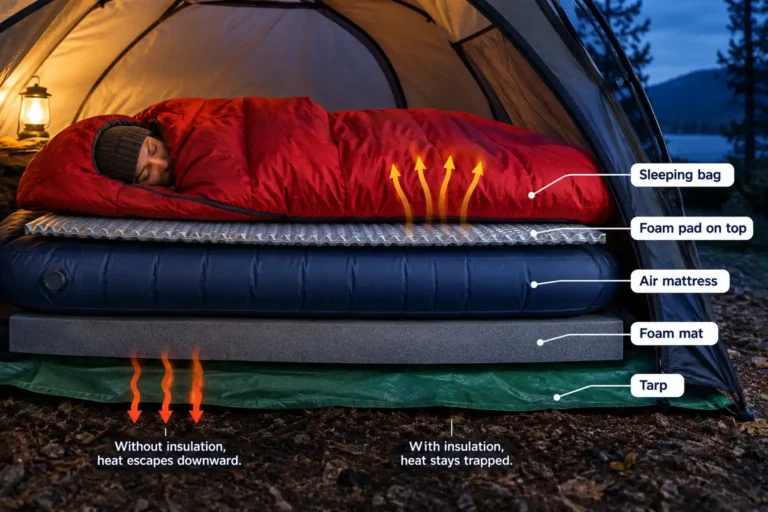
Camp sleep clothing should be separate from hiking clothes. Sweat-soaked shirts feel cold once the sun drops. So after dinner I change into a dry base layer top, lightweight long johns, and clean socks. They also double as an emergency warm layer if temperatures dip more than expected.
A light beanie helps too. Heat escapes through your head fast on still nights.
Rain Gear Even in Summer
Summer storms come quick, especially in the hills. So I always pack a lightweight rain jacket, even on a clear forecast. Look for one under 10 ounces with pit zips for ventilation.
Skip heavy hardshells unless you’re hiking above treeline. For warm rain, a treated wind shirt or a small poncho works fine and breathes better.
Sample Summer Camping Clothing List
For a typical 2 to 3 day trip:
- 2 technical t-shirts
- 1 long-sleeve sun hoody
- 1 pair hiking shorts
- 1 pair lightweight pants
- 3 pairs merino or synthetic socks
- 1 lightweight fleece or vest
- 1 packable rain jacket
- 1 wide-brim hat, sunglasses, head net
- Sleep base layers and clean socks
- Camp sandals
- Underwear in synthetic or merino
This kit weighs around 4 to 5 pounds and covers most summer conditions in temperate climates.
Common Mistakes to Avoid
- Wearing cotton anything. It traps sweat and chills you.
- Choosing black for hot sun. Dark colors absorb heat fast.
- Skipping a warm layer. Summer nights surprise people.
- Wearing new shoes. Always break in footwear before a trip.
- Forgetting rain gear. Summer storms are quick and cold.
Final Words
Summer camping clothes work best when they’re light, loose, fast-drying, and layered for sudden changes. So pick synthetic or merino over cotton, cover skin with breathable fabrics instead of relying only on sunscreen, and always bring one warm layer for nights.
After enough trips you’ll trust your kit without thinking. Start with the basics here, adjust for your climate, and you’ll stay comfortable from the first morning to the last campfire.