How to Make Tent Camping More Comfortable: A Complete Guide

Tent camping turns rough for a few predictable reasons. Cold ground, a sloped site, condensation, trapped heat, bugs, and gear scattered everywhere. Fix those six problems and a tent starts to feel like a small bedroom instead of a survival test. Below is the order I work through them.
You make tent camping more comfortable by fixing the setup, not by buying a better tent. Pick level, well drained ground. Insulate yourself from the soil with a pad rated for the season. Then vent the tent, manage heat with shade or layers, seal out insects, and give every item a fixed spot inside.
Why does tent camping feel uncomfortable?
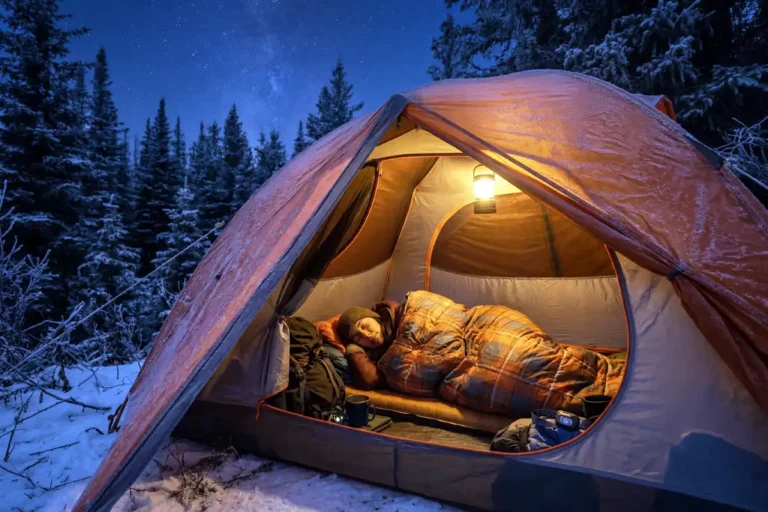
Most tent discomfort comes from the ground and the air, not from the tent itself. Soil pulls heat out of your body all night because it conducts far better than still air. A slope you barely notice while standing will slide you into the tent wall by 2 a.m. Meanwhile, your breath and any damp gear raise the humidity inside, so water beads on the fly and drips back down.
Heat behaves the same way in reverse. Once the sun hits a closed tent in the morning, the inside climbs past anything you would tolerate indoors. Add mosquitoes at the door and a pile of loose gear across the floor, and the night falls apart.
So the fixes below follow that same order: ground first, then air, then temperature, then insects, then clutter. I learned this sequence the slow way, camping through wet Rangamati nights where everything I owned felt damp by morning.
How do you pick a campsite that sleeps well?
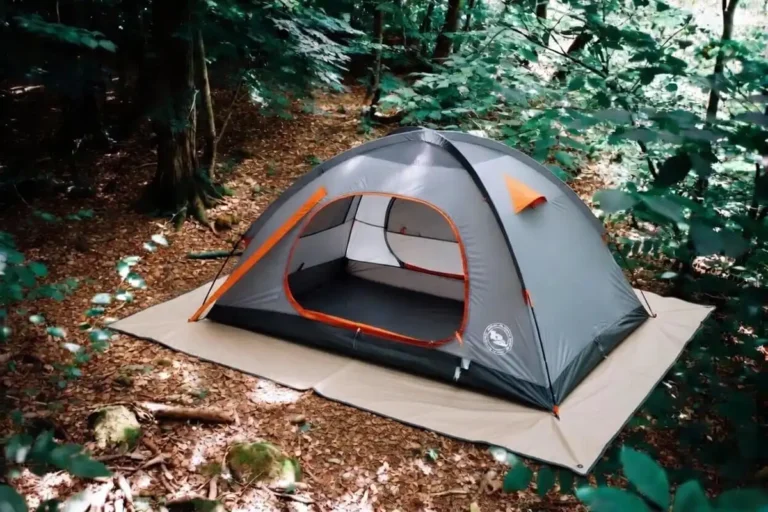
Look for flat, slightly raised ground with clear drainage, a wind break, and shade in the morning. That combination solves more comfort problems than any gear purchase.
Walk the area first and press the soil with your boot. Then lie down where your torso will go, because your body finds slopes your eyes miss. If the ground tilts, point your head uphill so blood does not pool in your face. Never pitch in a hollow or across a shallow channel, since both collect water during a night of rain.
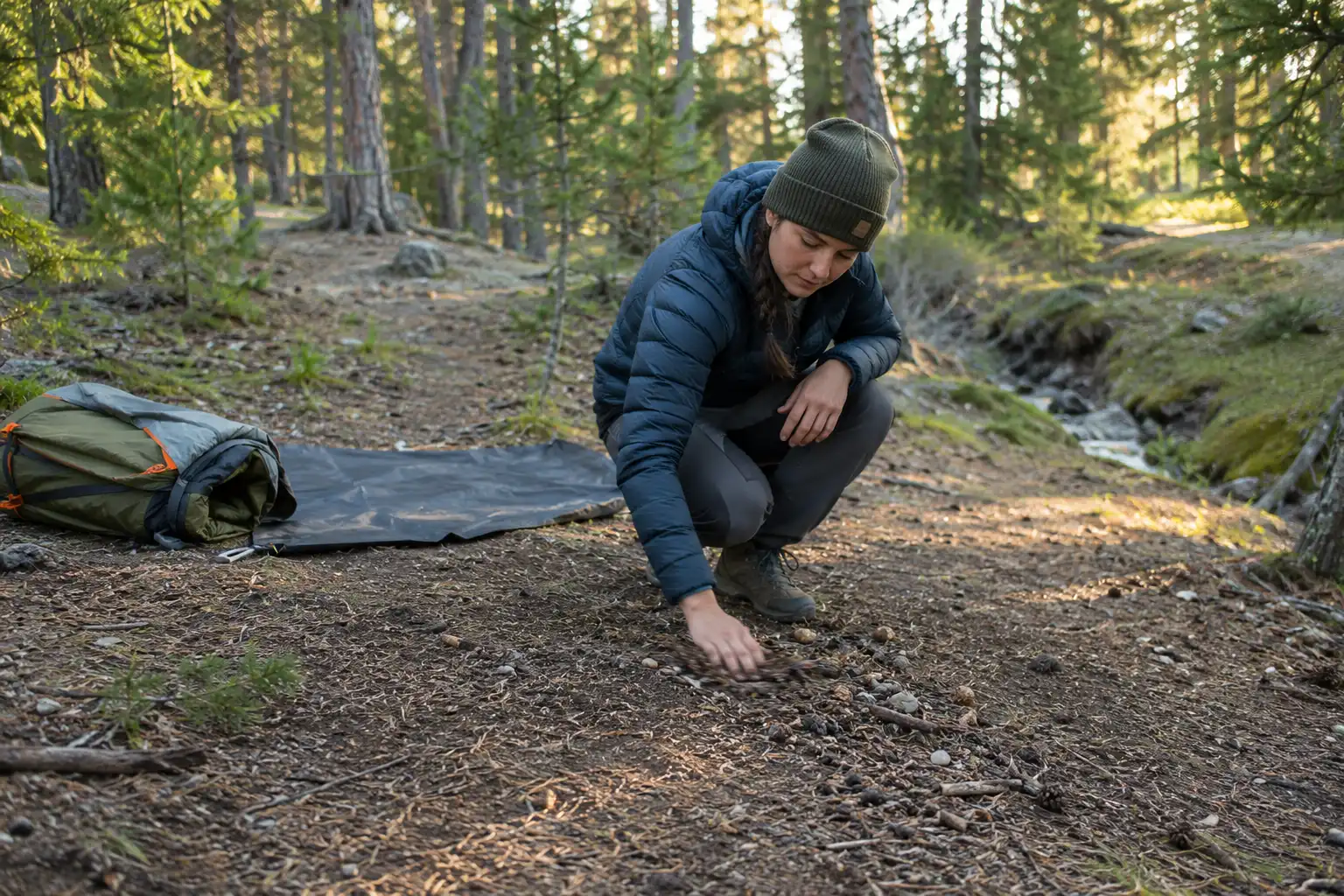
Check overhead before you commit. Dead branches hang in a lot of otherwise perfect sites, and campers call them widowmakers for good reason. After that, clear every pebble, root, and stick from the tent footprint. Small stones feel like boulders once your weight presses a pad against them.
Wind matters too. Face the door away from the prevailing breeze and put a hedge, boulder, or tree line on the windward side. Finally, work out where the morning sun will land, since east facing sites turn into ovens by 7 a.m. Arriving late narrows your options, so it helps to know the shortcuts for settling on a workable spot after dark.
What sleep system makes the biggest difference?
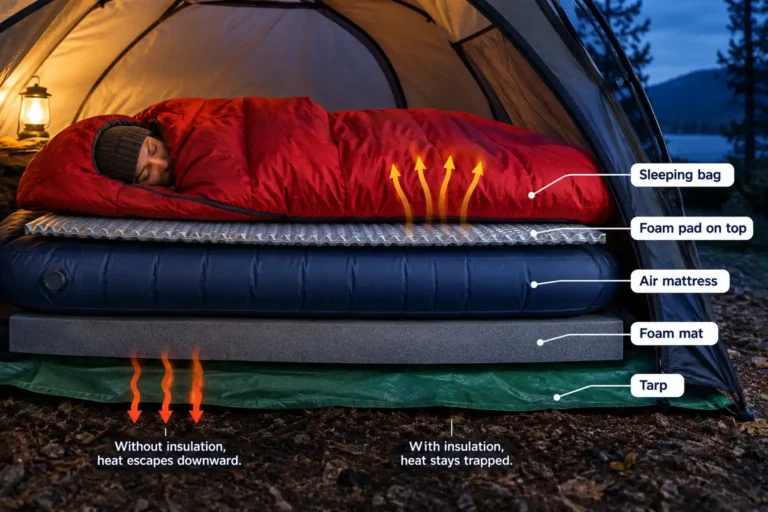
Your sleeping pad matters more than your sleeping bag, because the ground drains heat much faster than the air around you. A warm bag over a thin pad still leaves you cold by 3 a.m.
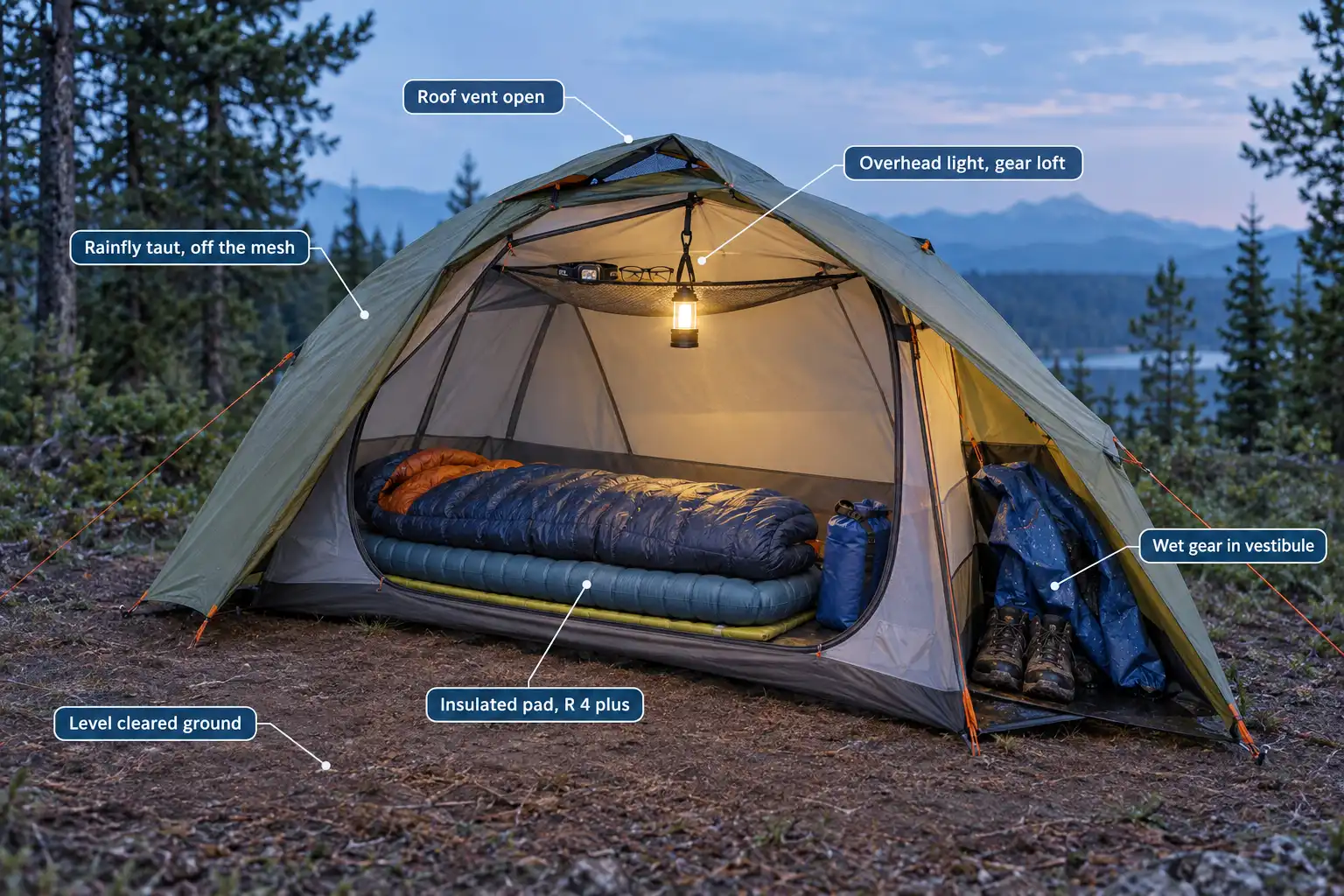
Pads carry an R value, which measures resistance to heat loss. Since 2020 the major brands have tested to the ASTM F3340 standard, so numbers from different companies finally compare fairly. As a rough guide, R 1 to R 2 suits summer and R 2 to R 4 covers three seasons. Anything from R 4 up handles genuinely cold ground. R values also stack, so a cheap foam pad under an inflatable adds its rating to the total.
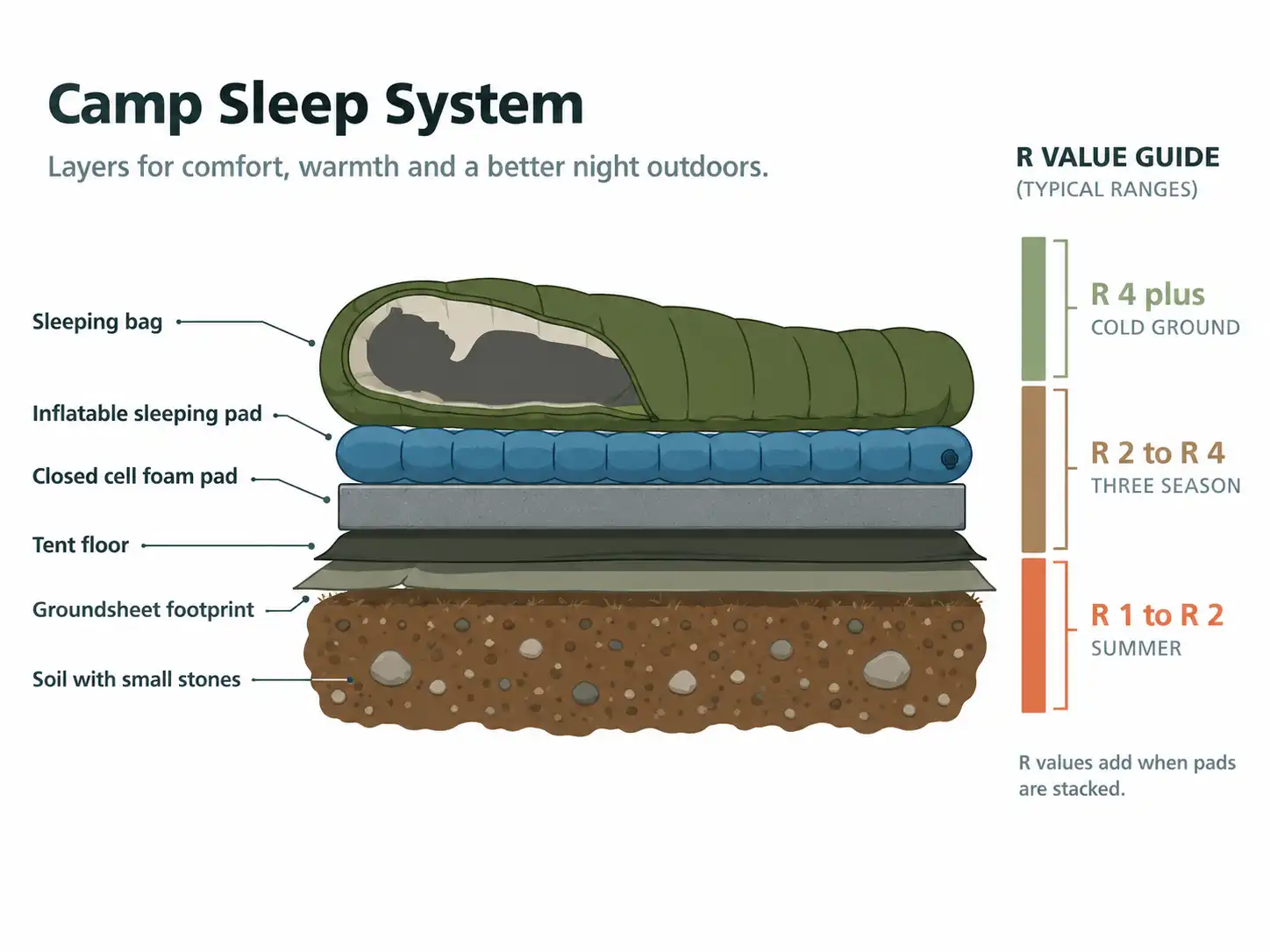
Thickness drives comfort, while R value drives warmth. Side sleepers usually want at least three inches of loft under the hip. If you camp from a car, a cot lifts you off roots and rocks. Cold air circulates underneath though, so keep a pad on top of it. Weigh up how a cot compares with a pad before you buy either one.
Skip the bare air mattress in cold weather. Air circulates inside the chambers and carries warmth away from your back. Add a foam pad or a wool blanket on top and the same mattress works fine. Pack a real pillow too, because a stuff sack full of clothes never holds its shape past midnight.
How do you stop condensation inside the tent?
Open every vent and keep damp air moving out, because condensation forms when warm, moist air meets cold fabric. You breathe out moisture all night, so some buildup happens in any tent.
Start with the rainfly. Pitch it taut and staked out, so it never touches the inner mesh. Contact points transfer water straight through to the inside. Next, open both the roof vent and a low vent to create a path for air. Warm air rises and escapes at the top only when fresh air can enter low down.
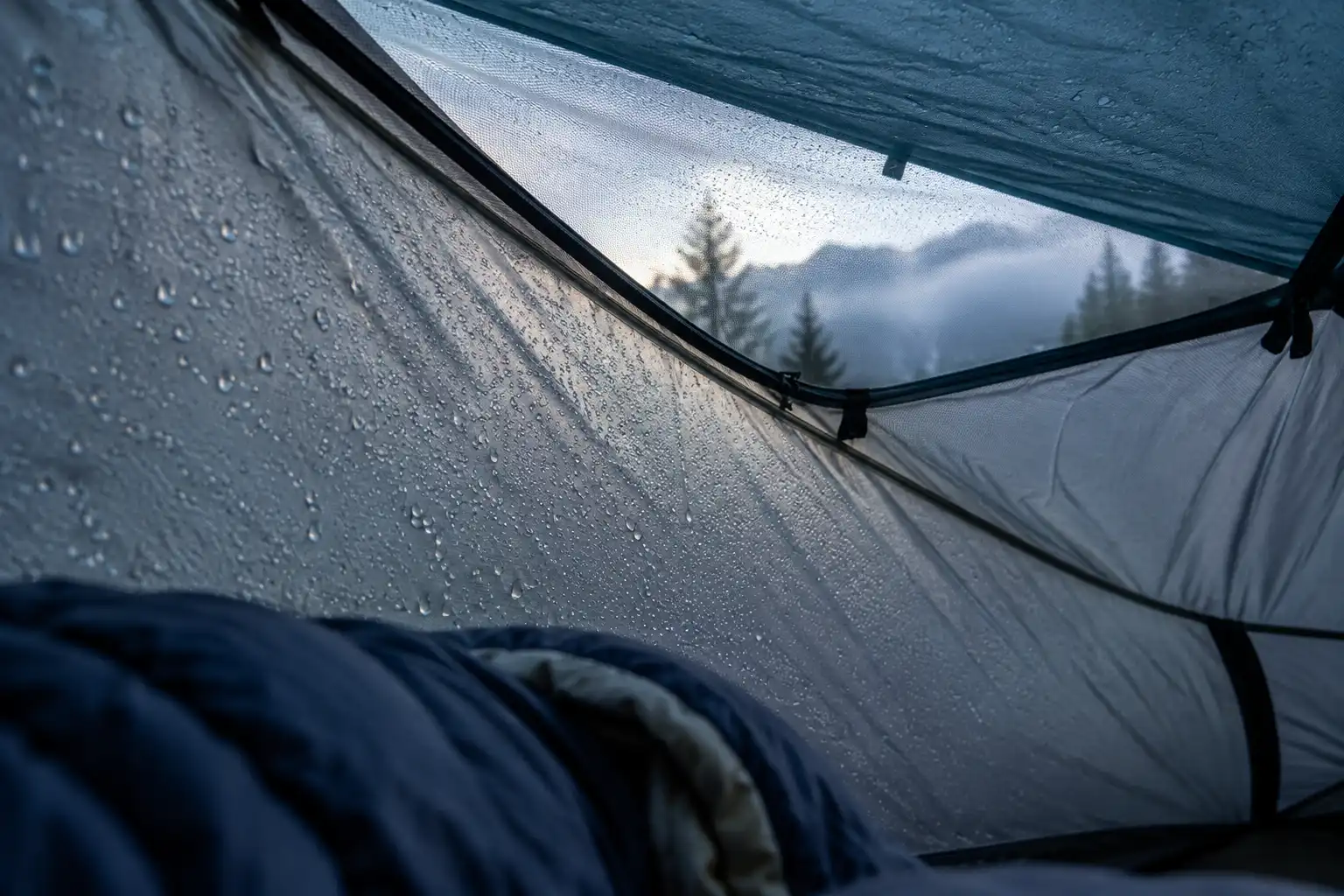
Keep wet things outside. Boots, rain jackets, and soaked towels belong in the vestibule, not next to your head. Never cook or boil water inside either, since one pot of tea can fog a tent in minutes.
On cold nights the temptation is to seal everything shut. That backfires fast, as trapped moisture soaks your bag and kills its insulation. Cracking the downwind door slightly costs you almost no warmth. Cold weather does change the math, which is why venting a tent when the air outside is freezing deserves its own approach. In the morning, wipe the inner wall with a small cloth before you pack.
How do you stay warm when the temperature drops?
Insulate from below first, then add layers you can strip off. Most cold nights in a tent trace back to the pad rather than the bag.
Change into dry sleep clothes before you get in. Day clothes hold sweat, and damp fabric steals heat for hours. Wear a light hat too, plus dry socks you keep only for sleeping.
Eat something before bed. Your body needs fuel to generate heat, so a handful of nuts or a warm drink helps more than people expect. Fill a leak proof bottle with hot water and drop it near your feet, though check the cap twice first.
Do not overstuff the bag with gear, since compressed insulation stops working. Instead, lay tomorrow’s clothes flat under your knees where they add a little padding.
One rule has no exceptions: never burn fuel inside a tent. The Consumer Product Safety Commission warns that portable heaters, lanterns, and stoves cause carbon monoxide deaths in tents every year. Cracking a door does not make it safe. For the rest of the routine, holding heat through a freezing night in a tent covers the layering side in more depth.
How do you keep a tent cool in hot weather?
Shade the tent, drop the rainfly when no rain is coming, and get air moving through both doors. Those three moves handle most hot weather nights.
Pitch under trees when you can. If shade is missing, string a tarp a foot or two above the tent so heat radiates away instead of collecting between the layers. Air needs room to move through that gap.
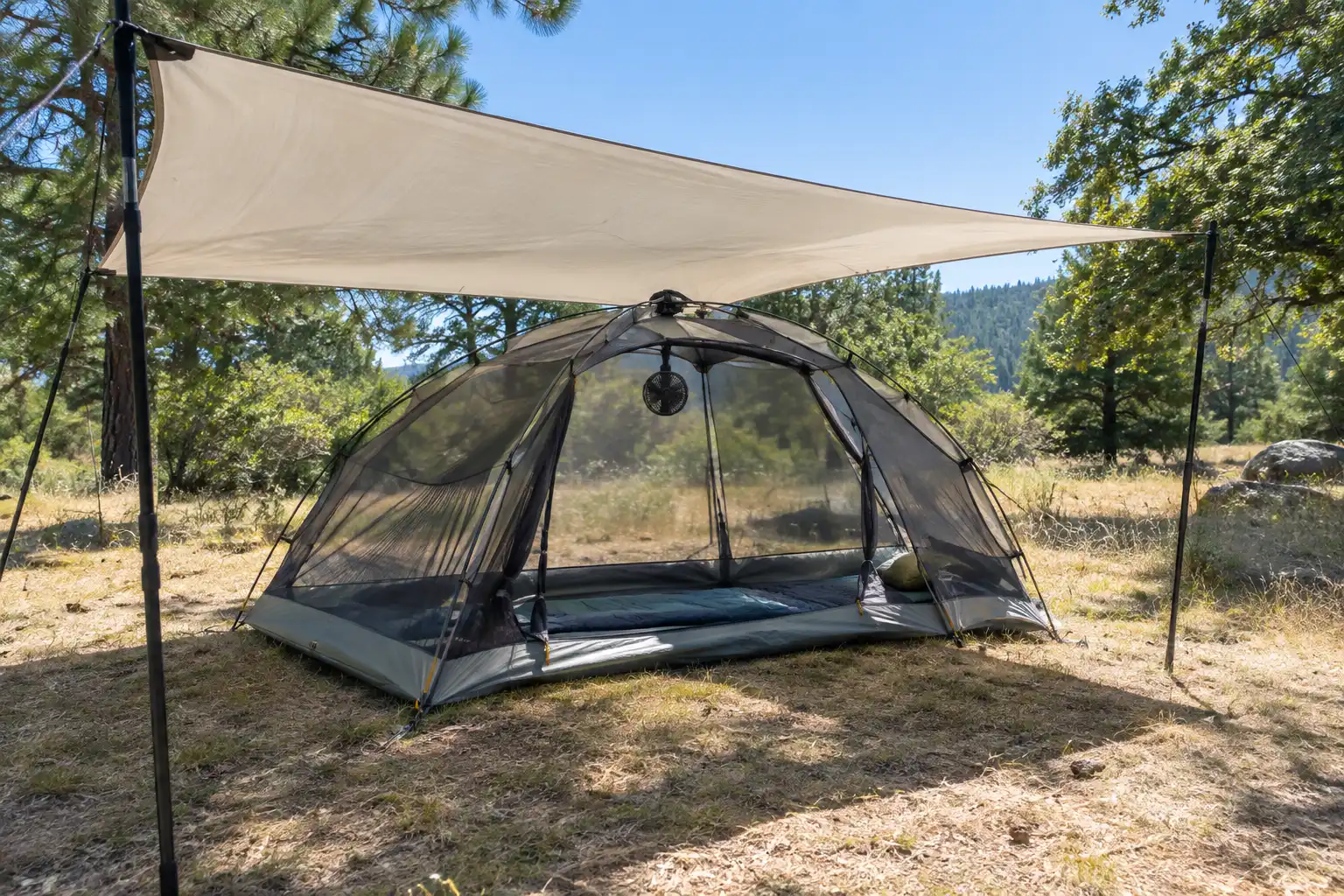
Fly off camping changes everything on a clear night. Mesh only tents drop several degrees immediately, and you get stars overhead as a bonus. Keep the fly rolled and clipped nearby in case clouds build.
A small battery fan helps more than its size suggests. Point it out the door rather than at yourself, because pushing hot air out beats stirring it around. Sleep on top of your bag, not inside it.
Morning heat ends most summer lie ins. Once direct sun hits the fabric, the inside warms quickly, so plan to be up and moving early. Campgrounds with power open another door, and running an air conditioner at a powered site is a real option. It does need the right tent design to work.
How do you keep insects out of the tent?
Zip discipline does most of the work. Open the door only as far as you need, move through fast, and close it behind you every single time.
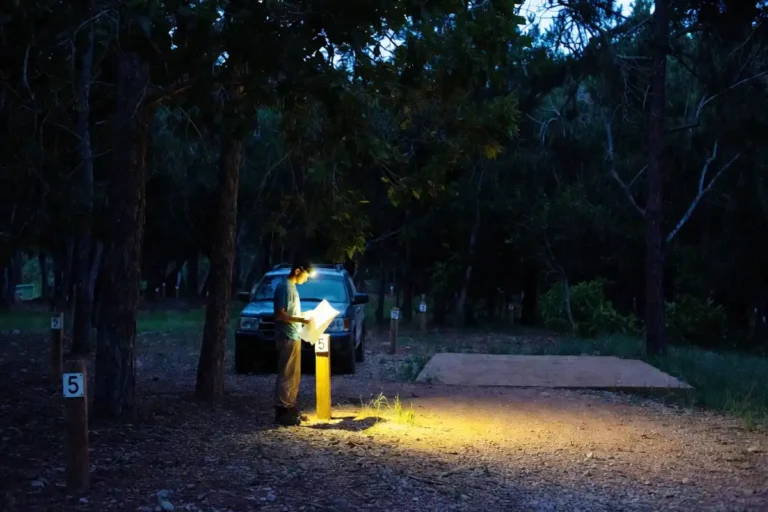
Kill your headlamp before you unzip at night, or point it away from the opening. Bugs fly toward light, so an open lit door acts like an invitation. A red beam draws far fewer of them.
Check the mesh for tears each trip and patch small holes with repair tape. After you get in, sweep the floor and inner walls with a light and remove whatever flew in with you.
Food never belongs inside a tent, and that goes double in bear country. Camp away from standing water where mosquitoes breed. When bugs are heavy, treat clothing with permethrin and save skin repellent for skin. Rough bug seasons call for a tighter routine, and shutting insects out after dark covers netting and site choice in more detail.
How should you organize the inside of a tent?
Give every item one fixed home, so you never dig through a pile with a headlamp in your teeth. Organization is the comfort upgrade people skip, and it costs nothing.
Split the tent into zones. The sleeping half stays clean, and nothing muddy crosses that line. Boots, wet rain gear, and the trash bag live in the vestibule. If your tent has no vestibule, keep boots in a stuff sack by the door.
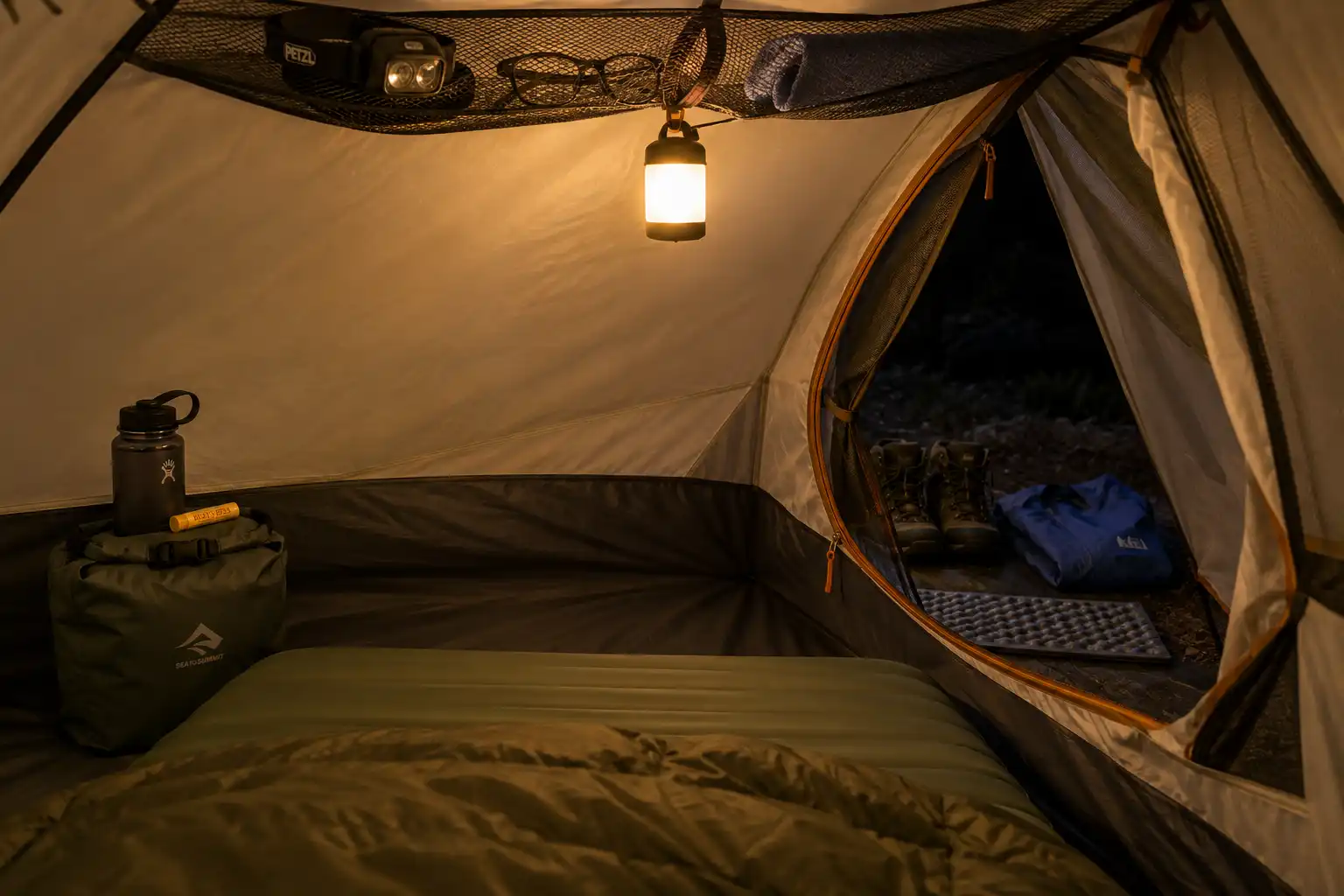
Use the ceiling. A gear loft or a short line across the peak holds your headlamp, glasses, phone, and a small towel. Hang a lantern up there as well, because diffused light overhead beats a headlamp pointed at someone’s face.
Keep a small dry bag beside your pad as a nightstand. Water bottle, lip balm, earplugs, and a spare buff go in it, and you can find all four by feel. Put a small towel or offcut of foam at the door too. That one square foot keeps grit out of the sleeping area better than any rule you try to enforce.
Which comfort upgrades are worth packing?
For car camping, four cheap items change the most. A thick pad or cot, a real pillow, a mat at the door, and a hanging lantern all pull their weight. None of them costs much.
A folding chair matters more than people think, since sitting on the ground for three days wears on your back. Add a second tarp for shade or a dry cooking area. That extra cover gives you somewhere to stand when rain settles in.
Backpackers face tighter limits, so the list shrinks. An inflatable pillow, earplugs, an eye mask, dry sleep socks, and light camp sandals together weigh under a pound. Those five items have saved more of my nights than any tent feature.
Skip the gear that only works in photographs. String lights in patterns, oversized mattresses, and heavy folding tables eat space and rarely earn it back.
What camp habits make nights better?
Pitch in daylight whenever you can. Setting up in the dark leads to bad site choices, missed stakes, and a loose fly that flaps until dawn.
Handle the bathroom trip right before you zip up, and stop drinking water about an hour earlier. Waking at 2 a.m. in the cold undoes a good night quickly.
Stretch your legs and back for two minutes before bed, especially after a long hike. Tight hips make side sleeping on a pad miserable.
Pack earplugs even if you camp alone, because wind, rain on nylon, and other campers all carry through thin fabric. Then set out tomorrow’s clothes and your headlamp within reach, so the morning starts without a search.
FAQs about Making tent camping more comfortable

Is a cot more comfortable than a sleeping pad?
Does an air mattress make tent camping more comfortable?
Why do I wake up cold with a warm sleeping bag?
How do you sleep in a tent when the ground is not flat?
Final thoughts
Comfortable tent camping comes down to a handful of repeatable choices. Pick level, dry ground. Insulate yourself from the soil with a pad that matches the season. Keep air moving so moisture leaves instead of dripping. Then control temperature deliberately, shut the insects out, and give every item a place. None of this needs expensive gear. Get the setup right and you will sleep as well in a tent as you do at home. That is the whole point of heading out.