How to Keep Tent Floor Dry in Rain: Fixes That Actually Work

Rain rarely ruins a camping trip on its own. A wet tent floor does. I camp through the monsoon in the Rangamati hills, so I have made most of the mistakes on this list myself. Here is what actually keeps a tent floor dry when it rains all night.
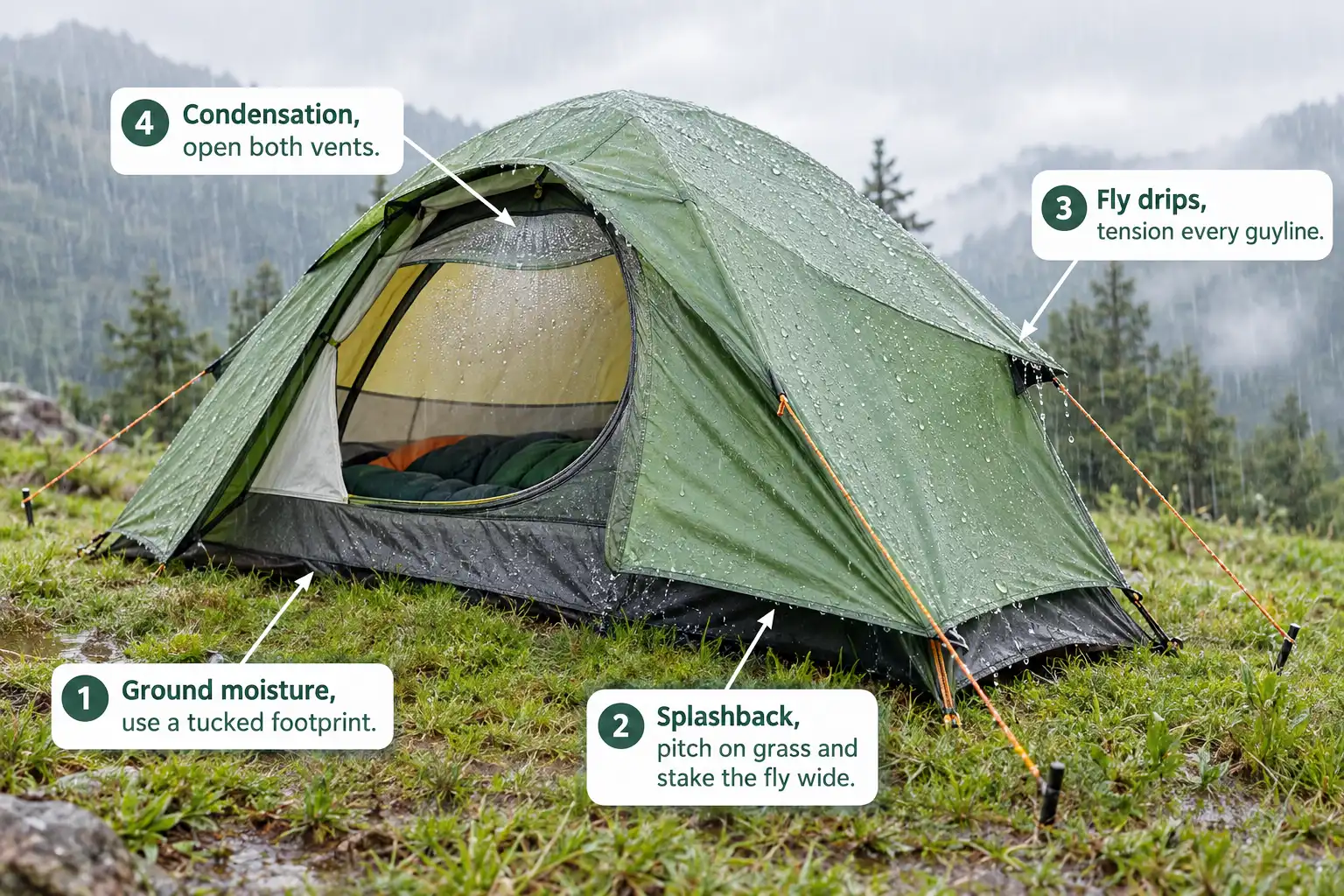
To keep tent floor dry in rain, pitch on high ground. Tuck the footprint completely under the floor edge. Stake the fly taut so it never touches the inner tent, then vent the tent to control condensation. Four separate paths let water in, so you have to close all four.
Where does the water on your tent floor come from?
Water reaches a tent floor from four directions. Saturated soil pushes moisture up from below. Splash and runoff hit the perimeter from the side. A sagging fly drips onto the inner mesh, and condensation plus wet gear add moisture from inside.
Most campers blame the tent when they wake up damp. In my experience the pitch is usually at fault instead. A cheap tent pitched well often stays drier than an expensive one pitched in a dip with the fly hanging loose.
Each of those four paths has a separate fix. Work through them in order and you solve the problem for good, rather than mopping the same puddle every night.
How do you pick a spot that keeps the tent floor dry?
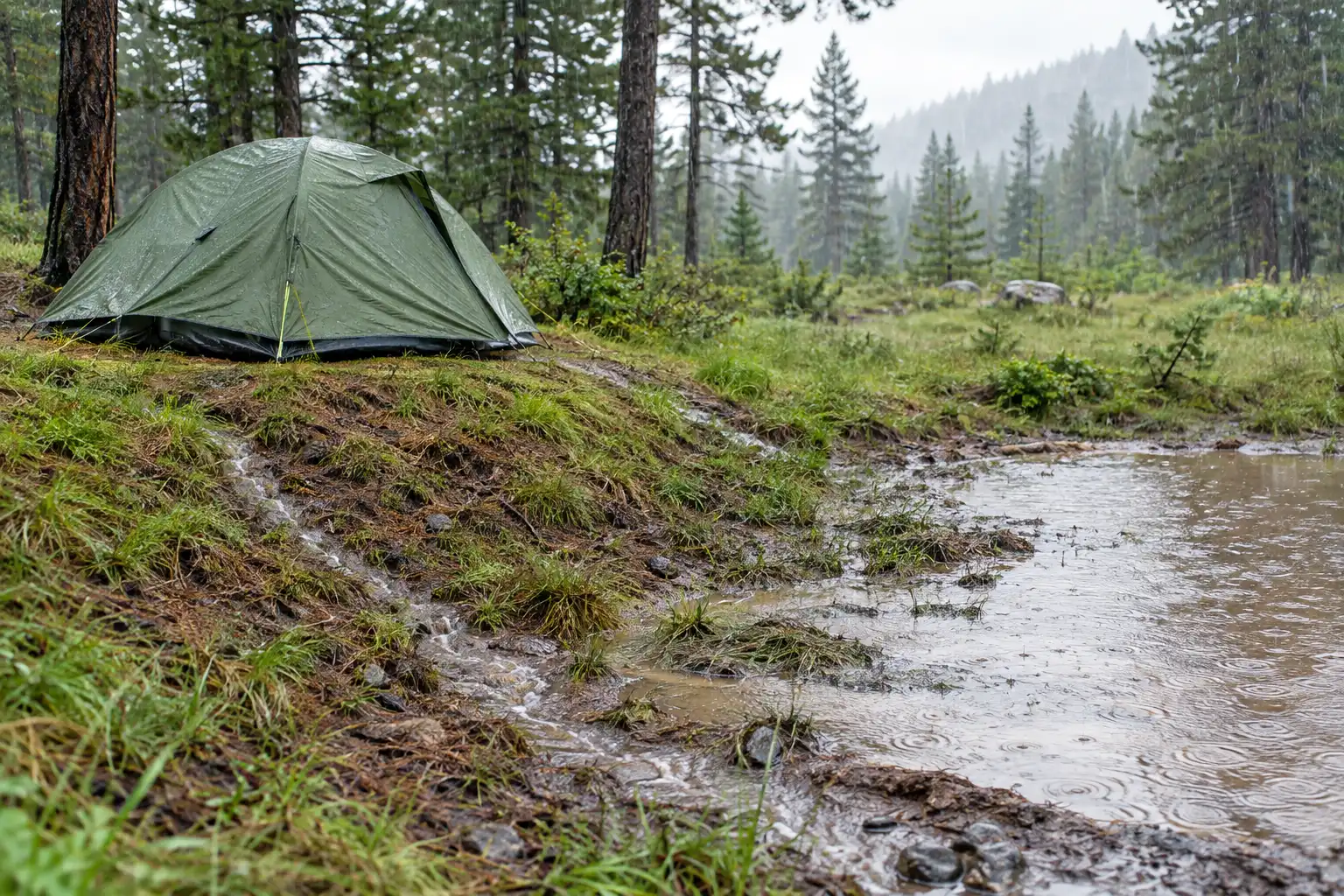
Pitch on the highest ground available, ideally a slight rise that sheds water on all sides. Then check what the ground is telling you before you unroll anything.
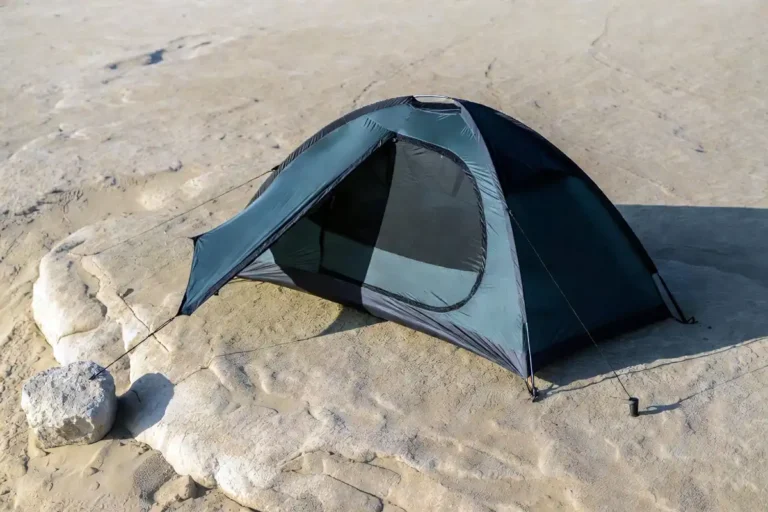
Look for flattened grass, silt lines, and leaf litter piled into curves. Those marks show where water ran last time it poured. Avoid hollows, tire ruts, the base of a slope, and the inside of a bend, because all of them collect runoff. Sand hollows fill fast too.
Gravel, forest duff, and dry grass drain quickly, so they beat bare packed dirt. Hardpacked soil sheds water sideways straight into your tent walls.
Also look up. A heavy branch keeps dripping long after the rain stops, and those drops land in the same line all night. Arriving late makes this much harder, so picking a campsite in the dark deserves its own set of checks.
One warning: the flattest, most comfortable looking patch is often the lowest point in the clearing. That is exactly why it is flat.
Should you dig a trench around your tent?
No. Agencies across the US advise against it, and a trench usually does not help anyway.
The National Park Service, the US Fish and Wildlife Service, and the Appalachian Trail Conservancy all warn against it. Each one lists digging trenches around tents as something campers should not do. Forest Service guidance for dispersed camping says the same. A trench scars the site, and the scar stays for years.
Beyond that, a trench dug in the dark on sloping ground often feeds water toward the tent instead of away. Moving the tent twenty steps uphill takes less effort and works better.
Does a footprint keep the tent floor dry in rain?
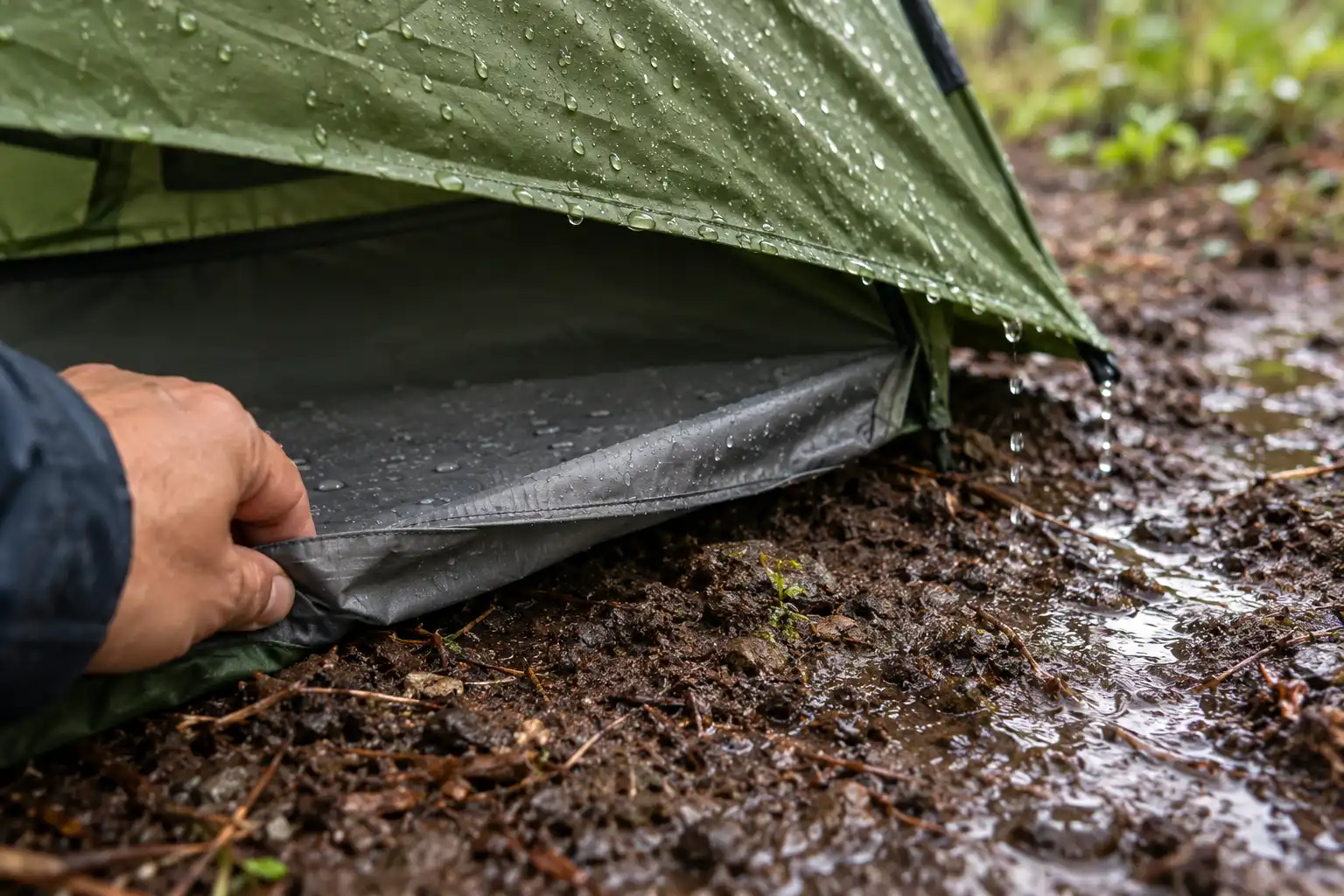
Yes, but only when it sits entirely under the tent floor. A footprint that pokes out past the floor edge catches runoff dripping off your fly and funnels it underneath you.
Size it about one to two inches smaller than the floor on every side. If your tarp is bigger, fold the extra under rather than cutting it, then you can still use that tarp for other jobs.
After pitching, walk a full circle around the tent and look for any fabric showing past the floor edge. Tuck whatever you find. Even a few inches of exposed corner can gather enough water overnight to create a puddle under you.
Smooth out wrinkles before you raise the tent, since folds turn into channels. Material choice matters as well, and I compared which ground cloth handles wet soil best in a separate article.
Why does a waterproof floor still leak when you kneel on it?
Because your body weight multiplies water pressure at that exact spot. Tent floors carry a hydrostatic head rating, which measures how tall a column of water the fabric holds back before it seeps.
Backpacking tent floors usually sit around 2,000mm to 3,000mm, while rainflies often run 1,200mm to 1,800mm. Manufacturers rate floors higher on purpose, because campers kneel, sit, and sleep on them. Kneeling on a wet patch can briefly push pressure far past the printed number, so the floor weeps even though the label says waterproof.
Two habits fix this. Spread your weight across a sleeping pad instead of kneeling directly on fabric, and keep the floor off saturated ground with a footprint.
Coatings also age. Watch for patches that darken or feel tacky, because that means the waterproof layer is failing. At that point it helps to reseal seams before they start leaking.
How do you stop splash and fly drips from wetting the floor?
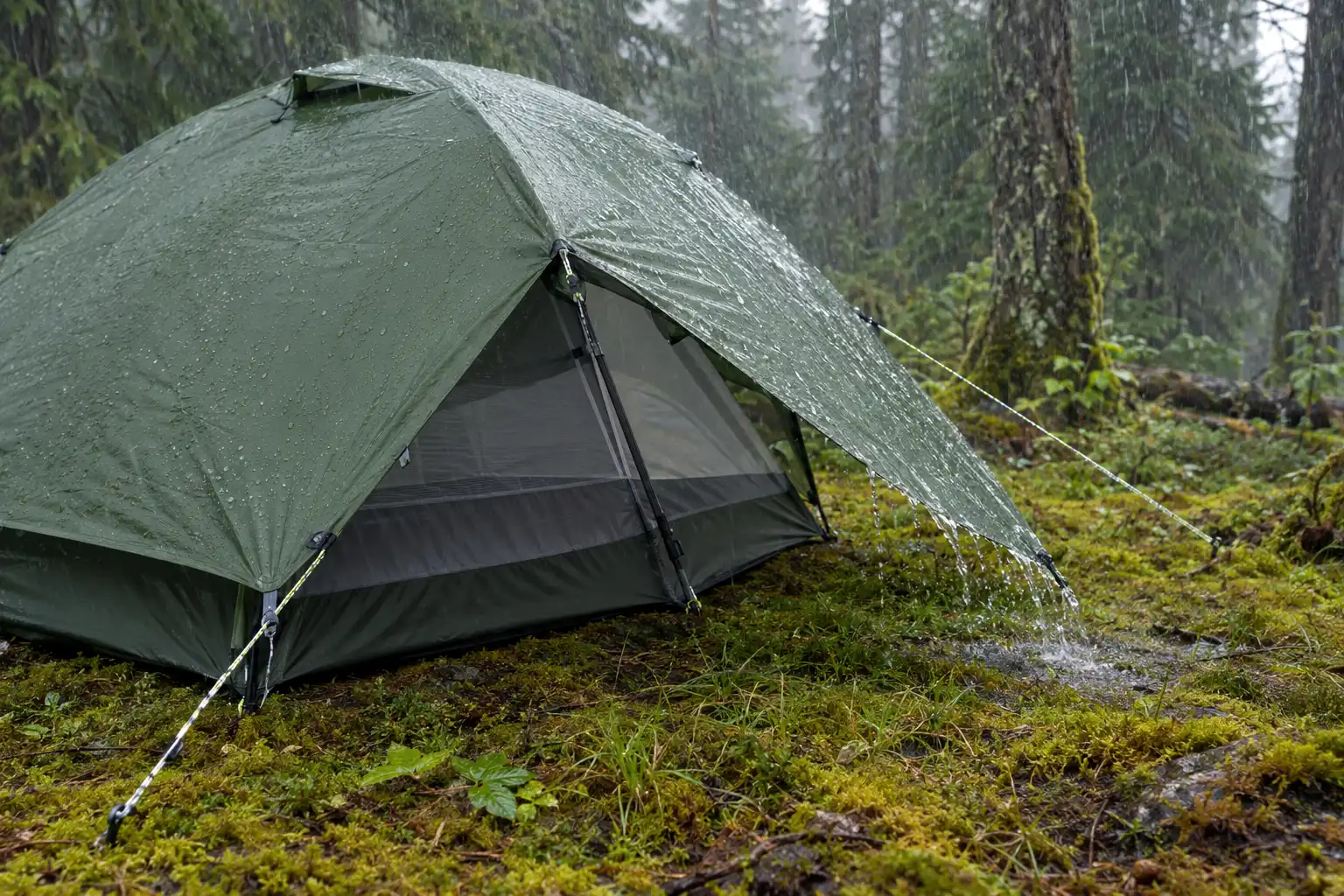
Stake the fly out taut and wide so runoff lands well away from the tent walls. A loose fly is the single most common cause of a wet inner tent.
Use every guy point, not just the corners. When a fly sags, it touches the inner tent, and water wicks straight through that contact point onto your floor seam. Nylon also stretches when wet, so re-tension the guylines once the rain starts and again before you sleep.
Splashback matters more than people expect. Raindrops hitting bare hard ground bounce back up onto the lower walls and the bathtub seam, where the floor fabric meets the wall. Grass, duff, and gravel absorb that splash instead of throwing it back.
For long storms I rig a tarp above the whole tent, which keeps the fly drier and cuts drip volume at the perimeter. Getting the coverage right depends on sizing a tarp for your tent setup correctly.
How do you stop condensation from wetting the tent floor?
Keep air moving through the tent all night. Condensation forms when warm damp air from your breath meets the cold inner surface of the fly. It then beads up and runs down to pool along the floor edges.
Two people breathing overnight release a surprising amount of moisture. Rain traps it, because everyone zips the tent tight and shuts the vents.
Open both roof vents, and crack the top of the door zipper by a few inches. Never cook inside a closed tent, since a stove dumps steam into a space that cannot clear it. Wiping the inner fly with a small pack towel in the morning removes most of what collected. Cold nights make this harder, and I go deeper on venting a tent in cold weather elsewhere on the site.
How do you keep wet boots and gear off the floor?
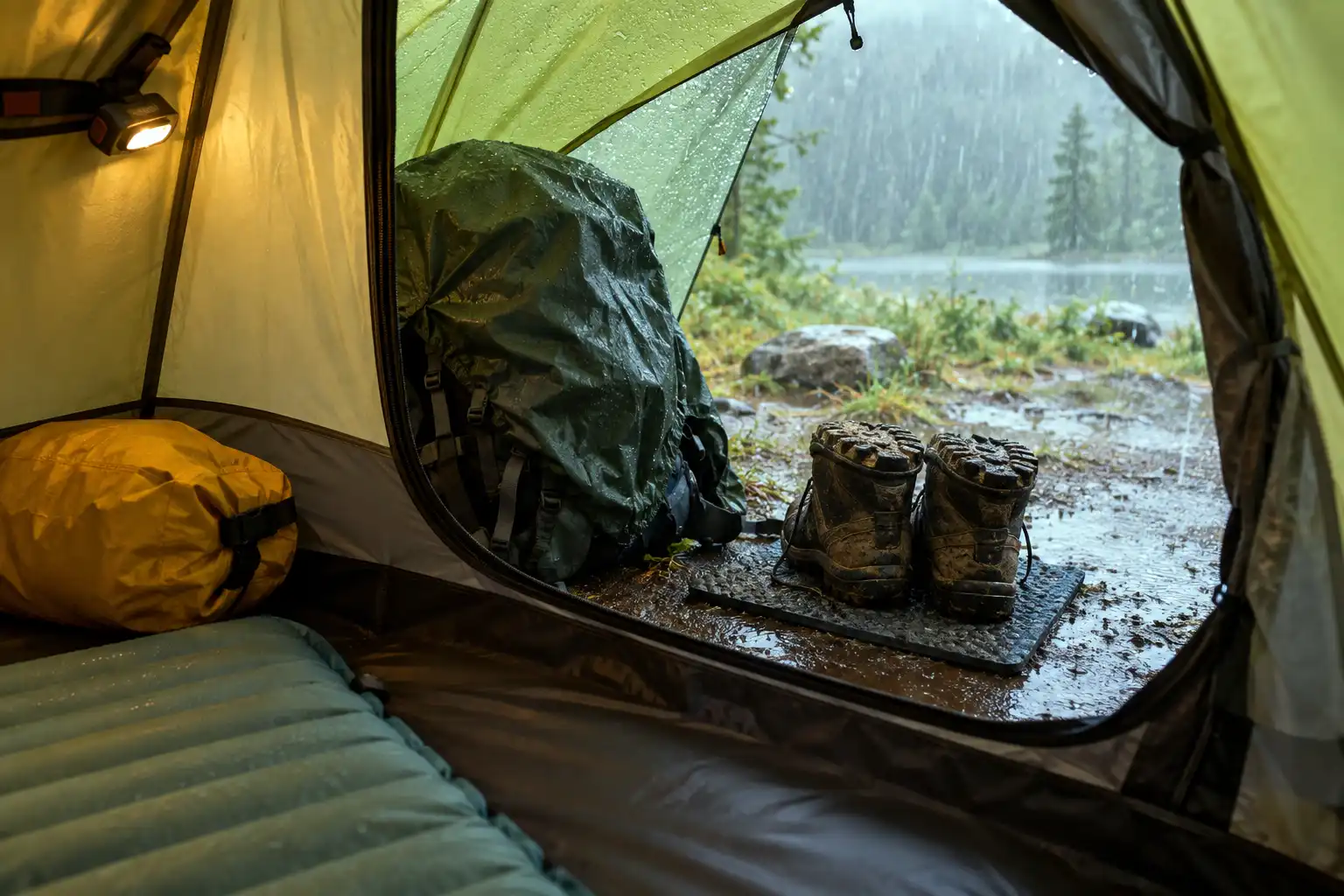
Split the tent into a wet zone and a dry zone, then never mix them. The vestibule is your wet zone.
Boots stay in the vestibule under the fly, upside down or inside a bag. Rain shells get wrung out and stay outside too. Your pack belongs in the vestibule as well, because a wet pack leaning on the inner wall soaks a patch of floor within an hour.
Sit in the doorway, swing your legs in, and change there. A folded pack towel or a small square of closed cell foam at the door works as a doormat and catches the worst of it. Meanwhile, keep your sleeping bag stuffed in its dry bag until you actually go to sleep.
What should you do if water is already on the floor?
Stop the source first, then remove the water. Mopping while water still flows in wastes your night.
Step outside and check the fly for sag and contact points, then re-tension every guyline. Look for a stream running under the floor. If water is actively flowing beneath the tent, move it, because nothing else will fix that.
Inside, lift everything onto your sleeping pad immediately, starting with the sleeping bag. Then soak up standing water with a pack towel and wring it out through the door. Repeat until the floor is only damp.
Moving a tent in heavy rain feels miserable at 2am. Still, I have never regretted doing it, and I have regretted waiting plenty of times.
What should you do after the rain stops?
Dry the tent before packing it, or at the very latest within a day of getting home. Wet fabric packed tight grows mildew fast, and mildew eats the floor coating that keeps you dry.
Open everything and let the sun and wind work while you eat breakfast. Wipe the floor with a towel, then flip the tent on its side so the underside dries too. If mildew already started, treat it carefully, since scrubbing hard destroys the coating. There are safe ways of cleaning mildew off tent fabric that protect the waterproof layer.
FAQs about Keeping tent floors dry during rain

Should I put a tarp inside the tent instead of under it?
Does a higher hydrostatic head rating guarantee a dry floor?
Can I use plastic sheeting as a footprint?
How long does a tent floor stay waterproof?
Final thoughts
A dry tent floor comes down to four habits, not expensive gear. Pick high ground with drainage in mind. Tuck the footprint completely under the floor. Stake the fly tight enough that nothing touches the inner tent, and keep air moving so condensation never builds. Check the pitch again once rain actually starts, because wet nylon sags. Do those things and you can sleep through a storm that would have flooded you a season ago.