Sajek Valley Travel Guide: How to Visit Queen of Hills and Cost

Sajek Valley is a popular tourist spot in the northern Chittagong Hill Tracts of Bangladesh, set among the hills of the Kasalong range. People call it the “Queen of Hills” and the “Roof of Rangamati.” It sits about 1,800 feet (550 meters) above sea level. Officially it falls within Baghaichhari Upazila of Rangamati district, and it is known as the largest union in Bangladesh.
I grew up in Kaptai, Rangamati, so these hills feel like home to me. Over the years I have made the trip up to Sajek more than once. Below I have put together everything you need to plan your own visit, including when to go, how to get there, where to sleep, what to eat, and the small things that make the journey smoother.
Where exactly is Sajek Valley?
Sajek belongs to Rangamati district, yet most travelers reach it through Khagrachhari. The reason is geography. The road from Dighinala in Khagrachhari is far easier than any route from central Rangamati. From Khagrachhari town the valley sits about 70 kilometers away, while from Dighinala it is roughly 40 kilometers. So when people plan a Sajek trip, they almost always plan a Khagrachhari trip first. See Sajek valley in the map below.
Also see: Mirinja Valley Travel Guide
What is there to see in Sajek Valley?
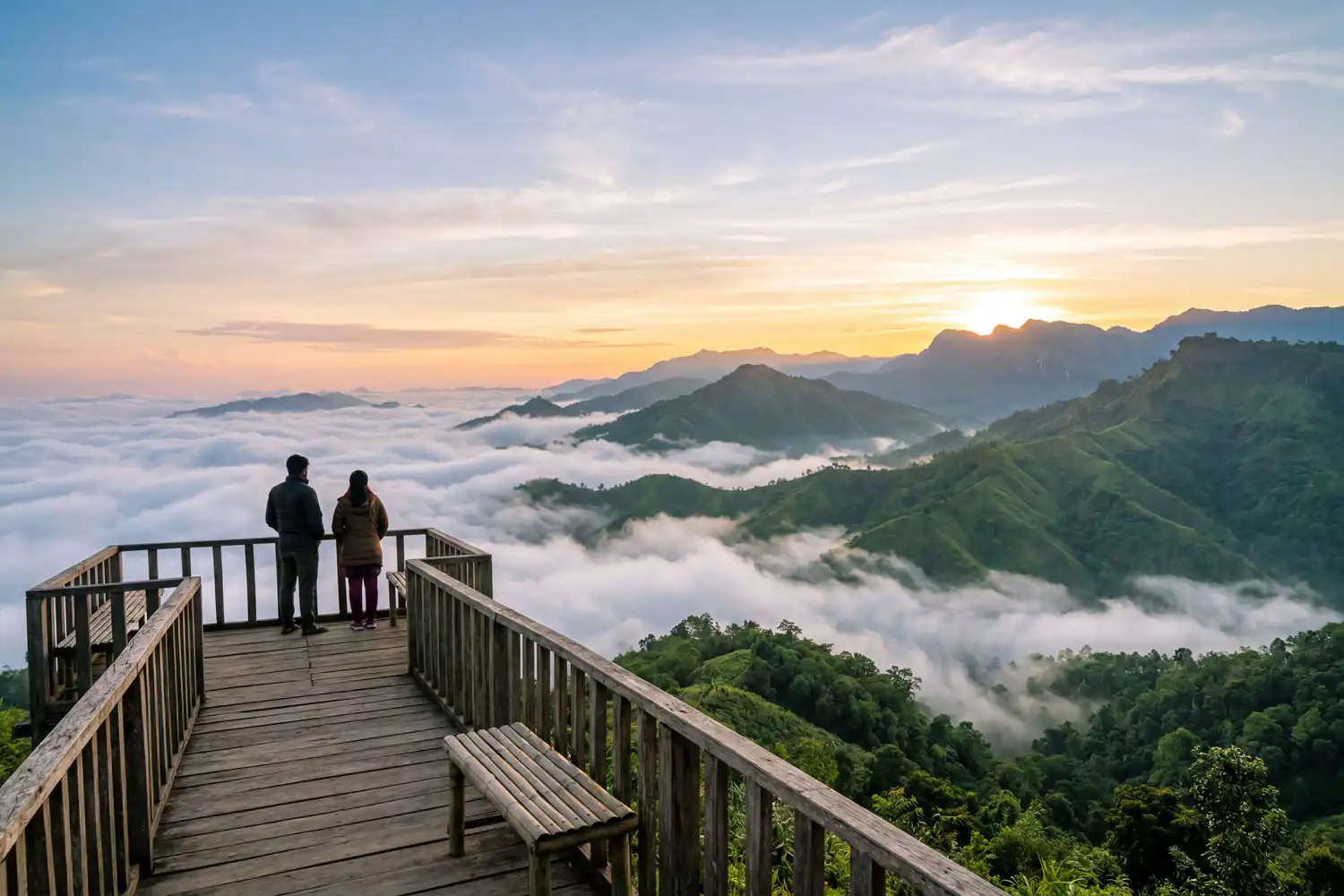
The main draw is the sea of clouds that rolls between the hills. Rows of green peaks surround you, and on a good morning the whole valley fills with white cloud that drifts from ridge to ridge. Sajek is also famous for showing three moods of weather in a single day. You might feel strong heat, then get caught in sudden rain, and minutes later watch thick mist wrap around everything.
Konglak Hill and Konglak Para
Konglak Hill is the highest point most visitors climb, and therefore the top attraction in Sajek. The trail ends at Konglak Para, the last village in the valley, where the Lushai community lives. From there you can look across to the Lushai Hills of India, where the Karnaphuli River begins. The short hike up rewards you with the widest view in the whole area.
Komolak waterfall
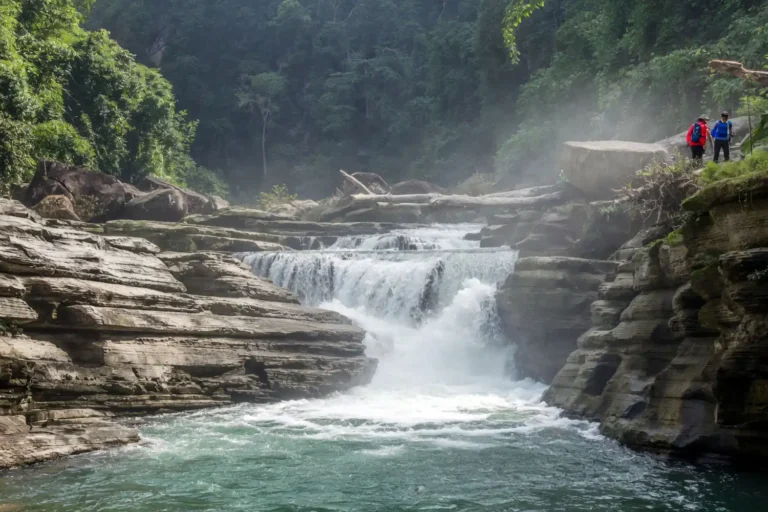
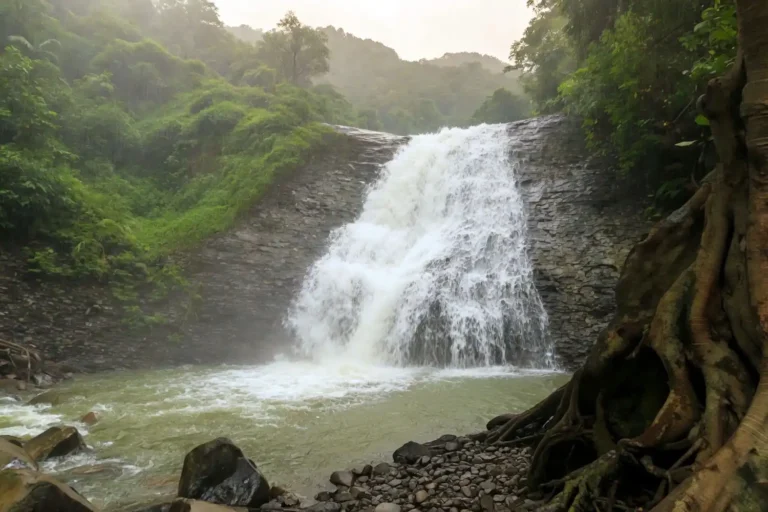
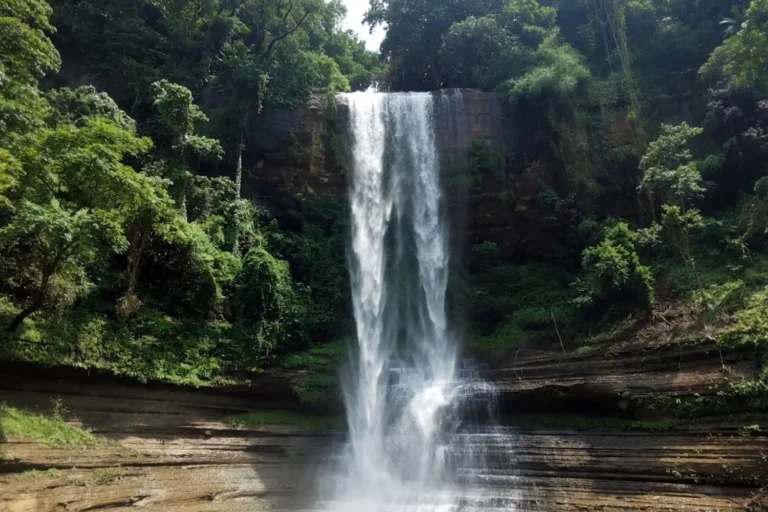
If you have extra time, you can trek about two hours from Ruilui Para to reach Komolak waterfall. Some locals also call it Pidam Toisa or Sikam Toisa. The path turns steep in places, so wear proper shoes. The walk feels a lot like other hidden waterfall treks in the hill tracts, with rocky sections and a cool pool waiting at the end.
Sunrise, sunset, and the night sky
Do not miss the early morning in Sajek. The best sunrise shows up from the helipad, so set an alarm and walk over before first light. As the sun rises, the cloud play and the morning colors line up together. In the late afternoon, climb any high spot for the sunset. After dark, on a clear night, the sky fills with countless stars, and you may even spot the Milky Way.
Indigenous life and stops on the way back
Walking around the paras gives you a close look at how the indigenous communities live. The people here are warm and easygoing. On the way back toward Dighinala, if time allows, you can also stop at Hazachhara waterfall, the Dighinala hanging bridge, and Dighinala Banbihar.
When is the best time to visit Sajek Valley?
You can visit Sajek any time of year, but July through November is the best window because that is when clouds settle around the valley most often. Sajek looks beautiful in every season, so no month is truly a bad choice. However, if the cloud-covered hills are what you are after, aim for the monsoon and the months right after it. The same logic applies to most trips, so it helps to think through the right season for any destination before you book.
How do you reach Sajek Valley?
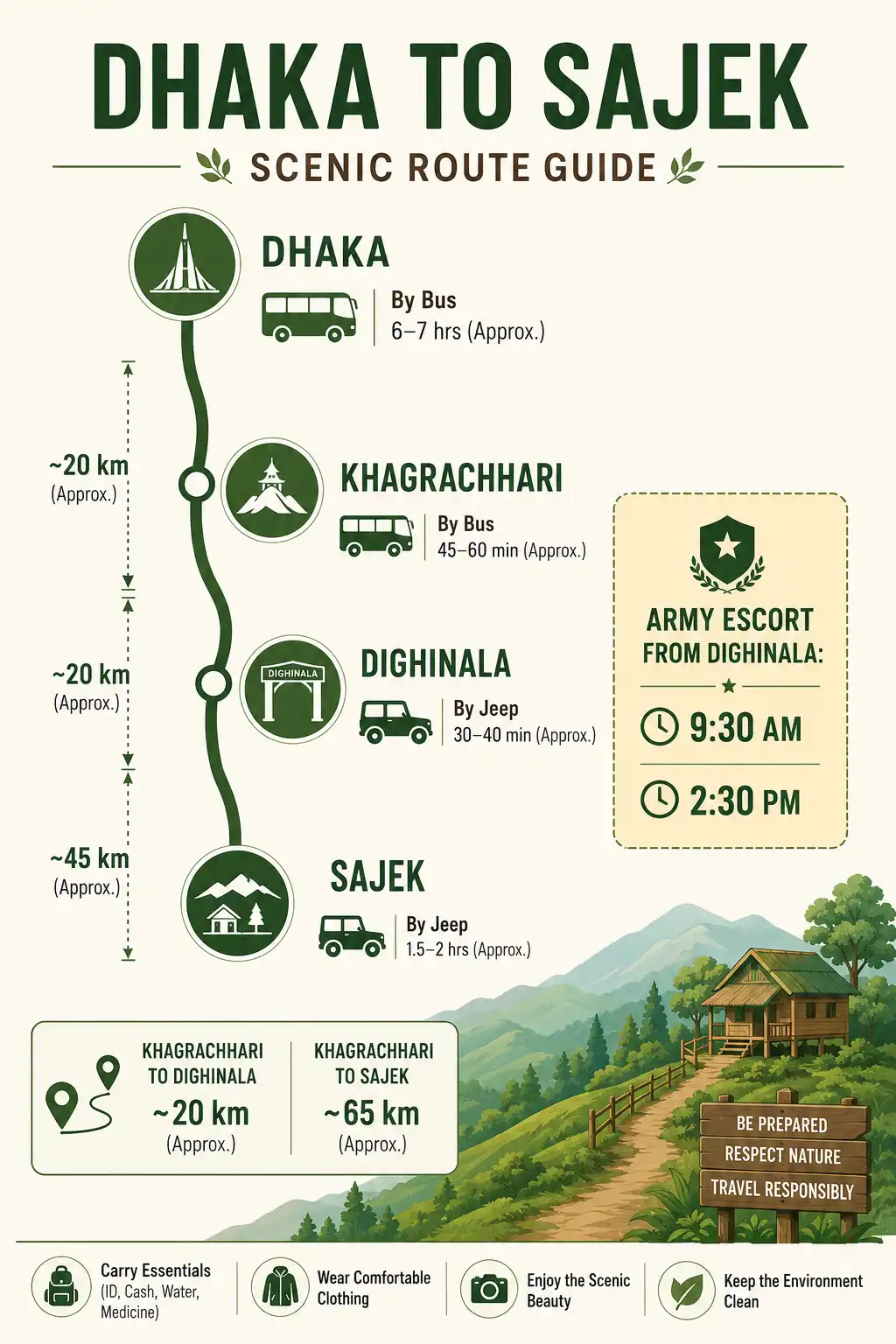
Although Sajek sits in Rangamati district, the simplest route runs through Dighinala in Khagrachhari. So your first goal is to get to Khagrachhari, and from there you arrange a vehicle to the valley.
From Dhaka to Khagrachhari
Several bus companies run the Dhaka to Khagrachhari route, including Hanif Enterprise, Saudia, Saint Martin Hyundai, Imperial Express, Desh Travels, Shyamoli, Shanti Paribahan, S Alam, and Eagle. Non-AC fares fall between 750 and 850 BDT. For AC coaches, Saint Martin Hyundai Robi Express, Hanif, Relax Transport, Shyamoli, Desh Travels, and Econo Service charge roughly 1,000 to 1,600 BDT. Most of these buses leave by around 10 PM. Shanti Paribahan also runs straight to Dighinala for about 820 BDT. You will find their counters at Gabtali, Kalabagan, and other points around the city. On holidays, book your ticket early, or you may struggle to find a seat later.
Prices in this guide are in Bangladeshi taka (BDT). At the time of writing, about 122 BDT equals 1 US dollar, though rates change often, so treat any dollar figure as a rough guide only.
From Khagrachhari to Sajek Valley
Khagrachhari to Sajek is about 65 kilometers. Near Shapla Chattar in Khagrachhari town, you can reserve a jeep, locally called Chander Gari, for the round trip. A two-day reservation runs about 10,500 to 12,000 BDT (roughly $86 to $98). One vehicle seats 12 to 15 people, so a bigger group splits the cost nicely. If your group is small, ask at the jeep association office, and they will pair you with another group to share. A CNG auto-rickshaw is cheaper at 4,000 to 5,000 BDT when reserved, but the roads climb and twist a lot, so I would not recommend a CNG for this trip.
Here are the published jeep association rates for Chander Gari trips from Khagrachhari:
|
Route |
Fare (BDT) |
Trip type |
|---|---|---|
|
Khagrachhari to Sajek |
7,500 |
Out in the morning, back in the afternoon |
|
Khagrachhari to Sajek |
9,000 |
Round trip with 1 night |
|
Khagrachhari to Sajek |
11,000 |
1 night plus Alutila Cave, Richang waterfall, hanging bridge |
|
Khagrachhari to Sajek |
12,000 |
Round trip with 2 nights |
|
Khagrachhari to Sajek |
14,000 |
2 nights plus Alutila Cave, Richang waterfall, hanging bridge |
|
Khagrachhari to Debota Pukur, Alutila Cave, Richang waterfall, hanging bridge |
6,000 |
Morning to afternoon |
|
Khagrachhari to Panchhari, Aranya Kuthir, Mayabini Lake |
5,000 |
Morning to afternoon |
|
Khagrachhari to Rangamati (round trip) |
7,000 |
Add 2,000 for an overnight |
|
Khagrachhari to Bandarban (round trip) |
12,000 |
Add 3,000 for an overnight |
On the one- and two-night jeep packages, if you skip the overnight and return the same afternoon, you add 500 BDT. On top of that, every tourist pays a small entry charge of 20 BDT per person and 100 BDT per vehicle.
For travelers who prefer a CNG, these are the published rates:
|
Route |
Fare (BDT) |
Trip type |
|---|---|---|
|
Khagrachhari to Sajek |
3,200 |
One way |
|
Khagrachhari to Sajek |
4,200 |
Out in the morning, back in the afternoon |
|
Khagrachhari to Sajek |
5,200 |
1 night |
|
Khagrachhari to Sajek |
6,200 |
2 nights |
|
Khagrachhari to Sajek |
6,200 |
1 night plus Alutila Cave, Richang waterfall, hanging bridge |
|
Khagrachhari to Sajek |
7,200 |
2 nights plus Alutila Cave, Richang waterfall, hanging bridge |
|
Alutila Cave, Richang waterfall, hanging bridge |
1,500 |
Reserved |
If you travel alone or in a group of two or three, head to Shapla Chattar, where many groups gather, and join one of them to share a vehicle. Working out these shared costs early is part of how I plan a clean trip budget before leaving home.
You can also go from Khagrachhari to Dighinala first, then on to Sajek. Khagrachhari to Dighinala is about 20 kilometers. The local bus costs 45 BDT, while a motorcycle seat runs 100 BDT per person. You can even reserve a motorcycle for the whole Sajek loop. Whatever vehicle you pick, settle the plan and the stops clearly before you agree on a price.
The army escort you must catch
One detail matters more than any other on this route. You have to reach Dighinala between 9:00 and 9:30 AM. For safety, the rest of the way runs under an army escort, and that escort leaves only twice a day, once at 9:30 AM and again at 2:30 PM. Miss the morning escort, and you wait until the afternoon. Miss the afternoon one, and you wait until the next day. No one may pass through without it. So plan your bus timing around this, and if you arrive early, you can fit in a quick stop at Hazachhara waterfall.
From Dighinala the route passes Baghaihat, then Machalong Bazar, and finally Ruilui Para before it reaches Sajek. The drive from Khagrachhari town takes two to three hours. The road bends and climbs the whole way, yet the rows of hills and the endless green make that ride one of the best parts of the trip.
From Chittagong, Rangamati, and Cox’s Bazar
From Chittagong, you can reach Sajek through Khagrachhari or Dighinala. BRTC AC buses leave Kadamtali four times a day at about 200 BDT. From Oxygen Mor, Shanti Paribahan runs buses every hour for around 190 BDT. The ride to Khagrachhari takes four to five hours.
From Rangamati, you can reach Baghaichhari by both boat and road. Launches leave the Reserve Bazar ghat each morning between 7:30 and 10:30 and take five to six hours, with fares of 150 to 250 BDT per person. Buses leave the Rangamati terminal between 7:30 and 8:30 AM, cost about 200 BDT, and take six to seven hours. You can also reach Baghaichhari directly from Dhaka or Chittagong. From Baghaichhari, a jeep or motorcycle then carries you up to the valley for about 300 BDT per person.
Coming from Cox’s Bazar, you travel through Khagrachhari. Shanti Paribahan runs the Cox’s Bazar to Khagrachhari route, with buses leaving at 9 PM and 10 PM. This non-AC service costs about 550 BDT.
Where should you stay in Sajek Valley?
Sajek has well over a hundred resorts and cottages, with room rates from about 1,500 BDT up to 15,000 BDT a night, depending on the place. On holidays, book a month ahead, or your chances of landing a good room drop fast. For a cheaper bed, the indigenous cottages work well. Many newer cottages now blend into the surroundings too, and almost every one offers a decent view.
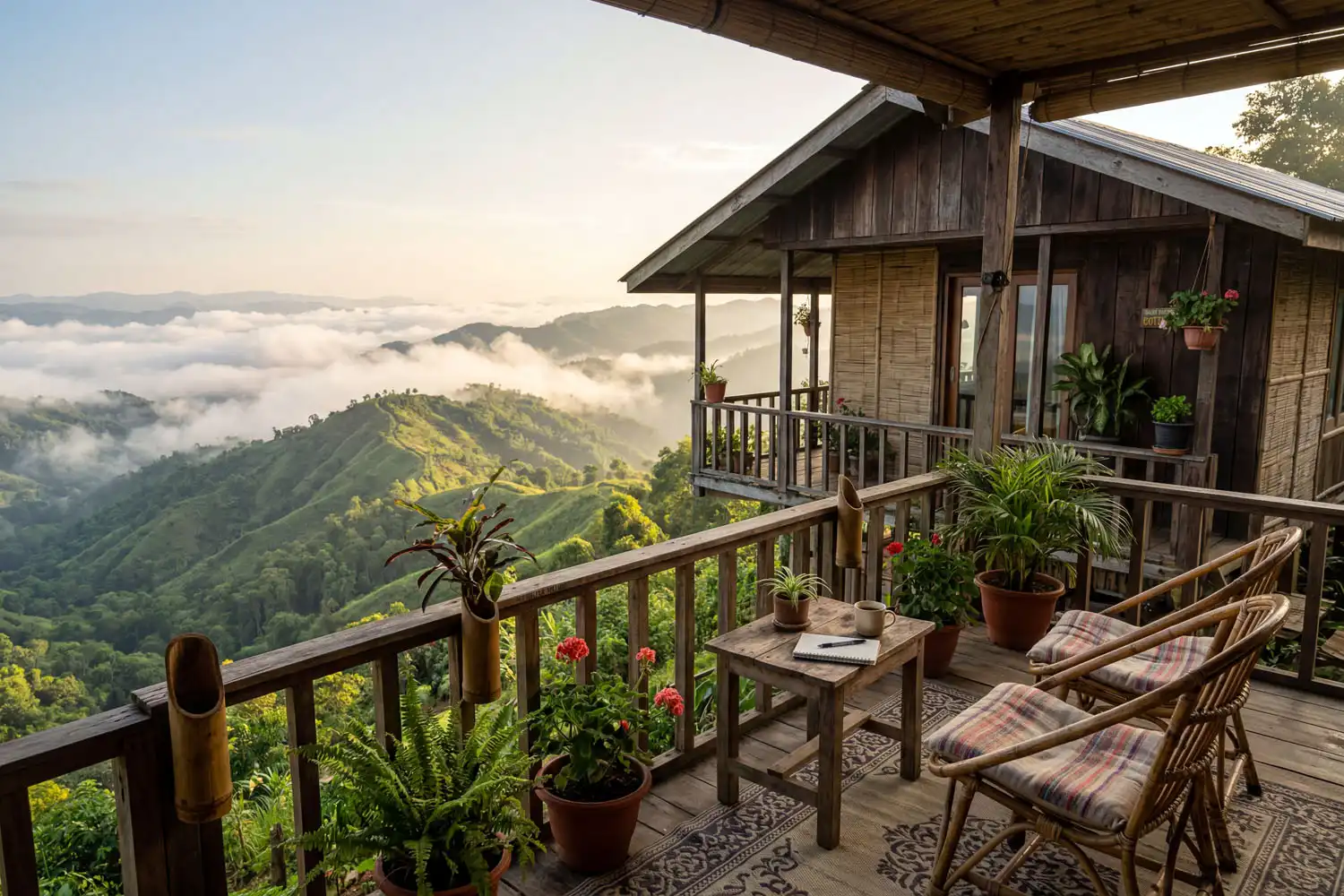
A few resorts and cottages worth knowing
Sajek Resort: Run by the Bangladesh Army, this is the high-end option. Non-AC rooms cost 10,000 to 15,000 BDT, and they serve food on site. Serving army members and first-class government officers also get a discount.
Runmoy Resort: It has five rooms, each for two people. Ground-floor rooms cost 4,450 BDT, while the two upstairs rooms cost 4,950 BDT. An extra bed adds 600 BDT.
Meghpunji Resort: This is one of the most popular places in Sajek. With eco-friendly decor and a strong landscape view, it offers six cottages named Tarasha, Purbasha, Rodela, Meghla, and Nilima. Rates run 5,500 to 6,000 BDT.
Megh Machang: For a good view at a lower price, many people pick Megh Machang. It has five cottages and serves food. Rates fall between 3,500 and 4,500 BDT.
Jumghor Eco Resort: This place has six couple rooms in separate cottages, each fitting up to four guests. Each cottage costs 5,000 BDT.
Alo Resort: Sitting in Ruilui Para, just before Sajek, it has six rooms, four of them doubles. Rates run 1,000 to 1,500 BDT.
Indigenous homes: For the lowest cost, you can stay in an indigenous family’s home for 150 to 300 BDT per person. It is not ideal for couples or families, yet it works well for a group of friends.
What is the food like in Sajek Valley?
Every resort serves food, so if you order ahead, they will cook what you like. Each meal runs about 100 to 250 BDT per person, and a typical plate brings rice, mashed potato, and chicken. At night you can also arrange a barbecue, and you should try the special bamboo chicken along with other local dishes. Fruit is cheap here too, with papaya, pineapple, and banana easy to find.
Sajek Valley travel tips
A few practical notes will save you trouble on the trip:
- Many spots in Sajek have no grid electricity and run on solar power instead, so carry a power bank.
- Only Robi, Airtel, and Teletalk give a reliable signal in the valley.
- The road bends and climbs sharply, which makes it risky, so stay careful if you ride on the jeep roof.
- You do not need a guide to visit Sajek.
- Always ask before you photograph indigenous people, and never take a photo without permission.
- The local communities are kind and simple, so be polite and respect their culture.
- For holiday trips, book your room about a month in advance to avoid the rush.
- Several security camps sit along the road, where you submit some traveler details, so cooperate and keep a copy of your national ID with you.
- For a two- or three-day trip, hire a vehicle only for the way up rather than keeping it idle, then catch another vehicle back or call one from Dighinala for the return.
See more of the Chittagong Hill Tracts
If Sajek Valley leaves you wanting more of these hills, you are in good company. The wider region holds some of the finest trekking in the country. A climb up the Keokradong peak trail gives you another taste of cloud-level views, while a night beside the quiet waters of Boga Lake makes a perfect add-on for anyone heading toward Bandarban.
FAQs on Sajek Valley

Do I need a permit or guide for Sajek Valley?
How many days do I need for Sajek Valley?
Is Sajek Valley safe for tourists?
Will my phone work in Sajek Valley?
Final thoughts
Sajek Valley rewards the long, twisting ride many times over. The clouds, the sunrise from the helipad, the night sky, and the warmth of the hill communities stay with you long after you leave. Plan your bus to catch the morning escort, book a room early for holidays, and keep your expectations flexible with the weather. Do that, and the “Roof of Rangamati” will hand you one of the finest trips in Bangladesh. I keep going back, and I think you will want to as well.