Kumari Waterfall, Bandarban: Best Time, Boat Route, Lodging

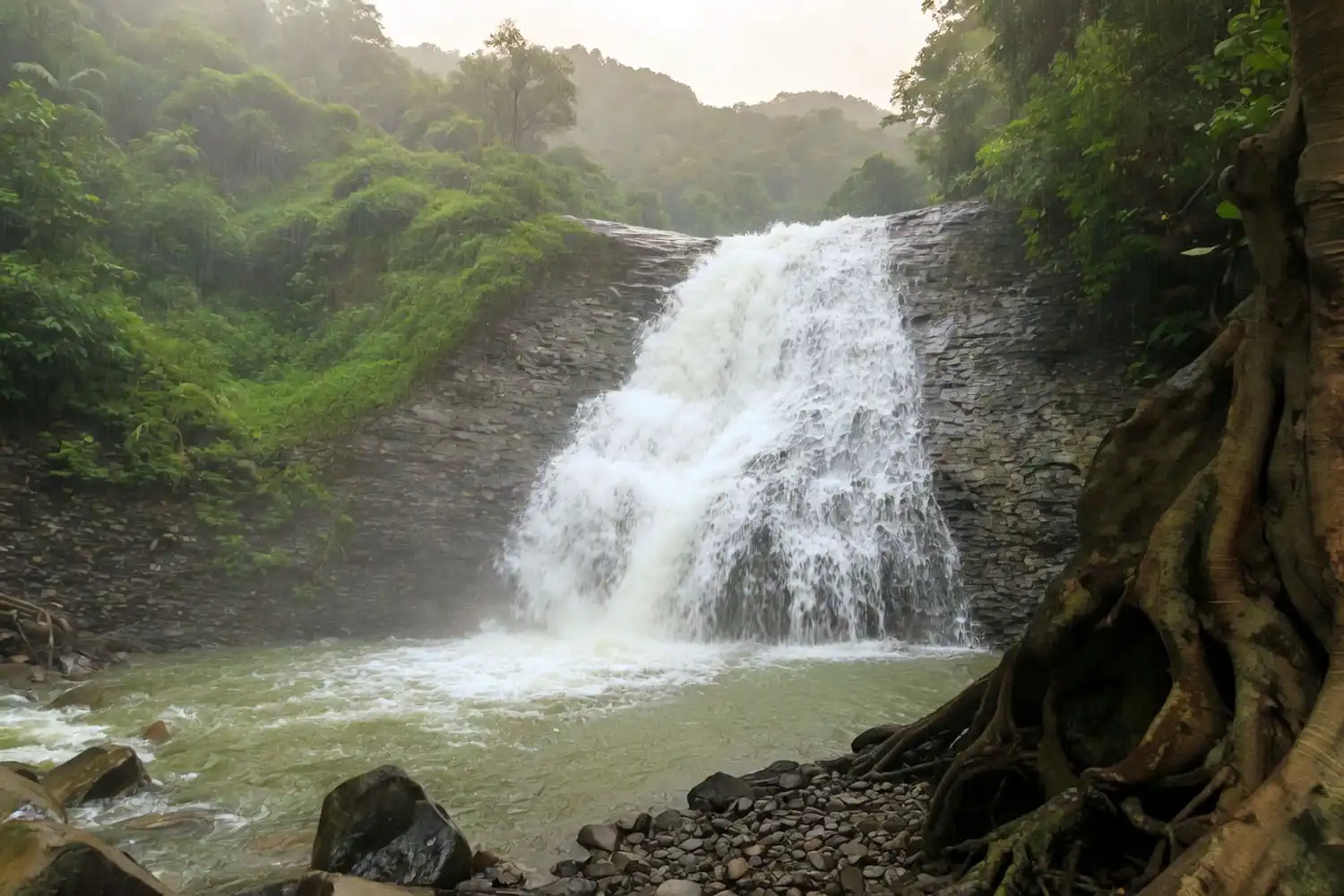
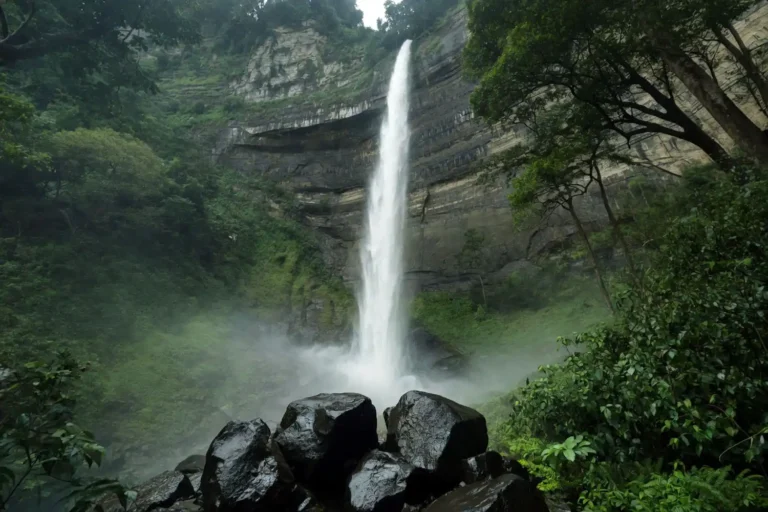
Kumari Waterfall (Kumari Jhorna) is a seasonal waterfall in Thanchi Upazila of Bandarban, Bangladesh. It sits near the Tindu union, close to the Boro Pathor (also called Raja Pathor) rocks along the Thanchi-to-Remakri boat route on the Sangu River. The falls run full only during the monsoon, and they shrink or dry out for the rest of the year.
Here is what you need to know up front. You reach Kumari Waterfall by boat from Thanchi up the Sangu River toward Remakri, then step off near the big rocks and walk a few minutes to the water. Visit between June and September for the strongest flow. Most people see the falls on the way to Remakri and then sleep in Thanchi town the same night.
Know more: Langlok Waterfall: Bangladesh’s Tallest Falls
Where is Kumari Waterfall?
Kumari Waterfall is in Thanchi Upazila, one of the remote southern corners of Bandarban district. The falls drop right beside the Sangu River, near the Tindu union and the well-known Boro Pathor stretch. Because the water lands so close to the riverbank, getting to it is easier than reaching most other falls in this region. You do not climb for hours or push through thick jungle. Instead, you ride the boat, hop off near the rocks, and the falls are a short walk away.
I grew up in the Rangamati hills, so the Sangu route feels close to home for me. On my trips toward Remakri and Nafakhum, this stretch of river always slows everyone down. The boatmen know exactly where to pull over, and that local knowledge matters here.
Why is it called Kumari Waterfall?
The name comes from the falls’ shy, seasonal nature. Locals say Kumari Waterfall only reaches its full form in the rainy season. For the rest of the year the flow drops, and sometimes the rocks go almost dry. People compare it to a bashful young woman (a “kumari”) who reveals her beauty just once a year. So the falls earned the name because of this short, once-a-year display. It is not a permanent sight. Rather, it is a brief one, and that is part of why people travel so far to catch it at the right moment.
Also know: Mirinja Valley Travel Guide
When is the best time to visit Kumari Waterfall?
The best time to visit Kumari Waterfall is during the monsoon, roughly June through September. The falls depend entirely on rain, so they look their best when the hills are soaked and the Sangu runs high. Outside the rainy months the water thins out, and by the dry season you may find little more than wet stone.
That said, monsoon travel here needs planning. Boats run when the river is safe, and heavy rain can change the schedule fast. Getting the timing right is the whole game with seasonal falls, and a little homework pays off, so it helps to read up on picking the right season for a trip like this before you commit to dates. Then build in a spare day in case the weather pushes your boat back.
How to get to Kumari Waterfall from Dhaka
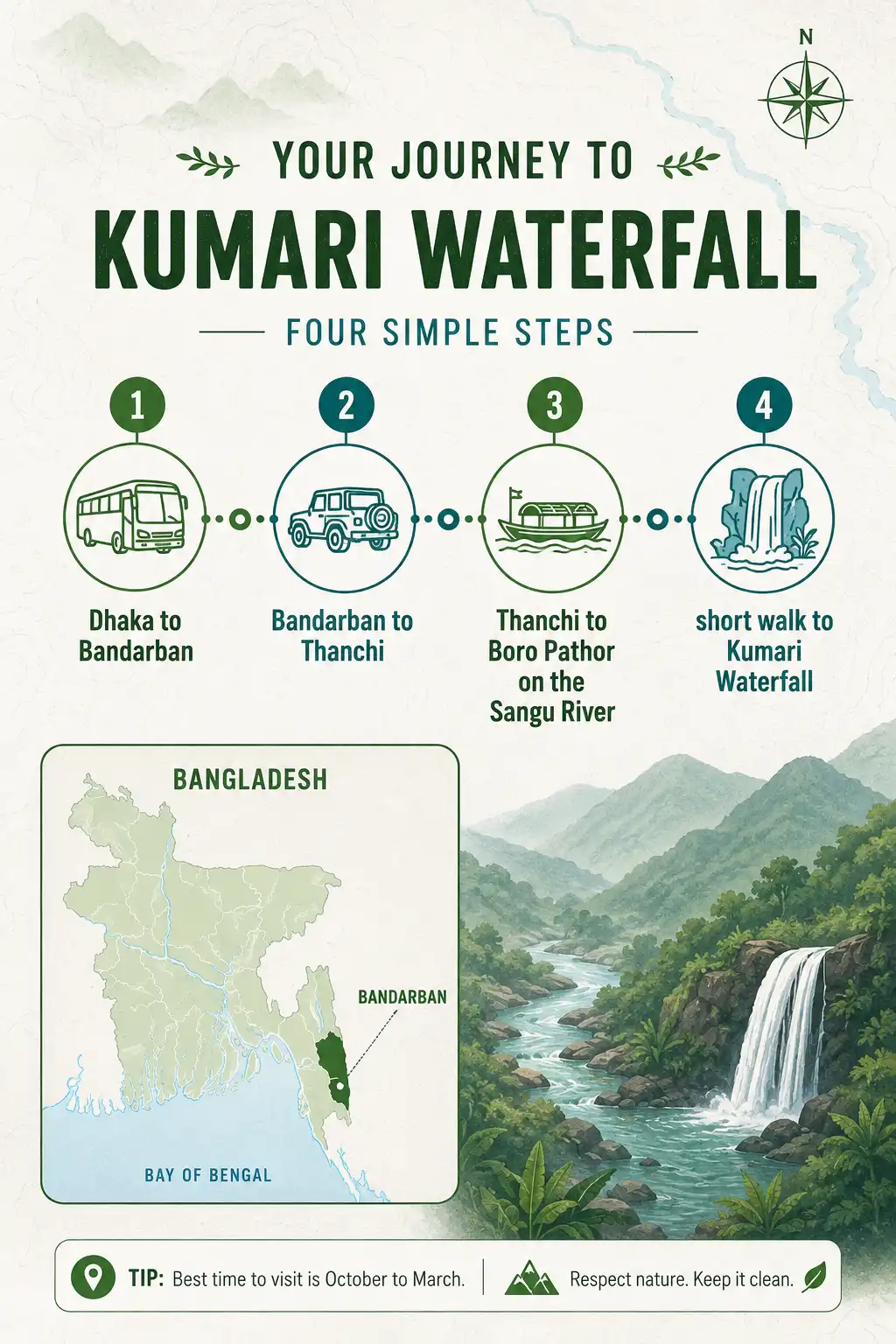
Getting to Kumari Waterfall takes a few clear stages. Here is the route I follow.
- Dhaka to Bandarban. First, travel from Dhaka to Bandarban district town. Night coaches make this run regularly, and the morning gives you a full day to push deeper.
- Bandarban to Thanchi. Next, take a local bus or chander gari (the open jeeps) from Bandarban town to Thanchi. The road climbs through real hill country, so leave early.
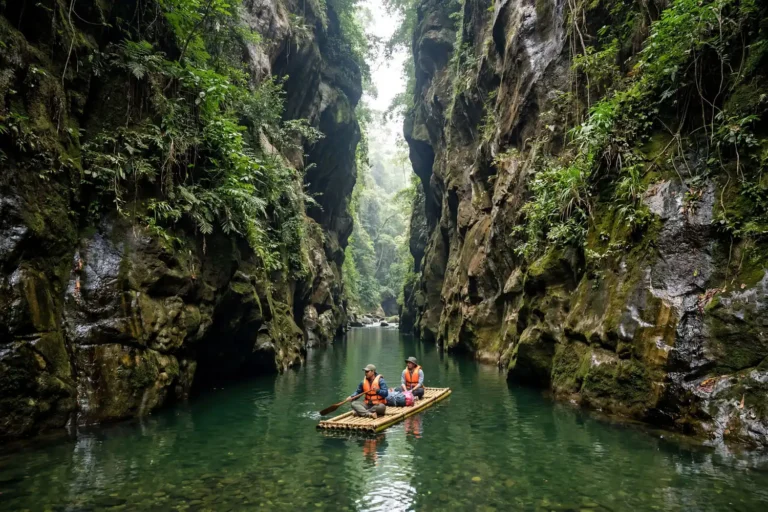
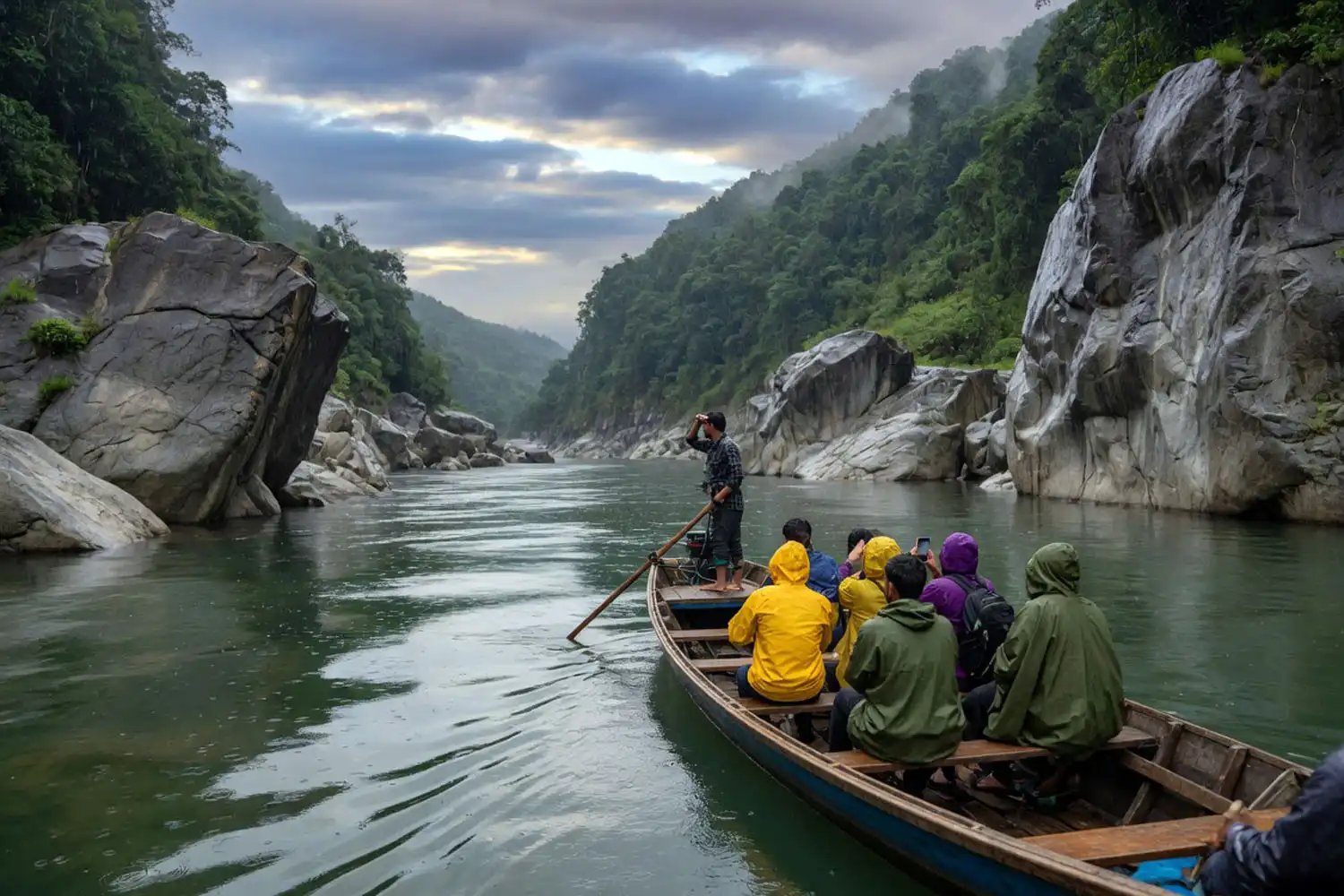
- Thanchi to the falls by boat. From Thanchi, hire a boat and head up the Sangu River toward Remakri. After a while you reach the Boro Pathor or Raja Pathor area. Step off there, walk a short stretch, and you arrive at Kumari Waterfall.
A few practical notes from my own trips. You usually register with the local authorities in Thanchi and hire a licensed guide before going up the river, and rules on this route do change, so confirm the current requirements when you arrive. Also keep your footing in mind, because the rocks near the water turn slick in the rain. New ground always throws people off, so a quick read on keeping your bearings on unfamiliar trails is worth your time. Finally, costs add up across boats, transport, food, and the guide, so it pays to map out your trip budget before you leave home.
Where to stay near Kumari Waterfall
There is no lodging at the falls themselves, so plan to sleep in Thanchi town. After you see Kumari Waterfall, head back to the Thanchi Upazila headquarters for the night. A handful of hotels and rest houses sit there, including the BGB Border Obokash Resort, Chingky Mro Guest House, Meghbati Resort, the Zila Parishad Rest House, and Thanchi Kutir, plus a few smaller options.
Based on what local guides and travel sources report, a room here runs somewhere between 700 and 2,000 BDT a night. However, rates shift with the season and demand, so confirm the price directly before you book. During peak monsoon weekends the better rooms fill quickly, so reach out early if you want a specific place.
Where to eat in Thanchi
You will find several restaurants around Thanchi bazaar serving simple local and everyday meals. The hill food here usually leans on local vegetables and fresh fish, and most travelers enjoy it. Portions are honest, prices stay reasonable, and after a long boat day a hot plate of rice and fish goes down well. Carry a few snacks too, because shops thin out once you leave the bazaar.
What to pack and a few trekking tips
The walk to Kumari Waterfall is short, but monsoon conditions still demand the right gear. Rain is the whole reason you came, so prepare to get wet and stay comfortable anyway. Here is what I keep on hand for this stretch.
- Quick-dry clothing and a packable rain layer. Cotton stays wet for hours, so skip it. Synthetic or quick-dry fabric handles the damp far better.
- Grippy footwear. The riverside rocks get slippery, therefore solid traction matters more than anything fancy.
- A dry bag for electronics. Phones, cameras, and power banks need protection from spray and sudden downpours.
- Basic first aid. Cuts and slips happen on wet stone, so pack the essentials.
- Cash. Card payments are rare out here, so carry enough notes for the boat, food, and your room.
Staying dry without cooking yourself is a real skill in this weather, and my guide on hiking in the rain without overheating covers the layering tricks I use. Move at a steady pace on the rocks rather than rushing, because most monsoon injuries come from one careless step.

Other places to see nearby
You do not have to stop at Kumari Waterfall, since the same Sangu route opens up some of the finest scenery in the country. Keep going upriver and you reach Remakri and then the famous wide cascade of Nafakhum, often called the Niagara of Bangladesh. Many travelers fold both into one trip, because the boat passes Kumari on the way anyway. If you want to add a real climb to the plan, the nearby Keokradong summit route makes a strong follow-up for a longer Bandarban adventure.
FAQs on Kumari Waterfall

Is Kumari Waterfall hard to reach?
Does Kumari Waterfall have water all year?
Do I need a guide to visit Kumari Waterfall?
Can I see Kumari Waterfall and Nafakhum in one trip?
Final thoughts
Kumari Waterfall rewards travelers who time it right. Catch it in the monsoon and you get a full, rushing cascade tucked beside the Sangu, reachable with only a short walk off the boat. Visit in the dry months and you may find bare rock instead. So plan around the rain, sort your Thanchi lodging in advance, and treat the wet stones with respect. Pair it with Remakri and Nafakhum if you can, and one short stop turns into one of the better river journeys Bandarban has to offer.