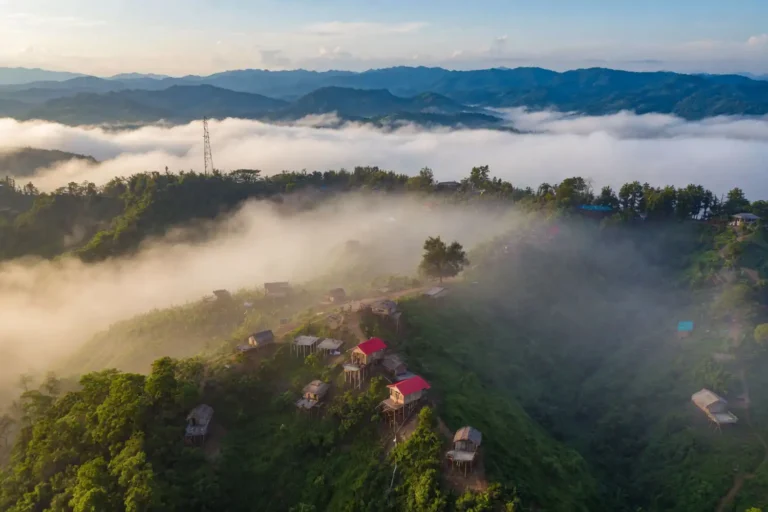
Langlok Waterfall: Bangladesh’s Tallest Falls Travel Guide

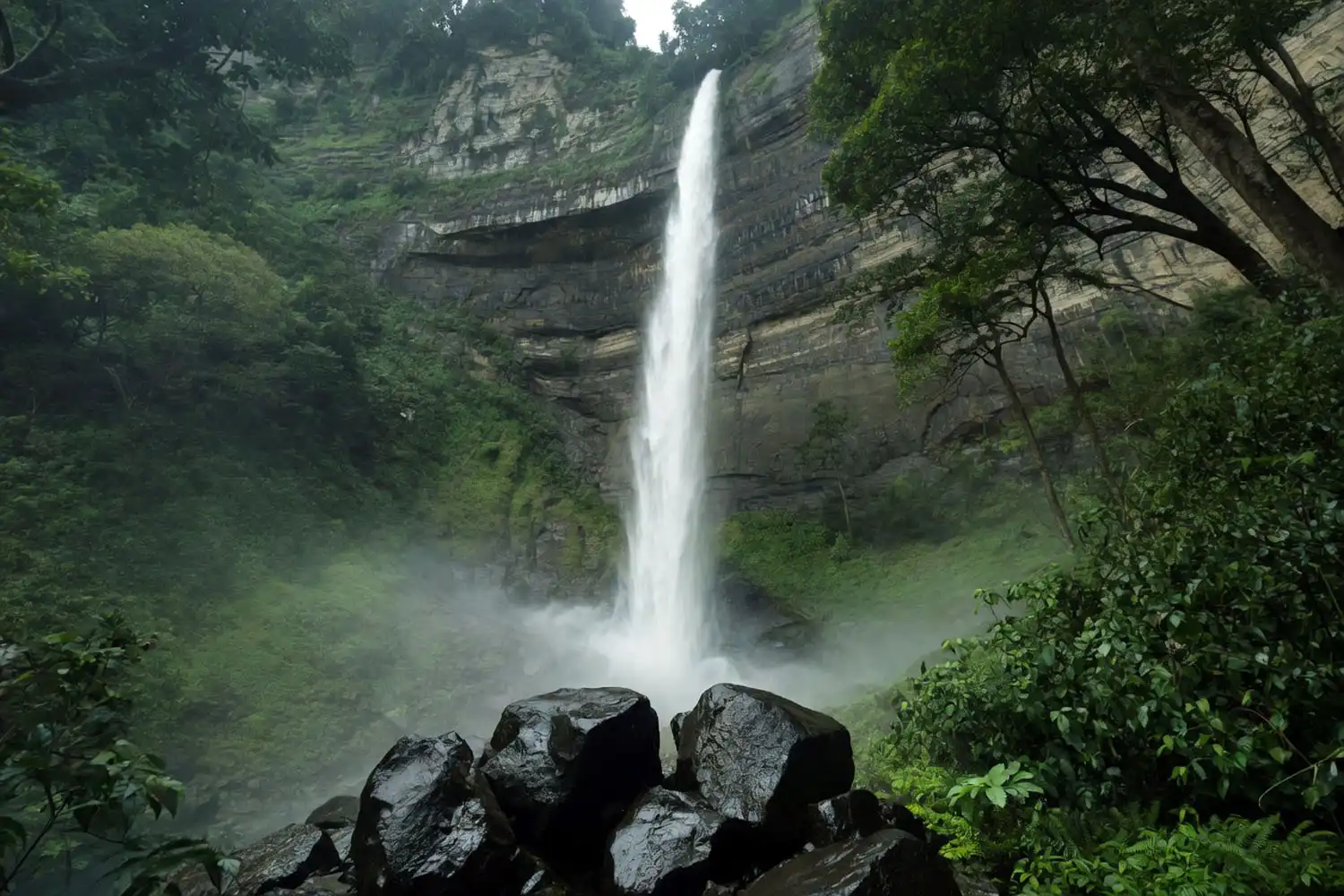
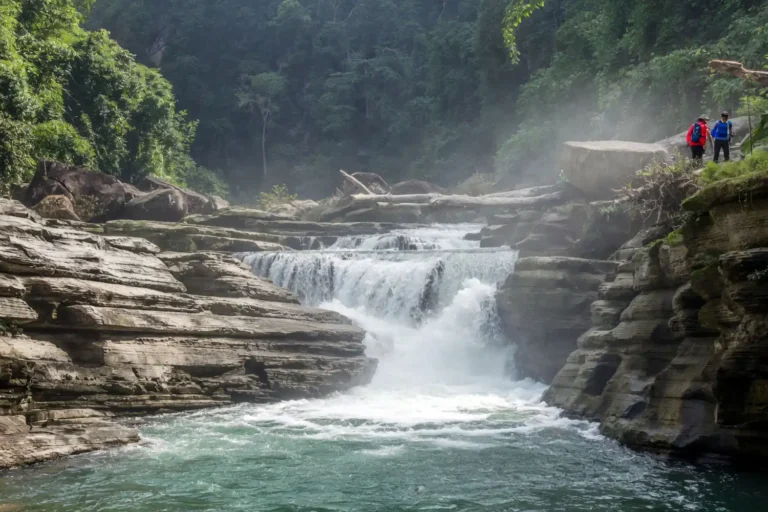
Langlok Waterfall, known locally as Liluk Waterfall, sits in Tindu Union of Thanchi Upazila in the Bandarban district of southeastern Bangladesh. Fed by the Langlok stream off the Chimbuk hill range, it drops down a forested cliff and eventually feeds the Sangu River. Many adventure travelers call it the tallest waterfall in the country.
I have spent years trekking through the Bandarban hills, and Langlok still stands out. The trail is rough, the boulders are slick, and the payoff at the end is one of the most dramatic drops I have seen anywhere in Bangladesh. So this guide covers everything you need: where it is, how tall it gets, the best season, the routes in, guides, food, lodging, and the tips I wish someone had handed me on my first trip.
See more: Debotakhum Bandarban: How to Visit
Where is Langlok Waterfall?
Langlok Waterfall is in Tindu Union, part of Thanchi Upazila in the Bandarban district. The water comes from the Langlok stream, which starts in the Chimbuk mountain range and runs down to join the Sangu River.
The name carries a small story. In the local Marma and Khumi languages, “Langlok” means bat. A bat cave sits beside the stream near the falls, so locals named the stream after it, and the waterfall took the same name. People from the nearby Khumi para also call it “Fi Fi Kle,” after the small finch-like birds that nest along the wet rock wall. Either name points to the same place.
Also see: Velakhum travel guide
How tall is Langlok Waterfall?
According to adventure groups, Langlok stands about 393 feet tall, which is why many people call it the tallest waterfall in Bangladesh. I have not seen an official survey confirm the exact figure, so treat it as the working number that local trekking organizers use.
Height alone does not tell the whole story, though. The volume of water changes the experience completely. After heavy rain the falls thunder down the full cliff, while in the dry months the flow thins out and the scale is harder to feel.
Learn more: Mirinja Valley Travel Guide
When is the best time to visit Langlok Waterfall?
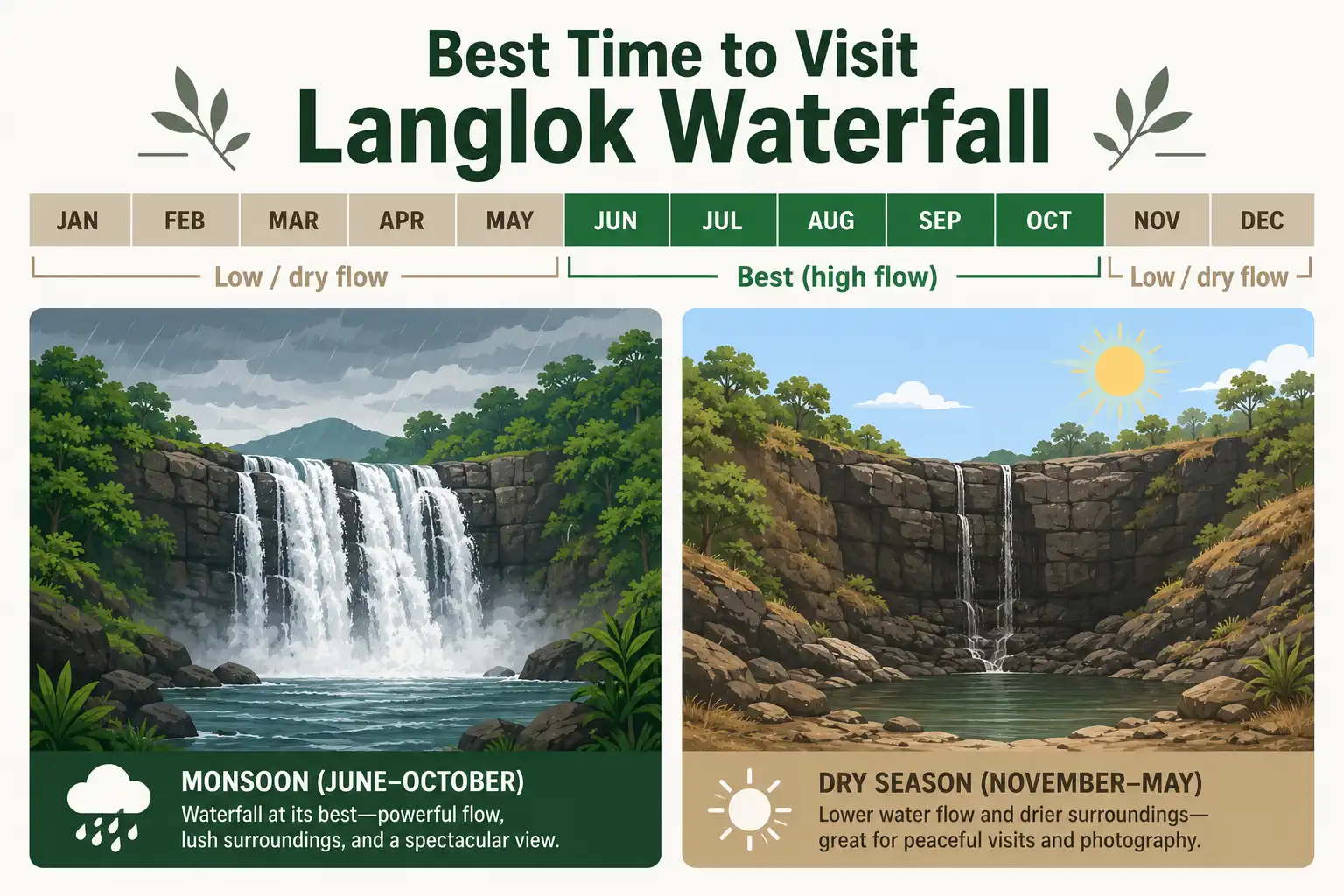
The best time to visit Langlok Waterfall is June through October, during and just after the monsoon. That window gives you the strongest flow and the fullest view of the drop.
During the dry season the water drops sharply. Sometimes the falls run nearly dry, so the trip loses much of its payoff. Rain changes everything here, and a good downpour fills the stream fast. Therefore, if you want the real spectacle, plan around the wet months rather than the dry ones.
How do you get to Langlok Waterfall?
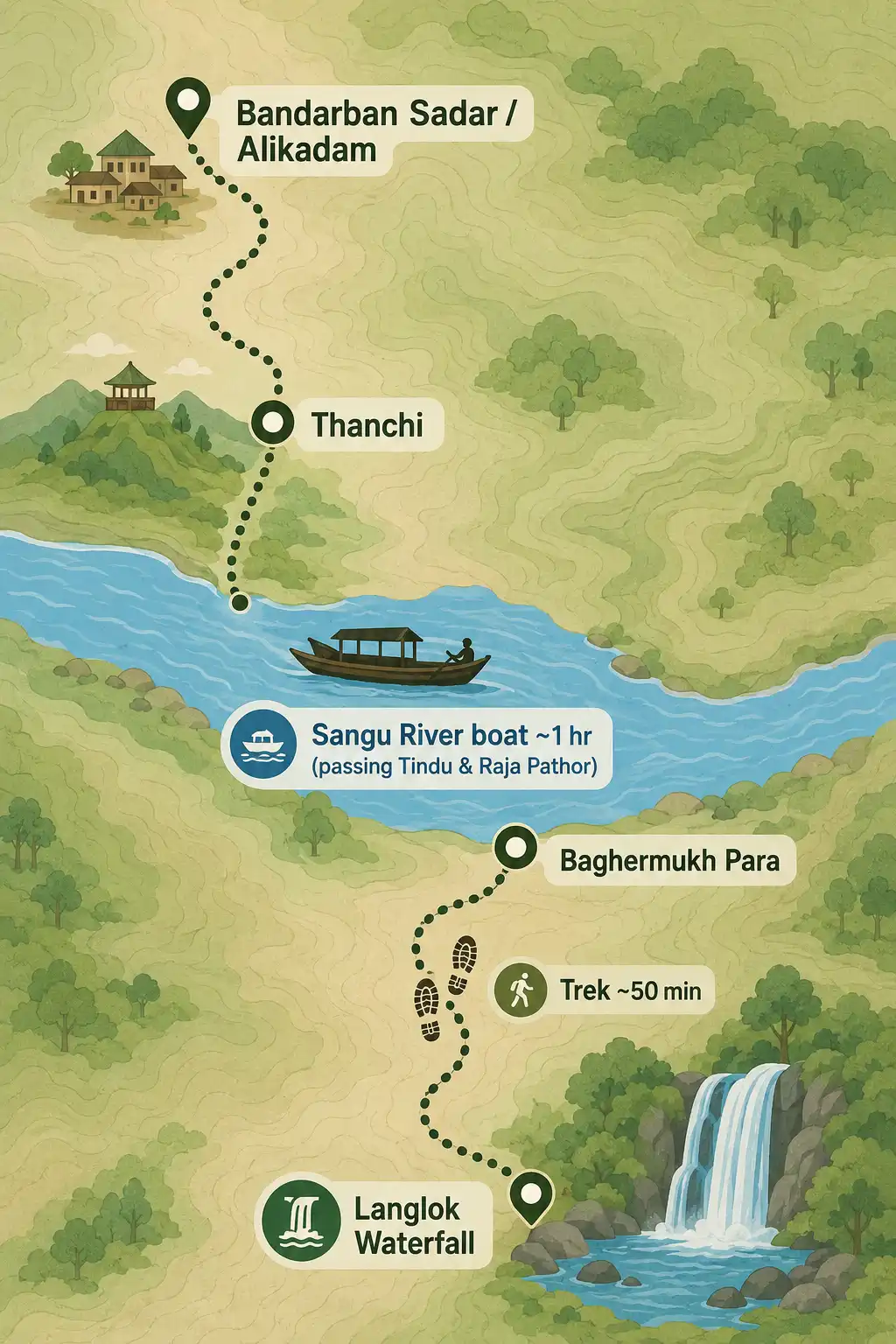
You reach Langlok Waterfall through Thanchi, either straight from Bandarban Sadar or by way of Alikadam Upazila. Some travelers skip Thanchi town and use the 21-kilometer point on the Alikadam to Thanchi road, then cut through Tindu to the falls.
Reaching Thanchi
First, get yourself to Thanchi. Most people come from Bandarban Sadar, while others route through Alikadam. Both options feed into the same starting area for the boat ride.
From Thanchi to Baghermukh Para by boat
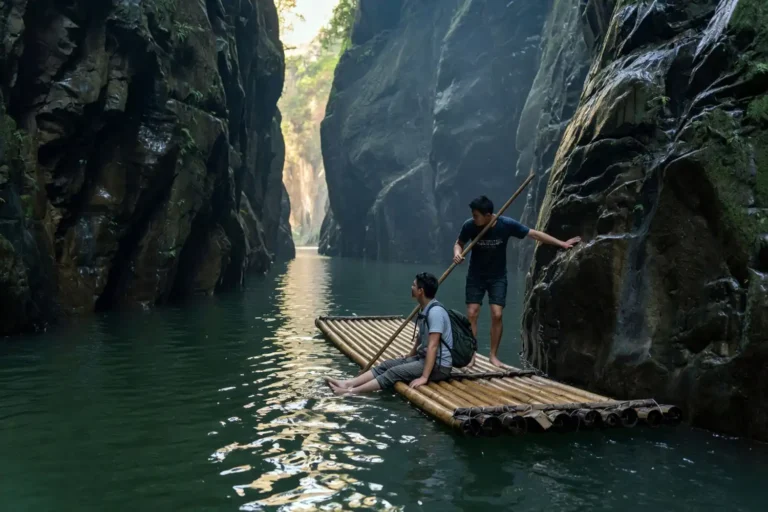
From Thanchi you take a small engine boat up the Sangu to Baghermukh Para. The ride runs about an hour, though the dry season can stretch it out when the water is low. A round-trip boat costs roughly 3,000 to 3,500 taka (BDT), and one boat seats five people. Along the way you pass Tindu and the large Raja Pathor (King Stone) boulder area, which is worth a few photos on its own.
Trekking from Baghermukh Para to the falls
From Baghermukh Para, about 50 minutes of trekking brings you to Langlok Waterfall. The path climbs through hills, so slower walkers should budget extra time.
The route runs through dense jungle, over uneven winding ground and slippery stone. Then, when you finally reach the front of the falls, the climb pays off and the tiredness fades. If your timing is good and the water is high, you walk away with a memory that sticks for life. Take the climb at a steady pace and avoid burning out early, because the uphill stretches sneak up on you.
The Tindu route
You can also approach through Tindu. From Tindu para you walk along the Sangu River to Baghermukh Para, which takes about an hour, and then you trek the same final stretch. Alternatively, you can hire a boat from Tindu para to Baghermukh Para for roughly 1,000 to 1,500 taka round trip.
Do you need a guide for Langlok?
Yes, you need a local guide for Langlok, whether you go through Thanchi or Tindu. You will find guides at Thanchi Bazar, and if you start from Tindu you simply bring someone local from the para.
A guide runs about 800 to 1,000 taka for the day. Beyond showing the way, your guide handles permission and helps sort out the boat. So if you already know a reliable guide, call ahead and lock in the date before you arrive.
Where to stay near Langlok Waterfall
For an overnight trip, you can stay in indigenous homes at Tindu para or Baghermukh Para. Thanchi Bazar also has a handful of basic cottages and a BGB resort if you prefer staying closer to town.
Conditions are simple, so set your expectations accordingly. These are remote hill communities, not resort areas, and the welcome stays genuine even when the rooms are plain.
Where to eat
If you tell the para families ahead of time, they will arrange meals for you. Small shops in the paras also sell tea and light snacks. For a proper meal, head to the food hotels near the bridge at Thanchi Bazar, which serve decent fare before or after the trek.
A two-day tour plan around Langlok
Langlok pairs well with the other sights in this corner of Bandarban, and two days lets you see several. On the way in you can stop at Tindu, the big stone area, and Kumari Waterfall. Farther out sit Remakri and the famous Nafakhum falls, along with Amiakhum. Closer to Thanchi you will also find the Toma Tungi tourist spot and Dim Pahar (Egg Hill). For another classic hill challenge, the trek up Keokradong is worth adding to a longer trip. So decide how many days you have and how you plan to travel, then build the route around that.
Travel tips for Langlok Waterfall
A few hard-earned pointers will make the trip smoother and safer:
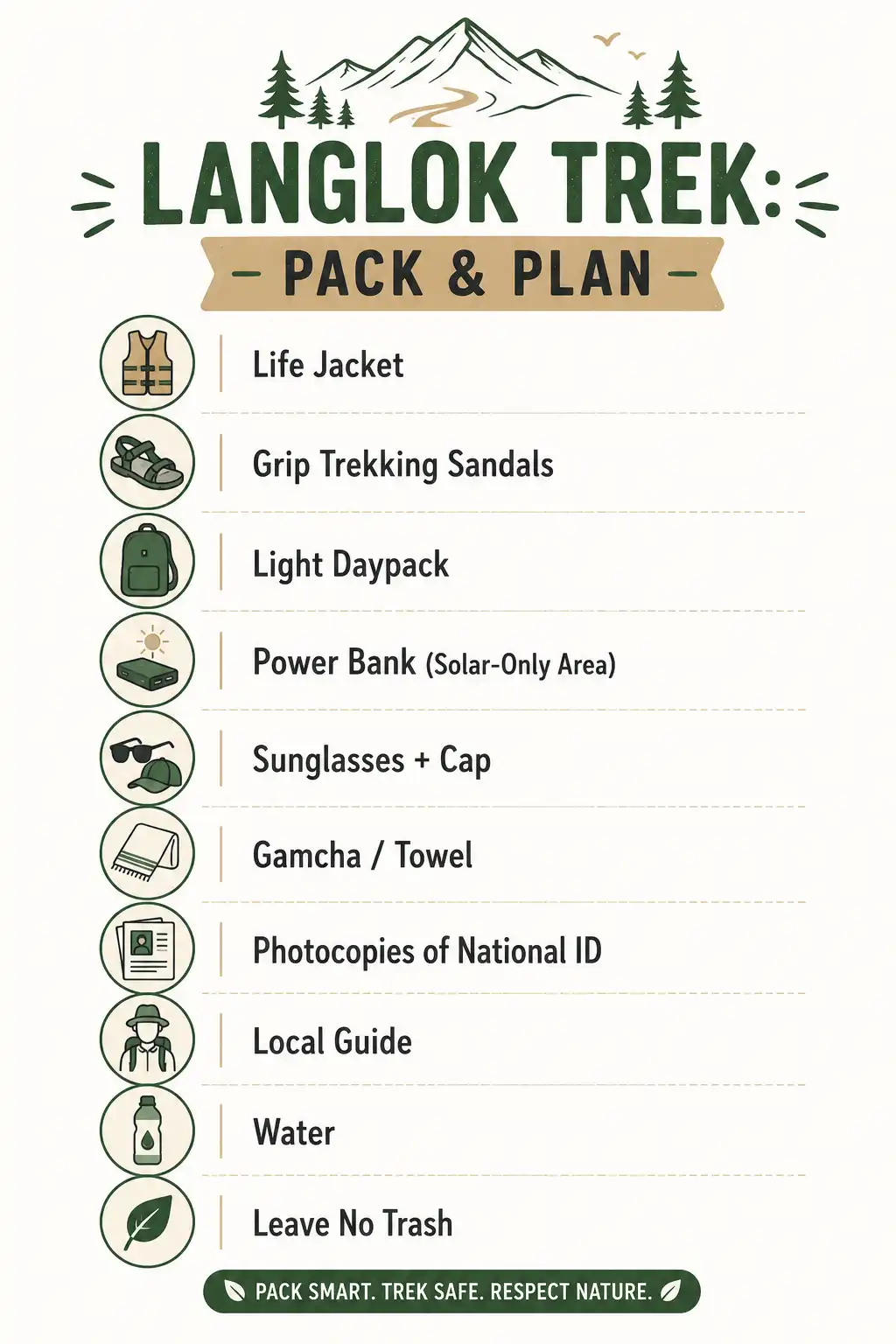
- The Sangu turns rough during monsoon, so grab a life jacket when you rent the boat.
- Trails here stay slippery, therefore good-grip trekking sandals or shoes matter a lot. Long days on wet rock also wear on your feet, so take steps to keep blisters off your feet.
- Keep your load light. A well-organized day pack for the trail makes the climb far easier.
- Be careful near the base of the falls. When the water is heavy, do not try to climb down.
- Large boulders line the approach, and they get very slick, so watch every step.
- Avoid any unnecessary risk out there.
- You get Robi and Airtel signal around Thanchi, but coverage disappears once you head inside.
- The paras have no grid electricity and run on solar, therefore carry a power bank.
- Bring sunglasses, a cap, and a gamcha (cotton towel) to handle the heat.
- Always carry several photocopies of your National ID card.
- Talk to your guide whenever you are unsure about something.
- Respect the local communities and avoid behavior that might bother them.
- Finally, never leave trash or plastic on the trail or near the falls.
FAQs on Langlok Waterfall

Is Langlok the tallest waterfall in Bangladesh?
How hard is the Langlok trek?
Can you visit Langlok in a single day?
Do you need permission to visit Langlok?
Final thoughts
Langlok rewards the effort it asks for. The boat ride, the jungle climb, and the slippery boulders all add up to one of the most striking waterfalls in Bandarban, especially when the monsoon fills it out. So go between June and October, hire a good local guide, pack light, and treat the hills and the people with care. Do that, and you will likely come home with the kind of memory that pulls you back to these mountains again.