Ali’s Cave (Alir Guha): How to Reach, What’s Inside, and Travel Tips

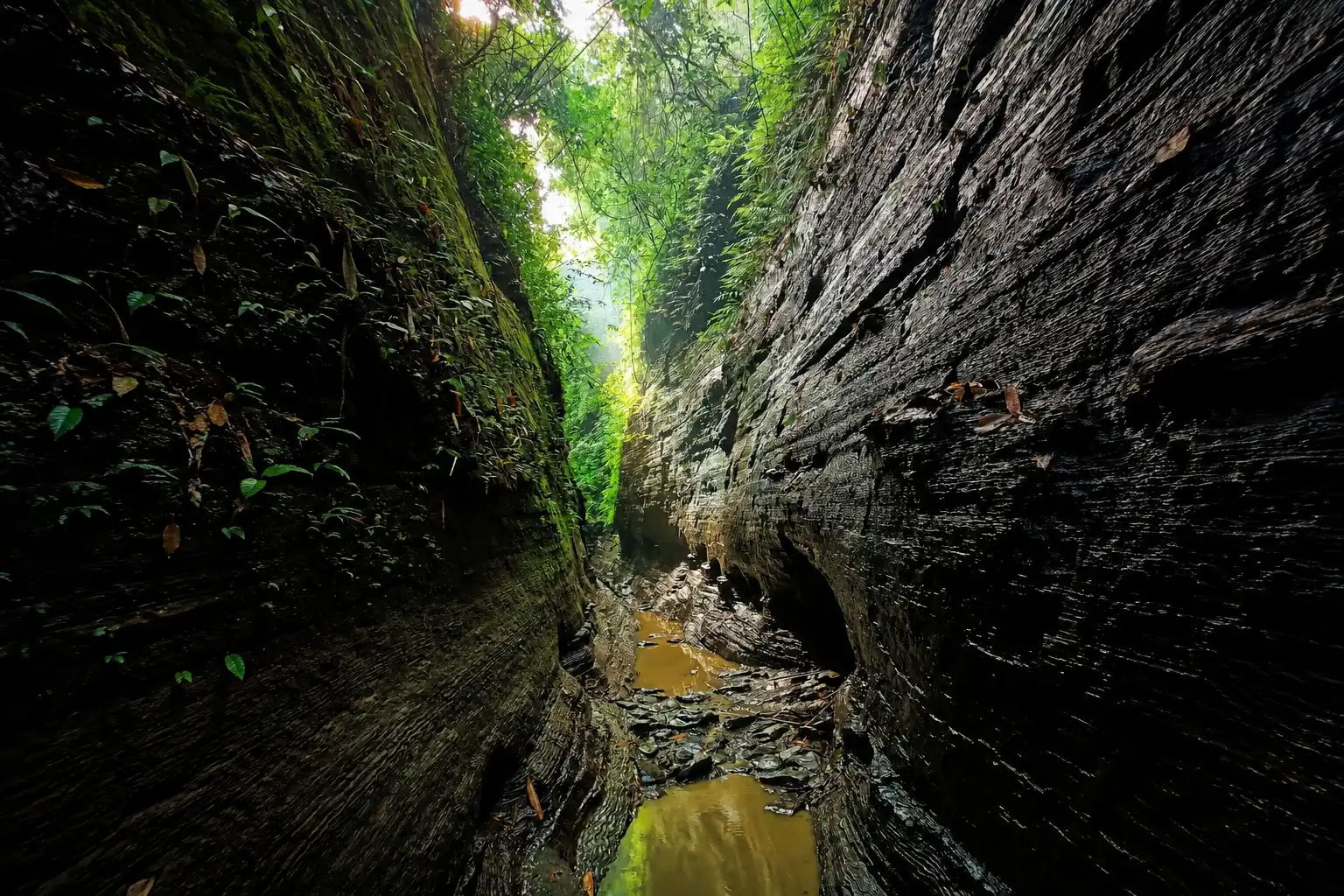
Ali’s Cave (আলীর গুহা), also called Alir Guha or Ali’s Tunnel (আলীর সুড়ঙ্গ), is a naturally formed cave system in Alikadam Upazila of Bandarban district. It sits on the crest of two hills beside the Matamuhuri–Toain canal, about three kilometers from Alikadam town. The site takes its name from the nearby Alir Pahar, or Ali’s Hill.
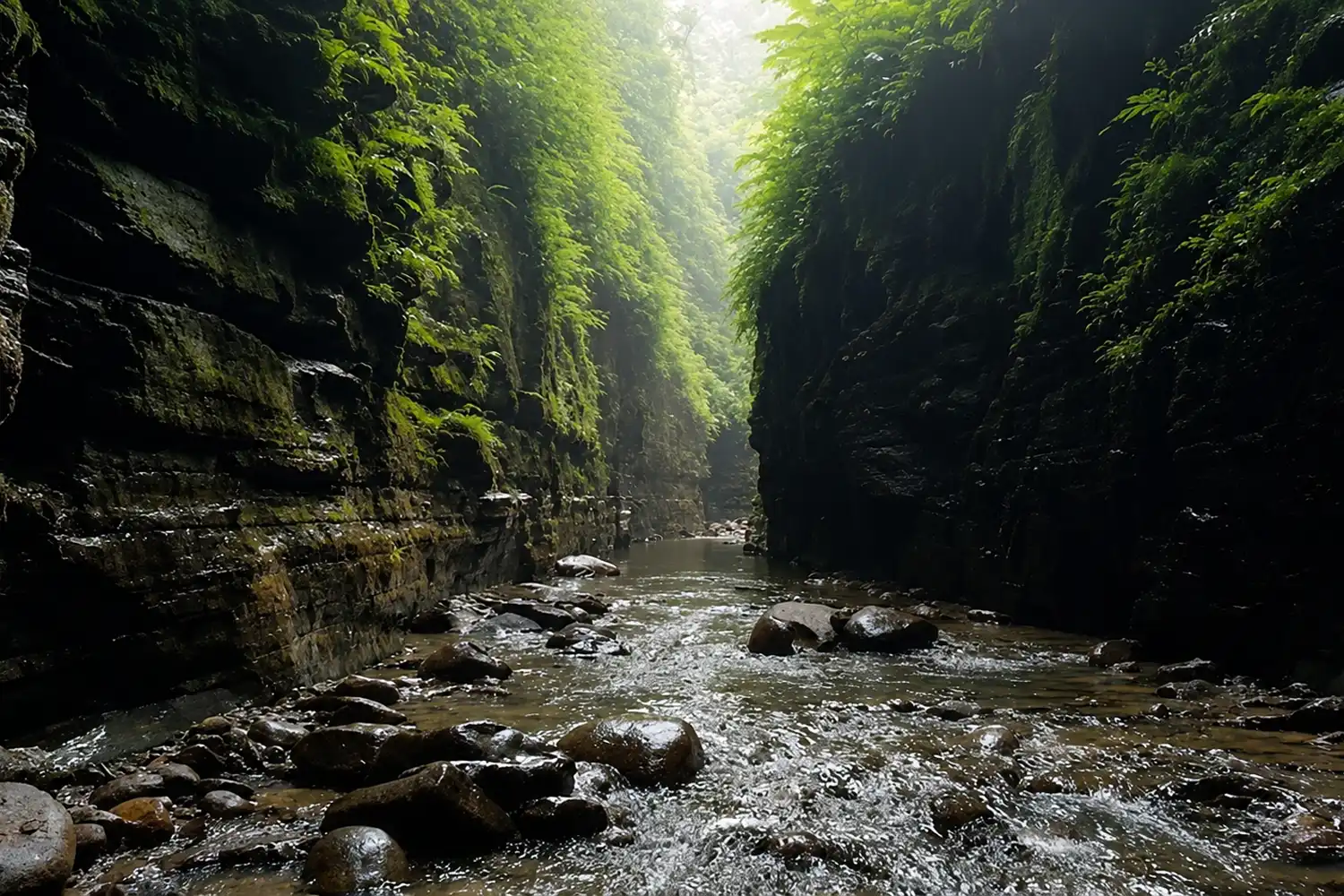
Ali’s Cave is actually three separate caves. You reach them on foot along a rocky jhiri (stream) path from Mongchupru Para, near Alikadam. Plan about two hours to see all three inside, and roughly three hours round trip from town. Carry a torch, because the caves are pitch dark.
Is Ali’s Cave open to tourists in 2026?
Yes, Ali’s Cave in Alikadam is open to visitors. The Bandarban administration lifted its last district-wide travel bans in June 2025, opening all seven upazilas of the district to tourists. In July 2025, the deputy commissioner confirmed there was no travel ban on any destination open to the public. Alikadam itself reopened a little earlier, in late 2024, along with Bandarban Sadar, Lama, and Naikhongchhari. Conditions in the hill tracts can still change, though, so check the latest before you lock in dates.
Before you go: Carry a photo ID. For spots in Alikadam, the usual practice is to give your national ID card and phone number at the army check post, take permission to go ahead, and finish the tour the same day. A local guide is recommended, and grip shoes plus a working torch are not optional on this trek.
Also know: Toma Tungi Resort Travel Guide
How do you reach Ali’s Cave?
You reach Ali’s Cave by first getting to Alikadam in Bandarban, then walking in from Mongchupru Para. Two main routes lead to Alikadam: through Chakaria in Cox’s Bazar, or from Bandarban town along the Thanchi–Alikadam road. The Chakaria route is the easier and more time-saving of the two.
Dhaka to Alikadam
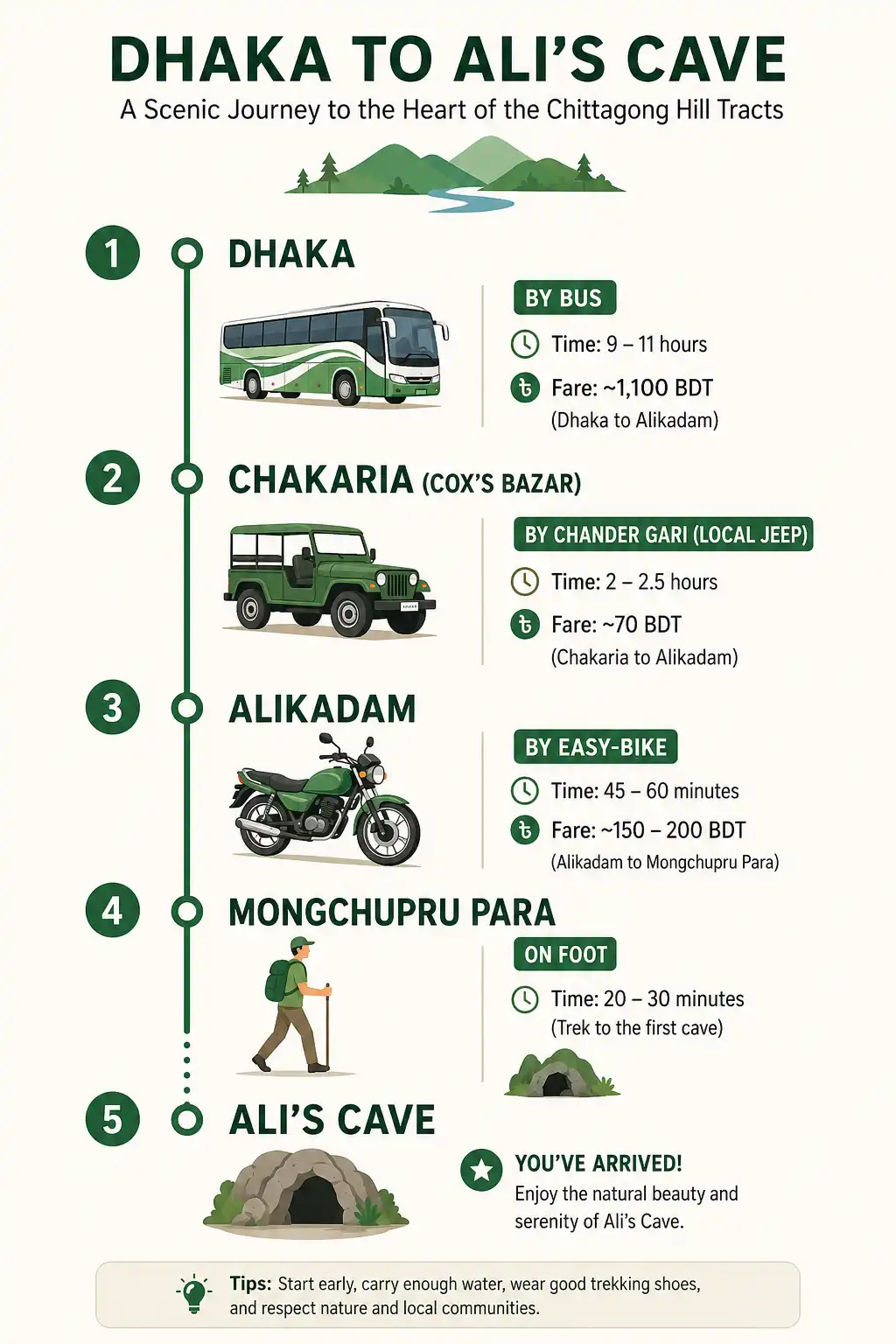
From Dhaka, Shyamoli NR Travels and Hanif Enterprise run direct buses to Alikadam. The fare is about 1,100 taka, which is roughly nine US dollars at current rates. As of mid-2026, one US dollar is worth about 122 to 123 taka, so all the taka figures here convert to small dollar amounts, and rates do shift. Going straight to Alikadam is the smart move from Dhaka. It saves time and cuts down on transfers.
Chakaria to Alikadam
You can also reach Alikadam through Chakaria. Any Cox’s Bazar–bound bus will drop you there, and the Dhaka–Chakaria fare runs from 950 to 2,200 taka depending on the class of bus. Ask the supervisor to let you off at Chakaria Bazar. From the new bus terminal in Chakaria, local buses leave for Alikadam every day between 7:30 a.m. and 6:30 p.m. A bus takes about two hours. Alternatively, you can take a local Chander Gari (a jeep), or reserve one if your group is large. The local Chander Gari fare is around 70 taka per person, while a reserved jeep costs about 1,200 to 1,500 taka one way after some bargaining. The jeep is a little quicker than the bus.
Alikadam to Ali’s Cave
From Alikadam, head first to Mongchupru Para. The roughly three-kilometer stretch is an easy walk, or you can hop on an easy-bike (locally called a tomtom). The Toain canal runs right past this para. After crossing it, you follow hill and jhiri paths for a while to reach the tunnel. From Mongchupru Para, the first cave is only 20 to 30 minutes away. So to see all three caves and get back, set aside about three hours from Alikadam.
What are the three caves like inside?
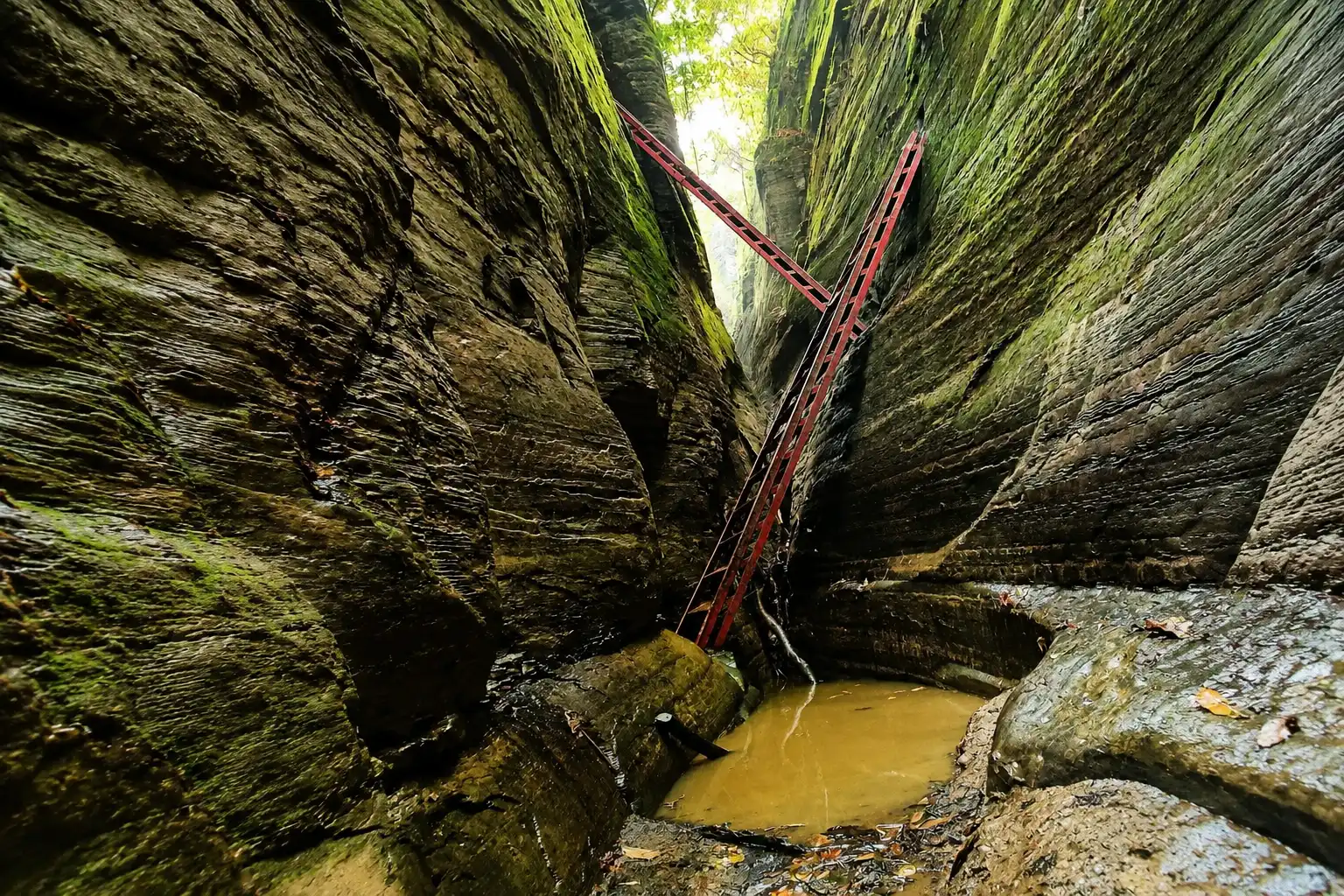
The three caves are dark, damp, and narrow in places, with bats living inside. You reach them along the jhiri, and each cave mouth sits above the stream. The first cave has steps built in, so getting up is simple. For the other two, you climb the hillside a bit.
Inside, it is completely dark. So a torch or headlamp is essential, and it helps to know how bright your light needs to be before you head in. Some stretches get tight enough that you crawl on your hands and knees. Meanwhile the air turns cool and damp, and the whole place feels still and a little eerie. Small and large bats roost in these caves. They dart around when they notice people, but there is nothing to fear from them.
Having grown up around the hill tracts myself, I can tell you the jhiri rock turns slick fast. Move slowly, and test each foothold before you trust it.
Where can you stay near Ali’s Cave?
You can see Ali’s Cave in a single day and head straight back. From Dhaka, take a night bus, tour the tunnel by day, and catch another night bus home. From Chittagong, an early start gets you there and back in one day too. If you do need a bed, or you are pairing the cave with more stops, Alikadam has a couple of options. The Damtua Inn on the new upazila road takes bookings (phone 01748-912127), and the Zilla Parishad Dak Bungalow is another choice. If your plan already includes the Mirinja Valley area, you can base yourself there instead.
When is the best time to visit Ali’s Cave?
The dry season is the better time to visit Ali’s Cave. During the monsoon, the jhiri fills with water and every surface gets more slippery, so the climb turns risky. The cooler, drier months are easier and safer underfoot. Because timing matters this much on hill trails, it pays to pick the best season for your trip and avoid heavy-rain days.
Where can you eat in Alikadam?
You will find simple local eateries in Alikadam’s Pan Bazar, and a few more around the town. The food is basic but decent. Expect rice with chicken, meat, or fish dishes. A meal costs about 100 to 300 taka. Also carry some dry snacks and water for the trail itself, since there is nothing to buy once you start the jhiri walk.
Do you need a guide for Ali’s Cave?
Yes, a guide is worth it, especially if you have not done this trek before. Tell your guide upfront that you want to see all three caves. You can hire a local from Mongchupru Para, or arrange someone in Alikadam. At the start of the jhiri path, a few young boys usually wait to lead visitors, and they are happy with whatever you pay them. A guide keeps you on the right line through the stream and up to the cave mouths.
Nearby attractions worth adding
Ali’s Cave pairs well with several other Alikadam and Bandarban sights. Right nearby you have the Matamuhuri River, plus the Marayon Thong hill with its hilltop Buddhist shrine, Dim Pahar (Egg Hill), and Maya Lake. Note that overnight camping on Marayon Taung is no longer allowed; visitors must finish between 6 a.m. and 5 p.m. and head down before 6 p.m. You can also head over to Sukhiya Valley, and from Alikadam the road runs on toward Thanchi. If you have time for a waterfall, the trail to Thankowain Waterfall is another Alikadam outing. Map out what you want first, then build your route around it.
Tips and safety for Ali’s Cave
A few practical things keep this trek smoother and safer:
- The path to the tunnel is rocky and slippery, so step carefully the whole way.
- Wear shoes with solid grip. Tread matters more than brand here, and it helps to know how a hiking shoe should fit on uneven, wet ground.
- During the monsoon, the jhiri holds more water and turns slicker, so take extra care then.
- Pack a length of rope. It also helps for pulling up to the higher cave mouths.
- Do not shout or make noise inside the caves.
- Carry out all your trash, and leave nothing behind.
- Please do not do anything that harms the natural surroundings.
FAQs about Ali’s Cave

How many caves are at Ali's Cave?
How long does the Ali's Cave trip take?
Is Ali's Cave safe?
Can I visit Ali's Cave in one day from Dhaka?
Are there bats in Ali's Cave?
Final word
Ali’s Cave is one of those Alikadam trips you can finish in a day and still feel like you saw something genuinely unusual. Get to Alikadam through Chakaria, walk in from Mongchupru Para, and give yourself about three hours for all three caves. Bring a torch, wear shoes that grip, and take a guide if it is your first time. Travel light, respect the quiet inside, and carry your trash back out. Plan around the dry season, and the climb will be easier and safer.