Satvaikhum Travel Guide: Routes, Permits, Best Time to Visit

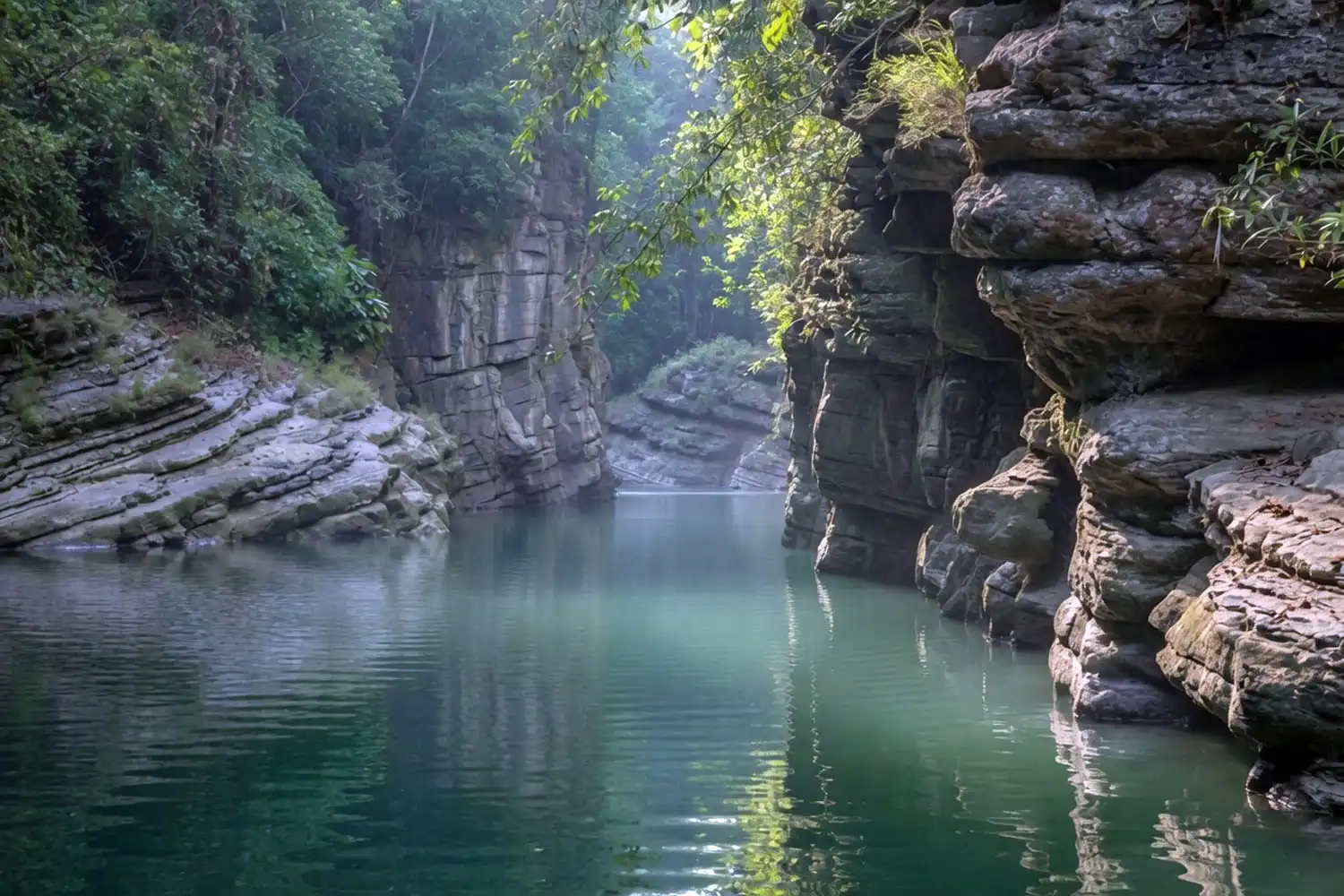
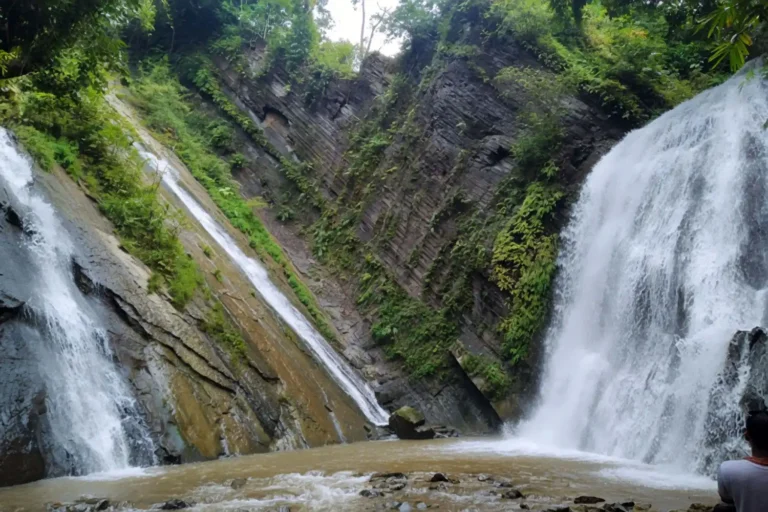
Satvaikhum (Bengali: সাতভাইখুম) is a remote waterfall and natural water body located in Remakri Union, Thanchi Upazila, Bandarban, Bangladesh. Set near the Bangladesh-Myanmar border, its clear green stream runs through a narrow gorge walled by towering stone cliffs that visitors cross by bamboo raft. Named after seven giant boulders that broke off Debota Pahar, Satvaikhum is one of the most breathtaking destinations for adventure lovers and nature seekers.
How to Reach Satvaikhum:
- Travel from Dhaka to Bandarban by bus or train
- Take a bus or Chander Gari from Bandarban to Thanchi
- Hire an engine boat from Thanchi up the Sangu River to Remakri
- Trek the Remakri canal to Nafakhum, then on to Thuisapara for the night
- Cross Debota Pahar to reach Amiakhum and finally Satvaikhum
A licensed guide and government permission are mandatory for all visitors. The best time to visit Satvaikhum is September through November.
I grew up in the hills around Kaptai, so the Bandarban ranges feel close to home for me. Even so, Satvaikhum caught me off guard the first time I floated into it. Stone walls shoot straight up toward the sky, the water turns a deep glassy green, and for a moment you feel like an unexpected guest at some ancient rock fortress.
About Satvaikhum
Satvaikhum sits beside Amiakhum and Velakhum in one of the most remote corners of Bandarban. You reach it only on foot and by boat, never by road. The full journey takes three to four days round trip from Thanchi. September through November is the sweet spot. A licensed guide and government permission are both mandatory, so sort that out first.
Also see: Debotakhum Bandarban
Where is Satvaikhum located?
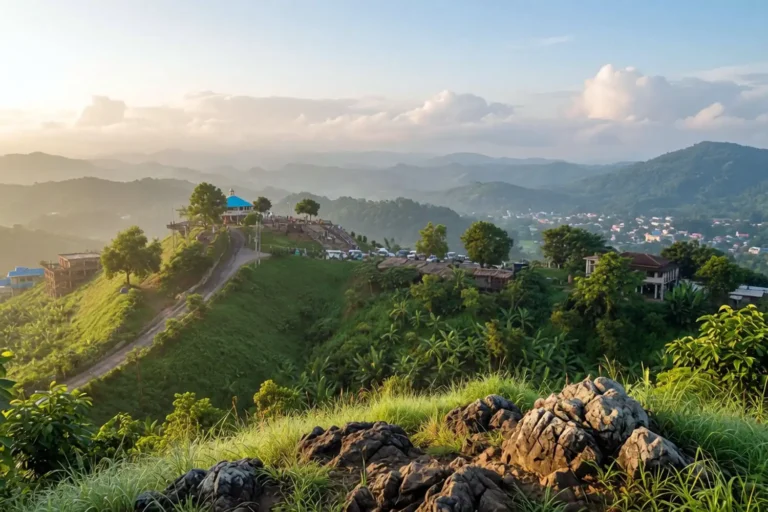
Satvaikhum sits at a remote spot called Naikshyong, inside the Remakri Union of Thanchi Upazila in Bandarban, right along the Bangladesh-Myanmar border. The gorge formed where huge boulders broke off the nearby Debota Pahar (Deity Hill) and piled up across a thin stream. Water now squeezes between those rocks, creating the calm green corridor that draws trekkers. Because it sits so deep in the hills, there is no direct road, no electricity, and no mobile signal for most of the way in.
How did Satvaikhum get its name?
Satvaikhum takes its name from seven large stones (“sat” means seven) that tumbled down from Debota Pahar and settled into the streambed. The first of those seven stones recently cracked into two pieces. Local people believe the gods cursed the hills because outsiders kept cutting trees without limit, and they read the broken stone as a sign of that anger. I always share this story with the people I travel with, since it reminds everyone to treat these hills with respect.
When should you visit Satvaikhum?
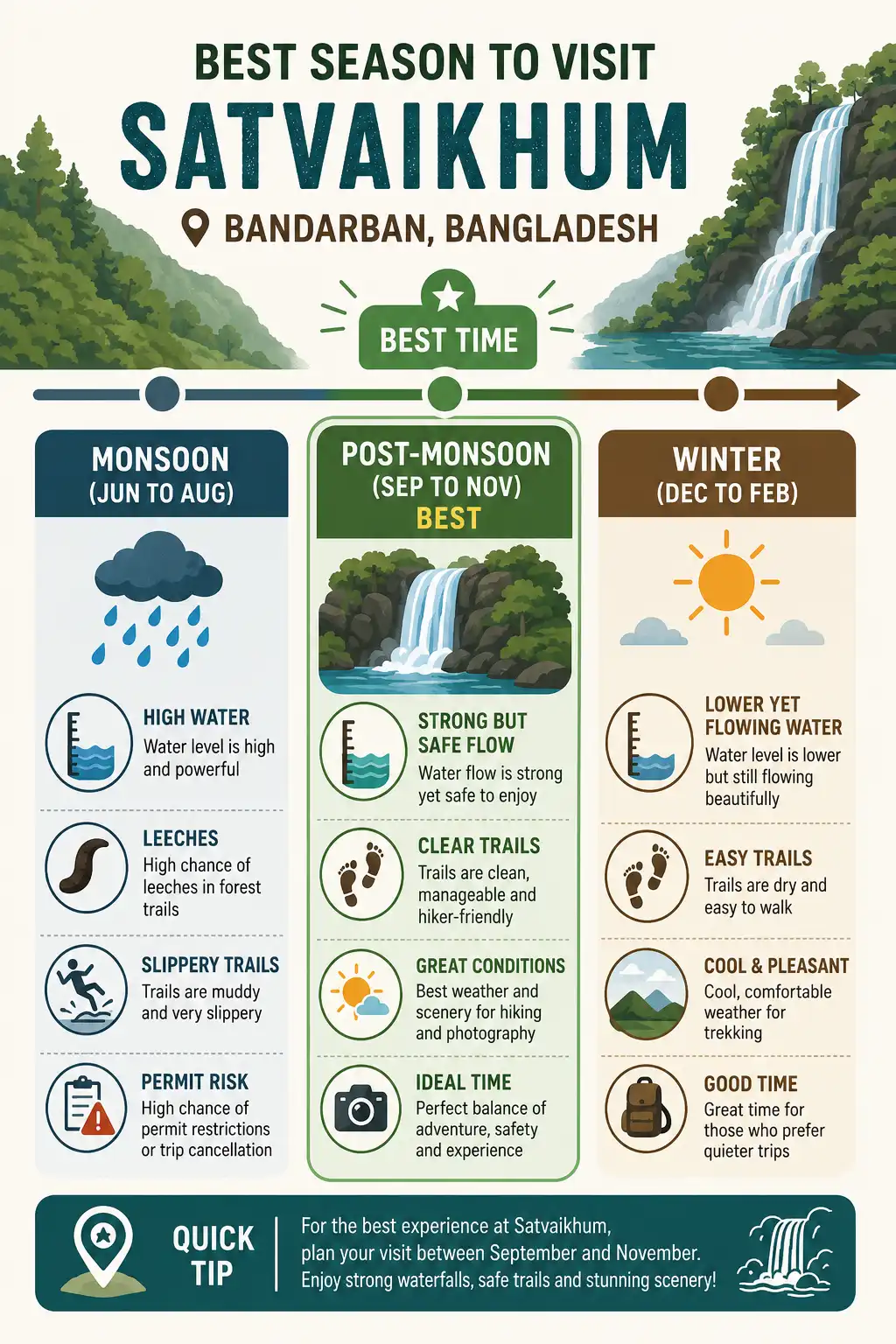
The best time to visit Satvaikhum runs from September to November, right after the monsoon and just before winter. Water flows strongest during the rains and thins out in winter, yet it never fully dries up, so each season shows a different face of the gorge.
I steer clear of the peak monsoon for a few solid reasons. During heavy rain, the Sangu River climbs close to its danger level, and the administration often refuses permission then. Leeches also come out in force. On top of that, the rocky paths turn slick, and sudden downpours can trap you. So the post-monsoon window gives you full water with far less risk.
How do you get to Satvaikhum?
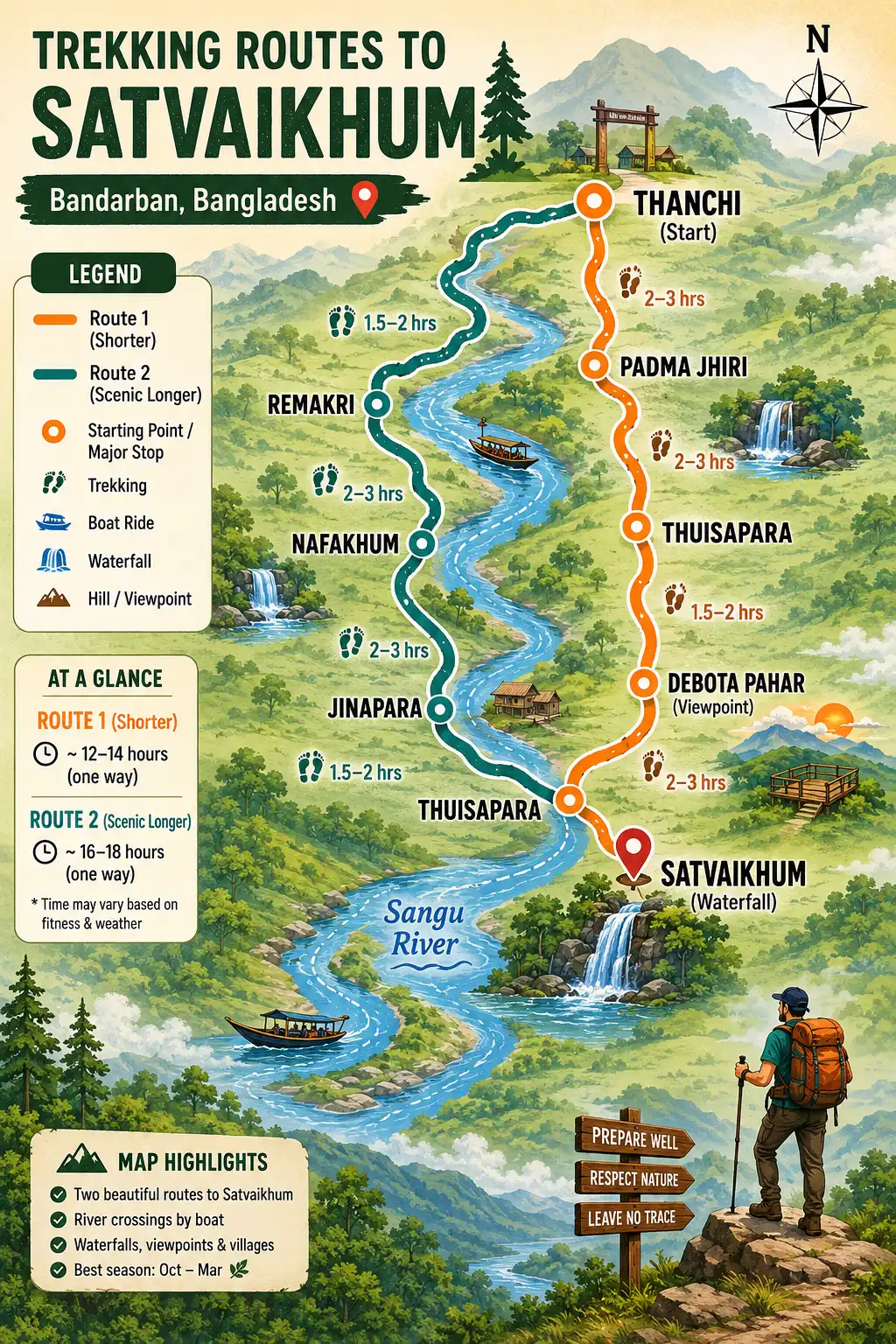
You first travel to Bandarban district, then to Thanchi upazila, and from Thanchi bazaar two routes lead to Satvaikhum. Both finish at the gorge by way of Debota Pahar, yet they differ a lot in difficulty.
- Route 1: Thanchi → Padma Jhiri → Thuisapara → Debota Pahar → Satvaikhum
- Route 2: Thanchi → Remakri → Nafakhum → Jinapara → Thuisapara → Debota Pahar → Satvaikhum
Route 1 demands six to seven hours of trekking just to reach Thuisapara, and sometimes you walk after dark. Route 2 feels easier and lighter on the legs because boats carry you part of the way. Many trekkers, myself included, take Route 2 in and save Route 1 for the return, or simply go and come back the same way. The breakdown below follows the popular Route 2.
Getting to Bandarban
Most travelers start from Dhaka. Buses from Kalabagan and Arambagh, run by companies like Shyamoli, Hanif, Saint Martin, and Desh, leave for Bandarban every day in AC, non-AC, and Hyundai coaches. Non-AC fares sit around 550 to 750 BDT, while AC seats run 1,200 to 1,500 BDT. If you take a night bus, you usually reach Bandarban by 7 in the morning.
You can also fly or take a train to Chattogram first. From there, buses leave from Baddarhat and Dampara stands for about 220 BDT, and a reserved microbus costs roughly 3,000 to 3,500 BDT. Fares shift over time, so confirm the current rate before you book.
Bandarban to Thanchi
From Bandarban town you reach Thanchi by local bus or by reserved jeep, the open-top vehicle everyone here calls a Chander Gari. Buses leave the Thanchi stand in Bandarban roughly every hour, cost about 200 BDT per person, and take four to five hours. The administration capped the Chander Gari fare at 6,000 BDT, though if you hire one a little before the official stand, you can sometimes save 500 to 1,000 BDT.
For a bigger group, the Chander Gari wins easily. It seats ten to twelve people and cuts the time to three or three and a half hours. Along the way you pass Milanchari, the famous Chimbuk Hill, and Nilgiri, plus a long stretch of gorgeous ridgeline where you can stop and take photos.
Thanchi to Remakri
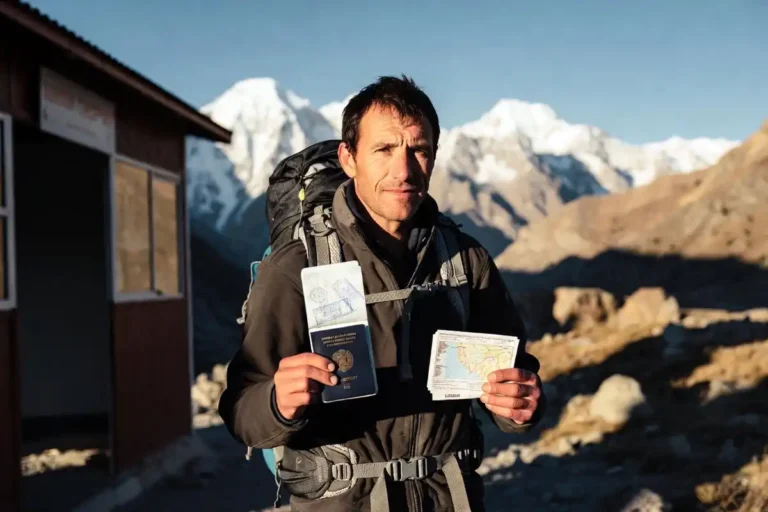
At Thanchi bazaar, the BGB camp keeps an official list of guides, and hiring one from that list is mandatory. A guide who stays with you from that day until your return the next day charges about 1,500 BDT. After that, you write down everyone’s name, address, phone number, home number, National ID copy, destination, and number of days, then collect permission from both the police station and the BGB camp. The thana also takes a group photo. Your guide walks you through every step of this.
Remember one rule: no office issues permission after 3 PM. So you must reach Thanchi before then, or you lose a day and start the next morning. Life jackets rent for 50 BDT each, and in monsoon everyone should wear one, while at other times each non-swimmer should at least carry one.
Once your permit clears, hire a small engine boat at the Thanchi ghat. The administration fixed this boat fare at 4,500 BDT for the trip out and the return the following day, and each boat holds four to five people. From there, the ride to Remakri takes around two and a half hours. When the water runs low, you may need to hop out and walk through a few shallow stretches.
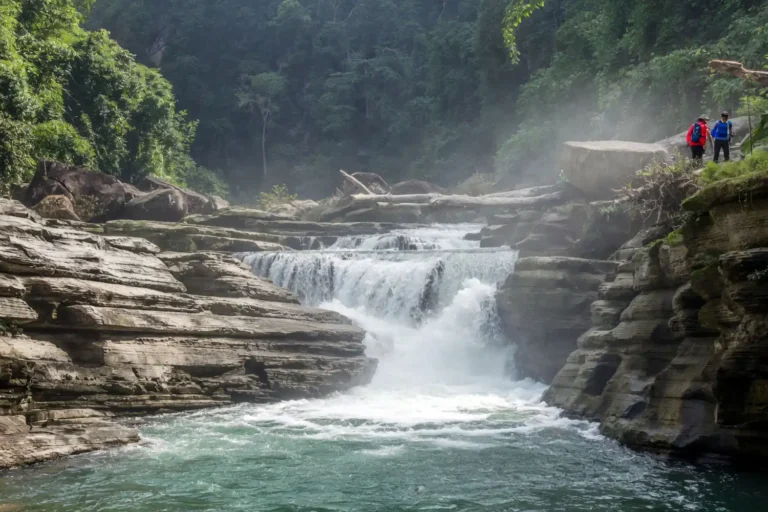
The Sangu River along this stretch is stunning. You float past Padmamukh, Tindu, Rajapathor, Borpathor, and finally Remakri. Security rules stop you from landing everywhere, yet you can get off at the Borpathor area for photos. At Remakri Falls, jump in for a quick wash, because the cold river water feels incredible after the heat.
Remakri to Thuisapara
If you reach Remakri late in the afternoon, spend the night there and head toward Nafakhum the next morning. You pick up a second local guide at Remakri for about 500 BDT, which your Thanchi guide arranges, and this person leads you onward. If daylight allows, you can push straight to Nafakhum the same day.
Following the Remakri canal on foot, you reach the broad Nafakhum falls in two to two and a half hours, faster if your legs are strong. Along the way you cross the canal two or three times, sometimes knee deep, sometimes waist deep, always against a strong current. Apart from two or three tricky spots, the path stays manageable.
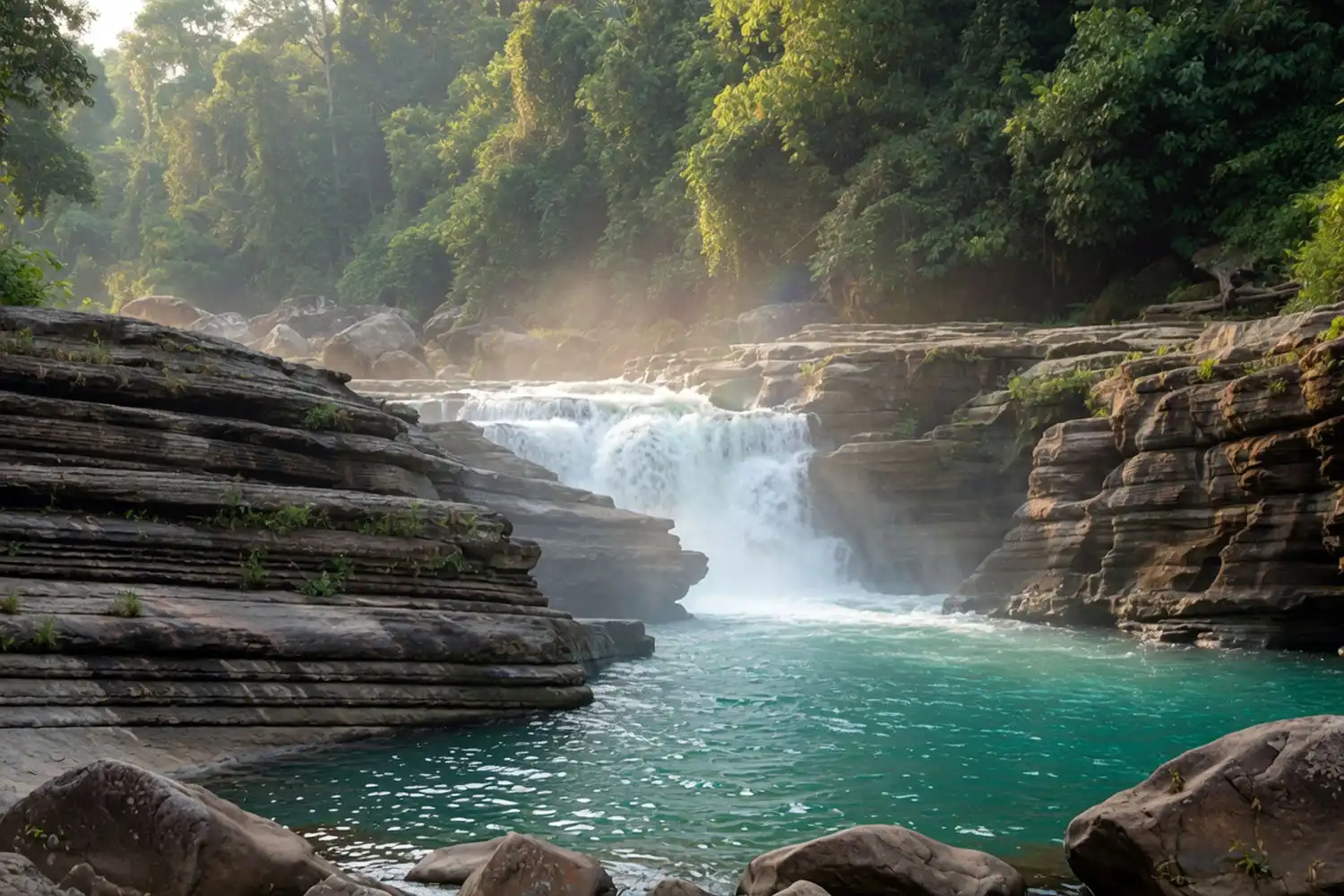
After Nafakhum, continue toward Thuisapara. From Nafakhum, another three to four hours of trekking brings you in. If the day grows long, you can stop at Jinapara, the village just before Thuisapara, and rest there instead.
Thuisapara to Satvaikhum
Spend the night at Thuisapara, then set out the next morning with one more guide (about 500 BDT) over Debota Pahar toward Satvaikhum. Two paths connect Thuisapara to the gorge: one mixes a stream bed with a hill trail, and the other stays purely on the hills. I usually take the hill trail going in and the stream path coming back.
On the pure hill route, thirty minutes of climbing brings you to the first peak. Rest a moment, then push on. Another thirty minutes lands you on the second hill, called Nicolas Pahar, where a few families live in Nicolas Para and, surprisingly, you catch a mobile signal. Take a short break here before the next stretch.
Soon you crest Debota Pahar itself. Coming down from this peak is hard and genuinely dangerous, so move slowly and stay focused. In places the slope drops at eighty to ninety degrees, and the descent alone can eat up nearly an hour. At the bottom, the right-hand trail heads to the Velakhum gorge and Naikshyongmukh, while the left-hand trail leads to Amiakhum and Satvaikhum.
From the base of Debota Pahar, a two to three minute walk drops you at the Amiakhum waterfall, and a short climb above it brings you to Satvaikhum at last. The whole stretch from Thuisapara takes about three hours, give or take, depending on your team’s stamina.
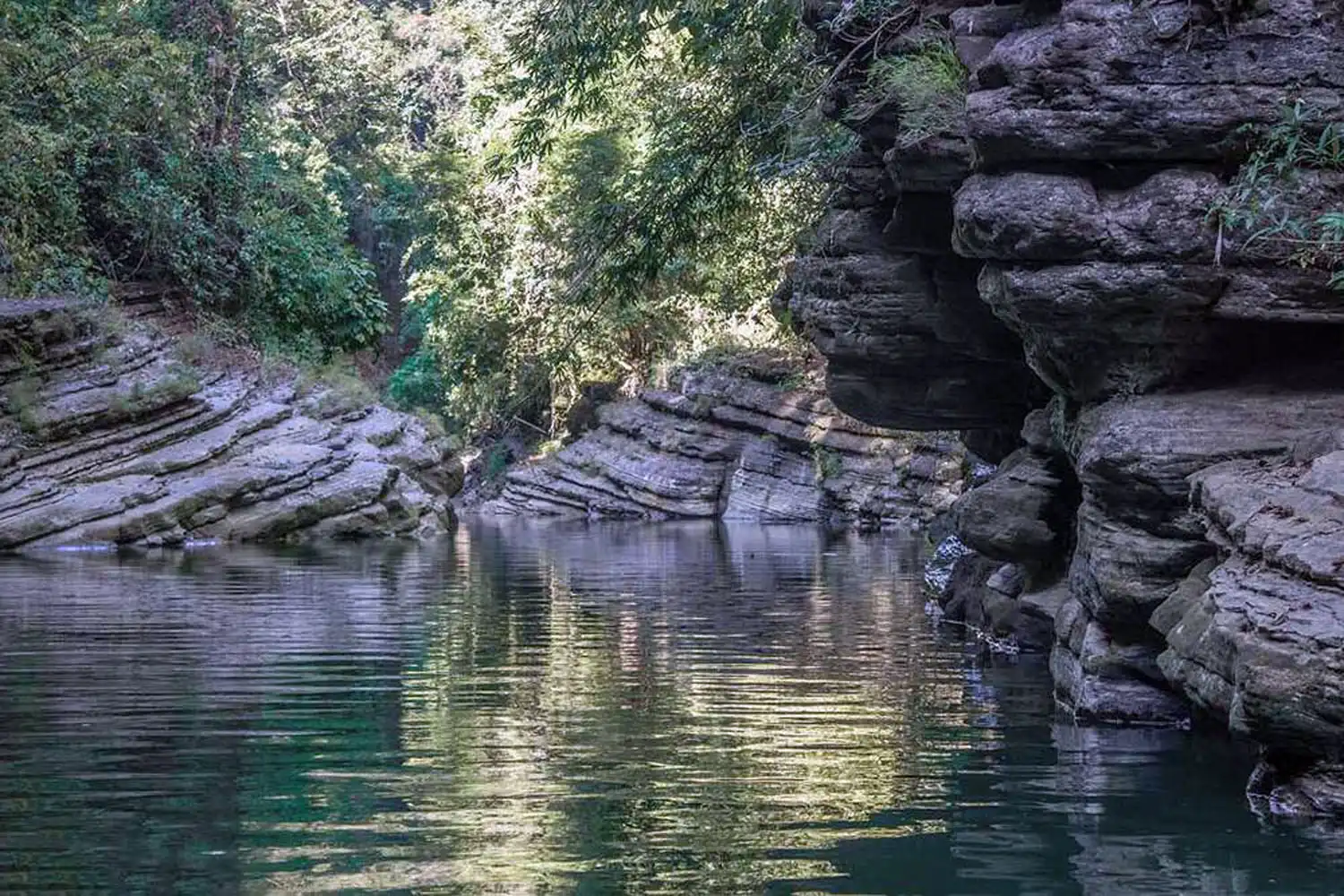
Here the real reward waits. A calm, clear, green stream slips between towering stone walls, and you drift through it on a bamboo raft while the cliffs rise on both sides. The round trip on the raft takes about fifty minutes. That glassy water looks so inviting that you will want to jump in, but it runs very deep, so I strongly suggest you stay on the raft.
Since Amiakhum and Velakhum sit right beside Satvaikhum, plan your days to cover all three together. On the way back, sleep at Thuisapara again, return to Thanchi by the same or a different route, then head from Thanchi to Bandarban and onward home.
Where to stay near Satvaikhum
Beyond Thanchi and Remakri, you will not find hotels or resorts, so indigenous family homes become your only and best option. These homes host travelers well, and your guide handles the arrangements. Along this long route you pass Remakri, Nafakhum Para, Jinapara, and Thuisapara, and most trekkers spend their nights in these villages. I have always found them safe and welcoming.
Where to eat on the trek
After Thanchi, you eat in indigenous homes, and they cook well for visitors. A typical plate includes rice, vegetables, dal, mashed potato, and chicken. Tell your guide your preferences ahead of time, and he will set it up. Still, carry light dry snacks such as dates, biscuits, chocolate, flattened rice, puffed rice, and fruit for the trail.
You also find small grocery shops in several villages selling cola, biscuits, and bottled water, along with fresh hill fruit worth tasting. The trekking here is hard work, so your body needs steady energy throughout.
Travel tips and safety for Satvaikhum
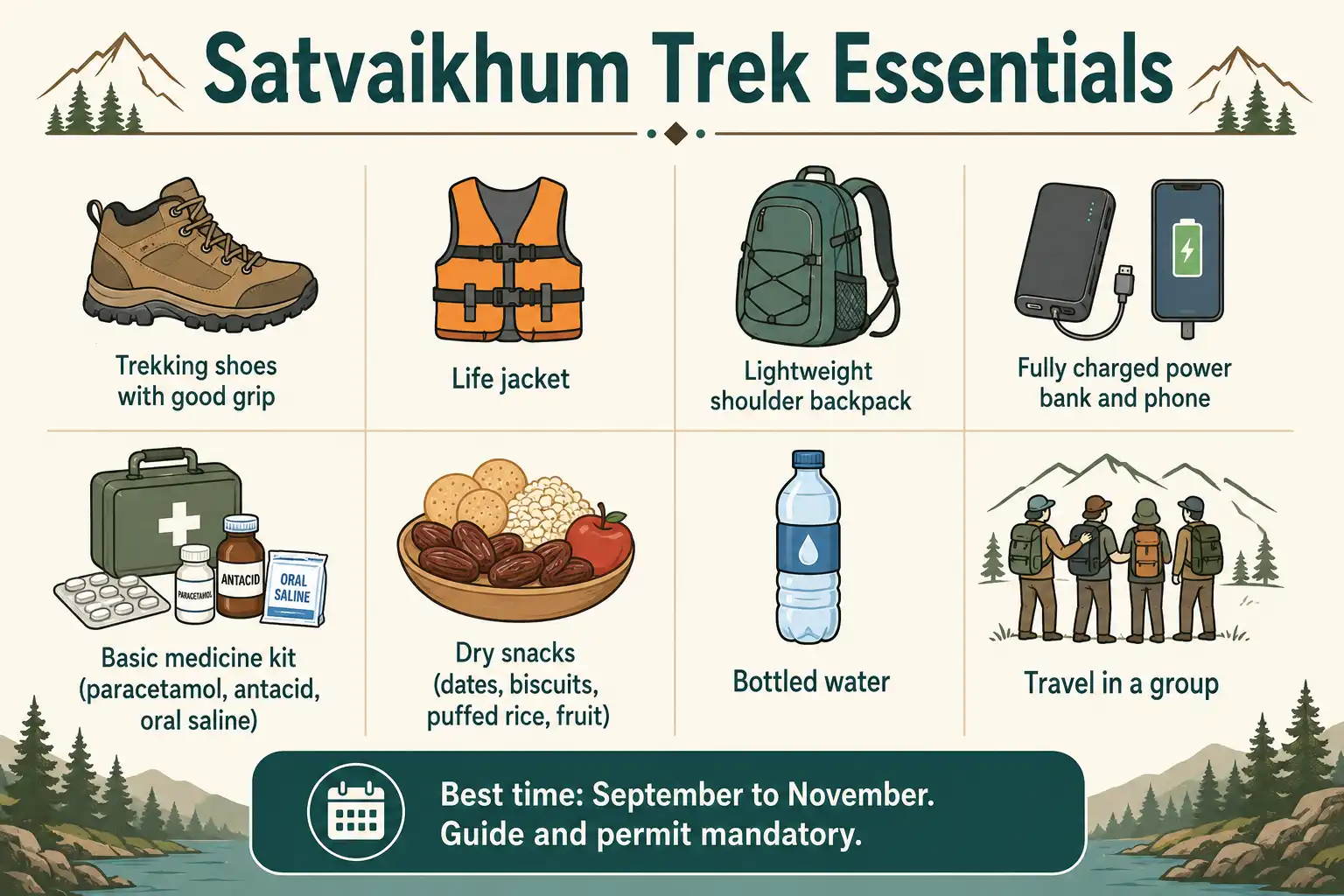
A few habits make this trip safer and cheaper. To cut costs, skip public holidays and travel as a group. Wear shoes with solid grip, since the wet rock stays slick, and careful footing also helps you keep blisters off your feet over so many hours on the trail. If you cannot swim or you go during the rains, keep a life jacket on. After Thanchi there is no electricity or mobile network, so charge your phone and power bank fully before you leave.
Pack light and carry only a shoulder bag. Bring basic medicine too: paracetamol, an antacid, and oral saline. Never wander off alone, watch the rest of your group, and step in fast if someone runs into trouble. The climbs are long, so pace yourself on the steep sections instead of burning out early. Above all, treat the indigenous communities with kindness and respect, because you are a guest in their home.
FAQs on Satvaikhum

Is Satvaikhum safe for beginners?
Do I really need a guide for Satvaikhum?
Can you swim in Satvaikhum?
You should not. The green water looks tempting, yet it runs very deep, so floating across on a bamboo raft is the safe and proper way to enjoy it.
How many days do I need for Satvaikhum?
Final thoughts
Satvaikhum rewards every hard hour it asks of you. The boat ride up the Sangu, the river crossings to Nafakhum, the lung-burning climb over Debota Pahar, and then that first quiet glide between the stone walls all add up to a trip I never get tired of. Go in the post-monsoon window, hire a good guide, pack light, and respect the hills and the people who call them home. Do that, and this remote green gorge will stay with you long after you head back down the trail.