Chimbuk Hill Bandarban: A Complete Travel Guide

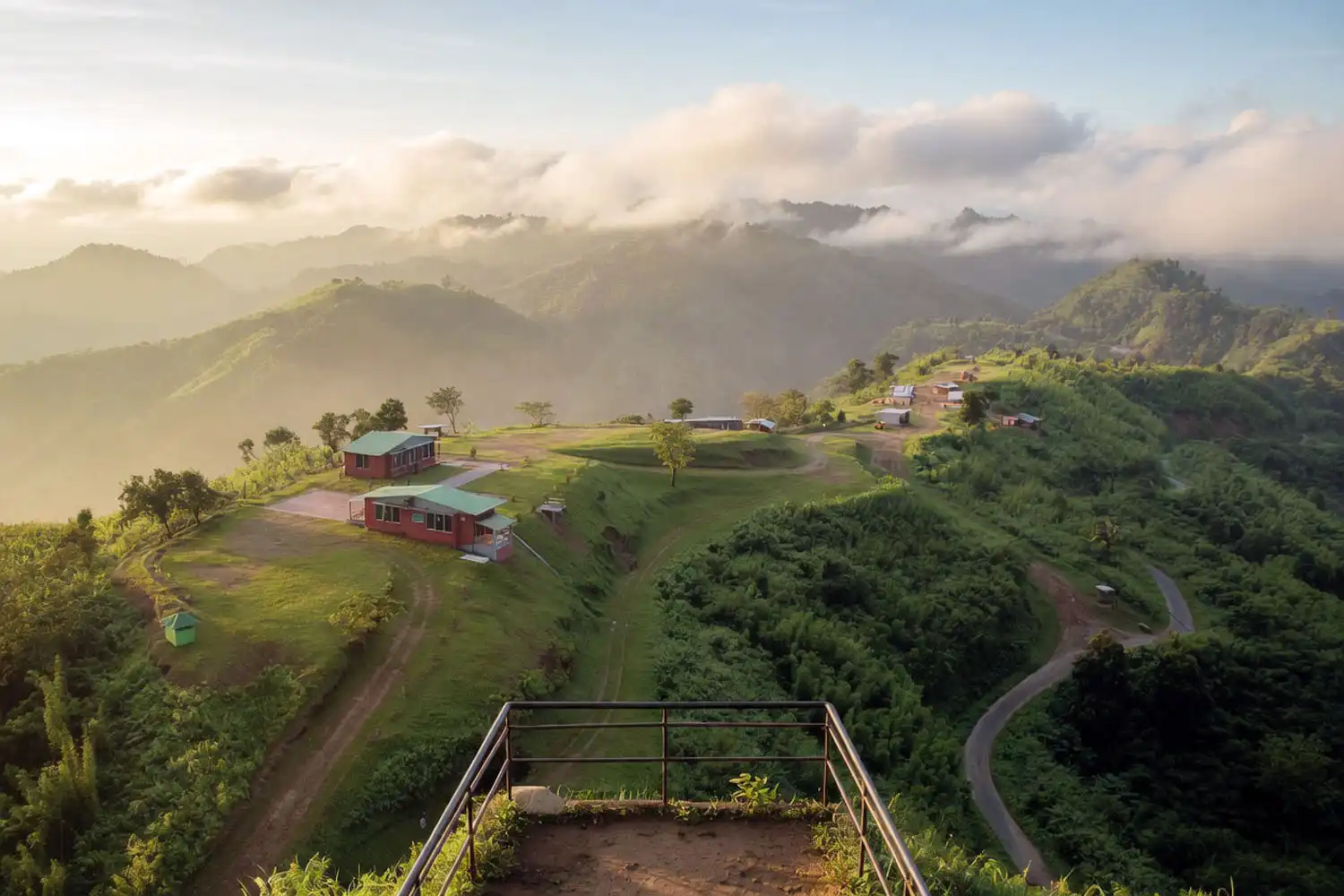
Chimbuk Hill sits about 23 kilometers south of Bandarban town in southeastern Bangladesh. It rises roughly 2,500 feet above sea level, which makes it one of the higher and better-known peaks in the Bandarban hill range. The Chimbuk tourism center sits right at the summit.
To reach Chimbuk, first travel to Bandarban, then hire a Chander Gari (a local open jeep) or a CNG for the roughly 90-minute climb. There are no hotels at the top, so most travelers base themselves in Bandarban town and treat Chimbuk as a day trip. Many also fold in Nilgiri and the Shoilo Propat waterfall on the same route.
Also see: Kumari Waterfall, Bandarban
What you’ll see at Chimbuk Hill
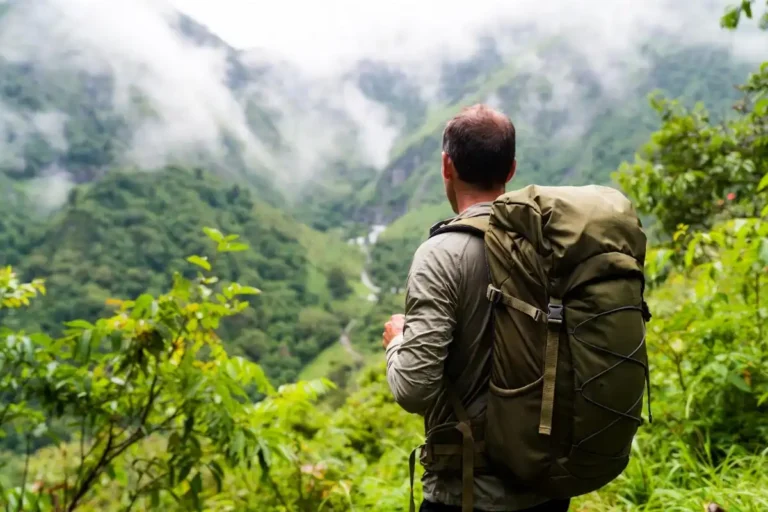
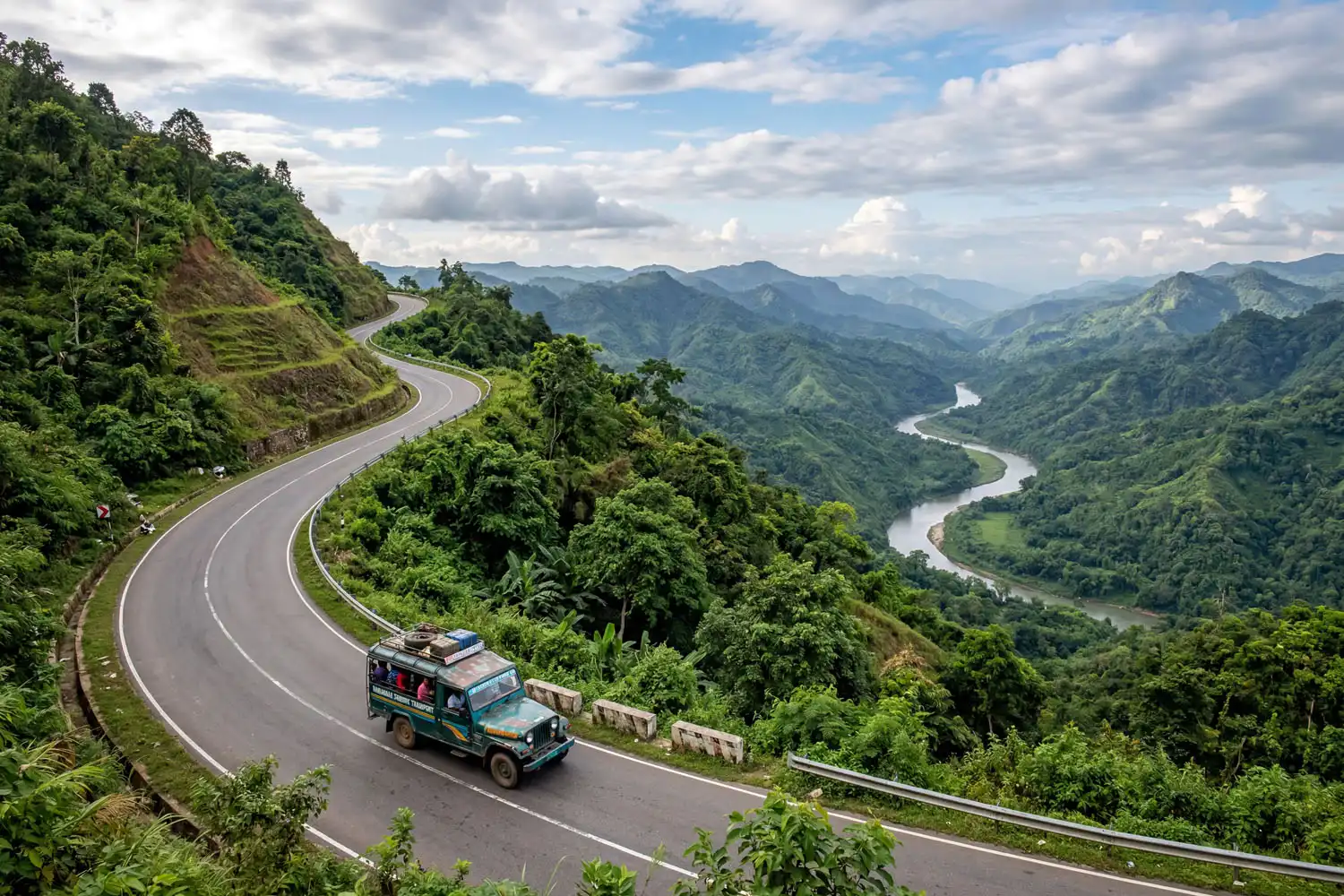
The drive up is half the reward. The road bends and climbs, and both sides open onto green hills, deep valleys, and the winding Sangu River far below. As you near the top, the air cools and the view widens. From the highest point, you look out over ridge after ridge of forested hills.
During the monsoon, the scene changes completely. Thick clouds roll across the peak, much like Sajek further north. So if your timing lines up, you can almost stretch out a hand and touch them. I have stood up there in July with cloud drifting straight through the viewpoint, and the feeling stays with you long after.
Attractions along the way
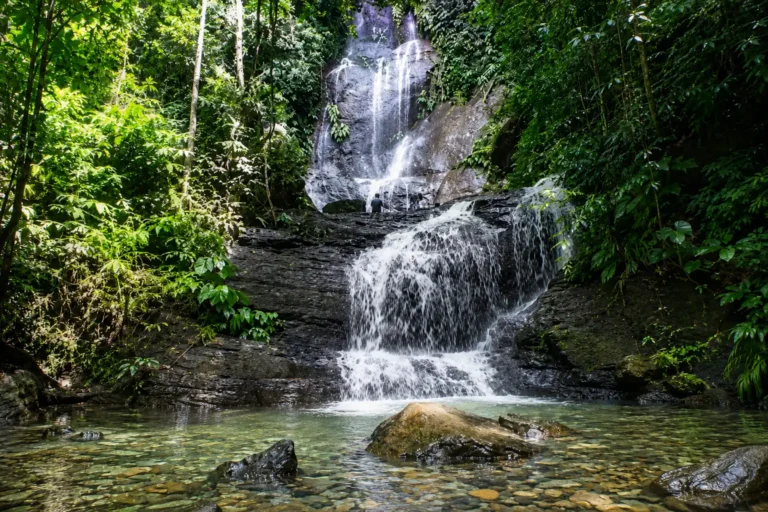
Two stops break up the climb nicely: Milanchari and the Shoilo Propat waterfall. Milanchari gives you an early taste of the valley views, while Shoilo Propat is a clear rocky stream where many travelers stop to cool off. Both sit right on the main road, so you lose no real time.
Nilgiri sits another 20 kilometers past Chimbuk. Because of that, most visitors combine Chimbuk, Shoilo Propat, and Nilgiri into a single hired trip. If you have a few extra days, the wider region rewards a longer stay too. Keokradong, another well-known peak in the Bandarban hills, makes a strong multi-day target. For a tougher payoff, the longer trek out to Nafakhum is worth planning around.
See more attractions in Bandarban district: Langlok Waterfall in Bandarban, Mirinja Valley in Bandarban, Velakhum Bandarban, Debotakhum Bandarban.
How to get to Chimbuk Hill
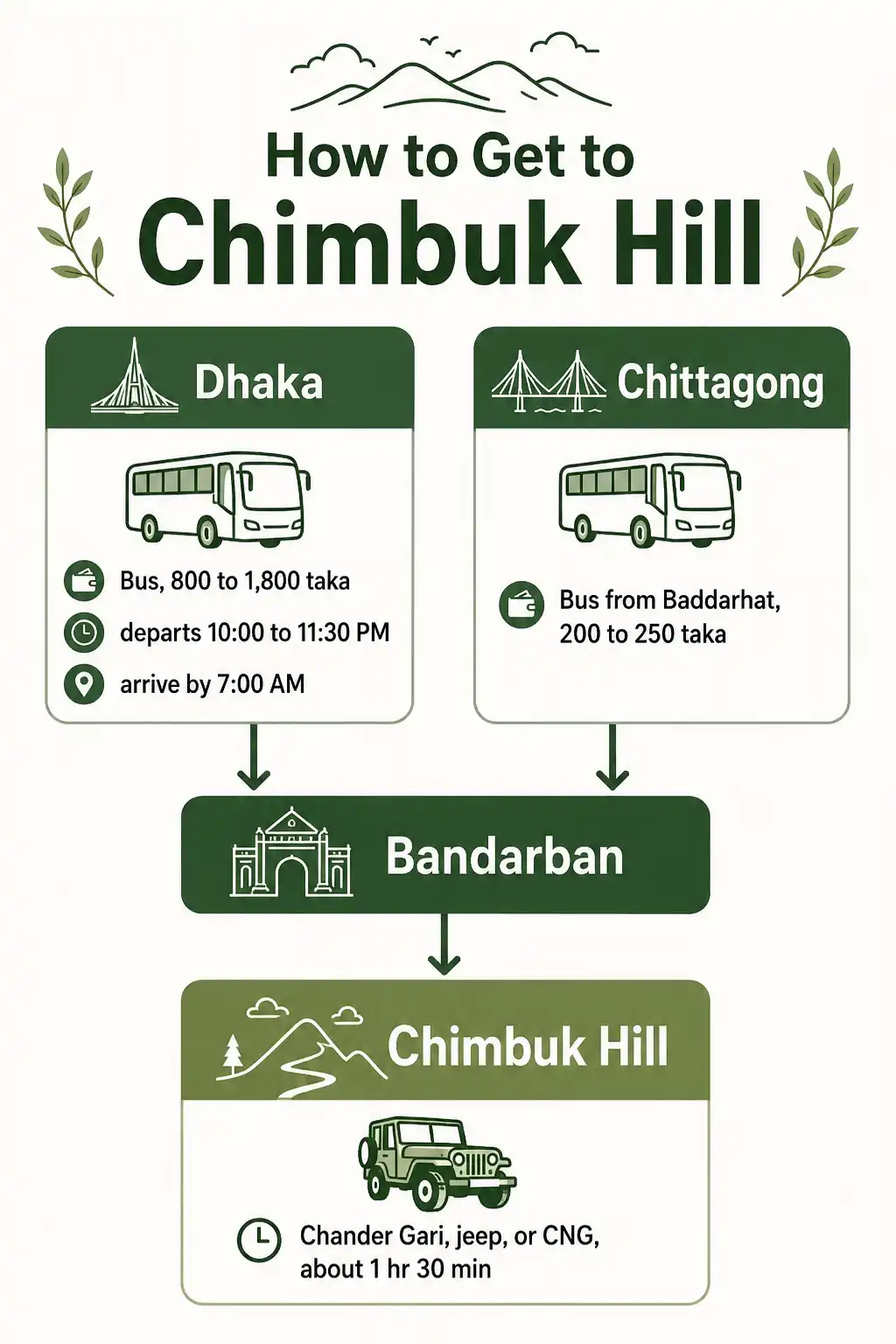
Getting to Chimbuk starts with one simple step: reach Bandarban first. No matter where you begin in the country, every route runs through Bandarban town.
From Dhaka
From Dhaka, direct buses run to Bandarban every day. Operators like Shyamoli, Hanif, Unique, S. Alam, and Dolphin leave from Kalabagan, Sayedabad, Gabtali, and Fakirapool. Most depart between 10:00 PM and 11:30 PM. Non-AC and AC fares fall between 800 and 1,800 Bangladeshi taka per person. So if you board around 9:00 to 10:00 PM, you usually reach Bandarban by 7:00 AM.
You can also fly or take a train to Chittagong first, then continue to Bandarban by road.
From Chittagong
From Chittagong, buses to Bandarban leave from the Baddarhat bus stand. The fare runs about 200 to 250 taka. After that, the rest of the route matches the directions above.
From Bandarban town to Chimbuk
From the Bandarban town bus stand, you hire a Chander Gari, a jeep, or a CNG auto-rickshaw to climb up to Chimbuk. The drive takes about one hour and 30 minutes. Most travelers rent one vehicle for the whole loop, since Chimbuk, Shoilo Propat, and Nilgiri share the same road. Before you agree on a price, ask around for the going rate, since common scams that target tourists can inflate quotes at busy stands.
Where to stay near Chimbuk
There are no hotels on Chimbuk Hill itself, mainly because the area is remote and steep. The District Commissioner’s office, however, runs a rest house near the top for limited stays. Further along the road, Nilgiri and the upscale Sairu Resort give you options closer to the higher hills.
For a budget-friendly base, Bandarban town is your best bet. The town has a wide range of hotels and resorts, with nightly rates from about 800 to 3,000 taka depending on the season and quality. Because of that range, you can plan around almost any budget. It also pays to work out a rough trip budget before you book, so food, transport, and rooms all fit together.
Where to eat at Chimbuk
Right beside Chimbuk Hill, the army runs a small canteen. There you can get breakfast and lunch, which helps since options up top are thin. In front of the tourism center, an indigenous-run food hotel also serves meals. If you let them know in advance, they will arrange lunch for your group.
Best time to visit Chimbuk Hill
The best time to visit Chimbuk is during and just after the monsoon, roughly July through October, when clouds settle over the peak. That cloud cover is the main draw, so plan around it if misty views are what you want. Winter, from December to February, brings clear skies and cooler air, which suits travelers who prefer long, open views instead. Summer turns hot and hazy, so I usually skip the peak dry months. When it comes to choosing the right season for your visit, it helps to match the weather to what you most want to see.
Tips for your Chimbuk trip
A few small things make the day smoother. First, start early, because the round trip from Bandarban eats most of the daylight. Next, carry water and light snacks, since shops are scarce on the climb. Also, wear shoes with grip, as the viewpoints turn slick after rain. Finally, keep some cash on hand, because card payments rarely work this far up.
FAQs on Chimbuk Hill

How high is Chimbuk Hill?
How far is Chimbuk from Bandarban?
Can you stay overnight at Chimbuk?
Is Chimbuk worth visiting in the monsoon?
Final thoughts
Chimbuk Hill packs a lot into one short trip. The cloud-wrapped summit, the curving road, and the Sangu River views all sit within easy reach of Bandarban town. Plan it as a day trip, hire one vehicle for the full loop with Shoilo Propat and Nilgiri, and time your visit for the monsoon if clouds are what you want. With a little planning around transport, food, and rooms, Chimbuk gives back far more than the effort it takes to get there.