How to Protect Your Tent From Rain: A Complete Camping Guide

Rain does not ruin a camping trip. A leaking tent does. I camp through the monsoon in Rangamati, so I have watched most tent failures happen up close. This guide covers how to keep water out, from the prep you do at home to the night a storm actually hits.
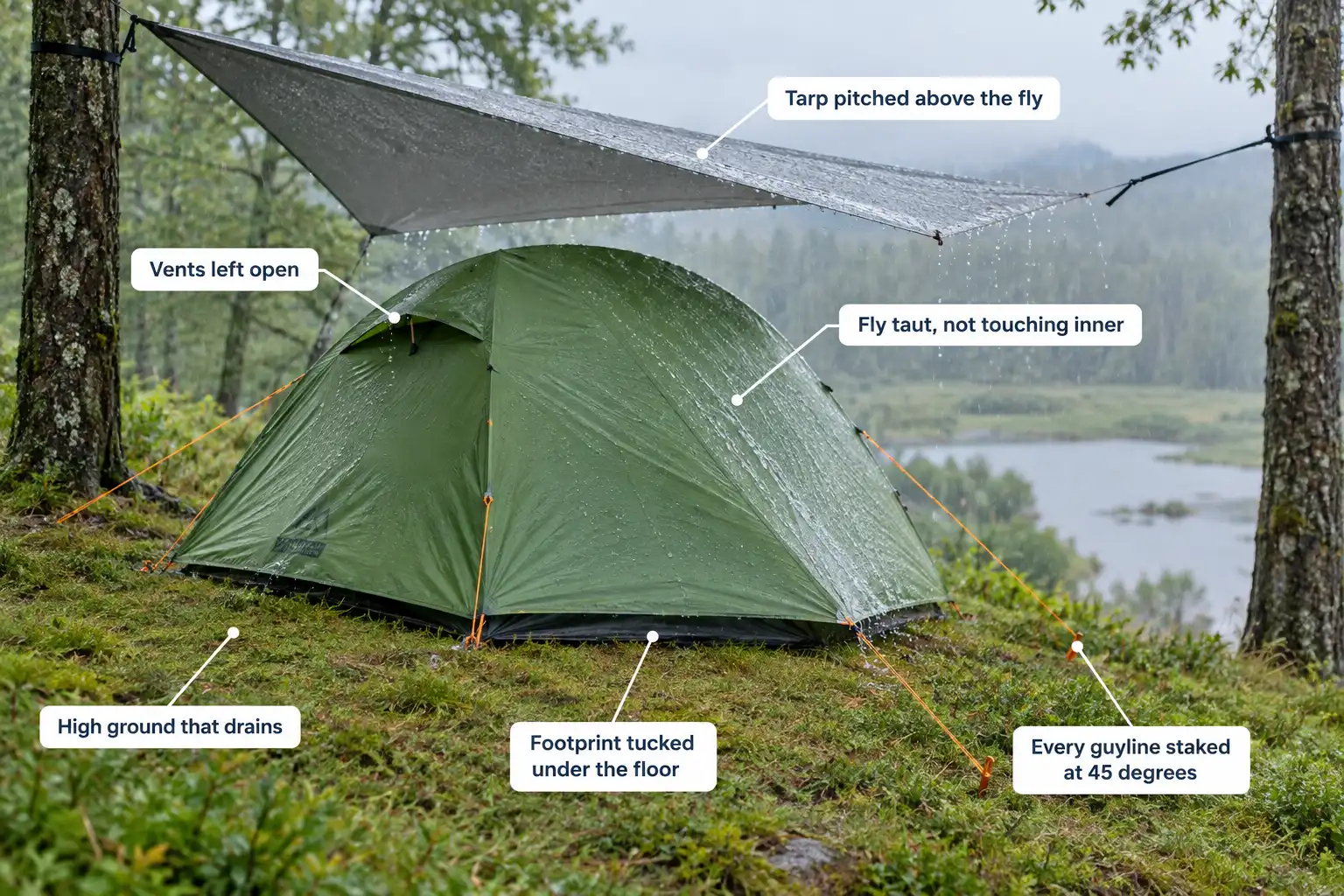
Protect your tent from rain by pitching on high, well drained ground. Tuck the footprint completely under the floor. Then tension the fly and every guyline until the fabric stays tight. Seal worn seams before you leave home, keep the vents open, and add a tarp above the fly for long storms.
What actually makes a tent leak in rain?
Most tents leak at four points: the seams, the floor, the spots where a sagging fly touches the inner wall, and the ground underneath. The fabric itself rarely fails first.
Seams carry thousands of needle holes. Factory tape covers them, but that tape peels with age and heat. Contact points fail next. When a slack fly rests on the inner mesh, water wicks straight through the touch point and drips on your head. Floors fail differently, because your body weight presses the fabric into wet ground and forces water up through the coating.
Waterproof ratings explain part of this. Makers rate fabric resistance as hydrostatic head, in millimeters, using the ISO 811 test. Rainflies usually sit between 1,500 mm and 3,000 mm, while floors run 3,000 mm and higher because ground pressure is greater. However, that number alone decides very little. Taped seams, a full coverage fly, and a tight pitch protect you more than a big figure on the box.
How do you pick a campsite that stays dry?
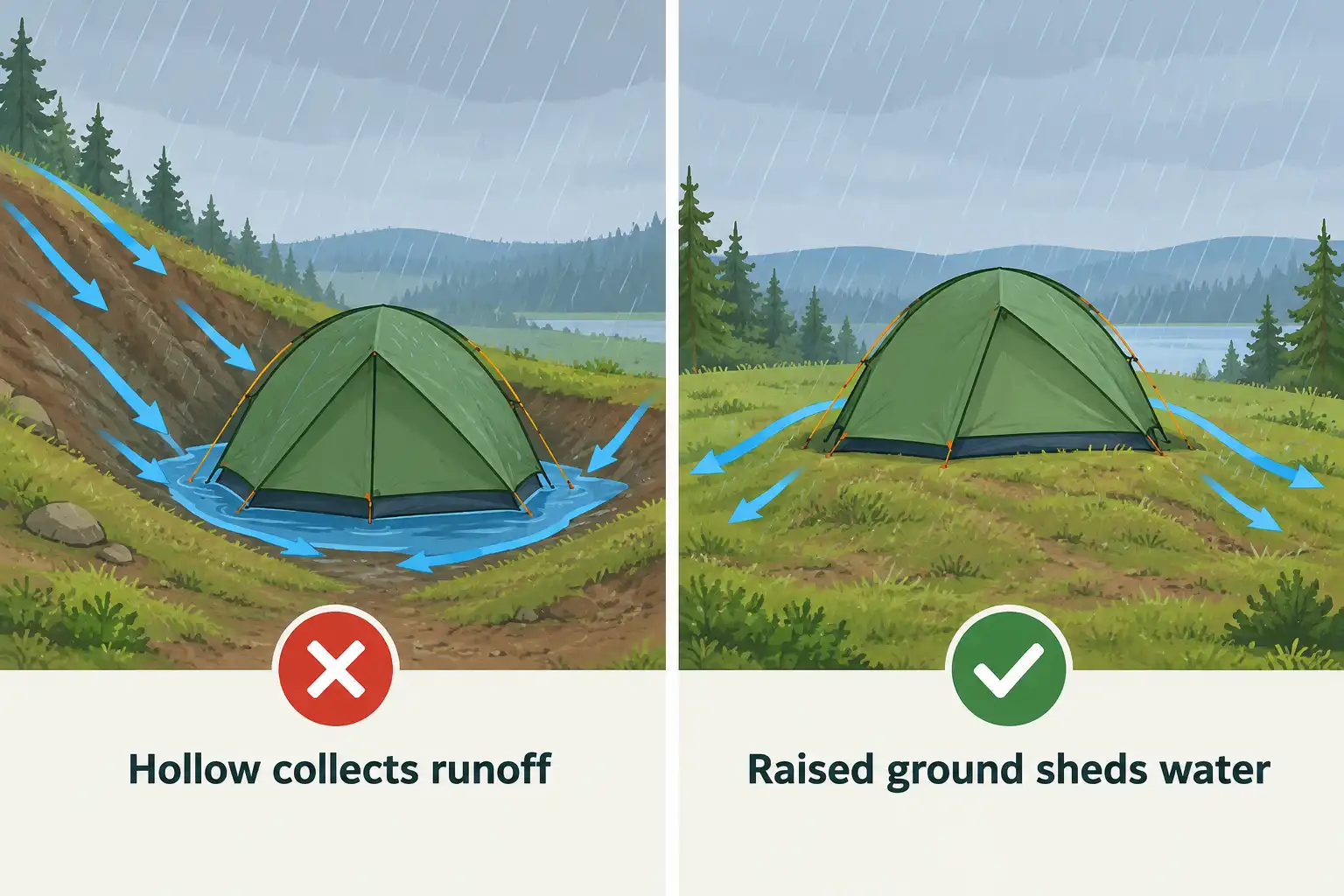
Pick the highest flat ground nearby, on a surface that drains. Grass, forest duff, and gravel shed water far better than packed clay.
Then read the ground for evidence. Silt lines, flattened grass, and bare channels show where water ran last time. Avoid those spots completely. Also skip hollows and the base of slopes, because runoff collects there within minutes of hard rain. Never pitch in a dry stream bed, even under a clear sky.
Look up before you commit. Dead limbs come down in wind and rain, so a clean canopy matters as much as level ground. A high, open canopy also blunts falling rain. Dense low branches, on the other hand, keep dripping fat drops for hours after the sky clears.
Wind direction shapes the rest of your setup. Point the narrow end of the tent into the wind, and keep the door on the sheltered side. That single choice keeps rain out of the vestibule every time you open the zipper.
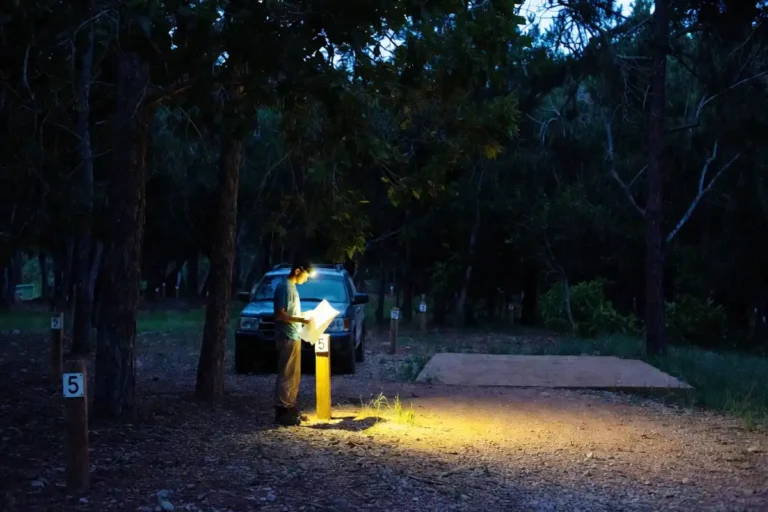
Arriving late makes all of this harder, so I stop earlier than planned whenever the forecast shows rain. Otherwise the usual rules for picking a campsite after dark still apply, just with less margin for error.
Does a footprint keep rain out?
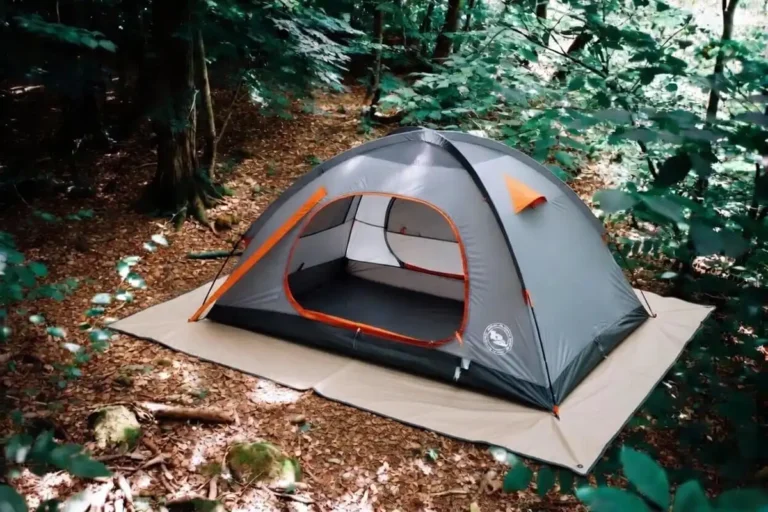
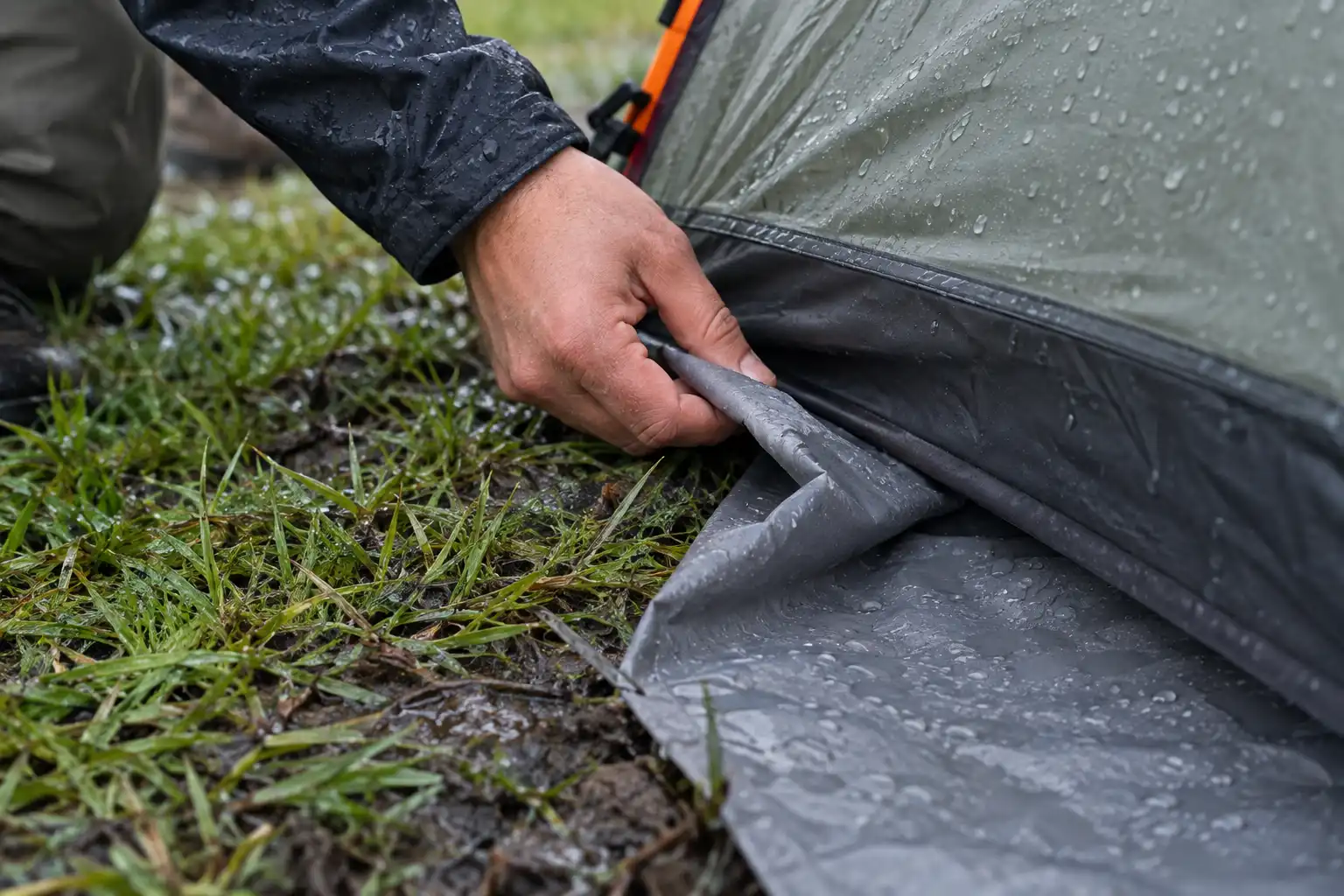
A footprint protects the floor and blocks ground moisture, but only when no part of it sticks out past the tent.
An exposed edge turns into a catch basin. Rain runs off the fly, lands on the footprint, and pools between that sheet and your floor. Pressure then pushes the water through the coating. So tuck every edge under by an inch or two. Custom footprints come cut smaller than the floor for exactly this reason.
Cheap sheeting works fine if you trim it properly. Polycro, Tyvek, and heavy builder’s plastic all do the job for a few dollars. Weight, puncture resistance, and grip all differ. So check which ground cloth materials hold up on wet soil before you cut one to size.
For soaked ground, I add a second sheet inside the tent, over the floor. That inner layer catches whatever seeps through and keeps my pad and bag out of contact with it. Afterward I sponge it dry and roll it up. On a wet Bandarban hillside, that extra sheet has saved more than one night of sleep.
How should you pitch a tent so rain runs off?
Pitch it tight. A taut fly sheds water instantly, while a slack fly holds pools and presses against the inner wall.
Work in this order:
- Stake the corners square. A twisted floor never tensions properly afterward.
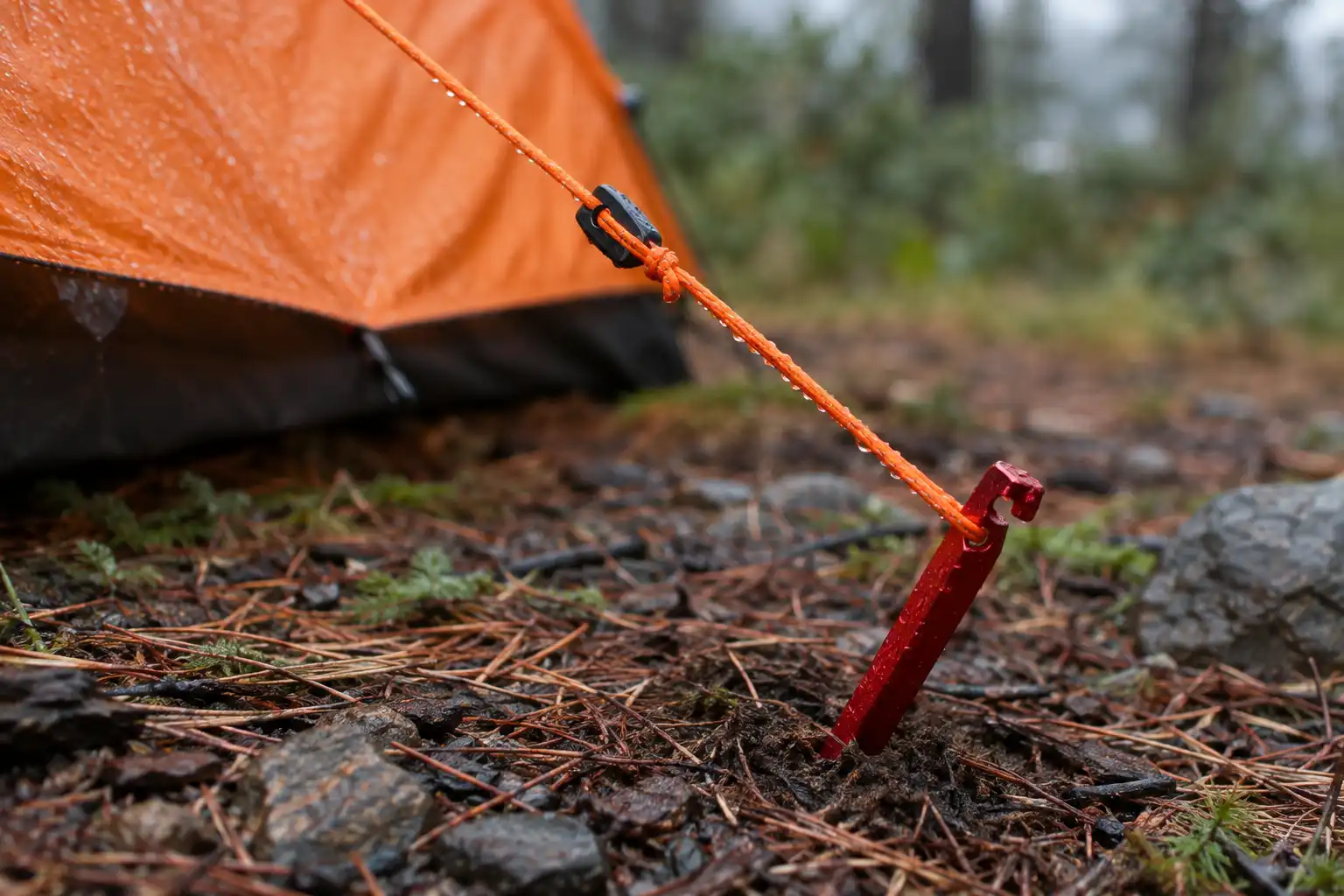
- Angle the stakes. Drive them at roughly 45 degrees, with the tops leaning away from the tent.
- Use every guyline. Two lines will not hold in wind driven rain, so tension them in opposite pairs and keep the tent balanced.
- Check the gap. Your fly must not touch the inner mesh anywhere. Pull the fly corners out and down until that gap is clear.
- Peg the vestibule. A loose skirt lets wind push rain under the fly.
- Retension after an hour. Wet nylon stretches, so lines that felt tight at setup will sag by dark. Polyester holds its shape better.
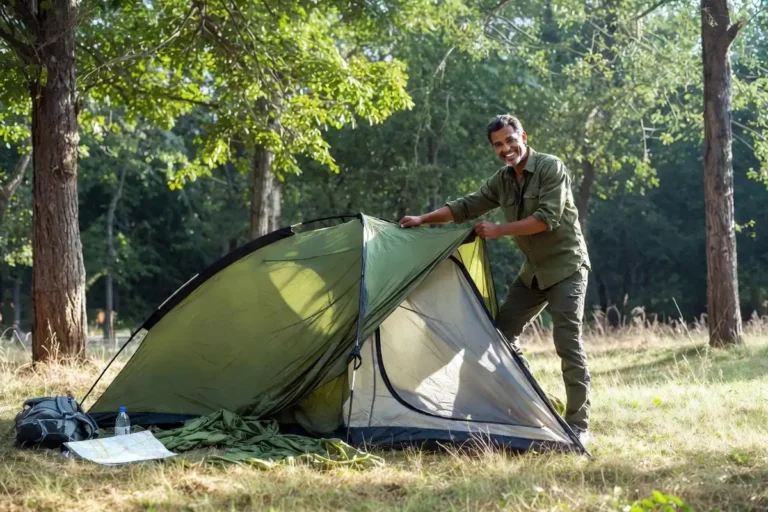
Pitch fly first if your tent allows it. That way the inner body stays dry while you work. On rocky ground, tie lines around rocks or bury deadman anchors instead of fighting bent stakes.
Should you put a tarp over your tent?
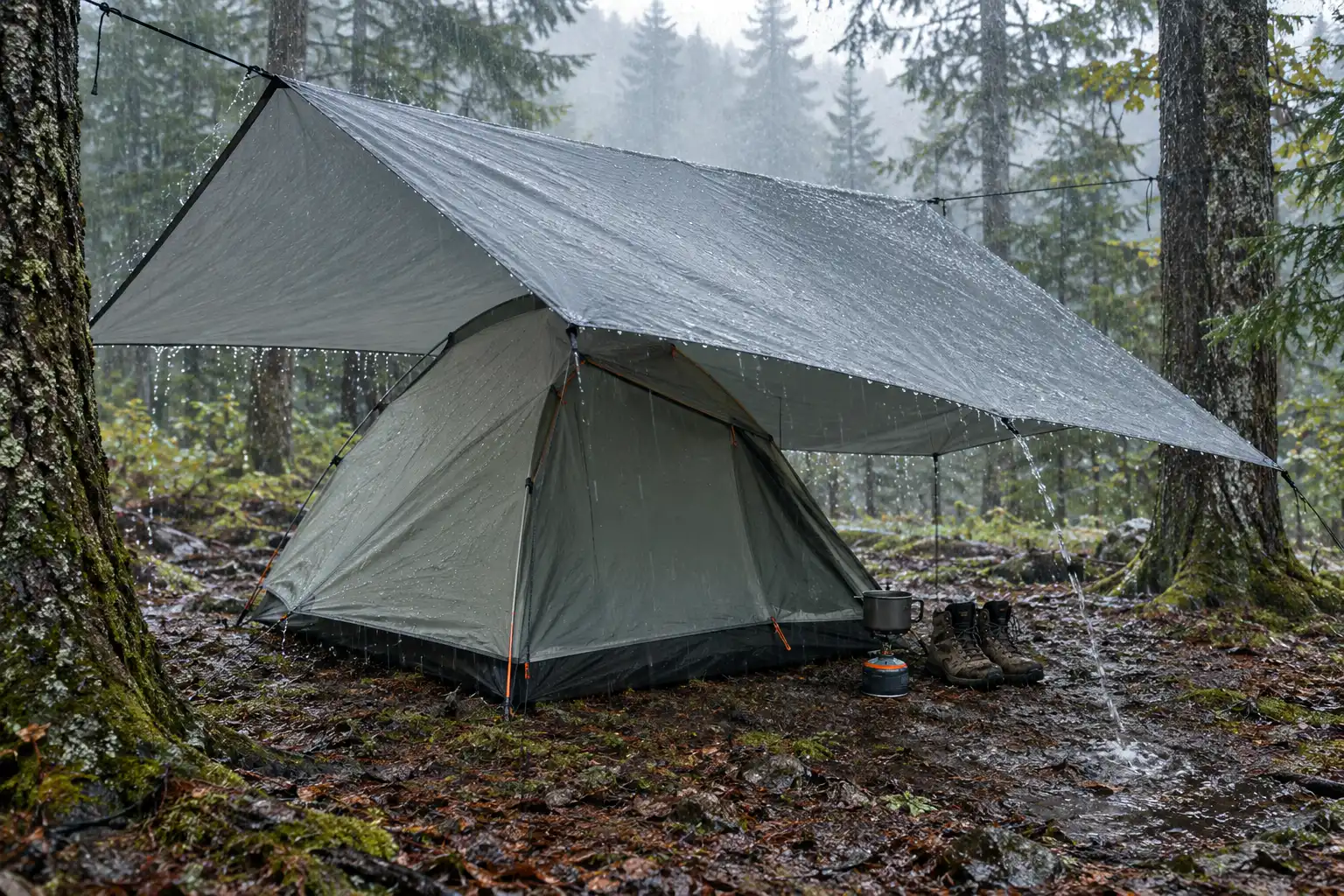
Yes, for heavy or multi day rain. A tarp above the fly takes the impact of big drops. It also keeps the fly drier and gives you covered space to cook and pull off wet boots.
Pitch it with real angle. A flat tarp collects a pond within an hour, and the sag then dumps all of it in one spot. Aim for a clear slope on both sides so runoff leaves fast.
Keep about a foot of air between tarp and fly. Otherwise warm air stays trapped underneath, and condensation forms on the tarp itself.
Position the drip edges away from the tent perimeter. Water should land well outside the footprint, never against the walls. Also tie a short length of cord onto each guyline near its anchor. Rain runs down the line, meets that cord, and drips off before reaching your shelter.
Coverage decides whether any of this works, so match the tarp size to your tent setup before buying one. For a two person tent, I want at least a meter of overhang past the fly on every side.
How do you seal seams and refresh waterproofing before a trip?
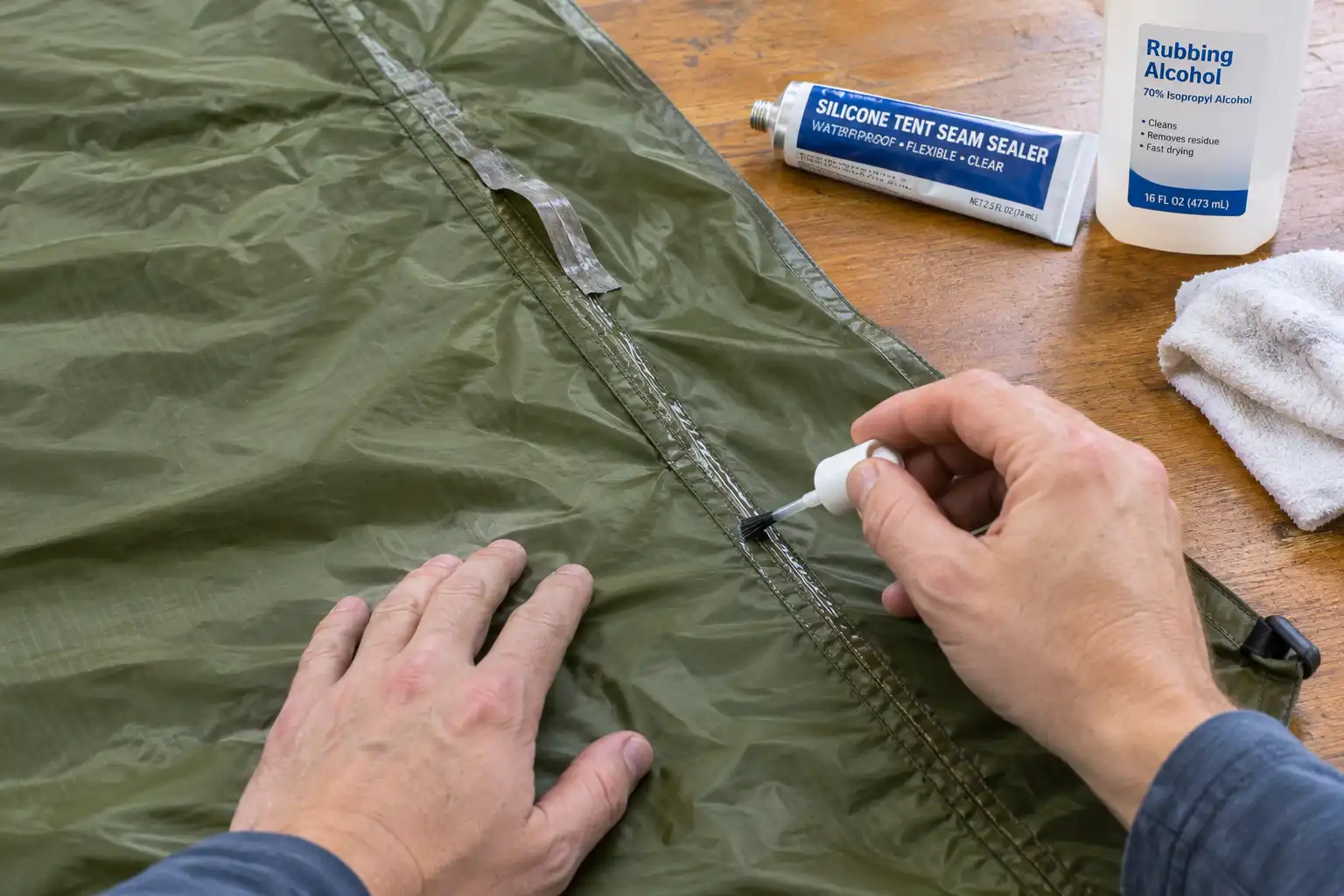
Test the tent at home about a week out. Pitch it, run a hose over it for ten to fifteen minutes, then crawl inside and look for wet spots.
If tape under the fly is peeling, reseal that seam. First match the sealer to your fabric, because silicone and polyurethane will not bond to each other. Gear Aid and REI both stress this point in their guidance. Silicone treated fabric such as silnylon needs a silicone sealer on the outer face. PU coated fabric, which covers most family tents, needs a urethane sealer on the inner face.
The process itself is simple. Peel loose tape away, clean the seam, apply a thin even layer, and let it cure fully before packing.
Flaking bits inside the fly or on the floor mean the coating has broken down. In that case, scrub the old coating off with rubbing alcohol and recoat the whole panel.
Finally, watch how water behaves on the fly. Water that soaks in instead of beading means the DWR has worn off, and a spray on refresh restores it. Sealing comes first, though. Anyone already dealing with a tent that leaks along the seams should fix the stitching before touching the DWR.
Why is my tent wet inside when nothing leaked?
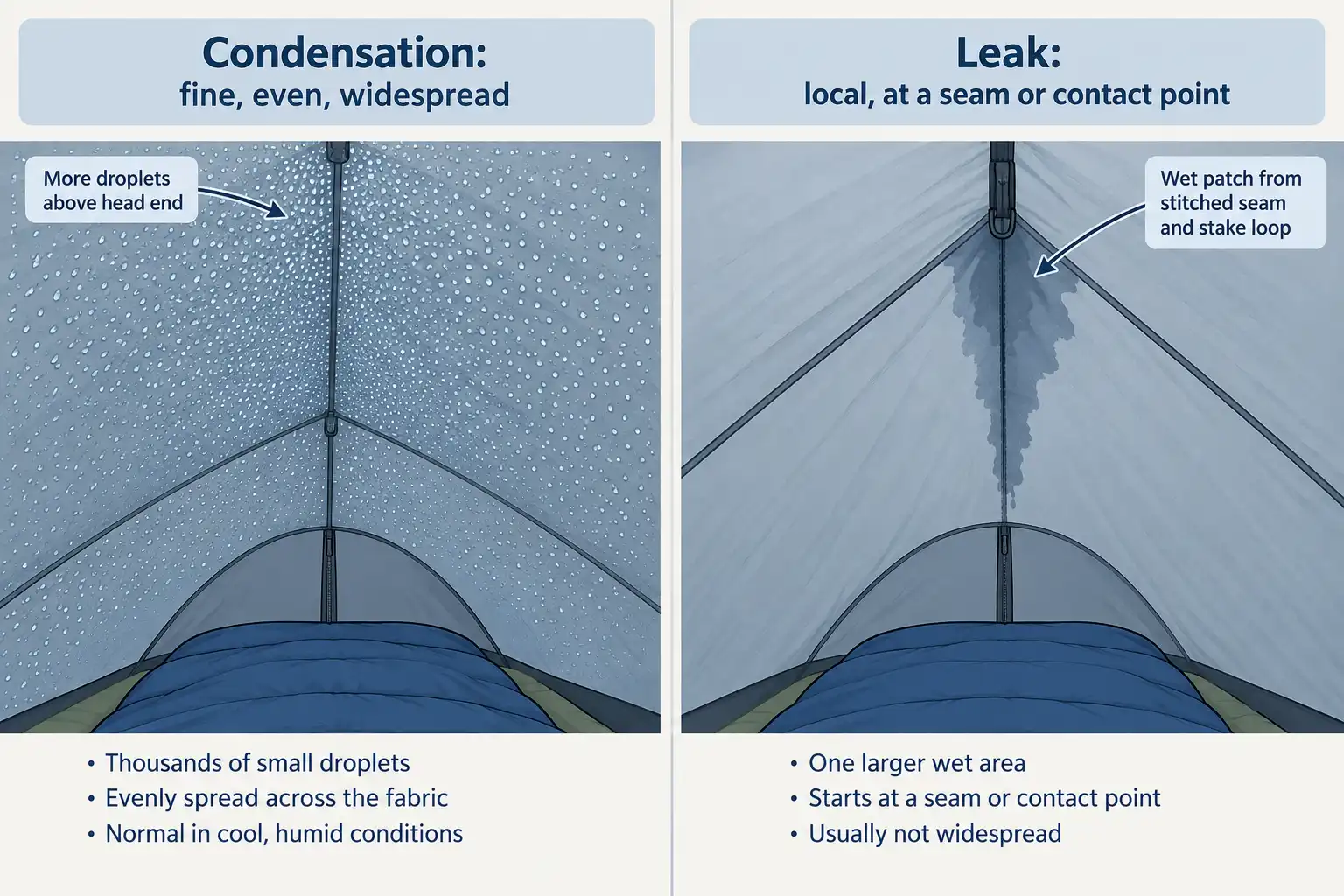
That is condensation, not rain. You release moisture all night through breathing and sweat, and it settles on the coldest surface, which is the inside of the fly.
Telling the two apart is easy once you know the pattern. Condensation spreads as fine, even droplets across a wide area, usually worst above your head. A leak shows up in one place instead, near a seam, a stake loop, or a spot where fabric touches fabric.
Cutting condensation takes airflow. Open both vents, even while it rains, and crack the top of the door zipper a few inches. Meanwhile, keep wet clothes and boots in the vestibule rather than inside, and never cook in the tent.
Site choice matters here too. Air near rivers and marshy ground already carries heavy moisture, so pitching a short distance back makes a noticeable difference. I learned that camping beside Kaptai Lake, where the tent closest to the water always woke up the wettest.
Cold nights bring the worst of it, so the same habits that work for venting a tent in cold weather apply during rain.
What should you do once heavy rain starts?
Work from the outside in: retension the lines, clear any pooling, then move gear away from the walls.
Sagging lines come first, since wet fabric stretches fast. Next, push up from underneath wherever water has collected on the fly. A few liters of standing water presses hard on the coating and finds every weak seam.
Inside, pull your sleeping bag and pack toward the middle. Contact with a wet wall transfers water straight through the fabric. Keep the pad underneath you as well, because it lifts you above anything that seeps across the floor. Electronics, spare clothes, and your bag should already sit in dry bags or heavy trash liners.
Boots go upside down in the vestibule, under the fly edge. A sponge and a cut plastic bottle handle any bailing you need to do.
Know when to move. Flowing water at the tent edge, or ground turning to standing water, means the site is finished. Moving early always beats moving in the middle of the night during a downpour. In the Bandarban hills, streams rise within an hour of hard rain, so I set that limit before I sleep.
Should you dig a trench around your tent?
No. Digging trenches around tents breaks Leave No Trace guidance, and land managers including the National Park Service prohibit it outright. Scouting America and several state forest agencies list it among the things campers should never do.
The reasoning is practical as well as ethical. A trench scars the site, starts erosion, and silts up anyway. More to the point, needing a trench usually means the site was wrong from the start.
Move the tent instead. Higher ground, better drainage, and a tighter pitch solve the same problem without cutting into soil.
What goes in a rain kit?
A few small items handle almost every wet weather problem.
- Spare cord, about 6 meters, for replacement guylines and a tarp ridgeline.
- Four extra stakes, since soft ground pulls stakes loose.
- Repair tape, for pinholes and small tears in the fly.
- Seam sealer, matched to your fly coating.
- A sponge and microfiber cloth, for wiping condensation and bailing water.
- Two or three dry bags, or heavy trash liners, for sleeping gear and electronics.
The whole kit weighs under half a kilo. I keep mine packed year round, so nothing gets forgotten on the way out the door.
How do you dry a tent after a wet trip?
Dry it completely within a day or two of getting home. Damp storage grows mildew, and mildew eats the waterproof coating.
At camp, shake the water off and wipe the fly down. If the rain pauses, hang that fly over a line for even twenty minutes. Pack it separately from the inner tent so the drier parts stay dry.
At home, pitch the tent again or hang everything in shade with air moving around it. Direct sun weakens fabric over time, so shade works better than a sunny yard. Dry both sides of the floor, along with the stuff sack and the stakes.
Store it loose in a cotton or mesh bag rather than compressed. If mildew has already taken hold, treat it now rather than next season. Caught early, you can clean mold off a tent without stripping the coating.
FAQs on Keep Your Tent Dry in Heavy Rain

Can spray on waterproofing fix a leaking tent?
Should a tarp go over the tent or under it?
How often should I reseal tent seams?
Do vents need to stay open during rain?
Will a budget tent survive heavy rain?
Final thoughts
Staying dry comes down to a few habits, repeated every trip. Choose high ground that drains. Tuck the footprint under. Pitch tight, use every guyline, and retension once rain starts. Seal the seams at home instead of discovering the problem at midnight. Then keep the vents open, so condensation does not finish the job the rain could not. Do this consistently, and heavy rain turns into background noise rather than an emergency.