How to Select Trees for Firewood Without Wasting Effort

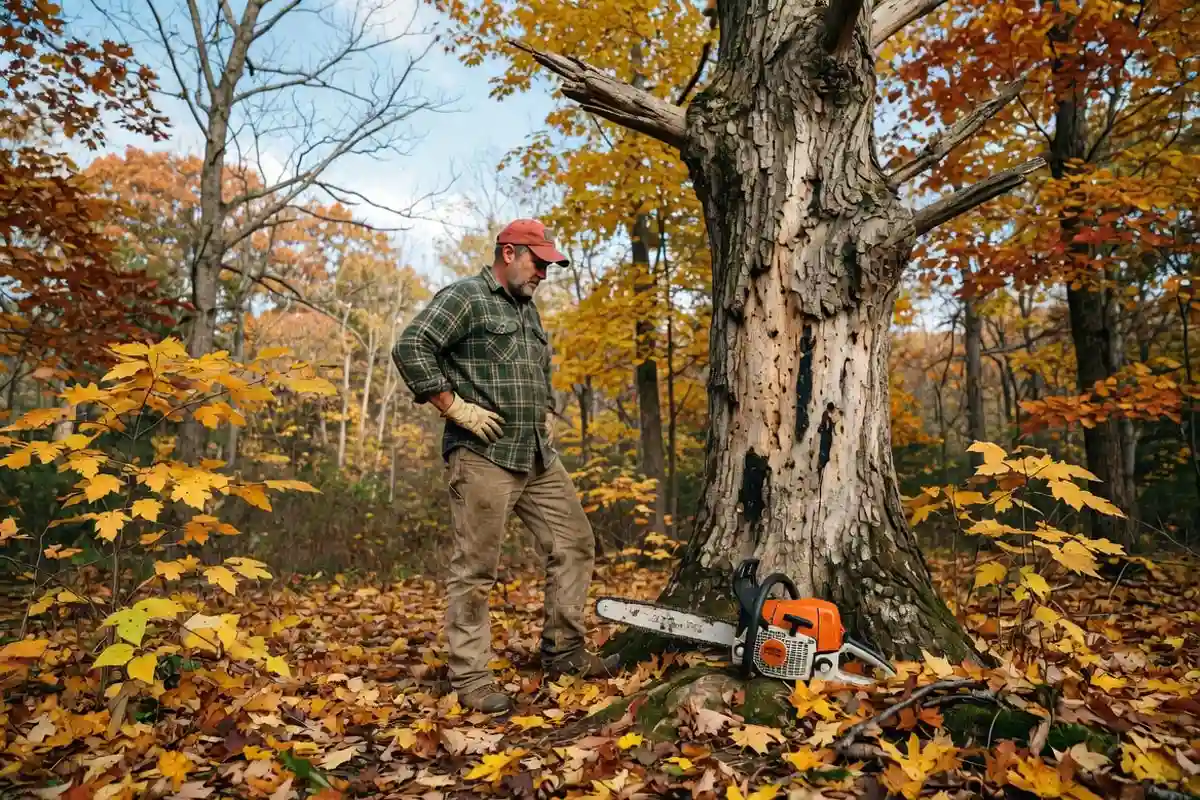
Knowing how to select the right trees for firewood means going for dense hardwoods like oak, hickory, ash, and sugar maple, taken from standing dead or recently fallen trunks with low moisture content. This guide walks through species selection, timing, legal cutting areas, identification steps, common mistakes, and safety so you can pick the right tree and build steady, clean-burning fires every trip.
To select trees for firewood, choose dense hardwoods such as oak, hickory, ash, sugar maple, beech, or black locust. Pick standing dead trees or recently downed trunks with bark intact, no soft rot, and a moisture level under 20%. Confirm cutting is legal on the land and the trunk is structurally safe to fell.
What Makes a Tree Good for Firewood?
A good firewood tree gives you high heat output, long burn time, clean smoke, and easy splitting. Three traits decide that:
- Density: heavier wood per cubic foot holds more energy. Hardwoods like oak deliver 24 to 28 million BTUs per cord. Softwoods like pine deliver 13 to 17 million.
- Moisture content: wood at or below 20% moisture burns hot and clean. Green wood above 30% smolders and produces creosote.
- Sap and resin: high-resin softwoods spit sparks and coat chimneys. Dense hardwoods keep fires steadier overnight.
The Forest Products Laboratory at the USDA Forest Service tracks species heat values and density across North America.
If you also need help finding firewood near your campsite or calculating how much firewood to bring, those checklists pair well with this selection process.
Best Tree Species to Select for Firewood
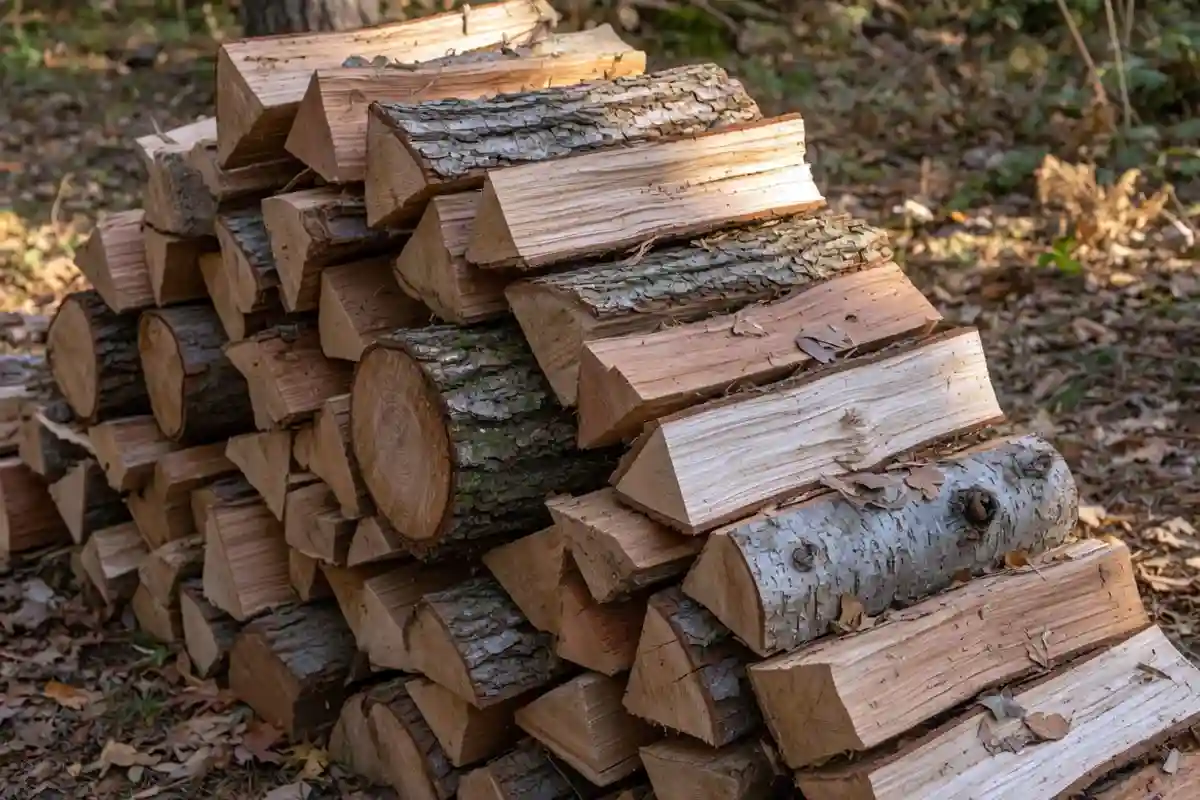
Choose dense hardwoods first when you select trees for firewood. These species split well, season faster than expected, and burn long.
Top-tier hardwoods:
- Shagbark hickory: about 28 million BTUs per cord, slow burn
- White oak and red oak: 24 to 28 million BTUs, steady coals
- Black locust: 27 million BTUs, very long burn
- Sugar maple: 24 million BTUs, clean coals for cooking
- Beech: 24 million BTUs, splits cleanly when seasoned
- Green or white ash: 24 million BTUs, low moisture even when freshly cut
Mid-range hardwoods: birch, black cherry, walnut, and red maple at 18 to 21 million BTUs.
Avoid or limit:
- Pine, spruce, fir: fine for kindling, poor for long fires
- Cottonwood, aspen, poplar: low heat, fast burn
- Poison sumac and poison ivy vines: toxic smoke
- Treated, painted, or pressure-treated lumber: never burn
If you camp in cold weather, dense species also support hotter campfires for cooking and warmth.
When to Cut Trees for Firewood
Cut firewood between late fall and early spring. Sap stays low, the wood loses water faster, and bugs are less active. Trees felled in December and split by March often reach 20% moisture by October.
Avoid cutting in late spring through early summer. Sap rises, the wood weighs more, and seasoning takes longer. Insect activity also climbs in warm months, which raises the risk of carrying borers home in the rounds.
Where to Source Firewood Legally
The land you cut on decides whether your harvest is legal. Three common options:
- Private land: get written permission from the owner. Confirm boundaries before you start the saw.
- National forests: most districts allow personal-use firewood permits for 4 to 10 cords per year. Permit fees run $20 to $40 per cord. Check the local ranger district office.
- State forests and parks: rules vary widely. Some allow downed-wood collection, others require permits, and many ban cutting standing trees outright.
Never move cut firewood more than 50 miles. Federal guidance from the USDA Animal and Plant Health Inspection Service reduces the spread of emerald ash borer, gypsy moth, and oak wilt across regions.
How to Identify and Select the Right Tree, Step by Step
Use this start-to-finish workflow when you walk into the woods.
Step 1: Confirm legal cutting
Read your permit boundaries or property lines first. Drop a GPS pin so you can stay inside the legal zone.
Step 2: Spot standing dead or recently downed trees
A standing dead tree with intact bark is the prize pick. The trunk dries upright for months, which gives you lower moisture than green wood without years of seasoning.
Step 3: Identify the species
Use bark, branch pattern, and any remaining leaves or seeds. State extension field guides help. Oak shows ridged gray bark, hickory peels in shaggy strips, and ash carries a diamond-pattern furrow.
Step 4: Check the trunk condition
Push a sharp tool into the wood. Firm wood means good fuel. Soft, punky wood that crumbles under pressure is too far gone for steady heat and will smolder more than it burns.
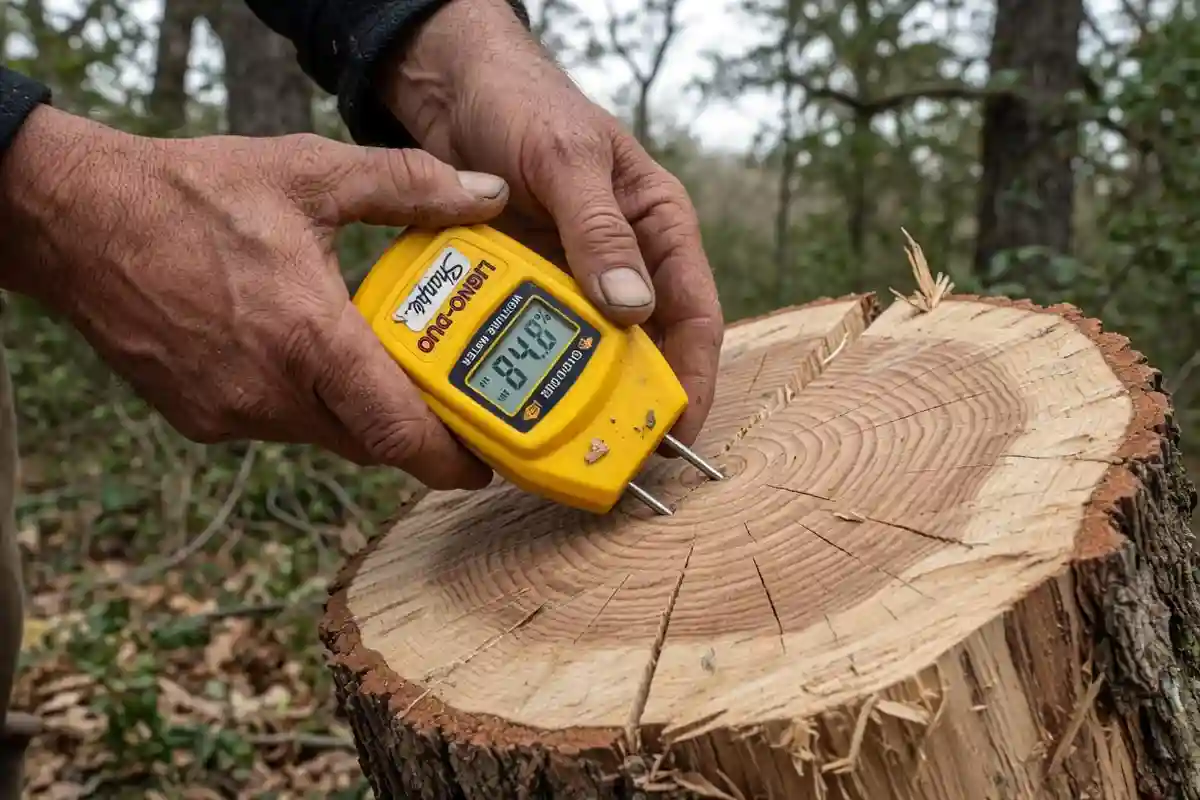
Step 5: Test moisture content
A moisture meter under $25 reads the inside of a freshly split end. Aim for 20% or less for ready-to-burn wood. Higher readings need more seasoning time before the wood earns a place in the fire ring.
Step 6: Assess size and access
A 12 to 16 inch diameter trunk gives you usable rounds without oversized splits. Confirm you can reach the tree, fell it safely, and haul the rounds back to the truck or camp.
Tools You Need
- Chainsaw with a sharp chain, 16 to 20 inch bar
- Felling axe and splitting maul
- Plastic or metal wedges
- Cant hook for rolling logs
- Tape measure and lumber crayon for bucking
- Helmet, eye and ear protection, chaps, gloves


1844 Helko Werk Germany Classic Forester Full-Size Felling Axe (10495)


As an Amazon Associate we earn from qualifying purchases.
Common Mistakes When Selecting Firewood Trees
- Cutting green wood and burning it the same season
- Choosing soft, rotten trunks that crumble at the saw
- Picking softwoods for long overnight burns
- Mixing transported firewood with local stock
- Skipping species ID and burning toxic vines twined in the bark
- Felling without checking trunk lean and overhead branches
If you camp in damp regions, knowing how to start a fire in wet conditions saves you when even good wood is hard to light.
Safety Checks Before You Cut
A standing dead tree is a fuel source and a hazard at the same time. Run these checks first:
- Look up for widow makers, broken branches lodged in the canopy
- Check the lean direction and any rot at the base
- Clear escape paths at 45 degrees behind the planned hinge
- Never cut alone in remote terrain without a check-in plan
- Stop work in winds above 20 mph
If the tree looks unstable, walk away. A standing dead trunk with hidden rot is never worth a serious injury.
FAQs about Select Trees for Firewood

Can I burn pine wood for camping fires?
How long does firewood need to season after cutting?
What size tree gives the best firewood?
Is it safe to burn wood with bark beetles or fungus?
How can I tell hardwood from softwood by looking at it?
Final Verdict
Selecting the right tree for firewood comes down to matching species, condition, and timing. Stick with dense hardwoods like oak, hickory, ash, and sugar maple. Cut from standing dead or recently downed trunks during the cool season. Confirm legal access, test moisture, and run safety checks before any saw work. Stack the rounds early, season them long enough, and your fires will burn hotter, longer, and cleaner trip after trip.