How to Start a Fire Without a Lighter: 5 Practical Methods

You can start a campfire without a lighter, but the right tinder matters as much as the ignition method. I’ll explain five ways to produce a flame, starting with the most practical option for beginners. I also cover wet wood, common mistakes, and when you should avoid making a fire entirely.
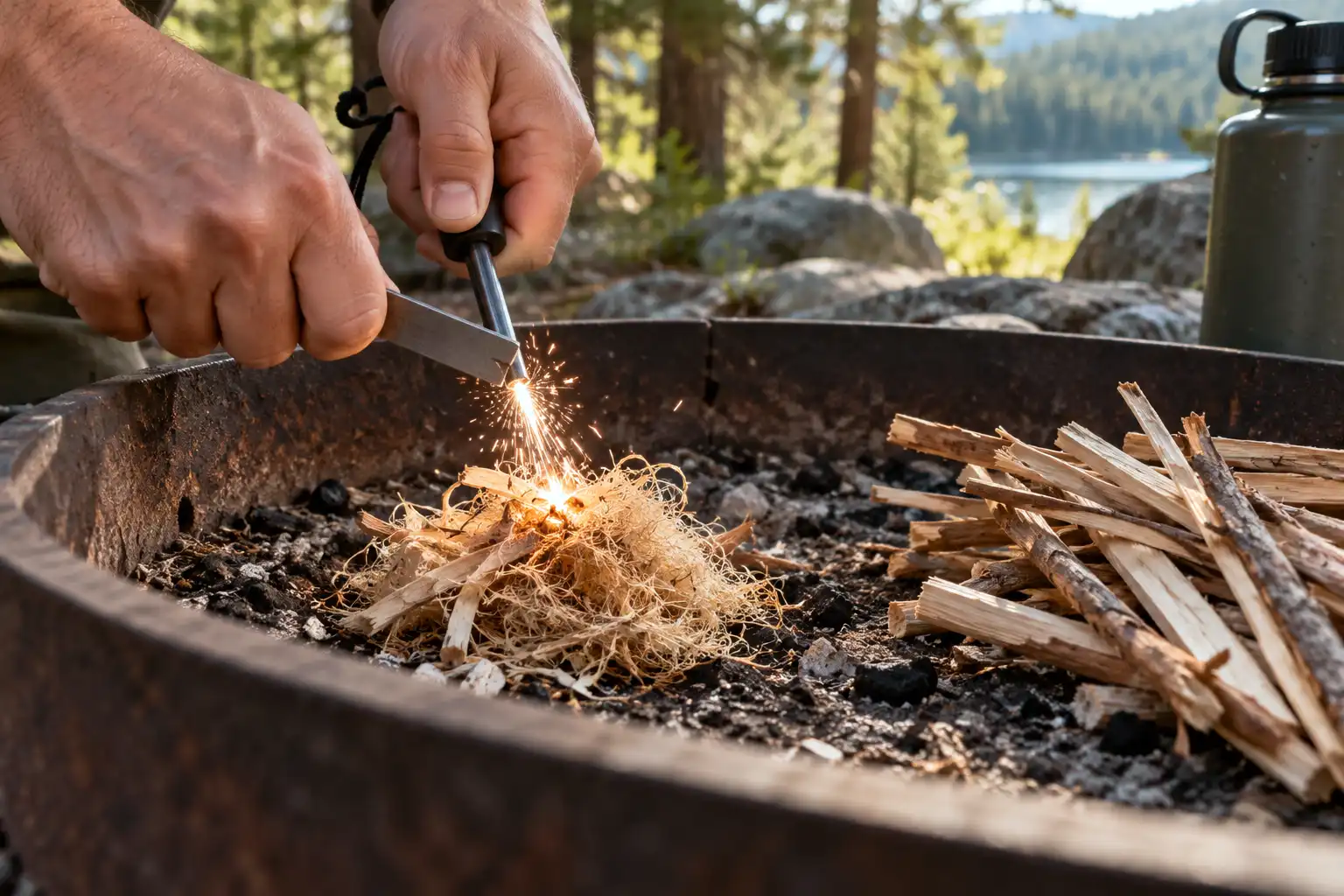
To start a fire without a lighter or matches, place fine, dry tinder in a permitted fire ring, then use a ferro rod to shower it with sparks. Once the tinder catches, add thin kindling before larger sticks. Flint and steel, concentrated sunlight, a bow drill, and a 9-volt battery with steel wool are alternatives, but each has limitations.
Check the Rules and Prepare a Safe Fire Site
Before I try any fire-starting method, I make sure a campfire is permitted. The National Park Service recommends checking current fire conditions and local restrictions. Even an established fire ring does not guarantee that open flames are allowed.
Use an existing, designated fire ring. Keep your setup clear of dry vegetation, overhanging branches, tents, and loose gear. Avoid making a fire in strong winds, and have enough water ready to extinguish it completely. Never leave the flames unattended.
The Leave No Trace campfire guidance recommends small fires and established fire rings where fires are allowed. If a campfire is prohibited, I would use an approved alternative for cooking or warmth only if current restrictions allow it.
Prepare Tinder, Kindling, and Fuel Before Ignition
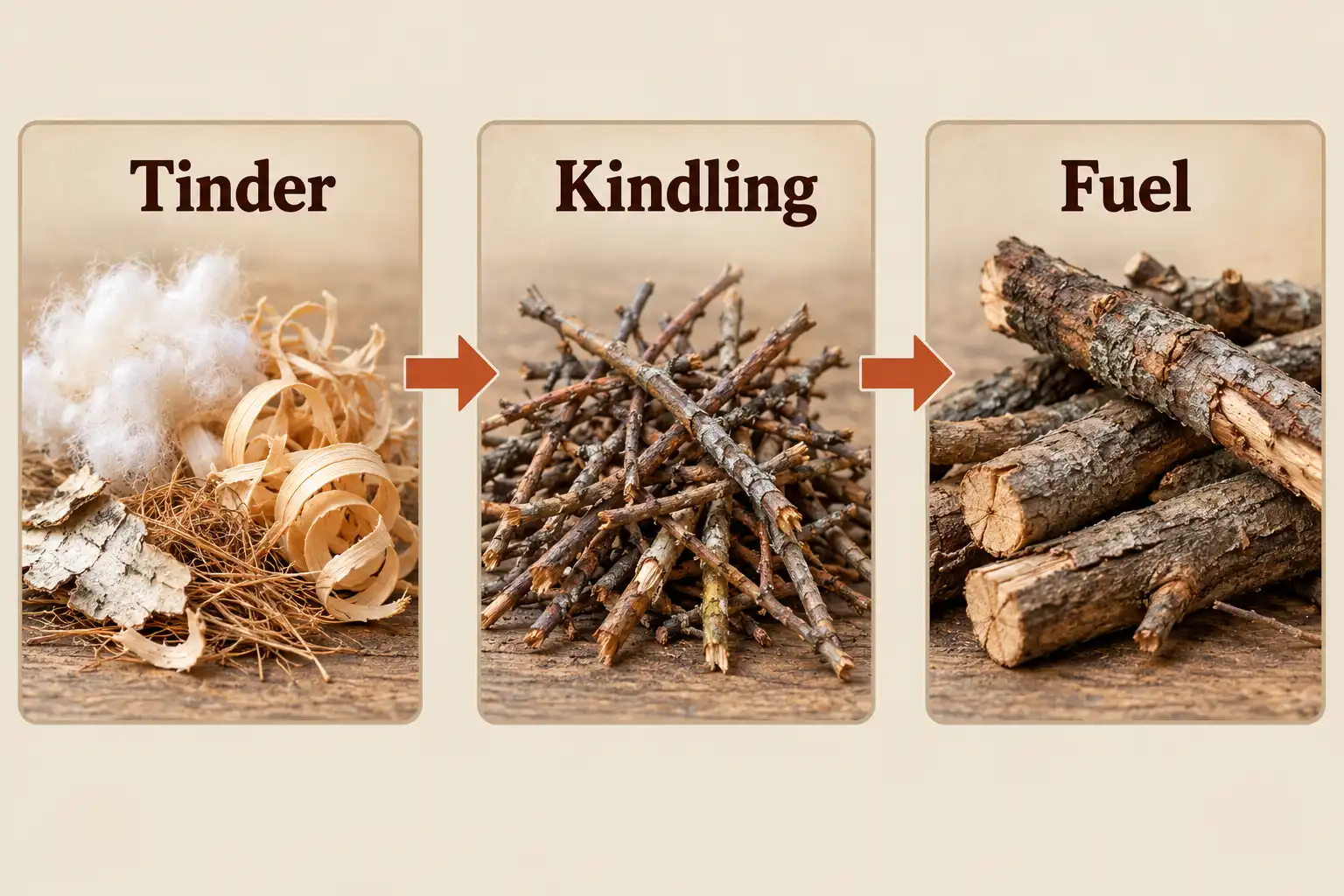
A spark won’t light a thick log. To make fire without a lighter, prepare three sizes of material first:
- Tinder: Very fine, dry, loose fibers that catch sparks. Good options include commercial fire tinder, fluffed cotton, dry bark fibers from fallen material, and thin wood shavings.
- Kindling: Dry twigs and split sticks, starting about as thin as a pencil lead and working up to finger thickness.
- Fuel: Larger, dry sticks that keep the fire burning once the kindling is established.
Next, build a loose tinder nest with air gaps. Then arrange a few thin sticks nearby so you can feed the flame immediately. If the ground is damp, keep the tinder on a dry piece of split wood inside the fire ring.
Also, collect wood only where local rules permit it. For longer trips, finding suitable firewood around camp is worth planning before the weather turns wet.
Method 1: Use a Ferro Rod for Easy, Match-Free Fire Starting
A ferrocerium rod, or ferro rod, produces hot sparks when scraped with a metal striker. It’s my first recommendation for someone learning how to start a fire without matches because it doesn’t need lighter fuel or sunshine. However, sparks still need dry, fine tinder to become a flame.
- Prepare a tinder nest. Fluff dry cotton fibers or fine wood shavings. Place the nest where sparks can land directly on it.
- Expose the rod’s surface. If the rod has a protective coating, scrape a small strip away with its striker.
- Bring the rod close. Brace the rod near the tinder. Hold the scraper firmly against it.
- Make sparks without scattering the tinder. Keep the scraper steady and pull the rod back sharply, directing sparks into the fibers.
- Feed the first flame. Once the tinder ignites, add the thinnest kindling with space for air. Increase the stick size gradually.
So I recommend practicing this in a permitted, controlled setting before relying on it during a cold or rainy trip.
Method 2: Use Traditional Flint and Steel with Char Cloth
Traditional flint and steel works differently from a ferro rod. A sharp flint edge struck with suitable carbon steel produces small sparks, which usually need char cloth or another easily ignited, prepared material to catch.
- Put a small piece of char cloth along the flint’s edge, away from your fingers.
- Strike the sharp edge of the flint with carbon steel so sparks land on the cloth.
- When a glowing spot appears, transfer the ember into a dry, loose tinder nest.
- Blow gently until the tinder flames, then add thin kindling.
Char cloth must be prepared beforehand. Also, random stones and stainless-steel tools may not produce usable sparks. I would choose a ferro rod over this method for a beginner’s emergency kit.
Method 3: Concentrate Sunlight with a Magnifying Glass
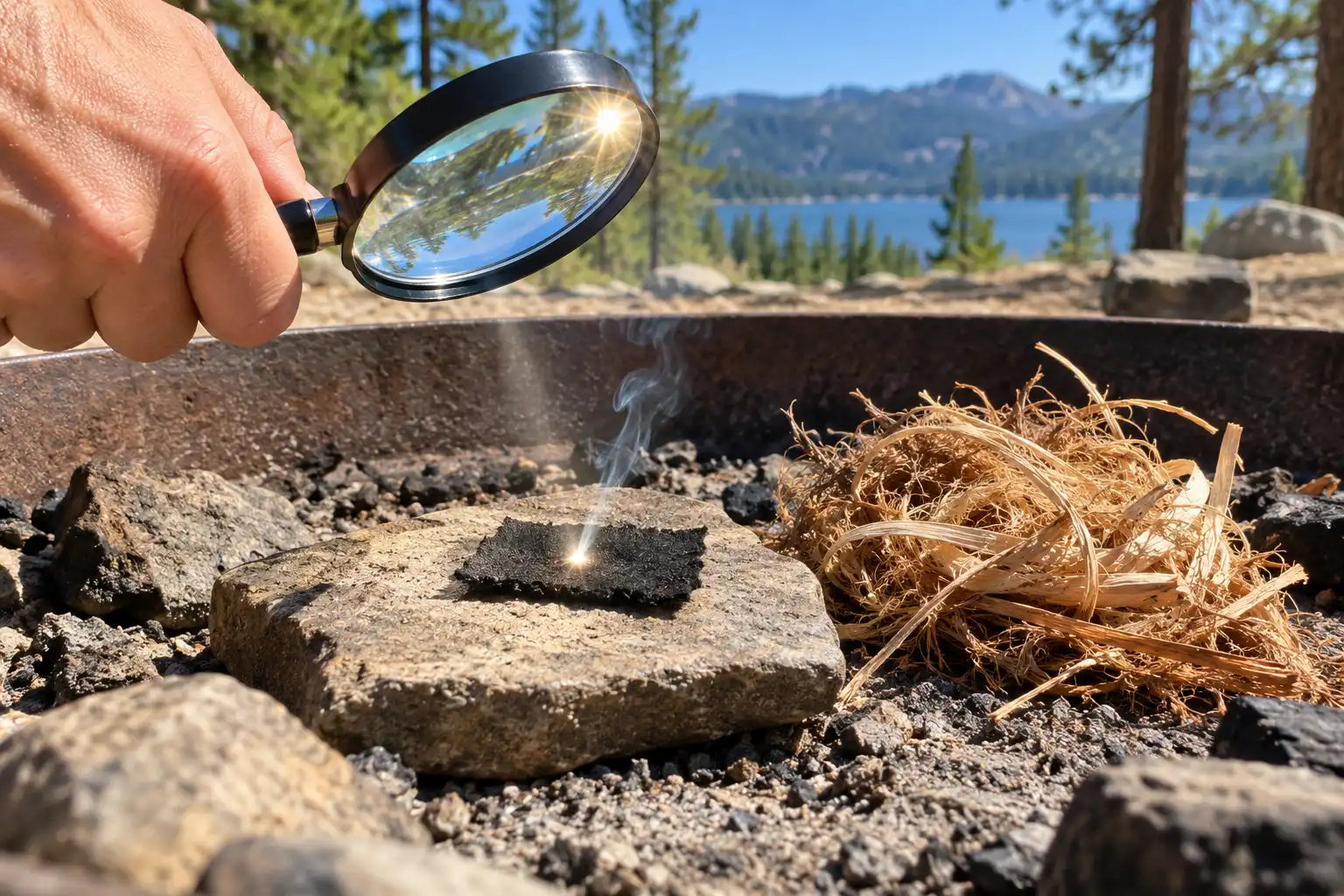
A magnifying glass or Fresnel lens can focus direct sunlight until suitable tinder starts to smolder. This method uses no matches, batteries, or lighter, but it requires strong sun, steady hands, and patience.
- Place dry, dark tinder, such as char cloth, in a safe fire ring.
- Hold the lens between the sun and tinder. Adjust it until the bright spot becomes as small and concentrated as possible.
- Keep the spot steady until an ember develops. Then gently feed the ember with air and transfer it into a dry tinder nest.
- Add very fine kindling once you have a flame.
However, clouds, low light, and damp material can make this method fail. Never look at the sun through the lens or leave it where it could accidentally focus sunlight onto flammable material.
Method 4: Make Fire with a Bow Drill
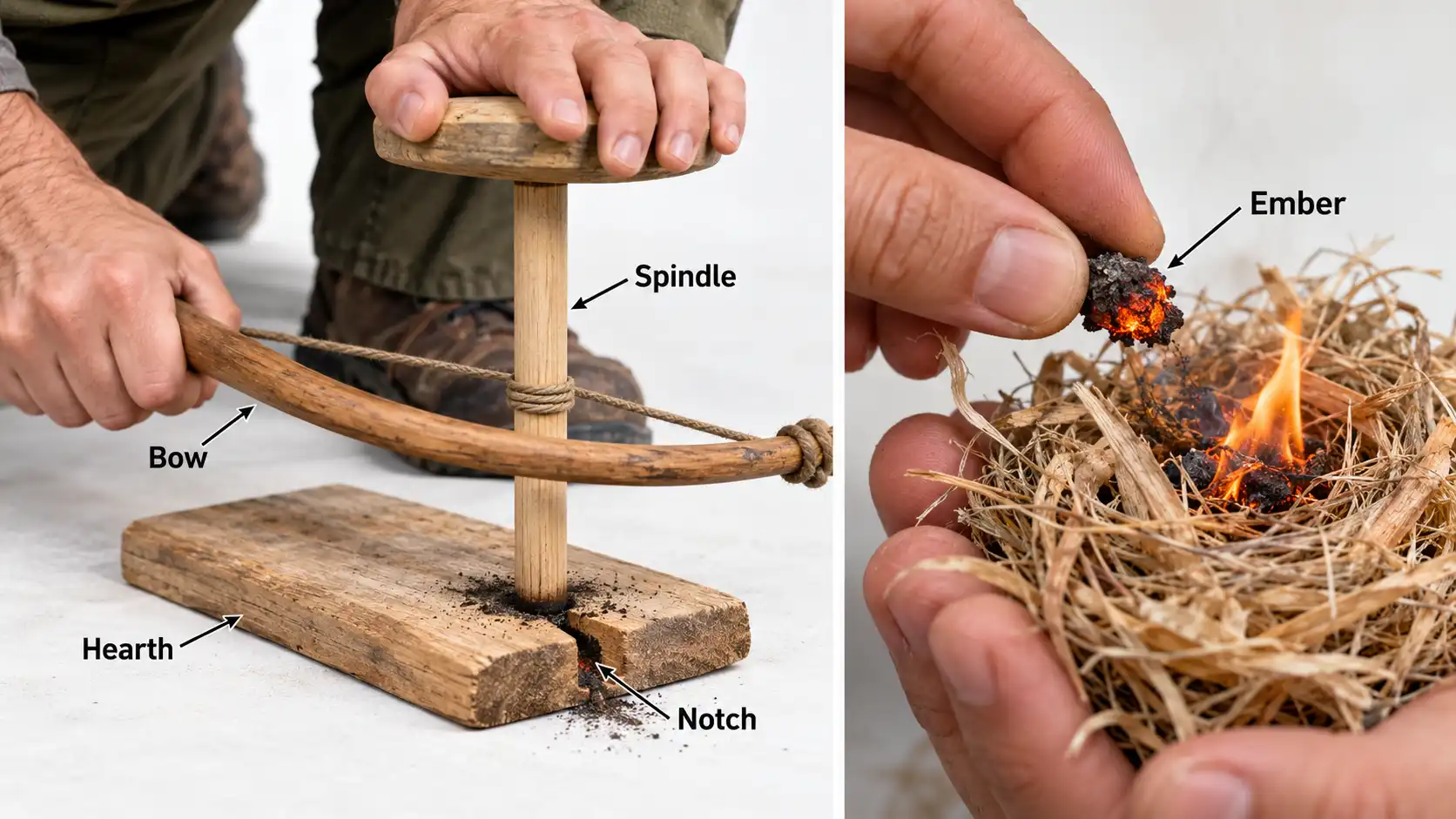
The bow-drill method creates a hot ember through friction. It can work without a manufactured ignition tool, but it is difficult for beginners and unreliable with damp wood. I see it as a skill to practice ahead of time, not an easy emergency shortcut.
You need a dry hearth board, a straight wooden spindle, a curved bow with cord, a handhold, an ember catcher, and a fluffy tinder nest.
- Make a shallow socket in the hearth board, then cut a small V-shaped notch from its edge toward the socket. Position your ember catcher below the notch.
- Wrap the bow cord once around the spindle. Set the spindle between the hearth socket and handhold.
- Hold the board steady with your foot. Apply downward pressure with the handhold while moving the bow smoothly back and forth.
- Continue until dark wood dust collects in the notch and forms a glowing coal. Smoke alone doesn’t guarantee an ember.
- Transfer the coal carefully to the tinder nest. Blow gently until it flames, then feed it with kindling.
Dry, suitable wood and good technique matter. Rubbing two random sticks together usually won’t start a fire. The University of Colorado Museum’s fire-starting guide also provides useful bow-drill instructions.
Method 5: Use a 9-Volt Battery and Fine Steel Wool
A standard 9-volt battery can heat fine, plain steel wool when the strands touch both terminals. This can ignite prepared tinder without matches or a lighter, but it creates an electrical short circuit and can burn your fingers or overheat the battery.
If you choose this method, place dry tinder in a permitted fire ring first. Set a small, loose tuft of fine steel wool on the tinder, briefly touch both battery terminals to the wool, and move the battery away as soon as the wool glows. Don’t touch the hot wool. Instead, let it ignite the tinder, then add kindling as a flame develops.
Also, never store steel wool against battery terminals. Don’t try this with a lithium-ion battery pack, damaged batteries, or improvised wiring. I would not sacrifice a battery needed for an emergency radio or navigation device just to attempt this method.
Grow the Flame Without Smothering It
Whichever method you use, the first flame is fragile. I build up a campfire in this order: burning tinder, tiny twigs, pencil-sized sticks, then thicker wood. Also, leave gaps so oxygen can reach the center, and add only a few pieces at a time.
If you still have dry matches, use them on the same tinder setup. Matches are easier than most of these methods, although they don’t answer the need to make fire without matches or a lighter.
For cooking, I prefer managing campfire heat with a small bed of coals instead of keeping a large flame going.
Troubleshoot Wet Tinder and Failed Sparks
When a fire won’t catch, I check the fuel before blaming the tool:
- Sparks land but nothing glows: Your tinder may be damp or too coarse. Fluff it, shave finer fibers, or switch to dry commercial tinder.
- Tinder flashes and dies: Add very thin kindling immediately. That’s because thick sticks steal heat from a weak flame.
- Wood smokes heavily: Look for drier, smaller pieces. If collecting or splitting wood is allowed, the inner wood of a dead branch may be drier than its surface.
- Wind scatters sparks: Stop if conditions are unsafe. Do not compensate with flammable liquids or a larger fire.
For rainy camps, I apply the same dry-tinder and small-kindling approach when starting a cooking fire in wet conditions.
Extinguish the Fire and Know When to Stop
A fire is not out just because the flames disappear. Instead, pour plenty of water over the coals, stir the ashes carefully, and repeat until everything is cold to the touch. Keep your face back from steam. Don’t bury hot coals under soil, because hidden embers can remain hot.
If you are cold, wet, or lost, a friction fire may consume energy without producing warmth. I would prioritize shelter, dry layers, and signaling for help in the backcountry rather than counting on an unpracticed fire technique. Never start an illegal or unsafe fire as a convenience.
Final Thoughts
The simplest way to start a fire without a lighter is to prepare dry tinder and use a ferro rod in an approved fire ring. Flint and steel, sunlight, a bow drill, and a 9-volt battery can also work, but none is a substitute for good preparation. My advice is to carry a reliable backup, keep your tinder dry, and practice before your next camping trip. Above all, check fire restrictions and make sure every ember is completely out before leaving.