How to Wash a Tent Safely: Step-by-Step Cleaning Guide

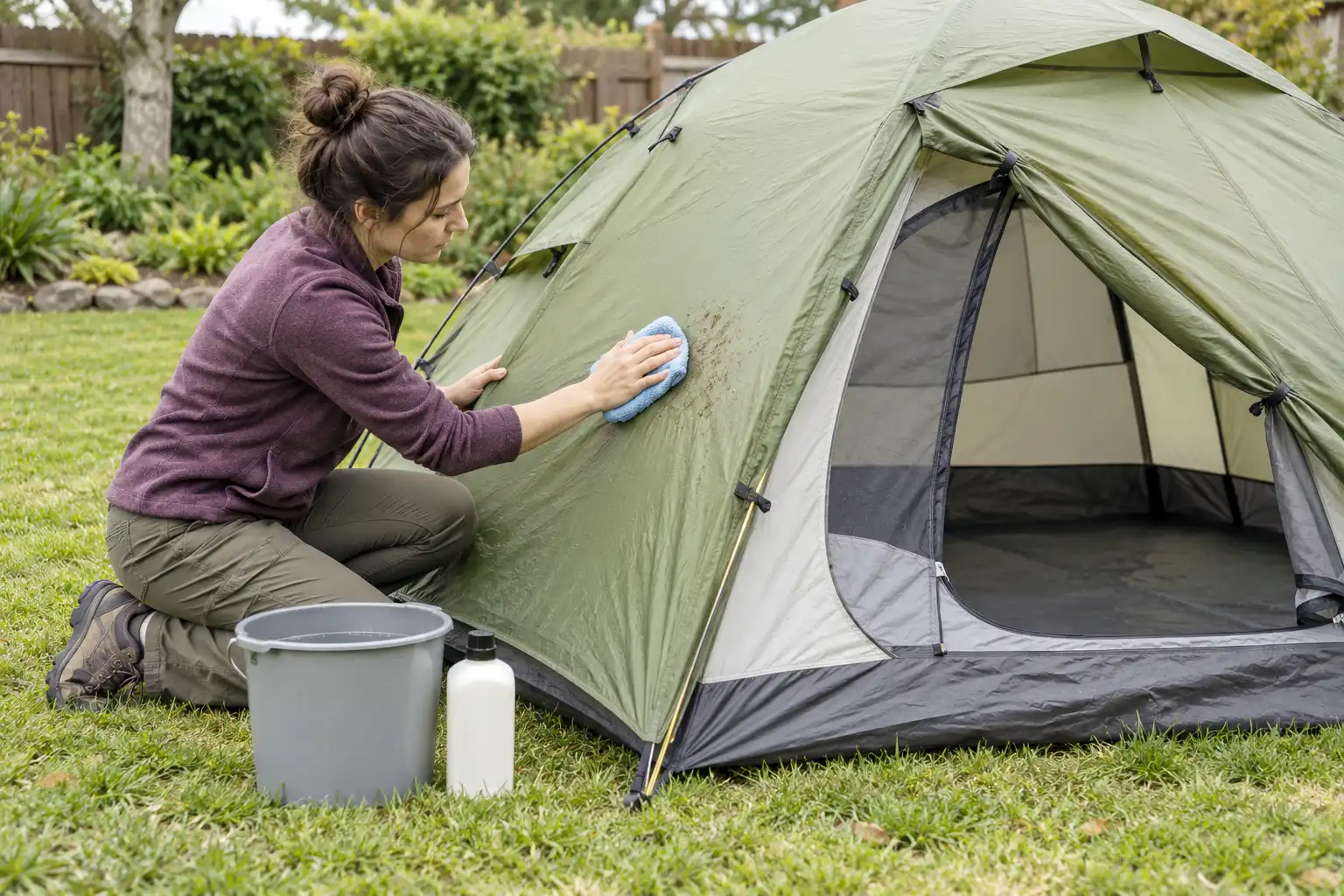
To wash a tent safely, start with a soft cloth, cool water, and a cleaner approved for the tent fabric, then rinse gently and let every part air-dry before storage. I recommend a gentle approach because aggressive washing can damage coatings, seams, and mesh long before the fabric looks worn.
Most nylon and polyester tents need spot cleaning, not a full bath. Shake off dirt, wipe soiled areas with a nonabrasive sponge, rinse away any cleaner, and air-dry the entire tent. Canvas tents usually need water and a soft brush rather than regular detergent. Never machine wash or tumble dry a tent.
Check Your Tent Fabric Before Washing
I start with the care instructions for the specific tent. A coated nylon or polyester backpacking tent needs different handling from a cotton canvas wall tent. Even among synthetic tents, waterproof coatings and seam treatments can vary.
For example, NEMO’s tent care guidance recommends gentle hand washing and warns against standard laundry detergents. If the maker specifies a cleaner or says not to soak the fabric, follow that advice instead of a general cleaning method.
Check the rainfly, tent body, floor, and mesh for dirt, damage, and sticky coatings. Also inspect the poles, zippers, and stakes. A tent with only a dusty floor rarely needs a complete wash.
Gather Simple Tent Cleaning Supplies
For most synthetic tents, I suggest a soft sponge or microfiber cloth, a soft brush, cool to lukewarm water, and a tent-safe cleaner approved by the manufacturer. A bathtub or large clean basin helps if the tent needs a deeper hand wash.
Use plain water for light dirt. For stubborn spots, choose a suitable gear cleaner or, only if the care instructions allow it, a tiny amount of mild, fragrance-free soap. Avoid bleach, laundry detergent, fabric softener, stiff brushes, hot water, and pressure washers. Those shortcuts can harm coatings or fabric.
How to Wash a Tent by Hand: 7 Steps
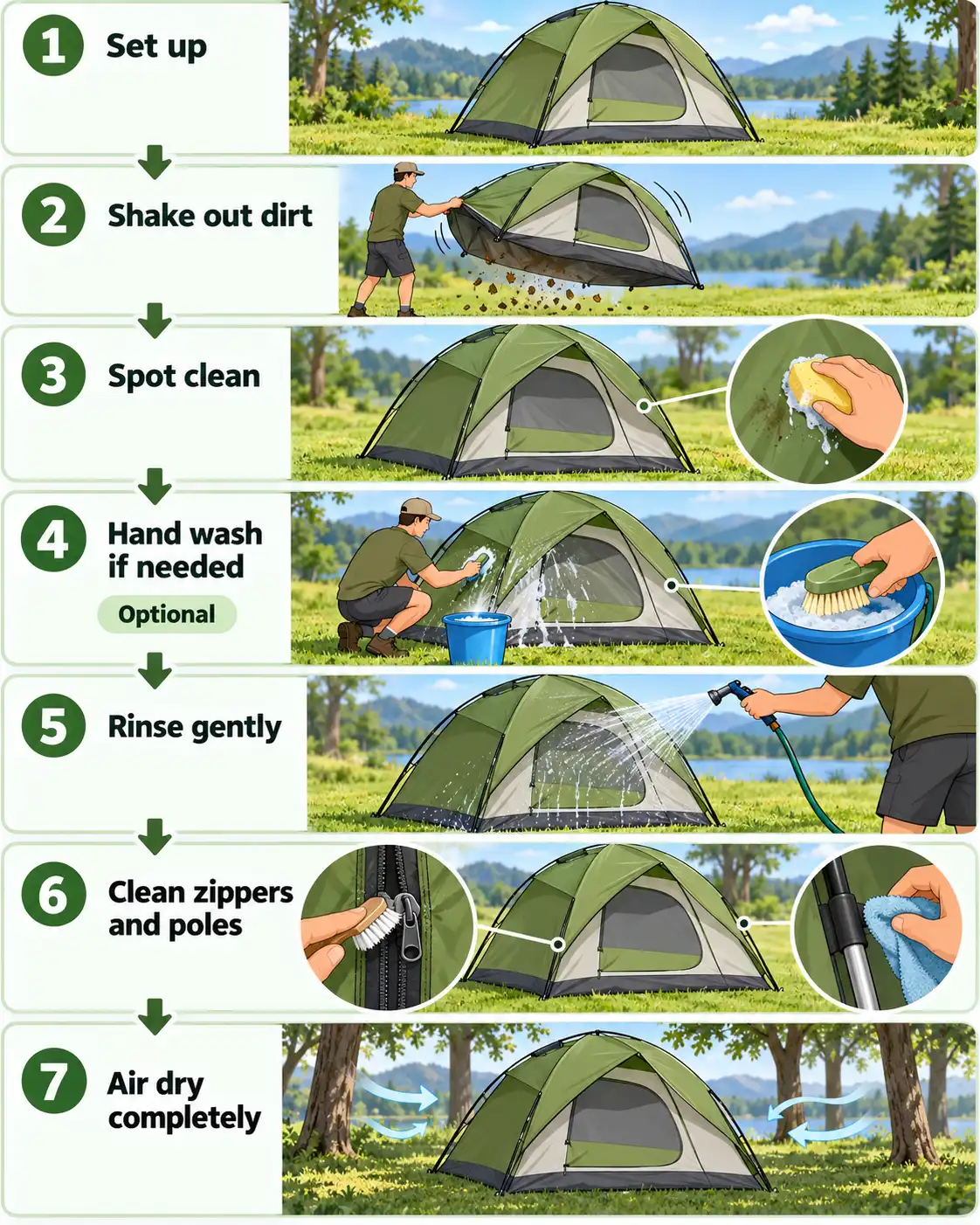
For a nylon or polyester camping tent, I recommend removing loose grit first, treating dirty spots with a soft cloth and gentle cleaner, rinsing thoroughly, and drying everything completely before putting it into storage.
- Prepare a clean area. Pitch the tent in shade for spot cleaning, or spread it on a clean surface. Remove bedding.
- Shake out dirt and sand. Empty the tent and sweep the floor. Brush away dried mud before wiping.
- Spot clean dirty areas. Wet a soft cloth, apply a little approved cleaner, and gently wipe stains on the floor, walls, and rainfly. Treat mesh with extra care.
- Hand wash only if needed. For widespread grime, remove the poles and use a clean tub of cool water with the recommended tent cleaner. If the maker permits soaking, follow the product’s exact dilution and soak time.
- Rinse away residue. Use clean water and a gentle flow, never a pressure jet. Repeat until no cleaner remains, especially around seams and floor corners.
- Clean the small parts. Remove sand from zipper teeth with a soft brush. Wipe poles and stakes with a damp cloth, then dry them separately.
- Drain and air-dry. Let water run off, then press with a towel if needed. Do not twist or wring coated fabric. Dry the tent fully before packing it.
How to Clean a Canvas Tent
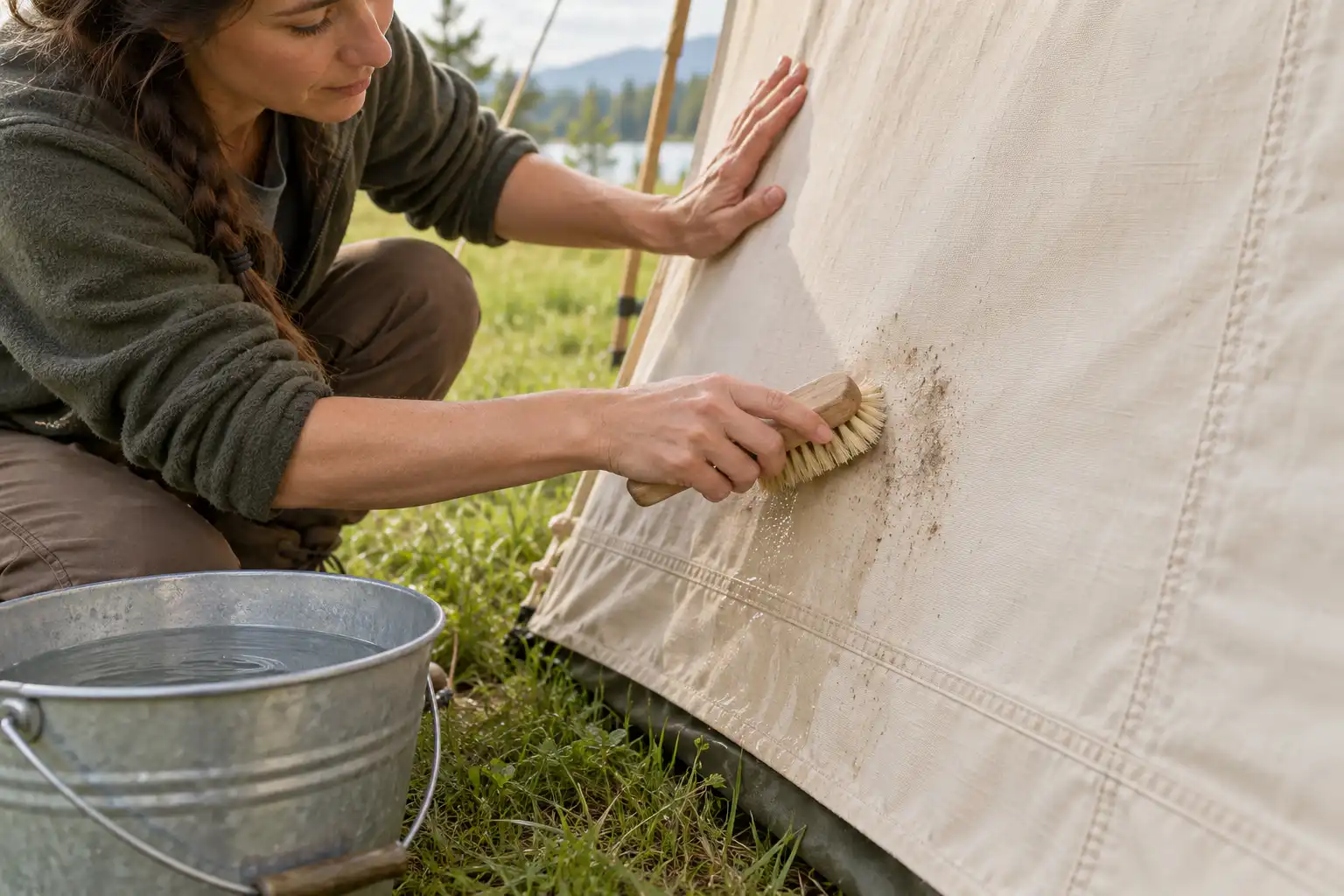
To clean a canvas tent, I recommend brushing off dry debris, wiping dirty areas with cool water and a soft-bristle brush, rinsing gently, and air-drying it fully while pitched in a ventilated area.
Canvas often has a water-repellent treatment that strong cleaners can strip. That’s why I would start with plain water for mud, dust, and bird droppings. Work gently rather than scrubbing a stubborn mark until the cloth looks new.
For deeper staining, check the maker’s instructions before using a canvas-specific cleaner. Some brands allow targeted treatments but advise restoring water repellency where soap was used. For instance, Springbar’s canvas care instructions favor water and a soft brush for routine cleaning.
Canvas also needs special attention around seams, corners, and the lower walls where moisture collects. If your manufacturer recommends seasoning a new canvas tent with a wet-and-dry cycle, follow its directions. That is not a step you need to repeat automatically after every wash.
How to Dry a Tent Completely
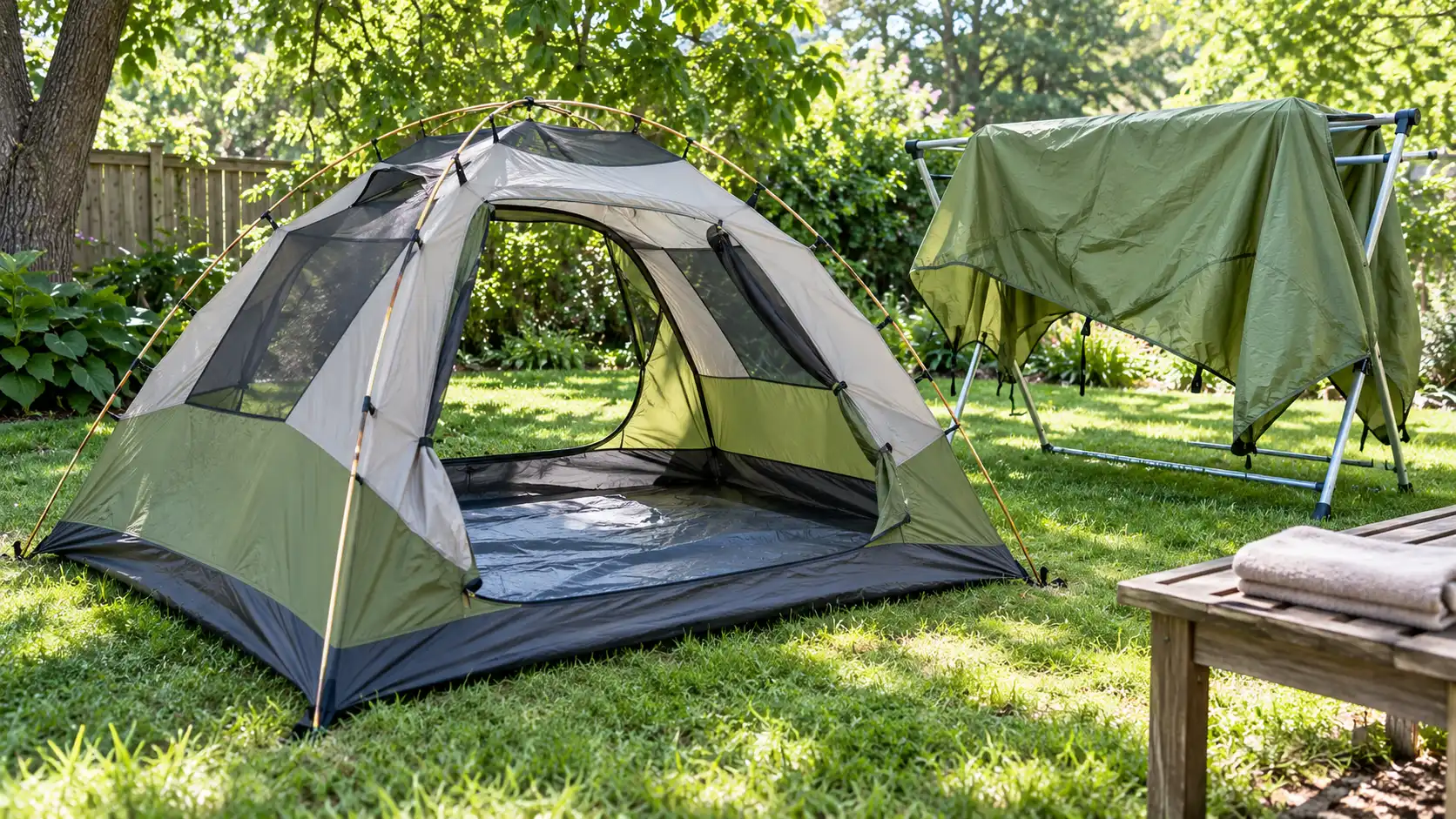
To dry a tent safely, pitch it in a shaded, breezy spot, open its doors and vents, and expose the floor and rainfly to moving air in a clean, well-ventilated area.
I prefer a fully pitched tent because airflow reaches more of the fabric. However, if space is limited, drape the tent loosely over clean, broad supports without stretching it or snagging mesh. Turn over the floor and rainfly once one side feels dry.
Use a clean towel to blot pooled water from corners. Then check the underside of the floor, pockets, zipper flaps, guylines, and pole sleeves. Drying can take much longer in humid weather, so I would not trust a fixed number of hours. If the tent gets packed wet at camp, open it again as soon as possible. The same principle helps when you need to dry other wet camping gear.
How to Dry a Canvas Tent
To dry a canvas tent, leave it pitched with doors and windows open in moving air until the walls, heavy seams, and folded edges are completely dry, then store it loosely. Canvas holds more water than most lightweight tent fabrics, so allow extra drying time. Also, avoid prolonged harsh sunlight, heaters, and hot air blasts.
Can You Put a Tent in a Dryer?
No, I would not put a nylon, polyester, or canvas camping tent in a tumble dryer because heat may damage coatings and seam tape, while the tumbling action can strain fabric, mesh, and stitching.
I would also skip the washing machine, even on a delicate cycle. A machine can pull at seams and protective layers, and low dryer heat does not remove the risk of mechanical damage. Instead, use a sponge, rinse gently, and give the tent enough time to air-dry. This matches REI’s tent care recommendations.
Handle Mold, Bad Smells, and Stubborn Stains Carefully
If the tent smells musty, first inspect it for visible mold or mildew. Ordinary dirt cleaning will not always solve a mold problem. I would choose a treatment only after checking that it is compatible with the tent’s coating and fabric, because some cleaning agents damage waterproof finishes. For lingering odors, use an approved tent-compatible enzyme cleaner only if the label and tent maker permit it, and follow the stated soak time. I cover the safer options for removing mold without harming tent coatings in a separate guide.
If tree sap leaves sticky residue, don’t automatically reach for rubbing alcohol or solvents. Ask the maker which spot treatment is safe for that fabric. Meanwhile, soften bird droppings with water before gently lifting them away, and brush off dried mud before wiping.
If a tent stays sticky, peels, or smells strongly of deteriorating coating after proper cleaning and drying, contact the manufacturer. Washing alone cannot restore a failing waterproof coating.
Check Waterproofing and Seams After Cleaning
A normal hand wash should not require automatic re-waterproofing when you use approved products. Once the tent dries, inspect the rainfly, floor, and taped seams. Look for peeling tape, cracking coatings, worn fabric, or previous leak points.
If the tent leaks, first identify whether water is entering through a seam, damaged fabric, or condensation. Then use a repair product compatible with that tent’s coating. My guide to repairing leaking tent seams covers that separate job. For canvas, reapply water-repellent treatment only when needed and according to the brand’s advice. A random waterproofing spray is not suitable for every tent.
How to Keep Your Tent Clean While Camping
To keep your tent clean while camping, clear debris before pitching, use a correctly sized footprint, keep dirty shoes outside, shake out grit daily, and wipe spills before they soak into the fabric. I also recommend removing sand from floor seams before it abrades the fabric.
A groundsheet that extends beyond the tent floor can catch rainwater rather than protect it. If you’re choosing one, check ground cloth options for wet campsites.
Keep food and drinks from spilling inside, wipe fresh stains with water, and brush dirt off zippers. Finally, let condensation escape through the tent’s vents whenever conditions allow. In my view, simple campsite habits beat washing after every night outdoors.
How Often Should You Wash a Tent?
I would not wash a tent after every camping trip; instead, I recommend shaking it out and drying it after every use, spot cleaning visible dirt, and doing a deeper wash only when grime or odors justify it.
Check it more closely after sandy, muddy, salty, or long trips. However, frequent full washes can create unnecessary wear, especially if you soak coated fabric each time. For a tent that is clean but damp, drying matters more than washing.
Store the Tent Only When Every Part Is Dry
Once the tent is clean, I store its fabric loosely in a roomy, breathable bag in a cool, dry place. Avoid leaving it compressed in a small stuff sack for months, and keep it out of hot trunks or damp storage rooms. Make sure poles, stakes, and the storage bag are dry too.
When you’re getting ready for another trip, packing a backpacking tent efficiently is a different task from long-term storage. A little extra space at home helps keep fabric and coatings from spending the season tightly compressed.
Final Thoughts
The safest way to wash a tent is also the simplest: remove grit, spot clean gently, rinse properly, and air-dry it completely. I would save full hand washing for truly dirty synthetic tents and use mostly water for canvas unless the maker says otherwise. Above all, don’t rush storage. A few minutes of careful cleaning and enough drying time will do more for your tent than strong soap or a washing machine.