Are Blundstones Good for Hiking? An Honest Look at Their Limits

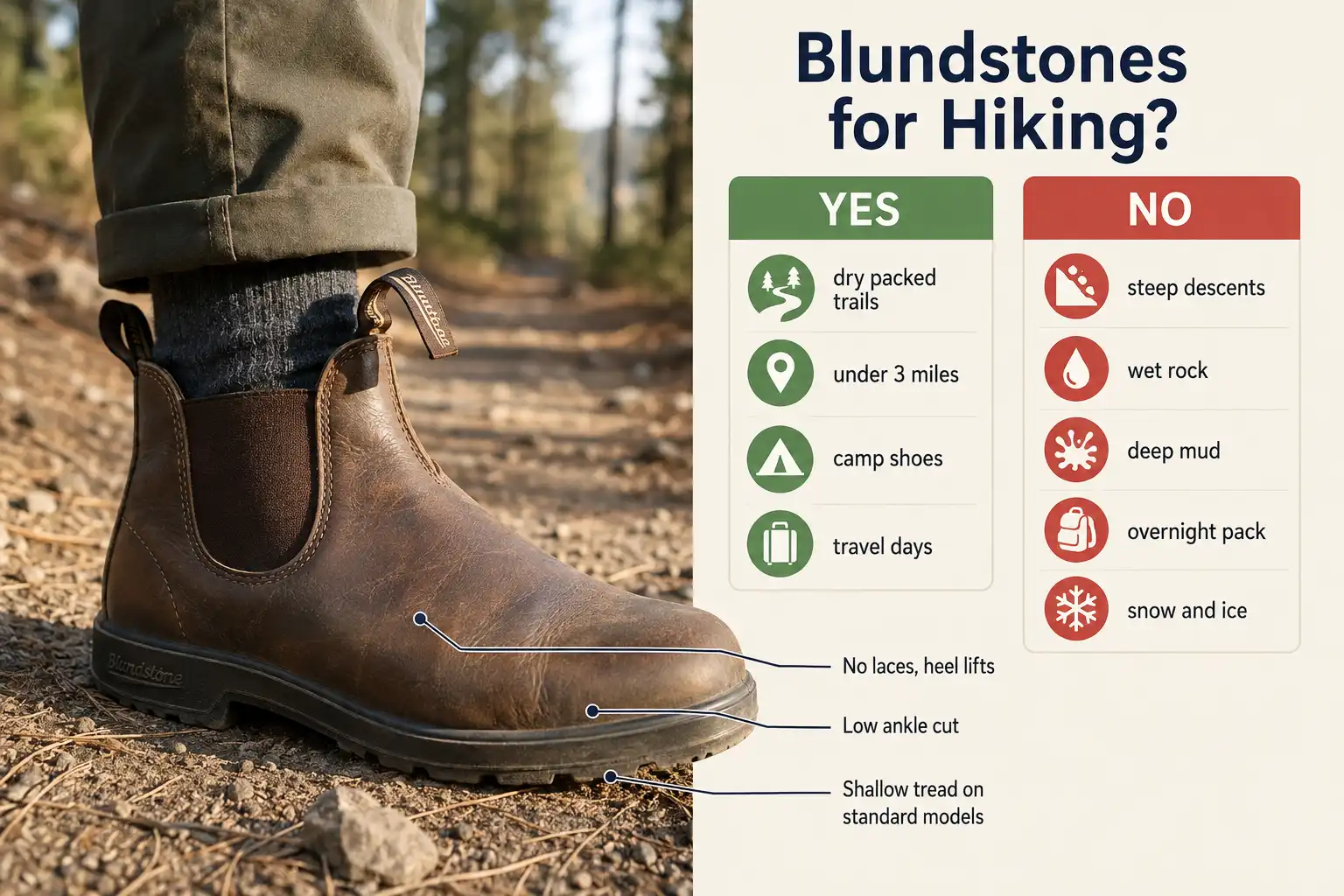
Blundstones cost about as much as a good hiking boot, so the question is fair. Can you actually hike in them? I wear a pair around the Kaptai hills most weeks. They handle some trails well and fail badly on others, and five specific things decide which.
Blundstones work for easy hikes on dry, packed trails, roughly three miles or less. However, they lack laces, deep lugs, and a waterproof membrane, so they slip and rub once ground turns steep, wet, or rocky. Buy the All-Terrain models if you want the best Blundstone for trails.
| What you need on trail | Blundstone | Verdict |
|---|---|---|
| Deep lugs (4 to 5 mm) | Shallow on standard models | Fails |
| Heel lockdown | Elastic only, no adjustment | Fails |
| Waterproofing | Water resistant on most models | Partial |
| Underfoot cushion for loads | Thin stock footbed | Fails |
| Light weight | About 1 lb 10 oz per pair | Passes |
| Easy on and off at camp | Two pull tabs | Passes |
What Blundstone Actually Built These Boots For
Blundstone builds work boots, and that history explains every strength and every gap. The company started in Tasmania in 1870, and the famous 500 series arrived in the late 1960s when Blundstone put rubber soles on a Chelsea upper.
The design targets people who stand all day and step in and out of boots constantly. Farmers, tradespeople, kitchen staff, and warehouse crews all fit that description.
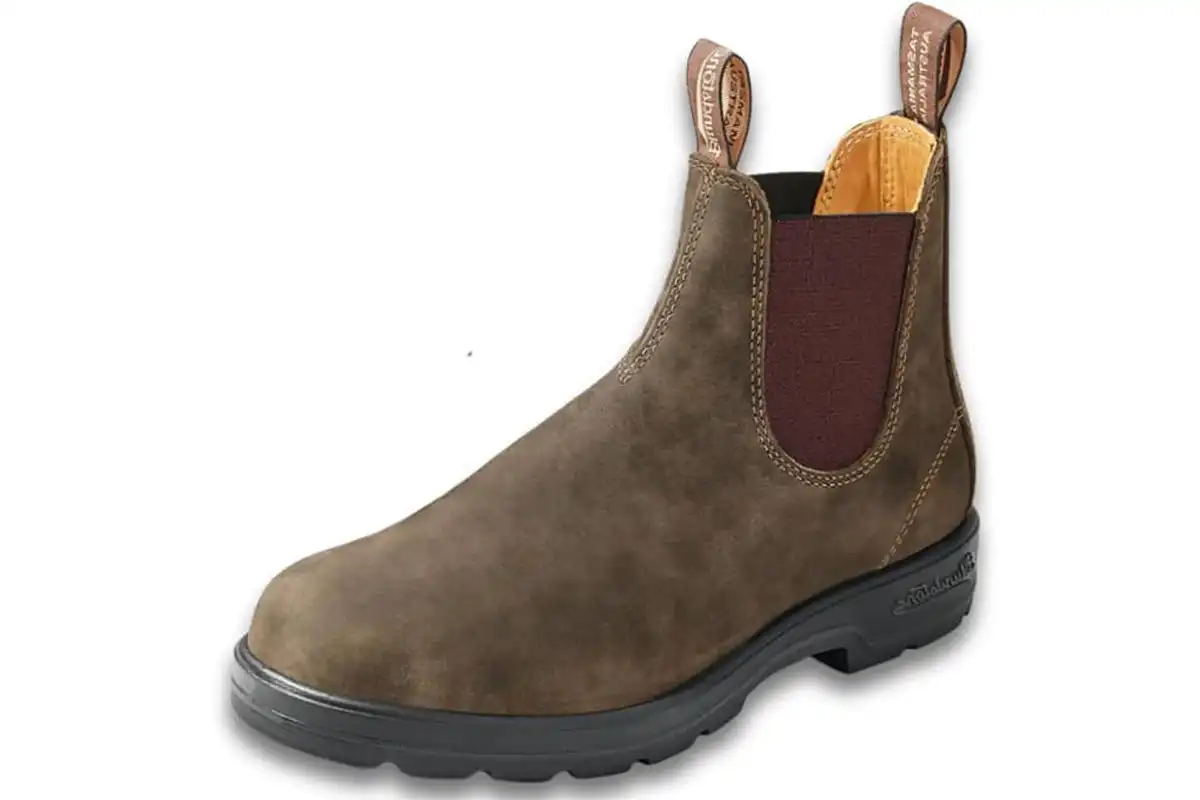
So the Original 500 pairs a 2.5 mm water-resistant leather upper with a polyurethane midsole, a thermo-urethane (TPU) outsole, and a steel shank for torsional stability. Those choices deliver comfort on flat, hard surfaces. Meanwhile, none of them address grip on loose ground or heel control on a climb.
The 5 Things That Decide If a Boot Can Hike
Judge any boot against these five points, then the answer for Blundstones becomes obvious.
1. Lug Depth and Tread Spacing
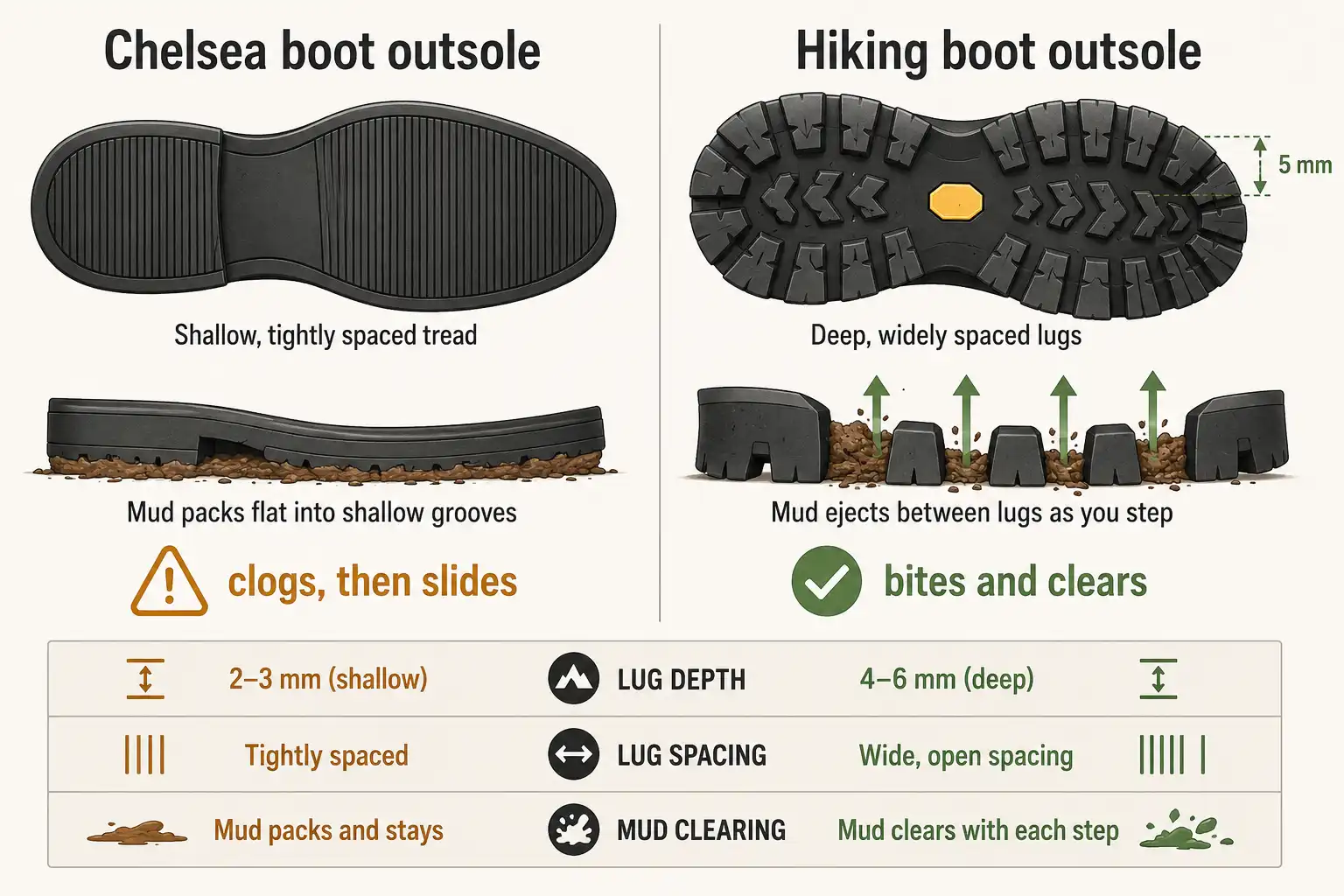
Standard Blundstones lose here. A mainstream hiking boot like the Merrell Moab 3 Mid runs a 5 mm lug depth on a Vibram TC5+ outsole. Deep, widely spaced lugs bite into soft ground, and the gaps let mud fall out as you walk.
Blundstone’s TPU outsole uses a shallower, tighter pattern built for slip resistance on hard floors. Consequently it packs with clay and turns into a smooth plate. After that, you are sliding, not walking.
The All-Terrain series fixes most of this. Blundstone developed that outsole with Vibram, and the tread adds contact area plus self-cleaning heel grooves that release mud and small stones.
2. Heel Lockdown
Elastic gussets cannot be tightened, so this is the gap you cannot engineer around. Your heel lifts on every climbing step, and your toes ram forward on every descent.
That sliding creates hot spots, and hot spots turn into blisters within a few miles. Laces exist to clamp the heel while leaving the forefoot free. No Chelsea boot can do that.
3. Water Protection
Most Blundstone leathers are water resistant, not waterproof. They shed drizzle, dew, and puddles without trouble.
Wet grass, stream crossings, and steady rain soak through instead, because standard models carry no waterproof membrane. Only the Thermal All-Terrain versions (#2241 and #2242) use waterproof leather with sealed seams and waterproof elastic.
4. Underfoot Protection
The steel shank helps more than people expect, since it resists twisting when you land on a rock edge. Still, the stock footbed is thin, and there is no rock plate.
Sharp stones come through on rocky trail. Also, without a rubber toe cap, a hard kick into a root hits nothing but leather.
5. Ankle Coverage
The shaft sits just above the ankle bone, near five inches from the arch on a small size. It covers the joint, though it never braces it, because nothing cinches around your ankle.
Treat that coverage as protection from grit, thorns, and scrapes. Do not treat it as support.
Where Blundstones Genuinely Work
They work on flat, dry, maintained ground, and they work very well as camp shoes.
| Use | Blundstone rating |
|---|---|
| Camp shoes after a long day | Excellent |
| Gravel and forest service roads | Good |
| Flat park loops under 3 miles | Good |
| Dry farm and village tracks | Good |
| Rolling day hikes, 3 to 5 miles | Marginal |
| Steep, wet, or rocky trail | Poor |
| Overnight trips with a pack | Poor |
Camp duty is where mine earn their place. After hours in stiff boots, sliding into a pair takes two seconds, and stepping out of the tent at 2 a.m. needs no lacing at all.
Which Blundstone Model Is Best for Hiking?
The All-Terrain #2055, #2056, and #2058 are the best Blundstones for hiking, thanks to the Vibram outsole.
| Model | Leather | Outsole | Water protection | Best use |
|---|---|---|---|---|
| Original 500 / 510 | 2.5 mm water resistant | TPU, shallow tread | Water resistant | Camp, travel, dry easy trails |
| Classic 550 / 585 | Water resistant | TPU, chunkier profile | Water resistant | Daily wear, light trails |
| All-Terrain 2055 / 2056 / 2058 | 1.8 mm water resistant | Vibram, self-cleaning lugs | Water resistant | Muddy tracks, light trail use |
| All-Terrain Thermal 2241 / 2242 | Premium waterproof | Vibram, self-cleaning lugs | Waterproof, sealed seams | Cold and wet walking |
| Lace-Up 1931 / 1935 | Water resistant | TPU, shallow tread | Water resistant | Better lockdown, same weak grip |
Two things are worth knowing before you order. Blundstone states that its rubber soles are not designed for extreme cold or ice, and that traction drops below freezing. In addition, the lace-up series solves heel lift but keeps the TPU outsole, so grip on wet ground stays unchanged.
The Sizing Mistake That Ruins Them on Trail
Blundstone half sizes add width, not length. That single fact causes most of the fit complaints I hear.
Blundstone lists sizes in Australian numbering, and the brand treats length as the primary fitting measure. Therefore ordering half a size up gives you a wider boot in the same length, which does nothing for toes that hit the front on a descent.
Fit them like this:
- Check length first. Leave about a quarter inch between your longest toe and the front of the boot.
- Walk a slope. Stand on a ramp or stairs in the shop and feel whether your toes slide forward.
- Wear your hiking socks. Thick socks change the fit more than half a size does.
- Accept slight heel give. Some lift is normal at first, since the leather molds with wear.
- Size up in length, not width, if your toes touch. The same toe room rules apply as when you work out how a hiking boot should fit.
The Problem Nobody Warns Hikers About: Resoling
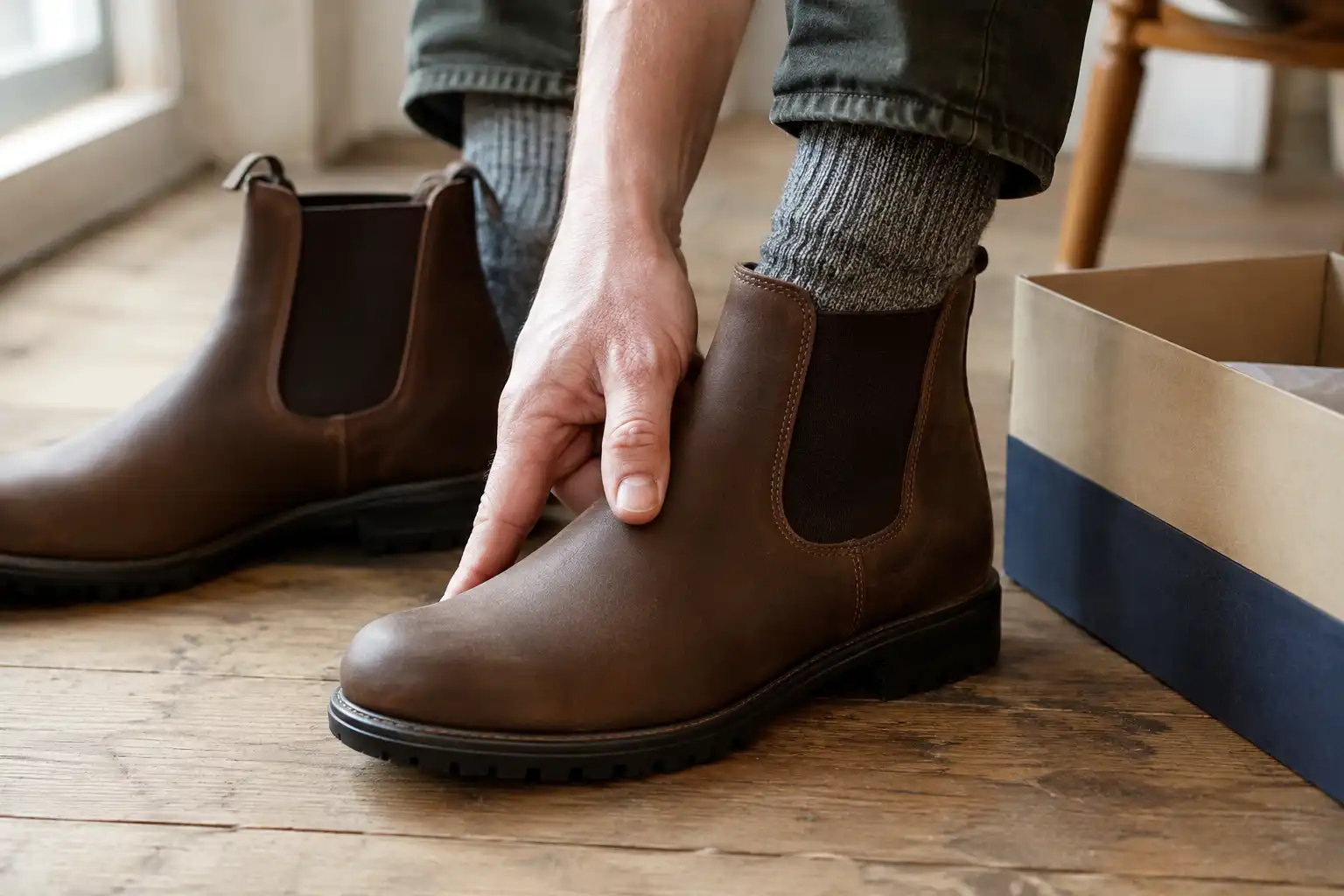
Most Blundstone soles will not take a resole, and trail miles grind them down fast. Blundstone’s own support pages explain why: the factory injects polyurethane into a mold against the leather upper, which fuses the two together permanently. As a result, the company offers no resoling service at all.
Skilled cobblers can bond on a replacement sole, and typical quoted prices run around $85 to $110 in the US, though costs vary by shop. Blundstone also notes that a non-original sole may change how the boot performs and feels.
There is a second issue. Polyurethane and TPU soles degrade with age through hydrolysis, so they can crumble even on a pair that looks fine up top.
That changes the value math. A hiking boot with a stitched or bonded lugged outsole often takes a resole, while a worn Blundstone usually reaches the end of its life. So grinding your soles down on rocky trails is an expensive way to use them.
Blundstone vs a Real Hiking Boot
The weight advantage is smaller than most people assume, and that surprises buyers.
| Spec | Blundstone Original 500 | Merrell Moab 3 Mid WP | Salomon X Ultra 4 Mid |
|---|---|---|---|
| Weight per pair | About 1 lb 10 oz | About 2 lb 4 oz | About 1 lb 10 oz |
| Lug depth | Shallow TPU tread | 5 mm Vibram TC5+ | Deep lugged rubber |
| Heel lockdown | None | Full lacing | Full lacing |
| Waterproof membrane | No | Yes | Yes |
| Toe cap | No | Yes | Yes |
| Resoleable | Rarely | Sometimes | Sometimes |
| Typical US price | About $180 to $230 | Around $150 | Around $165 |
Weights shift with size and model, so treat these as ballpark figures. Still, the pattern holds: you can buy a laced, lugged, waterproof boot that weighs the same as a Blundstone pair and costs less. If you are picking your first proper trail pair, settle boots or shoes for a new hiker before you shop by brand.
6 Ways to Make Blundstones Safer on Trail
Fit and mileage discipline solve most of the fixable problems.
- Replace the stock footbed. A firmer aftermarket insole adds arch support and fills slack volume, which cuts heel lift measurably.
- Wear thick cushioned socks. Extra volume tightens the fit. Good wool socks that keep blisters down matter more here than in any laced boot.
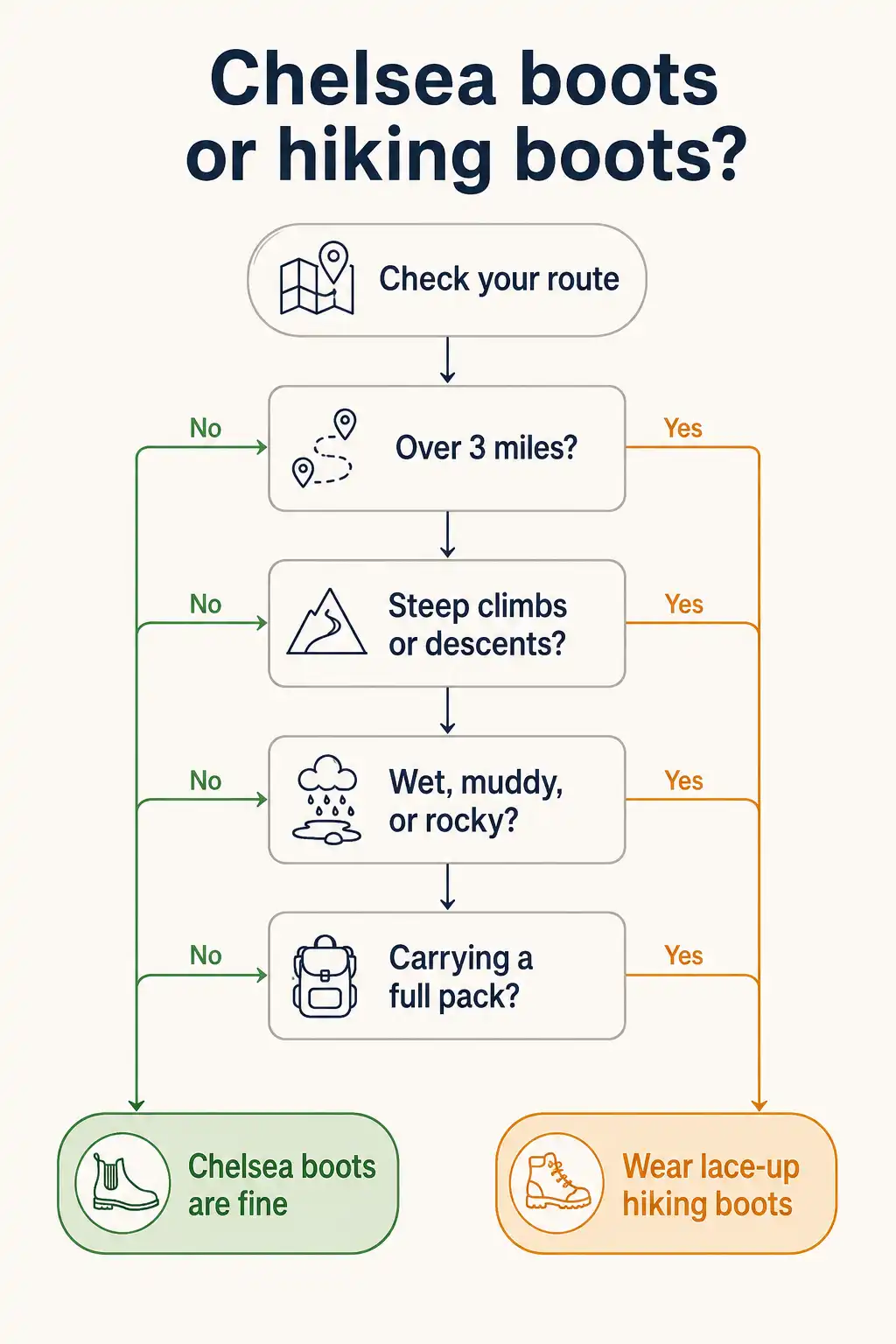
- Cap the distance at three miles. Past that, heel slide usually wins.
- Use trekking poles on descents. They take load off toes that are already sliding forward, and they help if you get sore knees on long descents.
- Brush grit out of the elastic. Dirt works into the gussets and stretches them, so the fit loosens permanently.
- Check the tread before every trip. Once the tread edges round off, wet grip drops sharply and you cannot resole.
When to Leave Them at Home
Choose lace-up boots whenever the route includes:
- Sustained climbs or long descents
- Wet rock, mossy stone, or river crossings
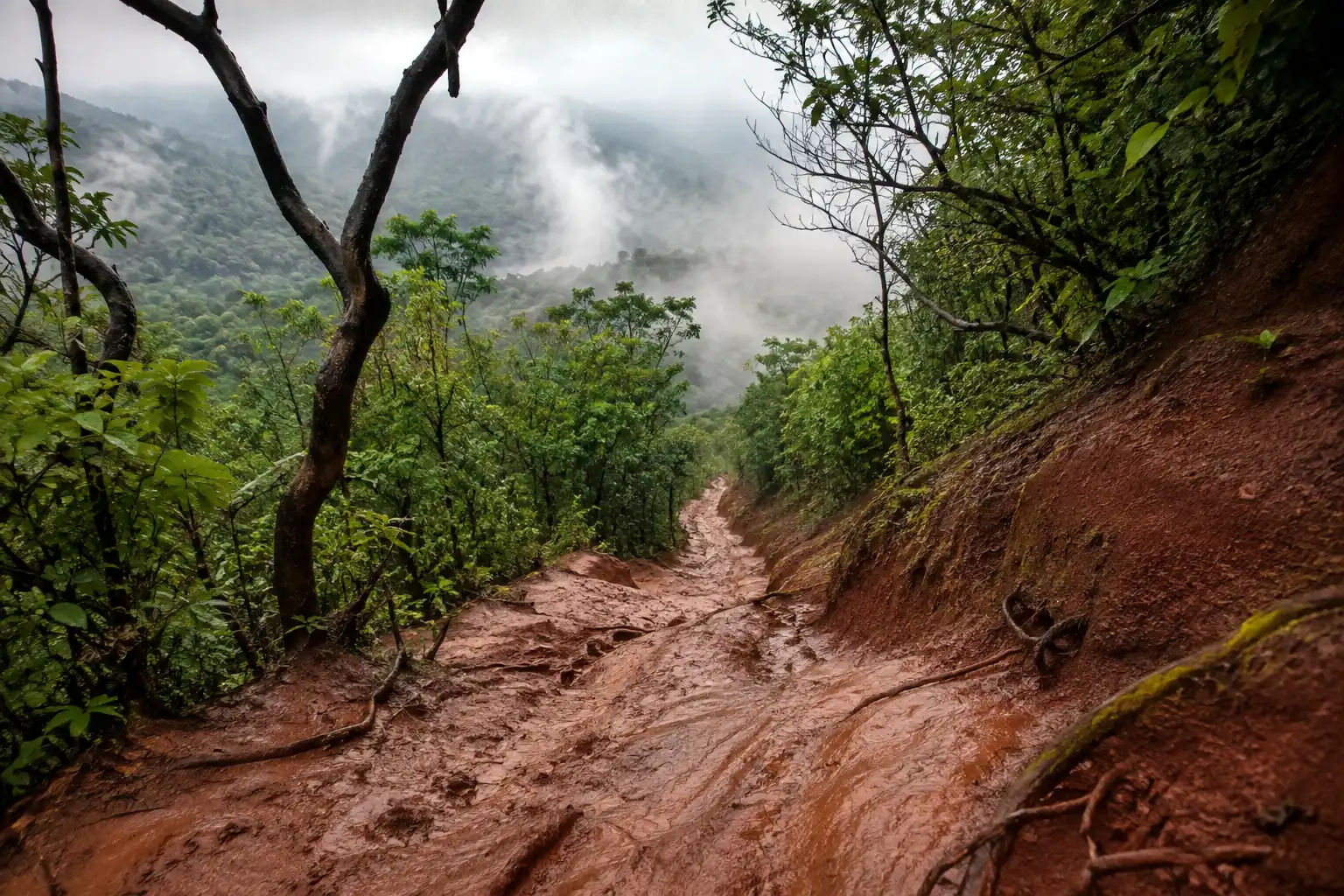
- Deep mud and monsoon clay
- Scrambling moves that need hands and precise footing
- Snow, ice, or frozen ground
- Overnight loads above a light daypack
- Unfamiliar trails where conditions can change
What to Buy Instead
Match the boot to the terrain instead of the outfit.
- Mid hiking boots suit rough trail, loose rock, and pack weight, since they combine lacing, ankle coverage, and deep lugs.
- Trail shoes or low hikers suit dry, moderate trails and fast days, because they are lighter and cooler.
- Blundstones suit camp, travel, and easy ground, and they remain excellent at that job.
Plenty of hikers carry both. One lugged pair for the trail, one Chelsea pair for everything after.
What I Actually Use Mine For
I use mine for lake-side walks, village paths, and travel days. Around Kaptai the shoreline tracks stay flat and dry through winter, so they handle those without complaint, and I can wear the same pair on the bus and into a restaurant afterward.
The hills are different. Once monsoon rain soaks the clay on Bandarban trails, the ground turns greasy, and a shallow tread cannot hold on a descent. For routes like Keokradong or Nafakhum I switch to lugged boots automatically. My rule is simple: if the trail climbs hard or the ground stays wet, the Chelsea boots stay in the bag.
How to Clean Them After a Muddy Hike
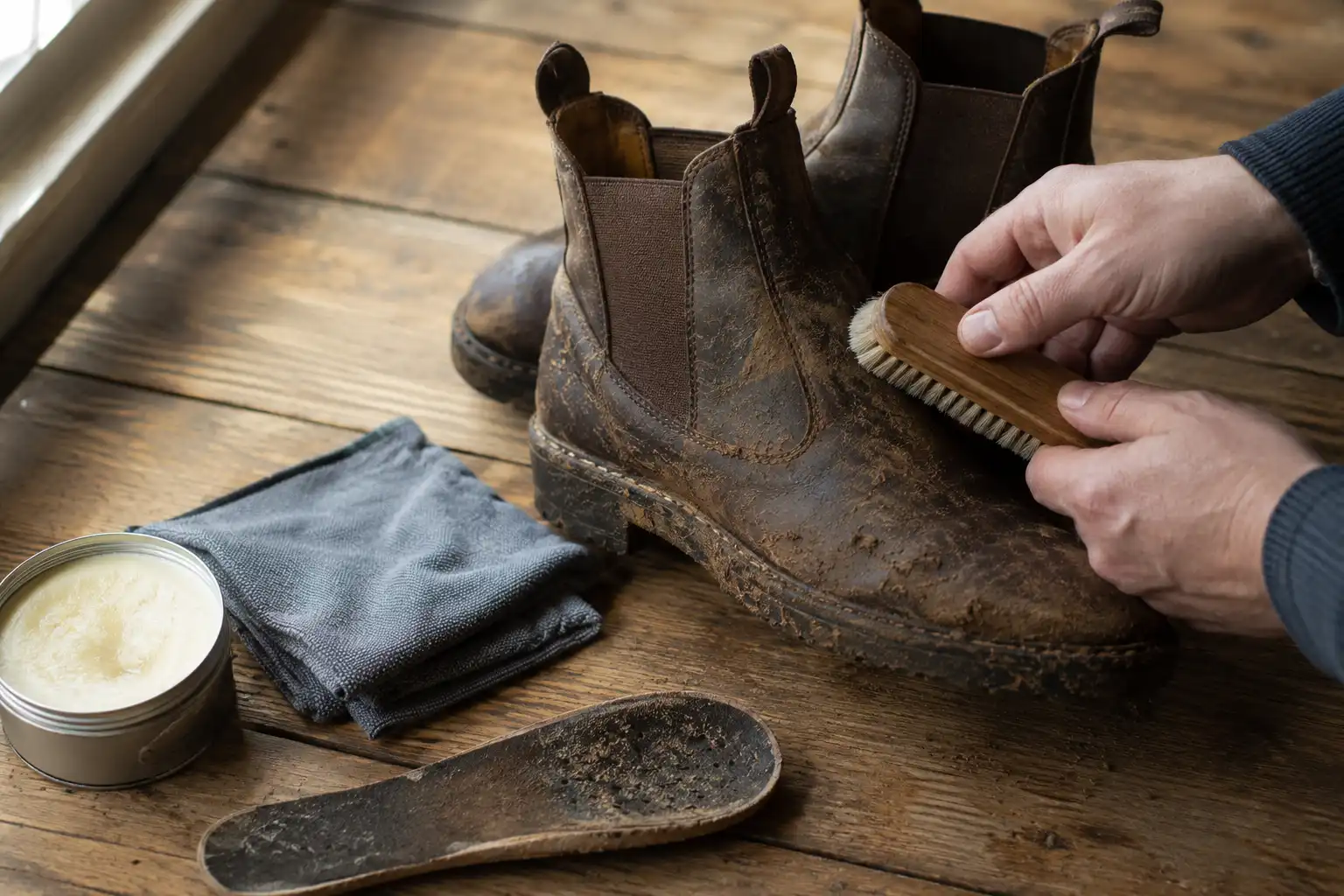
Let the mud dry, then brush it off. Wet mud smears into the leather and the stitching, so waiting saves work.
Next, wipe the leather with a damp cloth and air dry the boots away from sun, heaters, and campfires, because heat cracks leather. Finally, apply conditioner or cream once they are dry, since conditioning maintains the water resistance. The same routine applies when you reproof leather boots without drying them out.
FAQs on Blundstones for Hiking

Are Blundstones waterproof?
How far can you hike in Blundstones?
Do Blundstones have good grip on wet rock?
Do Blundstones give ankle support?
Can you backpack in Blundstones?
Do Blundstones need breaking in?
The Verdict
Blundstones are good hiking boots for one narrow job: short, dry, gentle trails, plus camp and travel duty. They are comfortable, tough, and quick to pull on. However, elastic cannot lock your heel down, shallow TPU tread cannot bite into wet clay, and a worn sole usually cannot be replaced. Buy the All-Terrain version if trails matter, keep the mileage under three miles, and keep a lugged pair for anything harder.