How Should Hiking Boots Fit? A Practical Guide for Every Hiker

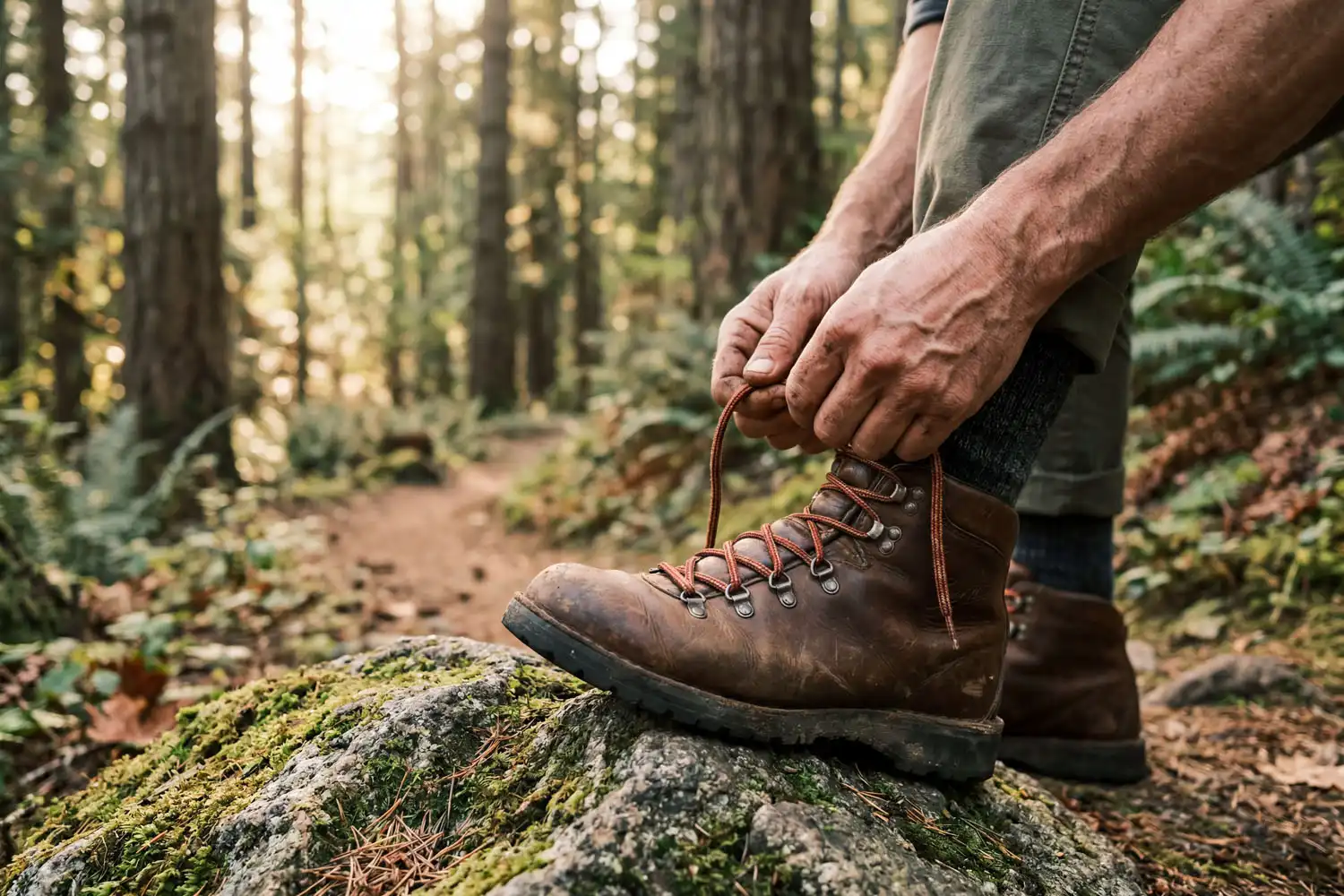
I’ve ruined more trips with badly fitting boots than I’d like to admit. One pair pinched my toes so hard on the descent from Keokradong that I lost two toenails over the next week. Since then, fit has been the first thing I check, long before brand, weight, or waterproofing. This guide walks you through exactly how hiking boots should fit, what to test, and the small mistakes that cost most beginners their comfort on the trail.
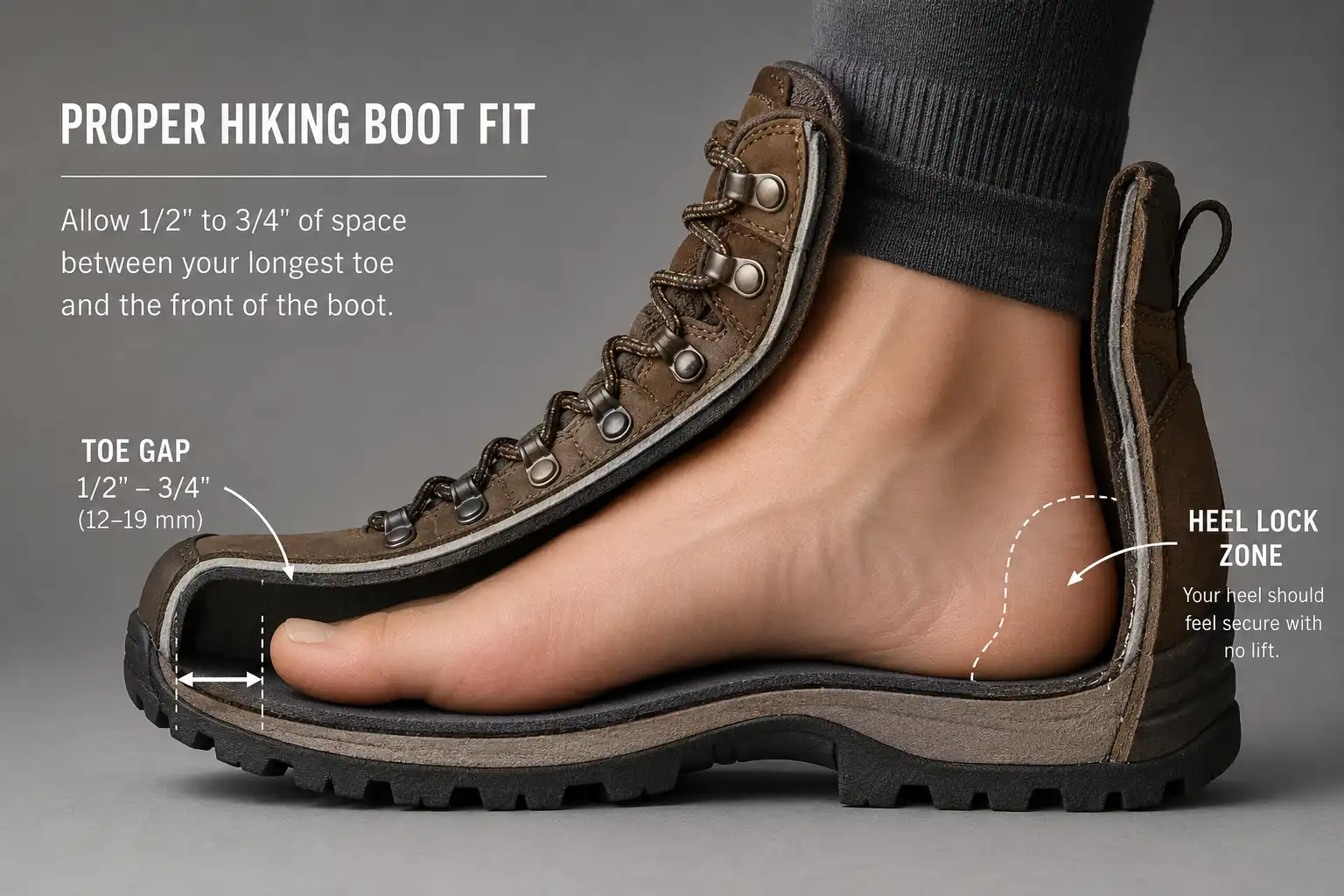
Hiking boots should feel snug around the midfoot and heel with no slipping, while leaving about a thumb’s width of space in front of your longest toe. Your foot should feel locked in place but never pinched, and your toes should never touch the front of the boot, especially when walking downhill.
Also Know: Proper Hiking Shoes Fit
How should hiking boots fit overall?
Hiking boots should fit snug through the midfoot and heel, with a finger’s width of space at the toes and zero heel lift when you walk. The boot should hold your foot steady, almost like a firm handshake around the foot. Tight enough to stop sliding around, loose enough that your toes can wiggle and your forefoot can flex naturally. If any part of the boot digs into a bone or tendon while you stand still, that pressure point will only get worse on the trail.
Know more: Waterproofing Hiking Boots Without Ruining the Leather
How much toe room do you need?
You should have about one thumb’s width, roughly half an inch to three-quarters of an inch, between your longest toe and the front of the boot. This space saves your toenails on long descents, because gravity slides your foot forward inside the boot with every downhill step. To test it, slide your foot all the way forward inside the unlaced boot and check if you can fit one finger snug behind your heel. If two fingers fit easily, the boot is too big. A single finger that barely fits means it’s just right.
I learned this the hard way on a Bandarban trip. My boots felt fine on flat ground and uphill, but the long descent turned my toes into a bruised mess. Always test fit with downhills in mind, not just flat walking.
How should the heel fit?
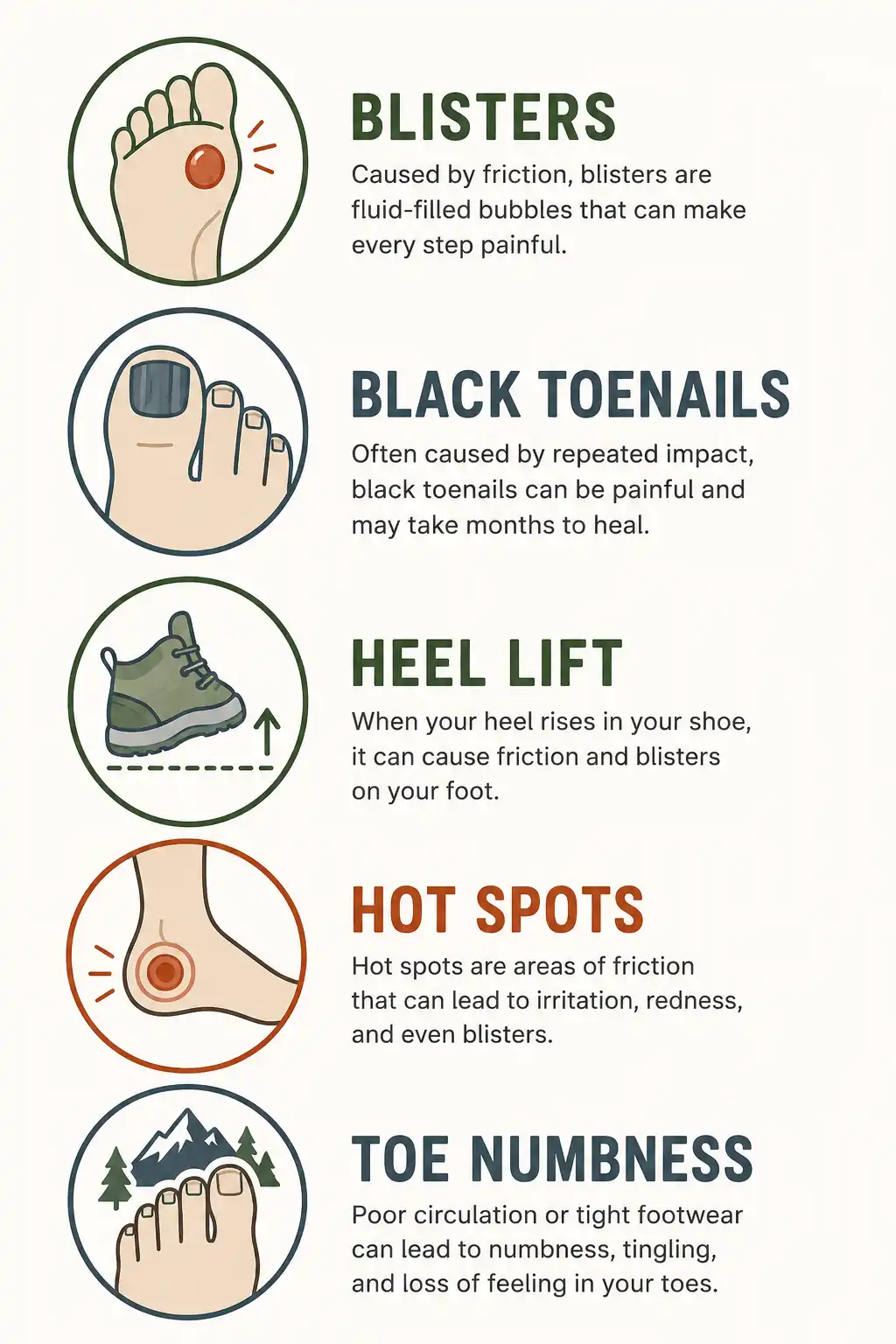
The heel should stay locked in place with no vertical lift when you walk. After lacing the boot snug, take ten steps and pay attention to your heel. If it rises more than about an eighth of an inch with each step, that movement will cause blisters on day one. Some lift is normal in unbroken boots and reduces after a few wears, but excessive slipping never fully goes away. Heel lock lacing helps in many cases, however a poorly shaped heel cup cannot be fixed with laces alone.
Width and arch: do they matter as much as length?
Yes, width and arch shape matter just as much as length, and the wrong width ruins an otherwise correct size. Your foot should not bulge over the insole edges, and the boot should not pinch across the ball of your foot or the base of your little toe. If you have wider feet, consider boots designed for that shape rather than sizing up, since that only adds length and creates heel slip. I’ve covered this in detail in my notes on choosing boots for wider feet if that sounds like your situation.
Arch support is more personal. High arches need more cushioning under the midfoot, while flat feet often need firmer support. Many hikers swap the stock insole for an aftermarket one to dial in the fit.
When should you size up for hiking boots?
Size up by a half size when your everyday shoe size leaves no thumb’s-width toe room, when your feet swell on long hikes, or when you plan to wear thicker hiking socks than usual. Most hiking boot brands recommend half a size larger than your street shoe, but this varies by brand. European sizing also runs differently than US sizing, so always try before you commit. Going up a full size usually creates more problems than it solves, because the extra length brings extra heel slip.
Why socks change everything about fit
Hiking socks change how a boot fits, so always try boots with the exact sock you plan to hike in. A thin liner sock and a thick merino sock change the internal volume of the boot noticeably. Wearing the wrong sock in the store often leads to buying the wrong size. For most three-season trips I wear a medium-weight wool blend, and I size my boots around that. If you’re still figuring out sock thickness, my guide to socks that help prevent blisters covers the basics.
Also, never test boots in cotton socks. Cotton bunches up, holds moisture, and gives you a misleading fit reading.
How to test hiking boot fit in the store
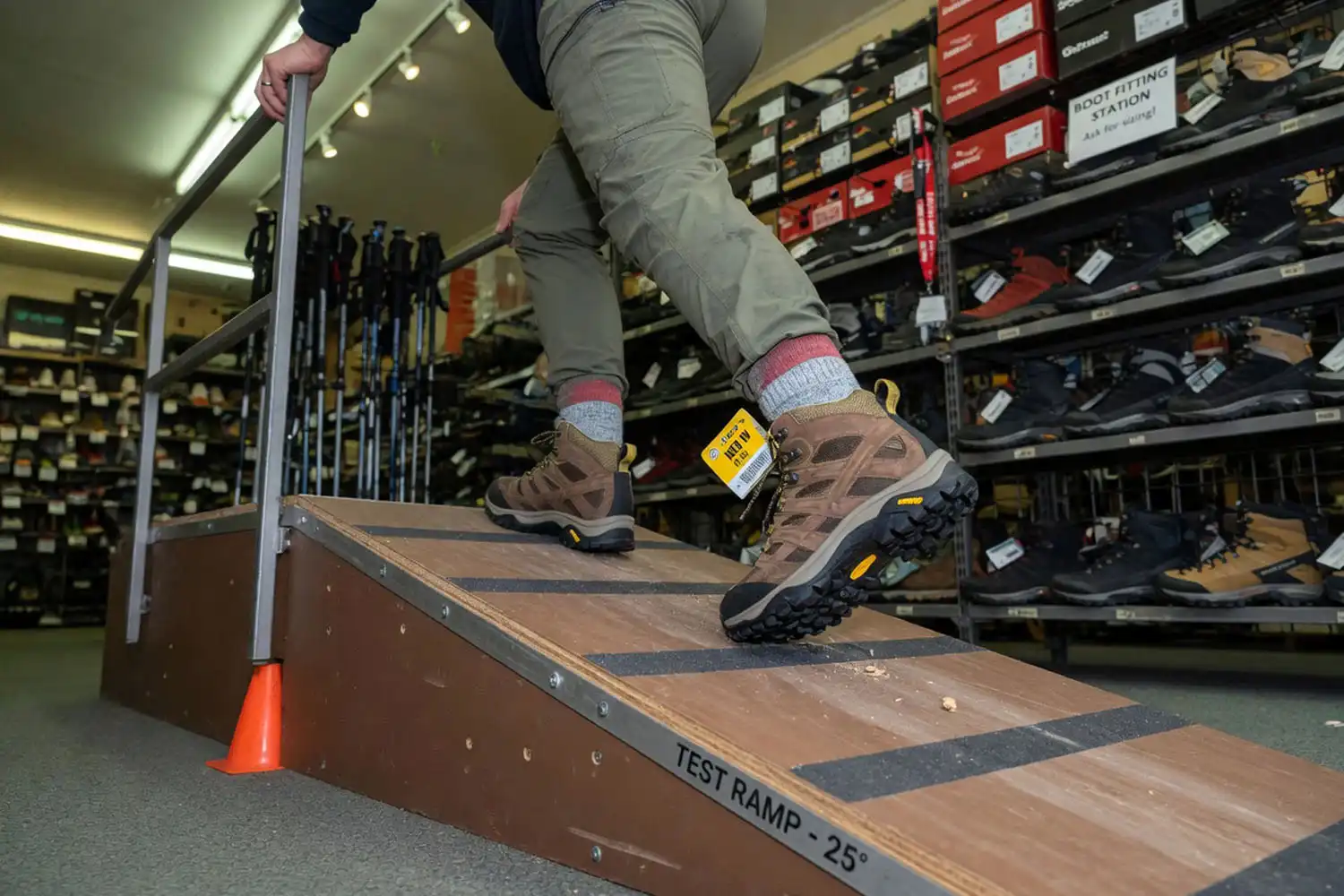
Test fit late in the day with hiking socks on, lace the boots fully, and walk on an inclined surface for at least ten minutes. Your feet swell by up to half a size after a day of walking, so morning fittings often feel perfect and then turn tight on the trail. Most outdoor stores have a small ramp or stairs for this reason. Walk uphill to check forefoot pressure, then walk downhill to check toe contact and heel hold.
After ten minutes you should notice:
- No toe contact at the front, even on the downhill ramp.
- No heel lift on the uphill.
- No pinching across the ball or sides.
- No hot spots, which are early signs of friction.
If anything feels off, try a half size up, a half size down, or a different brand. Brand shape varies more than size.
How to test fit at home before the trail
Wear the boots indoors for several hours over multiple days before any real hike. This both confirms the fit and starts the break-in process. Walk on stairs, stand while cooking, and pay attention to any pressure that builds slowly. Returns are usually possible within a window, and a slightly worn indoor sole rarely voids that. After indoor wear, I take new boots on short two-to-three mile walks before committing to a full day. There’s a longer step-by-step in my piece on breaking in new boots before a long trail that pairs well with this.
Signs your hiking boots don’t fit right
Common signs of bad fit include blisters in the same spot every hike, black or bruised toenails, numbness in the toes, arch cramps, or hot spots that show up before mile two. None of these are normal break-in issues. Real break-in softens stiff leather and molds the footbed, but it does not change the actual shape or size of the boot. If pain is structural, no amount of break-in fixes it.
Also watch for the boot folding in the wrong place. The flex point should sit at the ball of your foot, not behind it. A crease that forms farther back signals a boot that’s too big.
Should hiking boots feel tight at first?
Hiking boots should feel snug at first, but not tight in a painful way. Stiff leather and a firm footbed are normal in new boots, and both soften over the first 20 to 30 miles of wear. However, sharp pressure points, numbness, or pinching are not break-in issues and will not go away. The line between snug and tight matters here. Snug means firm contact with no movement. Tight means pressure that restricts circulation or pinches a specific spot.
How tight should hiking boot laces be?
Lace hiking boots tight enough to lock the heel and midfoot without cutting circulation across the top of the foot. Most hikers lace looser over the forefoot to let the toes spread and tighter across the ankle for support. The two-zone lacing approach uses a surgeon’s knot at the ankle break to separate forefoot tension from ankle tension. This single trick fixes more heel slip than any other adjustment I’ve tried.
Hiking boots vs hiking shoes: does fit work the same way?
Fit principles are the same, but hiking shoes generally allow slightly less toe room because they flex more naturally. The thumb’s-width rule still applies, just with less margin. If you’re still deciding between the two, my breakdown comparing boots and shoes for new hikers covers the trade-offs in more detail.
FAQs on Proper Hiking Boots Fit

Should there be space at the top of my hiking boots?
Can I wear two pairs of socks to fix loose boots?
Are leather hiking boots supposed to be tighter than synthetic ones?
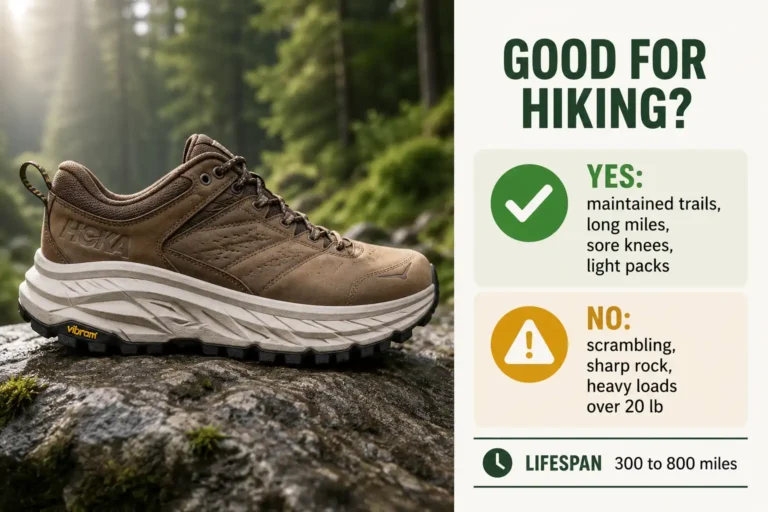
How long should good-fitting hiking boots last?
Final words
Hiking boot fit comes down to three things: a locked heel, generous toe room, and a midfoot that holds without pinching. Get those three right and the boot will quietly do its job for hundreds of miles. Miss any one of them and you’ll feel it within the first hour. Take your time in the store, test on inclines, wear your real hiking socks, and never let a great deal talk you into the wrong fit.