Are Columbia Hiking Boots Good? An Honest Review Before You Buy

Columbia sells some of the best selling hiking boots on the market, and the low prices pull a lot of people in. But cheap boots can cost you later. Here is what Columbia gets right, where the boots fall short, and which models actually deserve a spot in your closet.
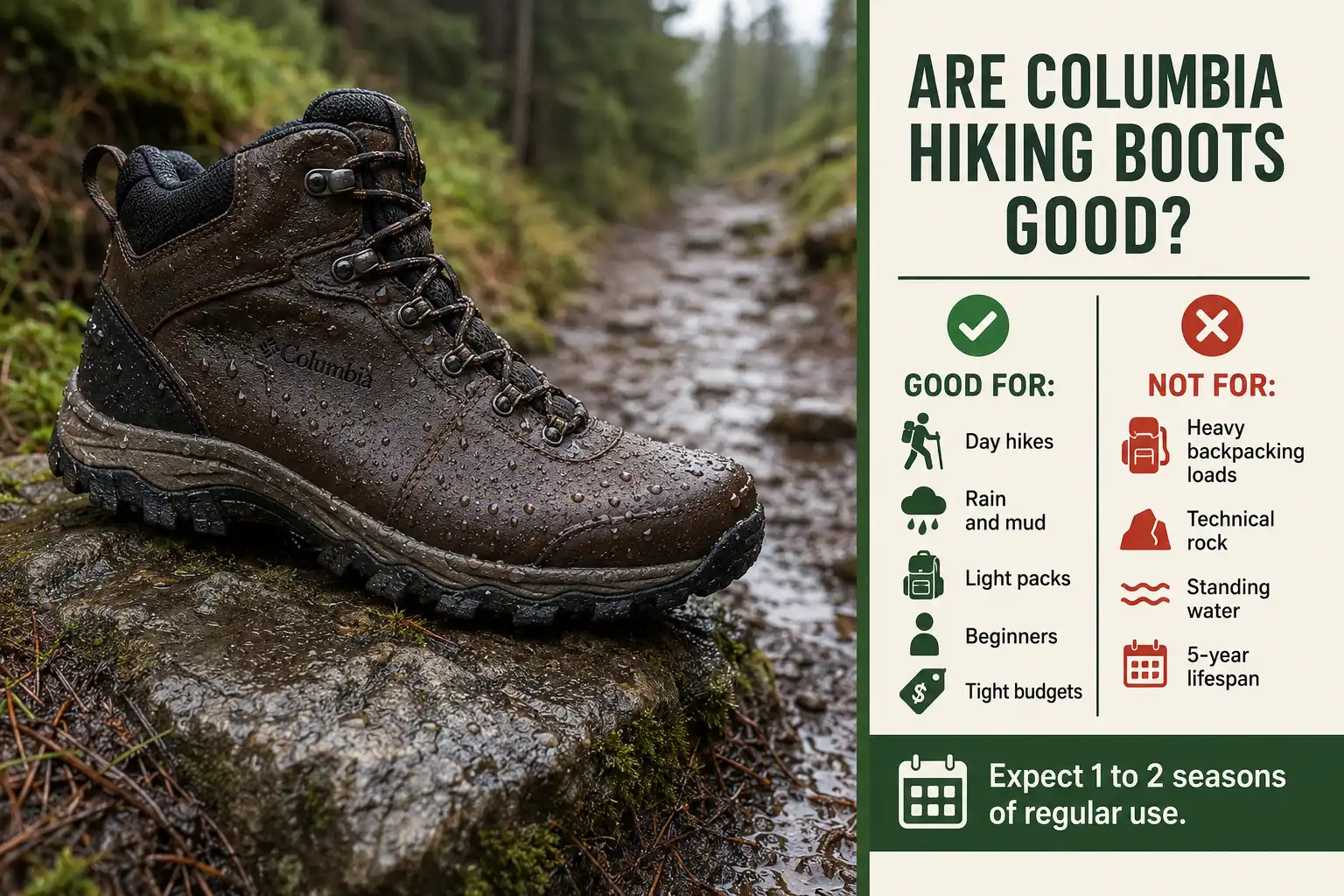
Yes, Columbia hiking boots are good for day hikes, maintained trails, and general outdoor use, but they are not built for heavy packs or technical terrain. You get working waterproofing, fair traction, and comfort straight out of the box for roughly half the price of premium brands. However, most pairs wear out in one or two hard seasons.
One thing upfront: I have not worn every model in this lineup through a full season. Therefore I built this from published long-term testing, owner reports, Columbia’s own technical documentation, and conversations with hikers I trek with. My own trail time is in the Bandarban and Kaptai hills, which shapes how I judge wet-weather performance.
So the honest answer depends on how you hike. A weekend hiker who covers a few hundred miles a year will get solid value. Meanwhile, a hiker carrying 40 pounds across scree and wet granite will chew through a pair fast and wish they had spent more.
What do you get for the money?
Columbia builds its own footwear technology instead of licensing it from other companies, which keeps prices down. Three names show up on almost every boot, so it helps to know what each one does.
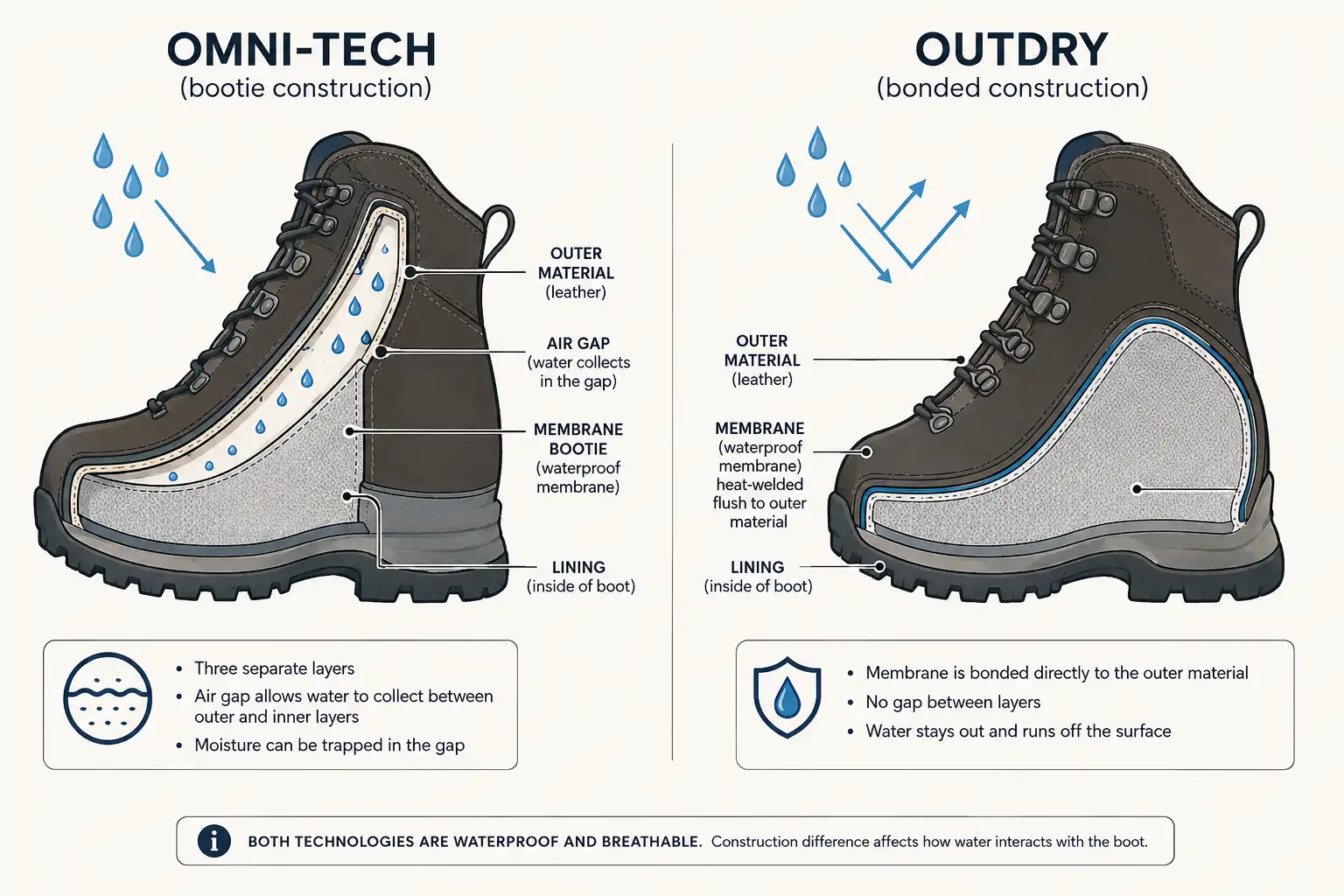
Omni-Tech is Columbia’s waterproof-breathable membrane, which the company launched in 1991. It sits inside the boot as a bootie, similar to how most brands use Gore-Tex.
Omni-Grip is the rubber outsole compound. Columbia states it uses more than 50% natural rubber with tread patterns tuned for different surfaces.
Techlite is the cushioned midsole foam. Newer boots use Techlite+ or Techlite Plush, which add more cushioning and energy return.
On top-tier models you also get OutDry waterproofing and the Adapt Trax outsole. Both perform noticeably better than the entry-level versions, and I will explain why below.
Read more: Beginners Hiking Guide for Villarrica Volcano
How waterproof are Columbia hiking boots?
Columbia hiking boots keep water out in rain, mud, and shallow puddles, but the cheaper Omni-Tech models leak once you stand in water for more than a few minutes. That gap between light wet and properly wet matters more than any marketing line.
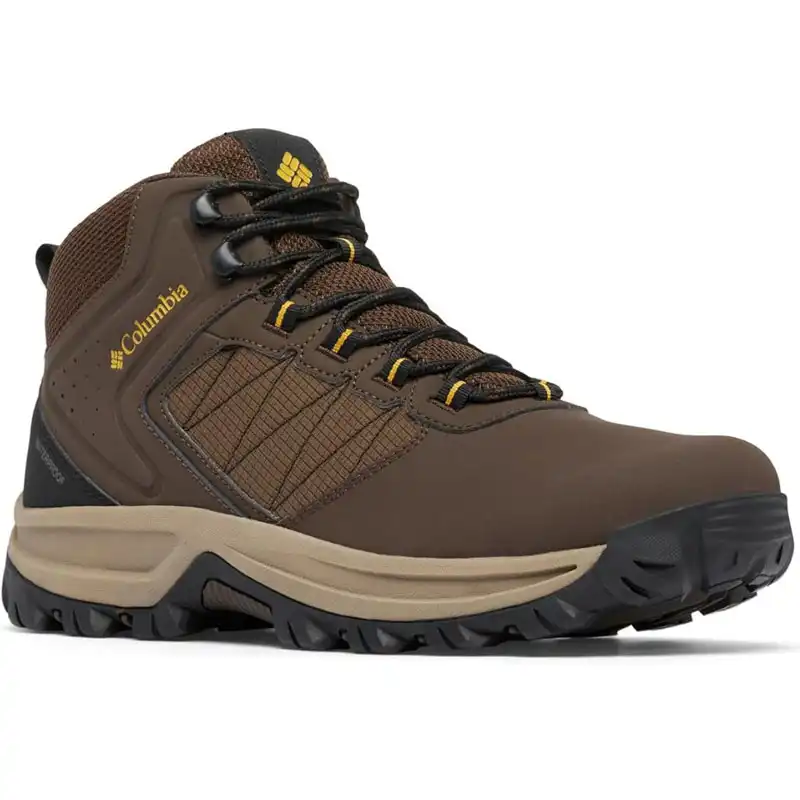
The reason comes down to construction. Omni-Tech boots use a bootie build, so the membrane sits loose inside the shoe with space between it and the outer material, while OutDry heat-welds the membrane directly to the outer material so water has nowhere to collect between the layers. Columbia itself calls OutDry the stronger of the two.
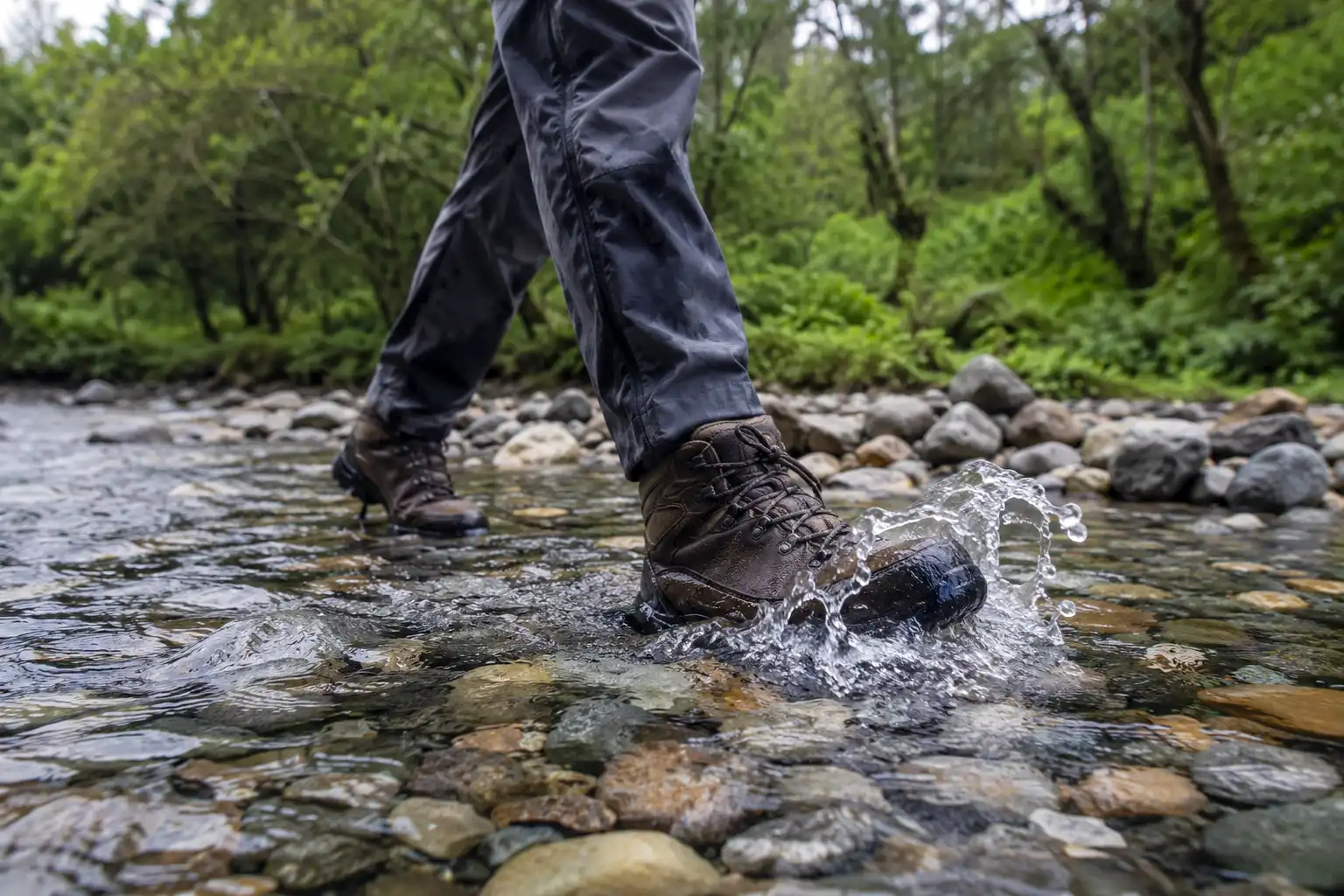
Independent testers back this up. One test team standing in shallow water in the Newton Ridge Plus II reported wet feet within a couple of minutes, and noted the thick materials take a long time to dry afterward. Another tester found the Newton Wander held out for roughly 20 minutes of mild submersion before water came in, though moisture stayed trapped inside once it entered.
So for drizzle, dew, and wet trails, Omni-Tech is fine. For stream crossings and all-day rain, pay up for an OutDry model instead.
How long do Columbia hiking boots last?
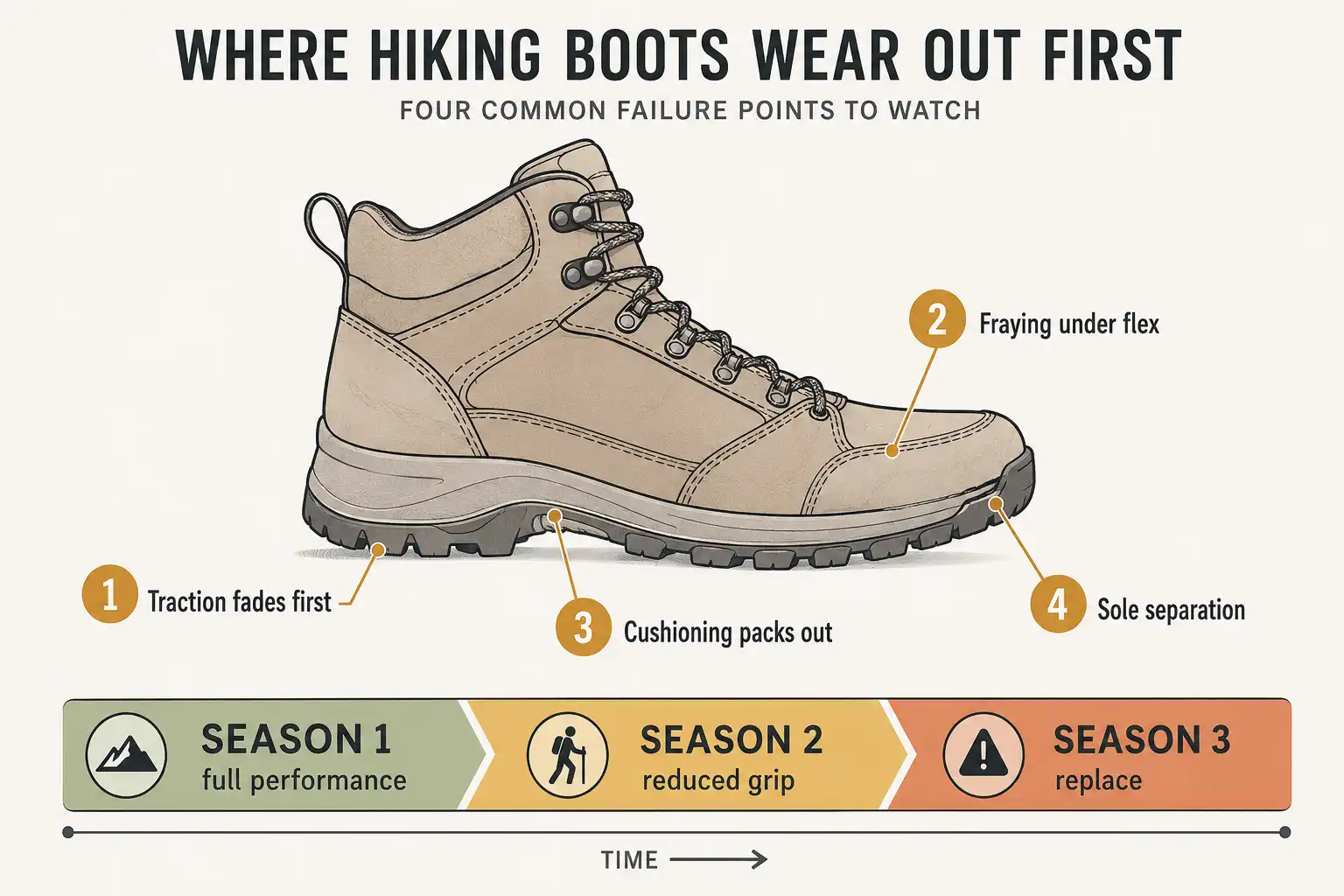
Most Columbia hiking boots last one to two seasons of regular use, which is shorter than premium leather boots. Casual hikers often get much longer, while high-mileage hikers hit the wall quickly.
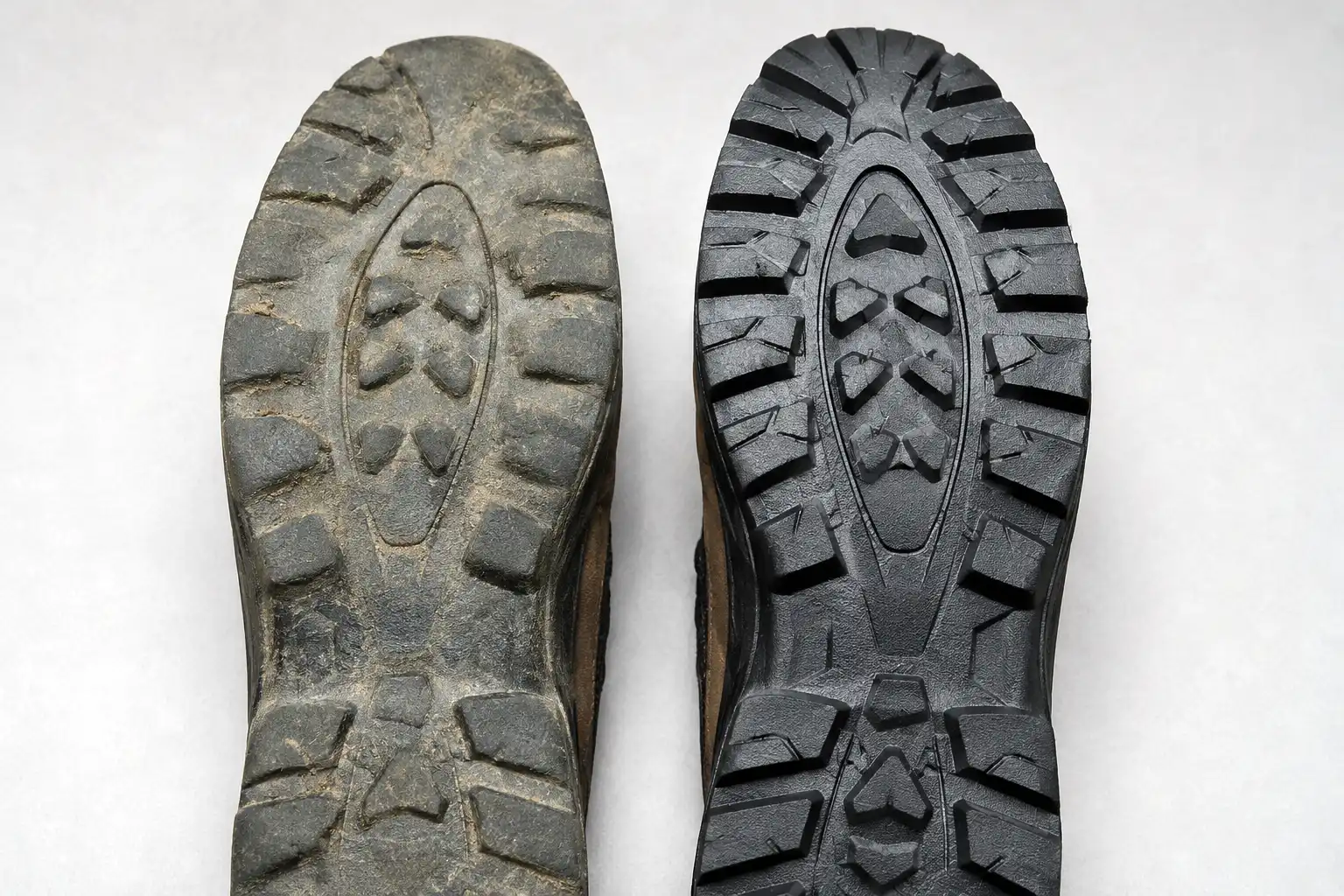
The failure points follow a pattern. First, the Omni-Grip lugs flatten out and traction drops. One long-term tester reported the outsole starting to break down after about a year, with the deep lugs gradually wearing away. Next, stitching frays where the panels meet. Another reviewer noticed fraying at roughly 300 miles of heavy use and concluded that a high-mileage hiker should expect to replace Columbias every few seasons.
Warranty coverage reflects this too. In the United States, Columbia footwear carries a one-year limited warranty that covers manufacturing defects only, not normal wear. European buyers get two years.
None of this makes Columbia a bad buy. Rather, it changes the math. Two pairs at $100 still cost less than one pair at $230, and you get fresh tread twice. If you want a broader picture of replacement timing, my guide on how long boots normally last before replacement covers the warning signs to watch.
Are Columbia hiking boots comfortable out of the box?
Yes, comfort is where Columbia genuinely beats most competitors. Testers repeatedly report almost no break-in period, largely because the uppers use thinner leather and mesh instead of stiff full-grain panels.
That softness cuts both ways. On one hand, you avoid the blister-heavy first month that thick leather boots demand. On the other hand, thin uppers flex more under load, so the boot gives up support once your pack gets heavy.
The Techlite midsole helps here. Lab testing found Columbia foam measuring softer than the hiking boot average, which explains why so many owners describe the feel as sneaker-like. For flat trails and long approach walks, that softness is comfortable. Over sharp rock, though, you will feel every stone.
Even easy boots benefit from a short wear-in period. Therefore, I still recommend two or three neighborhood walks before a long day out, and my notes on breaking in a new pair before a long trail explain the sequence I use.
How good is Columbia traction on wet rock?
Omni-Grip handles dirt, gravel, mud, and wet boardwalk well, but it struggles on wet slabs and polished rock compared with Vibram outsoles. The rubber is soft, so it conforms nicely to uneven ground yet flattens faster and loses bite.
Adapt Trax, which Columbia puts on its Peakfreak and Facet models, performs better in the wet. Columbia designed it specifically as a wet-or-dry compound with a hike-specific lug pattern, and testers consistently rate it above standard Omni-Grip.
I hike in the Bandarban and Kaptai hills, where monsoon trails turn to slick clay and moss-covered rock for months at a time. In those conditions, outsole compound matters more than any other feature on a boot. Consequently, if you hike wet ground regularly, I would skip the base Omni-Grip models and choose Adapt Trax or a different brand entirely.
How do Columbia hiking boots fit?
Columbia hiking boots fit true to size for most people, though they run slightly narrower than Merrell and KEEN. Wide sizes exist for the Newton Ridge Plus II, Crestwood, and Peakfreak II, so wide-footed hikers still have options.
The toe box is the common complaint. Several owners report limited room for toe splay, especially on the Newton Ridge. Because of that, I suggest sizing up half a size if you plan to wear thick socks or hike downhill for long stretches.
Heel hold is generally good thanks to hooked metal eyelets that let you lock the ankle separately from the forefoot. Getting this right prevents most blister problems, and my breakdown of how a hiking boot should fit around the heel walks through the checks I run in the store.
Which Columbia hiking boots are worth buying?
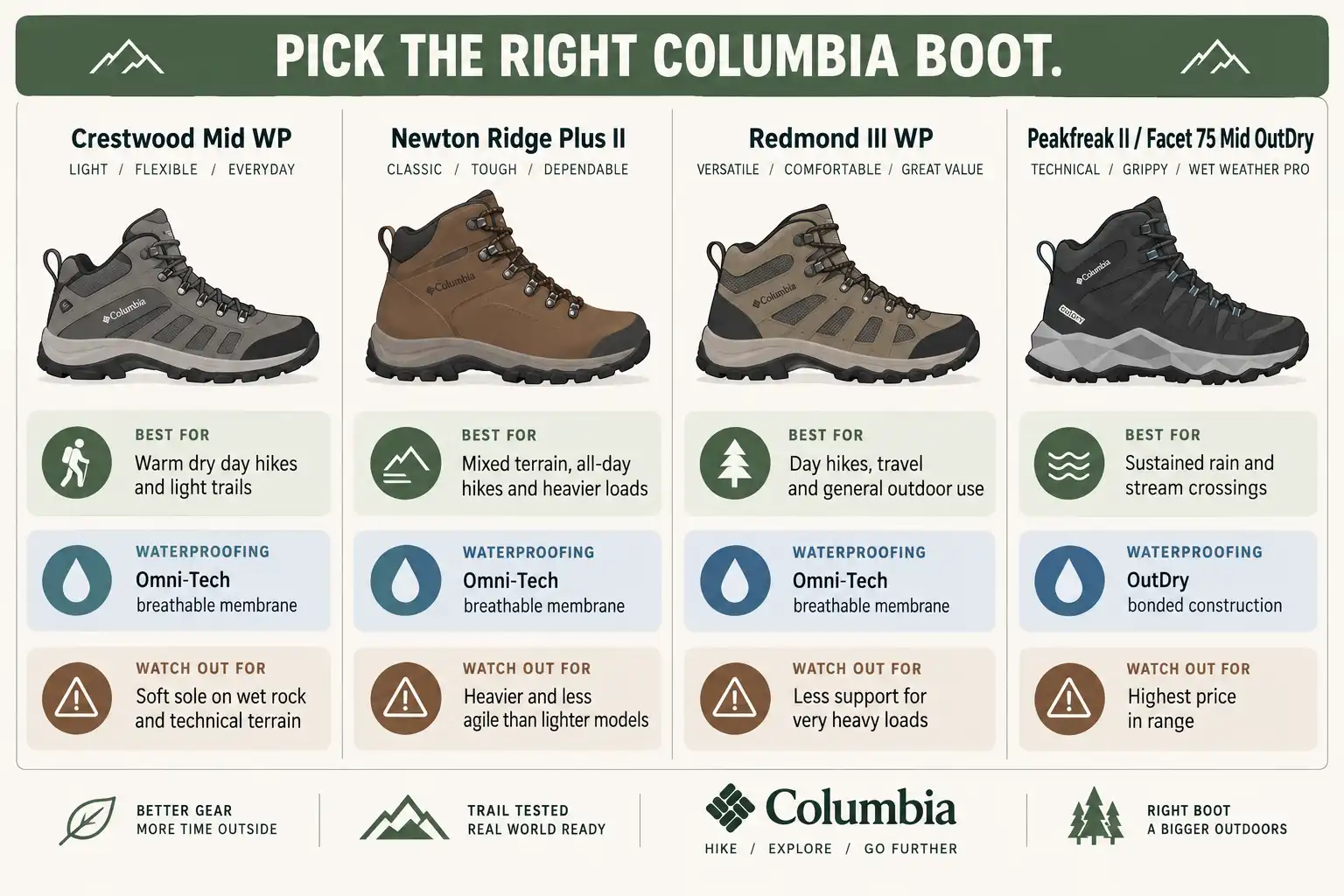
Four models stand out, and each suits a different type of hiker.
Newton Ridge Plus II Waterproof
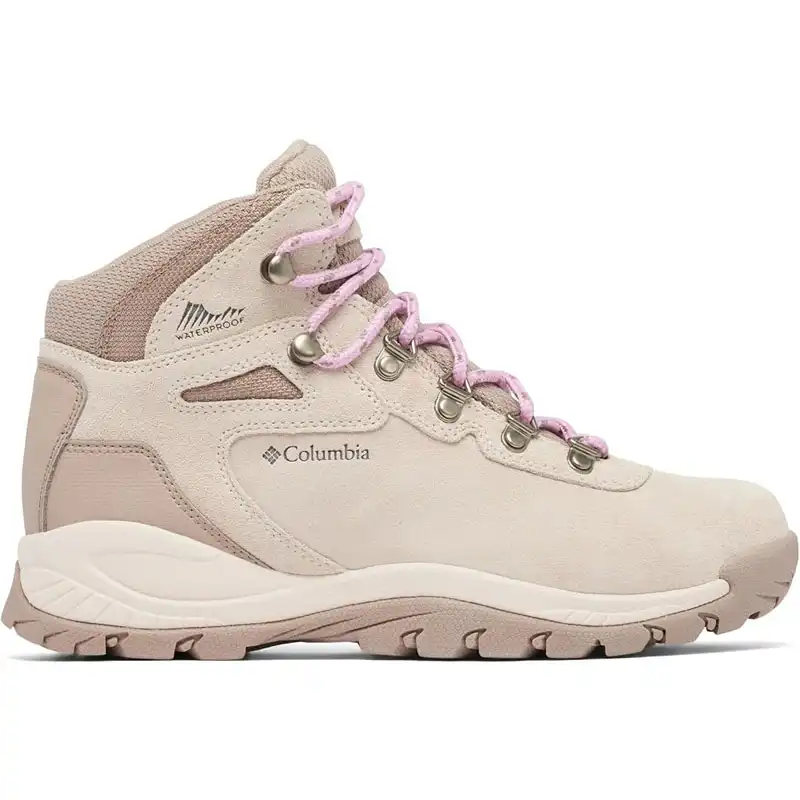
This is Columbia’s bestseller and the classic budget leather boot. It uses PU-coated leather with an Omni-Tech membrane and Omni-Grip outsole, and it lists around $100 with frequent discounts. Choose it for dry-to-damp day hikes and light loads. Avoid it for stream crossings and long backpacking trips.
Crestwood Mid Waterproof
The Crestwood is the lightest and most breathable option in the lineup. It handles warm-weather day hiking well and costs less than most rivals. The soft outsole is the weak point on wet rock, so treat it as a fair-weather boot.
Redmond III Waterproof
Redmond sits between the Crestwood and Newton Ridge for support and weight. It works well as a mixed-terrain day boot for hikers who want more structure without the full leather weight.
Peakfreak II Mid OutDry and Facet 75 Mid OutDry
These are the ones I would actually buy. Both use bonded OutDry waterproofing, Adapt Trax outsoles, and Techlite+ cushioning. They sit near the top of Columbia’s hiking range on price, yet they solve both weaknesses of the budget line.
How does Columbia compare with Merrell, KEEN, and Salomon?
Columbia wins on price and out-of-box comfort, while Merrell, KEEN, and Salomon win on durability and traction. That summary holds up across almost every independent test I read.
The Merrell Moab 3 is the usual comparison point. It costs more, around $150, but it uses a Vibram outsole and heavier construction. One tester who ran both under matched conditions reported the Moab 3 lasting roughly 70% longer than the Newton Ridge Plus II. KEEN Targhee boots offer a burlier toe cap and all-leather uppers, which helps on rocky ground.
So think about cost per mile rather than sticker price. A $100 boot that lasts 400 miles and a $170 boot that lasts 800 miles land in similar territory, but the pricier pair grips better the whole time.
For hikers weighing a mid boot against something lower cut, my comparison of picking between boots and low hiking shoes explains where each one makes sense.
Who should buy Columbia hiking boots?
Columbia hiking boots suit beginners, casual hikers, and anyone who needs capable footwear without a large budget. They also work well for travel, camp use, dog walks, and light winter duty.
Buy Columbia if you hike a few times a month on marked trails, carry a day pack rather than a full load, want comfort immediately, and prefer replacing boots more often over paying premium prices upfront.
Skip Columbia if you carry a heavy backpacking load, hike technical or off-trail ground regularly, spend hours in standing water, or want one pair to last five years. In those cases, spend more once.
Some people choose Columbia for the around-town look rather than the trail performance. If that describes you, my write-up on whether Blundstones hold up on trail covers the same crossover question from another angle.
How do you make a pair last longer?
Simple care adds real months to a Columbia boot. Since the materials are thinner than premium leather, maintenance matters more, not less.
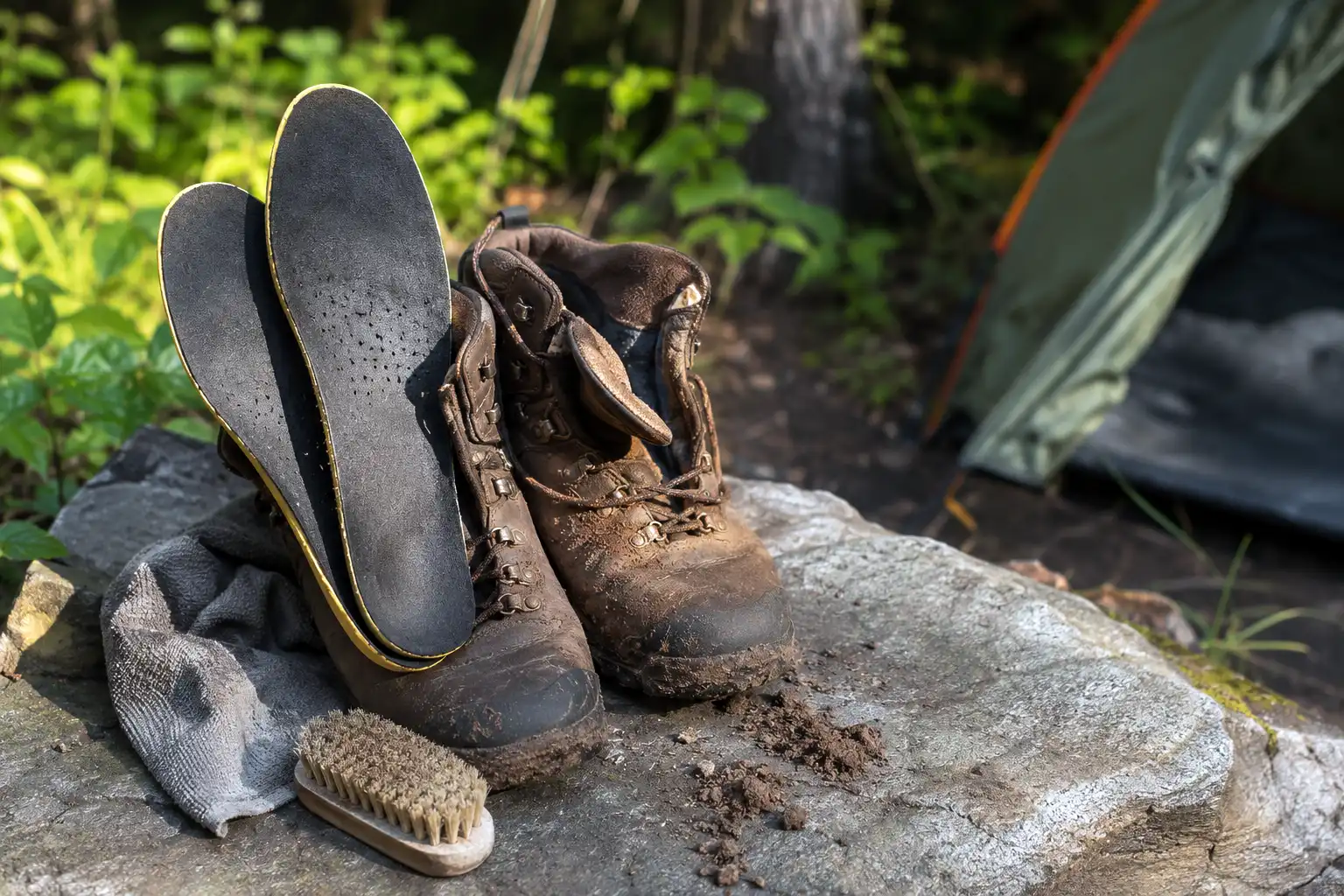
Rinse mud off after every wet hike, because grit grinds at stitching and speeds up sole separation. Then dry the boots slowly at room temperature. Never park them near a fire or heater, since direct heat shrinks leather and weakens adhesives.
Pull the insoles out after wet days so the inside dries fully. Otherwise trapped moisture breaks down foam and creates odor.
Re-treat the leather panels once or twice a season. Columbia states that all its waterproof membranes have been free of intentionally added PFAS since the end of 2024, so pick a modern PFAS-free treatment to match. My guide to re-waterproofing leather without ruining it covers which products suit which upper.
Finally, rotate pairs if you hike often. Foam recovers between outings, so two boots used alternately outlast two boots used back to back.
FAQs on Columbia Hiking Boots Value

Are Columbia boots good for backpacking?
Is Omni-Tech as good as Gore-Tex?
Are Columbia hiking boots good in snow?
Do Columbia hiking boots run small?
The bottom lines
Columbia hiking boots are worth buying if you match the model to your hiking. The budget line delivers comfort and adequate waterproofing at a price that is hard to argue with, provided you accept a shorter lifespan and softer traction. Meanwhile, the OutDry and Adapt Trax models fix most of those weaknesses and still cost less than premium brands. Buy the cheap ones for easy trails and light loads. Spend the extra for wet ground, rough terrain, or serious mileage.