How Long Does a Coleman Propane Tank Last

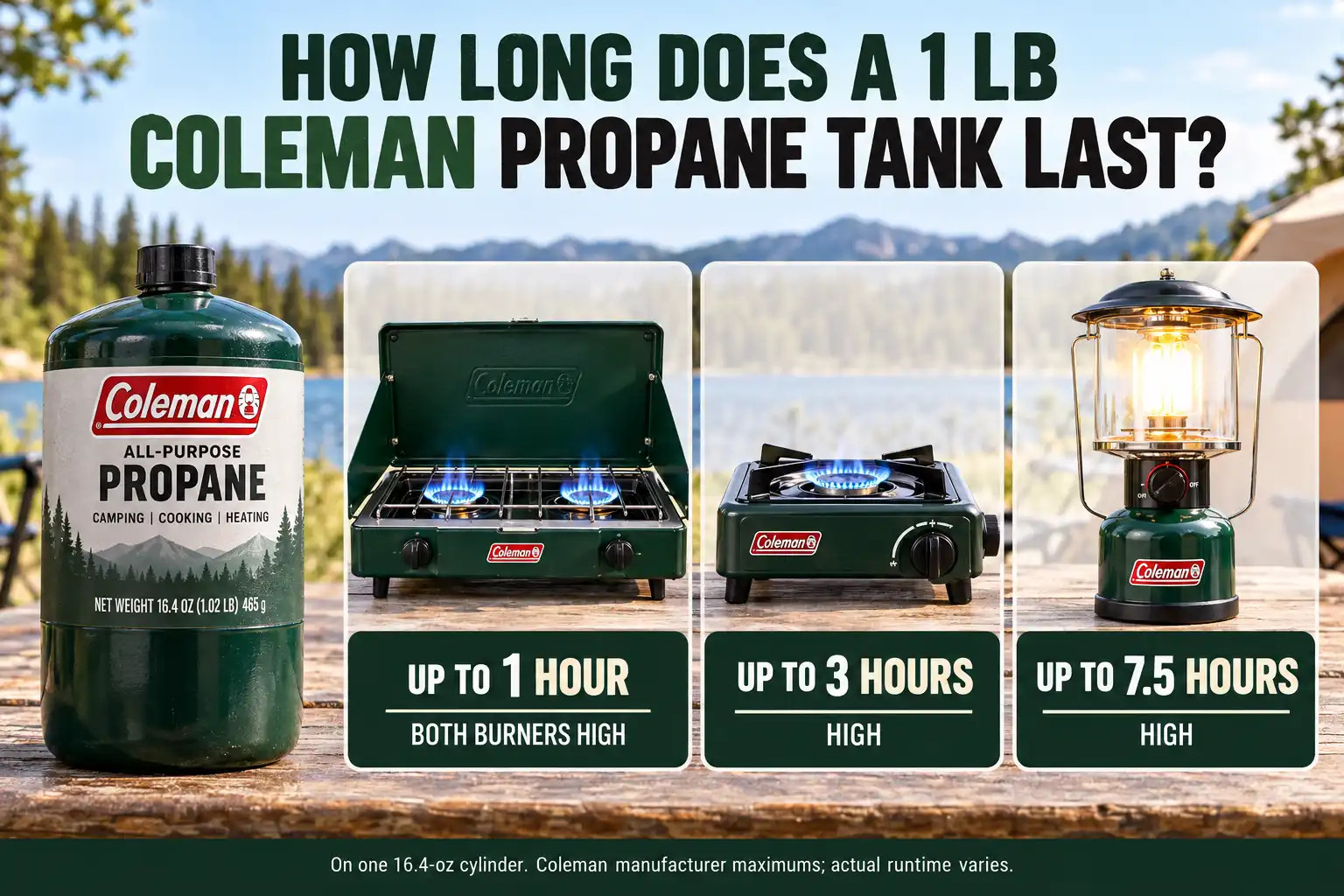
A 16.4-ounce Coleman propane tank lasts up to one hour on a Coleman Classic two-burner stove with both burners high, three hours on a PowerPack stove, or 7.5 hours in a Deluxe lantern on high.
These are Coleman’s published maximum runtimes, not guaranteed results. Actual fuel consumption depends on your appliance, flame setting, wind, and temperature. I’ll explain how to estimate fuel usage, check the remaining propane, and pack enough cylinders for camping without carrying too many.
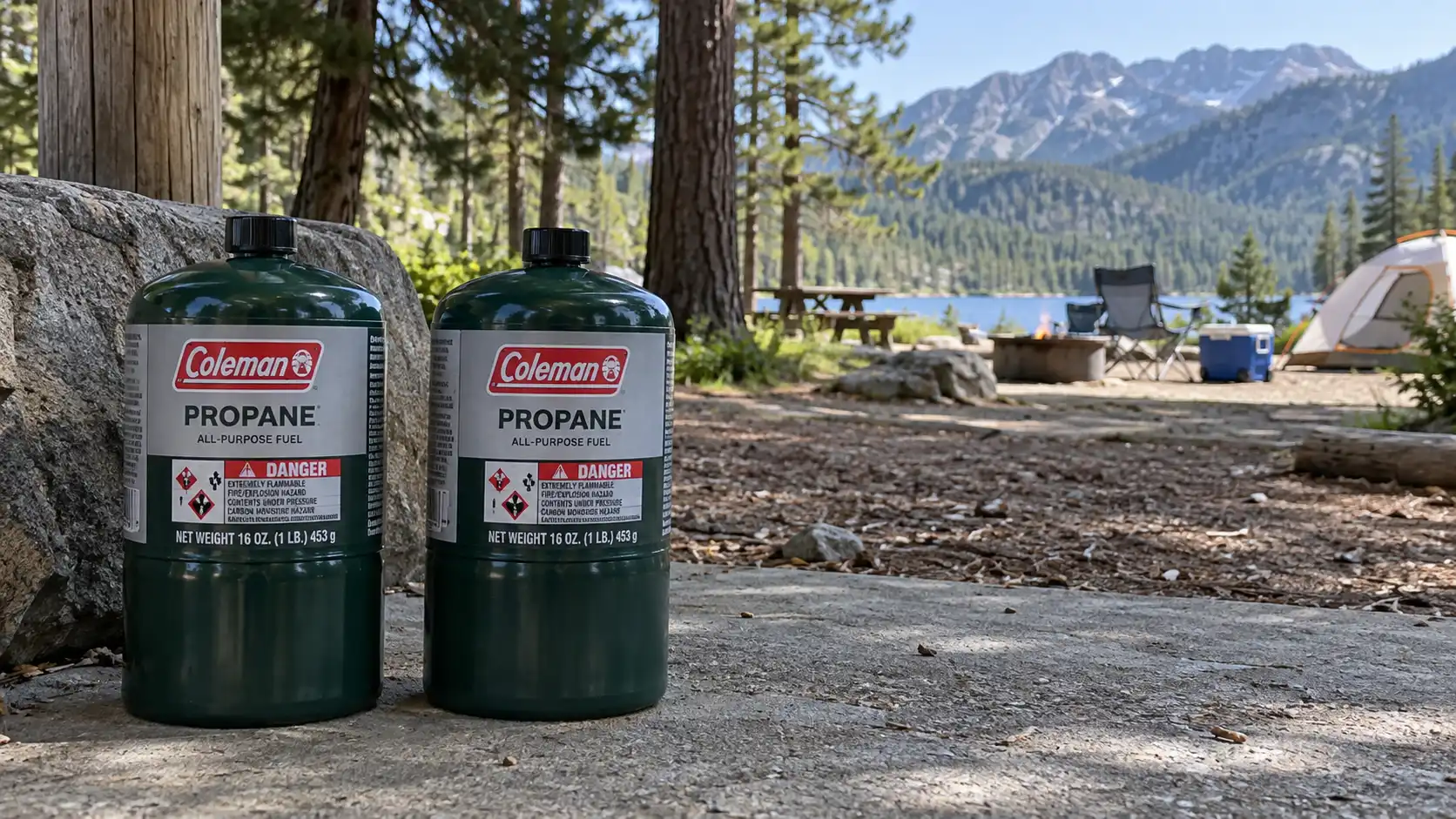
A Coleman 1 lb propane cylinder contains 16 or 16.4 ounces of fuel, depending on the product. For a two-burner camping stove, plan around one hour with both burners on high. Lower flame settings generally extend that time.
Coleman 1 lb Propane Tank Runtime by Appliance
Not every propane-powered camping appliance consumes fuel at the same rate. A two-burner stove uses significantly more propane at full power than a lantern running on low.
Here are Coleman’s published runtimes for different appliances using one 16.4-ounce propane cylinder.
| Coleman appliance | High setting | Low setting |
|---|---|---|
| Classic two-burner propane stove | Up to 1 hour, both burners | Not specified |
| PowerPack single-burner stove | Up to 3 hours | Not specified |
| Deluxe propane lantern | Up to 7.5 hours | Up to 13 hours |
| NorthStar 1500-lumen lantern | Up to 4 hours | Up to 9 hours |
Sources: Coleman’s official specifications for the Coleman Classic stove, PowerPack stove, Deluxe lantern, and NorthStar lantern.
The difference is substantial. For example, the Classic stove produces up to 20,000 BTU per hour across both burners. Meanwhile, the PowerPack produces up to 7,500 BTU per hour, so it burns fuel more slowly at full output.
I haven’t personally measured the runtimes of these specific Coleman models. Therefore, I’m relying on their manufacturer specifications rather than presenting estimates as my own testing results.
16 oz vs. 16.4 oz Coleman Propane Cylinders
Coleman sells All-Purpose propane cylinders labeled 16 oz (1 lb), while several Coleman appliance specifications refer to 16.4-oz cylinders. The larger version contains 0.4 ounce more propane, a difference of just 2.5%. Therefore, the two sizes offer nearly the same runtime when used under identical conditions. Coleman acknowledges both labels in its cylinder FAQ.
The listed fuel weight does not include the steel cylinder. So a full 1 lb bottle weighs more than one pound on a scale.
Also, check your appliance’s specified fuel type and connection. Coleman All-Purpose cylinders use the common CGA600 connection, but not every portable camping stove accepts that type of propane bottle.
Estimate Runtime from Your Appliance’s BTU Rating
You can calculate an approximate runtime even when Coleman doesn’t publish one for your particular stove, grill, or heater.
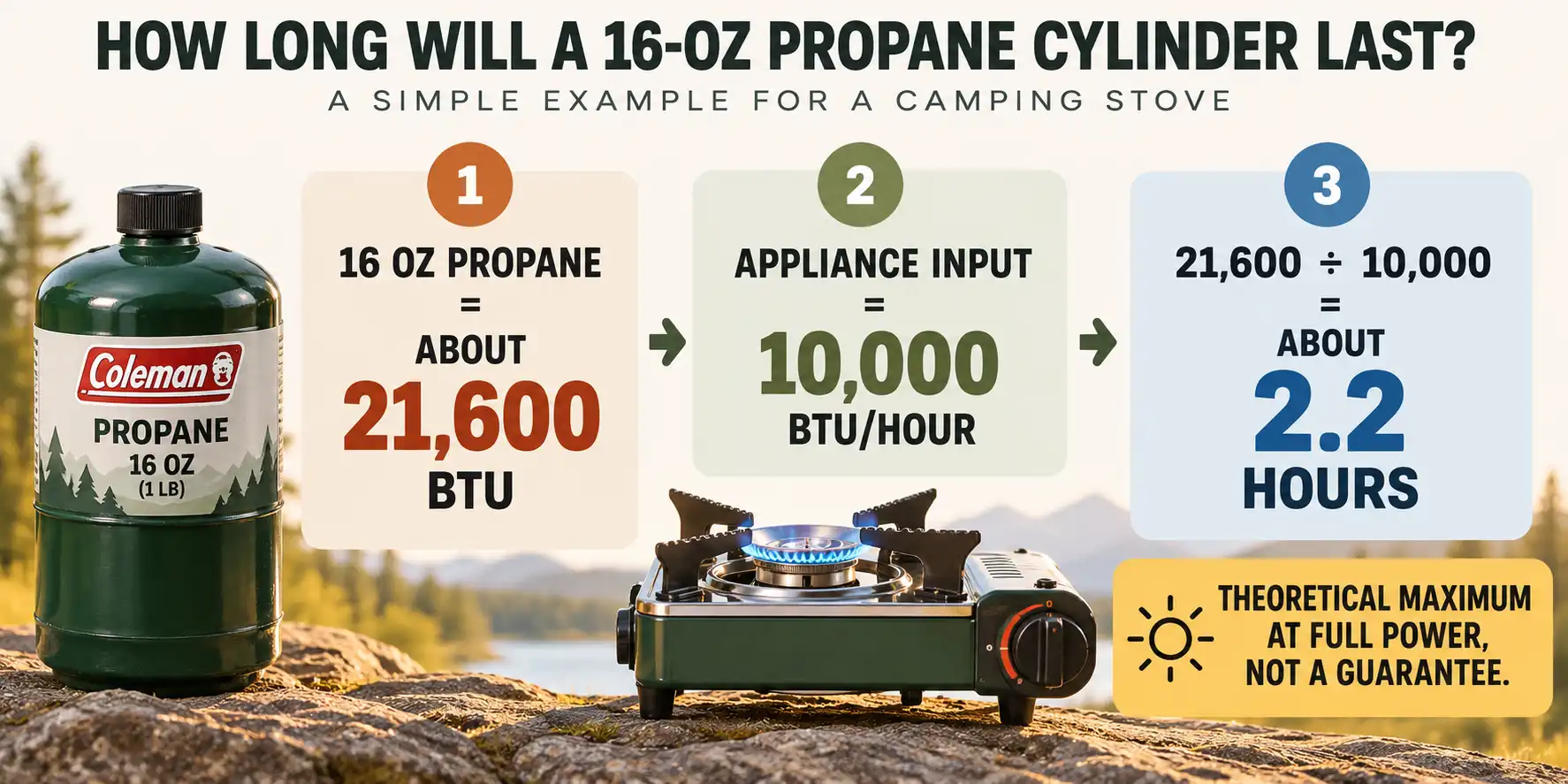
Propane contains about 21,600 BTU of energy per pound, according to heating-value data from ASHRAE. That means a 16-oz cylinder holds roughly 21,600 BTU, while a 16.4-oz cylinder holds about 22,100 BTU.
Estimated hours at full power = propane energy (BTU) ÷ appliance input (BTU per hour).
For example, a grill rated at 10,000 BTU per hour could theoretically run for around 2.2 hours on a full 16-oz cylinder:
21,600 ÷ 10,000 = 2.16 hours.
However, that is a fuel-energy calculation, not a manufacturer’s runtime guarantee.
If you run two burners together, use their combined BTU rating. Meanwhile, lower burner settings consume less fuel than the maximum rating assumes.
I would trust a model-specific Coleman runtime first and use the calculation when no published figure exists.
What Makes a Small Propane Tank Run Out Faster
Burner setting: High heat burns fuel faster than a gentle simmer. Consequently, a canister can last through several short cooking sessions even if its full-power rating is only one hour.
Number of burners: Running both stove burners at once generally uses more propane than running one. However, two pots cooking simultaneously may reduce the total time you need the stove lit.
Wind and cookware: Wind carries heat away, so boiling water may take longer. A pot with a well-fitting lid and the stove’s built-in wind protection can reduce that waste.
Cold conditions: Low temperatures can reduce propane vapor pressure and make an appliance perform poorly before the cylinder is empty. Therefore, a weak flame in the cold does not always mean the fuel has run out. Never try to heat the cylinder with a flame.
Fuel already used: A half-empty bottle has roughly half the original fuel, not another full manufacturer’s rated runtime. For that reason, I don’t count a partly used cylinder as a full backup.
Check How Much Propane Is Left
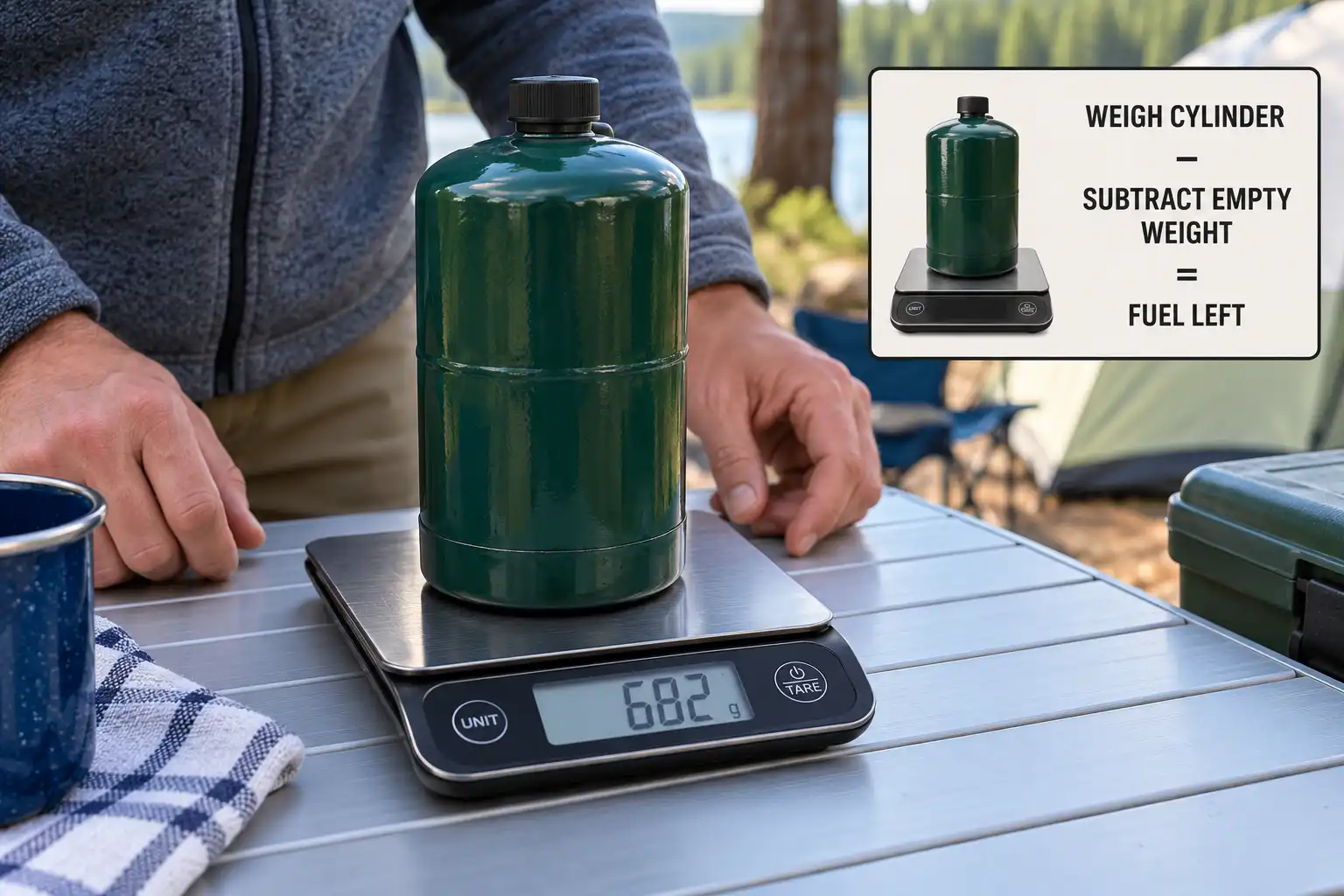
A kitchen scale gives you a more useful estimate than shaking a bottle and guessing from the sound. I use the labeled net fuel weight as the starting point, because the metal cylinder contributes to the overall weight.
- Establish the empty cylinder weight. When a cylinder is new, weigh it and subtract the fuel amount printed on its label. Write down the result for that cylinder. Alternatively, use a known empty cylinder of the same model as an approximate reference.
- Weigh the partly used cylinder. Subtract its estimated empty-cylinder weight from the reading. The difference is approximately how many ounces of propane remain.
- Adjust the runtime. If around 8 oz remains from an original 16 oz, start with about half the published full-cylinder runtime, then allow for weather and your flame settings.
Coleman also offers a digital gauge for compatible small CGA600 cylinders; its FAQ says to select the 16-oz setting for a 16.4-oz bottle. However, no fuel measurement makes a spare cylinder unnecessary.
Plan How Many Coleman Propane Tanks to Bring
I plan fuel by minutes of burner use, not simply by the number of days outdoors.
For example, imagine cooking breakfast for 20 minutes and dinner for 30 minutes each day over two days, with both Classic stove burners on high throughout.
That adds up to 100 minutes of full-power cooking. Since Coleman rates the Classic stove for up to 60 minutes per 16.4-oz cylinder, two full cylinders cover the planned use on paper.
However, I would pack three cylinders, including one spare, because delays, wind, and extra hot drinks can change the plan.
If you cook with one burner or use lower heat, your fuel may last longer. Still, an unopened backup belongs in a two-night camping packing checklist whenever you’re relying on propane for meals.
Make Your 1 lb Propane Tank Last Longer
I try to make every minute of stove time useful. Here are the habits I would prioritize:
- Prepare before lighting. Chop ingredients, measure water, and set out cookware first.
- Use a lid. Covered pots usually heat water faster and lose less heat to the air.
- Turn down the flame. Once a pot boils, simmer at the lowest setting that cooks the food properly.
- Use sensible wind protection. Position the stove out of direct wind or use its built-in shields, but never enclose or overheat the cylinder.
- Cook efficiently. Quick camping meals for two and a simple camping breakfast with minimal gear can help reduce burner time.
Also, shut the stove off as soon as you finish. A few unnecessary minutes at every meal add up across a weekend.
How Long Can an Unused Coleman Propane Cylinder Be Stored?
Unused Coleman propane cylinders don’t have a fixed fuel expiration date, so they may retain their fuel for years, but the container itself must remain intact, leak-free, and safely stored before I would consider using it.
Propane itself doesn’t become stale like gasoline. However, rust, dents, valve damage, and poor storage can make a cylinder unsafe even when fuel remains. Therefore, don’t assume a bottle is good merely because it still feels full.
Store cylinders upright in a cool, shaded, well-ventilated outdoor location, away from flames and living spaces. Never leave them in a hot vehicle or anywhere temperatures may exceed 120°F (49°C).
Also, inspect older bottles before connecting them, and follow any stricter directions printed on their labels.
Refilling, Leak Checks, and Safe Disposal
Do not refill Coleman’s disposable 16-oz propane cylinders. Coleman says its All-Purpose bottles are nonrefillable, and the U.S. Department of Transportation warns that single-use DOT-39 cylinders must never be refilled.
If you want a reusable option, choose a separate cylinder specifically certified as refillable.
Before use, inspect the cylinder and connections. Then check for leaks outdoors, away from sparks or flames, using soapy water as Coleman instructs.
Bubbles at the connection indicate a leak; stop using the setup rather than trying to repair a damaged cylinder.
Never use a propane stove or lantern inside a tent, camper, or enclosed shelter. Carbon monoxide can build up even when a flap or window is open.
Finally, follow local hazardous-waste or campground rules for disposal. Even an empty canister can retain pressure, so never puncture it, and don’t put one containing fuel into ordinary trash or recycling.
My Final Advice
For most campers, the appliance matters more than the name on the cylinder. One 16- or 16.4-ounce Coleman propane bottle might give you about an hour of two-burner cooking at full power, three hours on a smaller single-burner stove, or many hours of lantern light.
Therefore, check your exact appliance’s rating, estimate total burner minutes, and bring one spare. I would also weigh partly used bottles before packing and inspect every cylinder for damage. Good fuel planning makes campsite cooking simpler and safer.