Can You Wear Hiking Boots in Snow? Limits, Gear, and Fixes

Snow raises a fair question about footwear. Your hiking boots already handle mud, rock, and rain, so snow feels like the next step. This guide covers where they hold up, where they quit, and exactly what to add so your feet stay warm and your footing stays solid.
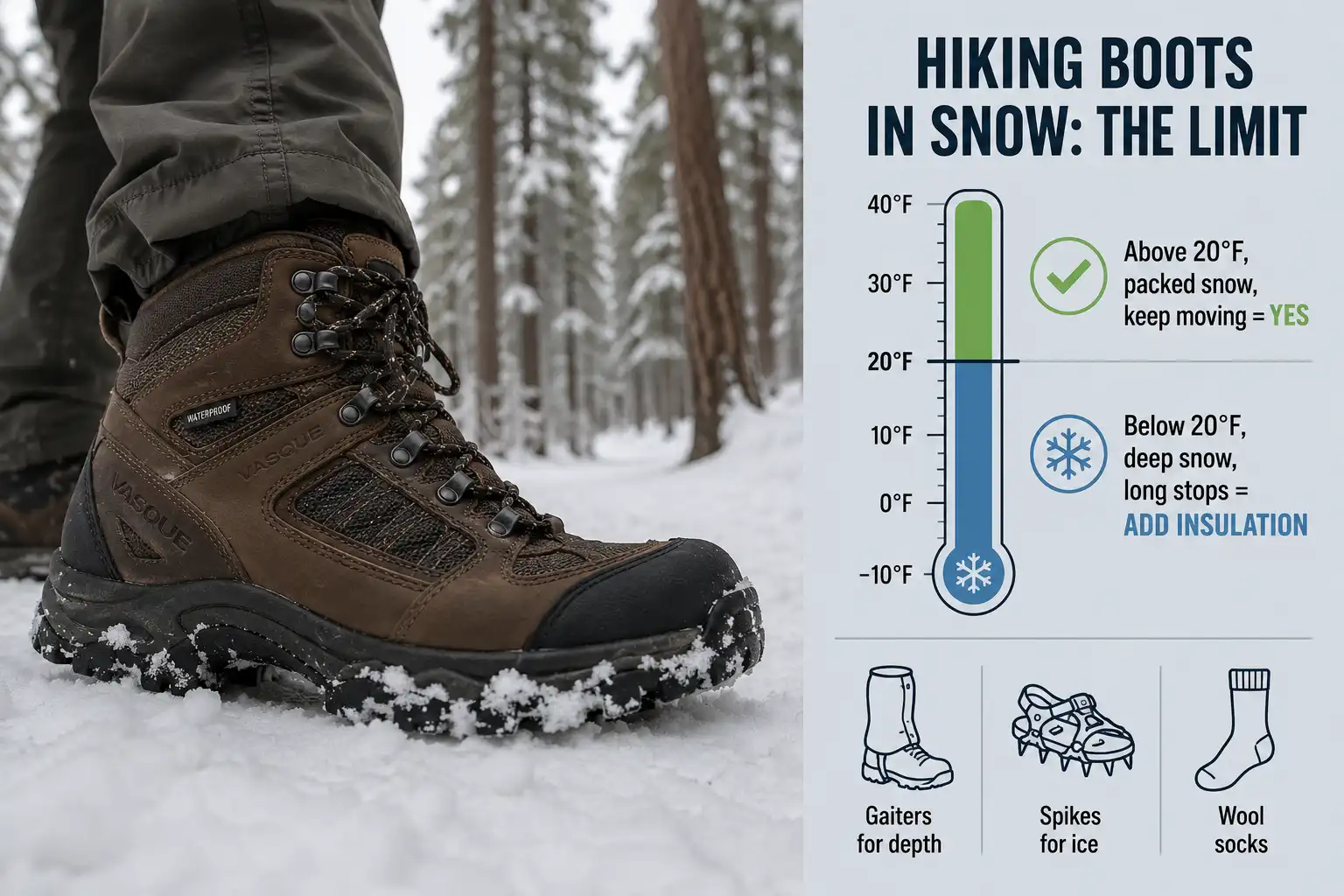
Yes, you can wear hiking boots in snow. Waterproof mid or high cut boots work well on packed snow and in a few inches of fresh powder, roughly down to 20°F, as long as you keep moving. Below that, or in deep snow, or during long stops, uninsulated hiking boots stop being enough.
One thing up front. I hike the Bandarban and Kaptai, and we never get snow here. So this guide leans on the boot and crampon rating systems, published winter hiking guidance, and notes from campers I trade gear talk with in colder countries. Where the numbers disagree between sources, I say so instead of picking one and pretending it is settled.
When do hiking boots work fine in snow?
Hiking boots work fine in snow when the trail is packed, the snow is shallow, and you keep walking. Under those conditions your feet generate steady heat, and the boot only needs to block water and grip the surface.
Here is the window where a standard three season boot performs well:
- Packed or previously broken trail. Other hikers, snowshoers, or a groomer have already compressed the snow.
- Depth under about six inches. Anything deeper starts spilling over the collar.
- Temperatures roughly above 20°F. Your own circulation does the insulating.
- Continuous movement. Short breaks are fine. Long ones are not.
- A waterproof, mid or high cut boot with deep lugs. Low cut hiking shoes fill with snow almost immediately.
- Day hikes rather than overnights. Insulation that gets damp has no chance to dry on a multi-day trip.
Most winter day hikers in temperate regions spend the majority of their season inside that window. Therefore buying dedicated snow boots first, before you know your local conditions, often wastes money.
Learn more: Hiking Boots in Work Mode
When are hiking boots not enough?
Hiking boots fall short once the cold becomes sustained, the snow gets deep, or you stop moving for long stretches. Each of those changes the math in a different way.
Sustained cold below roughly 15 to 20°F. Without insulation, your circulation alone carries the load. On a hike lasting more than an hour or two, that gap can turn into a genuine cold injury rather than just discomfort.
Deep unbroken snow. Every step sinks. Snow pours over the boot collar, melts against your calf, and runs down into your sock. After an hour of that, waterproofing means very little because the water arrived from above.
Long stops. Manufacturer temperature claims assume you are walking. Summit lunches, photo stops, and waiting for slower partners all remove the heat source your boots depend on.
Hard ice. No hiking boot outsole grips solid ice reliably. That problem needs metal, not better rubber.
Multi-day winter trips. Sweat accumulates in the boot over consecutive days. Wet insulation insulates poorly, so each morning starts colder than the last.
Cold feet also start above the ankle. When your core drops, your body constricts blood vessels in your hands and feet to protect your organs. So layering properly against cold wind protects your toes indirectly, and it costs nothing extra.
What temperature is too cold for uninsulated hiking boots?
Around 20°F is the practical floor for uninsulated hiking boots while you are actively walking. Below that, most winter hikers switch to boots with built in insulation, and experienced sources put the cutoff between 15°F and 20°F.
Treat every published number with some suspicion, though. Temperature ratings from boot companies rest on unregulated assumptions, and most of them assume the wearer moves continuously and generates extra heat the entire time. Stand still in the same boot at the same temperature and the rating no longer applies.
Wind, humidity, and your own circulation shift the number further. People with Raynaud’s or naturally poor circulation in their feet often need insulation 10 or 15 degrees earlier than the charts suggest. Meanwhile some hikers stay comfortable in uninsulated boots well below freezing. Test your own threshold on a short, low commitment hike before you trust it on a long one.
Do you need insulated hiking boots for snow?
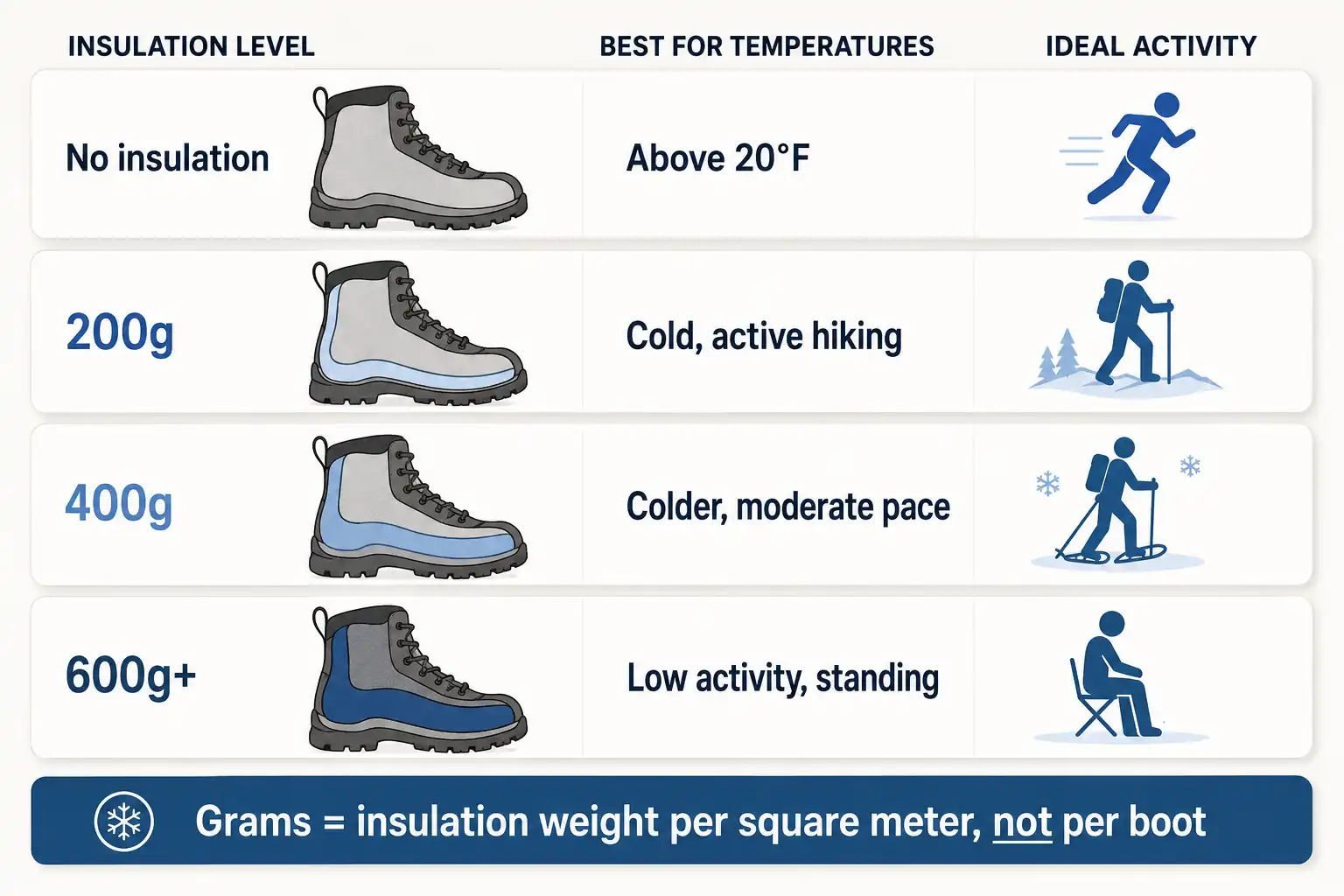
You need insulated boots once temperatures stay below about 20°F or your activity level drops. Above that, insulation usually creates more problems than it solves, because sweat soaks the insulation and your feet end up colder.
Manufacturers measure boot insulation in grams. The number describes weight per square meter of insulating material, not the total weight inside the boot, so a 200g boot does not contain 200 grams of fill.
| Insulation | Suits |
|---|---|
| None | Above ~20°F, active hiking, packed snow |
| 200g | Cold weather hiking with steady movement |
| 400g | Longer hikes in snow, moderate pace, colder days |
| 600g and up | Low activity, standing around, ice fishing, sledding |
Sources disagree noticeably on the temperature each level covers. One respected winter hiking site rates 200g boots to roughly 0 to 10°F and 400g boots far lower, while noting those figures assume walking rather than standing. Retailer charts often list warmer figures. Rather than trusting any single chart, match insulation to your activity level first.
More insulation is not automatically better. Highly active hikers wearing over-insulated footwear sweat, and that added moisture leads to colder feet, which is why hiking and snowshoeing call for less insulation than sedentary activities.
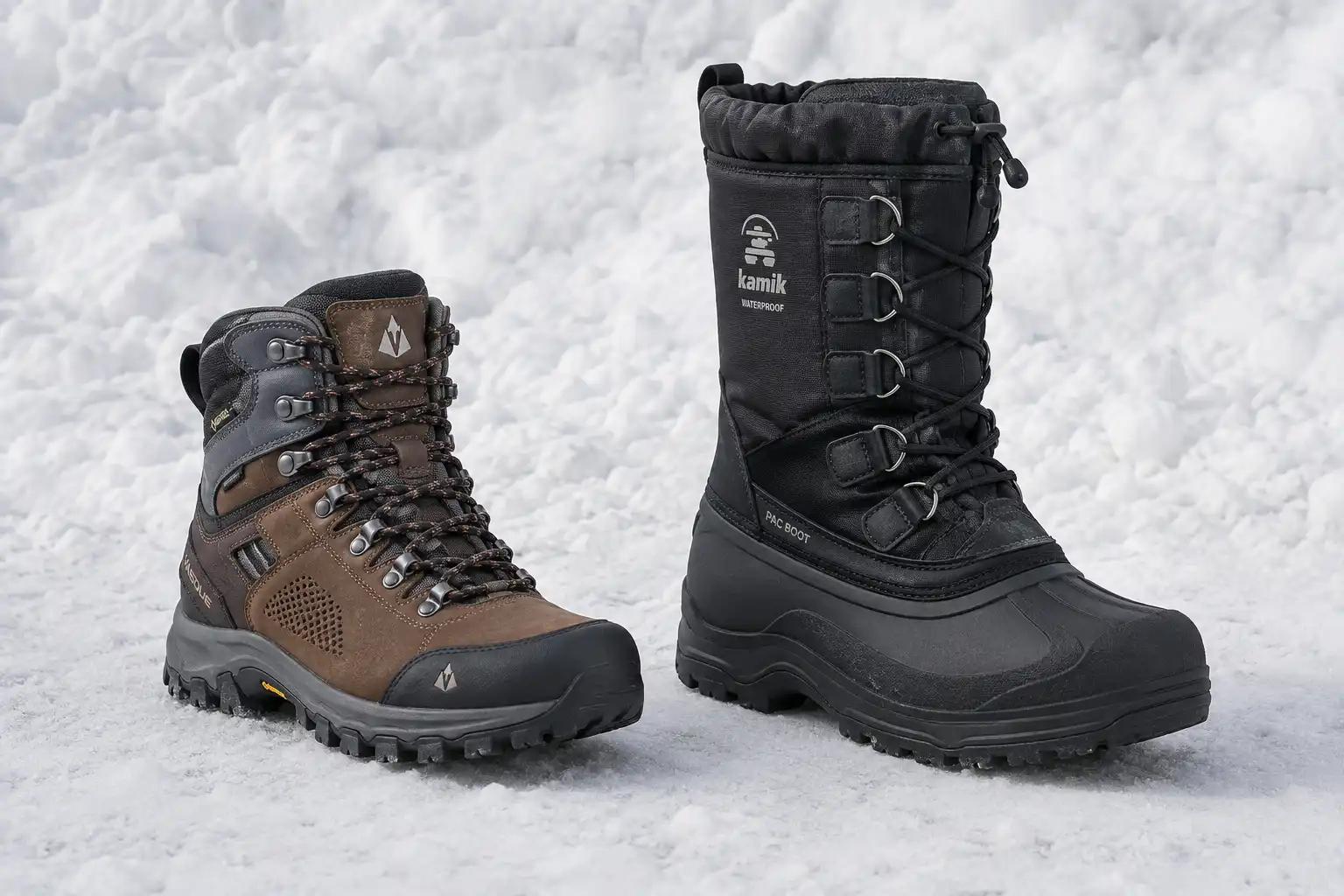
Hiking boots vs snow boots: what actually differs
Hiking boots and snow boots solve different problems, and the gap goes well beyond warmth.
Insulation. Snow boots carry synthetic fill as standard. Hiking boots usually carry none.
Height. Snow boots often rise well above the ankle to block deep snow. Most hiking boots stop at or just above the ankle bone.
Sole stiffness. Hiking boots flex. Snow boots vary, but pac style boots flex a lot too, which limits crampon options for both.
Breathability. Hiking boots vent sweat better. Heavily insulated snow boots trap it, which matters on anything strenuous.
Walking efficiency. Here hiking boots win clearly. They weigh less, roll through each step better, and cause far less fatigue over eight miles. Bulky snow boots wear you out.
Durability on mixed ground. Hiking boots handle rock, root, and scree under patchy snow. Soft snow boot outsoles wear fast on abrasive surfaces.
For active winter hiking on established trails, a waterproof hiking boot plus a sock system plus gaiters often beats a snow boot outright. For shoveling the driveway, waiting at a bus stop, or standing at a rink, the snow boot wins. The two categories are not competing for the same job.
Will waterproof hiking boots keep snow out?
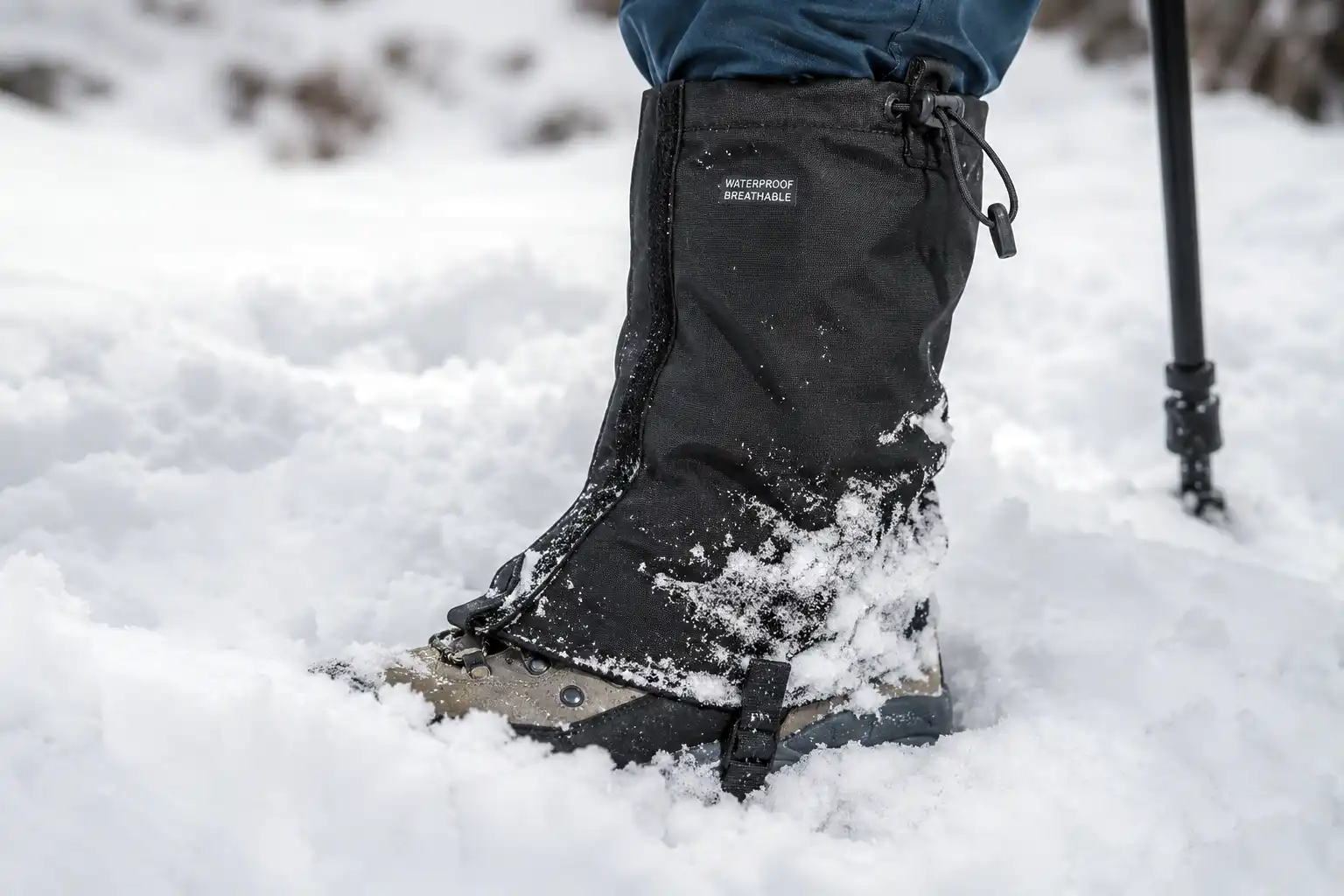
Waterproof hiking boots keep snow out of the boot itself, but they cannot stop snow from entering over the top. That opening at the collar is where most winter hikers actually get wet.
Three separate leaks deserve attention.
From above. When you posthole into soft snow, snow enters the top of the boot, collects, then melts from your body heat and gradually soaks the boot. Gaiters solve this. Waterproof and breathable gaiters keep snow out of your boots on deep snow hikes and add a little warmth as well. Mid height models handle most trails, and knee length versions suit deep powder.
From inside. Sweat wets insulation and socks just as effectively as snowmelt. On very cold trips some hikers add a vapor barrier sock, a fully waterproof layer worn over a thin liner sock that stops perspiration from reaching the insulation. Below roughly 15°F it works well. Above that, it usually leaves your feet drenched.
Through the upper. Leather absorbs water once its treatment wears off. Reapply through the season, and remember that treating leather without drying it out matters more in slush than in summer rain.
Also carry a spare pair of socks in a dry bag. Swapping socks at the halfway point is the cheapest warmth upgrade available.
Why traction is the real weak point
Traction fails before warmth does on most winter hikes. Rubber outsoles lose grip in the cold, and no hiking boot tread handles hard ice on its own.
Two things work against you. First, rubber compounds stiffen as temperatures drop. Standard rubber becomes rigid and much less grippy in the cold, the same way summer car tires do, which is why some brands use winter specific sole compounds instead. Second, lugs pack solid with wet snow and turn your aggressive tread into a smooth platform.
Winter specific outsoles help a little. Vibram’s Arctic Grip pairs a specialized compound with Icetrek rubber to improve grip on wet and dry ice. Still, independent testers report those compounds do far less on hardened ice than the marketing suggests. For icy trails, metal remains the answer.
Which traction devices fit regular hiking boots?
Regular hiking boots take microspikes, not crampons. Boot makers rate sole stiffness on a B0 to B3 scale, and crampons carry a matching C0 to C3 rating, so the two have to line up before anything clips on safely.
- B0 boots cover standard flexible three season hiking boots. They accept microspikes but not crampons, because the flexible sole cannot hold a crampon frame in place.
- B1 boots are stiffer four season models. These take C1 strap-on crampons only, since they lack a heel welt.
- B2 and B3 boots are mountaineering boots with welts, and they accept C2 and C3 crampons.
Pair a B1 boot only with a C1 crampon. Also check that your crampons include anti-balling plates, which stop snow from balling up underneath and blocking the spikes.
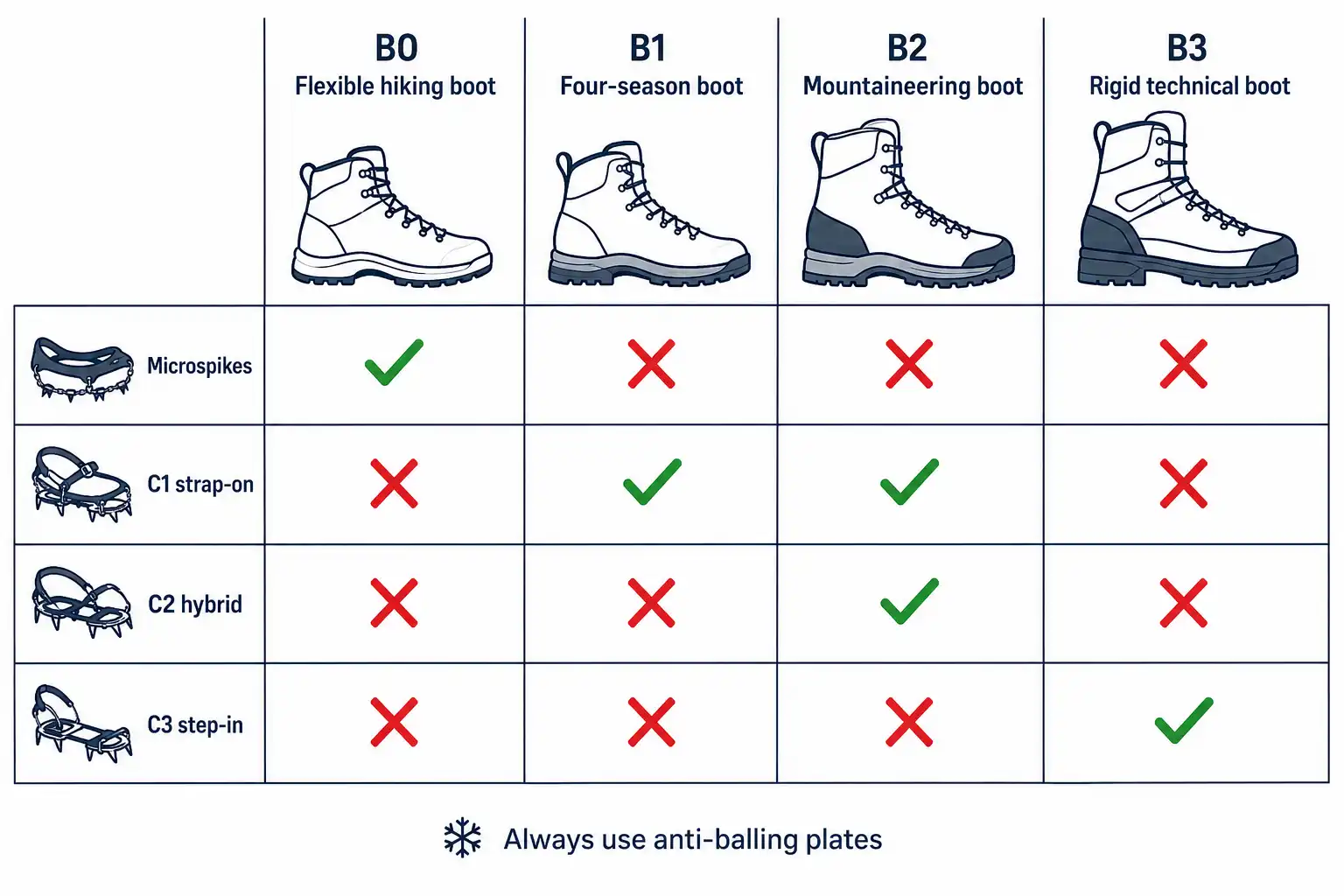
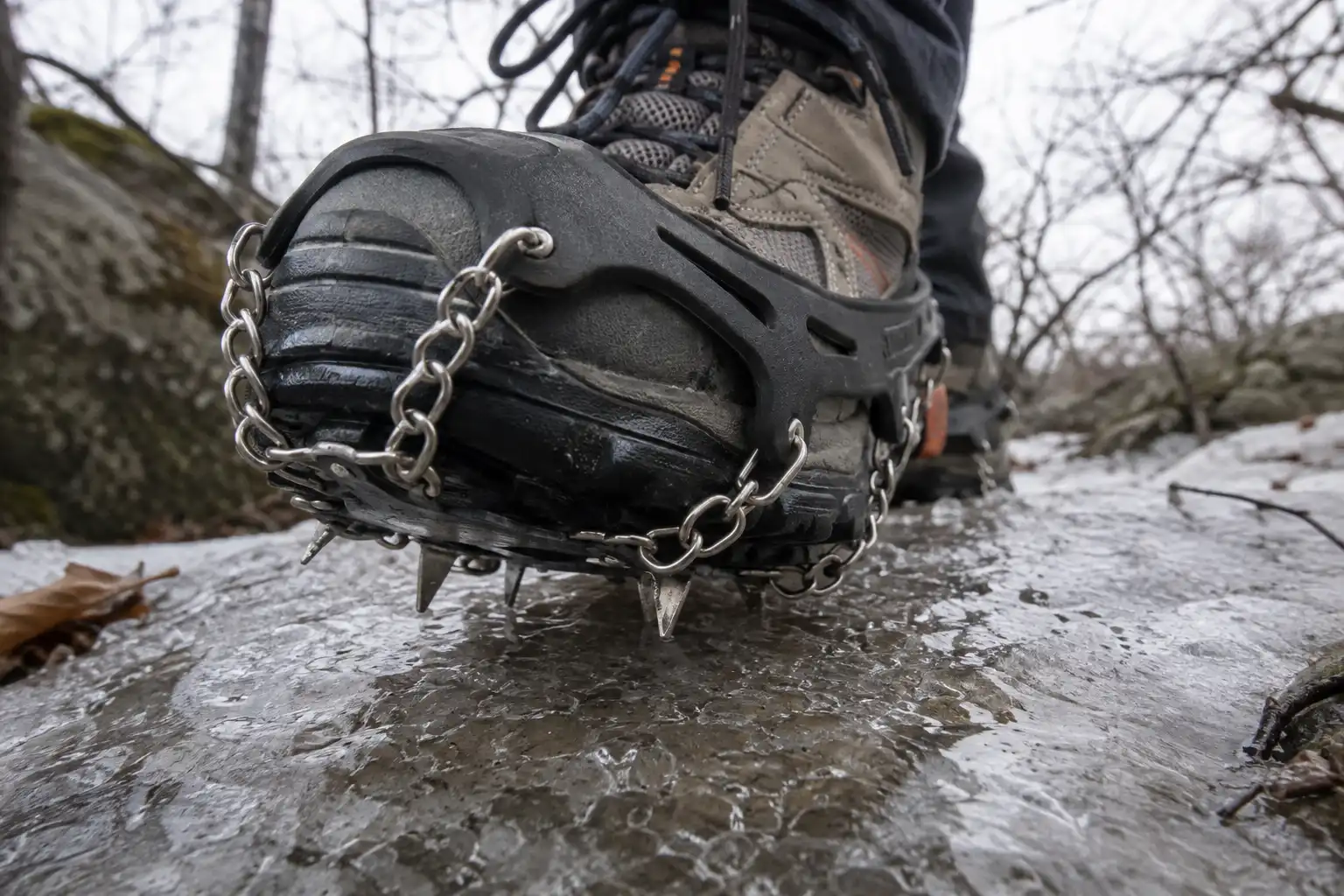
So if you own regular hiking boots, buy microspikes. They attach to most B0 walking boots and grip well on hard packed snow and ice without requiring a stiff sole, though they do not replace crampons on serious winter terrain. Strapping crampons onto a flexible boot risks the crampon releasing under load, which is exactly the wrong moment for gear to fail.
How to set up hiking boots for snow
Follow these steps in order. Most of them cost very little, and together they extend your existing boots well into winter.
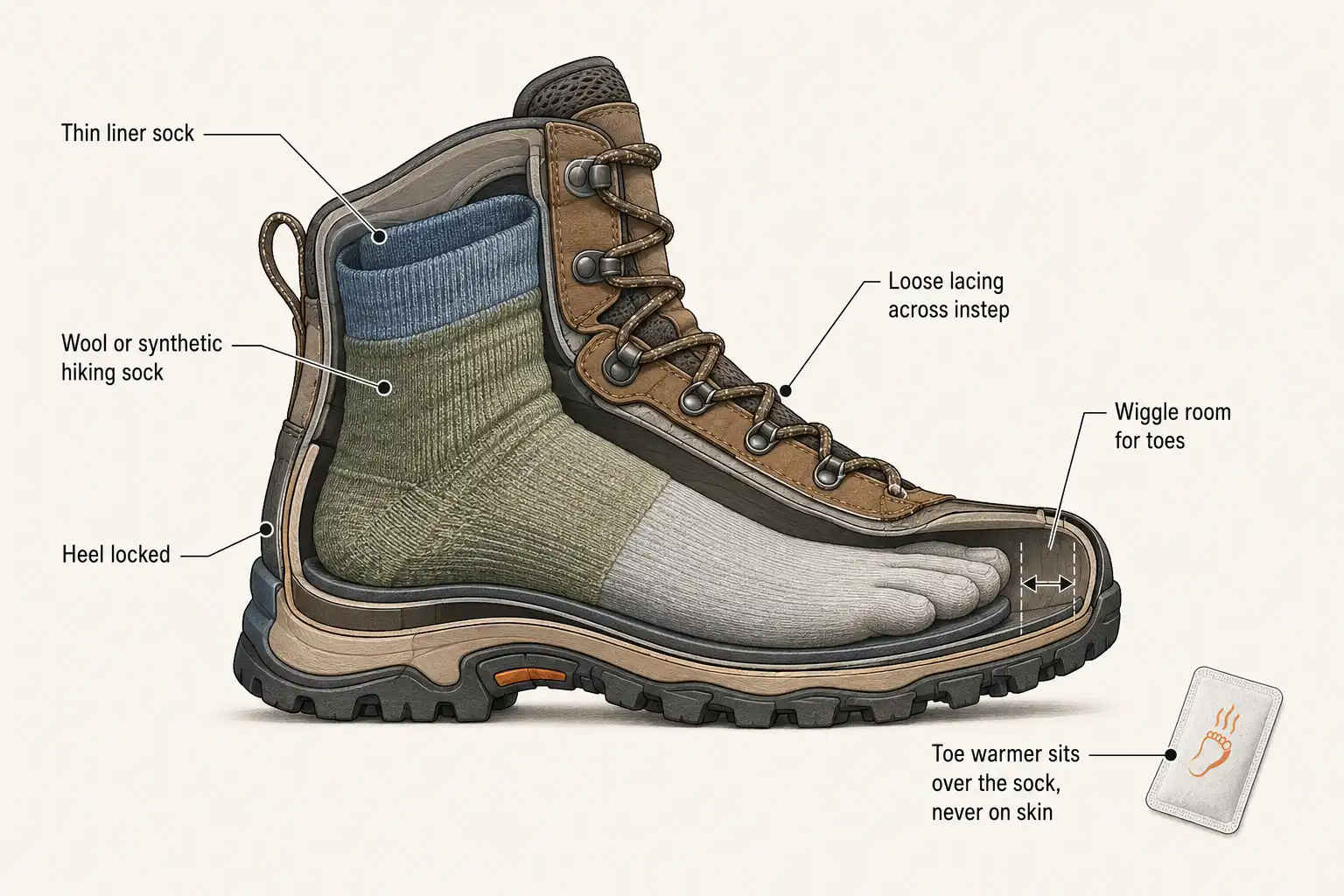
- Check toe room with winter socks on. Your toes need plenty of wiggle room even in wool socks, because that space promotes blood flow and keeps feet warmer. Since winter socks eat volume, getting boot fit right matters more now than in any other season. Size up if you have to.
- Build a sock system, not a sock pile. One thin liner plus one wool or synthetic hiking sock beats two thick socks crammed into the same boot. Sock choice does real work here, because thickness and fiber change how warm a boot feels. Skip cotton entirely.
- Lace loose over the toes and lock the heel. Tight lacing across the instep restricts circulation. The same lacing adjustments that stop sore toes improve winter blood flow too.
- Add gaiters. Mid height for packed trails, knee length for deep snow. Hook them to your laces and run the strap under the sole so they cannot ride up.
- Carry microspikes every time. They weigh little and pack flat. Even on a hike you expect to be soft snow, one shaded icy section justifies them.
- Refresh the waterproof treatment. Do it before the season, then again mid season if you hike often.
- Place toe warmers correctly. Put them over the sock, above the toes, never against skin. If a warmer compresses your foot, it reduces circulation and makes things worse.
- Pack a dry spare pair of socks. Change them at the turnaround point.
Mistakes that make cold feet worse
The most common winter footwear mistakes actually reduce warmth rather than adding it. Watch for these five.
Cramming thick socks into a normal fit boot. Compression cuts circulation. Two medium socks in a tight boot run colder than one good sock in a roomy boot.
Wearing cotton. Cotton absorbs sweat and holds it against your skin, which pulls heat out steadily.
Trusting lugs on ice. Deep tread grips snow. On ice it does almost nothing. Carry spikes instead of hoping.
Standing on snow at breaks. The ground drains heat from your feet quickly. Step onto a rock, a log, or your foam sitting pad during stops.
Ignoring the early warning signs. Numb toes that stop hurting need attention immediately, not at the trailhead. The same alertness applies to your whole body, so learn the early warning signs of hypothermia before your first snow hike.
When should you buy dedicated winter boots?
Buy insulated winter boots when your conditions consistently fall outside what a three season boot can manage. Three signals point that way.
First, your regular hikes run below 15 to 20°F. Second, you spend meaningful time stationary outdoors, whether waiting, photographing, or camping. Third, your feet get cold even after you fix socks, fit, lacing, and gaiters.
Otherwise, upgrade the cheap parts first. Gaiters, microspikes, and better socks together cost a fraction of a new pair of boots, and they fix the majority of winter foot complaints. Since boots are the most expensive item in your clothing system, that order makes financial sense.
If you do buy insulated boots, check traction compatibility before you pay. Winter boots generally work with microspikes and snowshoes, though you should confirm the attachment does not press on your toes, since that pressure causes discomfort and blistering.
FAQs about Hiking Boots in Snow

Can you wear hiking boots in deep snow?
Does snow ruin hiking boots?
Can you put crampons on regular hiking boots?
Should you size up hiking boots for winter?
Are waterproof hiking boots warm enough for snow?
Final thoughts
Your hiking boots handle more snow than most people assume, provided you respect the limits. Packed trails, shallow snow, temperatures above roughly 20°F, and continuous movement all sit comfortably within their range. Push past those conditions and the boots need help: gaiters for depth, microspikes for ice, a proper sock system for warmth. Fix those three cheap things before you shop for anything new. When your hikes genuinely run colder or slower than your boots can cover, then insulated winter boots earn their place in the closet.