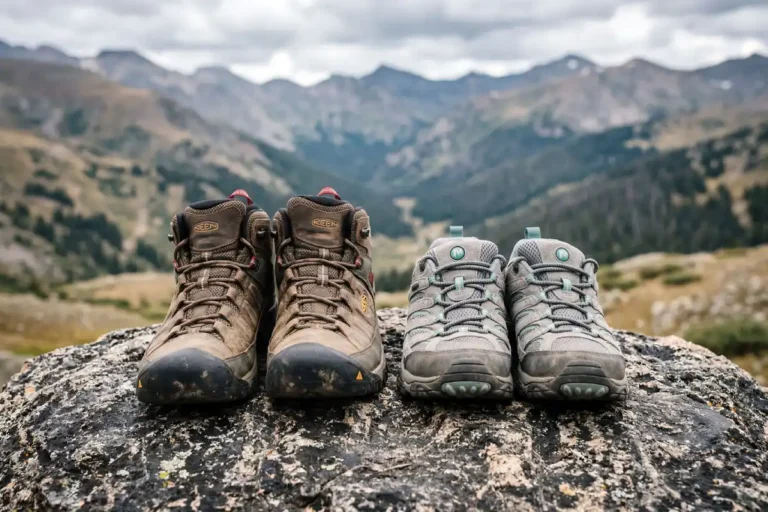
Are Hiking Boots Good for Work? Safety Ratings by Job Type

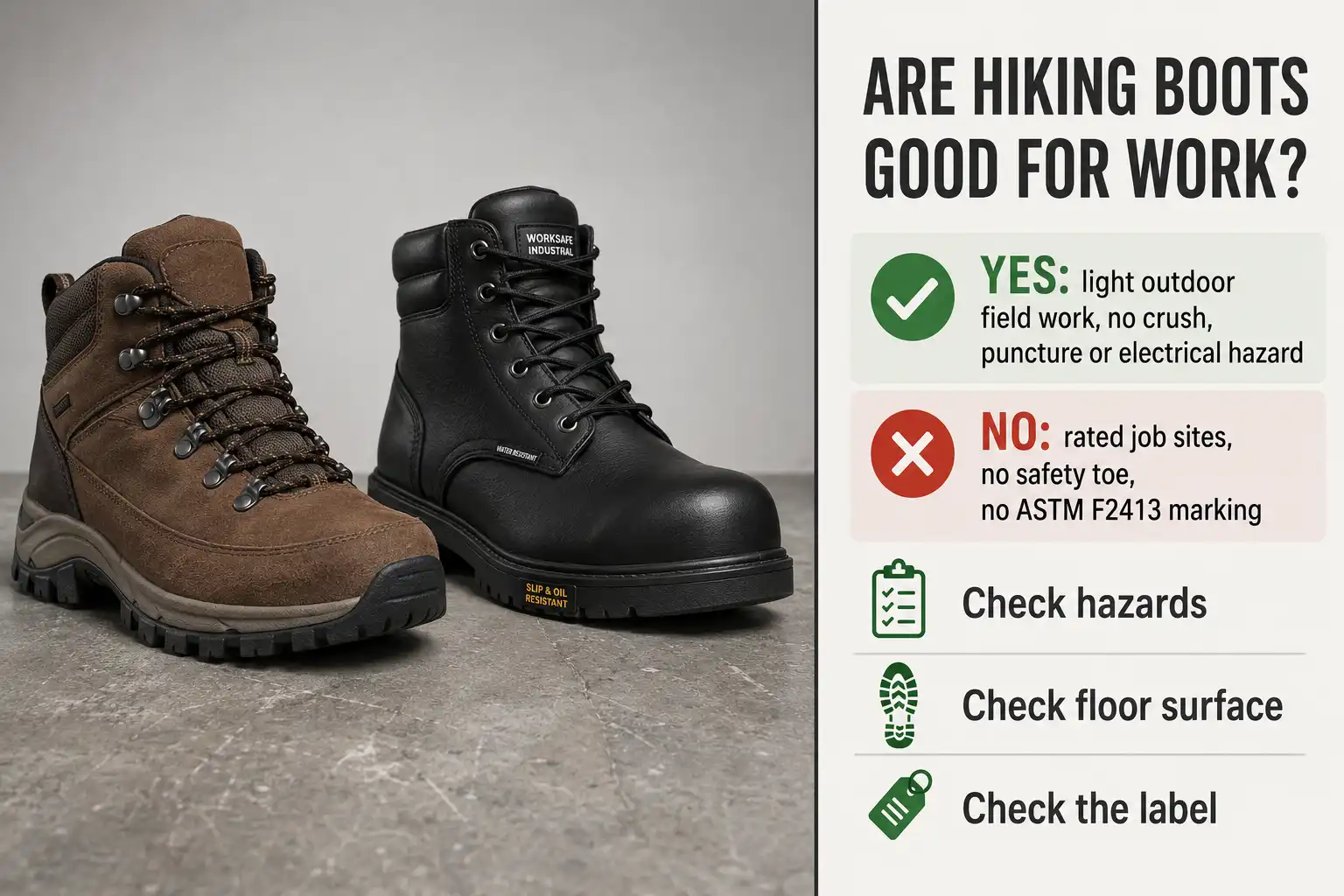
Plenty of campers ask me whether they can skip work boots and wear trail boots to the job instead. The answer depends on your hazards, not your comfort. Below I cover the footwear rules, the gaps in hiking boots, and the exact jobs where they pass or fail.
Hiking boots are good for light outdoor work with no crush, puncture, or electrical hazard. They are not good for regulated job sites, because standard trail boots carry no safety toe and no ASTM certification. So your hazards, your floor surface, and your employer’s policy decide this, not comfort.
How hiking boots and work boots differ
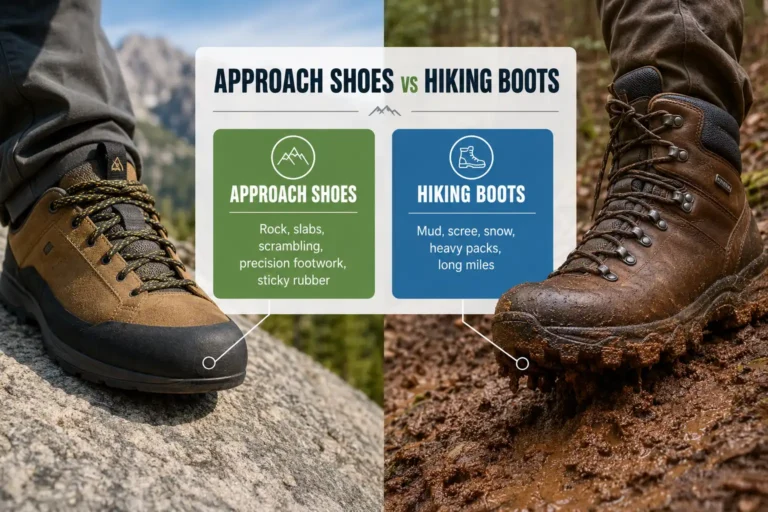
Both boots protect your feet, yet they solve different problems. Hiking boots carry you over uneven ground under a pack, so makers cut weight, add flex, and mold deep lugs that bite into dirt. Work boots face hazards and hard flat floors instead. Therefore they get firmer midsoles, thicker uppers, flatter oil-resistant outsoles, and often a protective toe cap.
| Layer | Hiking boot | Work boot |
|---|---|---|
| Toe | Rubber bumper for trail scuffs | Steel, alloy, or composite safety cap |
| Midsole | Softer foam tuned for uneven ground | Firmer polyurethane that resists compression |
| Underfoot plate | None | Optional puncture-resistant plate |
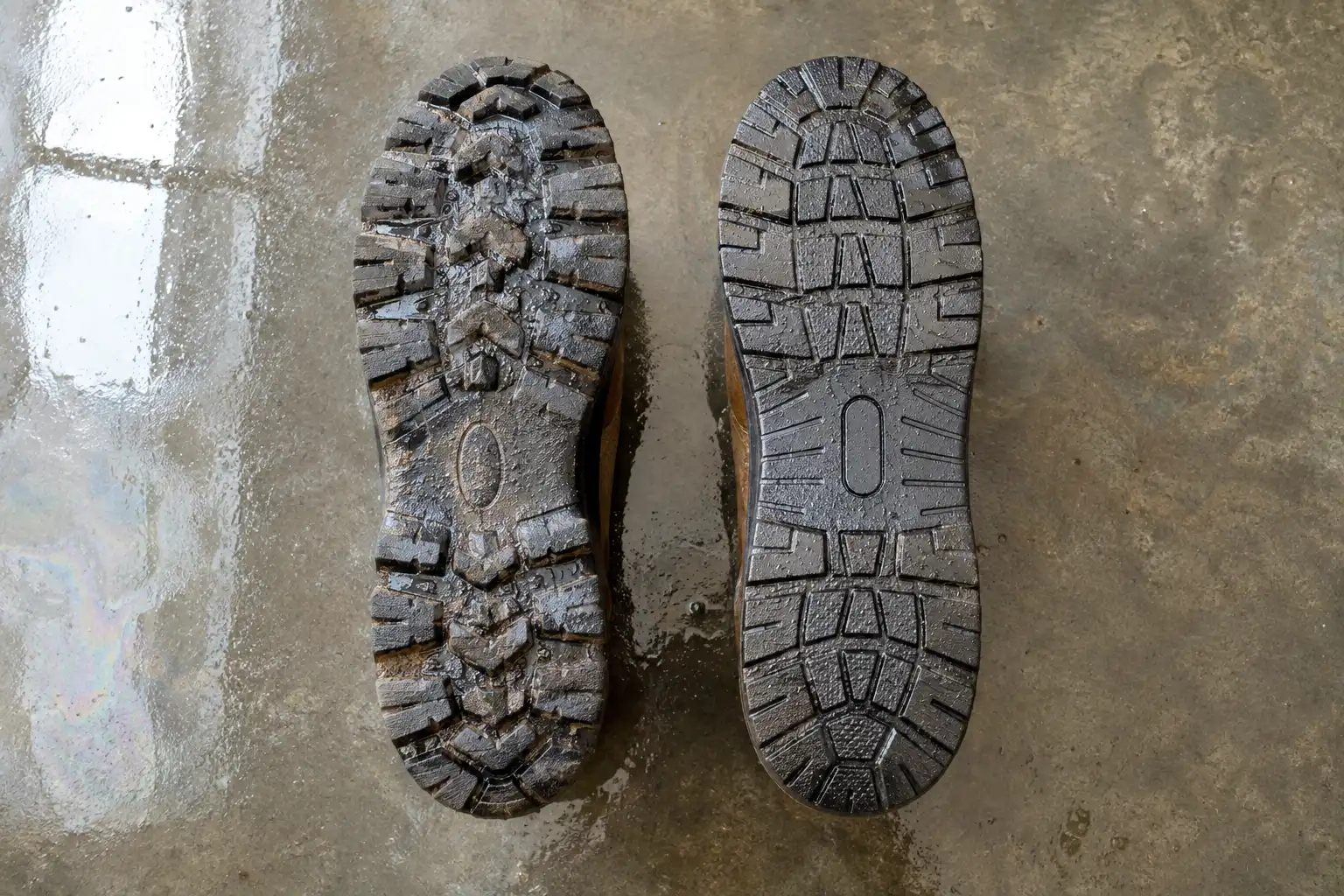
| Outsole | Deep lugs for dirt, mud, and rock | Flatter tread with oil and slip resistance |
| Upper | Mesh panels and lighter leather | Thick full-grain leather, reinforced |
| Certification | None by default | ASTM F2413 marking |
Neither build wins outright. Instead, each one matches a setting. Trouble starts when you move a boot outside the setting it was built for.
Also know: Hiking Shoes in Snow
What does OSHA require for work footwear?
OSHA requires protective footwear only when a hazard assessment finds a hazard. Under 29 CFR 1910.136, your employer must ensure protective footwear where falling or rolling objects, sole punctures, or electrical hazards exist. No documented hazard means no legal footwear requirement, so plenty of jobs let you wear whatever fits.
When a hazard does exist, the rule points to consensus standards. The regulation text names ASTM F2412 and F2413 plus the older ANSI Z41, and it also accepts footwear an employer can show performs at least as well. In practice, employers verify the ASTM F2413 marking stamped inside the boot.
Also worth knowing: foot injuries at work rarely come from dramatic accidents. OSHA’s summary of Bureau of Labor Statistics data found the typical injury came from an object falling less than four feet, weighing about 65 pounds on average. Most injured workers wore no protective footwear at the time. Keep that in mind before you decide a safety toe seems unnecessary.
Do hiking boots meet ASTM F2413?
Standard hiking boots do not meet ASTM F2413, because that specification covers safety toe cap footwear and trail boots have no toe cap. A rubber toe bumper stops abrasion on rock. However, it does nothing against a 75 foot-pound impact or 2,500 pounds of compression, which is what the I and C ratings certify.
The current edition is ASTM F2413-24, published in June 2024 to replace F2413-18. Boots marked with either edition still satisfy most site policies. The 2024 update also brought slip resistance into the standard through the SR and SRO marks, which earlier editions left out entirely.
One more standard matters here. ASTM F2892 covers soft toe protective footwear, so boots tested under it can carry EH, SD, PR, and slip resistance marks without any safety toe. A few hiker-style models do exactly that. Therefore check the label instead of assuming.
How to read the safety label inside a boot
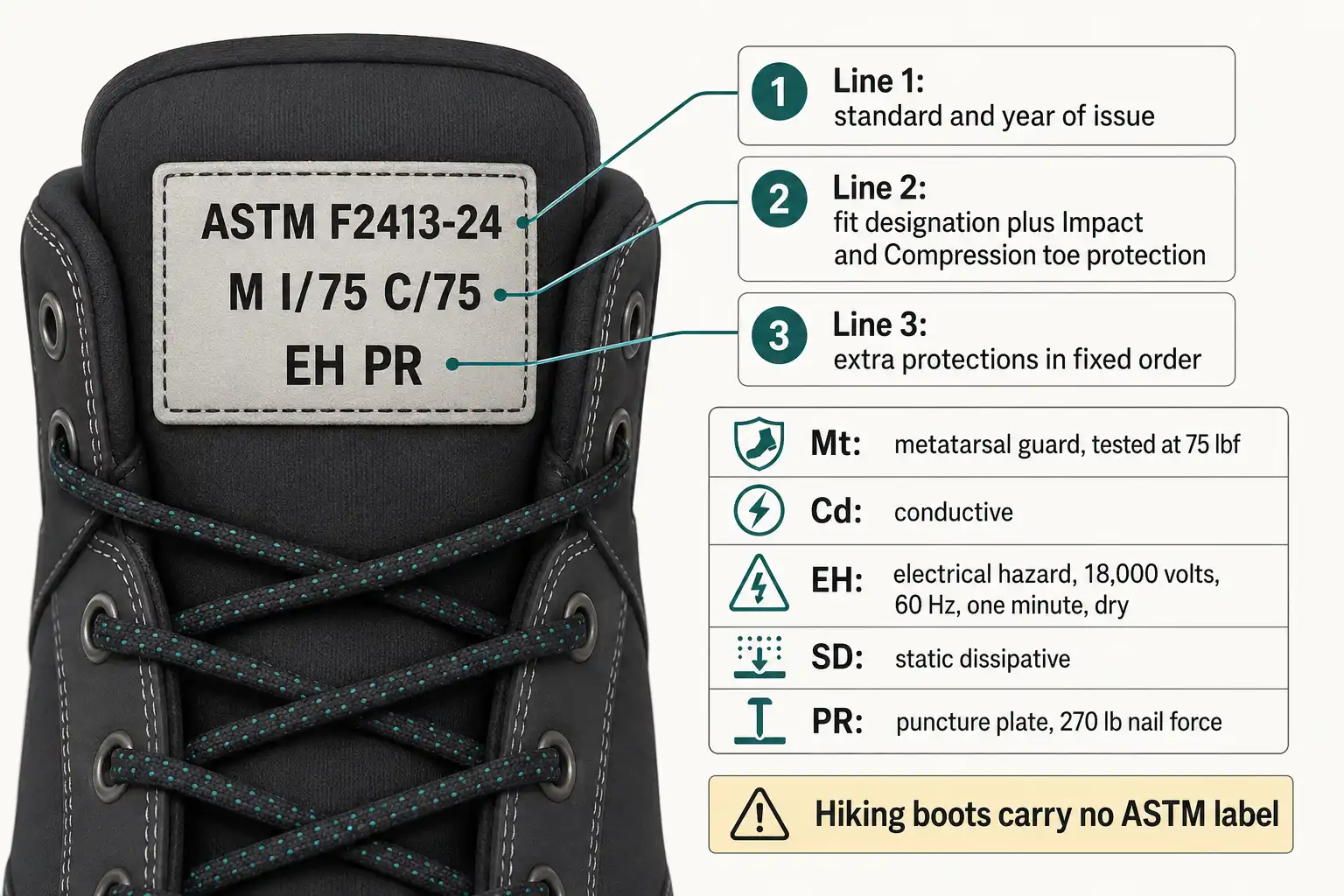
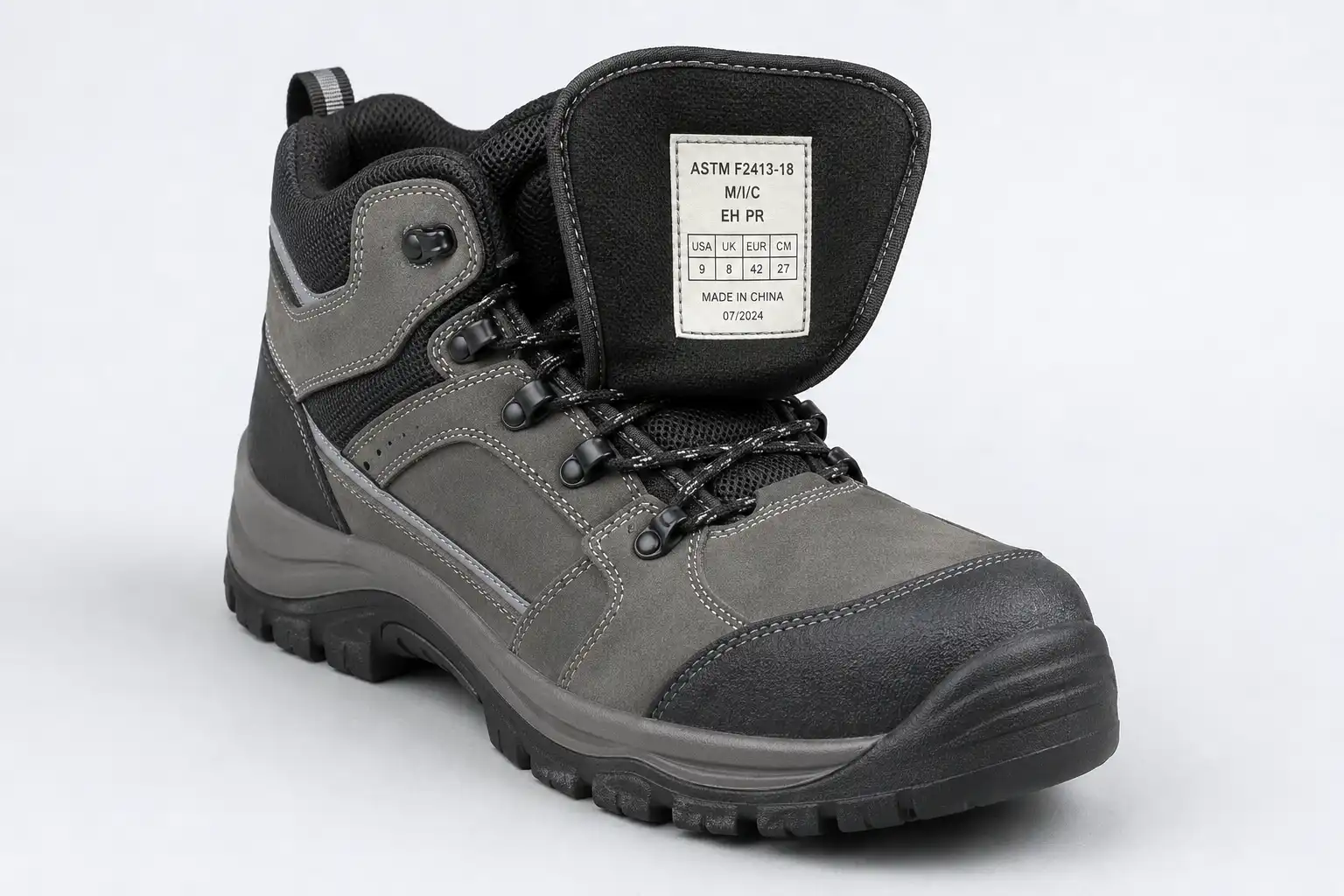
You will find the ASTM marking stamped inside the tongue or shaft of one boot in each pair, running three or four lines. The first line names the standard and its year. Next comes the fit designation (M or F) plus I and C for impact and compression toe protection. After that, a third line lists extra protections in a fixed order.
Here is what those extras cover:
- Mt: a guard over the metatarsal bones, tested at 75 pounds of force.
- Cd: conductive, for controlled static environments.
- EH: electrical hazard. Labs test the sole and heel at 18,000 volts, 60 Hz, for one minute, with leakage below 1.0 milliampere in dry conditions.
- SD: static dissipative, which chases the opposite goal from EH.
- PR: a puncture-resistant plate rated to a 270 pound (1,200 newton) nail force.
Read the EH line carefully. It certifies secondary protection on new, dry boots only. Wet soles, worn soles, and metal shavings all cut that protection down, so EH boots never replace lockout procedures.
A hiking boot has no such label, which means no certified protection against anything.
Which jobs suit hiking boots?
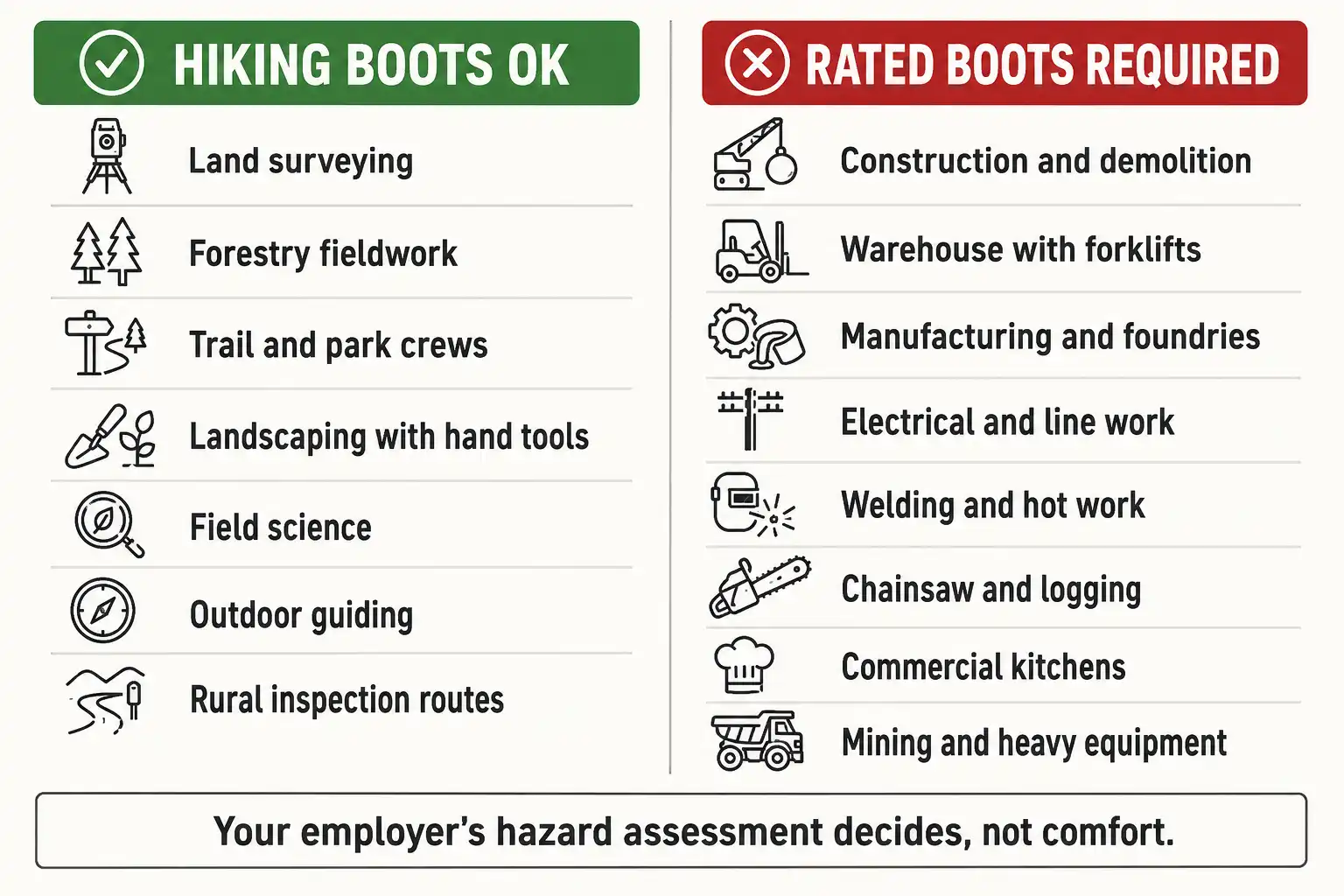
Hiking boots suit jobs that cover outdoor terrain without crush or puncture risk. These roles come up most often when readers write to me:
- Land surveying and field data collection
- Forestry and conservation fieldwork away from chainsaws
- Trail crews, park staff, and campground hosts
- Landscaping and grounds work with hand tools
- Wildlife biology, geology, and archaeology fieldwork
- Outdoor guiding, camp instruction, and adventure tourism
- Meter reading and rural inspection routes
These jobs share a pattern. Your ground shifts under you, your mileage runs high, and nothing heavy hangs overhead. Hiking boots handle that combination better than stiff leather work boots do. They also weigh less, and that gap adds up across thousands of steps. Anyone who already knows how hiking boots feel over long walking days will recognize why field workers reach for them.
Which jobs rule hiking boots out?
Hiking boots fail anywhere the hazard assessment calls for rated footwear. Skip them for:
- Construction, demolition, and roadwork
- Warehouses with forklifts, pallet jacks, or stacked racking
- Manufacturing, foundries, and metal fabrication
- Electrical and utility line work
- Welding and hot work
- Chainsaw and logging work, which calls for cut-resistant boots under ASTM F1818
- Commercial kitchens and food processing
- Mining, oil and gas, and heavy equipment yards
Two of those deserve a note. Welding punishes hiking boot uppers, because mesh panels and synthetic overlays melt when spatter lands on them. Meanwhile kitchen floors need flat outsoles that clear grease off the contact patch, and trail lugs trap it instead.
Where hiking boots fall short on hard floors
Four gaps show up fast once trail boots meet concrete.
Lug traction works against you. Deep lugs grip loose dirt by concentrating pressure on small edges. On smooth wet concrete, tile, or oily shop floors, that small contact area reduces grip. Work outsoles spread contact wide and channel liquid away instead.
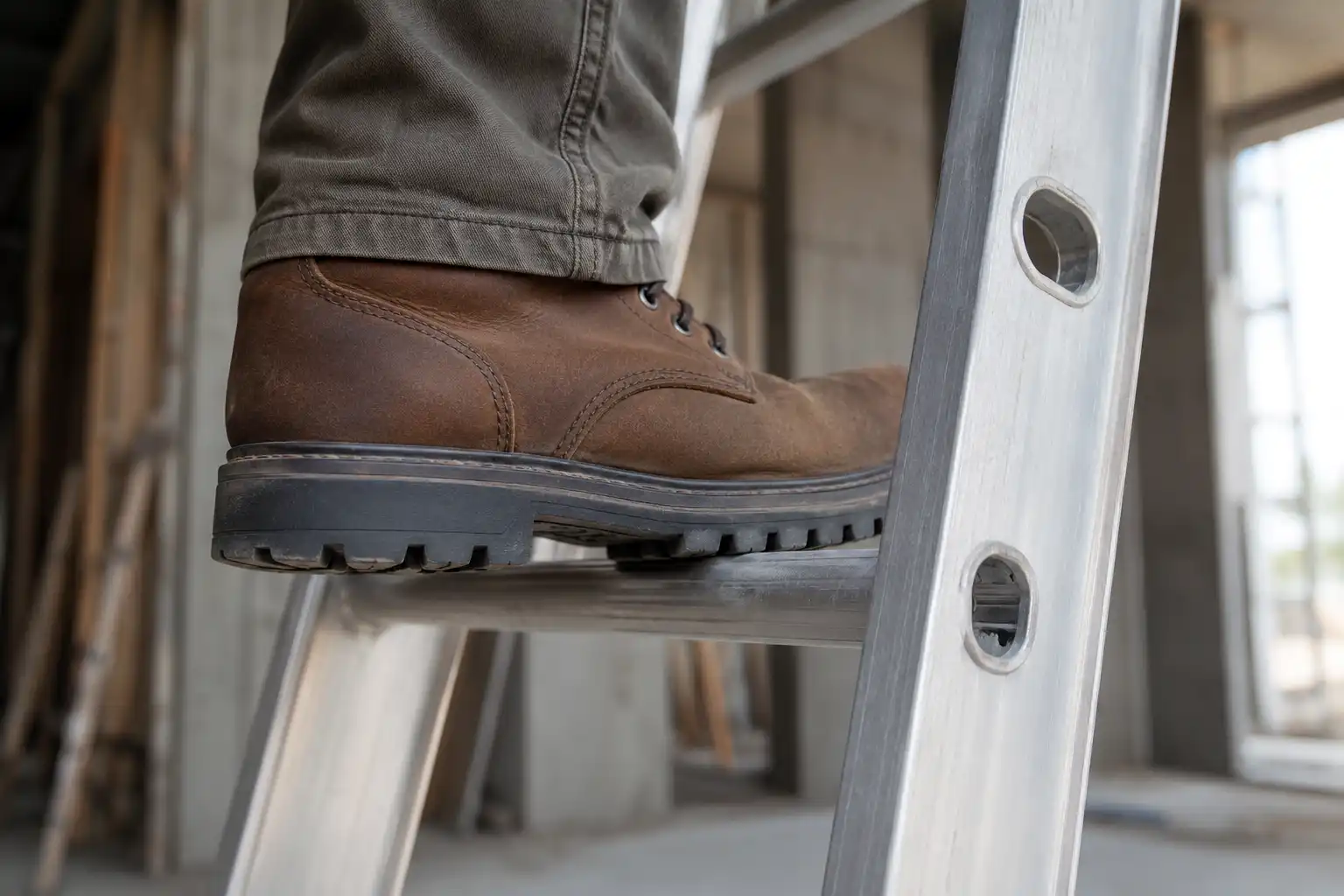
Ladder rungs catch lugs. A rung needs a stable, predictable platform under your arch. Aggressive lugs perch or snag on the rung, which feels unsteady at height.
Midsoles flatten sooner. Concrete returns almost nothing underfoot, so every step lands hard. Hiking boot foam targets softer ground, so it packs out faster under daily shift loads. Firmer polyurethane midsoles resist that better, which is why a pair of hiking boots wears out faster on a job site than on trails.
Uppers give out. Oil, solvents, concrete dust, and constant scraping chew through mesh and thin leather much faster than trail use does. A welted work boot outlasts a cemented hiking boot in that setting almost every time.
What the safety ratings do not cover
Even a fully rated work boot leaves gaps, and hiking boots leave those same gaps wider. ASTM F2413 tests impact, compression, metatarsal, electrical, static, and puncture performance. It does not test everything else you might meet at work.
Three hazards sit outside the standard entirely:
- Chemicals. Acids, caustics, and solvents need footwear documented for chemical resistance. No F2413 code covers them.
- Temperature extremes. Heat and cold ratings come from manufacturer claims rather than this standard, so read the product details.
- Chainsaw cuts. The PR code covers nail punctures from below, not saw contact. Cut resistance falls under ASTM F1818, which is why loggers wear purpose-built boots.
Hiking boots score zero on all three. Their mesh panels melt, their linings soak up solvents, and their uppers offer no cut protection whatsoever.
What hiking boots do better
Hiking boots beat work boots on weight, breathability, and comfort straight out of the box. Most need almost no break-in period, while stiff leather work boots need weeks. They breathe better too, which helps through long hot shifts. On uneven outdoor ground, their flex and lug pattern grip far more confidently.
One caveat belongs here though. Comfort is not compliance. A boot can feel perfect and still leave your toes fully exposed. So treat comfort as a tiebreaker between compliant options, never as a reason to skip protection.
Safety hikers: boots that cover both jobs
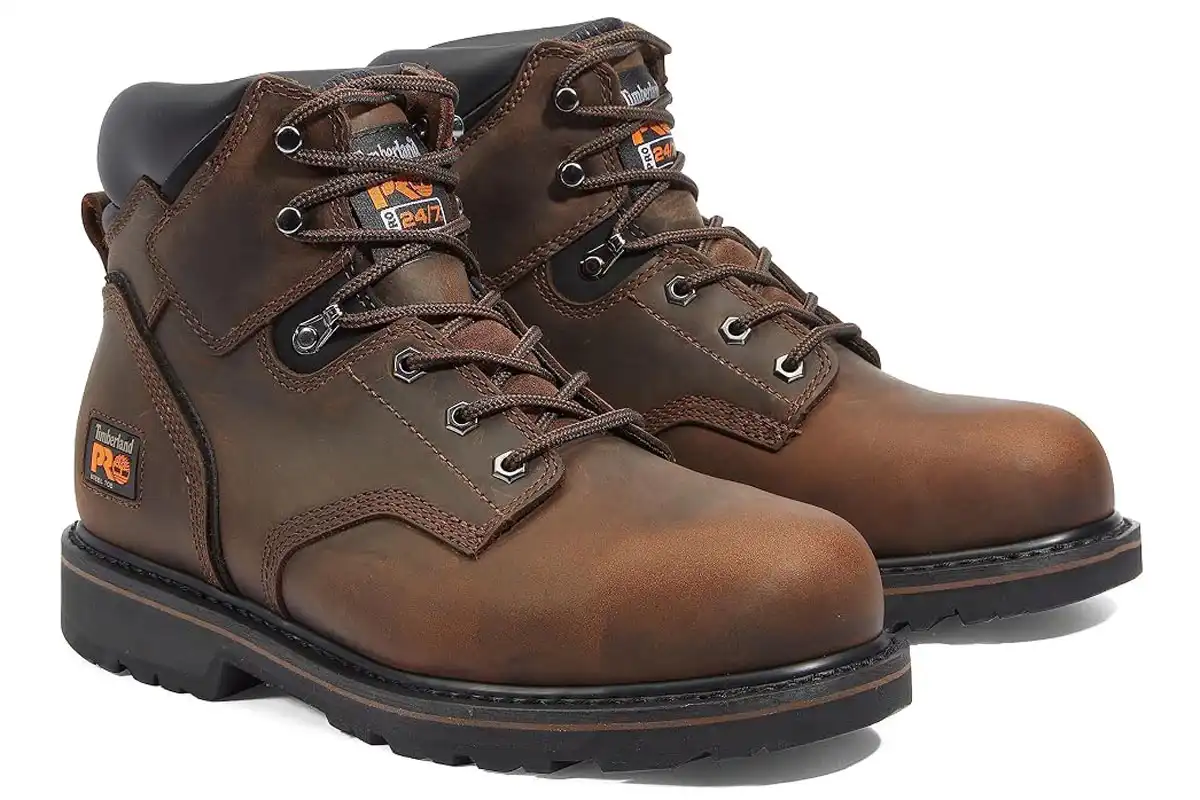
Safety hikers give you the hiking boot shape with certified protection built in. Several brands now build athletic-cut boots on hiker lasts, then add composite or steel toes, EH protection, and puncture plates tested to ASTM F2413. Keen Utility, Merrell Work, Timberland PRO, Danner, Rocky, and Red Wing all sell models in this category, though lineups change, so check current listings.
Check two things before you buy. First, confirm the exact marking on the specific model, because brands often sell the same silhouette in rated and unrated versions. Second, match the codes to your hazards rather than buying the longest string of letters. An EH rating serves an electrician and does nothing for a warehouse picker.
How to make hiking boots last through work shifts
Treat work shifts as high-mileage use, then maintain the boots accordingly.
- Rotate two pairs. Foam recovers between wears, so alternating pairs holds cushioning longer.
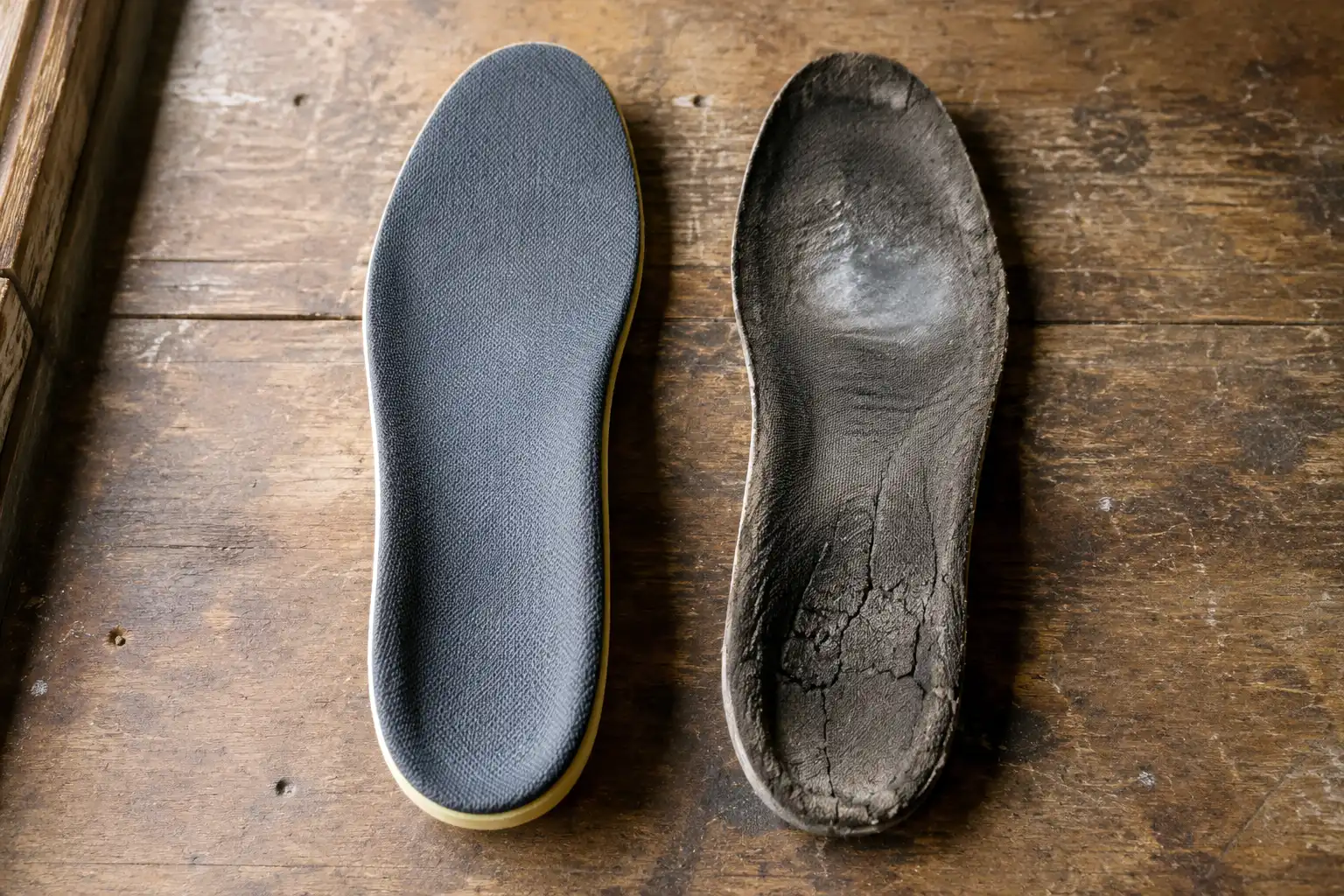
- Replace insoles early. Cushioning flattens well before the outsole or upper looks finished, so swap insoles at the first sign of a dead heel.
- Clean off oil and dust daily. Both attack rubber and leather. A quick brush and wipe buys you months.
- Re-treat the leather. Abrasion strips waterproofing fast, and restoring water resistance without wrecking the leather takes the right product for the material.
- Fix fit problems immediately. Sore toes usually trace back to fit or lacing rather than mileage, and a few lacing changes stop sore toes before they turn into blisters.
- Upgrade your socks. Long shifts sweat more than day hikes do, so good socks make a measurable difference to friction and moisture.
Getting the fit of your boots right matters more at work than on trail, because you cannot stop and adjust mid-shift.
What I have learned wearing trail boots on long days
My boots do double duty most weeks here in the Kaptai hills. Long days on hill trails around Bandarban taught me how quickly foam gives out once the ground turns hard. On packed road and concrete stretches, the same boots that felt fine on soil started feeling flat within a few months. That pattern matches what readers in field jobs tell me. So when someone asks about wearing trail boots at work, I ask about their floor first, their hazards second, and comfort last.
FAQs on Hiking Boots for Work

Can I wear hiking boots on a construction site?
Do hiking boots have steel toes?
Are hiking boots okay for warehouse work?
Will hiking boots pass an OSHA inspection?
Does an EH rating protect me in wet conditions?
The bottom lines
Start with your hazards, not your comfort. If your job carries no crush, puncture, or electrical risk and your day runs over outdoor ground, hiking boots do that work well and save your legs. If your site requires rated footwear, comfort changes nothing, so buy a safety hiker and get both. Check the label inside the tongue before you commit, then match those codes against the hazards you actually face each shift.