Are Barefoot Shoes Good for Hiking? An Honest Trail Test

Barefoot shoes keep showing up at trailheads, and hikers keep asking me whether they hold up on rough ground. This guide gives you a straight answer. I cover what these shoes do well, where they fail, who should skip them, and how to switch over without wrecking your feet.
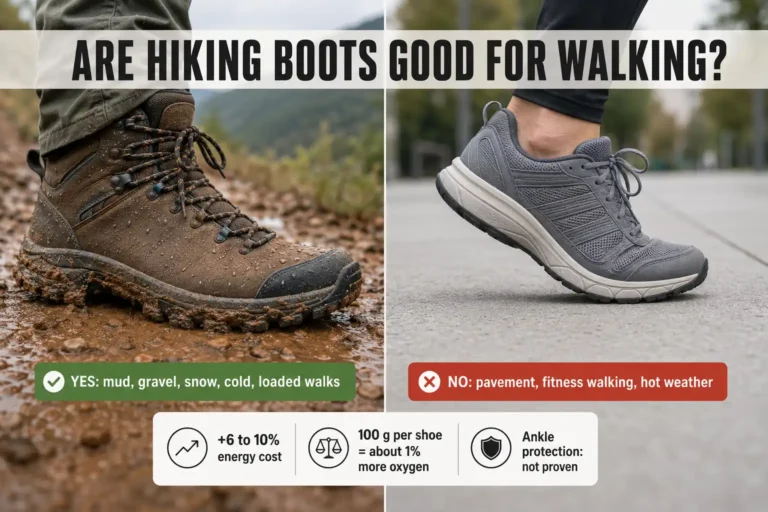
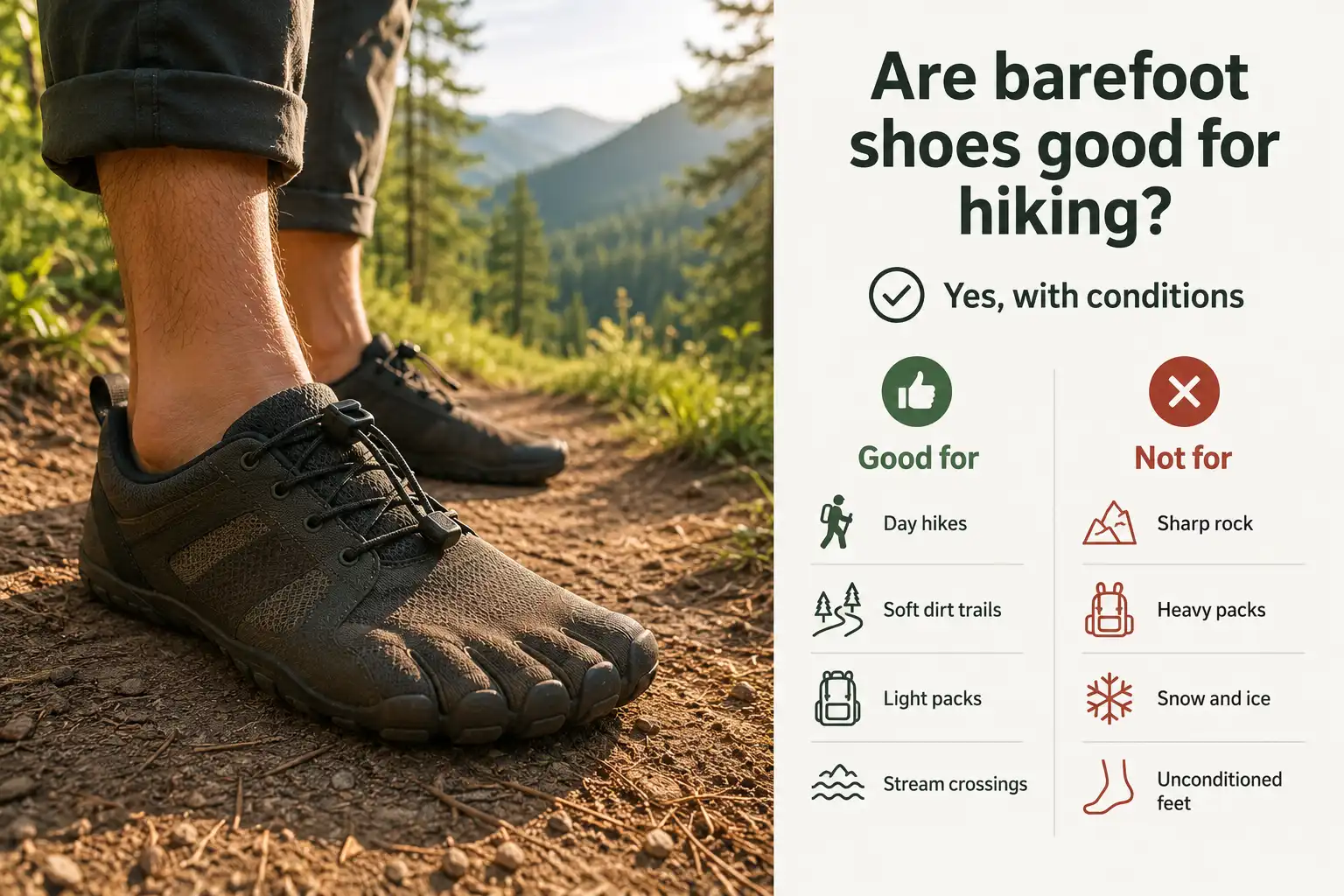
Barefoot shoes are good for hiking in specific conditions, not in all of them. They work well on day hikes over dirt, grass, and moderate trails, provided your feet are already conditioned for them. However, they perform poorly under heavy packs, on sharp rock, and in cold or snowy weather.
What makes a shoe a barefoot shoe?
A barefoot shoe has four features that separate it from a normal hiking shoe.
- Zero drop. The heel and the forefoot sit at the same height off the ground.
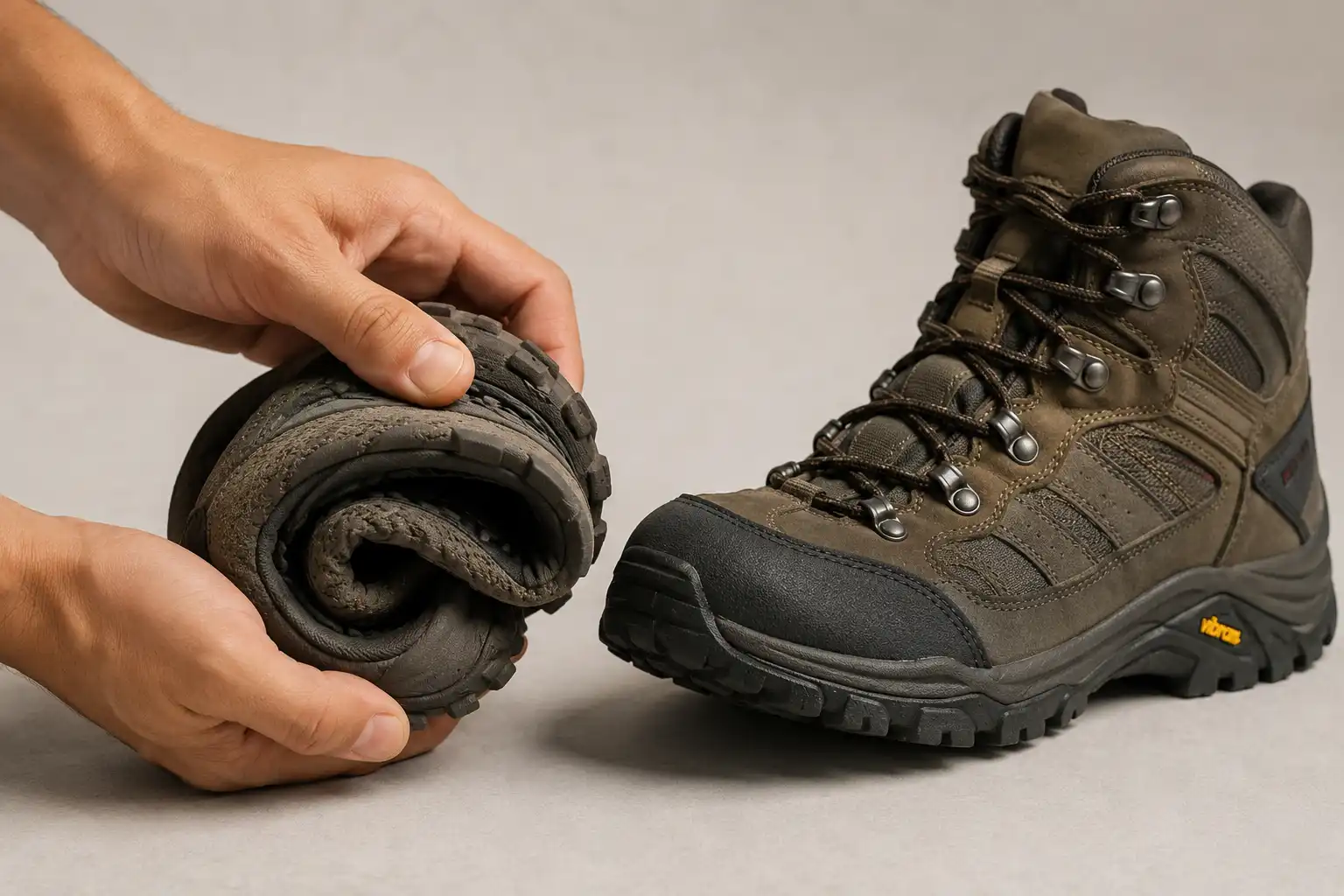
- A thin, flexible sole. Most models keep less than about 10 millimeters of material under your foot, and you can usually roll the shoe into a ball.
- A wide toe box. The front is shaped like a foot, so your toes spread instead of pressing together.
- No arch support or motion control. Instead, your own foot muscles do that work.
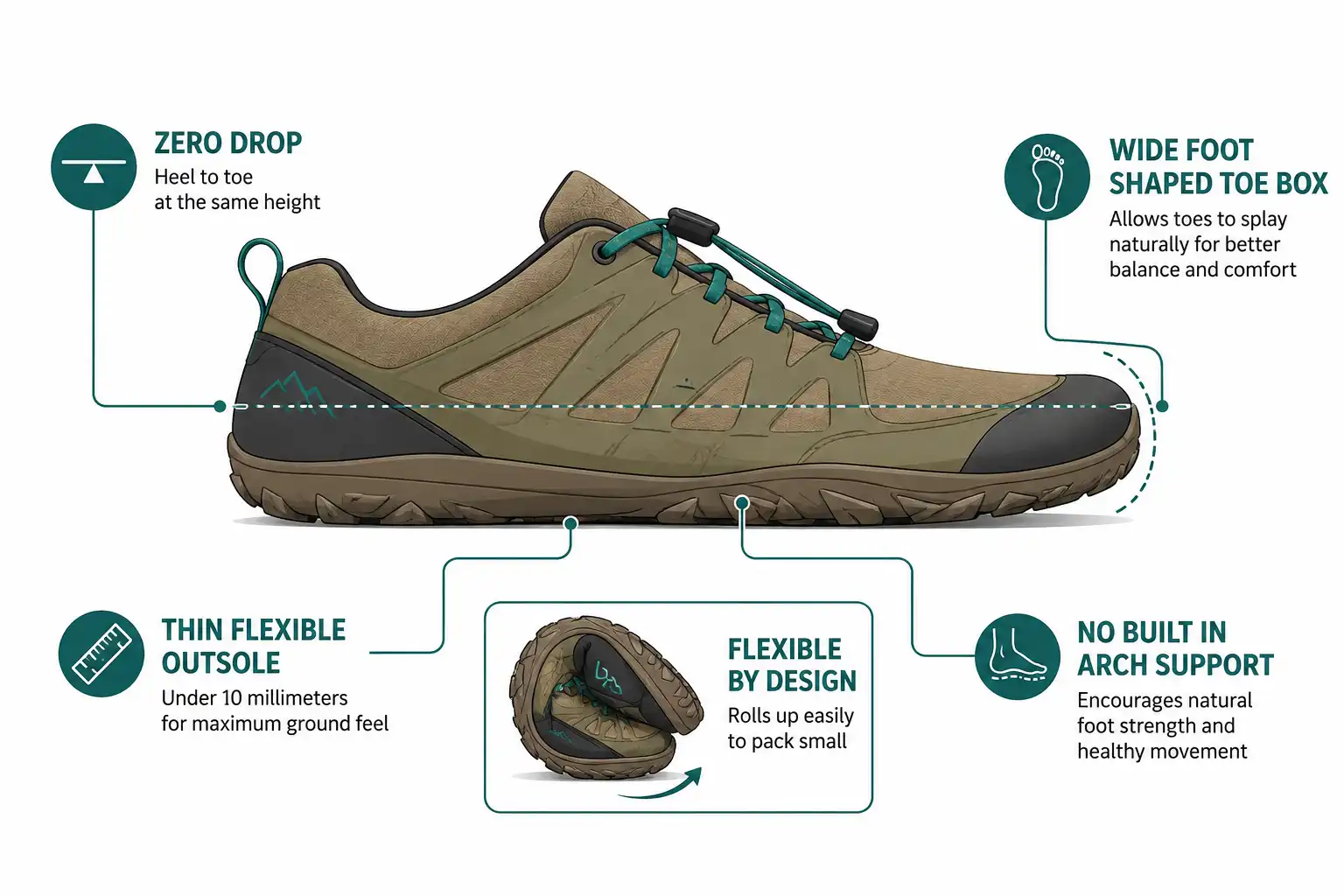
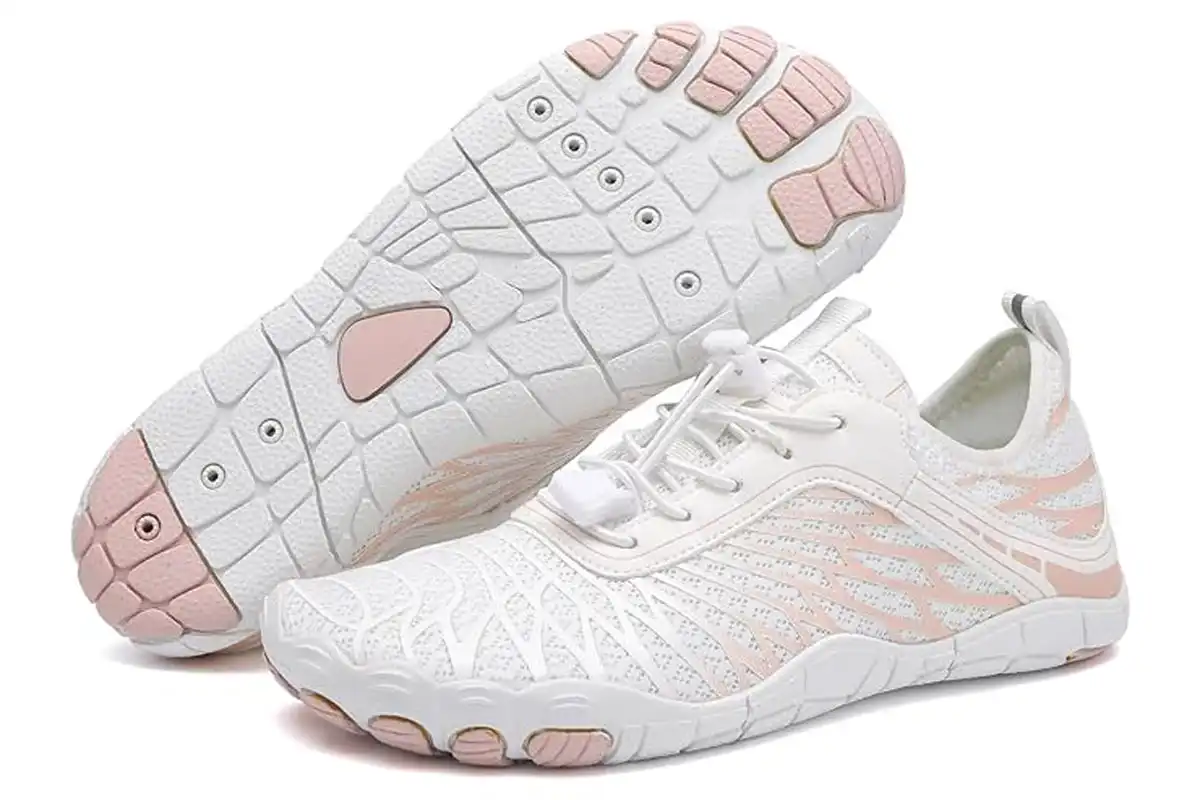
Zero drop alone does not make a shoe barefoot. Several popular zero drop trail shoes carry thick cushioning, so they feel nothing like a minimalist model. Water shoes also sit in a separate group, because their soft soles give you almost no grip on a slope. Example of Barefoot shoes from Barezoey brand:
What do barefoot shoes do well on the trail?
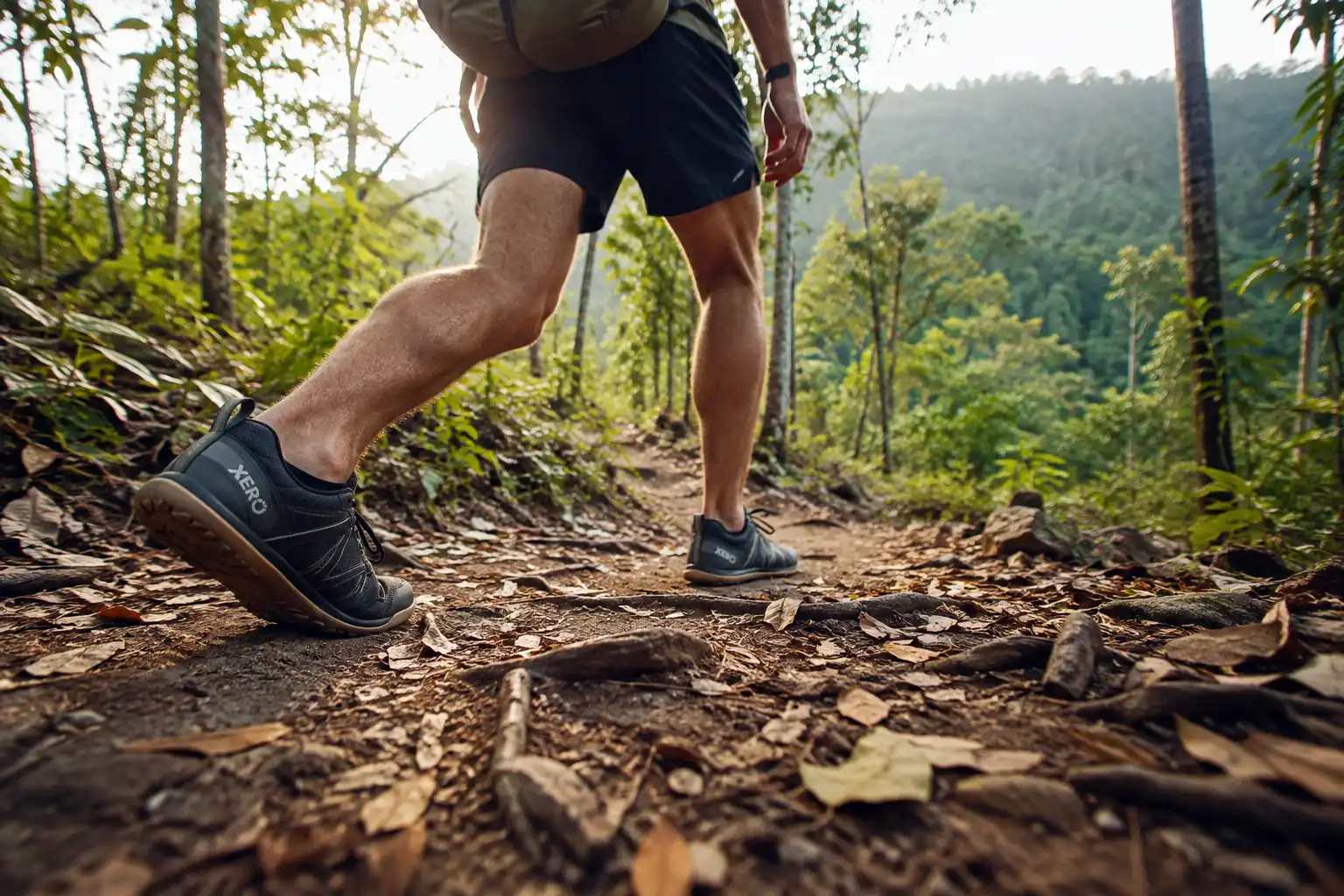
Barefoot shoes give you ground feel, toe room, low weight, and fast drying. Those four things matter more on trail than most people expect.
Ground feel comes first. You sense roots, loose gravel, and the edge of a rock through the sole, so your body corrects balance faster. On slick clay in the hills, that feedback has saved me from more than one fall.
Toe splay matters next. Because the toe box is wide, your toes spread as you push off and as you brake. Consequently, you get fewer jammed toenails on long descents.
Weight is the third benefit. A pair of barefoot shoes weighs far less than a pair of leather boots, so your legs stay fresher hour after hour. They also pack flat, which makes them a useful second pair for camp or for river crossings.
Fast drying rounds it out. Thin mesh uppers drain within minutes after a crossing, while a soaked boot can stay heavy for the rest of the day.
Where do barefoot shoes fall short?
Barefoot shoes fall short on protection, load carrying, and cold. Each gap has a clear cause.
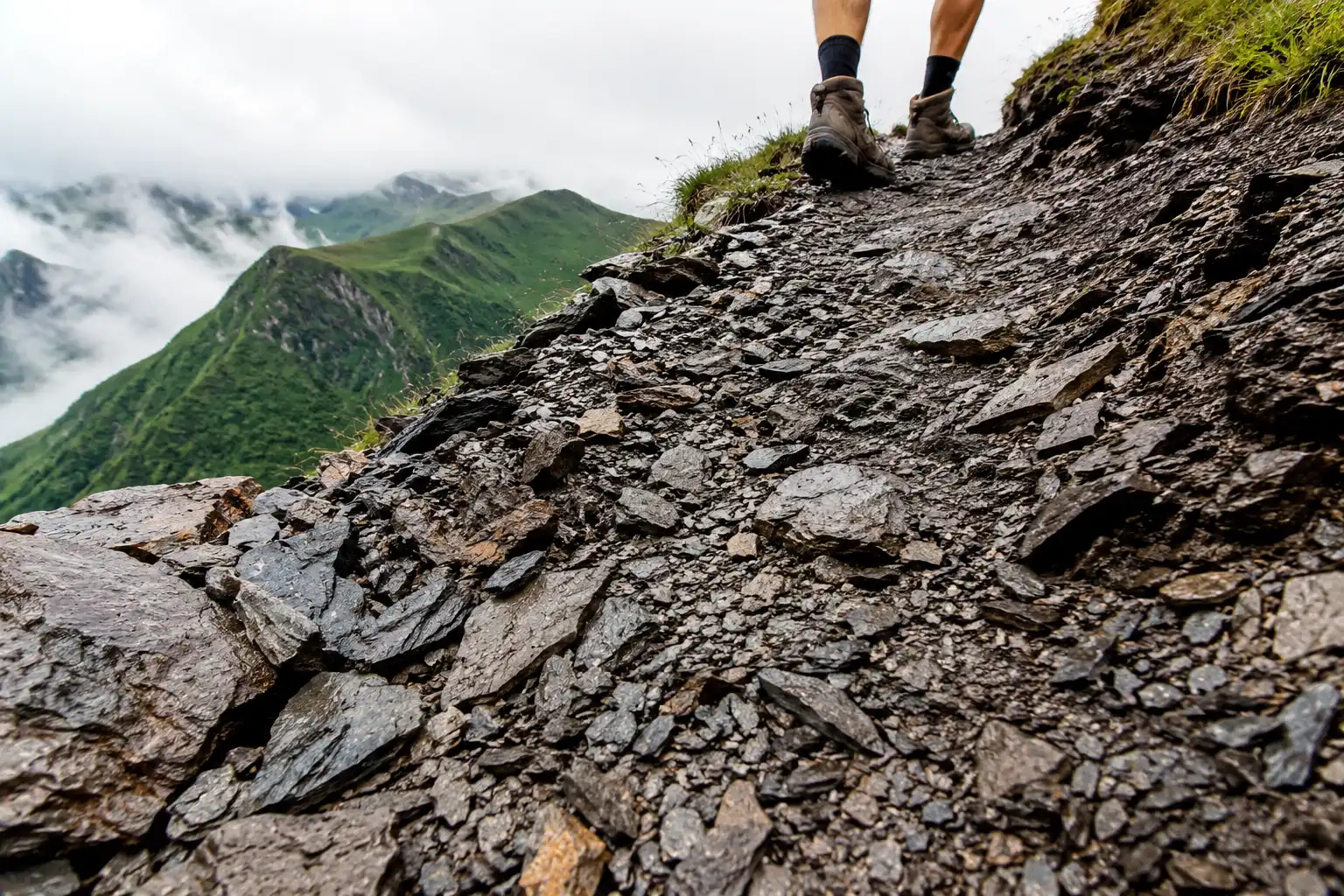
Sharp rock creates the biggest problem. A thin sole passes point pressure straight into your foot, so a single stone bruise can end a hike early. Scree, broken shale, and coarse gravel roads all punish minimalist soles.
Pack weight creates the second. Every extra kilo pushes more force through your forefoot at each step. So before you try a loaded hike in thin shoes, get clear on what a sensible loaded pack weight looks like for your body and your trip.
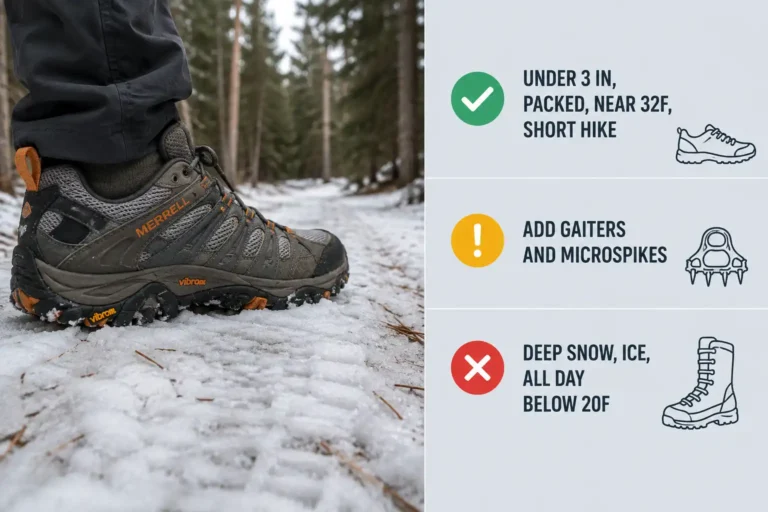
Cold is the third. Thin uppers block little wind, and a few millimeters of rubber cannot stop frozen ground from pulling heat out of your feet.
Structure is limited elsewhere too. Most barefoot models skip the toe cap, the rock plate, and any ankle support. Therefore, kicking a hidden root or a cut bamboo stump hurts in a way that boots would have prevented.
Do barefoot shoes actually strengthen your feet?
Yes, and the evidence behind that claim is reasonably strong. Researchers at Brigham Young University tested 57 runners and found that eight weeks of walking in minimalist shoes increased foot muscle size and strength about as much as a dedicated foot strengthening program. Another study, published in Scientific Reports in 2021, followed adults who wore minimal footwear during daily activity for six months. Their foot strength rose by roughly 57 percent on average.
Stronger feet help you on trail. A stronger arch holds its shape late in the day, and stronger toes grip better on uneven ground. Balance often improves as well.
That strength arrives slowly, though. You cannot buy it with a new pair of shoes on Friday and then use it on Saturday.
What does the research say about injury risk?
Most of the injury risk shows up during the switch, not later. In a 2013 MRI study, researchers followed runners who moved into Vibram FiveFingers across a ten week transition. Ten of the nineteen in that group showed increased bone marrow edema, which is an early sign of bone stress, and two of them developed stress fractures. Meanwhile, the control group showed no comparable changes.
Those runners followed a planned, gradual program, and some still got hurt. Hikers tend to miss that detail. For this reason, several running clinicians now suggest around twenty weeks as a realistic transition window.
Hiking loads differ from running loads, so the numbers do not transfer directly. Even so, the lesson holds. Your bones adapt much slower than your enthusiasm does.
Which trails suit barefoot shoes?
| Terrain or condition | Verdict | Reason |
|---|---|---|
| Packed dirt, forest floor, grass | Works well | Even pressure, no sharp points |
| Day hikes with a light pack | Works well | Low load through the forefoot |
| Wet clay and mud | Depends on the outsole | Grip comes from lug depth, not sole thickness |
| Stream crossings and monsoon trails | Works well | Thin uppers drain and dry fast |
| Loose gravel, scree, broken rock | Poor choice | Point pressure and stone bruises |
| Long rocky descents | Poor choice | Braking force lands on unprotected forefoot |
| Snow, ice, and frozen ground | Poor choice | No insulation and no stiff platform |
| Multi day trips with a heavy pack | Poor choice | Sustained load with no cushioning |
Rock slabs sit in the middle. Thin rubber grips granite well, so many people like minimalist shoes for easy rock scrambling sections. The moment the rock turns sharp or broken, though, that same thin sole becomes a liability.
Who should skip barefoot shoes for hiking?
Skip barefoot shoes on trail if any of the following applies to you.
- You are carrying serious weight. Multi day loads and thin soles are a bad match.
- You have an active foot injury. Plantar fasciitis, Achilles pain, or a recent stress fracture all need a professional opinion first.
- You have reduced sensation in your feet. Nerve damage from diabetes, for example, makes puncture and bruise protection important.
- Your trip starts soon. A new pair three weeks before a big trek is asking for trouble.
- You are brand new to hiking. Start with a stable platform instead, and use my comparison of hiking boots versus low cut hiking shoes to pick a first pair.
None of this means barefoot shoes are bad. It means they demand preparation that most hikers have not done yet.
How do I switch to barefoot shoes safely?
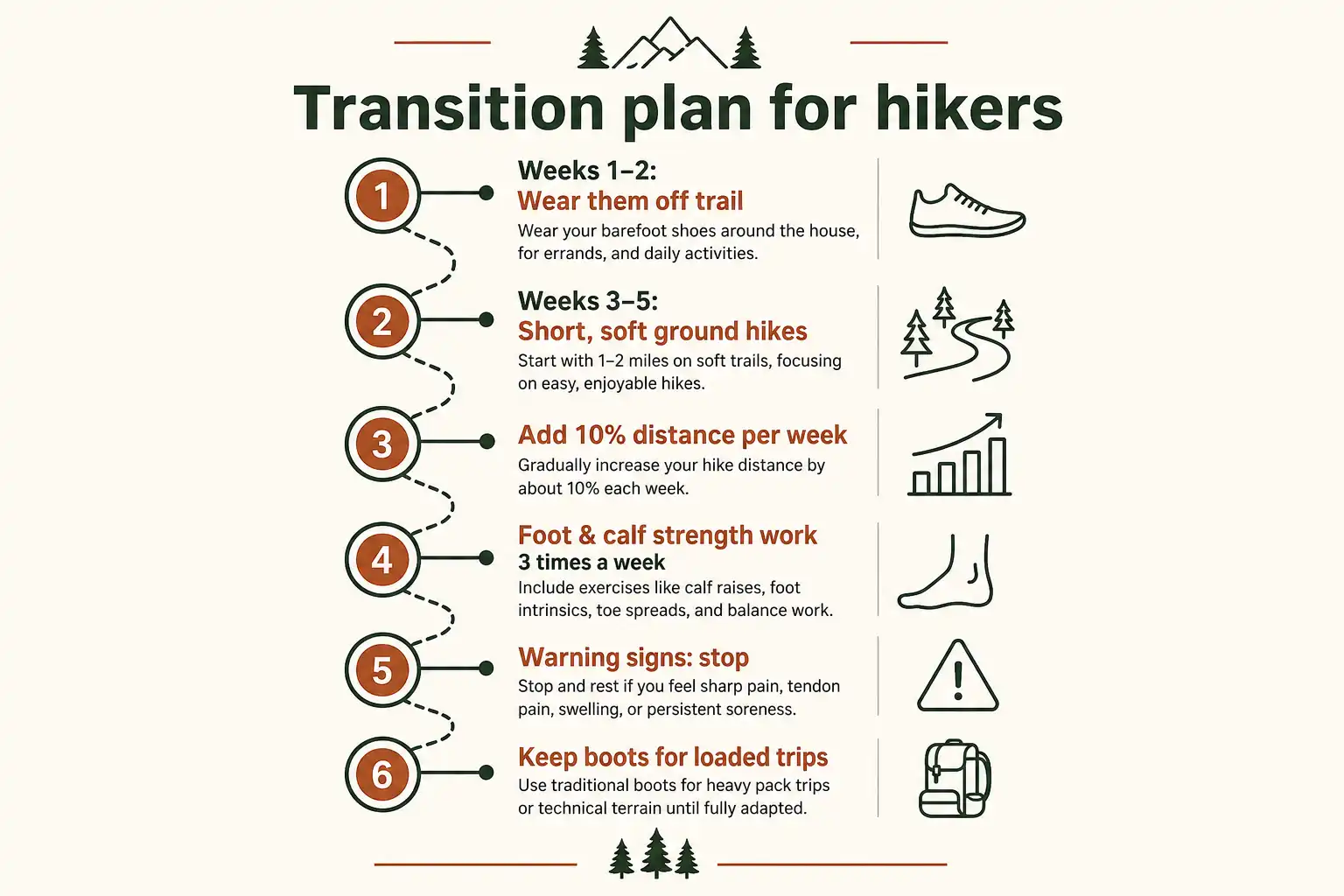
Give the switch two to three months, and build up in stages. Here is the progression I recommend.
- Wear them off trail first. Spend two to four weeks in them around town, at work, and on errands.
- Add short, soft hikes. Start with one or two miles on dirt or grass, never on rock.
- Build slowly. Add roughly ten percent more distance per week, and keep one rest day between longer walks.
- Train your feet directly. Calf raises, toe spreads, and single leg balance work three times a week speed things up.
- Watch for warning signs. Pinpoint pain on the top of the foot, morning heel pain, or a sore spot on one bone means stop and rest.
- Keep your old shoes. Use boots for loaded trips until a full season of easy hikes feels comfortable.
Foot care matters more in thin shoes, since your skin takes more of the load. Thin, snug socks and a quick tape job on hot spots help you keep blisters from forming on the trail.
What should I look for in a barefoot hiking shoe?
Look at the outsole first, then the toe box, then the upper. Those three decide how the shoe performs on trail.
Outsole rubber and lugs. Deep, widely spaced lugs shed mud and bite into soft ground. Sticky rubber compounds hold better on wet rock. A road style barefoot shoe with a flat outsole will slide on a hill trail.
Sole thickness. Thicker minimalist soles, in the six to ten millimeter range, protect better on stony ground. Very thin soles feel great on dirt and painful on gravel.
Toe box shape. Measure the width of your forefoot and compare it against the brand’s size chart. Because sizing varies a lot between brands, the chart matters more than your usual number. My guide on whether hiking shoes should feel tight or loose covers the fit checks I use.
Upper material. Mesh drains fast and dries fast. Leather lasts longer and blocks thorns better. Waterproof membranes hold water in once it gets over the collar, which makes them a poor pick for monsoon trails.
Optional rock plate. Some hiking specific barefoot models add a thin protective layer. You lose a little ground feel, yet you gain real protection on rocky trails.
How I use barefoot shoes in the hill tracts
I hike mostly around Kaptai, and the trails near Boga Lake and Keokradong. Honestly, I do not use minimalist shoes as my main trekking footwear there. The ground has too many cut bamboo stumps, sharp shale, and hidden roots under leaf litter.
Where they earn their place is on shorter local walks, on lakeside trails, and as a second pair for river crossings around Remakri. They dry before the boots do, and they weigh almost nothing in the pack.
One more note from experience. On steep hill descents, thin soles put more work on your calves and quads, which changes how your knees feel by evening. If your knees already complain on steep downhill sections, test that on short hikes before committing to a long one.
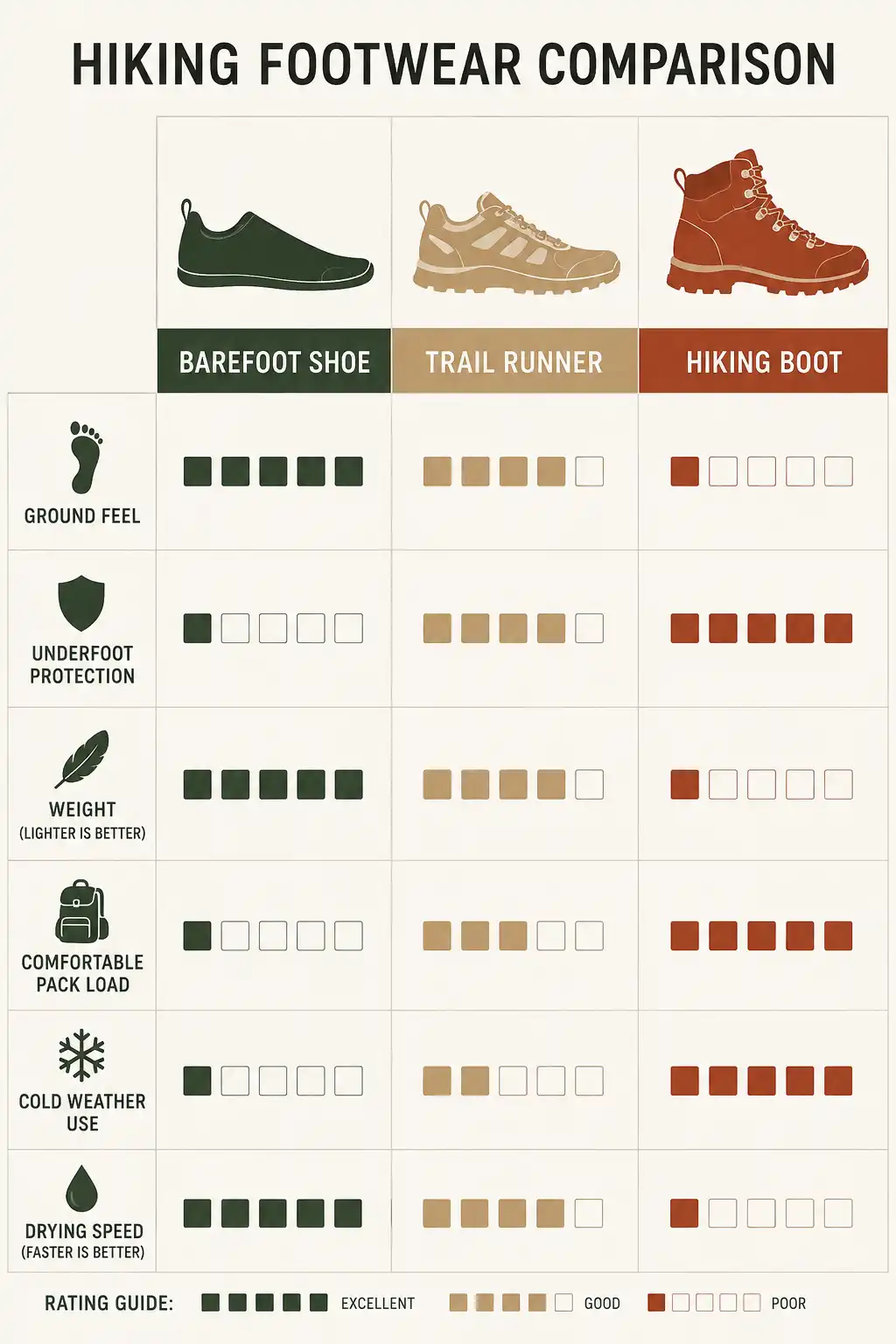
Barefoot shoes vs hiking boots vs trail runners
| Feature | Barefoot shoes | Trail runners | Hiking boots |
|---|---|---|---|
| Ground feel | Highest | Medium | Lowest |
| Underfoot protection | Lowest | Medium | Highest |
| Weight | Lightest | Light | Heaviest |
| Comfortable pack load | Light only | Light to medium | Medium to heavy |
| Break in time | None, but feet need conditioning | Short | Longer |
| Cold weather use | Poor | Fair | Good |
| Drying speed | Fastest | Fast | Slowest |
| Best use | Short day hikes on soft ground | Fast day hikes and light overnights | Loaded, rocky, or cold trips |
Trail runners sit between the two extremes, and that is why so many long distance hikers choose them. You get some cushioning, a flexible sole, and decent grip without the weight of a boot.
FAQs on Barefoot Shoes for Hiking

Can you hike long distances in barefoot shoes?
Are barefoot shoes good for hiking with a heavy backpack?
Do barefoot shoes help with knee pain?
Are barefoot sandals a reasonable hiking option?
How long do barefoot hiking shoes last?
Final thoughts
Barefoot shoes are a good hiking option for the right hiker on the right trail. Give your feet two or three months to adapt, keep the loads light, and pick soft ground while you build up. Then decide honestly whether the ground feel and toe room are worth the lost protection. For rocky routes, heavy packs, and cold trips, I still reach for boots, and I do not think that is likely to change soon.