Are Compression Socks Good for Hiking? What the Research Shows

Compression socks show up in a lot of hiking packs now. I get asked about them often, usually by people who finish a long day with swollen ankles. So this guide covers what compression socks do on trail, what the research supports, which pressure level to pick, and who should skip them.
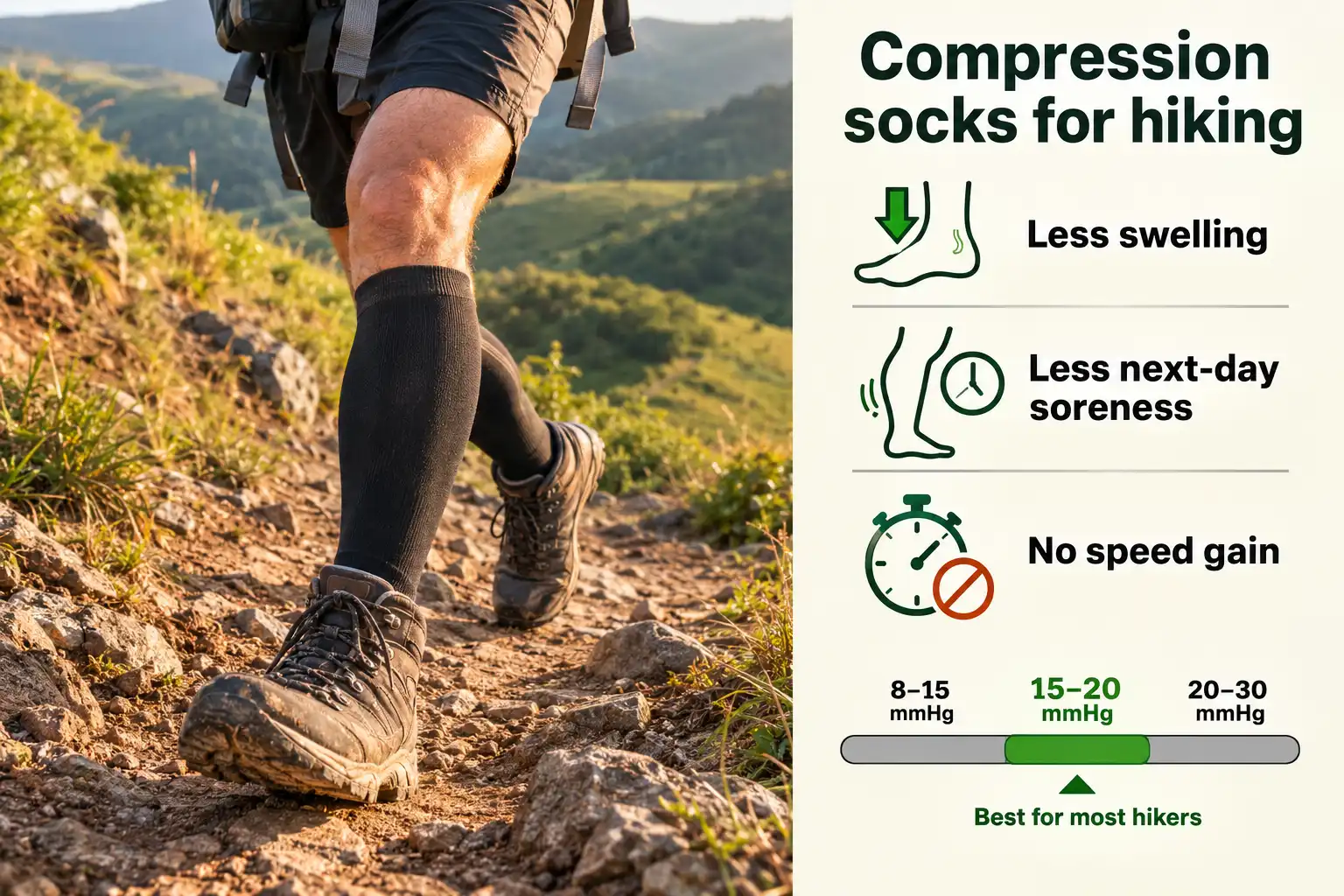
Yes, compression socks are good for hiking, though not for the reason most people expect. They will not make you climb faster. Instead, they hold down ankle and lower leg swelling on long days, and they leave your calves feeling less beaten up the next morning. On multi-day treks and steep descents, that trade is worth it.
What do compression socks actually do?
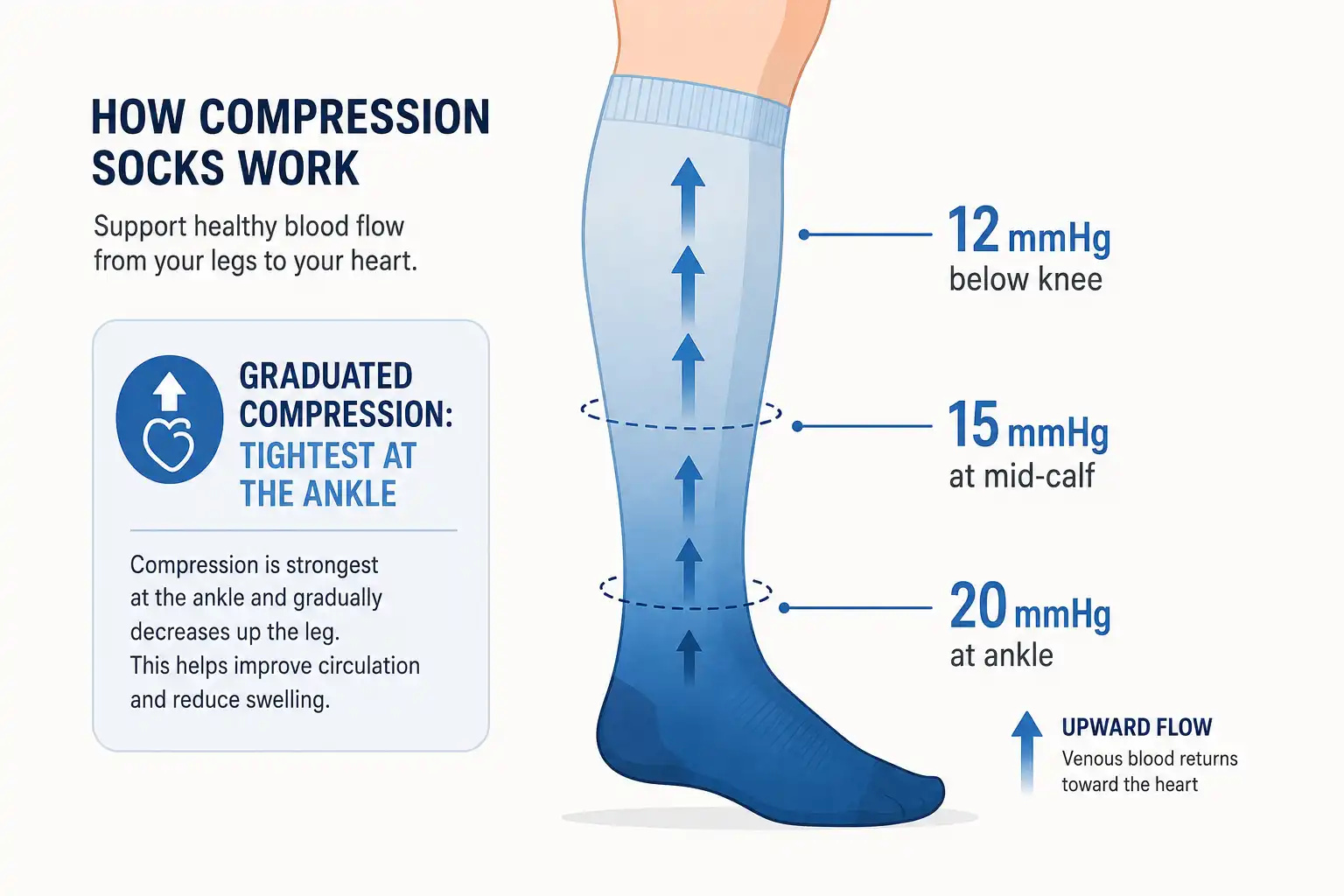
Compression socks press on your lower leg so blood returns toward your heart more easily. Quality pairs use graduated compression, which means the squeeze is strongest at the ankle and eases as the sock climbs your calf. Your heart sends blood down to your feet without much effort. Pushing it back up is the harder job, especially after eight hours upright on a trail.
Two other effects matter on rough ground. First, the fabric limits how much your calf muscle vibrates each time your foot lands. Second, the snug fit sharpens the feedback your ankle sends about foot placement, which helps on loose rock. Neither effect is dramatic on its own. Together, though, they explain why a long descent feels slightly less punishing in compression.
Also know: Hiking in Normal Shoes
Do compression socks improve hiking performance?
No, compression socks will not make you faster or let you go farther. A 2025 systematic review pooled 51 studies covering 899 runners, and it found no meaningful gain in race time or time to exhaustion. Another 2025 meta-analysis of 28 trials landed in the same place. Heart rate, blood lactate, perceived effort, and speed all looked the same as in ordinary socks.
One finding did hold up, however. Compression clearly reduced soft tissue vibration in the legs. So the claim about controlling muscle bounce has support, yet it never turned into a faster time. Treat any brand promising a performance boost with suspicion.
Do compression socks help you recover after a hike?
Yes, and this is where the evidence gets stronger. A meta-analysis of 12 studies looked at compression garments worn after damaging exercise. It found a moderate drop in delayed onset muscle soreness, plus a quicker return of strength and power. Then a 2025 review of 27 studies reported smaller but still positive effects on strength recovery.
Newer work is more cautious, though. A 2026 review of endurance athletes concluded that the soreness benefit points in a favorable direction, yet it rests on small studies with weak blinding. Here is my honest read. Compression will not repair muscle damage faster. It does make your legs feel usable the next morning, and on day three of a trek that counts for plenty. Sore quads on descents respond better to managing knee pain on steep downhills than to any sock.
What compression level is best for hiking?
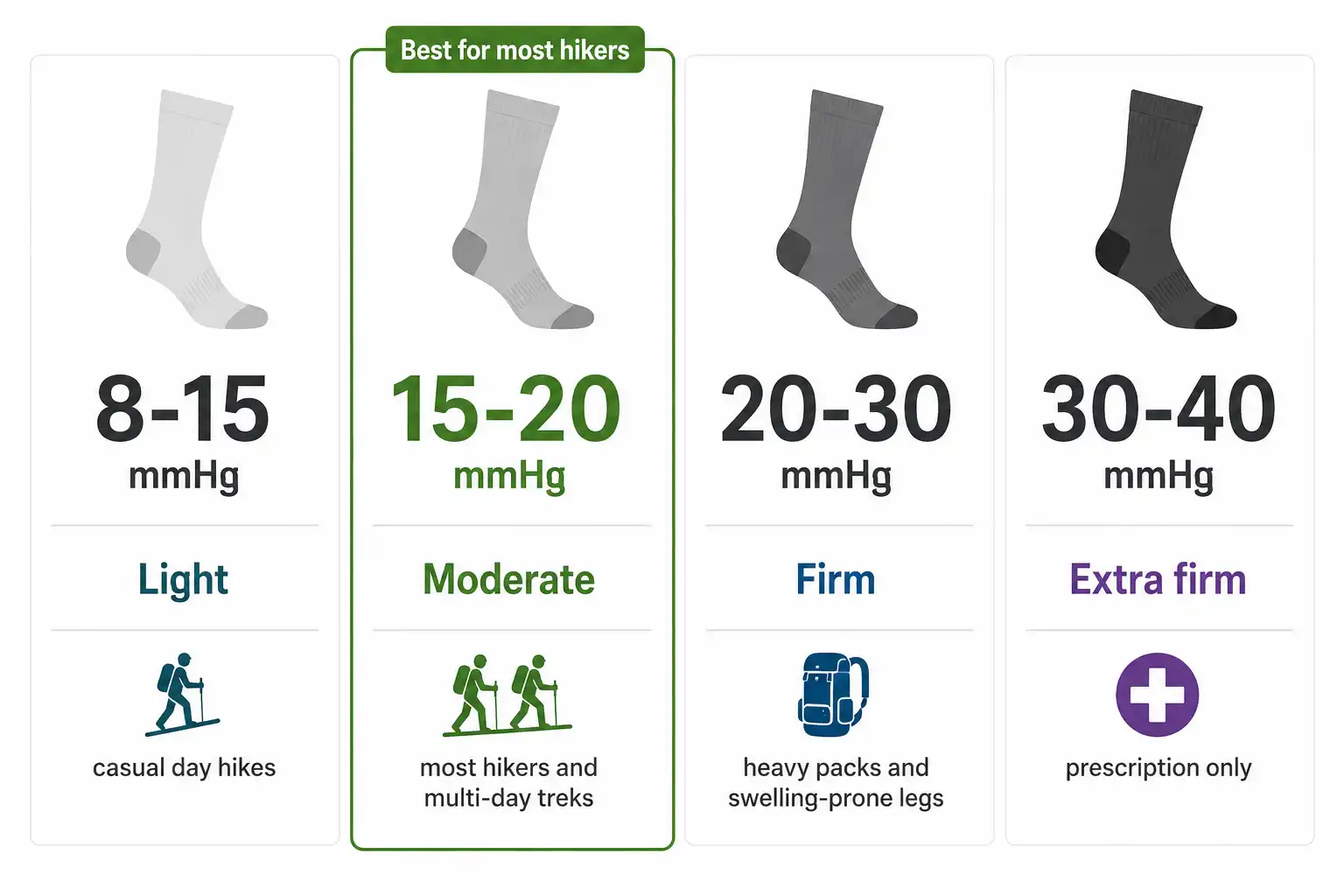
For most hikers, 15 to 20 mmHg works best. Brands measure compression in millimeters of mercury, the same unit doctors use for blood pressure. So a higher number means a firmer squeeze.
| Compression | Pressure | Who it suits |
|---|---|---|
| Light | 8 to 15 mmHg | Casual day hikes, mild leg fatigue, first-time users |
| Moderate | 15 to 20 mmHg | Most hikers, long day hikes, multi-day treks, flights |
| Firm | 20 to 30 mmHg | Heavy packs, big elevation days, hikers prone to swelling |
| Extra firm | 30 to 40 mmHg | Prescription only, for diagnosed medical conditions |
Start moderate if you have never worn a pair. Firm socks feel fine to some people and unbearable to others, so there is no sense in paying for pressure you will strip off at lunch. Anything above 30 mmHg belongs in a doctor’s hands, not on a gear list.
Compression socks vs regular hiking socks
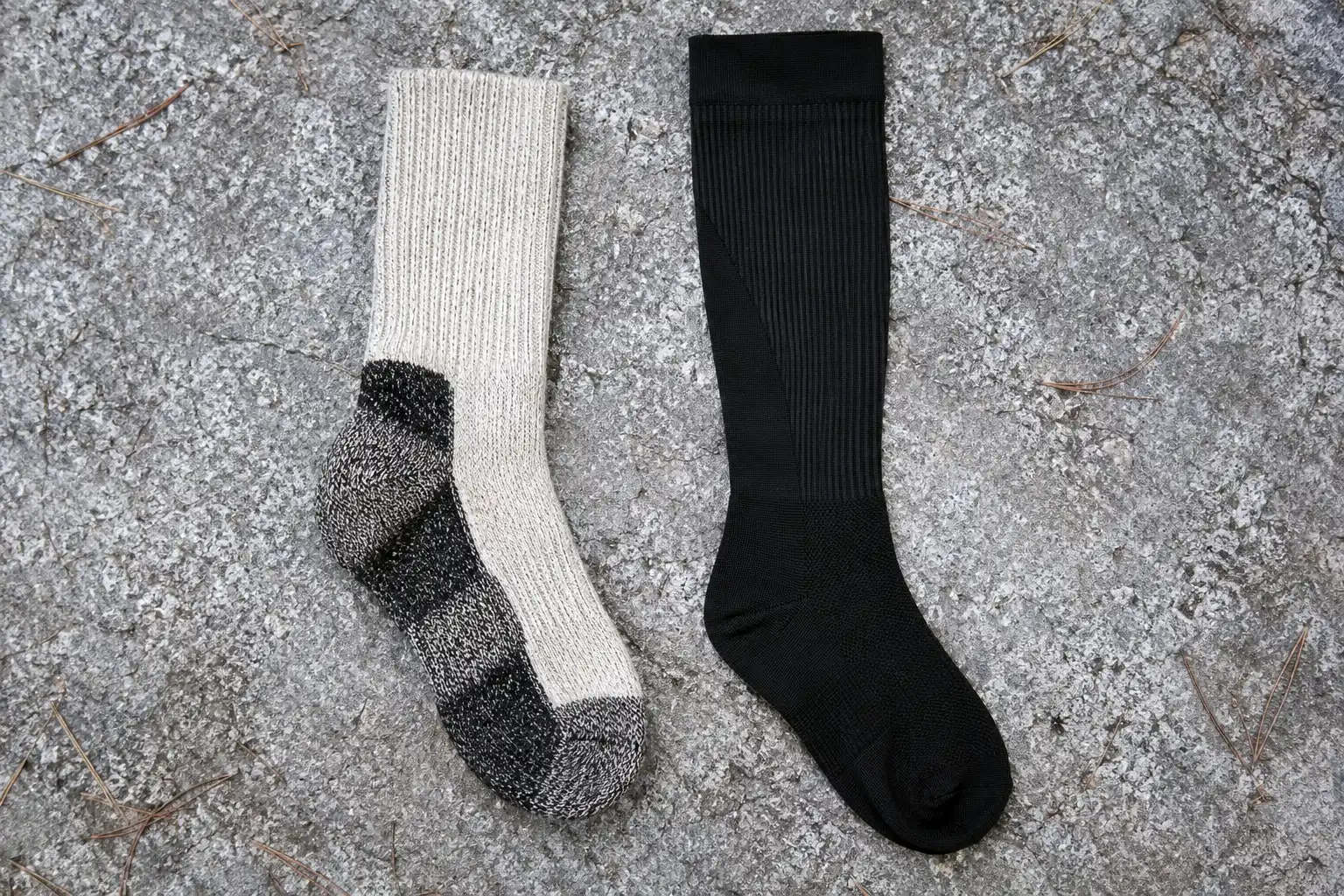
Regular hiking socks and compression socks solve different problems. A merino hiking sock manages moisture, adds cushioning, and cuts friction inside your boot. A compression sock manages blood flow and swelling instead. Because of that, a thin compression sock inside a stiff leather boot can feel harsh underfoot after a few miles.
Some brands now build both jobs into one sock, with graduated pressure plus cushioning at the heel and forefoot. Those hybrids are what I recommend for actual hiking days. Otherwise, keep your cushioned pair for the trail and save plain compression for camp and travel. Fabric and fit still carry most of the comfort load, so it helps to know what a proper hiking sock changes on a long day before you swap anything out.
Who benefits most from compression socks?
Some hikers notice a clear change, while others feel almost nothing. You are likely in the first group if:
- Your ankles and feet swell on long days or in heat
- You carry a heavy pack over big elevation gain
- You hike several days back to back with no rest day
- You have varicose veins or a history of leg swelling
- You stand all day at work and already deal with tired legs
- You fly long-haul to reach your trailhead
Younger hikers on short, flat trails rarely notice much. Anyone dropping a thousand meters with a loaded pack usually does. On the Keokradong route in Bandarban, the climb never bothers my calves. The long descent back toward Boga Lake does, and compression is the one thing that changes how my legs feel that evening. Poles help even more on that stretch, so spreading the load off your legs with poles is worth pairing with them.
Who should avoid compression socks?
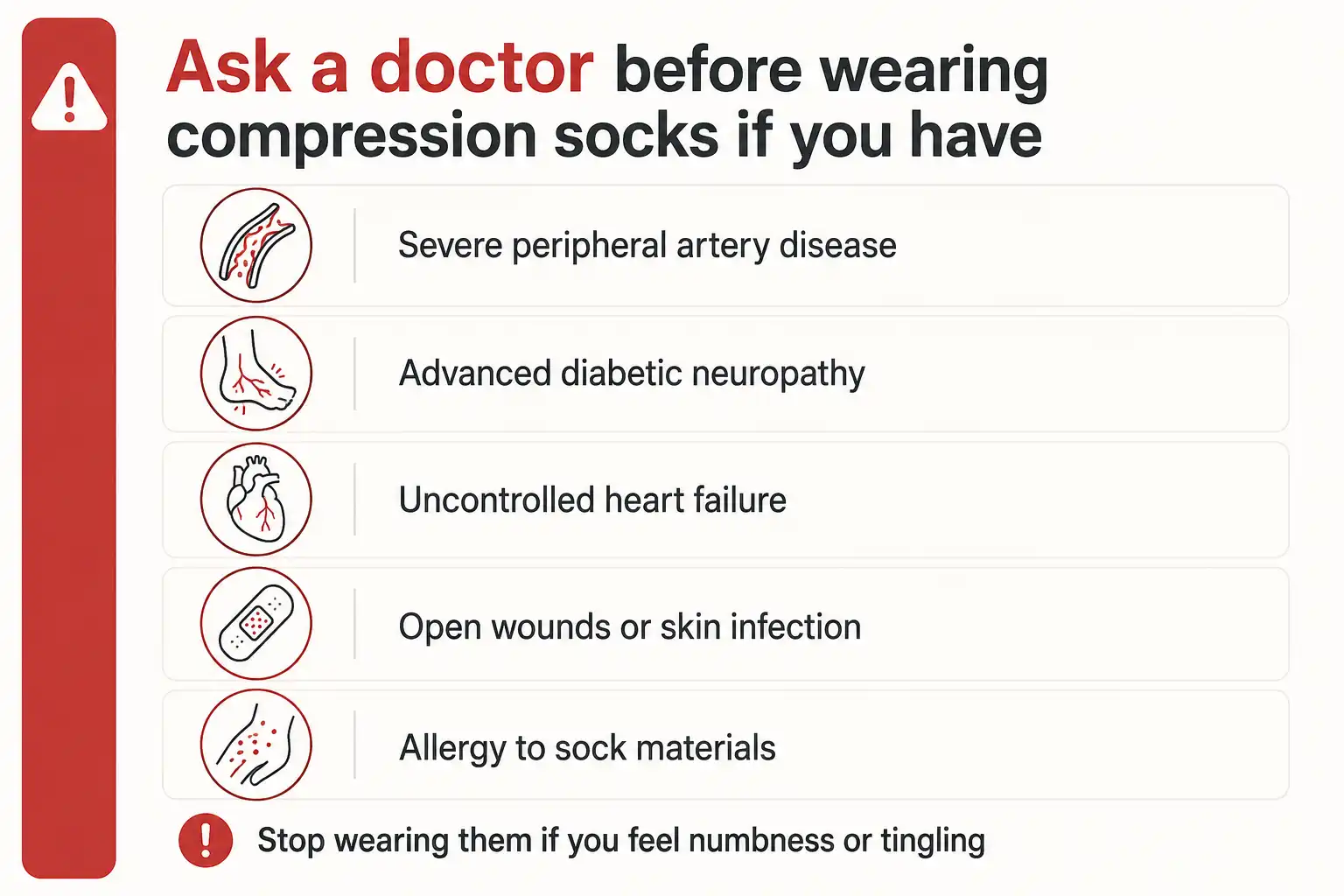
Some people should not wear compression socks without medical clearance. Compression presses on tissue, so it can cause harm when circulation or sensation is already compromised. Skip them, or talk to a doctor first, if you have any of these:
- Severe peripheral artery disease or poor arterial flow in the legs
- Advanced diabetic neuropathy or reduced sensation in your feet
- Uncontrolled congestive heart failure
- Open wounds, ulcers, cellulitis, or an active skin infection on the leg
- A known allergy to sock materials or dyes
Reduced sensation is the risk hikers underestimate. If you cannot feel a wrinkle pressing into your skin, a bunched sock can create a pressure sore over several hours and you will never notice it happening. Therefore, anyone with numb feet should check their skin at every break.
Do compression socks prevent blisters?
Not directly. Blisters come from friction, heat, and moisture inside your boot, so pressure alone does not stop them. A snug sock that stays put reduces sliding, which helps a little, but poor boot fit still wins every time.
Fix the shoe first, then fix the sock. Getting your hiking boot fit right matters far more than any fabric you put inside it. After that, keeping blisters off your feet on trail comes down to moisture control, lacing, and treating hot spots early.
How to fit compression socks correctly
Fit decides whether compression works at all. Measure your ankle at its narrowest point and your calf at its widest point, then match those numbers to the brand’s size chart. Shoe size alone will not do, since two people with identical feet can have very different calves.
Then follow four rules on trail:
- Pull the sock all the way up. Never roll or fold the top down, because that creates a tight band that blocks flow.
- Smooth out every wrinkle before your boot goes on.
- Put them on in the morning, before your legs swell.
- Take them off if you feel numbness, tingling, or pins and needles.
Should you sleep in compression socks at camp?
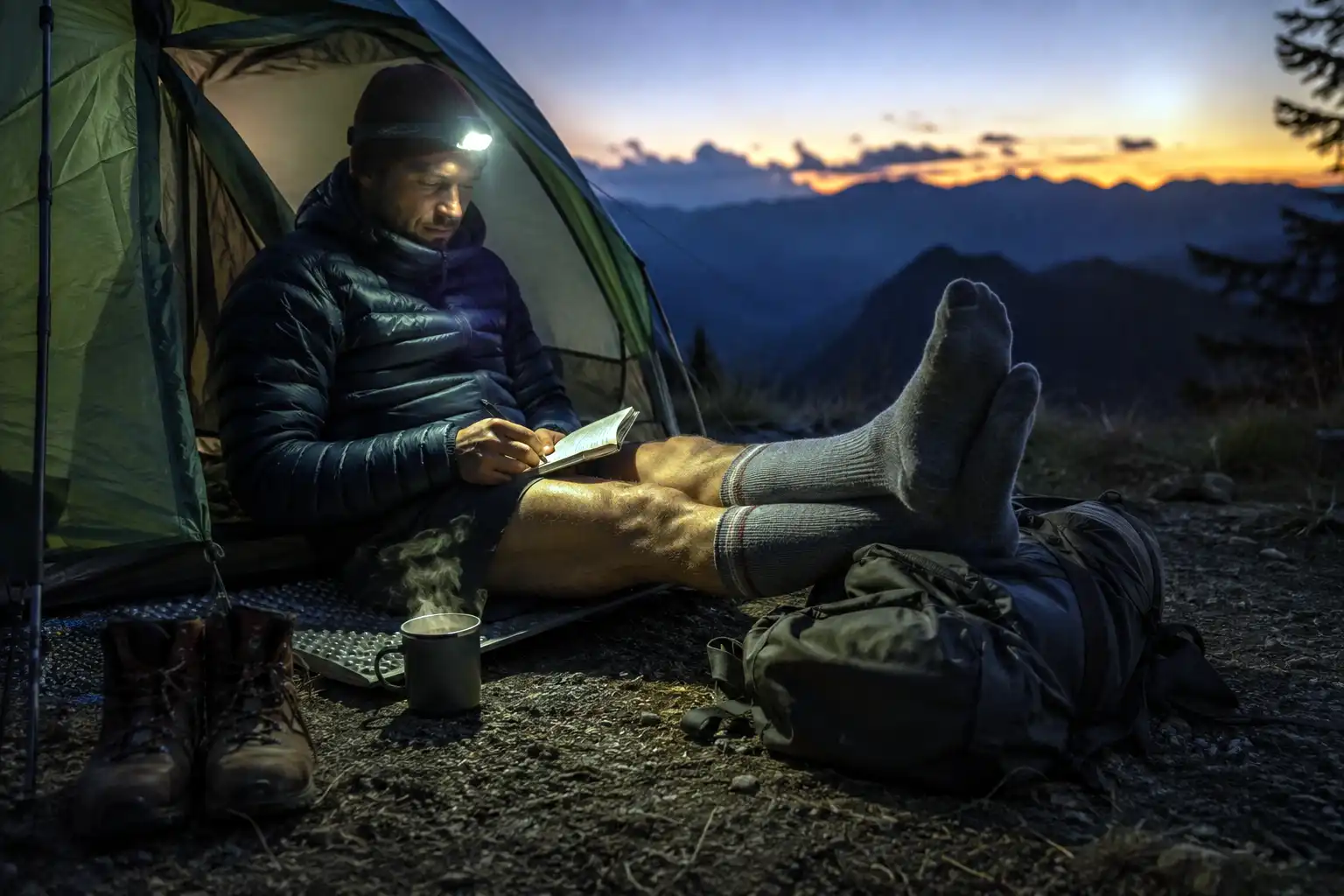
Usually not. Lying flat already lets blood drain out of your legs, so the sock has little work left to do overnight. Wearing them for an hour or two with your feet propped up after a hike makes more sense.
That said, some hikers do sleep in light compression on multi-day trips and swear by it. Keep the pressure low, watch for deep marks on your skin, and stop if your feet turn cold or numb.
Compression socks for travel days
Long flights are where compression earns its strongest evidence. A Cochrane review pooled 12 trials and 2,918 passengers. It found high-certainty evidence that graduated stockings cut the risk of symptomless deep vein clots on flights over four hours. Passengers who wore them also had less leg swelling.
So if you fly to a trailhead, pack a 15 to 20 mmHg pair in your carry-on. Then wear them on the plane, and on long bus rides too. Arriving with fresh legs helps more than most people expect, which is also why handling jet lag before a multi-day trek deserves a plan of its own.
How long do compression socks last?
Compression fades as the elastic breaks down. Most brands suggest replacing a regularly worn pair every three to six months, and heavy trail use shortens that further. Wash them after every hike in cool water with mild soap, then air dry them away from direct heat. Machine drying kills the elastic fastest.
Replace them once they slide on easily. A pair that no longer takes effort to pull up has stopped compressing anything.
FAQs on Compression Socks for Hiking

Can you hike in medical compression stockings?
Are calf sleeves as good as compression socks?
Should you wear compression socks uphill or downhill?
Do compression socks keep your feet warm?
The bottom lines
Compression socks earn their place on long, loaded, or multi-day hikes. They will not add speed, so ignore any brand that promises it. What they do give you is less swelling by evening, less soreness in the morning, and solid protection on the flight to your trailhead. Start with a 15 to 20 mmHg pair sized by your actual calf measurement. Then wear them for the full hike, keep the fabric smooth, and check with a doctor first if you have circulation or nerve problems.