Do Hiking Socks Make a Difference? What Changes on the Trail

New hikers ask me this every season. They save up for boots, then pull on whatever socks sit in the drawer. Here is what hiking socks actually do, what the research supports, and how to pick a pair that earns its price.
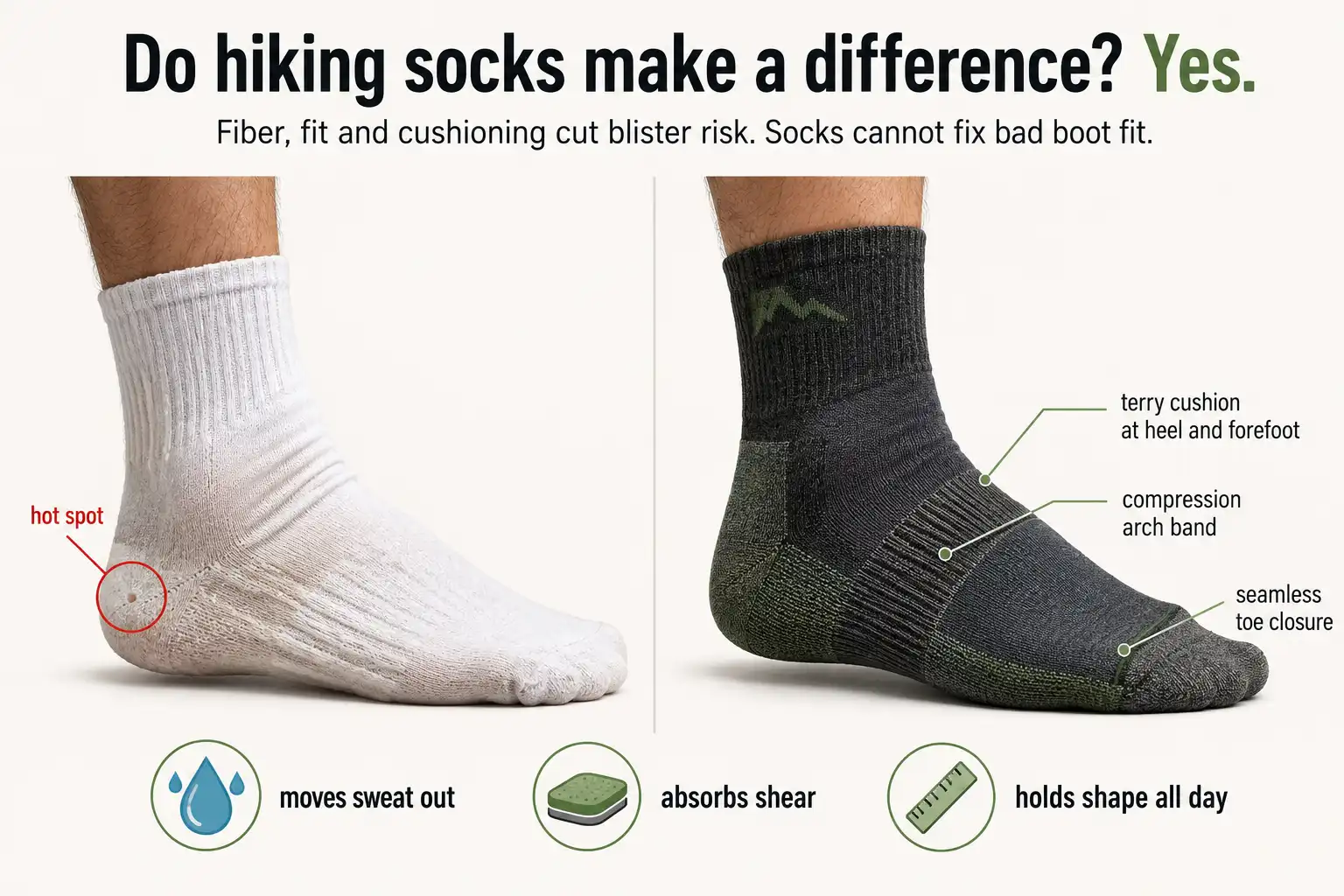
Hiking socks make a clear difference. They move sweat off your skin, cushion the spots that take repeated impact, and hold their shape for hours. Blisters need friction, moisture, and repetition together, so socks that reduce two of the three lower your risk. Still, no sock fixes badly fitting boots.
What makes a hiking sock different from a regular sock?
Fiber, knit, and shape separate the two. Regular socks usually rely on cotton, which soaks up sweat and holds it against your skin. Hiking socks use merino wool, synthetic fiber, or a blend, so moisture moves outward instead of pooling under your heel.
Construction matters just as much as the material. Good hiking socks include:
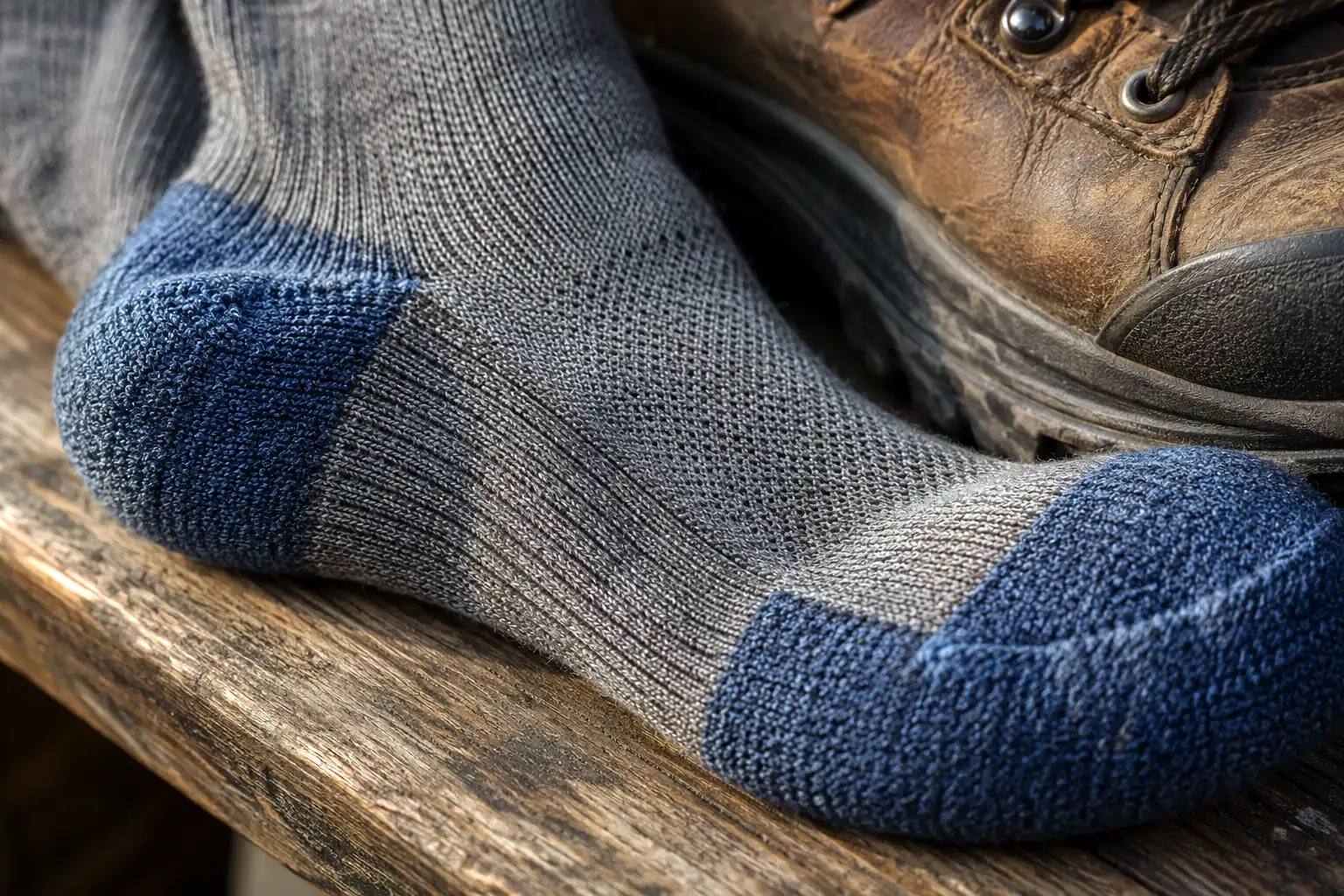
- Terry loop cushioning under the heel and forefoot, where impact lands hardest.
- A thinner knit across the top of the foot, so your boot does not feel tighter than it should.
- Compression through the arch, which stops the sock sliding forward on descents.
- A shaped heel pocket that keeps the padding under your actual heel.
- Flat or seamless toe closure, because one raised seam concentrates pressure on a tiny patch of skin.
- Some elastane in the blend, which holds the shape through a long day.
Basic socks skip all of that. After two hours of walking they stretch, bunch, and wrinkle. Then those wrinkles become pressure points, and pressure points become hot spots.
Do hiking socks really prevent blisters?
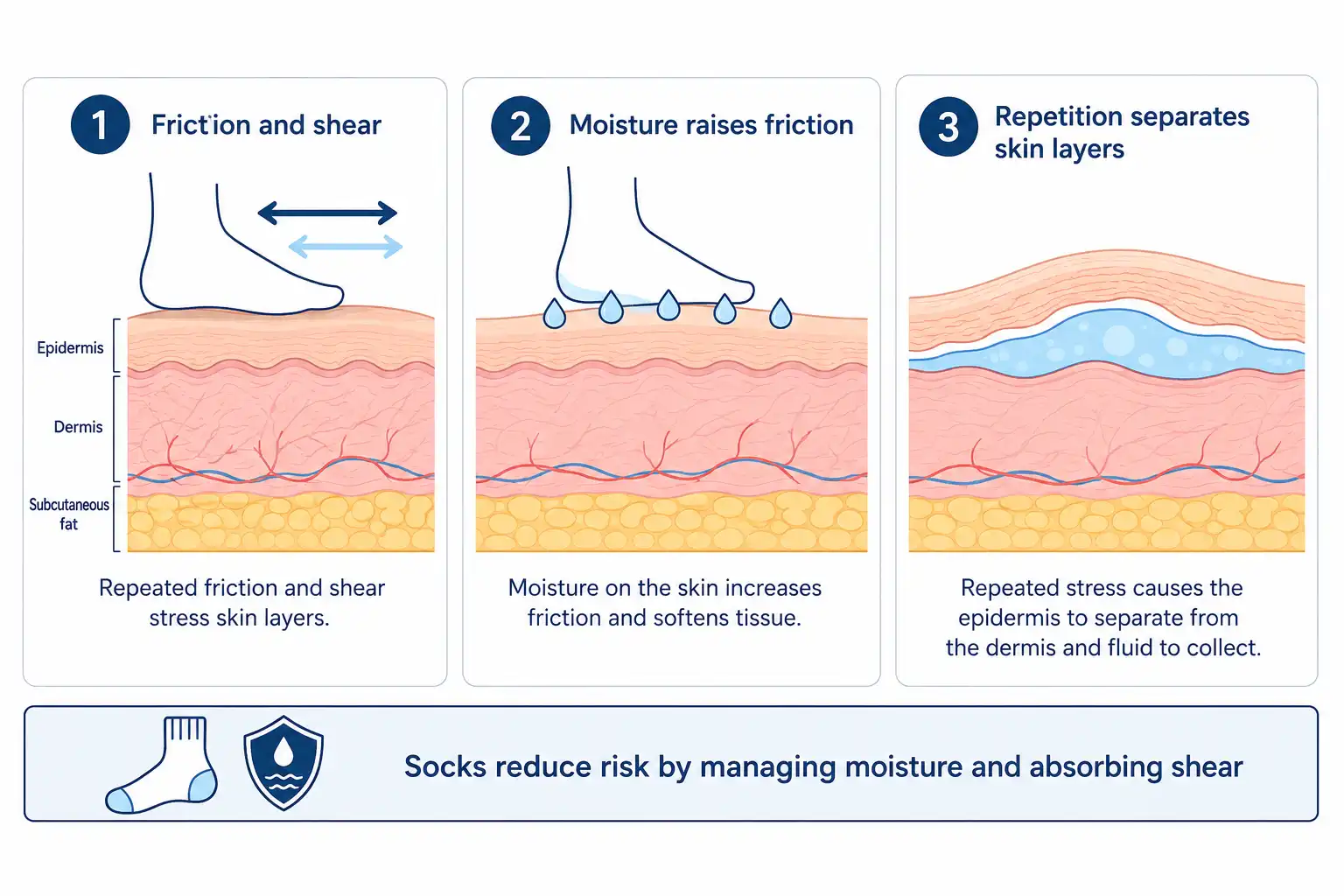
Hiking socks lower blister risk, though they never guarantee smooth feet. Blisters form when repeated shear force pulls skin layers apart and fluid fills the gap. Friction, moisture, and enough steps all have to line up first.
Moisture is the part socks control best. Damp skin grips damp fabric far harder than dry skin does, and lab testing shows friction at the sock and skin interface can more than double once the fabric turns wet. Therefore a sock that pushes sweat outward reduces friction before your foot starts to complain.
Cushioning works through a second route. Dense terry loops squash and shift with every step, so they absorb part of the shear that would otherwise reach your skin. Double-blind studies from the early 1990s found padded socks cut blister rates regardless of which fiber the socks used, which researchers did not expect at the time.
Fit closes the loop. A sock that slides inside your boot adds friction instead of removing it, so sizing and shape count as performance features. If your feet already blister often, my notes on stopping blisters on your feet before they form cover the taping and lubricant side too.
Which sock material works best for hiking?
No single fiber wins everywhere, so match the material to your conditions.
Merino wool blends
Merino absorbs a lot of moisture vapor, roughly 30 percent of its own weight, before your skin feels wet. Meanwhile the fine crimped fibers trap air, so merino insulates even when damp. It also resists odor for several days of wear, which helps on multi-day treks where washing is not an option. On the other hand merino dries slowly and wears out faster on its own, so almost every quality sock blends it with nylon and a touch of elastane.
Synthetic socks
Polyester, nylon, acrylic, and polypropylene absorb almost no water, usually under one percent of their weight. As a result they dry fast and resist abrasion better than wool. Synthetics suit hot weather, stream crossings, and monsoon hiking where nothing ever fully dries. The trade-off is odor. Synthetic socks smell after a single hard day, and the smell gets worse as the fibers age.
Cotton
Cotton is the one material I avoid for hiking. It holds sweat, loses all insulation once wet, stretches out of shape, and turns abrasive against your skin. Older studies comparing acrylic against cotton found fewer and smaller blisters in the acrylic group.
Silk, bamboo, and other options
Silk liners feel smooth and wick well, but they tear easily. Bamboo-based fibers wick reasonably, though merino still dries faster and controls odor better. For most hikers a merino nylon blend or a synthetic blend covers everything.
How much does sock thickness matter?
Thickness matters because it changes how your boot fits. A sock fills volume, so a thick pair inside snug footwear creates pressure and squeezes circulation. Cold toes often come from a tight boot, not from thin socks, since blood flow carries most of the warmth.
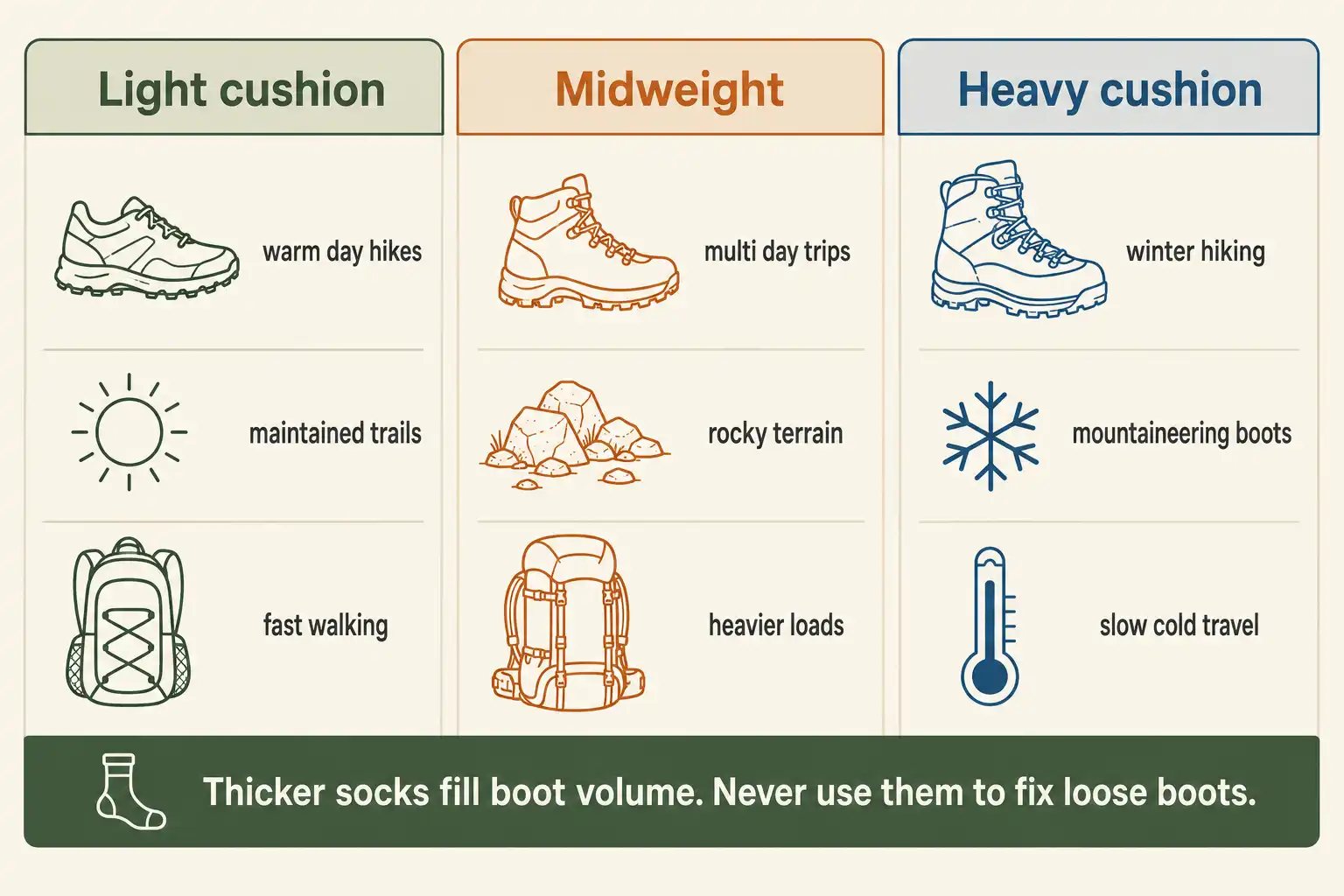
Match cushion level to load and terrain:
- Ultralight or light cushion for warm day hikes, trail runners, and fast walking on maintained paths.
- Midweight for standard boots, rocky ground, and a loaded pack on multi-day trips.
- Heavy cushion for winter, mountaineering boots, and slow travel in the cold.
Never use thick socks to fill out loose boots. Padding cannot replace proper sizing, and the extra bulk usually shifts the problem to your toes. Instead, get the footwear right first, which my guide on how much room your boots should leave explains in detail.
Do liner socks or double-layer socks help?
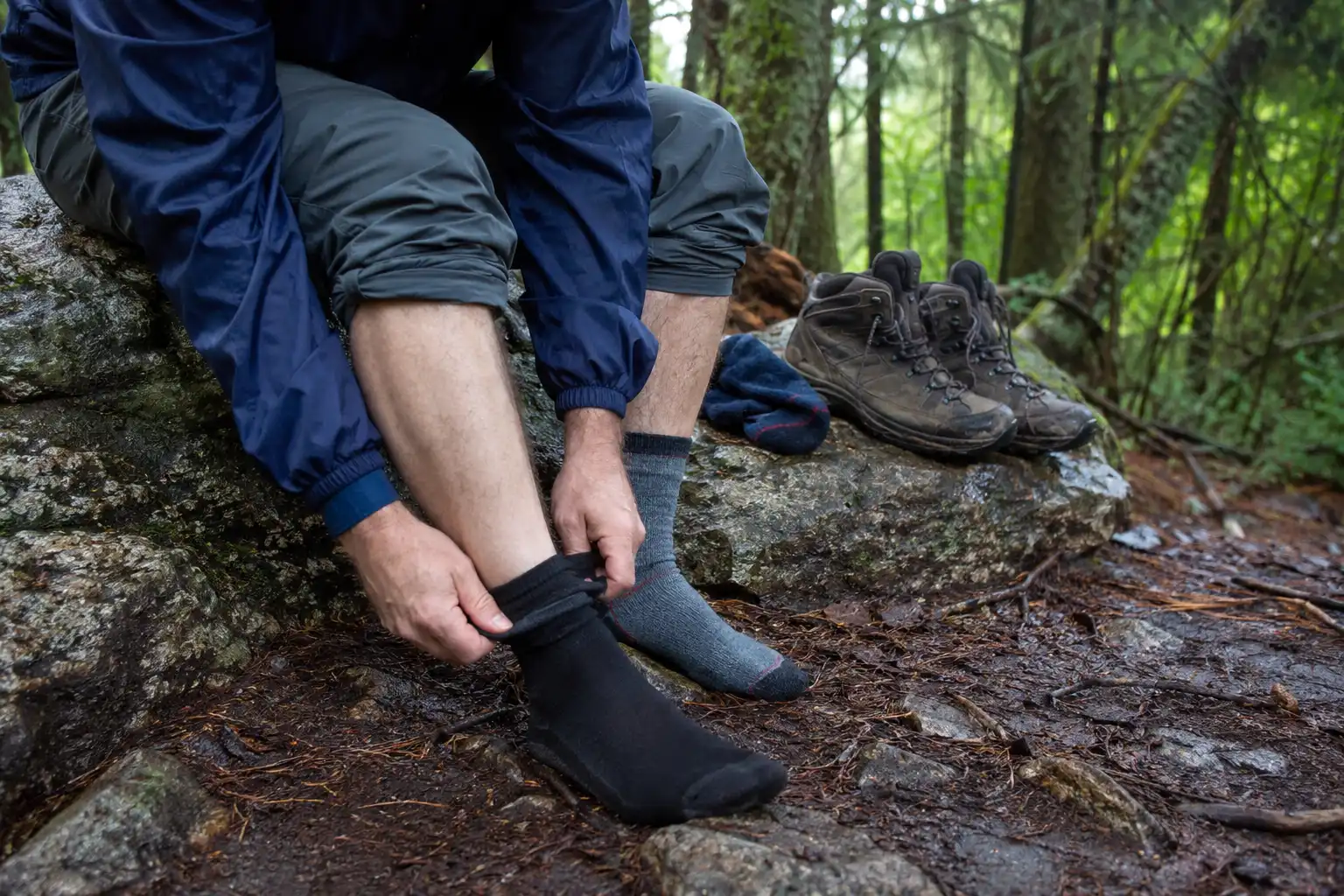
Liners help when a single sock keeps failing you. A thin liner under a cushioned outer sock creates a sliding surface between the two layers, so the fabric absorbs shear instead of your skin. Research on soldiers during long marches found a liner plus a wool blend outer sock cut blister incidence sharply compared with one standard sock, and it roughly halved the severe cases.
Double-layer socks build the same idea into a single pair. Toe socks separate each digit, which reduces rubbing between toes, although the evidence there stays thin.
Modern cushioned socks have closed much of the gap, so plenty of hikers never need liners now. I still carry a pair for long descents and for wet season walks around Bandarban, where my feet stay damp for hours. Just remember that two layers add volume, so check that your boots still fit comfortably.
Does sock height change anything?
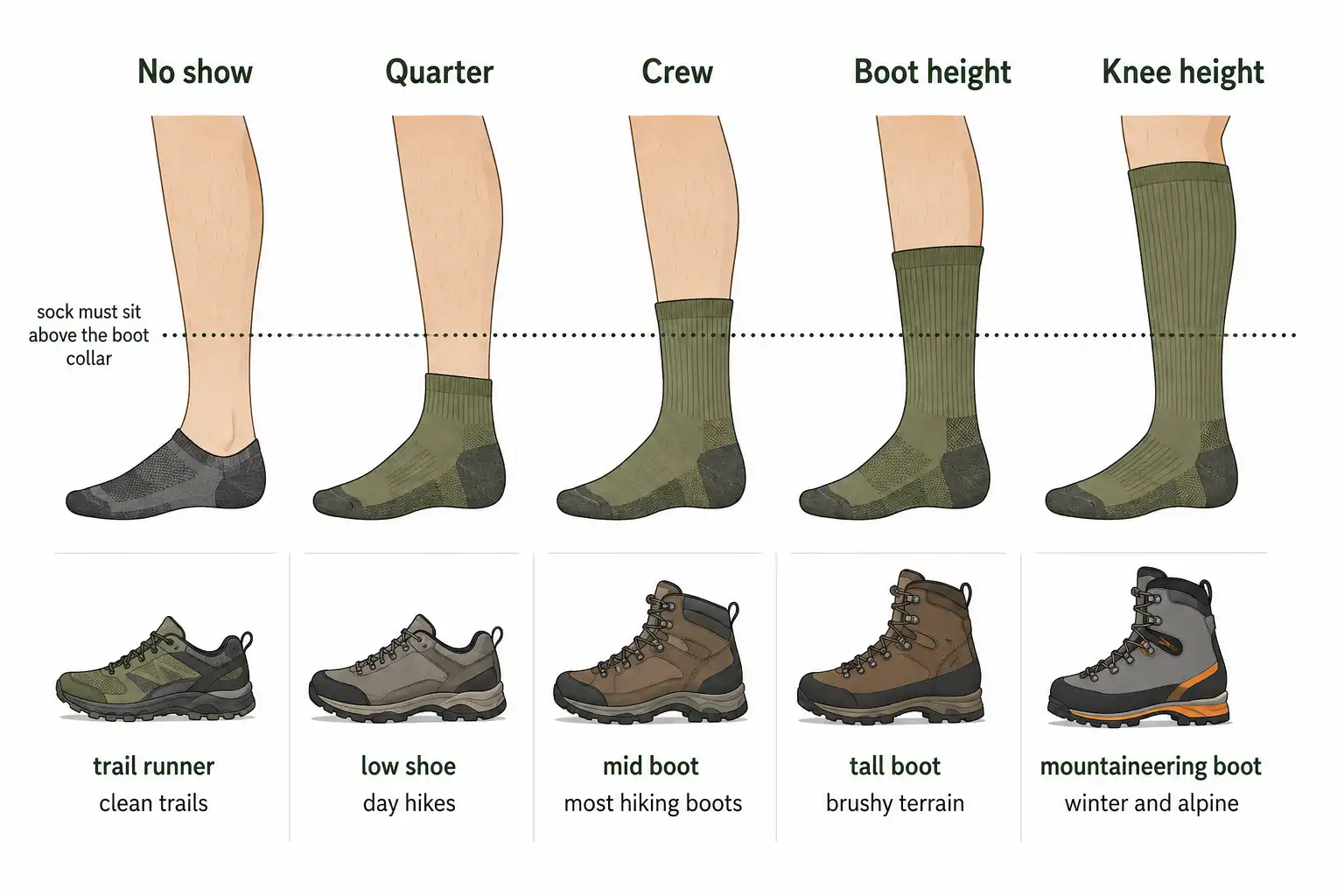
Height protects skin where footwear rubs. One rule covers most cases: your sock should sit taller than your boot collar. Otherwise the cuff grinds directly against your ankle or lower leg.
- No-show and quarter heights work with trail runners and low-cut shoes on clean trails.
- Crew or micro crew clears standard hiking boots and blocks grit, seeds, and dust.
- Boot height suits taller boots and brushy, overgrown ground.
- Knee height belongs with mountaineering boots and cold conditions.
On overgrown hill trails around Kaptai I always choose crew height or taller. Debris that gets past a low sock ends up under your arch, and a single grass seed can rub a hole in your skin over six miles.
When do ordinary socks work fine?
Ordinary socks work fine on short, flat, dry walks in shoes that already fit well. A one mile stroll on a park path will not blister most people, whatever they wear. Sock quality starts to matter once you add distance, elevation, heat, moisture, or a pack.
I would rather see a beginner spend on one good pair than on three mediocre ones. Two pairs of merino blend socks handle a full weekend, because you can wash one while wearing the other. If your feet blister easily, my roundup of hiking socks made for blister-prone feet shows which features matter most.
How many pairs of socks should you carry?
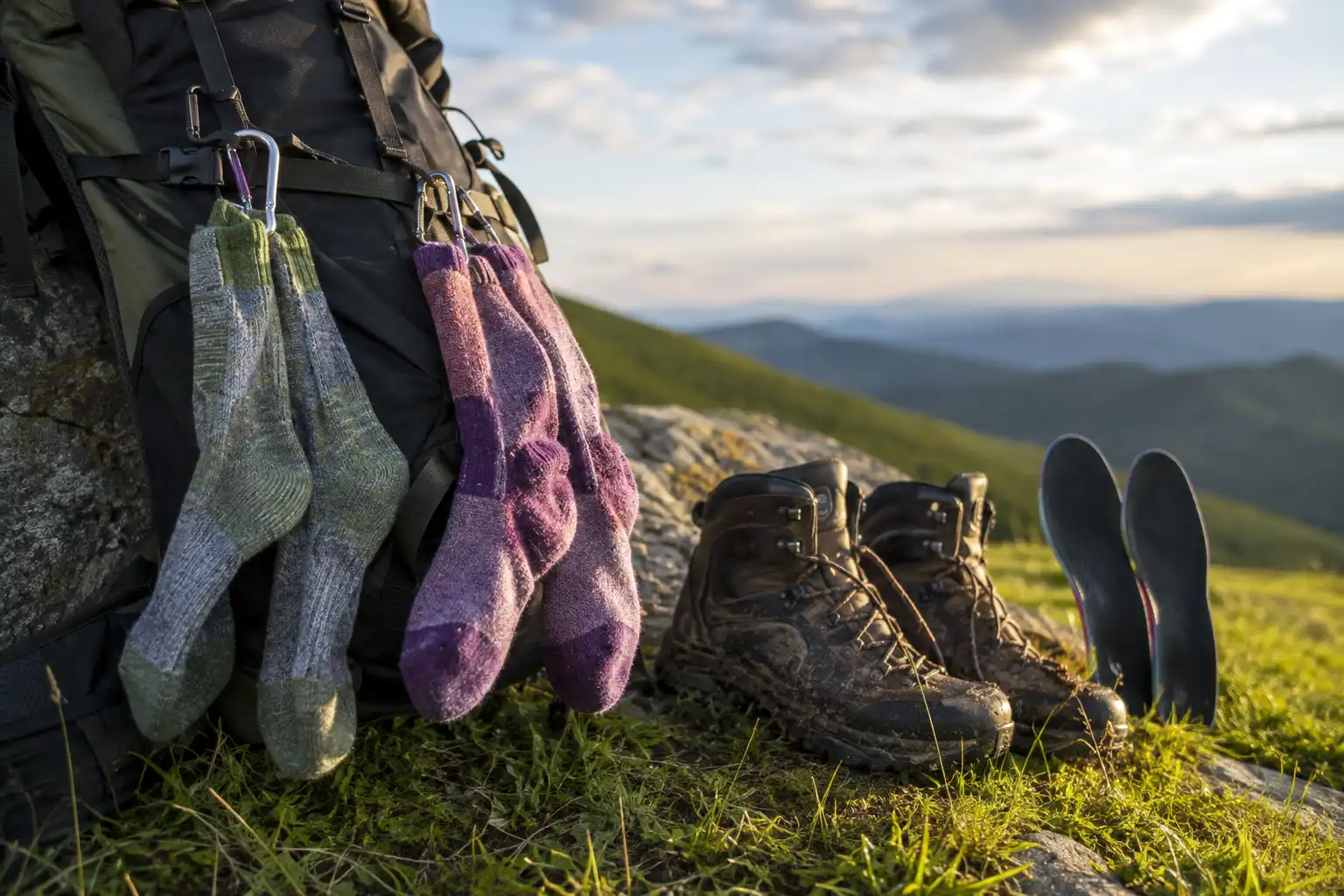
Carry one pair per hiking day for short trips, plus a dry pair reserved for sleeping. For longer treks, three pairs usually work: one on your feet, one washed and drying on your pack, and one clean pair kept sealed in a bag.
Never sleep in the socks you hiked in. Damp socks pull heat from your feet all night, and your skin needs hours to dry out and recover. Drying takes planning in humid weather, so my tips on drying damp gear overnight at camp apply to socks as much as to a tent.
How do you make hiking socks last longer?
Careful washing extends sock life by years. Turn socks inside out first, then wash cool or warm on a gentle cycle. Fabric softener coats the fibers and ruins wicking, so skip it completely. High dryer heat damages elastane and mats wool, so air drying flat protects your investment.
A few more habits help:
- Rotate pairs instead of wearing one favorite into the ground.
- Trim your toenails before a long hike, since sharp nails cut through the toe box.
- Wash grit out after dusty trails, because sand grinds fibers apart from the inside.
- Replace socks when the cushioning packs flat or the cuff stops gripping.
Quality socks cost several times more than basic cotton pairs. However, a good pair lasts years, and some brands back theirs with long warranties.
Mistakes that cancel out good socks
Even the best socks fail when something else is wrong. Watch for these:
- Wearing a low sock with a tall boot, which exposes skin right where the collar rubs.
- Loose lacing, because a lifting heel shears against fabric with every step. Fixing that starts with lacing your boots to lock the heel down.
- Ignoring the first hot spot. Stop and treat it early, since a warm patch becomes a blister within a mile or two.
- Sizing socks by shoe brand guesswork. Check the size chart instead, because a loose sock wrinkles and a tight one pinches your toes.
- Hiking in yesterday’s damp pair to save weight.
FAQs on Hiking Socks vs Regular Socks

Are expensive hiking socks worth the money?
Can I hike in cotton socks?
Should hiking socks feel tight?
Can I wear two ordinary pairs instead of liner socks?
How often should I change socks on a long hike?
What this means for your next hike
Socks sit between your skin and everything else, so they change how a hike feels more than their price suggests. Pick merino blend or synthetic fiber over cotton, choose a cushion level that matches your load, and make sure the sock clears your boot collar. Then keep a dry pair for camp and wash them properly at home. Two good pairs beat a drawer full of cheap ones, and your feet will tell you the difference within the first few miles.