Are Jeans Good for Hiking? What Denim Does on the Trail

Jeans feel tough, so plenty of new hikers grab them for the trail. Denim behaves badly once sweat or rain hits it, though. Below I cover what happens to jeans on a hike, when they work, when they cause trouble, and what to wear instead.
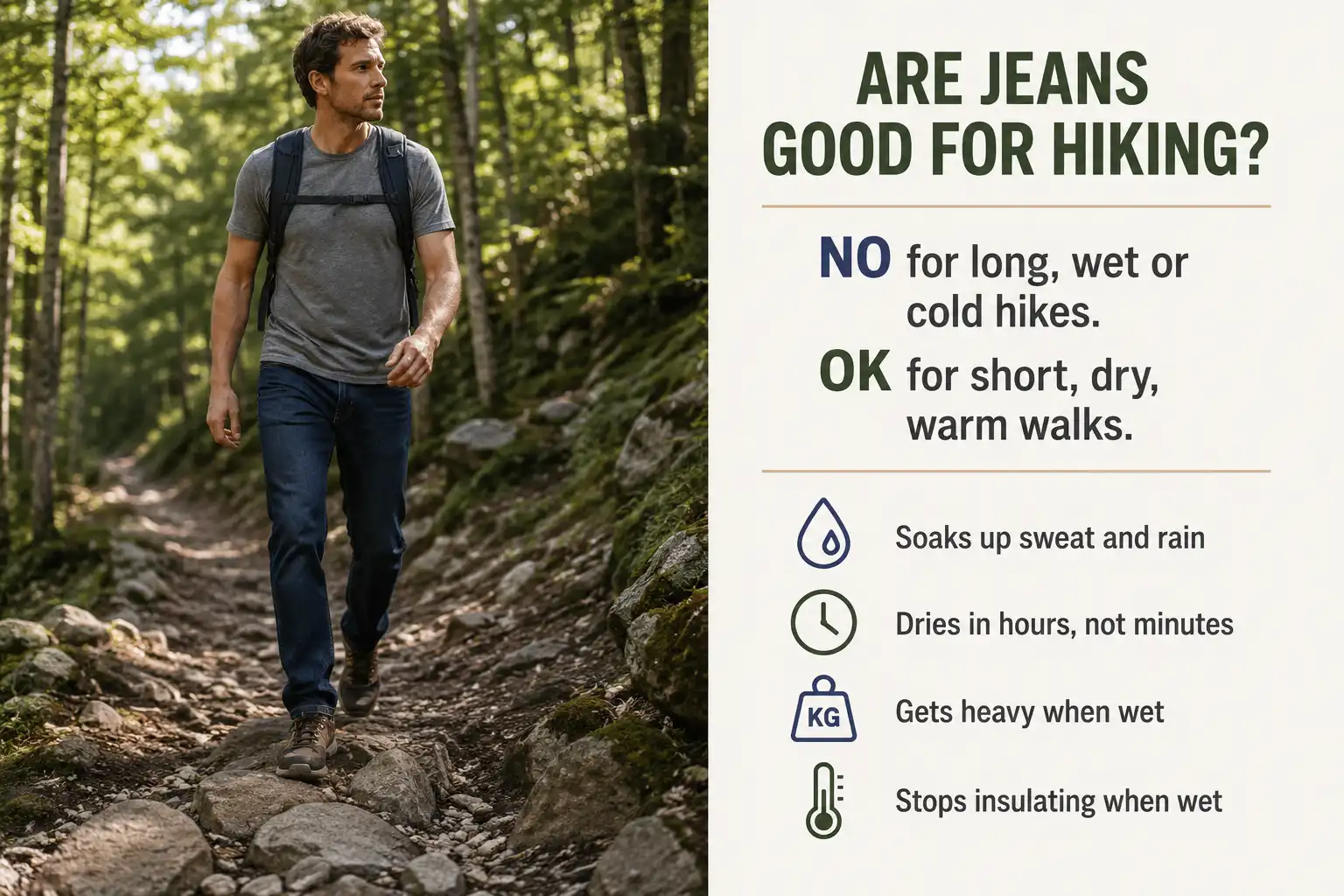
No, jeans are not good for hiking in most conditions. Denim is heavy cotton that soaks up sweat and rain, dries very slowly, and stops insulating once wet. On short, dry, warm hikes, jeans cause no harm. On long, wet, or cold hikes, however, they raise your risk of chafing and hypothermia.
What makes denim a poor hiking fabric?
Denim fails on the trail because of the fiber, not the stitching. Cotton absorbs water instead of pushing it away from your skin. Most jeans use 10 to 13 ounce denim. That number means one square yard of the fabric weighs 10 to 13 ounces while still dry.
Here is what goes wrong, point by point:
- Water absorption. Cotton fibers act like tiny tubes that pull water in and hold it. Cotton can soak up many times its own dry weight.
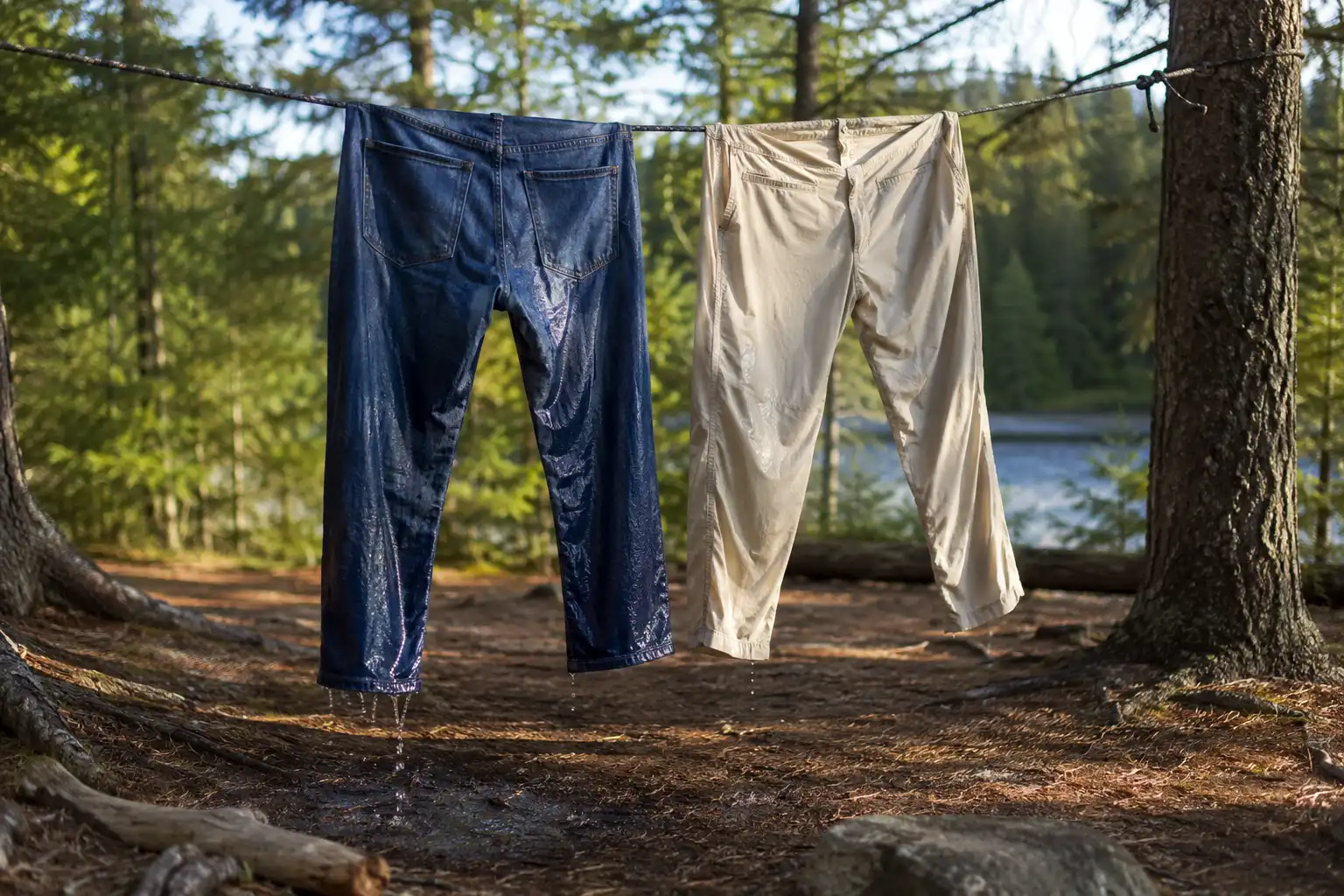
- Slow drying. Wet denim stays damp for hours. In humid forest air it may never fully dry while you keep walking.
- Weight gain. A dry pair of jeans already weighs roughly one pound. Soaked denim feels far heavier on your legs.
- No insulation when wet. Water fills the air pockets that normally trap your body heat.
- Restricted stride. Rigid denim fights every high step, and high steps make up most of hill walking.
- Chafing. Wet cotton turns rough, so thick inseam seams grind against your inner thighs.
None of these matter on a flat 30 minute stroll. All of them matter once you climb, sweat, or get caught out in rain.
Read next: Duck Boots in Hiking
How dangerous are wet jeans in cold weather?
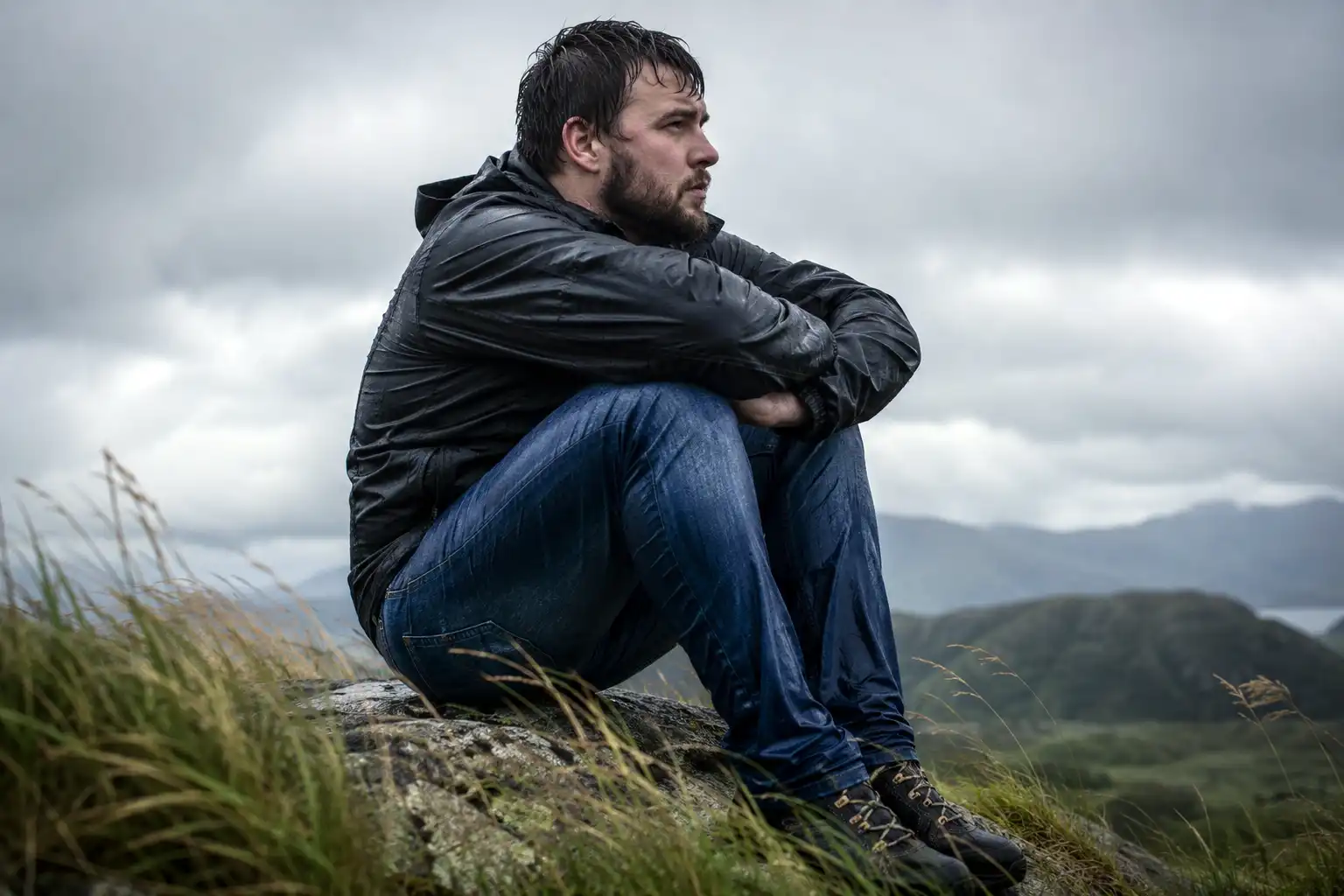
Wet jeans are genuinely dangerous in cold weather because water pulls heat out of your body far faster than air does. Outdoor safety guides commonly cite wet cotton stripping body heat around 25 times faster than dry clothing. That single fact explains the old warning that cotton kills.
Hypothermia sets in when your core temperature drops below 95 degrees Fahrenheit (35 degrees Celsius). Most people picture snow, yet hypothermia regularly happens well above freezing. Wet legs, a breeze, and a rest stop after a sweaty climb create the same effect at 50 degrees.
The pattern usually goes like this. First you sweat hard on the ascent, and your jeans absorb it. Then you stop at the top, wind hits, and the denim turns cold against your skin. Because denim holds so much water, it cannot dry fast enough to recover.
Learning to recognize early hypothermia warning signs matters even more when you hike in cotton. Shivering, clumsy hands, and slurred speech all show up before the situation gets serious.
Do jeans make you overheat in hot weather?
Yes, jeans overheat you in hot weather because thick denim traps heat and blocks airflow. Sweat soaks into the fabric rather than evaporating off it, so your body loses its main cooling method. Wet denim then clings to your legs and slows you down.
Humidity makes this worse. I live near Kaptai in Rangamati, where summer air already sits heavy, and denim in those conditions feels like wearing a wet towel. Meanwhile a pair of thin nylon pants keeps moving air across the skin.
That said, denim does one thing well in the sun. Skin Cancer Foundation guidance notes that dark denim blocks UV almost completely, since the tight weave leaves nowhere for rays to pass through. So the coverage is excellent even though the comfort is terrible. My advice on staying cool and avoiding sunburn on hot hikes covers lighter fabrics that give you sun coverage without the heat penalty.
Jeans vs hiking pants: how do they compare?
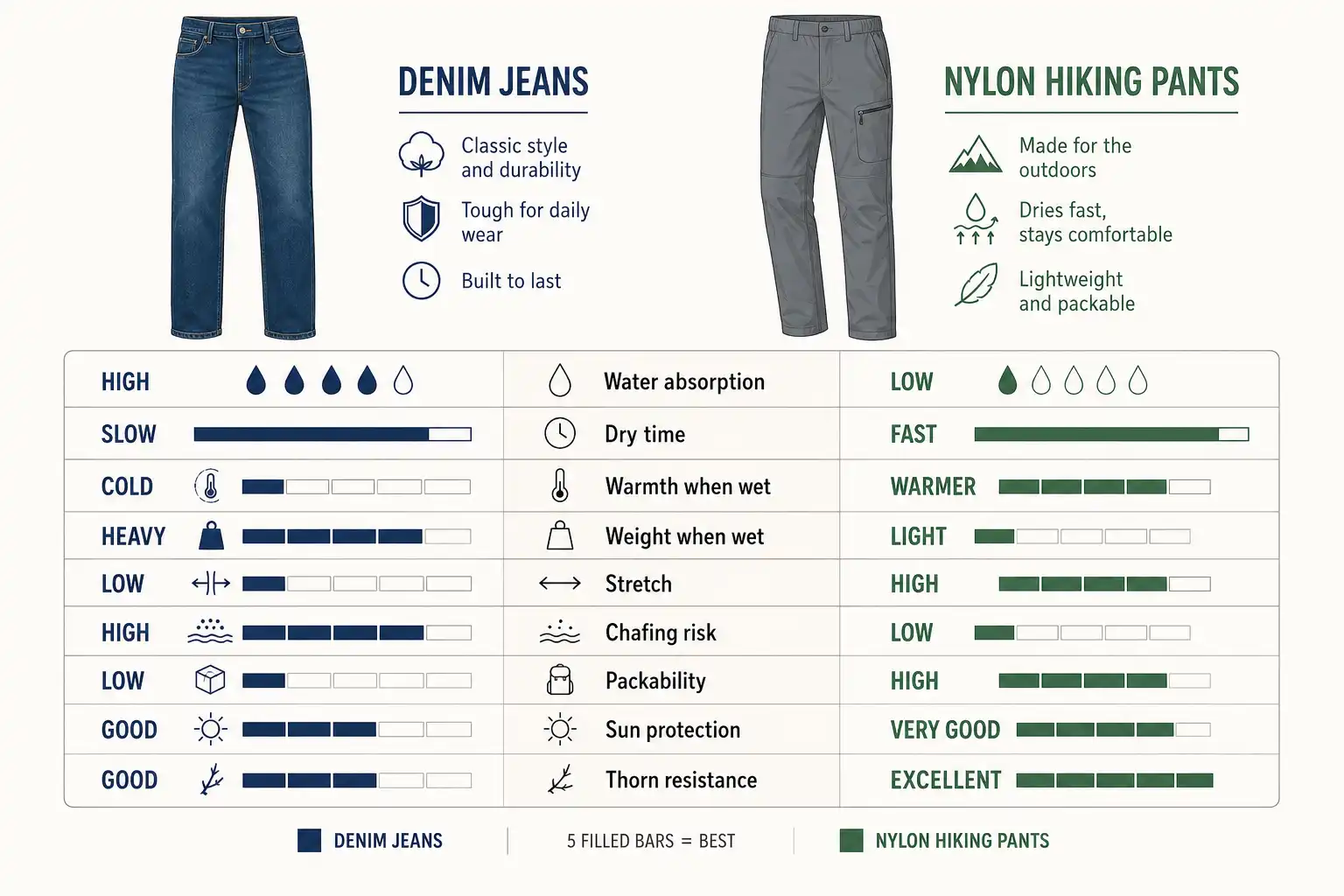
Hiking pants beat jeans on every performance measure except abrasion resistance and sun blocking. The table below shows where the gap sits.
| Factor | Jeans (100% cotton denim) | Nylon or polyester hiking pants |
|---|---|---|
| Water absorption | Very high | Low |
| Dry time after soaking | Several hours or longer | Often under an hour |
| Warmth when wet | None | Limited but present |
| Weight when wet | Heavy | Barely changes |
| Stretch and stride | Poor unless blended | Good, often with gusseted crotch |
| Chafing risk | High once damp | Low |
| Packability | Bulky | Packs small |
| Sun protection | Excellent | Good, usually UPF rated |
| Thorn and brush resistance | Very good | Moderate |
| Price | Low | Moderate to high |
Notice the pattern. Denim wins on toughness and loses on moisture, and moisture is what actually hurts you on a long day out. The same logic applies to footwear, which is why wearing everyday shoes on a trail runs into similar limits.
Are performance jeans and stretch denim any better?
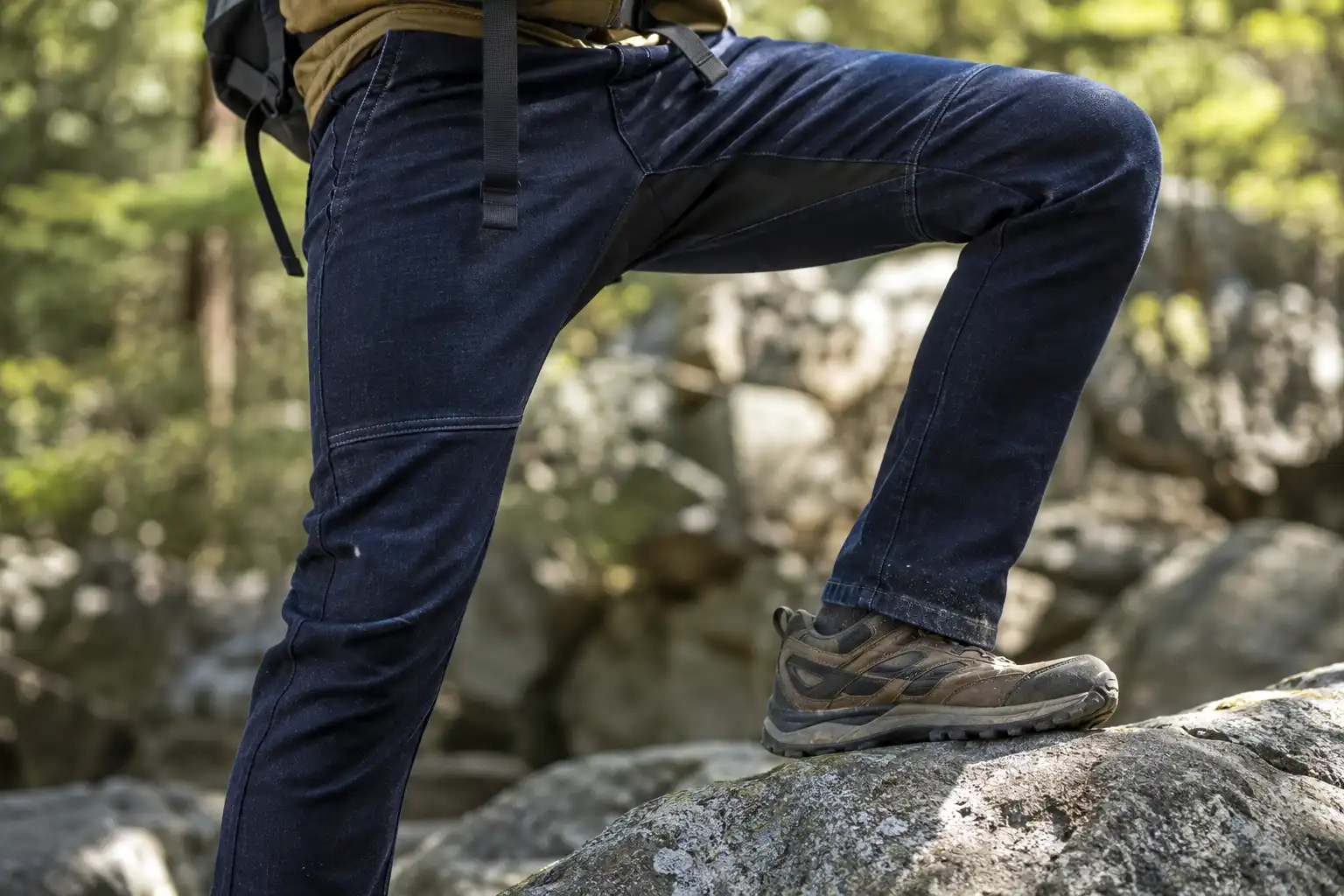
Yes, performance denim performs noticeably better than standard jeans, though it still trails proper hiking pants. Brands like prAna, KUHL, and DUER blend cotton with polyester and elastane to add stretch and speed up drying. The prAna Bridger jean, for example, runs around 75 to 79 percent organic cotton with polyester and about 2 percent elastane.
That blend fixes two problems. Stretch restores your stride, and the synthetic share dries faster than pure cotton. Some pairs also add gussets, articulated knees, or a water repellent finish.
Still, the base fabric remains mostly cotton. KUHL, which sells performance pants itself, states plainly that cotton absorbs moisture, holds it against skin, and dries slowly. So a performance jean suits travel days, camp evenings, and easy trails. For a wet multi day trek, I would still pack synthetics.
When are jeans actually fine for hiking?
Jeans work fine for short, dry, warm hikes close to your car or home. If you can reach shelter within an hour and rain is not forecast, denim costs you comfort rather than safety.
Situations where jeans hold up reasonably well:
- Flat or gently rolling trails under three miles
- Warm, dry weather with no creek crossings
- Overgrown paths full of thorns, where denim protects your shins
- Casual camp walking rather than committed trail miles
- Trips where a dry change of clothes waits in the vehicle
Situations where jeans become a real problem:
- Rain, snow, or any chance of a soaking
- Cold weather, especially with wind
- Steep terrain that needs big steps or scrambling
- Long days above six or seven miles
- Multi day trips with no way to dry clothing
- River crossings and canyon routes
The deciding question is simple. Ask yourself how much trouble you face if your pants get soaked and stay soaked for the rest of the day.
What should you wear instead of jeans?
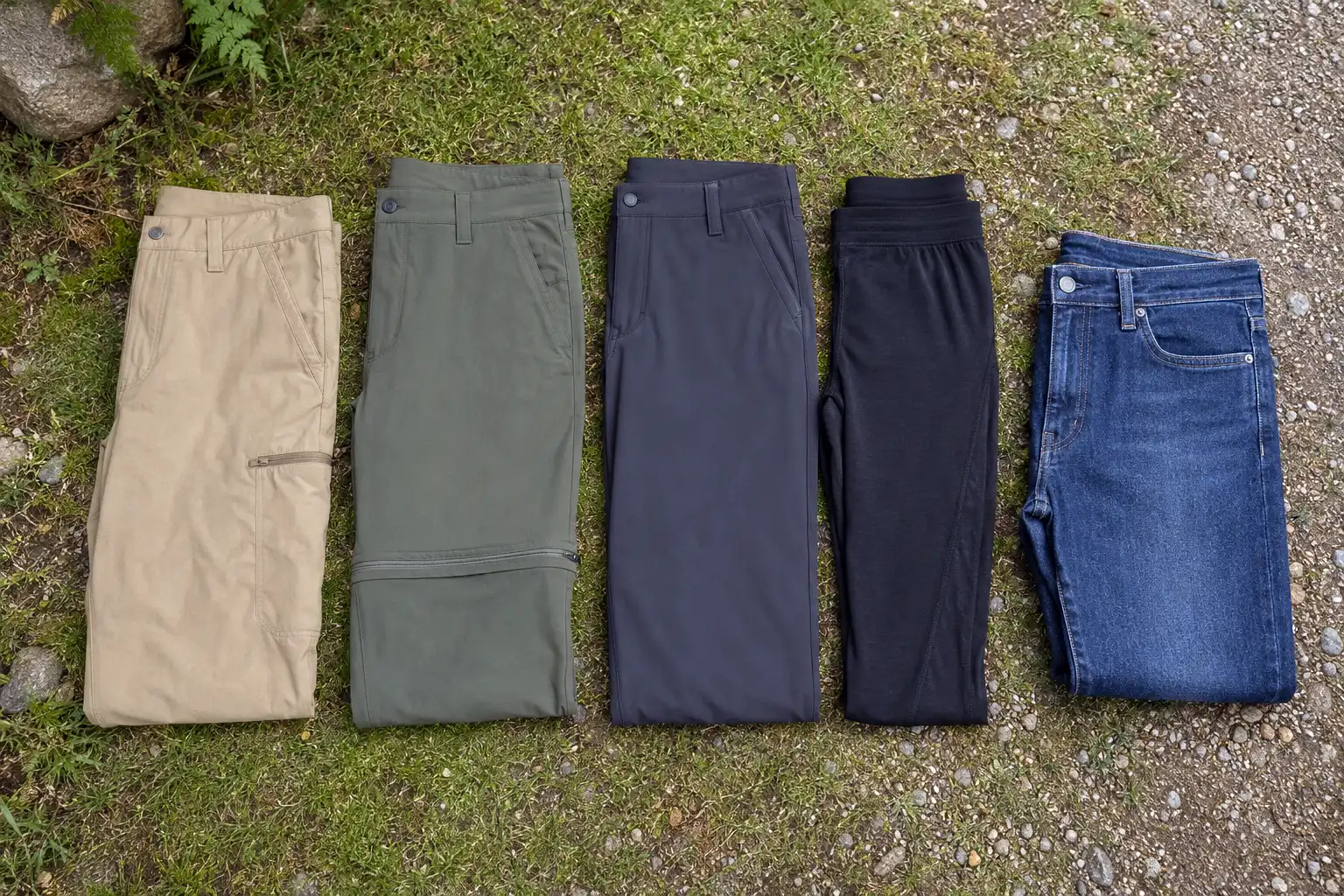
Wear nylon or polyester hiking pants instead of jeans, because both wick moisture and dry quickly. Nylon resists abrasion better, while polyester dries slightly faster and costs less. If you want detail on how polyester performs across different trail conditions, I covered that separately.
Solid alternatives, roughly by budget:
- Cheap synthetic track pants. Not ideal, yet still better than denim on wet days.
- Basic nylon hiking pants. The sweet spot for most hikers. Light, quick drying, and cheap enough to replace.
- Convertible zip off pants. Handy when weather swings from cool morning to hot afternoon.
- Softshell pants. Wind resistant and warm for shoulder season hikes.
- Merino or synthetic base layer plus shell. Best choice for cold or wet mountains.
Rain gear matters too. A packable shell over quick dry pants beats any denim setup. Balancing waterproofing against sweat takes practice, and hiking through rain without overheating comes down to venting early. For colder outings, proper layering against cold trail wind matters more than any single garment.
How do you hike safely in jeans when that is all you have?
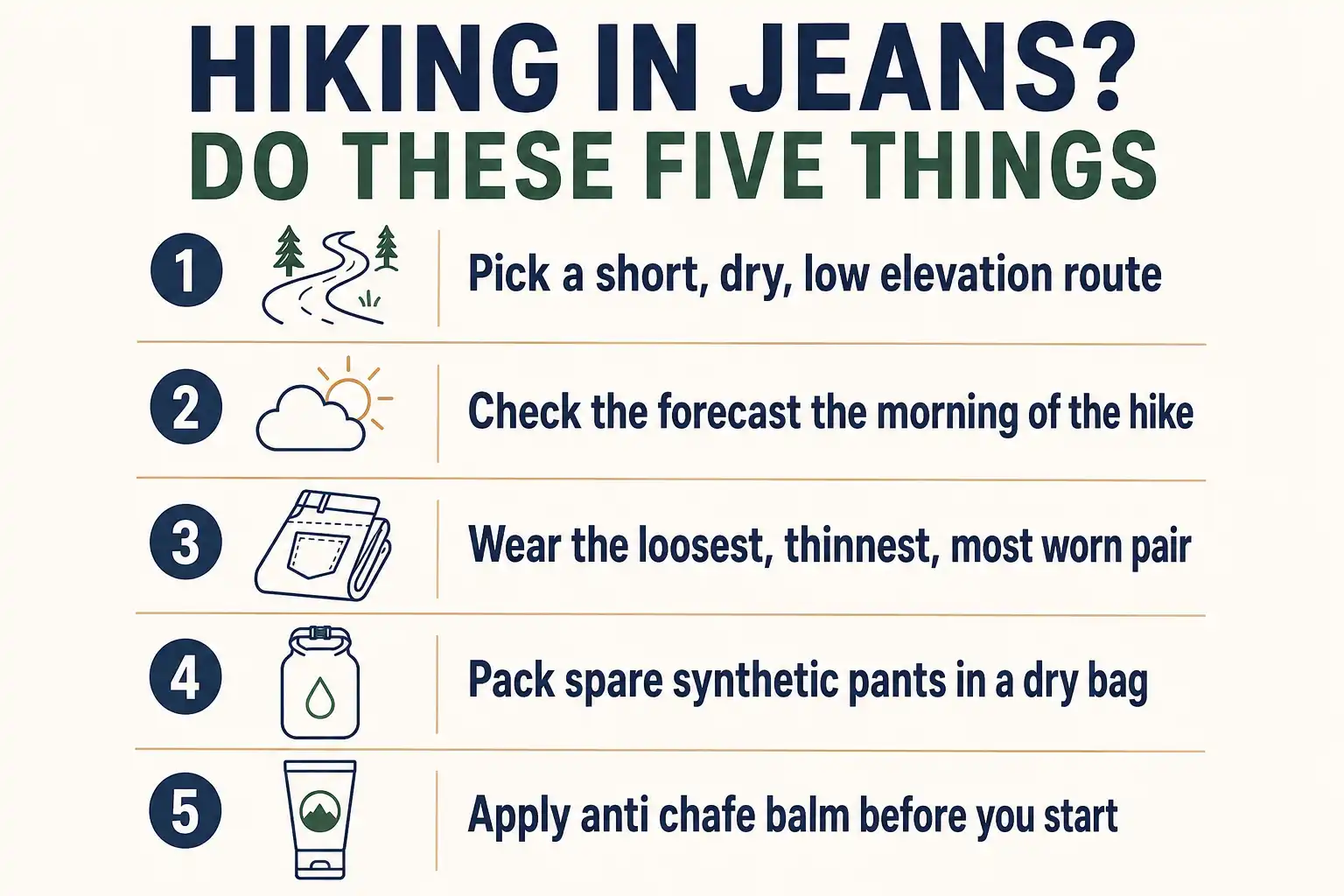
Hike in jeans safely by controlling the conditions rather than the fabric. Plenty of people start hiking in whatever they own, and I did too. These steps reduce the risk.
Pick a short, dry, low elevation route. Check the forecast the morning of your hike, not the day before. Choose the loosest, thinnest, most worn pair you own, since faded denim is softer and lighter than stiff raw denim.
Pack a dry backup layer. Even cheap synthetic pants or shorts stuffed in a dry bag give you an escape route if the denim soaks. Bring an extra insulating top as well, because your core keeps your legs warm.
Apply anti chafe balm to your inner thighs before you start. Denim seams cause most of the damage, so pre treat the contact points. Finally, turn back early if rain starts. A wet cotton walk out of two miles is manageable, while eight miles is miserable and risky.
FAQs about Hiking in Jeans

Can you hike in jeans in summer?
Are jean shorts good for hiking?
Do jeans protect against ticks and thorns better than hiking pants?
Are black jeans better than blue jeans for hiking?
Do raw denim jeans work for hiking?
Final thoughts
Jeans are not the right tool for hiking, but they are not an automatic emergency either. On a short, warm, dry walk, denim just feels clumsy. On a cold or wet day, wet cotton against your skin turns into a safety problem fast. Do you hike more than a few times a year? Then one pair of nylon hiking pants will improve your comfort more than almost any other purchase. Until then, keep your denim hikes short, dry, and close to home.