Are Hammocks Machine Washable? How to Wash Them Safely

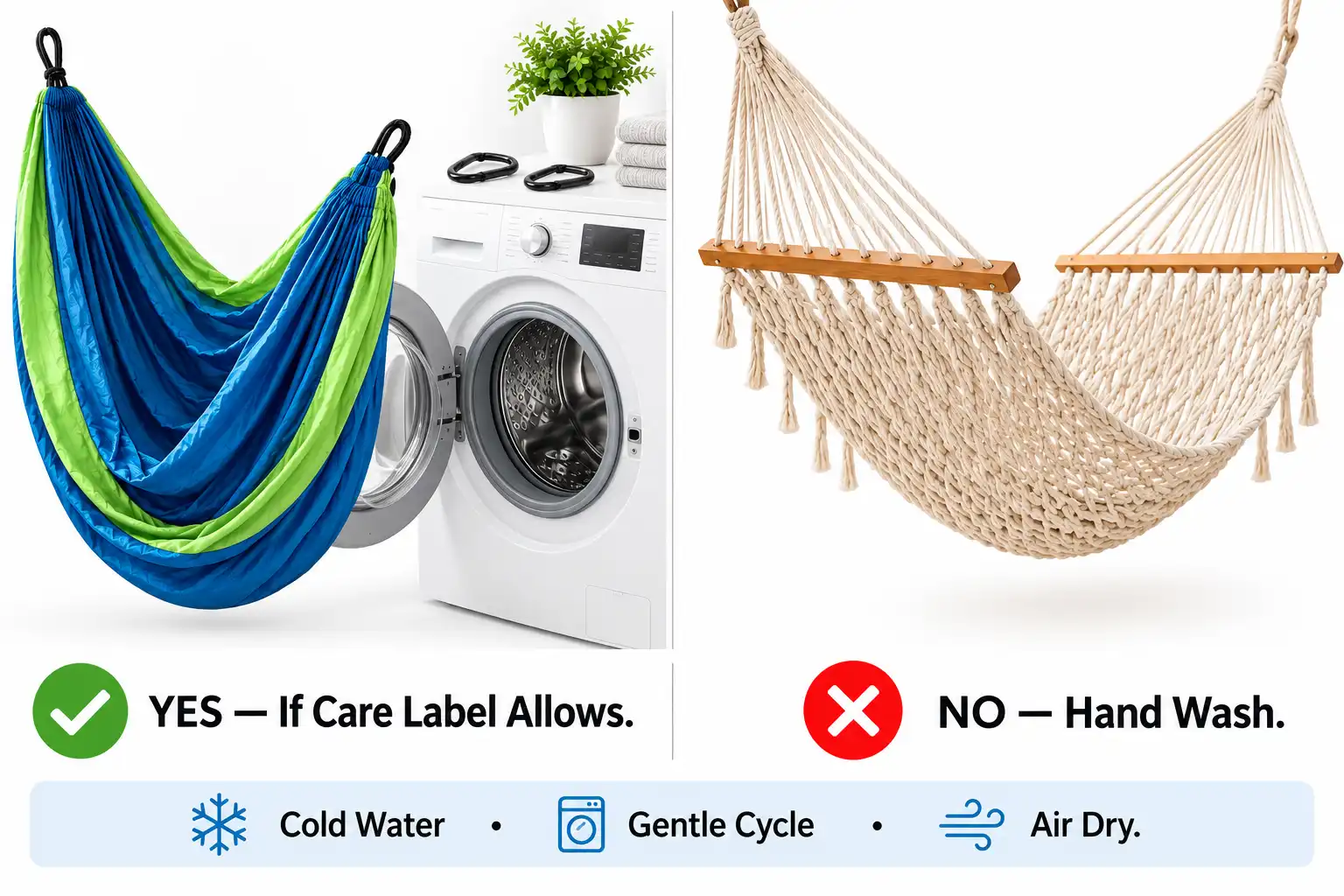
Yes, many hammocks are machine washable, including ENO gathered-end hammocks and some cotton and polyester models. However, hammocks with fixed wooden spreader bars, rope construction, or thick padding generally require hand washing.
The safest cleaning method depends on the hammock’s design and care instructions. Before using a washing machine, check the manufacturer’s label, remove detachable hardware, and confirm that the fabric can handle a gentle wash.
Which Types of Hammocks Are Machine Washable?
Not every hammock can handle the movement of a washing machine. Some fabrics wash easily, while ropes, wooden parts, and padding may become damaged.
| Hammock type | Machine washable? | Recommended care |
|---|---|---|
| Nylon camping hammocks | Usually, if approved | Cold water, gentle cycle |
| Polyester fabric hammocks | Often, if approved | Cold water, mild detergent |
| Cotton or Brazilian hammocks | Depends on the model | Gentle wash if the label permits |
| Rope hammocks | Generally not recommended | Hand wash to prevent tangling |
| Hammocks with fixed spreader bars | No | Clean by hand |
| Quilted or padded hammocks | Usually not recommended | Spot clean or follow the care label |
Cotton is a good example of why checking the manufacturer matters. Some LA SIESTA cotton hammocks are machine washable at 30°C (86°F), while other manufacturers recommend hand washing.
If the care label is missing, hand washing is the safer option.
Are ENO Hammocks Machine Washable?
Yes. ENO recommends machine washing its gathered-end hammocks, including the popular SingleNest and DoubleNest models.
According to ENO’s official washing instructions, you should:
- Remove the carabiners before washing.
- Wash the hammock alone in a front-loading machine.
- Choose cool water and a delicate cycle.
- Use mild detergent without fabric softener or additional cleaning chemicals.
- Hang the hammock to dry instead of using a dryer.
ENO also recommends hand washing when a suitable machine is unavailable.
These instructions apply to gathered-end hammocks. Models with integrated bug nets, spreader bars, or other special features may have different requirements. Check the care label attached to the product’s stuff sack before washing.
Do not untie the hammock’s structural end knots during cleaning.
How to Wash a Hammock in a Washing Machine
If your hammock is approved for machine washing, follow these steps to protect its fabric and suspension cords.
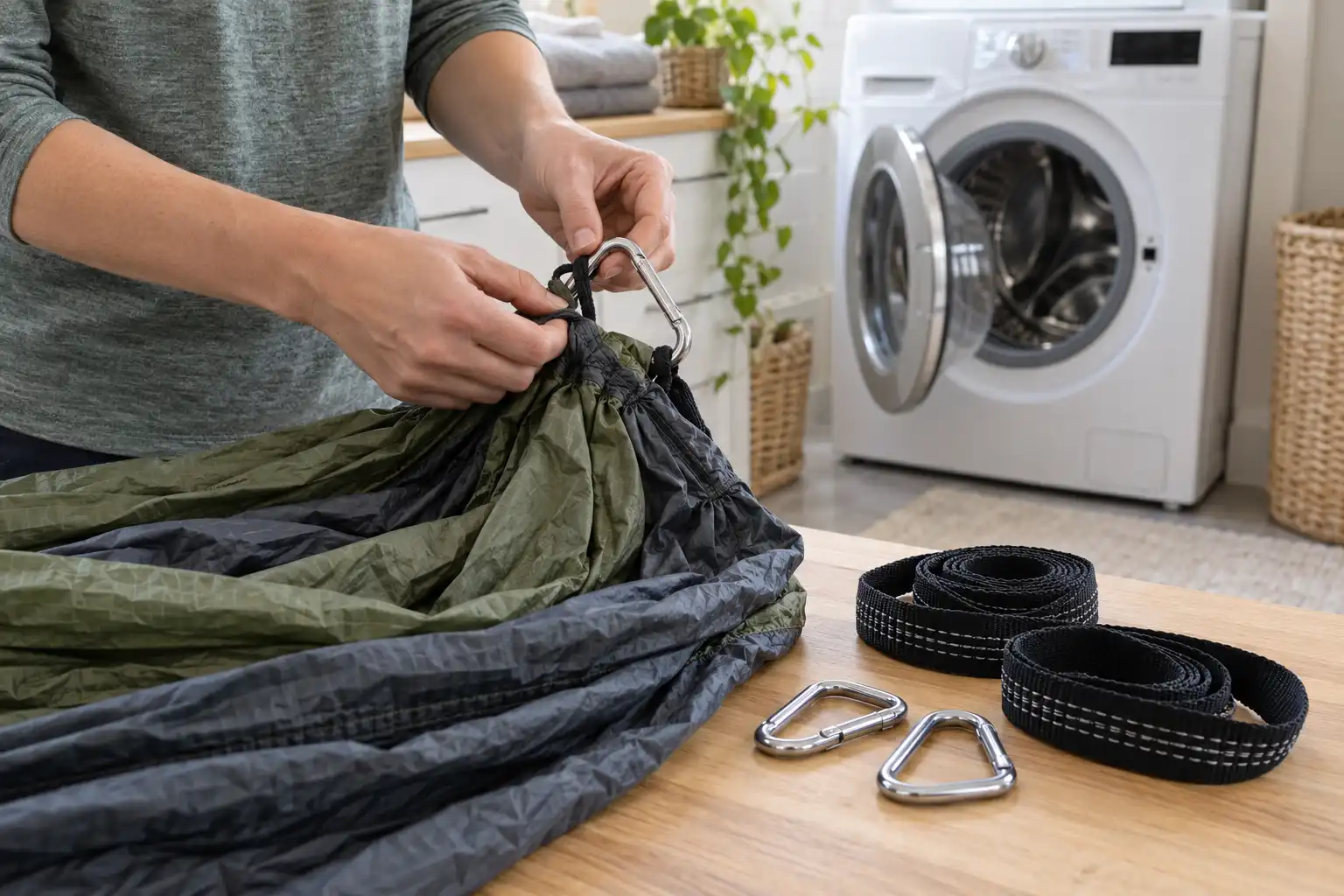
1. Shake off loose dirt
Take the hammock outdoors and remove leaves, sand, and dried mud. Use a damp cloth to loosen stubborn dirt before putting it in the washer.
2. Remove detachable hardware
Take off carabiners, straps, and other removable accessories. Metal hardware can damage both the hammock and the washing machine.
3. Secure the hanging cords
Long suspension cords can become tangled during washing. Tie them together as the manufacturer instructs. A large mesh laundry bag can also help protect suitable hammocks.
Never loosen permanent load-bearing knots.
4. Use a gentle wash cycle
Select cold water, a delicate cycle, and a small amount of mild detergent. A front-loading washer is preferable when recommended by the manufacturer.
Wash the hammock separately from heavy clothing and abrasive items.
5. Air dry completely
Remove the hammock promptly after washing. Spread it out or hang it in a well-ventilated area until the fabric and cords are completely dry.
Avoid tumble dryers and direct heat.
6. Inspect before using
Check the fabric, stitching, end loops, and attachment points for damage. Reattach the hardware only after everything has dried.
How to Wash Hammocks That Cannot Go in a Washing Machine
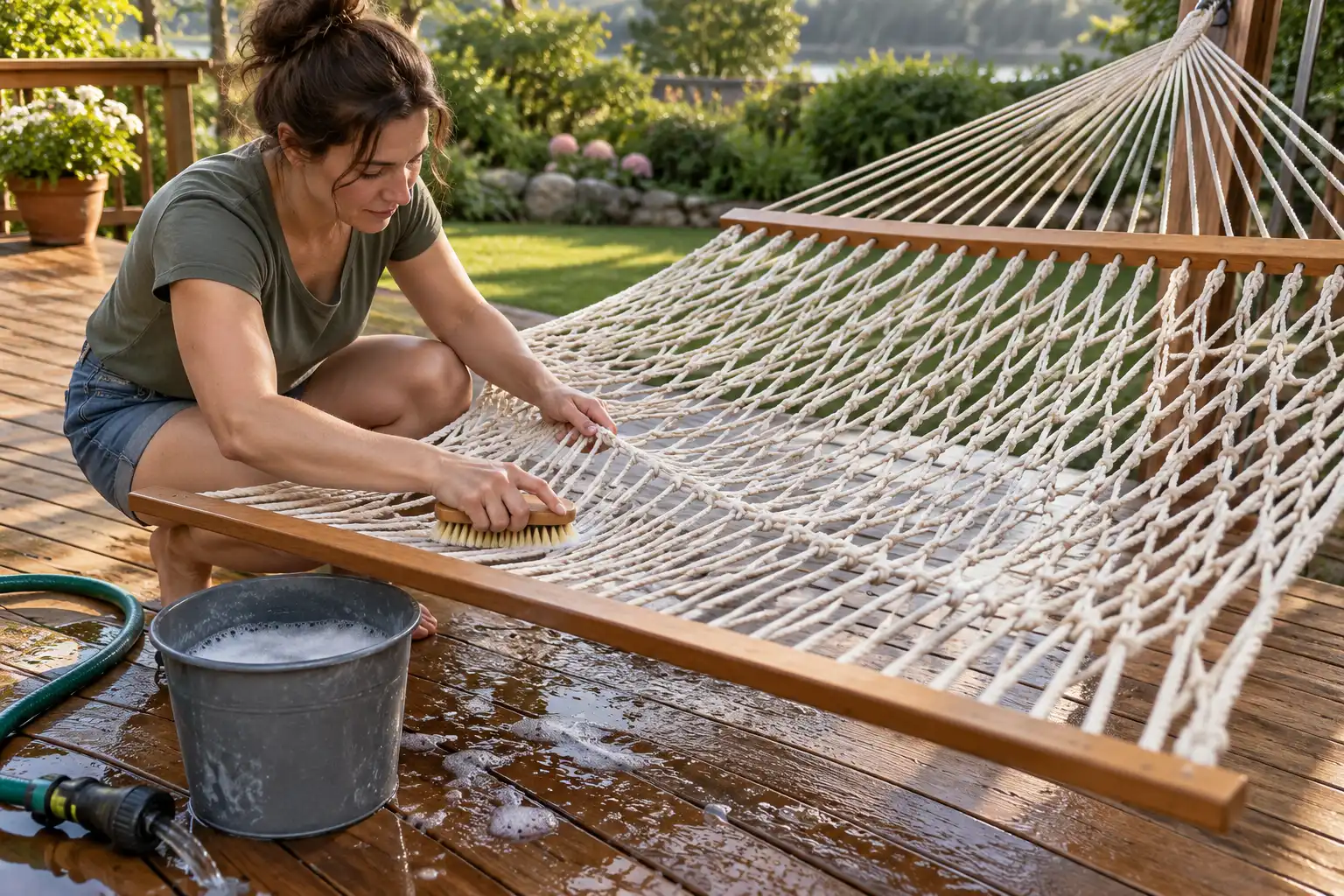
Hand washing is the better choice for hammocks with fixed spreader bars, delicate rope construction, or padding that could shift during a machine wash.
For hammocks with wooden spreader bars:
- Lay the hammock on a clean, flat surface.
- Dampen the fabric or rope with water.
- Gently clean dirty areas using mild soapy water and a soft brush.
- Rinse thoroughly, keeping wooden bars from becoming soaked.
- Turn the hammock over if necessary, then allow it to dry completely.
This method follows the general approach in Vivere’s hammock care instructions.
For a soft cotton hammock without bars, you can usually hand wash it in a bathtub using cool water and mild soap, provided its care instructions allow it. Avoid aggressive scrubbing, twisting, or wringing that could stretch the fabric and end cords.
How to Dry and Store a Hammock After Washing
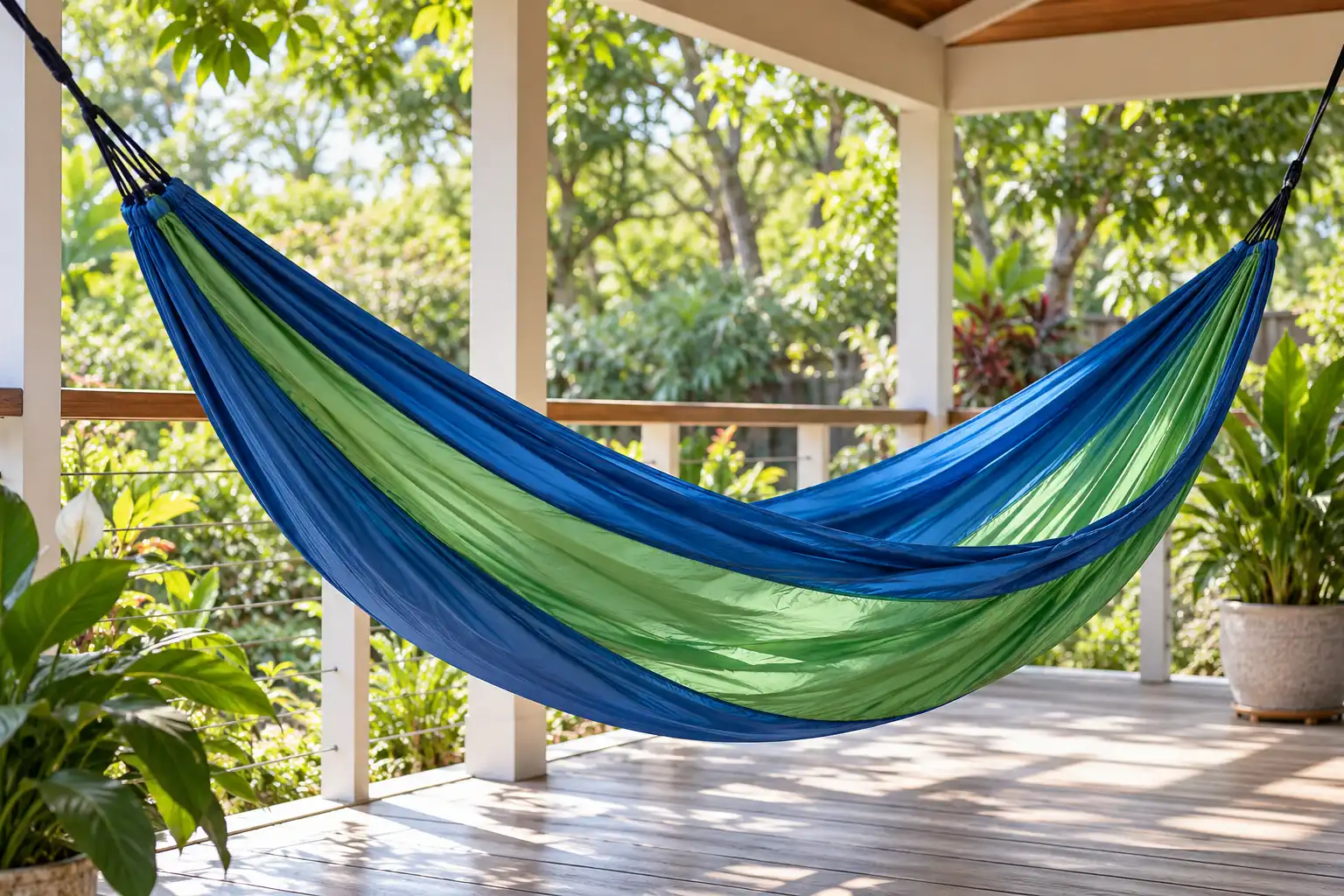
Air drying is the safest general method for cleaned hammocks. High dryer temperatures can cause shrinking or damage to fabrics and stitching.
Hang the hammock loosely or spread it over a clean drying rack. Make sure air reaches the folds and suspension cords.
Do not leave nylon camping hammocks exposed to strong sunlight for extended periods. UV exposure can weaken the fabric over time.
Once completely dry, fold the hammock and store it in a clean, dry place. Never seal a damp hammock inside its stuff sack, as trapped moisture encourages mildew.
If you need to clean or rinse your hammock outdoors, these ways to dry wet camping gear can help when laundry facilities are unavailable.
Before your next trip, inspect the attachment points and set up your camping hammock safely.
Common Questions About Washing Hammocks
Can you put a hammock in the dryer?
Generally, no. Air drying is recommended for most hammocks, including ENO models. A heated dryer may damage synthetic fibers or shrink cotton.
How often should you wash a hammock?
There is no fixed washing schedule. Spot clean minor dirt after use and perform a full wash when the fabric becomes noticeably dirty or develops persistent odors. Always dry a wet hammock before storage.
Can you use bleach or fabric softener?
Avoid both unless the manufacturer’s instructions specifically allow them. Mild detergent is generally sufficient, and ENO specifically advises against fabric softeners and additional cleaning agents.
Can you wash hammock straps with the hammock?
Remove detachable straps before washing. Clean them separately according to their own care instructions. Never put metal carabiners or other loose hardware in the washing machine.
What if a hammock has mildew?
Clean it according to its care label and dry it thoroughly. Inspect the fabric afterward. If mold damage, weakened fibers, or significant fraying are present, do not use the hammock until its safety has been assessed. Washing cannot restore damaged load-bearing material.
Final Thoughts
Many hammocks can be machine washed, but the manufacturer’s instructions should always determine how you clean yours.
ENO gathered-end hammocks can be washed in a front-loading machine using cool water, mild detergent, and a delicate cycle. Hammocks with fixed spreader bars or delicate construction are better cleaned by hand.
Whatever method you use, dry the hammock completely and inspect it before your next use. Proper cleaning helps preserve the fabric without putting its strength at risk.