What to Wear Hiking in Hot Weather to Stay Cool and Avoid Sunburn

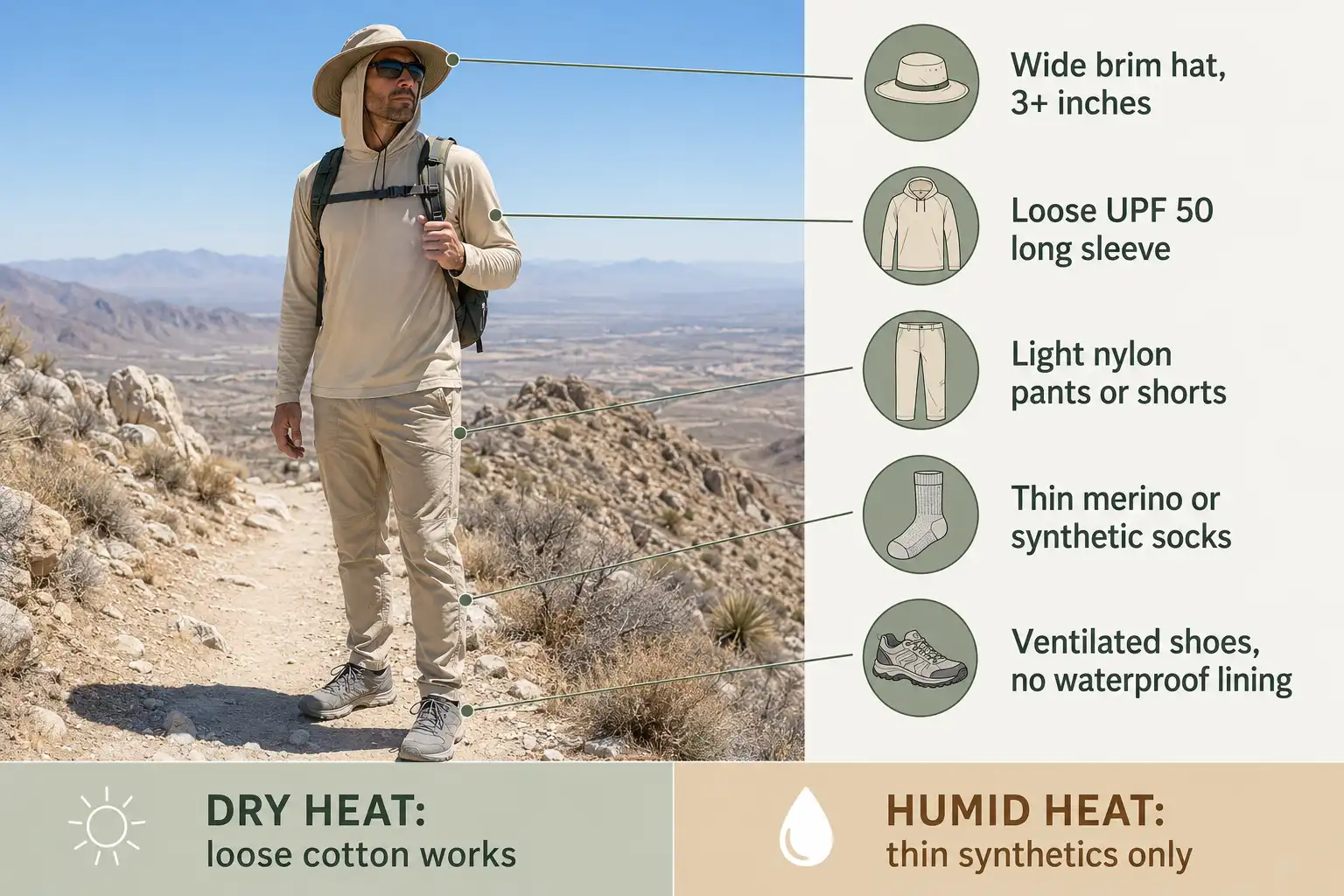
Hot weather changes what works on a trail. The wrong shirt traps sweat, the wrong shoes cook your feet, and a missing hat turns a good day into a burn. Below is exactly what I wear hiking in hot weather, and why dry heat and humid heat need different choices.
Wear a loose long-sleeve shirt rated UPF 50, lightweight nylon or polyester pants or shorts, a wide-brim hat, thin merino or synthetic socks, and ventilated shoes without a waterproof lining. In dry desert heat, loose cotton also works well, because damp cotton cools you as the water evaporates.
Do dry heat and humid heat need different hiking clothes?
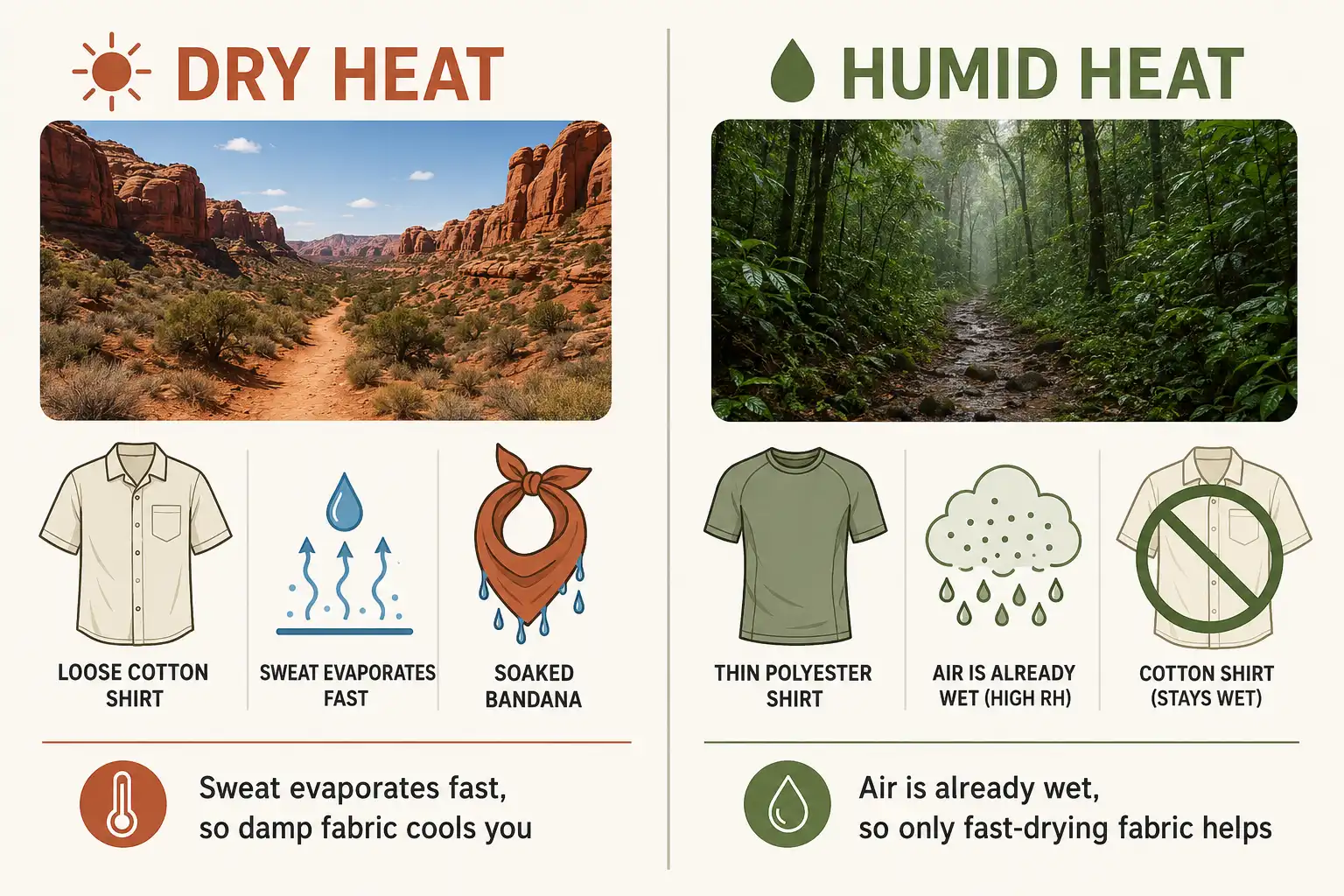
Yes, and this one point decides most of your choices. Dry heat and humid heat behave differently on your skin, so the same shirt can feel great in Utah and awful in a monsoon forest.
In dry heat, sweat evaporates almost the moment it appears. Holding a little moisture against your skin therefore helps you cool down. That is why the National Park Service tells Grand Canyon visitors to dress in loose-fitting cotton clothing during heat warnings, and why canyon hikers soak their shirts on purpose.
In humid heat, the air already carries plenty of moisture. Sweat then sits on your skin instead of evaporating. Cotton turns heavy and stays wet for hours, so you want thin fabric that moves sweat outward and dries fast.
| Condition | What works | Why |
|---|---|---|
| Dry heat: deserts, canyons, high plateaus | Loose cotton, cotton blends, light synthetics | Fast evaporation cools you, so damp fabric helps |
| Humid heat: jungle, coast, monsoon hills | Thin polyester, nylon, light merino | Slow evaporation means you need fabric that sheds sweat quickly |
Check the forecast humidity, not just the temperature, before you pack.
Read next: What Are the 10 Essentials for Hiking
What fabrics work best for hiking in hot weather?
Lightweight polyester and nylon work best across most hot conditions, because both move sweat off your skin quickly and dry within an hour.
Polyester dries fastest and costs the least, which is why most budget hiking shirts use it. The main tradeoff with polyester as a hiking fabric shows up as odor after a day or two of hard sweating. Nylon dries slightly slower, yet it resists abrasion better, so it dominates hiking pants and shorts.
Merino wool surprises people in the heat. Thin merino, roughly 120 to 150 gsm, breathes well and resists odor for days without a wash. Above about 75°F with high humidity and a fast pace, however, lighter synthetics usually feel cooler and dry faster. For multi-day trips where washing is impossible, merino still earns its place.
Cotton splits opinion for a good reason. Dry heat is where it genuinely helps, since it holds water against your skin and cools you through evaporation. Humid air ruins it completely, because the shirt soaks through, clings, chafes, and never dries.
Skip these entirely:
- Denim and heavy canvas, which hold sweat and restrict movement
- Fleece and thick knits, which trap heat you are trying to shed
- Waterproof shells worn while walking, unless rain actually arrives
- Anything tight and dark in synthetic fabric, which traps warm air against your skin
Should you wear long sleeves or short sleeves hiking in hot weather?
Long sleeves win on exposed trails with little shade. A loose long-sleeve shirt shades your arms, blocks most UV, and cuts how often you stop to reapply sunscreen.
That advice sounds backward until you try it. Fabric held slightly away from your skin creates shade and lets air move underneath, so your arms stay cooler than bare skin under direct sun. Guides at the Grand Canyon have recommended thin, light-colored long sleeves for decades for exactly this reason.
Sun hoodies take the idea further. A hooded sun shirt covers your neck, ears, and the sides of your face, which are the spots most people burn. Pull the hood over a cap and the brim holds it off your face. Thumb loops keep the cuffs over the backs of your hands.
Short sleeves still make sense in some conditions:
- Shaded forest trails where UV barely reaches you
- Humid jungle walks where any extra fabric feels worse
- Short hikes under two hours with sunscreen already applied
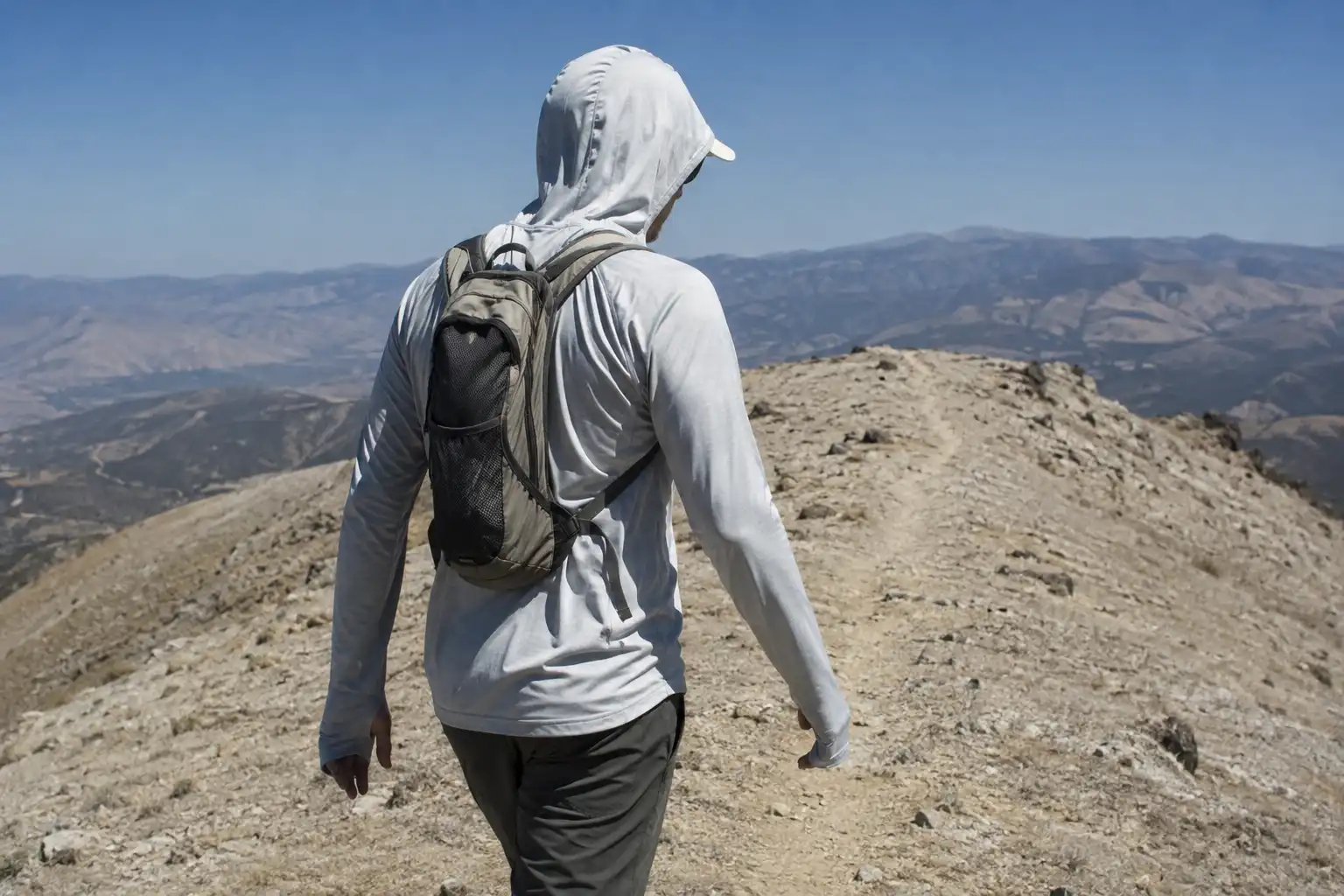
Personally, I keep one thin long-sleeve shirt in my pack even on short trips. Sun exposure adds up faster than most people expect.
Pants or shorts for hot weather hiking?
Both work well, so choose based on shade, brush, and sun rather than temperature alone.
Pants earn their place on exposed trails, in thorny scrub, on sharp rock, and anywhere ticks live. Look for nylon in the 3 to 5 ounce range, a light color, roll-up cuffs, and a gusseted crotch for easier stepping. Good hiking pants weigh almost nothing and dry in minutes.
Shorts win on shaded trails, humid forest paths, and routes with repeated water crossings. Pair them with a longer sock or a light gaiter if the brush gets scratchy.
Convertible pants split the difference, though the zippers add bulk and often chafe behind the knee. I would rather carry proper shorts and proper pants than a compromise between them.
Never hike in jeans when it is hot. Denim absorbs sweat, stays damp for hours, and rubs raw once wet.
What UPF rating do hiking clothes need?
Look for UPF 50 or UPF 50+, which blocks roughly 98% of ultraviolet radiation. That rating covers both UVA and UVB, unlike sunscreen SPF, which mainly measures UVB.
The scale helps once you see the gaps. UPF 30 lets through about 3.3% of UV, while UPF 50 lets through about 2%. Ordinary clothing performs far worse than most hikers assume: a plain white cotton t-shirt sits near UPF 5, and that number drops further once the shirt gets wet or stretches tight.
Four things drive the rating. Tight weaves block more UV, darker and richer colors absorb more, synthetics like polyester and nylon naturally outperform untreated cotton, and a snug stretched fit opens the weave and leaks UV through.
One caution worth remembering: fabric only protects the skin it covers. Your face, ears, neck, and the backs of your hands still need sunscreen, and high altitude raises the stakes further.
Does clothing color matter in hot weather?
Less than most people assume, though it still matters a little. Light colors reflect more sunlight, yet fit and airflow affect your comfort far more than shade of fabric.
Researchers tested this properly in 1980. A study published in Nature compared black and white Bedouin robes in the Sinai desert and found that the wearer gained the same amount of heat either way. The black robe absorbed more radiation, but that extra heat escaped before it reached the skin, because the loose robe created a chimney of rising air.
Keep the limits of that finding in mind. A robe holds a large air gap, while a fitted hiking shirt does not. For close-cut clothing, light and mid-tone colors remain the safer default in direct sun.
Meanwhile, darker saturated colors block more UV, which explains why many UPF shirts come in mid-tones rather than white. My own approach settles the argument simply: light to mid-tone color, loose cut, UPF label on the tag.
What hat works best for hot weather hiking?
A wide-brim hat with a brim of at least three inches all the way around beats every other style. That width shades your face, scalp, ears, neck, shoulders, and upper back at once.
Ball caps leave your ears and the back of your neck fully exposed, and those spots burn first. If you prefer a cap, add a neck cape or wear a hooded sun shirt over it.
Look for these features:
- Tightly woven fabric rather than open straw, since loose weaves leak UV
- Mesh side panels or vent holes for airflow
- A chin cord, because exposed ridges get windy
- A crown that holds water, so you can soak it at every stream
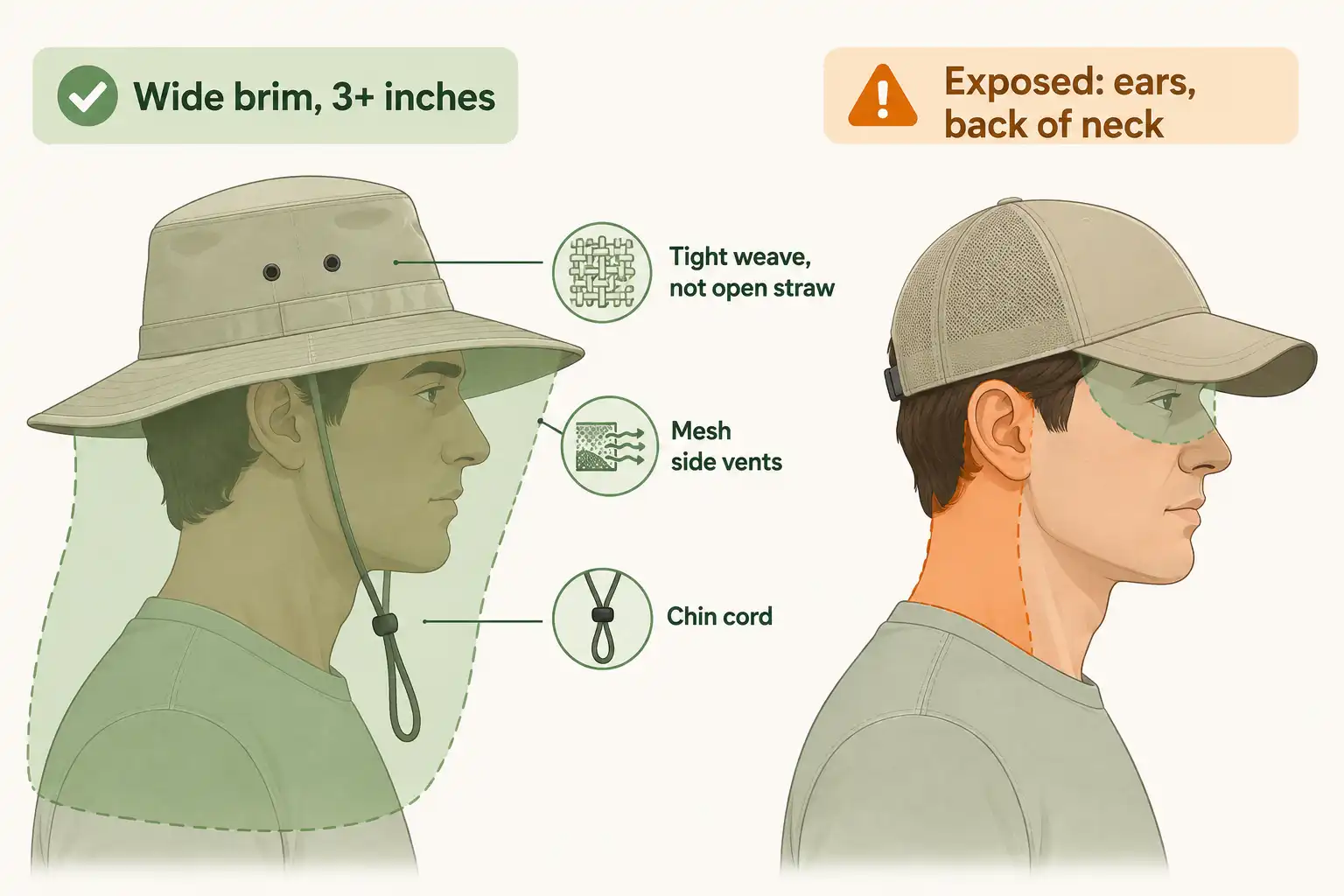
Soaking a hat costs nothing and works remarkably well. On hot afternoons in the hills near Kaptai, I dunk mine at every stream crossing and feel the difference within a minute.
What socks and shoes should you wear in hot weather?
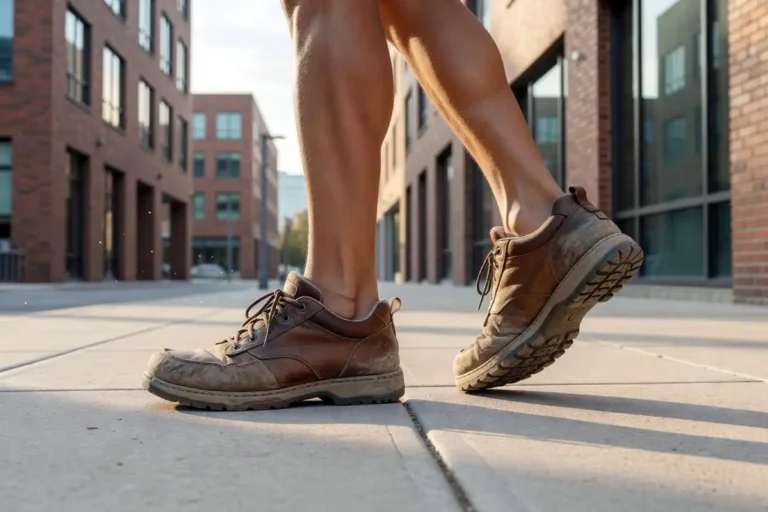
Wear thin merino or synthetic socks with ventilated shoes that have no waterproof membrane. Heat and sweat cause far more blisters than water does.
Waterproof linings are the common mistake. A membrane cannot release sweat vapor as fast as hot feet produce it, so moisture builds inside, skin softens, and blisters follow. Mesh uppers solve this by letting sweat evaporate and letting the shoe dry within an hour or two.
A few fit details matter more in the heat:
- Feet swell on hot days, so allow about half a size extra
- Light-colored uppers absorb less heat than black ones
- Low-cut shoes vent better than mid boots on maintained trails
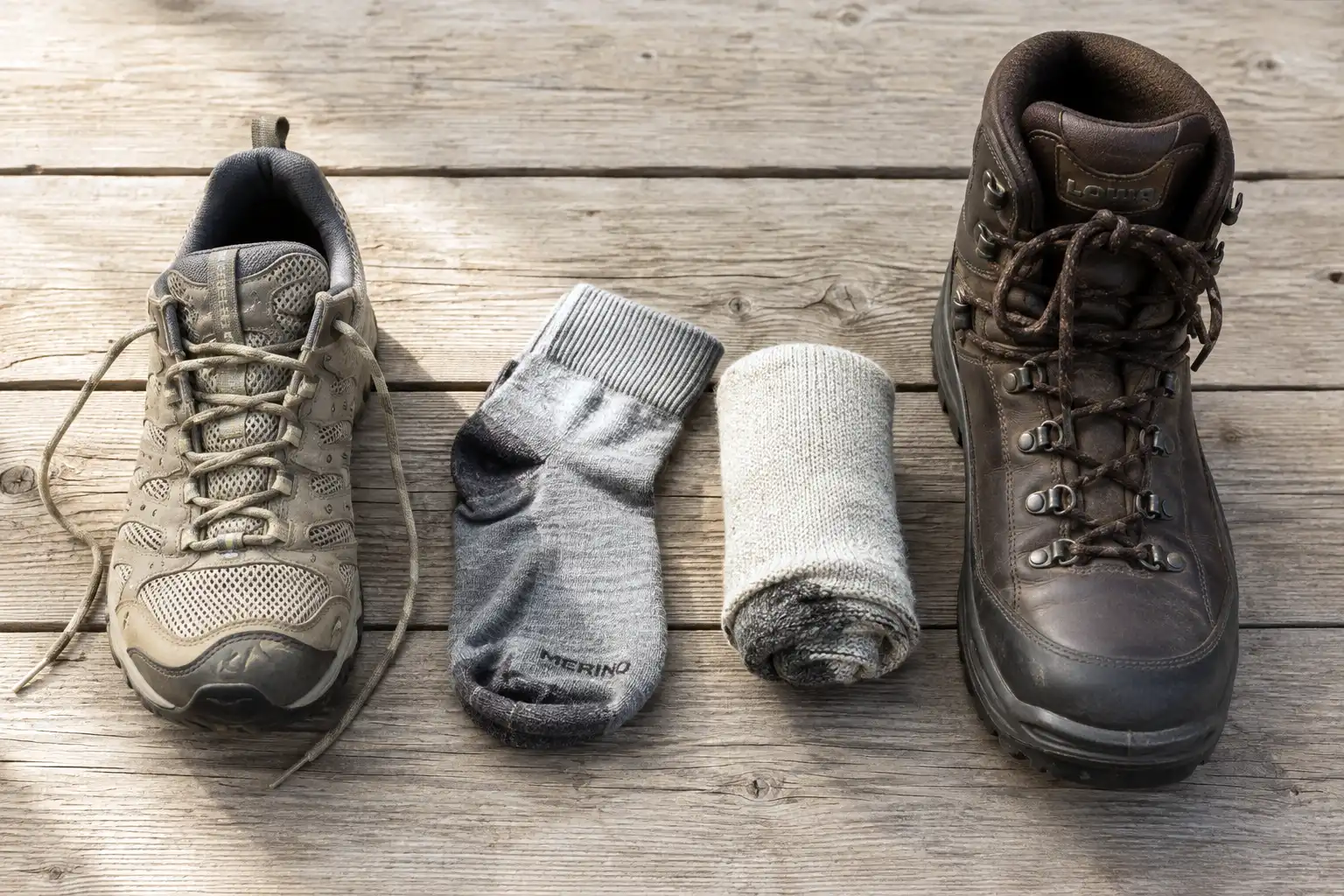
Heat pushes the choice between boots and hiking shoes toward the lighter option, though rough terrain and heavy packs still argue for ankle support.
For socks, skip cotton completely. Cotton holds sweat, dries slowly, and raises blister risk sharply. Choose thin merino or synthetic instead, with light cushioning only at the heel and toe, and a snug fit with flat seams. Crew height keeps dust and grit out on sandy trails, while ankle height vents better on clean paths.
Packing a second pair of hiking socks that cut blister risk lets you swap at lunch, which is the single best foot habit I have picked up.
What about underwear and chafing?
Choose synthetic or merino underwear with flat seams, then add anti-chafe balm before you start walking. Cotton underwear stays soaked all day and rubs badly once damp.
Chafing shows up in three places on hot hikes: inner thighs, under a pack belt, and along a sports bra band. Balm applied at the trailhead prevents far more damage than balm applied after the burning starts.
Longer boxer briefs or fitted shorts under loose pants stop thigh rub better than briefs alone. For a full day in humid heat, I also carry one spare pair. Changing at a break resets everything.
Accessories that earn their weight
A few small items do more for hot weather comfort than any expensive shirt.
Sunglasses come first. Bright rock, sand, and water reflect a surprising amount of UV upward, so wraparound lenses with side coverage beat narrow frames on open ground.
A bandana or thin neck gaiter ranks second. Soak it, wrap it around your neck, and you get several minutes of real cooling. Both dry fast, weigh nothing, and double as a dust filter.
Sun sleeves suit hikers who prefer short sleeves. They cover your arms, pull off in seconds, and cost less than a new shirt.
A lightweight sun umbrella looks odd until you use one on a shadeless ridge. Desert hikers have carried them for years because portable shade beats every fabric choice.
Finally, pack sunscreen for the skin your clothes cannot cover, along with lip balm carrying SPF.
What should you still pack even though it is hot?
Carry a wind shirt or light rain shell plus one dry layer, no matter how hot the forecast looks. Temperatures in dry regions can drop 30 to 40 degrees after sunset, and afternoon storms arrive fast in monsoon season.
Wet clothing plus wind chills you quickly, even in summer. A dry shirt to change into at camp solves the problem for a few ounces. Bear in mind that what you wear at a summer campsite does not need to match what you hiked in, since standing around calls for looser and warmer clothes than walking does.
What not to wear hiking in hot weather
Avoid these entirely:
- Jeans or denim shorts. They soak, sag, and chafe.
- Cotton socks. They cause more blisters than any other single item.
- Waterproof boots. Trapped sweat softens skin and raises blister risk.
- Tight dark synthetics. They block airflow while absorbing solar heat.
- Brand new shoes. Hot swollen feet punish any shoe you have not broken in.
- Tank tops on exposed trails. They leave shoulders and arms fully exposed, and sweat washes sunscreen off faster than you reapply it.
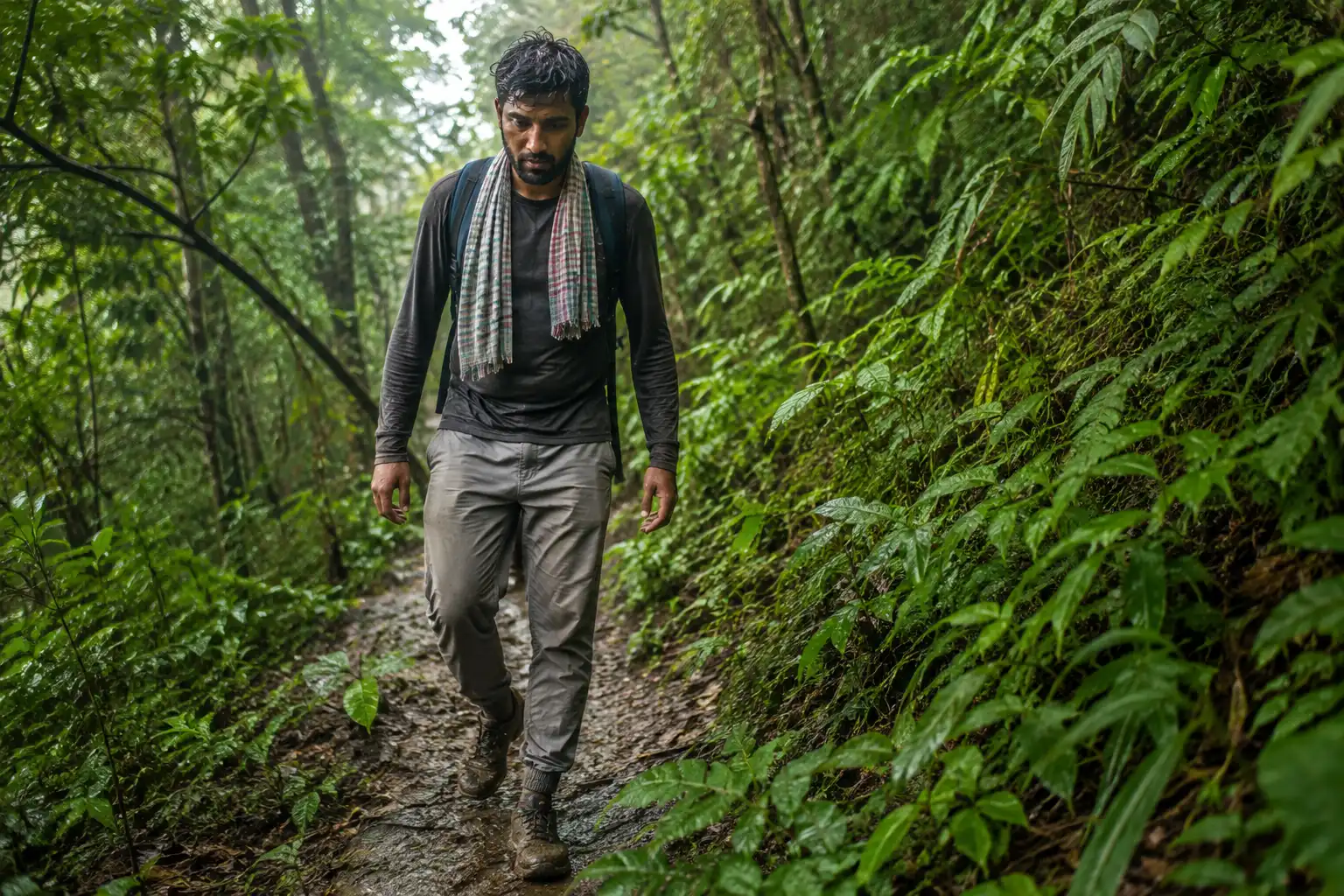
How I dress for humid heat in the hill tracts
My home trails around Kaptai stay humid for most of the year, so I have tested this kit hard. Nothing here is theoretical.
My standard setup runs simple: a thin polyester long-sleeve shirt, light nylon pants, crew socks, and trail shoes I do not mind soaking. Pants matter more than most visitors expect, because the undergrowth carries thorns, leeches, and biting insects, and long trousers help with keeping mosquitoes off you on the trail.
I also carry a thin cotton gamcha, the local towel every hill household owns. Soaked at a stream and draped over my neck, it cools better than anything I have bought from a gear shop.
One habit I have learned the hard way: nothing dries overnight in humid air. Therefore I always pack one sealed dry set for sleeping, and I accept that my hiking clothes will still be damp at dawn.
How do you use your clothes to cool down on the trail?
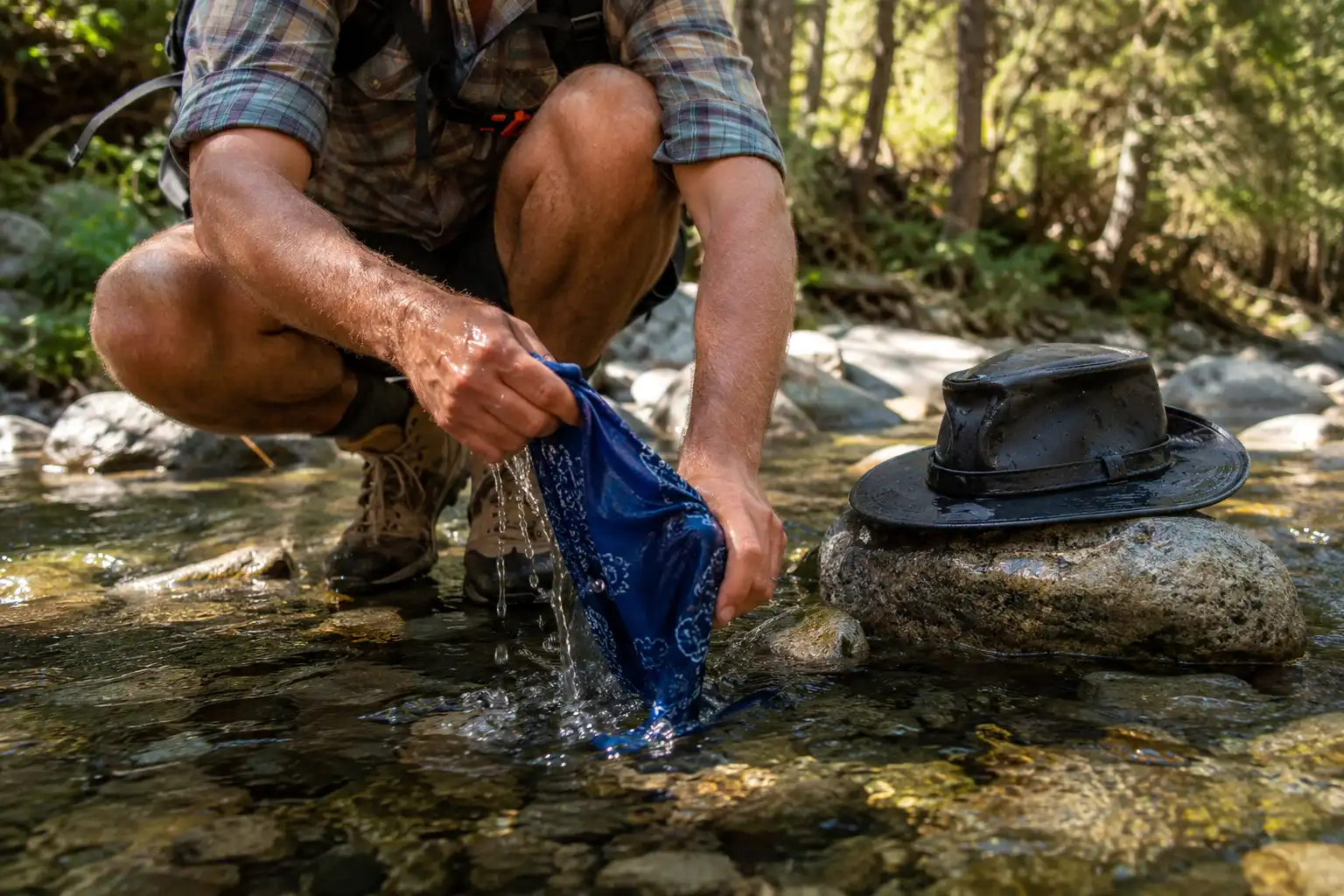
Wet them. Soaking your hat, bandana, and shirt at every water source gives you evaporative cooling that no fabric provides on its own.
Rangers at the Grand Canyon advise hikers to get wet to stay cool, and the same trick works anywhere with water access. In humid air the effect fades faster, yet it still helps for a few minutes.
Beyond wetting down, small adjustments add up:
- Open your collar and roll your cuffs while resting in shade
- Take your pack off at breaks so your back can dry
- Use pit zips or side vents if your shirt has them
- Change socks at midday, then dry the used pair on your pack
Clothing alone cannot protect you once temperatures climb into dangerous territory. Knowing how to handle a trail in extreme heat matters far more than fabric at that point, and the answer usually involves changing when you walk rather than what you wear.
Frequently asked questions

Is cotton ever acceptable for hiking in hot weather?
Do long sleeves actually make you hotter?
What color shirt stays coolest for hiking?
How many shirts do I need for a multi-day summer hike?
Are sun sleeves worth carrying?
Final thoughts
Hot weather hiking clothing comes down to three decisions. First, match your fabric to the humidity, because dry heat and humid heat reward opposite choices. Second, cover up rather than strip down on exposed trails, using UPF 50 fabric, a three-inch brim, and loose sleeves. Third, keep your feet cool and dry with thin socks and ventilated shoes. Get those three right and the rest is minor. Then use water at every chance to reset your temperature.