Cost of Trekking to Everest Base Camp: Full Price Breakdown

Trekking to Everest Base Camp sits at the top of many hikers’ lists, and the price tag is usually the first thing people ask about. I have not walked the trail myself, but I have researched it carefully and spoken with friends in Kathmandu who guide it every season. This article breaks down every cost so you can plan a realistic budget instead of guessing. All numbers below are in US dollars and reflect what most trekkers paid during recent seasons.
What does Everest Base Camp trek cost on average?
A guided Everest Base Camp trek usually costs between $1,200 and $2,800 per person, not counting international flights. Budget trekkers who join group departures and skip extras can finish closer to $1,000. Comfort-tier packages with private guides, premium lodges, and helicopter returns can run past $4,500. So your final bill depends on your style, season, and how much you carry yourself.
Read more: Nepal base camp trekking
Permits and entry fees
You need two permits for the standard route. Local authorities replaced the older TIMS card on this trail a few years back, so the paperwork is simpler now.
- Sagarmatha National Park entry permit: roughly $25 for foreign trekkers, paid in Nepali rupees at the Nepal Tourism Board office in Kathmandu or at the Monjo checkpoint.
- Khumbu Pasang Lhamu Rural Municipality permit: about $20, payable in Lukla once you arrive.
So permits alone cost around $45. Children and SAARC nationals pay reduced rates.
Flights to Lukla
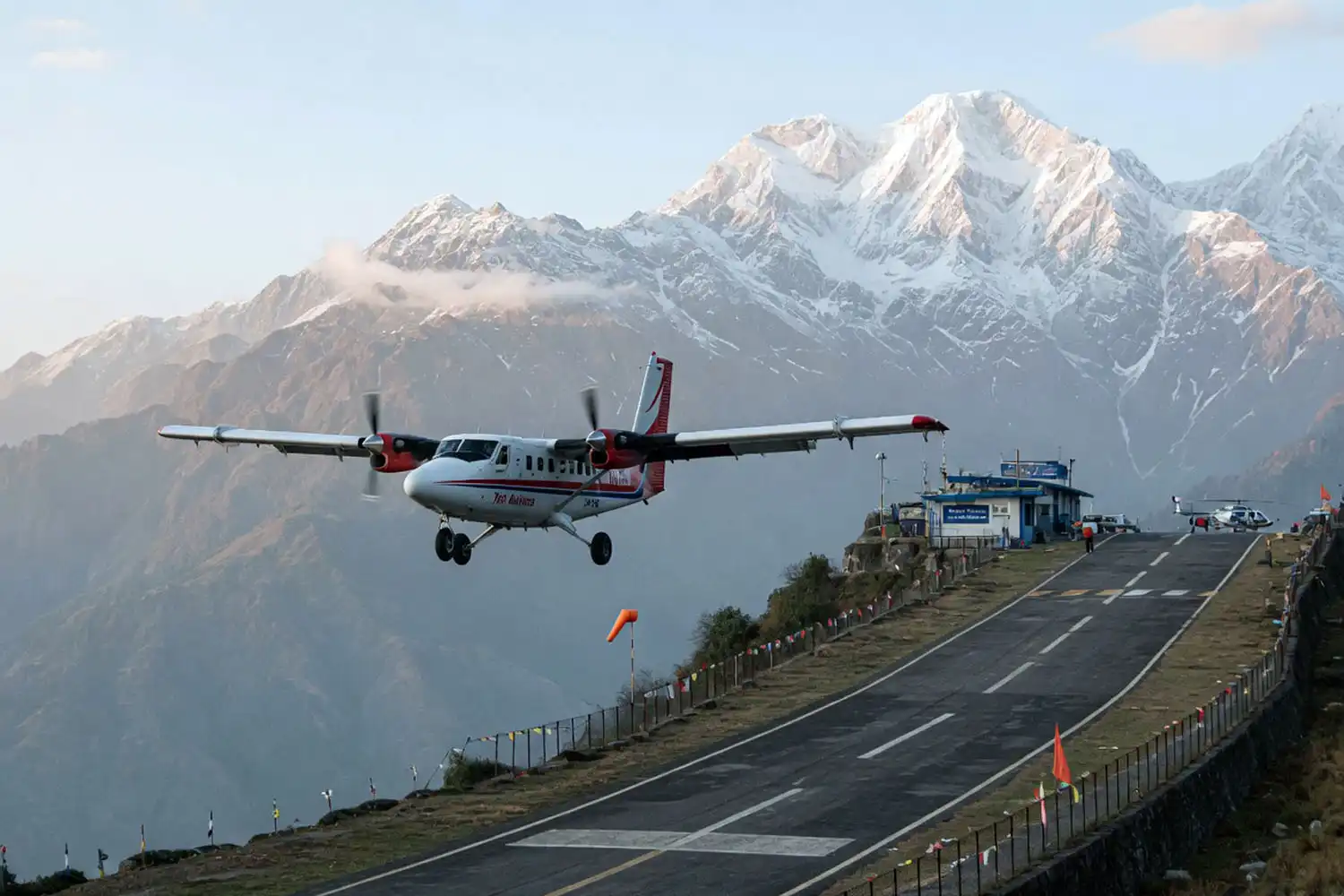
The Kathmandu-Lukla flight is the single biggest fixed cost after permits. Round-trip tickets typically sit between $360 and $440 per person. During peak season (October and November), flights often shift to Ramechhap, which adds a four to five hour jeep ride before boarding. Helicopter transfers from Kathmandu or Lukla cost $500 to $1,200 per seat depending on demand and weather delays. Many trekkers split a chartered chopper four ways to bring the per-person cost down.
Guide and porter costs
Since 2023, Nepal requires foreign trekkers in most national park regions to hire a licensed guide or join an organized group. So skipping this step is no longer an option on the main Everest route.
- Licensed guide: $30 to $40 per day, plus the guide’s food and lodging in some itineraries.
- Porter: $20 to $25 per day, usually carrying up to 20 kilograms.
- Porter-guide combo: $25 to $30 per day, a popular middle option for solo trekkers.
For a typical 12-day itinerary, a guide alone adds roughly $360 to $480. Add a porter and the labor cost climbs by another $240 to $300. Trekkers also tip on top, usually 10 to 15 percent of the total fee. For a sense of how long you will actually be on the trail and paying daily wages, the full walking duration breakdown for Everest Base Camp is worth a look before you commit to dates.
Teahouse lodging
Teahouses along the trail charge surprisingly little for the bed itself. Expect $5 to $10 per night for a basic twin room at lower altitudes like Phakding and Namche. Higher up, near Lobuche and Gorak Shep, rooms reach $10 to $20 because porters and yaks haul every supply up by hand. Some lodges now require you to buy your dinner and breakfast from them to keep the cheap room rate.
Food and drink along the trail
Meals get pricier as you climb. Plan for these averages:
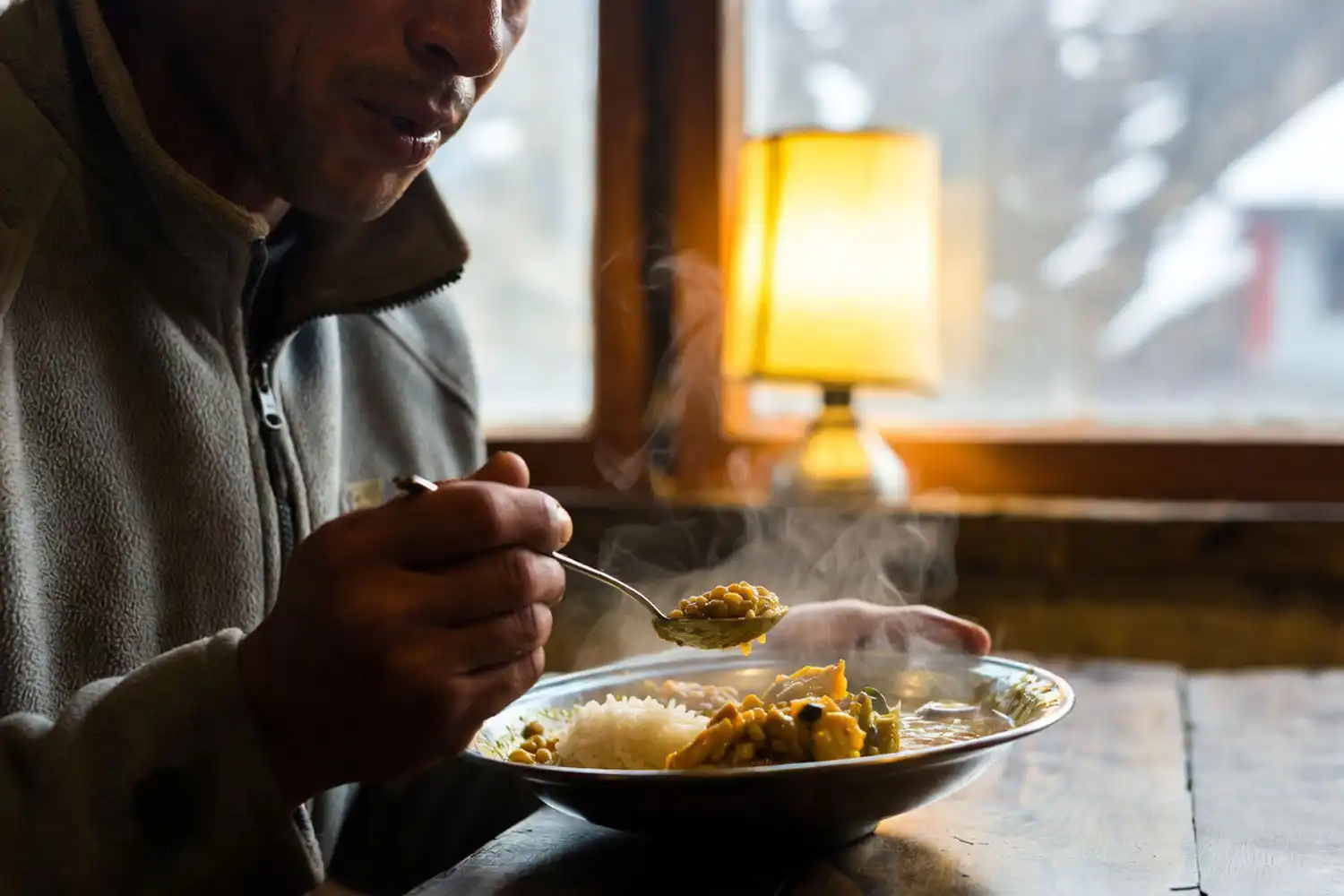
- Dal bhat or pasta: $5 to $8 in Namche, $9 to $14 in Gorak Shep.
- Breakfast (eggs, pancakes, porridge): $4 to $9.
- Hot drink (tea, hot lemon, coffee): $1 to $5, climbing fast above 4,000 meters.
- Bottled water: $1 to $5 per liter (please use purification instead).
- Snickers or energy bar: $2 to $5.
So daily food budget realistically falls between $25 and $40. For a 12-day itinerary, that means $300 to $480 in meals alone. To cut bottle costs, I recommend carrying a filter or chlorine drops, similar to the method I use on Bandarban treks. For the basics on treating water in the field, the same techniques apply at altitude.
Travel insurance
This is non-negotiable. Standard travel policies usually exclude trekking above 4,000 meters, and the Everest Base Camp elevation sits at 5,364 meters. So you need a policy that explicitly covers high-altitude trekking and helicopter evacuation. Expect to pay $80 to $180 for two to three weeks of coverage, depending on age and limits. For a closer look at what adventure activity policies should include, my earlier guide walks through the key clauses.
Gear costs
If you already own decent hiking gear, you might spend nothing extra. If you start from scratch, expect $400 to $1,000 to outfit yourself with boots, a sleeping bag rated to -10°C, a down jacket, base layers, a headlamp, and trekking poles. Renting in Kathmandu is cheaper, with down jackets and sleeping bags going for $1 to $2 per day. The packing list for international high-altitude trips overlaps closely with what I cover in my notes on gear and documents for international treks.
Tips, visa, and small extras
- Nepal tourist visa: $30 for 15 days, $50 for 30 days, $125 for 90 days.
- Tips for guide and porter: $100 to $200 combined for a full trek.
- Wi-Fi (Everest Link card): $5 to $20.
- Hot shower: $3 to $8 per use.
- Charging electronics: $2 to $5 per hour.
These small charges add up quickly. So most trekkers spend $80 to $150 on extras across the whole trek.
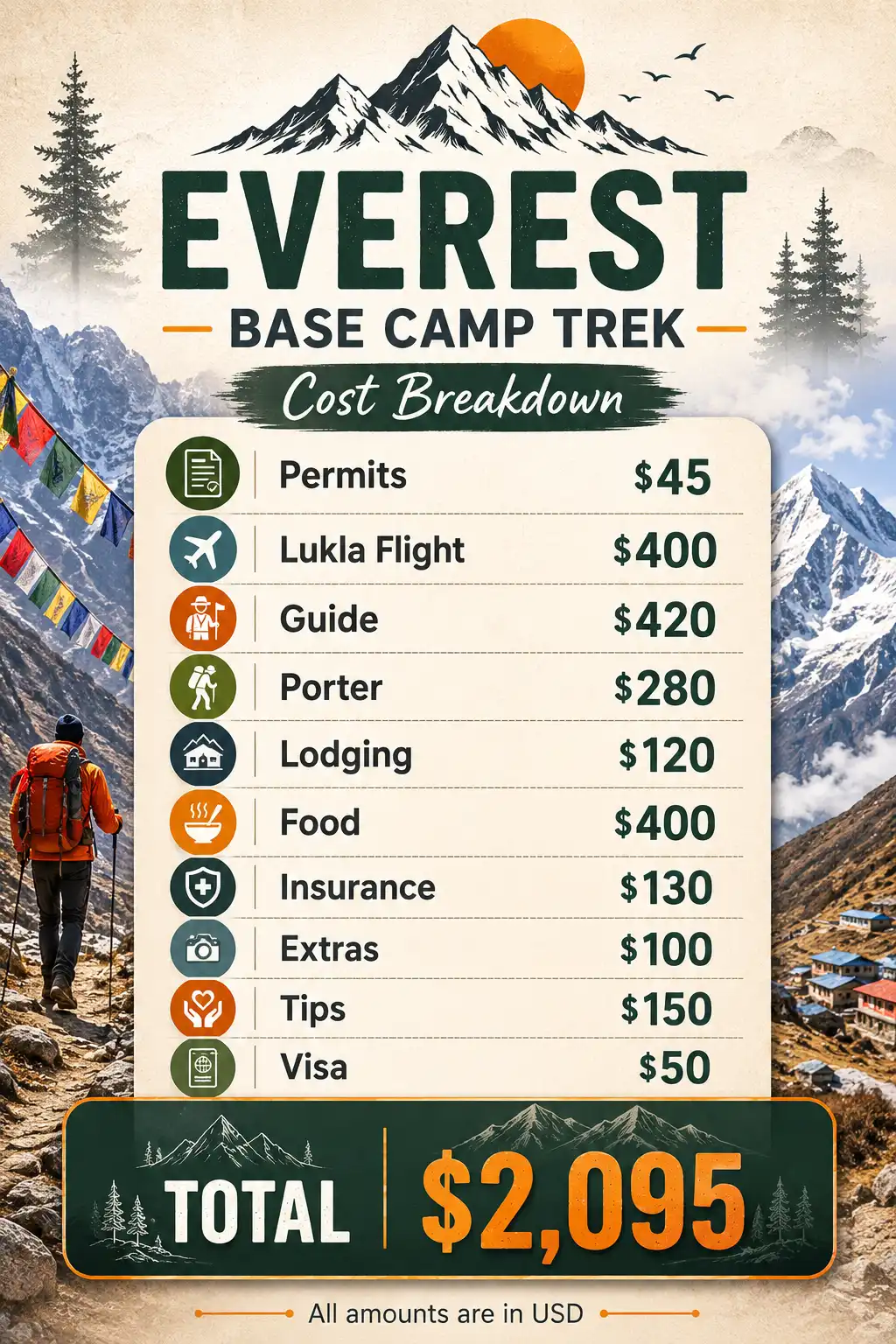
Sample budget for a 12 day independent-style trek
| Category | Cost (USD) |
|---|---|
| Permits | $45 |
| Kathmandu-Lukla flight | $400 |
| Guide (12 days) | $420 |
| Porter (12 days) | $280 |
| Lodging | $120 |
| Food and drinks | $400 |
| Insurance | $130 |
| Extras (Wi-Fi, charging, showers) | $100 |
| Tips | $150 |
| Visa | $50 |
| Total | $2,095 |
International flights from your home country are separate. From South Asia, return tickets to Kathmandu often sit at $300 to $500. From Europe and North America, expect $900 to $1,600.
Ways to lower your Everest Base Camp budget
A few choices cut your bill without hurting the experience.
- Book in shoulder season. Late March or early December often brings cheaper flights and lodges with bargaining room. My broader thoughts on saving on travel in shoulder months apply here too.
- Share a porter. Two trekkers can split one porter and still stay under the 20 kilo limit.
- Bring your own snacks. Granola bars and electrolyte powder bought in Kathmandu cost a fraction of trail prices.
- Refill water with purification. Skipping bottled water saves $60 to $120 over the full trek.
- Skip the helicopter return unless weather forces it.
Hidden costs people forget
Acclimatization days in Namche and Dingboche still cost money for food and lodging, even when you do not walk far. Also, flight delays in or out of Lukla can mean two or three extra hotel nights in Kathmandu, plus rebooking fees. Altitude sickness medication (Diamox), blister kits, sunscreen, and lip balm together add another $30 to $60. To get the bigger picture before you commit, my framework for building outdoor trip budgets covers the same approach I used for my Bandarban planning.
Final words
Everest Base Camp is not the cheapest trek in Nepal, but it is more affordable than most people assume once you separate fixed costs from optional ones. So a realistic working number is $2,000 to $2,500 for a comfortable mid-range trek, plus your international flight. Build in a 10 to 15 percent buffer for weather delays and surprises, and you will land on the trail without money stress riding on your shoulders.