What Muscles Does Hiking Work? A Full Body Breakdown

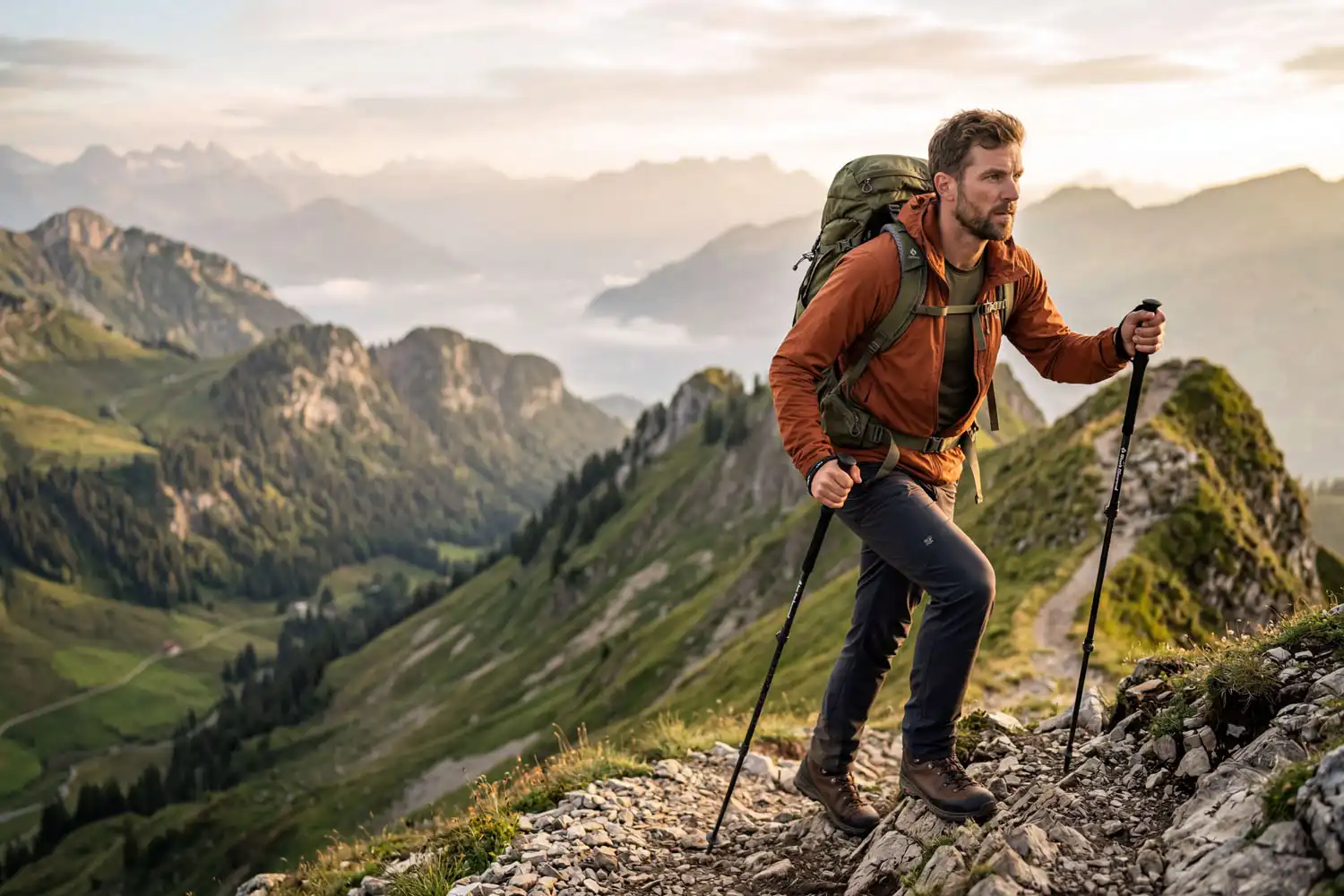
Hiking looks like simple walking, but it pulls in far more muscles than a flat city stroll. After years of trekking the Bandarban hills around Keokradong and the trails near Kaptai, I can tell you my whole body feels it the next morning. This article breaks down every muscle group hiking targets, how the workload shifts between uphill and downhill, and what changes when you add a heavy pack. By the end, you will know exactly why hiking counts as a full-body workout.
What muscles does hiking work the most?
Hiking primarily works the quadriceps, hamstrings, glutes, calves, and core, with secondary engagement of the hip flexors, lower back, and upper body. Your lower body does most of the heavy lifting, but your core stabilizes every step and your shoulders carry the pack. The exact muscle load shifts based on slope, pack weight, and terrain.
Learn more: Hiking tips for Weight Loss
Major lower body muscles hiking targets
Your legs do roughly 80% of the work on any hike. Here is how each muscle group contributes.
Quadriceps
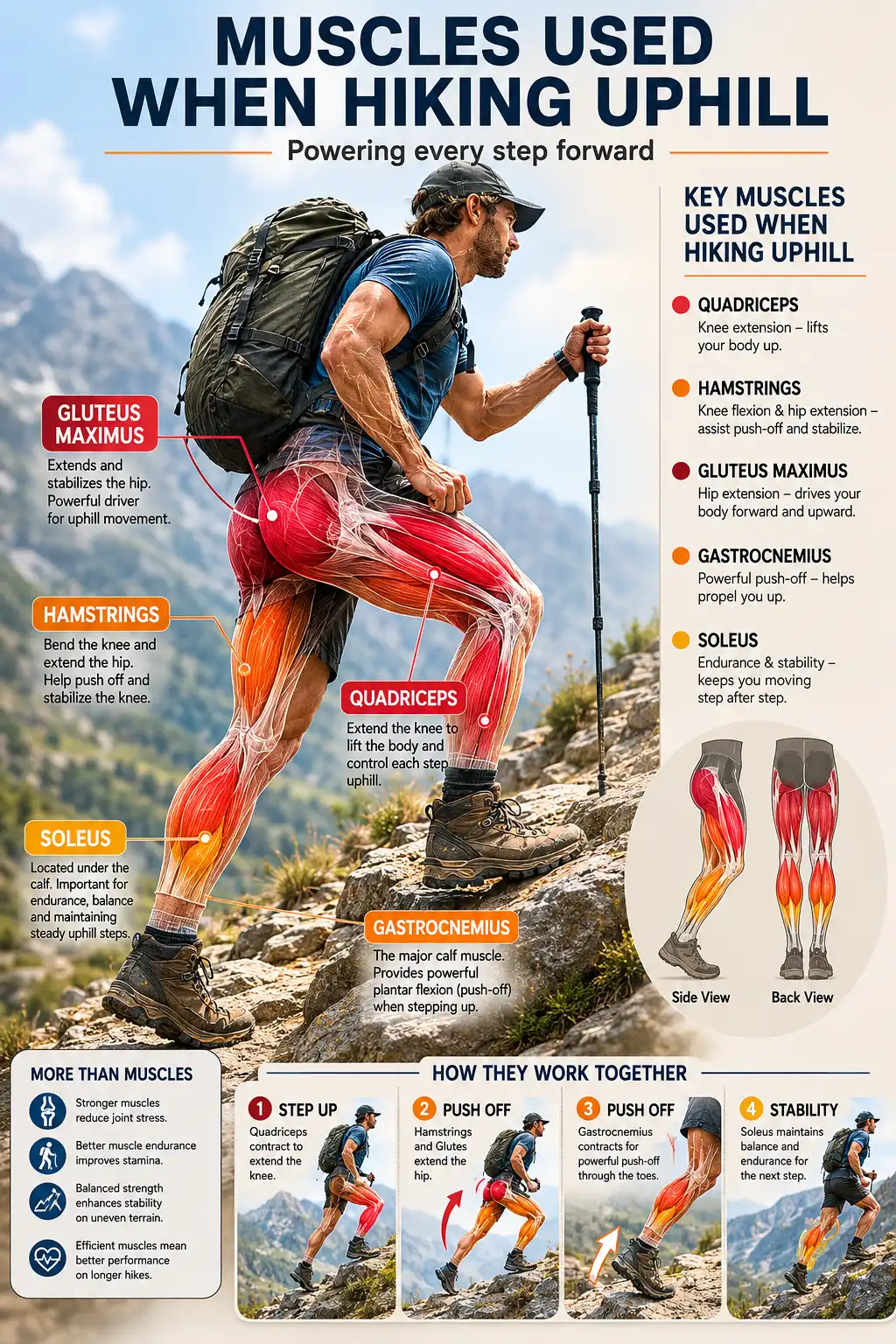
The quadriceps drive every uphill push and absorb every downhill impact. These four muscles on the front of your thigh extend the knee, so they fire constantly when you step up onto a rock or lower yourself off a ledge. On steep descents the quads work eccentrically, meaning they lengthen under load. That is why your thighs burn the day after a long downhill, and why so many people struggle with sore quads and aching knees after big descents. If your quads are not strong enough, you will feel it through your knees first. I cover that specific problem in my guide on handling knee pain on steep descents.
Hamstrings
The hamstrings power your stride and stabilize your knees on uneven ground. These muscles run along the back of your thigh, and they fire every time you pull your trailing leg forward or hold your knee in a safe position over loose rocks. On flat terrain hamstrings work moderately, but on steep climbs they pair with the glutes to drive each step up.
Glutes
The gluteal muscles are the engine of uphill hiking. Your glute max is the largest muscle in your body, and it powers hip extension, which is exactly what you need to push your bodyweight uphill step after step. Weak glutes force your quads and lower back to compensate, which usually shows up as fatigue or pain by mile five. Strong glutes let you climb longer without burning out, and they help with conserving energy on long uphill stretches.
Calves
The calves lift your heel and propel each push-off. Both the gastrocnemius and the soleus fire on every step, but they work hardest on inclines and when you carry weight. After a full day on the Nafakhum trail, my calves felt rope-tight from constant climbing on slick rock. Trekking poles can offload some of that strain, but the calves stay engaged the entire hike.
Hip flexors
The hip flexors lift your leading leg with every step. These small muscles at the front of the hip do quiet but constant work, and they get worked heavily when you step up onto tall rocks or fallen logs. Tight hip flexors are a common cause of lower back soreness after long hikes.
Learn more: Hiking and Leg Muscle
Core and back muscles engaged while hiking
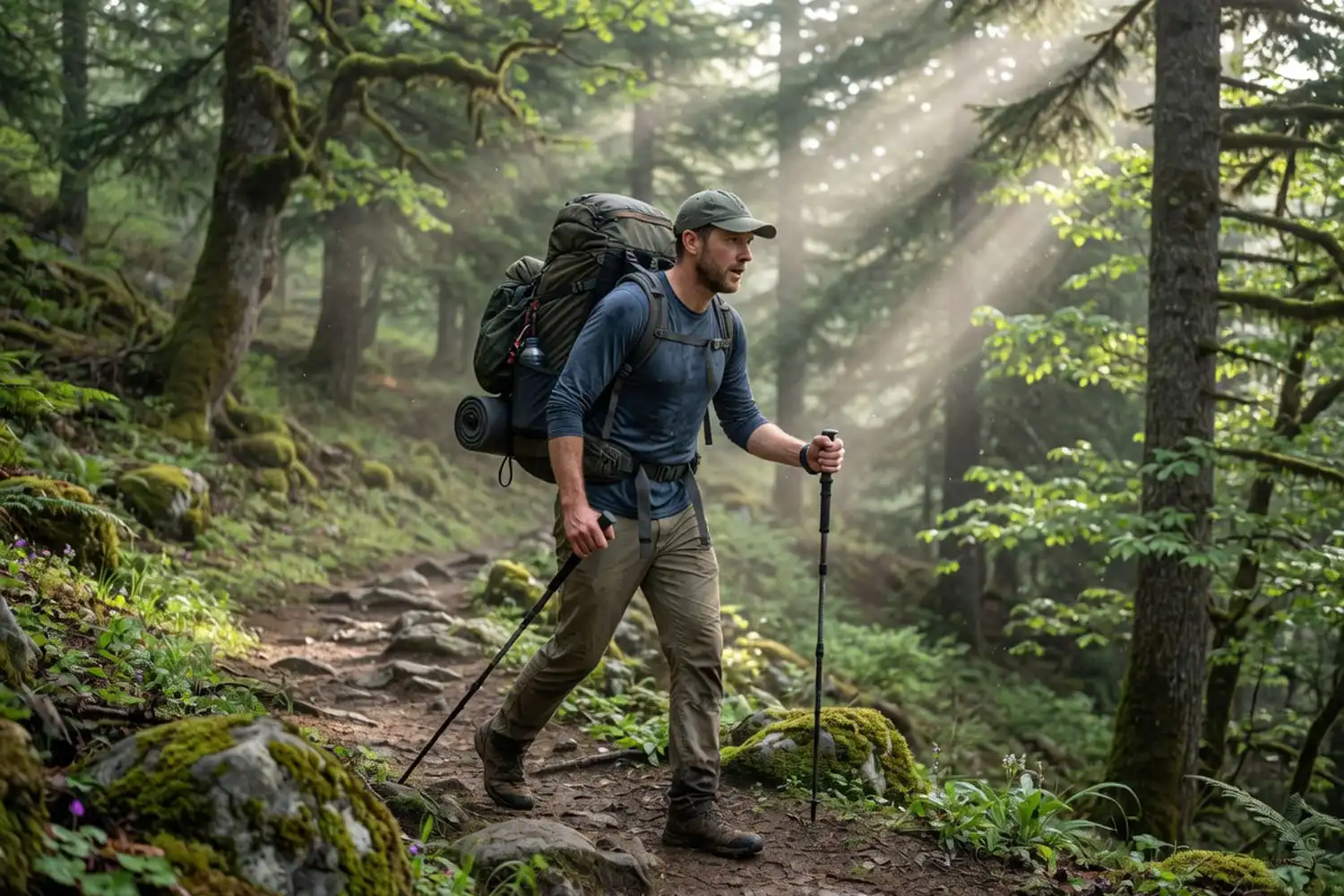
Your core works the entire time you are upright, even though you do not feel it the way you feel your legs. The deep abdominal muscles, obliques, and lower back stabilize your spine over uneven ground. Each time you twist to look around or balance on a rock, your core fires to keep you steady. Carrying a backpack multiplies this work. A loaded pack shifts your center of gravity backward, so your abs and erector spinae must work continuously to keep you upright. A weak core often shows up as lower back pain after long days on the trail.
Upper body muscles hiking activates
The upper body does less than the legs, but it still earns its share of the work, especially with poles or a heavy pack.
- Shoulders and traps carry the weight of your backpack. The longer the day and the heavier the load, the more they fatigue.
- Forearms and grip muscles activate when you scramble, push off rocks, or hold trekking poles.
- Chest and biceps engage lightly when you use poles aggressively on climbs or descents.
If your pack rides poorly, your shoulders will let you know first. Proper load placement matters a lot, and I walk through it in my article on balanced backpack loading on the trail.
How uphill vs downhill changes the muscle load
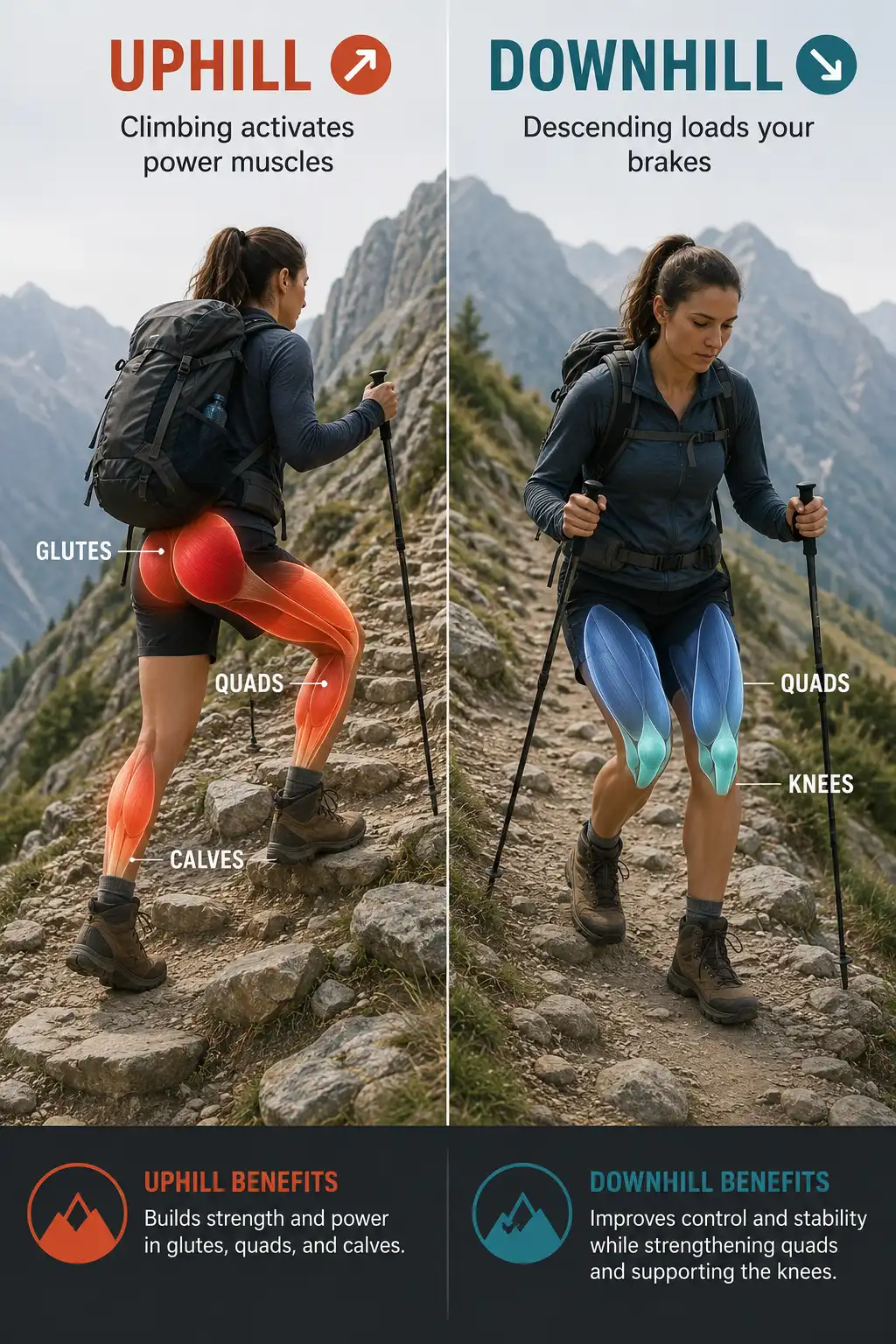
Uphill and downhill hiking work the same muscles in very different ways. Knowing this helps you train smarter and recover faster.
Uphill hiking
Going up emphasizes the glutes, quads, calves, and hamstrings in a concentric pattern, meaning they shorten under load. Your cardiovascular system also gets a strong push because uphill demands sustained effort. Heart rate climbs fast, and even a moderate slope can feel brutal without conditioning. For trip-specific physical prep, I lay out a routine in my Kedarnath trek conditioning guide.
Downhill hiking
Going down loads your quads, knees, and core through eccentric contractions. Your quads act as brakes, decelerating each step. This is why downhill feels easier on the lungs but punishes the legs. Joint impact also rises sharply on descents, and trekking poles can cut that impact by up to 25% based on what I have read from physical therapy sources.
How pack weight and terrain change the workout
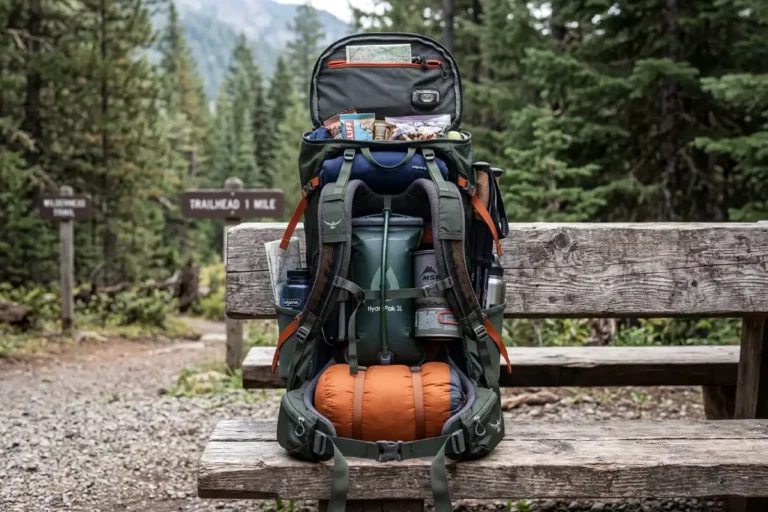
A loaded pack changes hiking from a leg workout into a full-body workout. Every extra kilogram on your back adds load to your core, shoulders, and lower back, and it multiplies the strain on your knees, especially on descents.
Terrain matters just as much. Smooth dirt trails work the prime movers in a predictable pattern. Rocky, root-tangled paths fire stabilizer muscles in your ankles, hips, and core much harder because every step demands a small balance correction. After three days on the Bandarban ridge trails my ankles felt like I had done a hundred single-leg balance drills, because in a way I had.
Calories and cardiovascular benefits
Hiking burns roughly 400 to 700 calories per hour depending on pace, pack weight, and slope. Your heart rate sits in a fat-burning zone for most of the day, and steep climbs push you into a cardio training zone. So hiking trains endurance, strength, and balance at the same time, which is why it remains one of the most efficient outdoor workouts.
How to strengthen hiking muscles off the trail
A few targeted exercises go a long way for building hiking-specific strength.
- Squats and lunges for quads, glutes, and hamstrings.
- Step-ups with weight to mimic uphill loading.
- Calf raises for ankle and calf endurance.
- Planks and side planks for core stability.
- Deadlifts for posterior chain strength (hamstrings, glutes, lower back).
Two strength sessions per week paired with regular walking will prepare you for most trails. For longer trips, I share a full conditioning framework in my breakdown of what fitness level multi-day backpacking demands.
Recovery and common soreness areas
Soreness after a hike usually concentrates in the quads, calves, glutes, and lower back. Stretching after the hike, light walking the next day, and proper hydration all speed recovery. If you finish a hike feeling pain in a joint rather than a muscle, that is a sign of overload or a form problem, not normal training soreness.
For new hikers, pacing prevents most of the worst soreness. I cover that in my guide on pacing yourself to avoid trail burnout.
Final thoughts
Hiking works almost every major muscle group, with the heaviest demand on the quads, glutes, hamstrings, calves, and core. Add a pack and the upper body joins in. Throw in elevation and the cardio system gets a serious workout too. So if you want a single activity that builds lower body strength, core stability, and endurance at once, hiking is hard to beat. Strengthen the key muscles, pace yourself, and let the trail do the rest.