Does Hiking Build Leg Muscle, or Just Burn Calories?

Hiking gets my legs sore in ways the gym never does. After a few seasons walking the hills around Bandarban and Kaptai, I noticed real changes in my calves, quads, and glutes. So if you have been wondering whether hiking actually builds leg muscle or just burns calories, this guide answers it plainly. I will walk through which muscles hiking targets, how the load and terrain change the result, and how to train smart if muscle growth is your goal.
Does hiking build leg muscle?
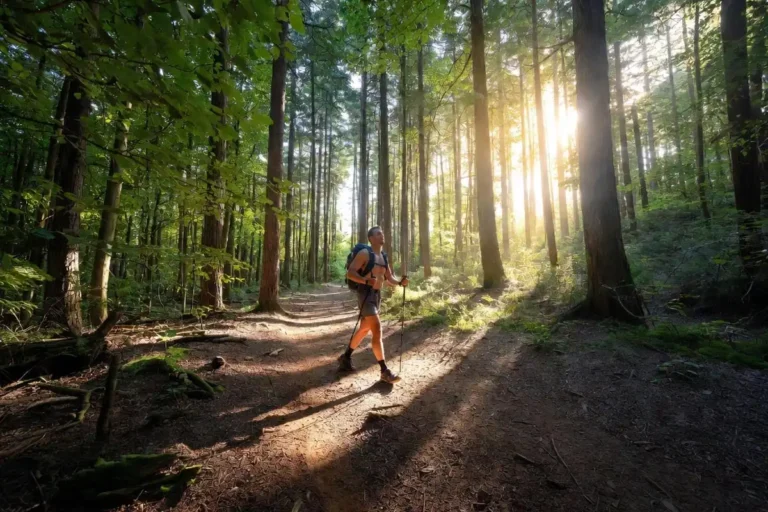
Yes, hiking builds leg muscle, especially when you carry a pack, climb steep grades, or move across uneven ground. It works your calves, quadriceps, hamstrings, and glutes through long-duration resistance loading. However, hiking alone tends to build endurance-style muscle rather than bulk. For visible size gains, you need extra load or supplemental strength training.
Learn more: Best way to Use Hiking Poles
Which leg muscles does hiking actually work?
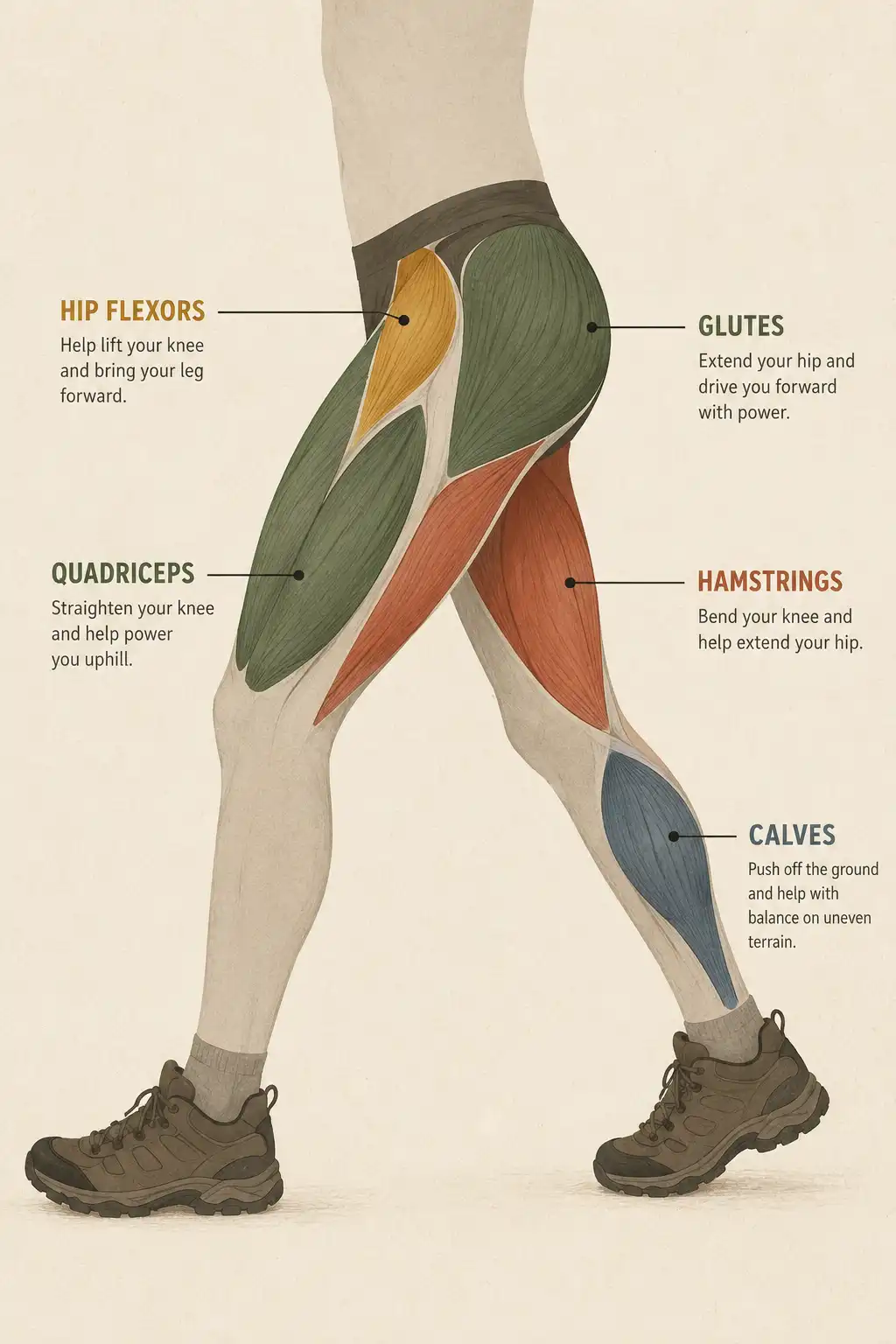
Hiking hits nearly every major muscle below the waist. Each one fires for a different reason, depending on terrain and pace.
Quadriceps
Your quads do the heavy lifting on every uphill step and absorb most of the impact on descents. After a long downhill stretch, mine feel shaky for hours. Because descents are eccentric work (the muscle lengthens under tension), they create the most microtears, which is exactly what drives muscle growth.
Glutes
Your glutes power hip extension. Every time you push off a step or climb a switchback, they fire hard. Steep climbs in particular light up the glute max more than flat walking ever will.
Hamstrings
The hamstrings stabilize your knee and assist on uphills. They also kick in when you carry a heavy pack, since your body leans forward and shifts the load through the posterior chain.
Calves
Calves are the unsung heroes on trail. Every push-off, every toe-strike going uphill, and every balance correction on rocks calls on the gastrocnemius and soleus. After two days on the Keokradong trail, my calves were the most sore part of my body.
Hip flexors and stabilizers
Hip flexors lift your knee on every step, and small stabilizing muscles around your ankles and hips fire constantly on uneven ground. This is why hiking on rocks builds balance and ankle strength that flat treadmill walking cannot match.
How does hiking actually build muscle?
Muscle grows when fibers experience tension, stress, and recovery. Hiking provides all three, just differently than a gym workout.
Long uphill climbs create sustained tension. Carrying a backpack adds resistance. Descents create eccentric loading, which is one of the strongest stimuli for muscle damage and regrowth. Then, during rest days, the tissue repairs and grows back slightly thicker.
So while you will not bulk up like a powerlifter, you absolutely build functional, dense, useful muscle. Hikers often have lean, defined legs rather than big ones. That is endurance hypertrophy in action.
Uphill vs downhill: which builds more muscle?
Both build muscle, but in different ways.
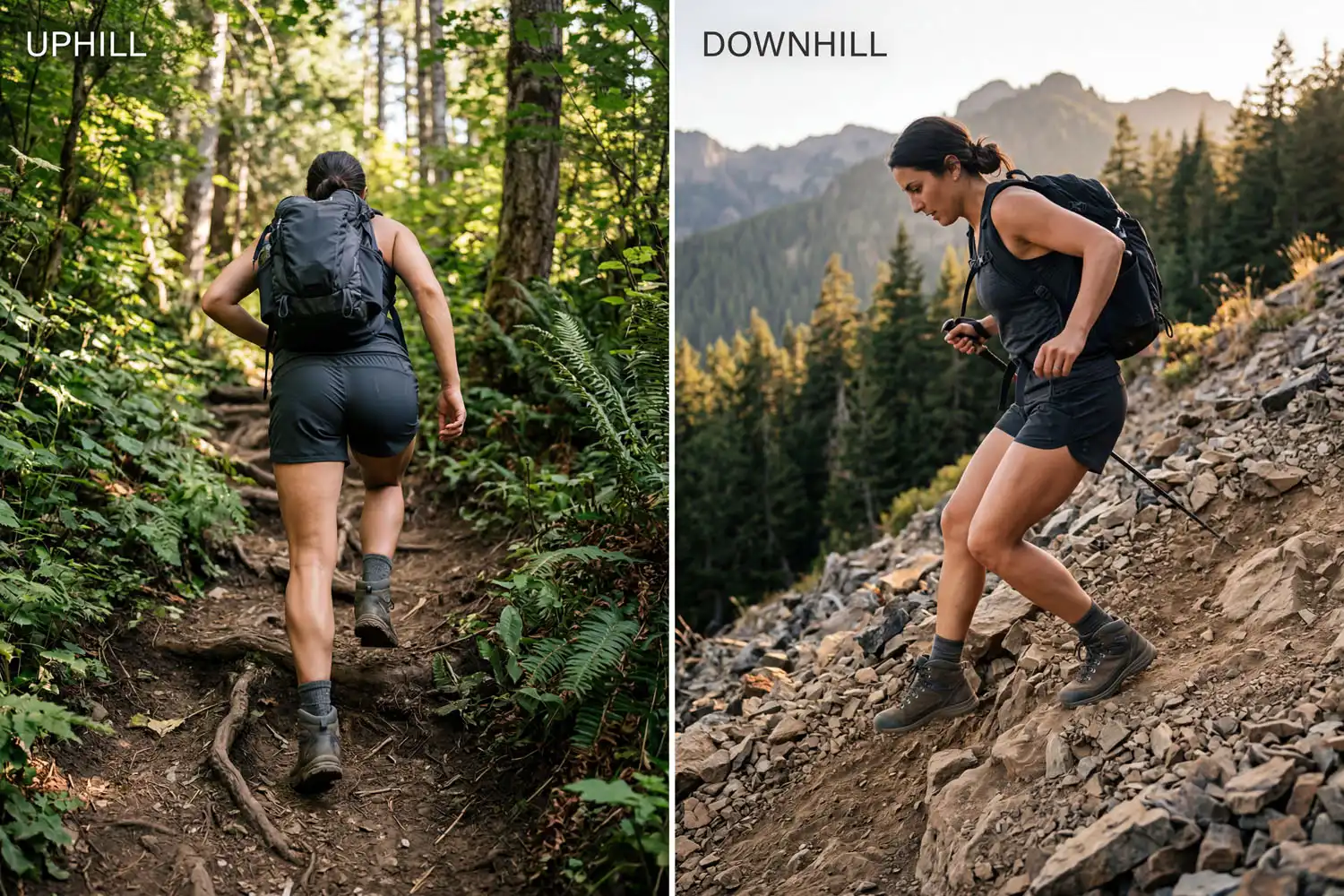
Uphill hiking demands concentric strength: muscles shorten under load. This burns more calories, raises your heart rate fast, and builds power in your glutes and quads. Tackling a steady climb feels brutal on the lungs, but the muscle stimulus is strong. If steep ground wrecks your pace, my notes on hiking uphill without burning out cover the breathing and step rhythm that helped me most.
Downhill hiking, on the other hand, is mostly eccentric. Muscles lengthen while resisting gravity. This is where the deep, lingering soreness comes from. Eccentric loading is well known to drive hypertrophy, so descents are actually doing serious muscle-building work even though they feel easier on your lungs. If you struggle with this part, my breakdown of managing knee pain on long descents covers the recovery and form fixes that work best.
Factors that increase muscle building on hikes
A few variables decide whether you finish a hike with just tired legs or genuinely stronger ones.
Pack weight
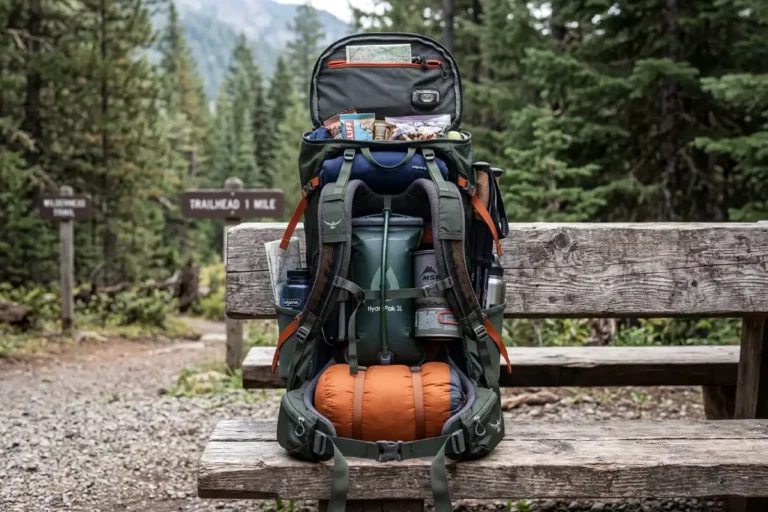
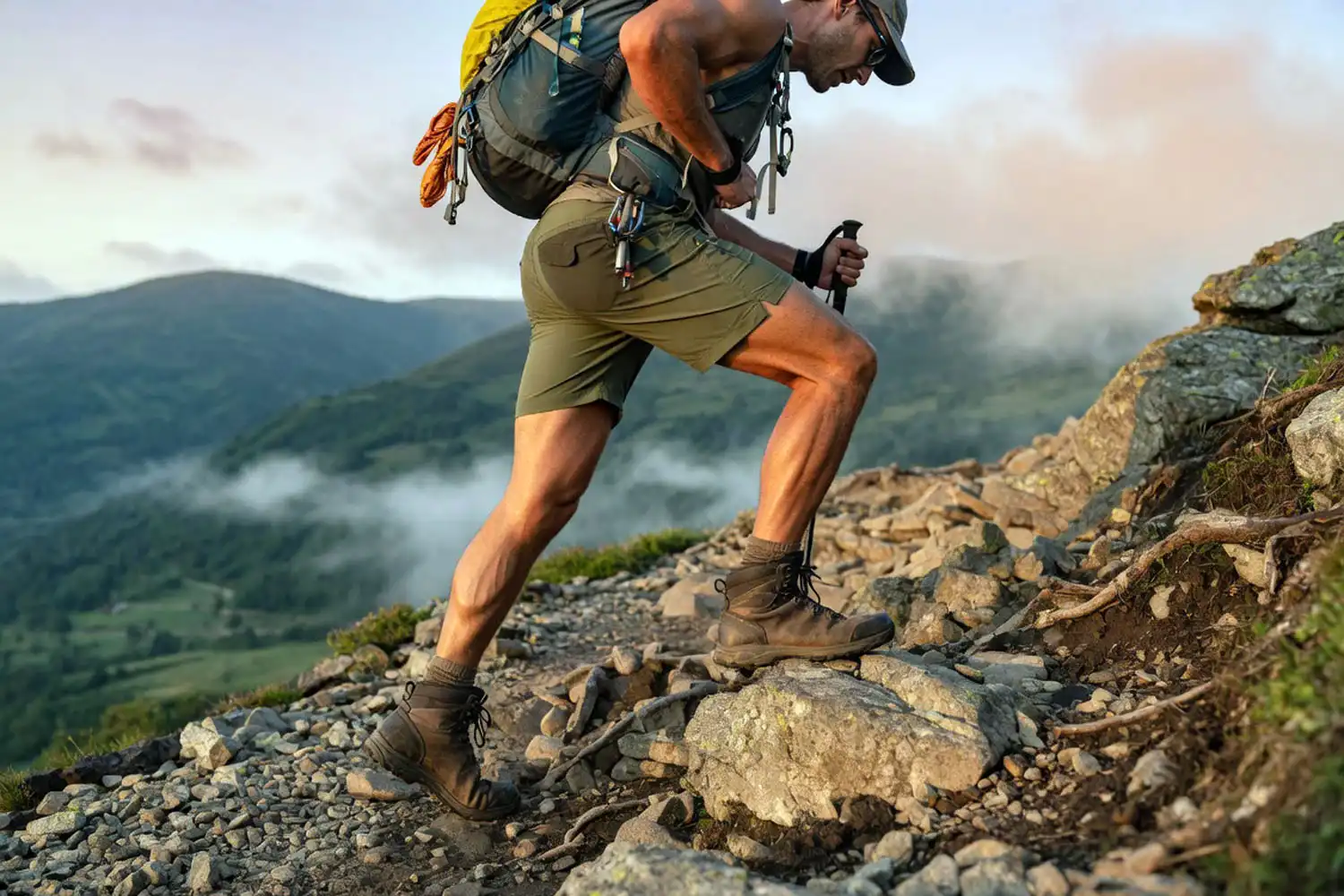
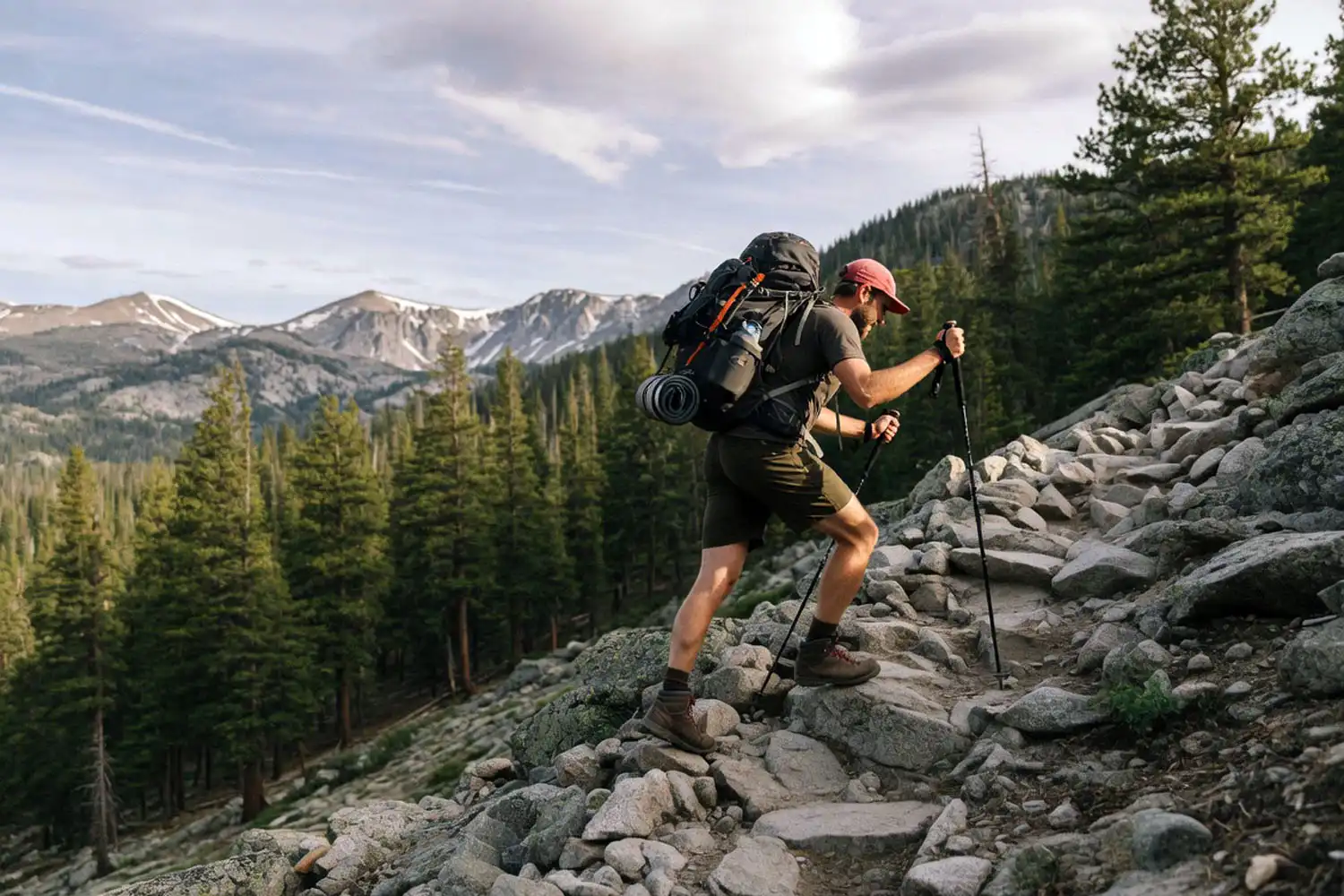
Adding weight is the closest thing hiking has to progressive overload. A 25-pound pack on a six-mile climb produces a very different muscle response than a daypack with snacks and water. For most hikers, a loaded pack on rolling terrain is enough resistance to drive growth.
Elevation gain
Flat trails build endurance more than muscle. Climbs build strength. If you want bigger legs from hiking, seek out routes with steady elevation. My guide on what counts as serious elevation gain on a hike breaks down the numbers worth aiming for.
Terrain
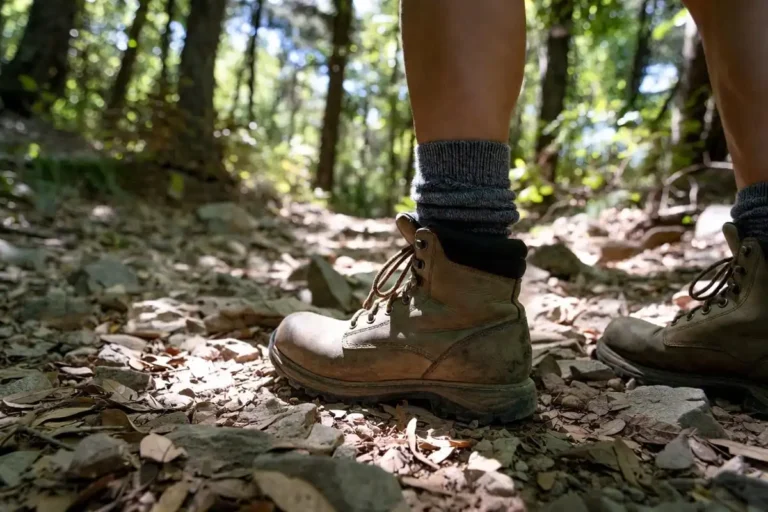
Uneven, rocky, root-covered trails recruit far more stabilizer muscles than smooth paths. Loose scree, stream crossings, and switchbacks all add micro-resistance work that a gym cannot easily replicate.
Pace and duration
Slower, sustained efforts over hours train slow-twitch fibers. Faster, harder bursts up steep grades hit fast-twitch fibers. Mixing both within a trip gives the best overall stimulus.
Does hiking build muscle as well as weightlifting?
No, not for pure size. Weightlifting still wins for raw hypertrophy because it lets you isolate muscles and progressively overload them in controlled doses. Hiking instead builds endurance-oriented muscle: leaner, more fatigue-resistant fibers.
That said, hiking has benefits lifting cannot match. It works your stabilizers, builds cardiovascular capacity at the same time, and improves practical leg function. For most outdoor people, that combination is more useful than gym-only strength.
If your goal is the strongest, most capable legs possible, do both. Hike for volume and endurance, then lift twice a week for size and power. That combo is what most experienced trekkers I know follow before serious multi-day trips.
How to get the most muscle gain from hiking
A few small tweaks turn an ordinary hike into a real training session.
First, add a weighted pack. Start light and build up gradually. Second, choose steeper trails over longer flat ones when muscle is the goal. Third, hike consistently. Once-a-month outings will not change much, but two to three hikes a week absolutely will. Also, recover properly. Sleep, protein, and rest days are when the muscle actually grows.
Finally, mix in strength moves at home: squats, lunges, calf raises, and step-ups. These compound the trail work and reduce injury risk. My breakdown of the fitness level needed for multi-day backpacking goes deeper on building this base.
What about recovery and nutrition?
Recovery decides whether you grow or just burn out. After a hard hike, eat protein within an hour or two, hydrate well, and sleep enough. Your legs rebuild during sleep, not on the trail itself.
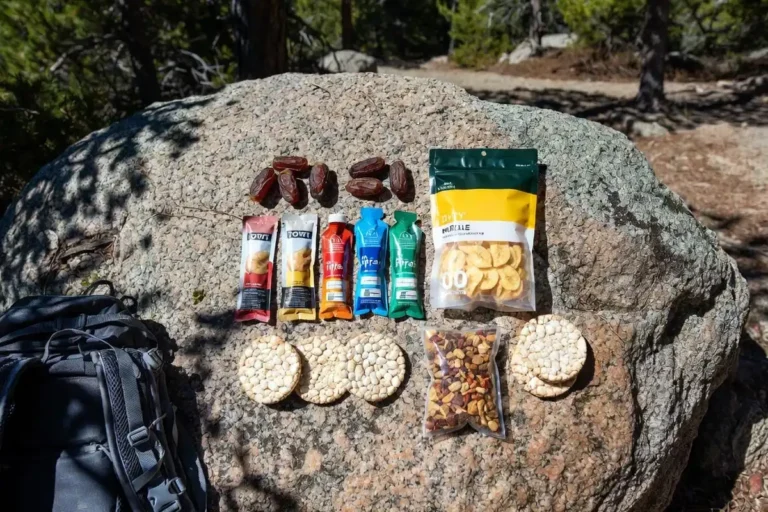
Soreness peaks 24 to 48 hours after descent-heavy hikes. Light walking, gentle stretching, and adequate protein all help shorten that window. If you are heading out repeatedly, plan your fuel carefully. I cover trail-friendly options in my notes on snacks that fuel fast trail energy.
My experience from the Bandarban hills
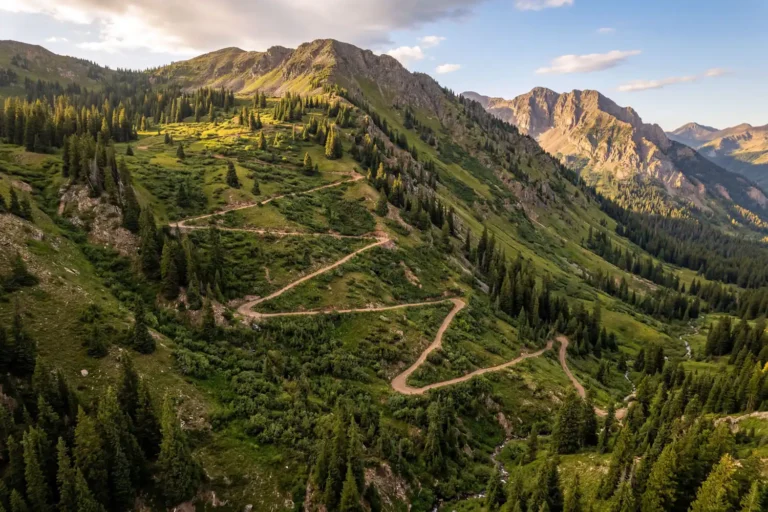
After three days hiking from Bandarban up through Keokradong, I came home with calves and quads that stayed sore for nearly a week. The trails there mix steep clay climbs, rocky descents, and stream crossings, exactly the kind of varied terrain that recruits stabilizers and posterior chain. Over a few seasons of regular trekking, my legs got visibly leaner and noticeably stronger, even without any gym work. That convinced me hiking builds genuine muscle on its own, just slowly and in a different shape than lifting.
Conclusion
Hiking does build leg muscle. Your calves, quads, glutes, and hamstrings all get stronger, especially when you add pack weight, steep climbs, and uneven terrain. You will not bulk up like a powerlifter, but you will develop lean, durable, hard-working legs that perform well in real conditions. Pair regular hikes with a couple of strength sessions a week, eat enough protein, and rest properly. That is how most strong-legged hikers actually built what they have.