Trekking Permit Everest Base Camp: What You Pay and Need

The paperwork for an Everest Base Camp trek catches more first-time trekkers off guard than the altitude does. I have helped several friends sort through it before their flight to Lukla, and the same questions come up every time. Which permits do you actually need? How much do they cost in 2026? Can you still go without a guide? This guide gives you straight answers, the current fees, where to buy each permit, and the small details that save you from being turned around at a checkpoint.
What permits do you need for Everest Base Camp?
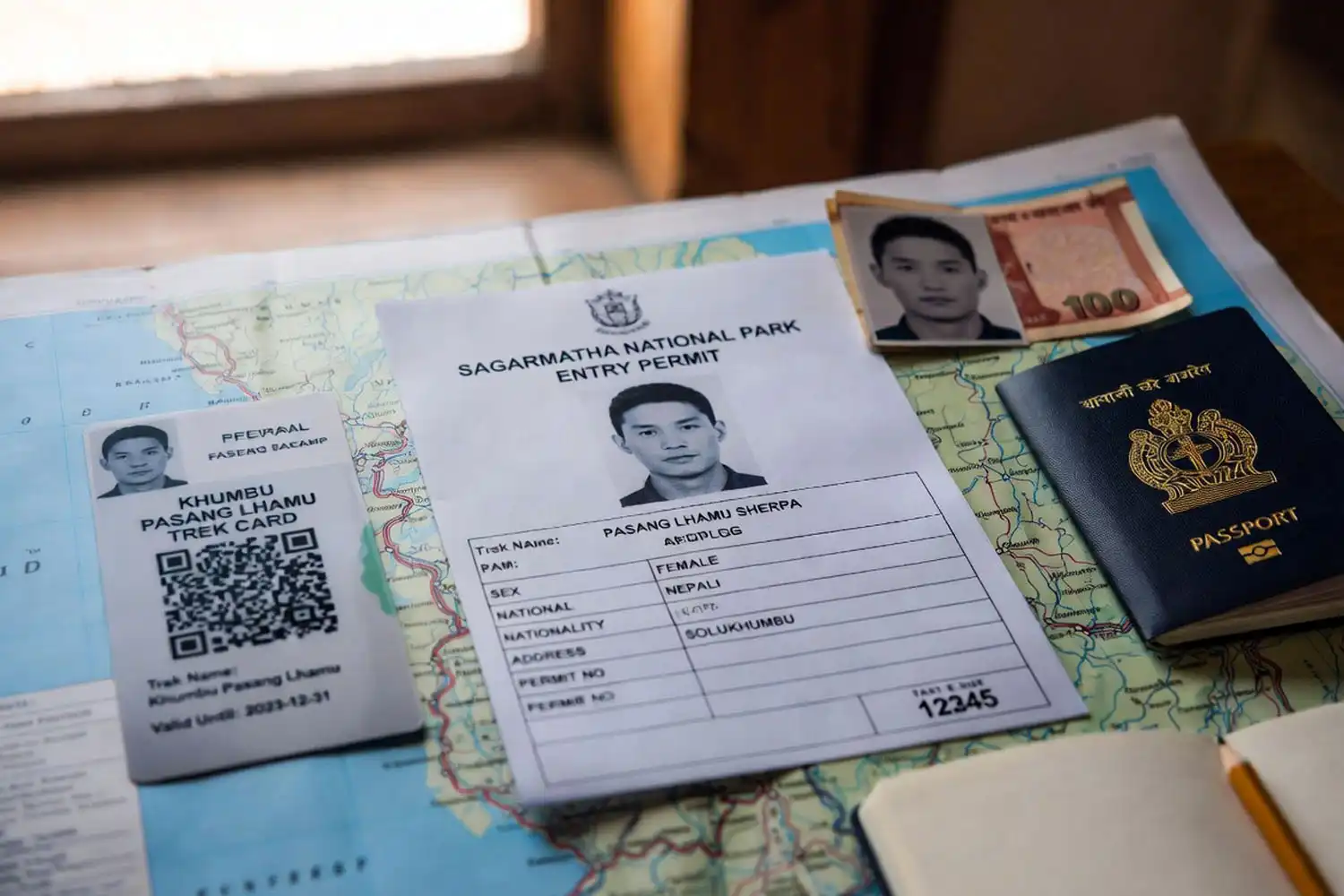
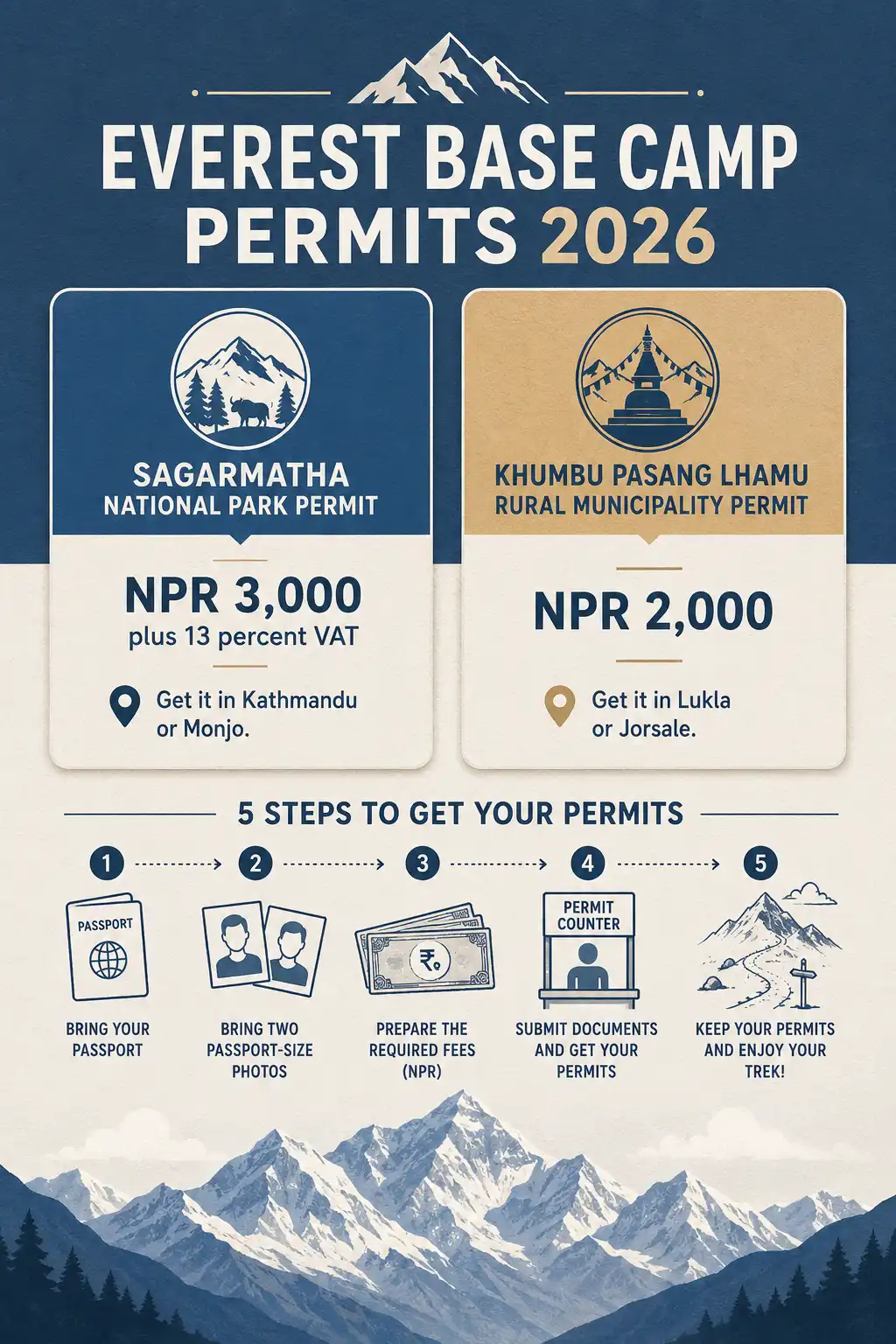
Two permits are mandatory for the Everest Base Camp trek in 2026. So the old TIMS card is no longer needed for the Khumbu region.
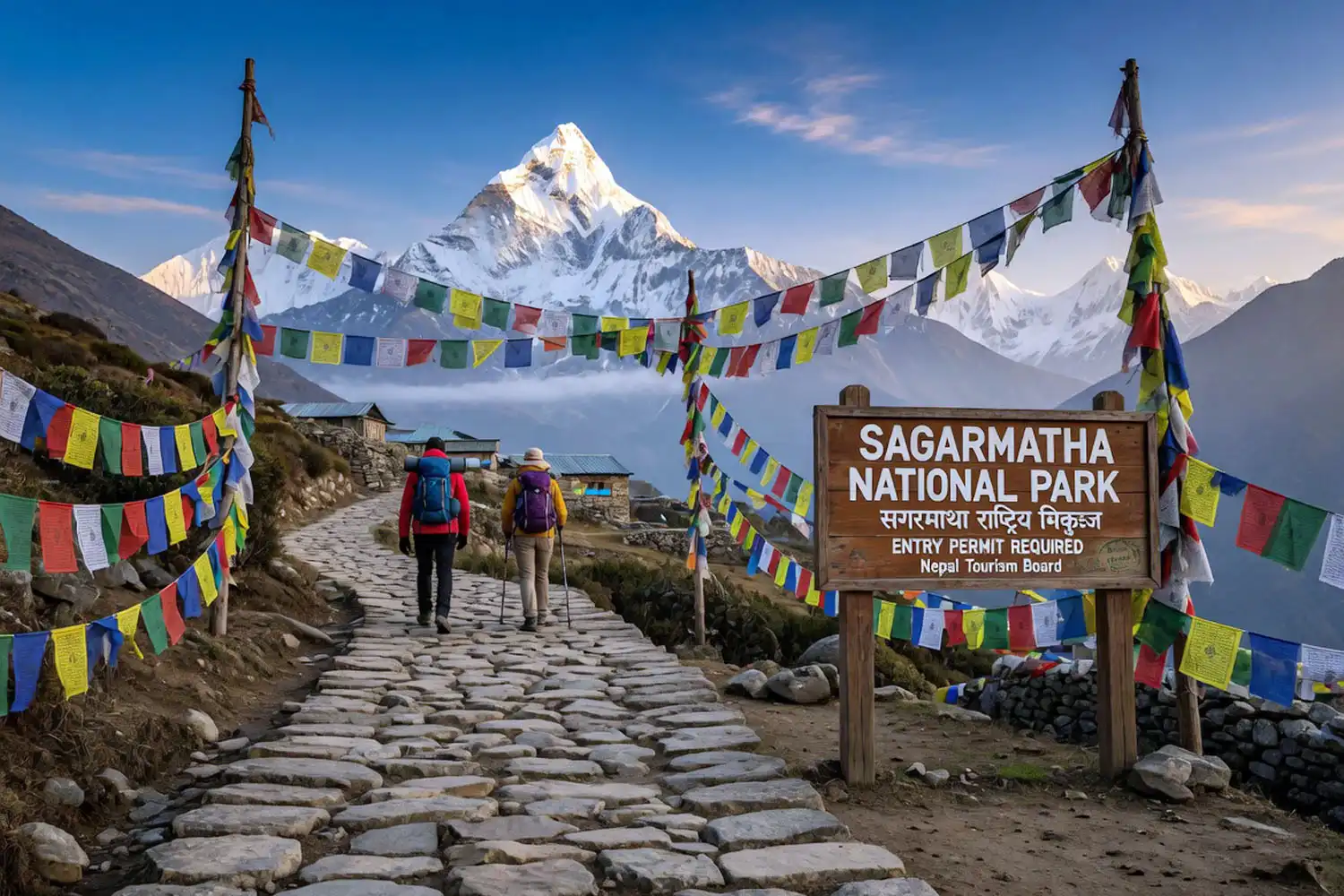
The first is the Sagarmatha National Park Entry Permit. This covers the entire protected area where Mount Everest sits. The trail from Monjo to base camp runs through this park.
Next, you need the Khumbu Pasang Lhamu Rural Municipality Entrance Permit. Money from this permit funds local trail repairs, waste collection, schools, and clean water projects in villages like Namche Bazaar, Khumjung, and Dingboche.
Both permits are checked at official posts. Skipping either one results in a fine or being sent back.
How much does an Everest Base Camp permit cost in 2026?
The total comes to about $40 to $50 USD for foreign trekkers in 2026. Here is the breakdown:
- Sagarmatha National Park Permit: NPR 3,000 plus 13% VAT (NPR 3,390 total, roughly $25 to $27) for non-SAARC nationals. SAARC nationals pay NPR 1,500.
- Khumbu Pasang Lhamu Rural Municipality Permit: NPR 2,000 (about $15 to $20) for the first four weeks. After four weeks the fee rises to NPR 2,500.
So the total runs around NPR 5,390 to 5,890. Children under 10 enter the park free, but they still pay the local permit fee.
These prices have crept up over the past two years. Therefore, always confirm the current rate on the Nepal Tourism Board site before you fly to Kathmandu.
Know more: Nafakhum Waterfall Trip
Where to get the EBC trek permits
You have a few options for each permit, and timing matters because counters do not always open on weekends or holidays.
Sagarmatha National Park Permit
Two locations issue this permit:
- Nepal Tourism Board office in Kathmandu (Bhrikutimandap, near the city center). This is the most reliable place. Counters open Sunday through Friday, roughly 9 a.m. to 5 p.m. Closed on Saturday.
- Monjo checkpoint, the official park gate itself. Many trekkers grab it here after flying to Lukla and starting the walk.
If you have a spare half-day in Kathmandu, get it there. The line is shorter in town than on the trail in peak season.
Khumbu Pasang Lhamu Rural Municipality Permit
This one is issued only inside the region itself. You cannot get it in Kathmandu.
- Lukla counter (most common, just after you land at Tenzing-Hillary Airport)
- Jorsale checkpoint (for trekkers who hike in from Salleri or Phaplu)
Since 2023 the local authority has issued a digital Trek Card with a QR code at these counters. Officials at Monjo scan it instead of stamping paper. The Trek Card replaced the old TIMS system for this region entirely.
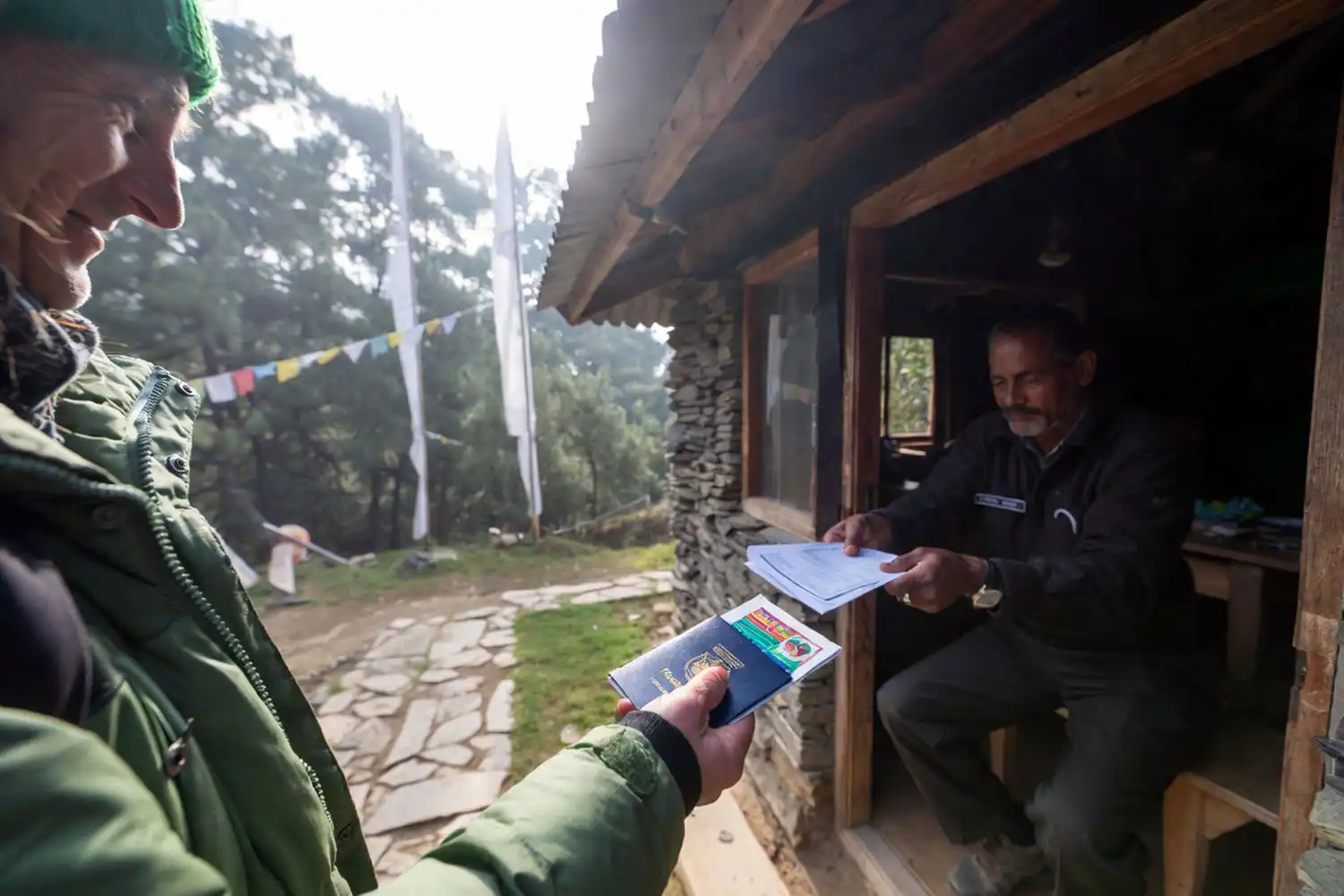
Documents you need at the permit counter
The list is short, but you must come prepared:
- Original passport with at least six months of validity
- Two passport-sized photos (extras are smart in case of damage or a second permit)
- Cash in Nepali rupees (USD is accepted at some counters, but the conversion is rarely in your favor)
- Nepal tourist visa already stamped in your passport
- Travel insurance details with helicopter evacuation coverage (not always asked at the counter but mandatory on the trail)
If you fly to Lukla, the airline check-in agents sometimes ask to see proof of insurance too. I always tell friends to print a one-page summary of their policy before leaving home. For more on this, my piece on travel insurance for outdoor and adventure activities explains the coverage limits that matter at altitude. Also, my checklist for documents and gear on international hiking trips covers what else to keep stowed in your daypack.
What about TIMS for the Everest region?
You do not need a TIMS card for the EBC trek in 2026. The Khumbu Pasang Lhamu Rural Municipality phased it out in 2023 and replaced it with the local entrance permit. So old blogs that still list TIMS as required are out of date for this trek.
TIMS is still active for Annapurna, Langtang, and a few other regions. However, for the Khumbu, ignore it.
Do you need a guide to trek EBC?
You can still legally trek to Everest Base Camp without a guide in 2026, but the rules are not straightforward. In April 2023, Nepal’s Tourism Board ruled that all foreign trekkers in national parks must be accompanied by a licensed guide. Yet the Khumbu Pasang Lhamu Rural Municipality, which controls the local permit, publicly opted out of that ruling. As of early 2026, solo trekkers can still legally walk to base camp under the local authority’s notice.
Enforcement, though, varies. Some checkpoints wave solo trekkers through. Others suggest, sometimes strongly, that you should join a group. So if you go solo, carry your permits, your insurance details, and a clear itinerary. For my friends without prior high-altitude experience, I always recommend a guide anyway. The safety margin is worth far more than the daily $25 to $35 fee, especially above 4,000 meters where altitude sickness sets in fast.
Either way, the permit cost stays the same. Independent trekkers and guided groups pay identical fees.
Step-by-step: how to get your EBC permits
Here is the order I would follow as a foreign trekker arriving in Kathmandu:
- Land in Kathmandu and grab your tourist visa on arrival (15, 30, or 90 days available).
- Day 1 or 2 in Kathmandu: walk to the Nepal Tourism Board office, fill out the Sagarmatha permit form, pay in NPR, and collect the receipt.
- Fly to Lukla (or hike in via Jiri/Salleri if you prefer).
- Lukla counter: buy the Khumbu Pasang Lhamu permit and receive your Trek Card.
- Show both at Monjo when you enter Sagarmatha National Park, usually on day 2 of the trek.
- Carry both with you for the rest of the trek. Officials may check again at Namche, Dingboche, or Gorakshep.
If you skip Kathmandu, you can buy the SNP permit at Monjo instead. The cost is the same. However, expect a longer wait in peak season (March to May and September to November).
Where checkpoints check your permits on the trail
I have gathered this from friends who walked the trail recently. So you should expect permit checks at these spots:
- Lukla (right after landing)
- Monjo (the official park gate)
- Namche Bazaar (random checks)
- Dingboche (sometimes)
- Gorakshep (rare but possible)
Keep both permits in a waterproof pouch. Wet ink or torn paper has gotten people fined. For more on the actual hike distance, my breakdown on how long the walk to base camp takes will help you plan rest days into your schedule.
Common permit mistakes to avoid
A few small errors cause most of the trouble:
- Showing up on a Saturday in Kathmandu. The NTB office is closed. Plan around it.
- Bringing only USD. Some counters accept it, many do not. Carry NPR.
- Forgetting passport photos. Two minimum. Lukla has no easy photo shop.
- Letting the permit get soaked. Use a zip bag.
- Not budgeting the VAT. The 13% VAT on the park permit catches people off guard.
For the wider context of how this trek fits within Nepal’s mountain regions, my overview on base camp trekking across Nepal is a good companion read.
FAQs on Trekking Permit Everest Base Camp

Can I get the Everest Base Camp permit online?
How long is the permit valid?
Is the permit refundable if I cancel?
Do I need a permit for the helicopter return?
Final thoughts
The trekking permit process for Everest Base Camp is simpler than most first-time trekkers expect. Two permits, about $40 to $50 total, a passport, two photos, and some Nepali rupees. That is it. So get them in the right order, carry them in a dry pouch, and you can focus on what really matters once you are on the trail. The altitude, the views, and the long slow walk up to one of the most photographed valleys on earth. For a sense of how high you will actually climb, my piece on the actual elevation at base camp puts the numbers in perspective.