Do You Need a Permit to Hike The Narrows? Zion Rules for 2026

The Narrows in Zion National Park has two hiking routes, and only one of them needs a permit. That single detail trips up most first-time visitors. Below I lay out which route needs a permit, what it costs in 2026, how the application works, and what shuts the canyon down even after you hold one.
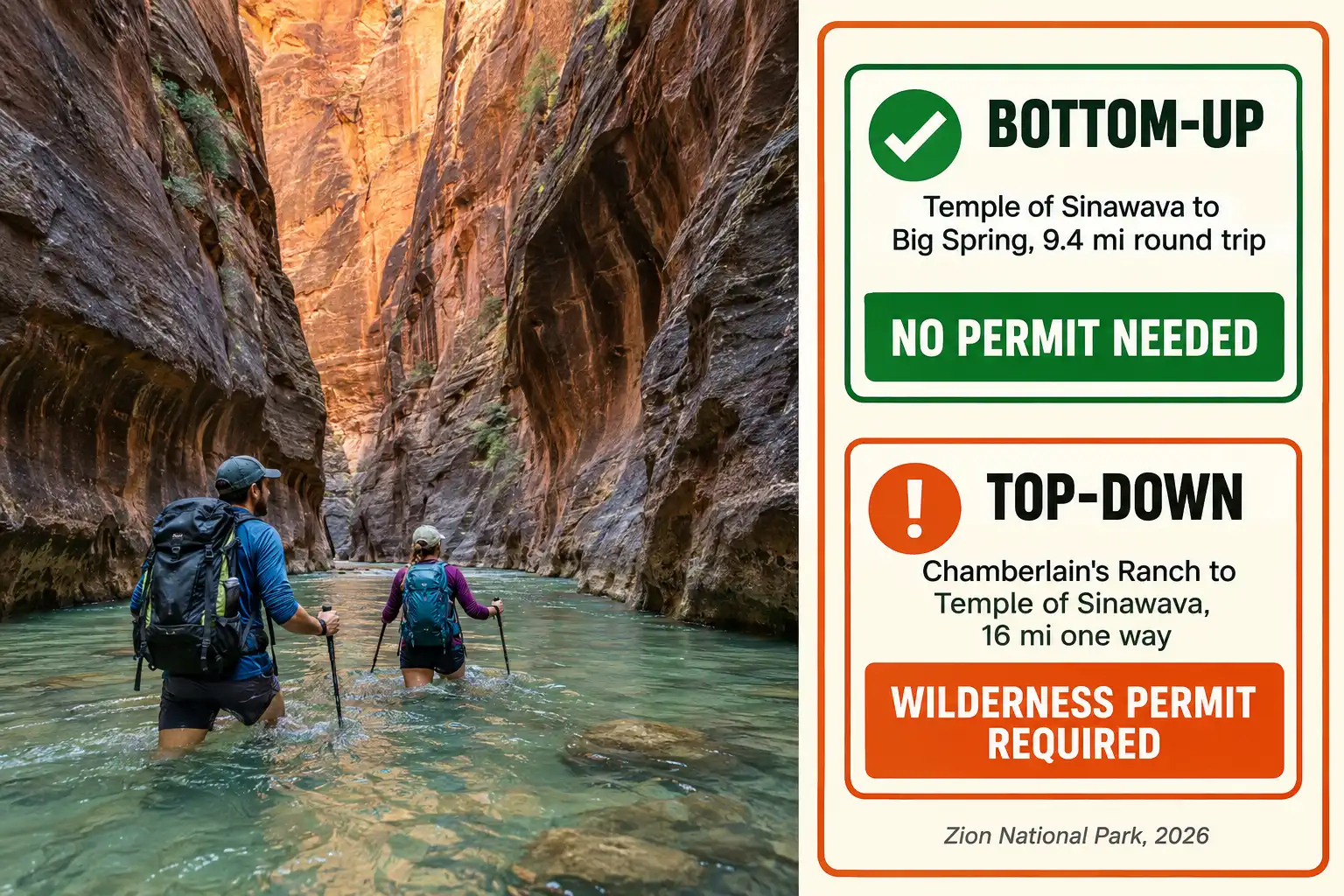
No, you do not need a permit to hike The Narrows from the bottom up. You start at the Temple of Sinawava, walk upstream as far as Big Spring, then turn around whenever you want. However, the 16-mile top-down route from Chamberlain’s Ranch does require a wilderness permit, either as a long day hike or as an overnight trip.
Read next: Switchback in Hiking
Which Narrows route are you asking about?
Zion treats The Narrows as two separate hikes, so the permit answer depends entirely on where you start.
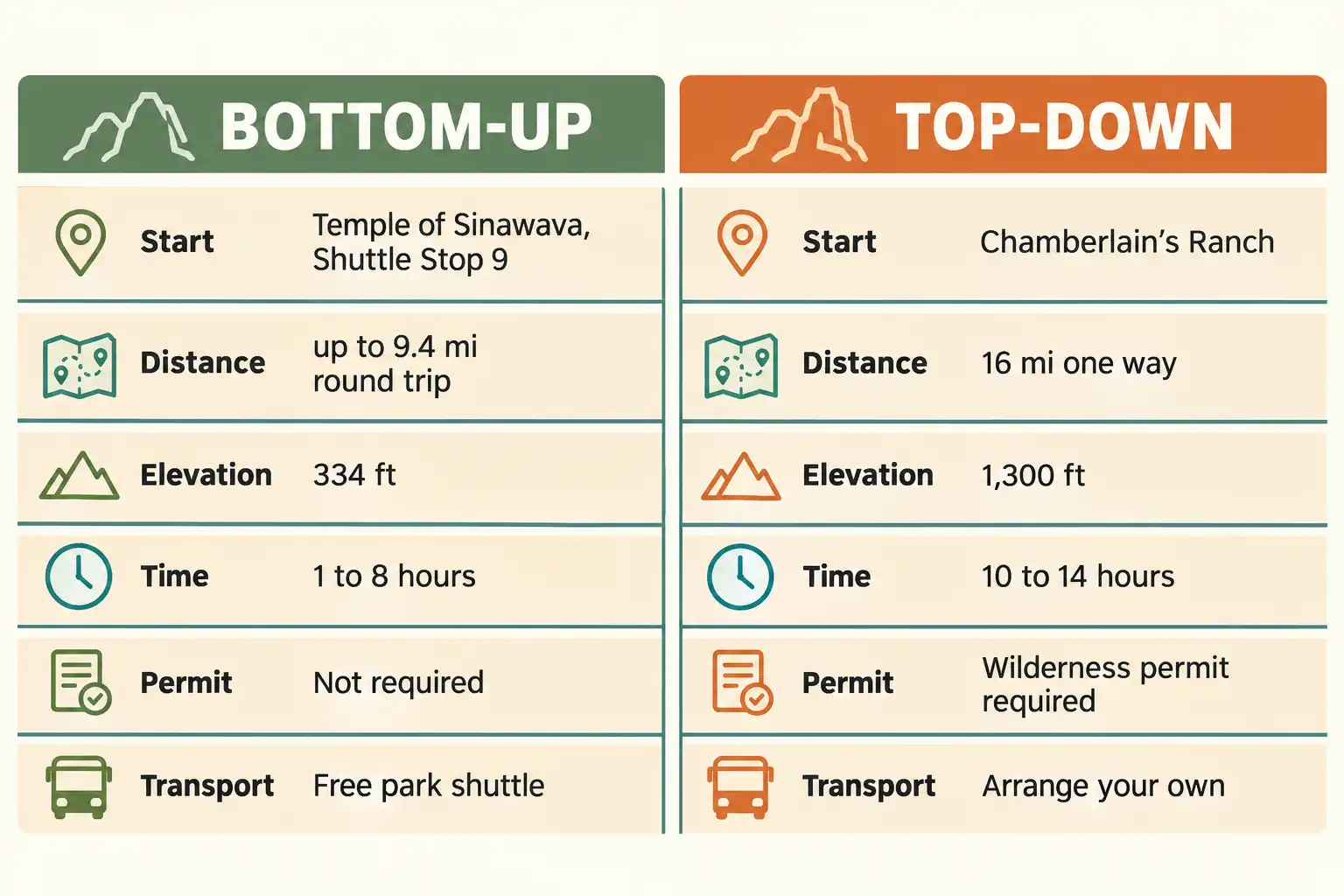
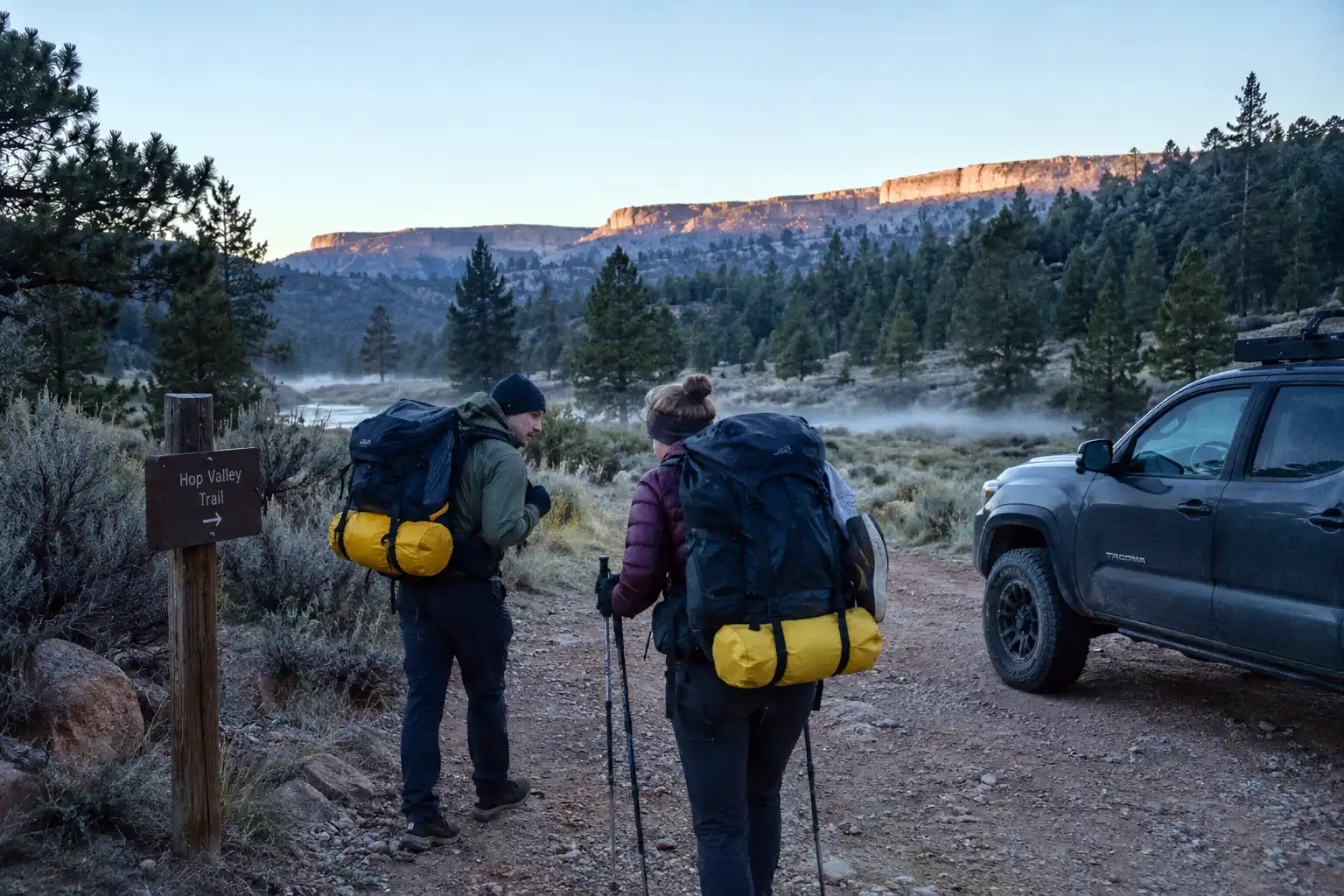
The bottom-up route begins inside the park at the Temple of Sinawava, which is Shuttle Stop 9. First you walk the paved Riverside Walk for about a mile. Then you step into the Virgin River and head upstream. It runs up to 9.4 miles round trip with only 334 feet of elevation gain, and most people spend one to eight hours in the canyon.
The top-down route starts outside the park at Chamberlain’s Ranch and covers 16 miles one way, ending at the Temple of Sinawava. It drops about 1,300 feet and takes most groups 10 to 14 hours. There is no maintained trail on this one, because the river itself is the route.
So when someone asks about a Narrows permit, the real question is which end of the canyon they plan to start from.
Do you need a permit to hike The Narrows bottom up?
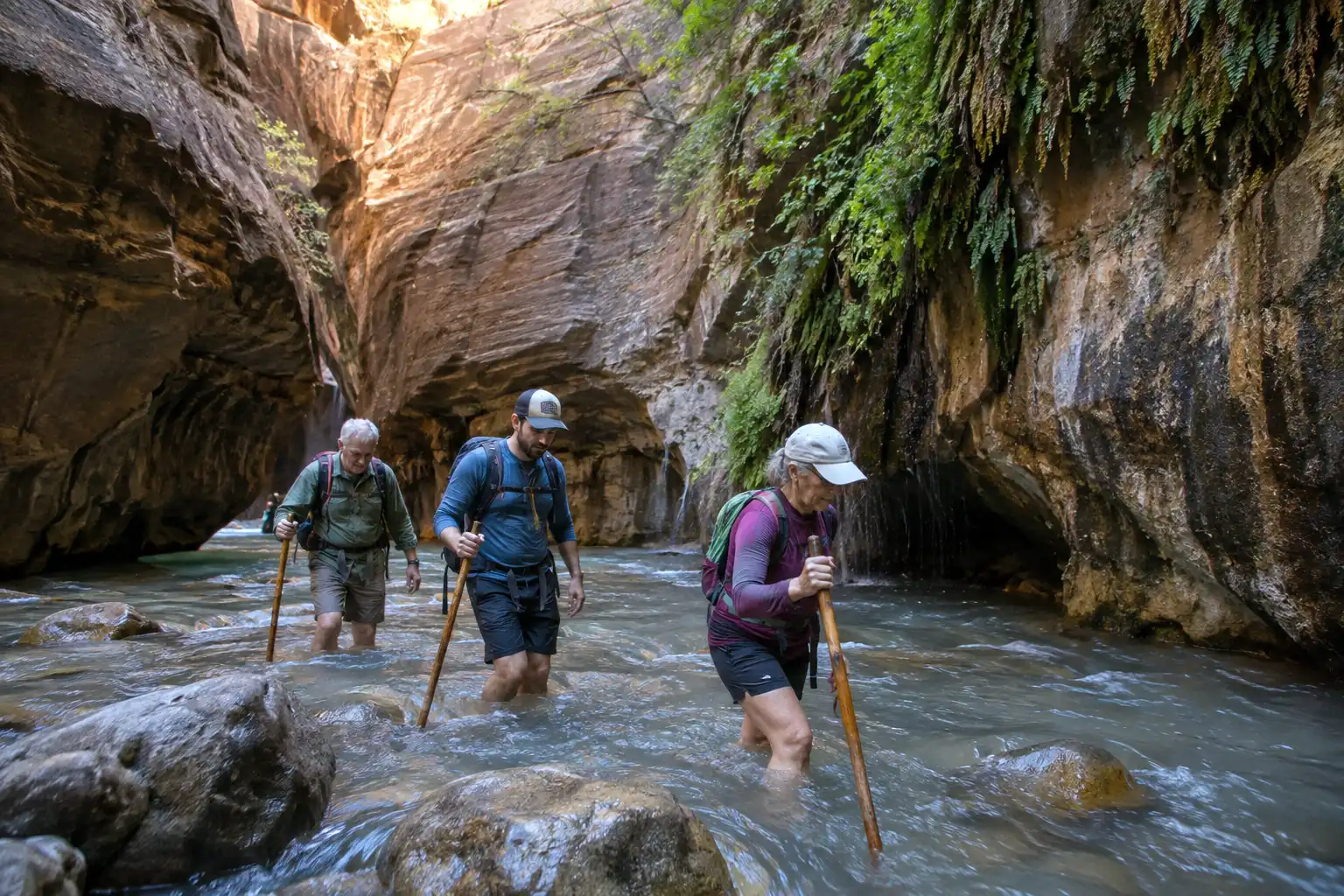
No. Hiking upstream from the Temple of Sinawava needs no wilderness permit at any time of year. Your park entrance pass covers it, and the shuttle ride to the trailhead costs nothing extra.
A few rules still apply even without paperwork. You cannot travel upstream past Big Spring. Orderville Canyon joins the Narrows about two miles in, and the park stops upstream travel there after a quarter mile. Anyone who wants the upper part of Orderville needs a canyoneering permit and has to enter from the top instead. Pets cannot come at all.
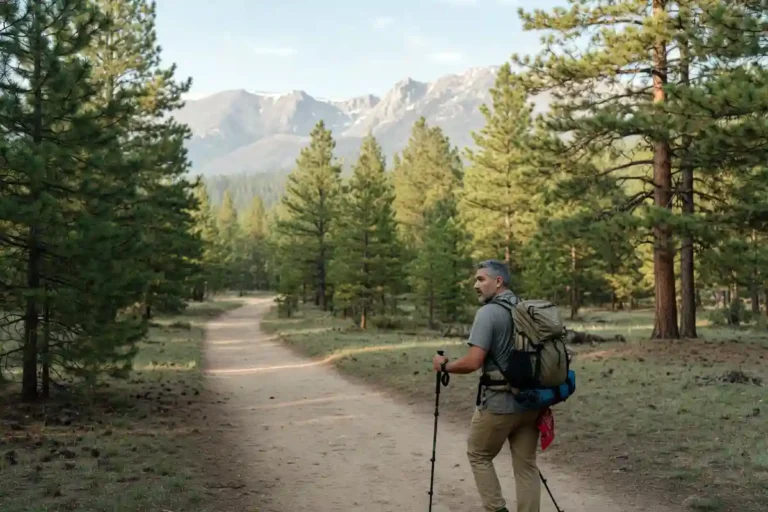
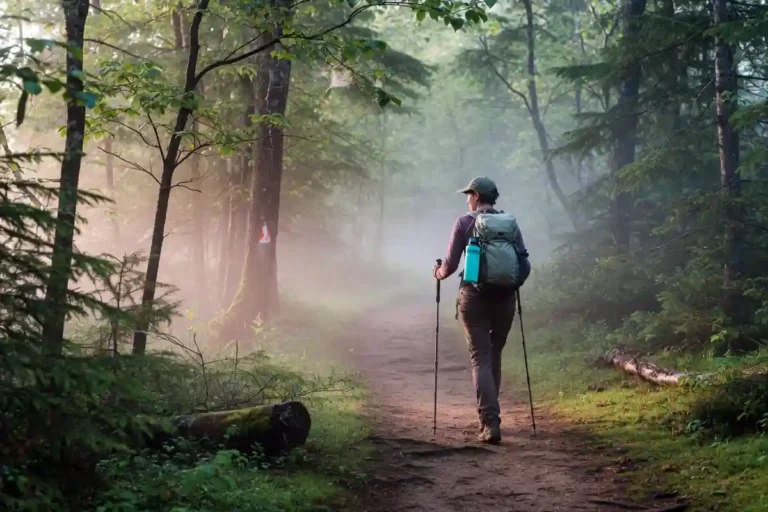
Do not underestimate this hike because it skips the permit desk. The park says at least 60% of the bottom-up route involves wading, walking, and sometimes swimming in the river. Cold water plus slippery boulders makes for slow going. A sturdy stick helps more than people expect, so the same logic behind using poles to take pressure off your knees applies in a riverbed even more than on dry trail.
There are also no bathrooms once you leave the trailhead. Use the restrooms at the Temple of Sinawava, then carry human waste bags just in case.
Do you need a permit to hike The Narrows top down?
Yes. Every 16-mile trip from Chamberlain’s Ranch needs a wilderness permit, and that covers single-day hikes and overnight trips alike.
Two versions exist. The single-day version puts all 16 miles into one push of 10 to 14 hours, which is a serious ask even for fit hikers. Before committing, be honest about how far you can safely cover in a single day, because no bailout point exists once you drop into the canyon.
The overnight version splits the route across two days. You need a permit for a specific designated campsite, and the canyon holds 12 of them, all roughly halfway between the trailhead and the Temple of Sinawava. Zion does not allow multi-night trips through the Narrows. You also cannot walk upstream to reach a campsite, so every overnight group starts at Chamberlain’s Ranch and exits at the Temple of Sinawava.
One more piece catches people out. Permit holders arrange their own transportation to Chamberlain’s Ranch, which sits well outside the park boundary. The permit includes no shuttle.
How do you get a top-down Narrows permit?
Zion issues top-down permits three ways, and each one opens at a different point before your trip date.
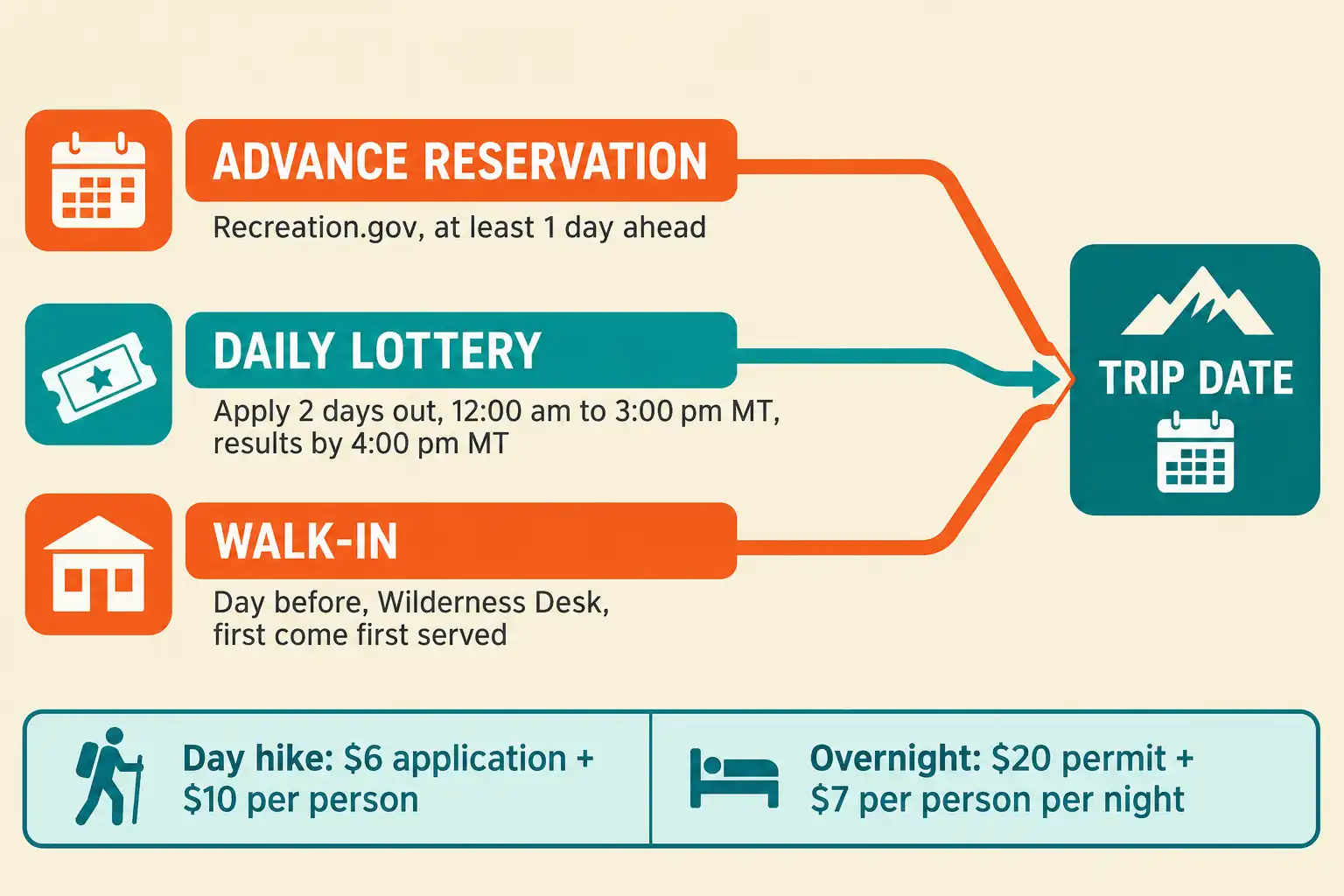
Advance reservations. You can reserve on Recreation.gov at least one day ahead. Same-day reservations do not exist.
Daily lottery. For single-day top-down trips, the park runs a lottery exactly two days out. Applications open at 12:00 am and close at 3:00 pm Mountain Time, then results land by email around 4:00 pm. Each person may submit one application and list up to four canyons on it.
Walk-in. Whatever the daily lottery does not take goes first-come, first-served the day before your trip. You claim it in person at the Wilderness Desk in the Zion Canyon Visitor Center.
Overnight trips work a little differently. Zion holds back half of its wilderness campsites for walk-in hikers, so you can pick one up the day before or early on the morning your trip starts.
How much does a Narrows permit cost in 2026?
Day-use and overnight permits carry different fees, and both sit on top of your park entrance fee.
For a top-down day hike, Zion charges a $6 lottery application or reservation fee, which it does not refund, plus $10 per person, which it does refund.
For an overnight trip, the permit costs $20 with no refund, plus $7 per person per night, which is refundable.
Those numbers stay small next to flights and lodging, though they add up for a large group. While working out a budget for the whole trip, count the entrance fee, the permit, gear rental, and your ride to Chamberlain’s Ranch as four separate lines.
Fees do change. Check the Zion pages on nps.gov before you pay.
Do you still have to pick up the permit in person?
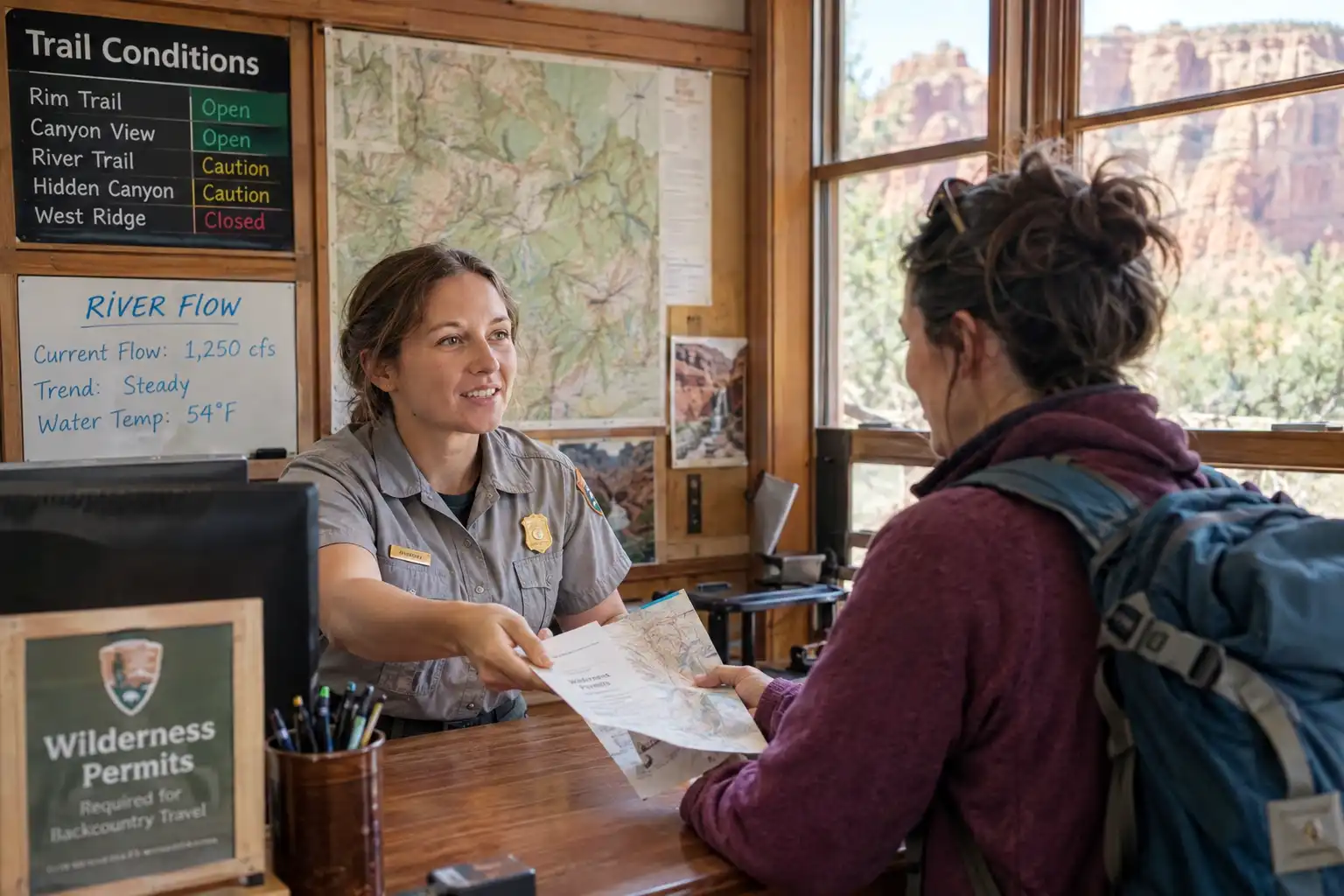
Yes. The park issues every wilderness permit in person at the Wilderness Desk inside the Zion Canyon Visitor Center, either the day before your trip or the morning of.
Plan at least 20 minutes for it. Bring the make, model, and license plate of every vehicle in your group. Also remember that the person named on the reservation has to be the one standing at the counter, because Zion never transfers permits between people.
Repeat visitors have one shortcut. The free Zion Express Membership lets you turn online reservations into permits from home. To join, you watch three orientation films at the Wilderness Desk and sign an agreement, and the membership then stays valid for three years.
Does the entrance fee cover the permit?
No. The entrance fee and the permit fee are two separate charges.
Zion charges $35 for a private vehicle, $30 for a motorcycle, and $20 per person for anyone walking or biking in. Each pass covers seven days, and kids 15 and under enter free. A Zion annual pass runs $70, while the America the Beautiful pass covers all federal recreation sites for $80.
One 2026 change matters for international visitors. Since January 1, non-US residents aged 16 and over pay an extra $100 per person on top of the standard entrance fee, unless they hold an annual pass or an America the Beautiful pass. The non-resident version of that pass costs $250 and waives the surcharge for the holder plus everyone in one private vehicle.
The shuttle itself stays free. No ticket, no reservation, no lottery.
What closes The Narrows, permit or not?
Water level and weather close this canyon more often than anything else, and a permit does not override a closure.
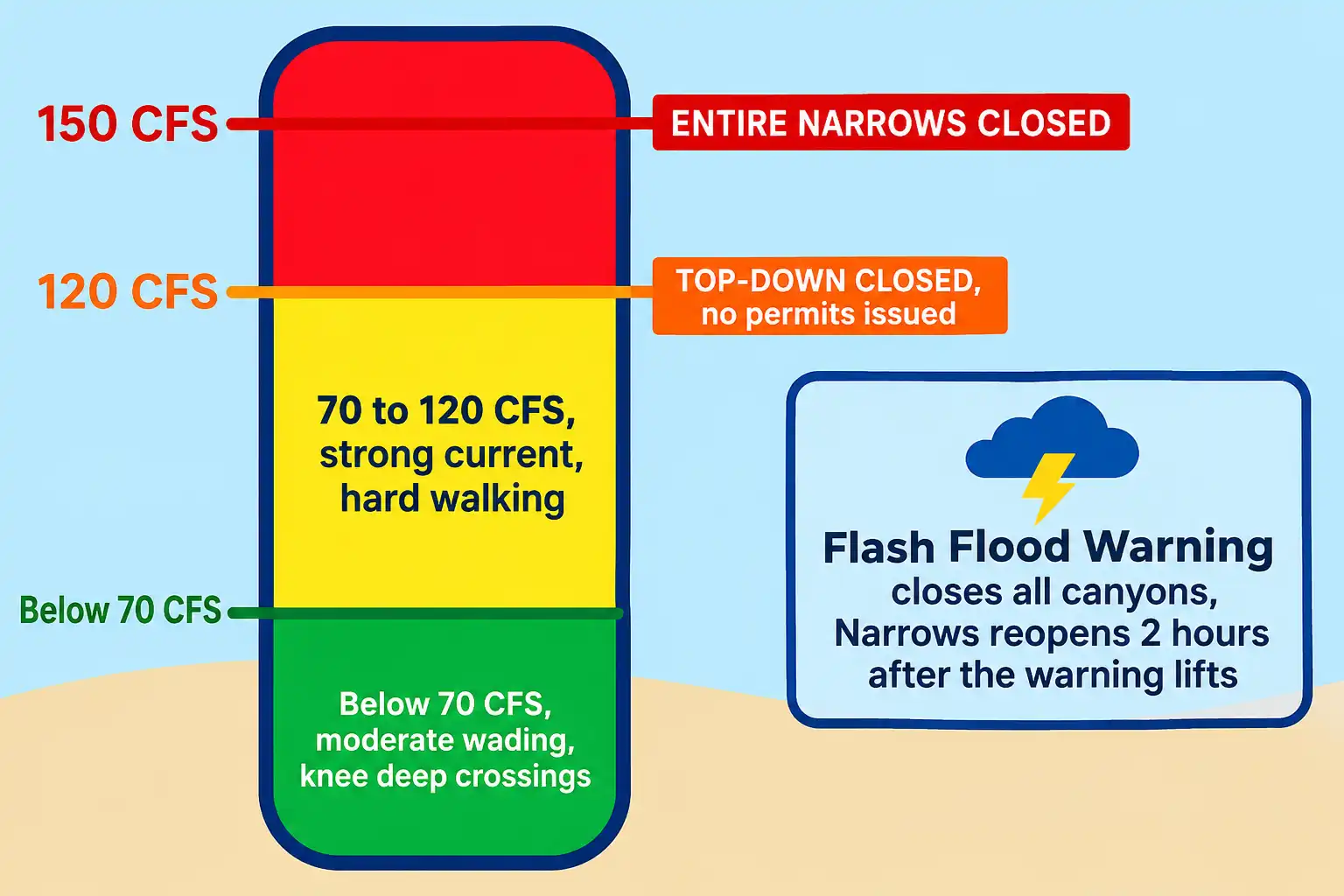
Zion shuts the entire Narrows when the Virgin River runs above 150 cubic feet per second. The top-down route closes earlier, at 120 CFS, and the park stops issuing permits while that closure holds. Flash flood warnings close the river and every canyon in the park, then the Narrows stays shut for two more hours after the National Weather Service lifts the warning.
Spring snowmelt drives most of the long closures. In 2024 the river ran too high from April 11 to May 19, while in 2023 the closure stretched from April 8 all the way to June 19. Some years, like 2021 and 2022, never hit that threshold at all.
If a closure kills your trip, cancel the reservation rather than letting it sit. The same habits behind canceling a booking without losing money apply here, and someone else gets your spot.
Do you need a permit for Angels Landing too?
Yes, and it works nothing like the Narrows permit. Angels Landing runs on its own lottery, which you can only enter online through Recreation.gov. No park office issues those permits.
Zion requires them 24 hours a day, all year, for anyone going past Scout Lookout onto the chained section. Hiking to Scout Lookout itself needs no permit. The application costs $6, then each issued permit adds $3 per person.
People often lump the two hikes together when they plan a Zion trip. Keep them separate on your checklist, because the deadlines, the systems, and the fees do not match.
Can you hire a guide for The Narrows?
Not inside the park. Zion does not allow guiding anywhere in its wilderness, so no company can legally walk you through the Narrows on either route.
Outfitters in Springdale rent gear and drive you around instead. Canyoneering boots, neoprene socks, drysuits, and walking sticks all rent by the day. Several also run a shuttle to Chamberlain’s Ranch for top-down permit holders.
That means your group carries responsibility for its own decisions down there. Cold water is the main hazard, since canyon walls block the sun and keep water temperatures low even in July. Learn what early hypothermia looks like before you go, then watch your slowest hiker.
Can you drink the river water?
No. Park biologists have found toxic cyanobacteria in the Virgin River and other Zion waterways, and no backcountry filter or chemical treatment brings those toxins down to a safe level.
Overnight hikers collect water straight from springs instead, then treat it. If you already know how to make backcountry water safe to drink, the routine stays the same, but the source matters far more here than the method. Day hikers on the bottom-up route usually just carry everything they need.
I walk rivers at home in the Chittagong Hill Tracts, where the reflex is to filter and keep moving. Zion breaks that habit fast. Skip the river entirely.
Frequently asked questions

Do you need a permit for the Riverside Walk?
Can you get a same-day Narrows permit?
Do children need their own permit?
Does a permit guarantee you can hike?
How big can a group be in the Narrows?
Final Words on Hiking the Narrows
Most people asking this question want the bottom-up hike, and that one needs no permit at all. Show up with a park pass, ride the free shuttle to the Temple of Sinawava, then walk as far upstream as your legs and the water allow. Only the 16-mile top-down route from Chamberlain’s Ranch puts you into the permit system, with a lottery, a fee, and a stop at the Wilderness Desk. Either way, check the river flow before you commit.