What Are the 10 Hiking Essentials? An Honest Breakdown

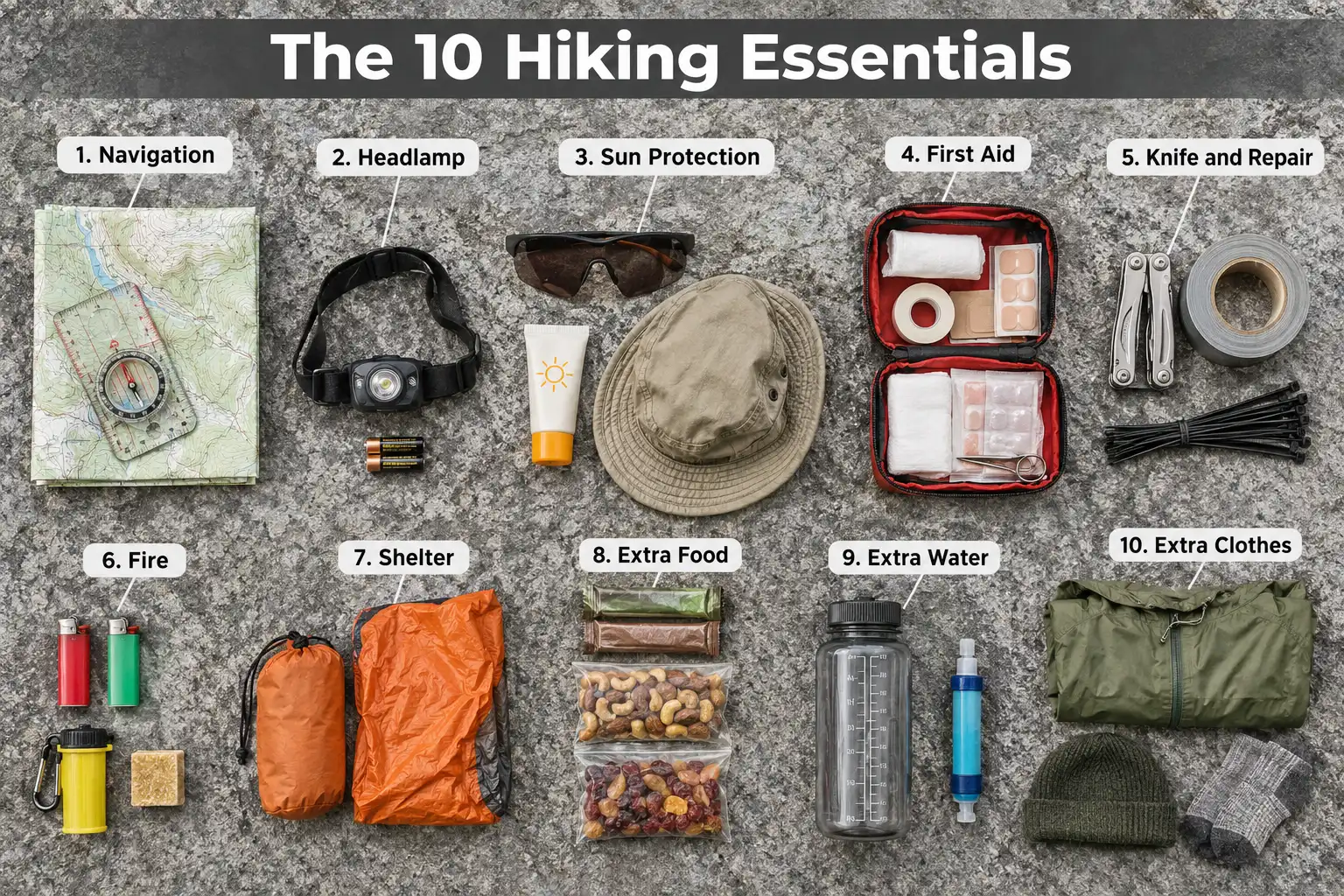
The 10 hiking essentials are ten gear categories that help you handle trouble on the trail and survive an unplanned night outside. I carry them on short loops near Kaptai and on longer treks in Bandarban. Below is the full list, what belongs in each category, and how to judge what you can safely leave at home.
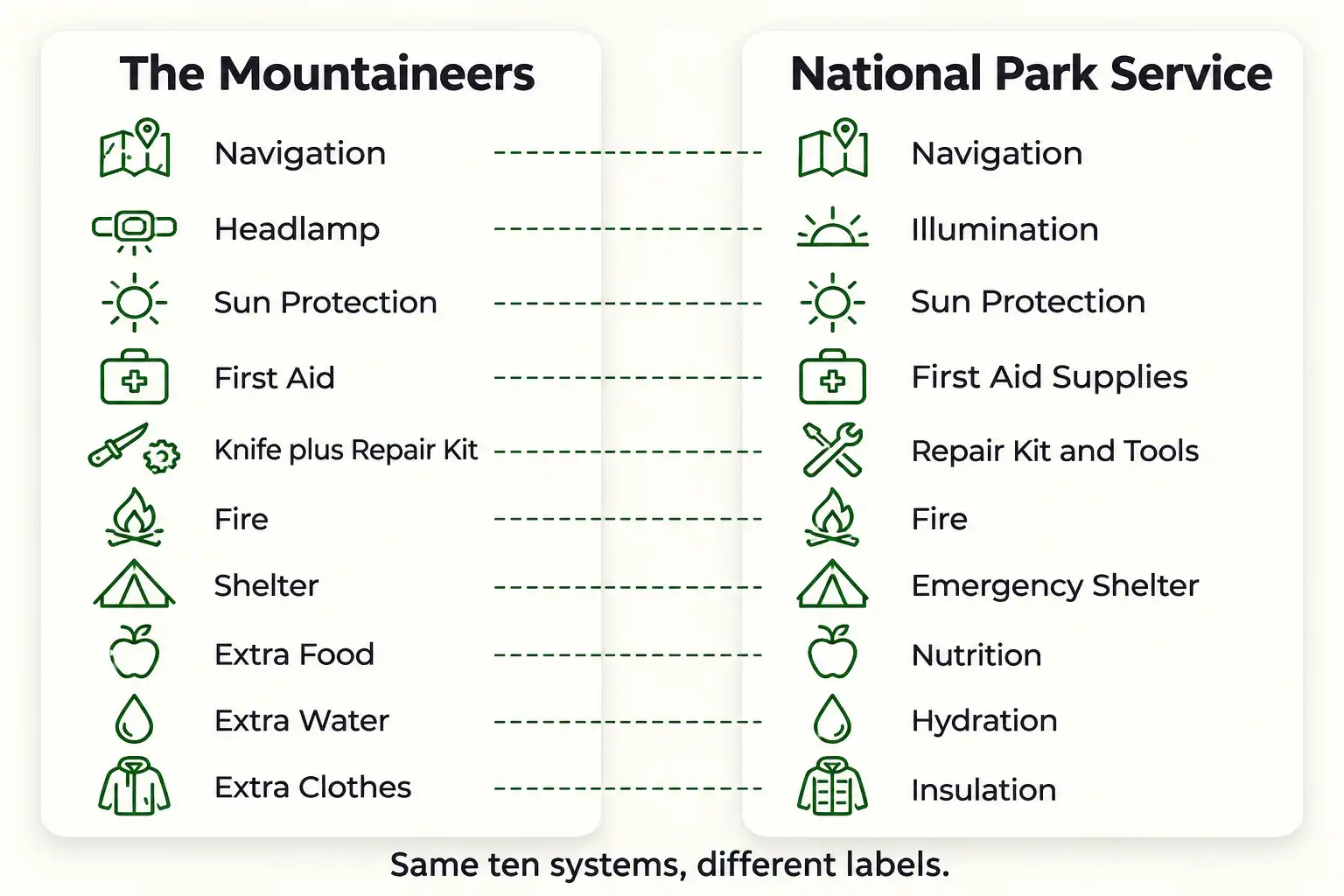
The 10 hiking essentials are navigation, a headlamp, sun protection, first aid, a knife with a repair kit, fire, emergency shelter, extra food, extra water, and extra clothes. A Seattle climbing club called The Mountaineers built the list from its 1930s courses, then printed it in 1974 in the third edition of its manual, Mountaineering: The Freedom of the Hills.
The current version treats each entry as a system rather than a single object. Navigation, for example, is not just a map. Instead, it covers your map, your compass, your phone or GPS app, and your backup power. The ninth edition of the manual reworked the list around modern gear, and the book reached its tenth edition in late 2024. Meanwhile, the National Park Service publishes the same ten categories under slightly different labels.
Top 10 Hiking Essentials
- Navigation
- Headlamp
- Sun protection
- First aid
- Knife and repair kit
- Fire
- Emergency shelter
- Extra food
- Extra water
- Extra clothes
Why does the list have ten categories?
The list has ten categories because it answers two questions before you leave the trailhead. First, can you prevent an emergency and respond well if one happens? Second, can you safely spend a night, or longer, outside? Every category earns its spot by answering at least one of those questions. Anything that fails both is comfort gear, not an essential.
That framing matters more than the number itself. A lighter and a small stove both count as fire, for example. Likewise, a heavy duty trash bag and a sealed bivy sack both count as shelter. So you can usually build a full kit from things you already own.
The two naming versions you will see
Both common versions cover the same ten systems, so the labels change but the gear does not.
| The Mountaineers | National Park Service |
|---|---|
| Navigation | Navigation |
| Headlamp | Illumination |
| Sun protection | Sun protection |
| First aid | First aid supplies |
| Knife plus repair kit | Repair kit and tools |
| Fire | Fire |
| Shelter | Emergency shelter |
| Extra food | Nutrition |
| Extra water | Hydration |
| Extra clothes | Insulation |
The Mountaineers list leads with navigation and a headlamp because those two get used on almost every trip. NPS instead groups the knife with duct tape and scissors under repair kit and tools. Either naming works fine, so pick one and stay consistent.
1. Navigation
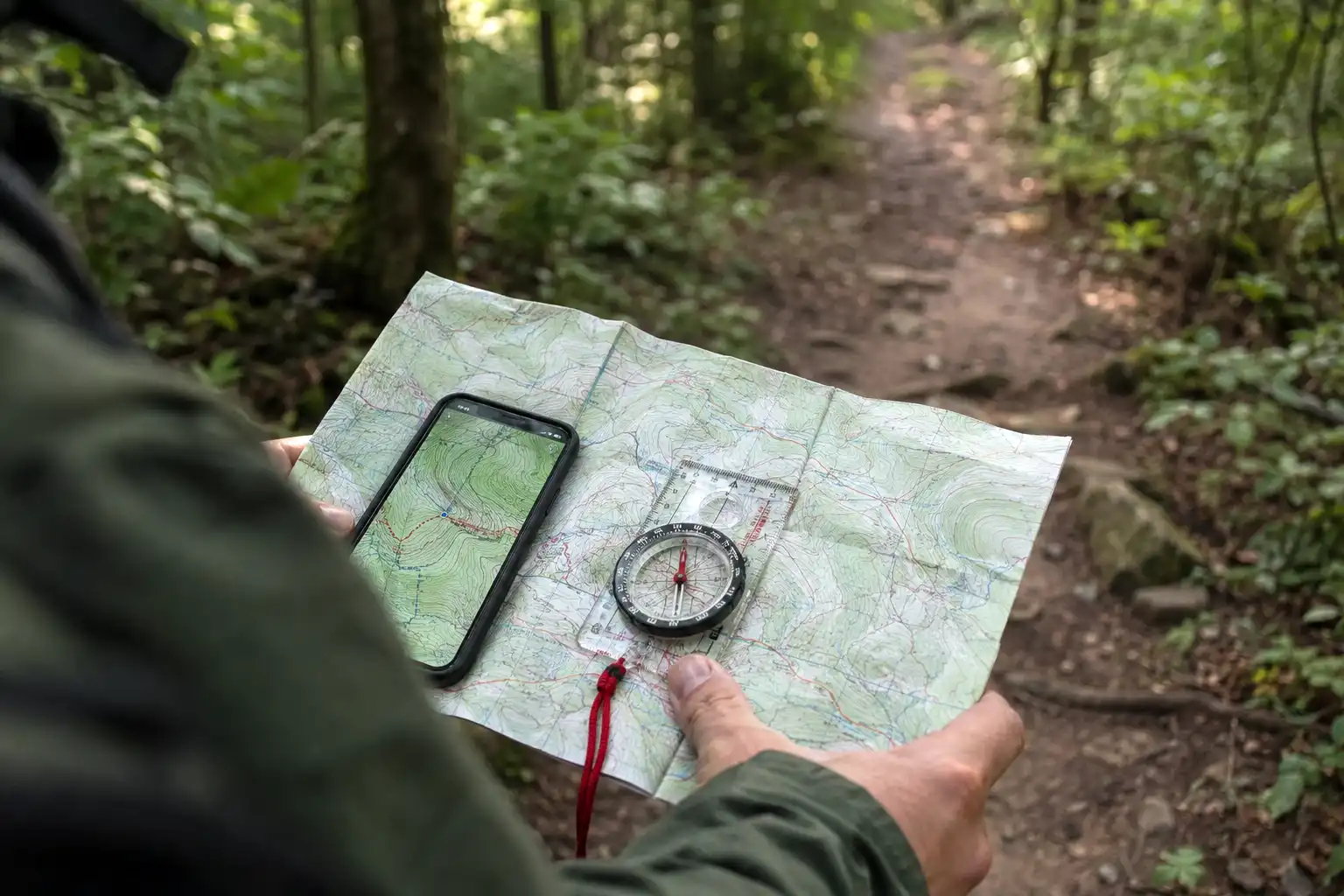
Navigation means a physical map, a compass, and a charged phone or GPS unit with the map already downloaded. Paper does not run out of battery, and it shows the wider area in a way a small screen cannot. Because of that, I keep a printed map in a zip bag even when my phone app is working perfectly.
A baseplate compass lets you orient that map to the ground around you. Learning to take a bearing takes one afternoon, and the skill holds up when the screen dies. Those same basics also help when you need to keep a route without GPS in dense forest, which happens more often than people expect.
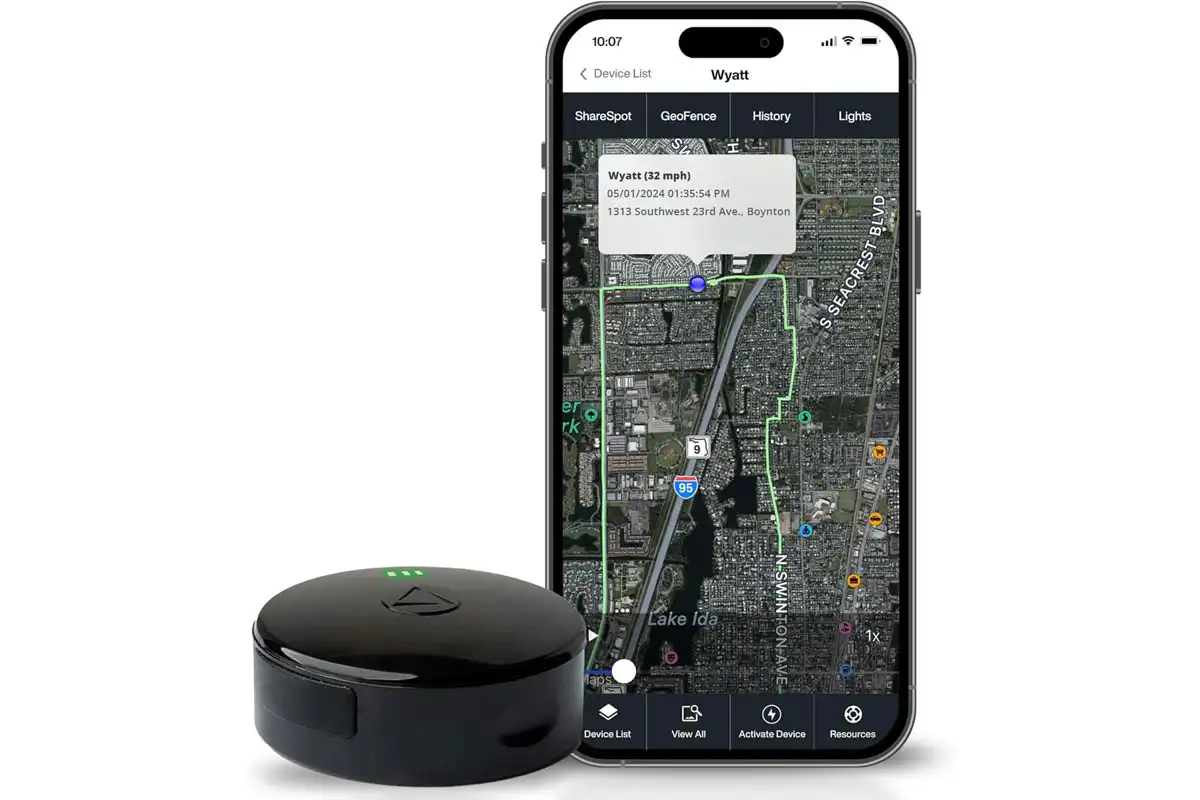
Many newer phones now include satellite SOS messaging. That feature has already pulled people out of trouble, though it comes with limits. It needs a clear view of the sky. It also activates only when you have no cell signal, and it drains the battery fast. Therefore treat it as a backup layer, not as your plan. A dedicated satellite messenger still wins on battery life and durability for remote trips.
2. Headlamp
A headlamp keeps your hands free, so it beats a flashlight on the trail. Bring one on every hike, even a short afternoon walk, because a twisted ankle two miles in turns a daylight hike into a night hike. LED bulbs last almost forever, but batteries do not, so carry spares or start with a full charge.
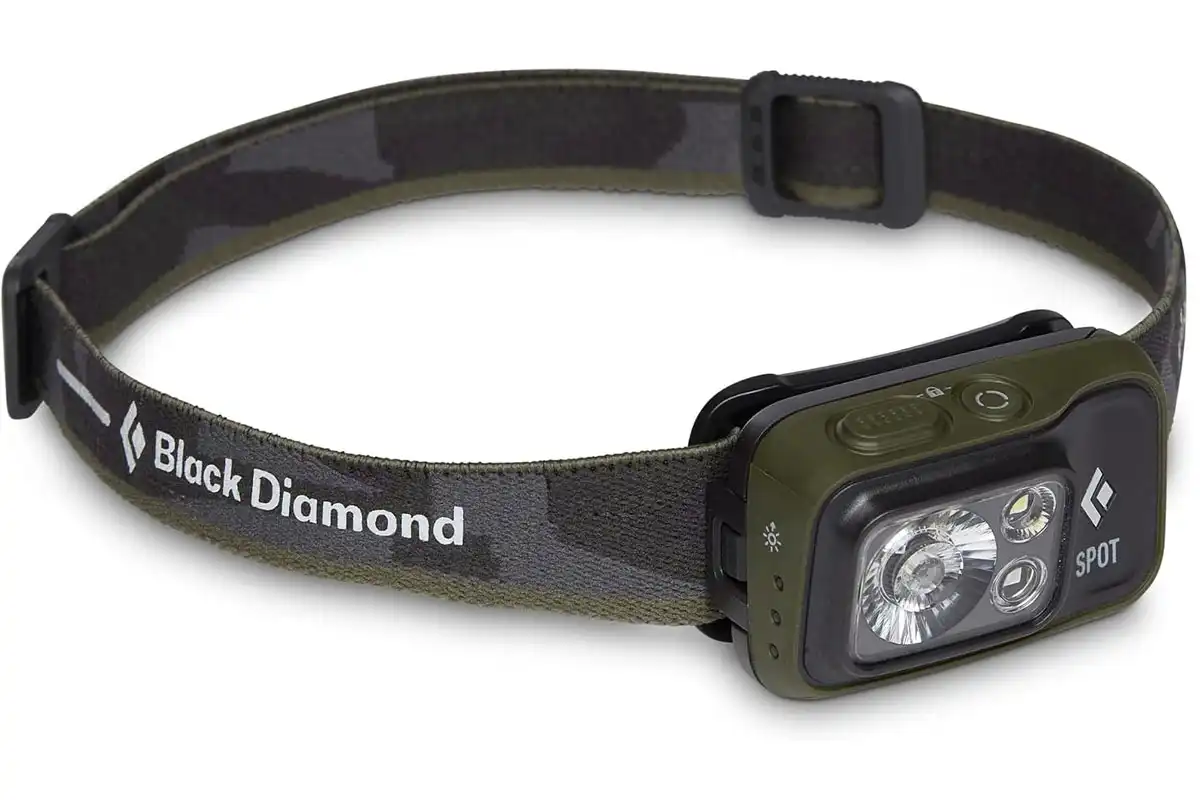
Your phone flashlight is not a substitute. It eats the battery you may need for navigation or a rescue call. Brightness matters less than most buyers assume, and the lumens a headlamp actually needs depend on whether you walk open ridges or thick forest.
3. Sun protection
Sun protection means sunglasses, sun protective clothing, and broad spectrum sunscreen rated SPF 30 or higher. Clothing blocks more sun than sunscreen does, so a brimmed hat and long sleeves carry a lot of the load. Near snow or water, The Mountaineers recommend SPF 50 on thin skinned spots such as the nose and ears.
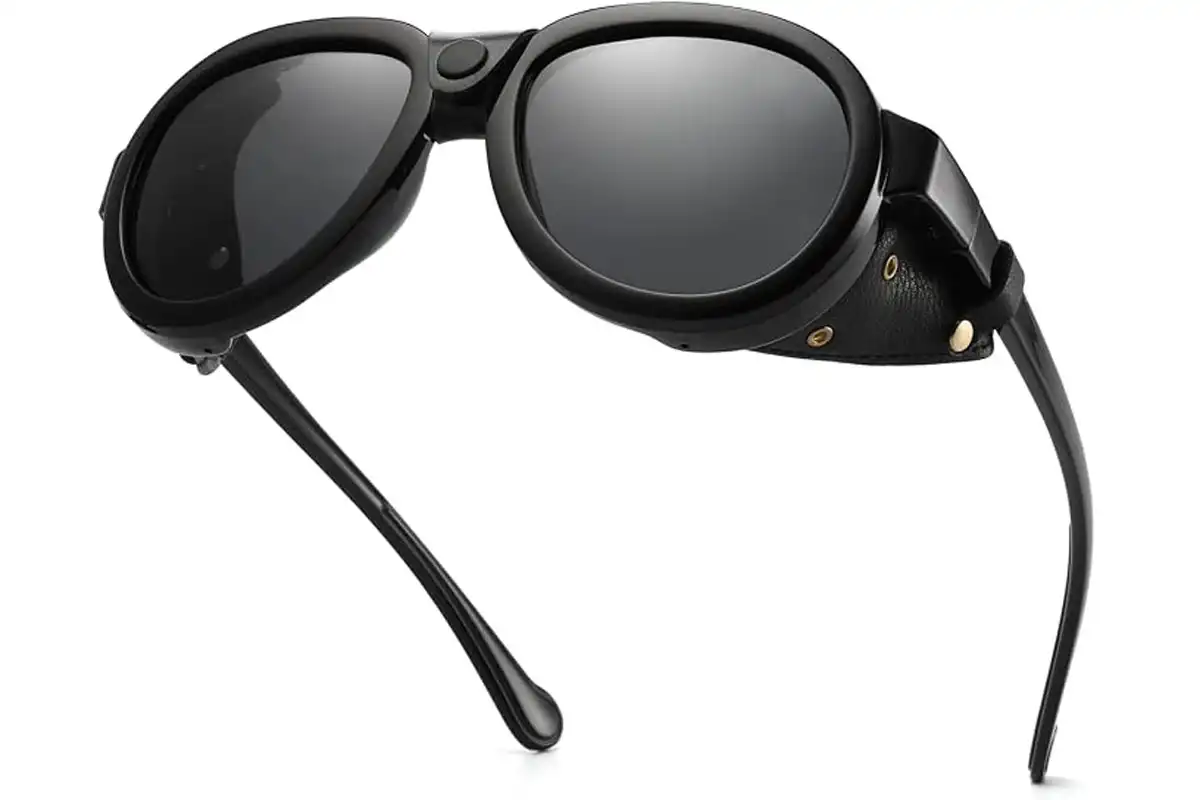
Good sunglasses filter at least 99 percent of UVA and UVB light. UV cuts through cloud cover too, so gray skies are no reason to leave your eyes unprotected. Apply sunscreen about 20 minutes before you head out, since it needs time to start working. No sunscreen is truly waterproof either. Water resistance tops out around 80 minutes, so reapply when you get a chance. Finally, replace any bottle that is past its expiration date or more than three years old.
4. First aid
A first aid kit should cover bleeding, blisters, and your own medical needs. Start with a compact commercial kit, then fix its gaps. Most store bought kits go heavy on tiny bandages and light on what actually stops a hike. So I add blister care, tape, gauze, tweezers, nitrile gloves, and painkillers.
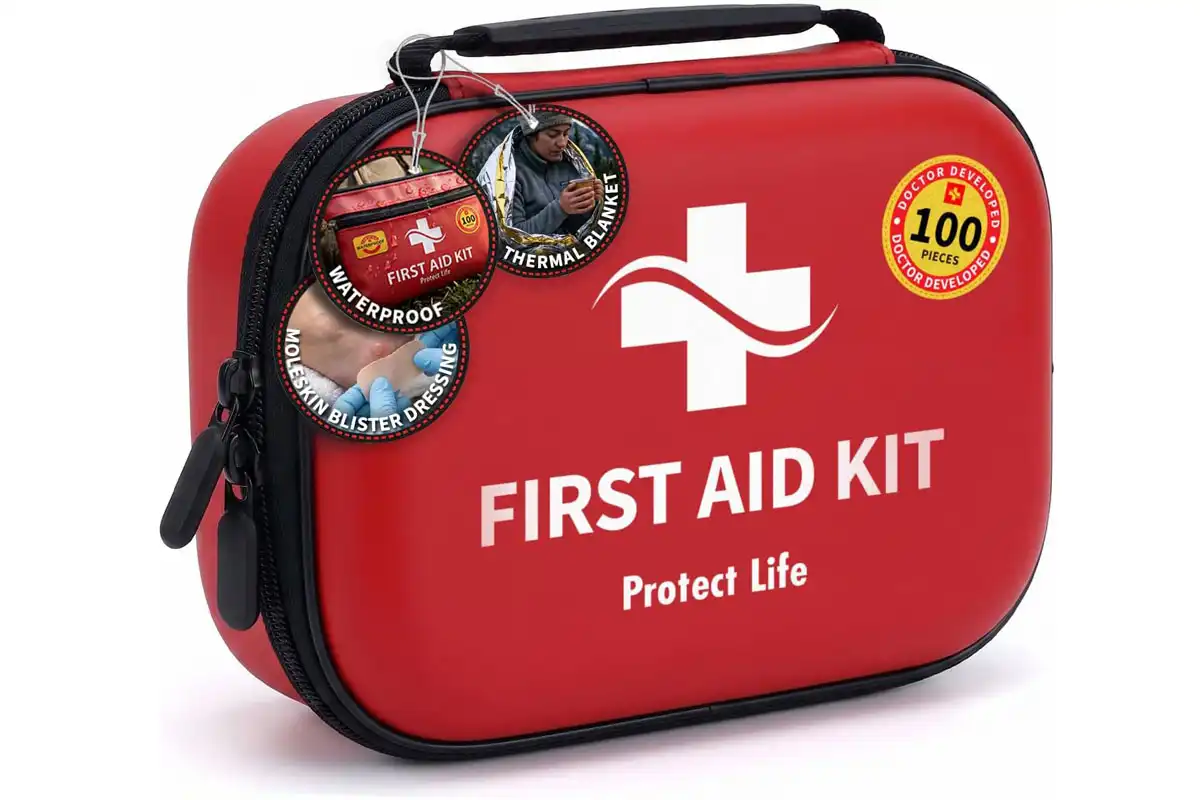
Add your personal prescriptions as well, including an epinephrine injector if you react badly to stings. Then wrap everything in waterproof packaging. Owning the kit is only half of it, though. Wilderness first aid training matters more, because help in the hills can be hours away rather than minutes.
5. Knife and repair kit
A knife plus a small repair kit handles gear failures that would otherwise end your day. A multitool covers most of it. Beyond that, I carry duct tape wrapped around a water bottle, a few zip ties, cordage, safety pins, and a needle and thread.
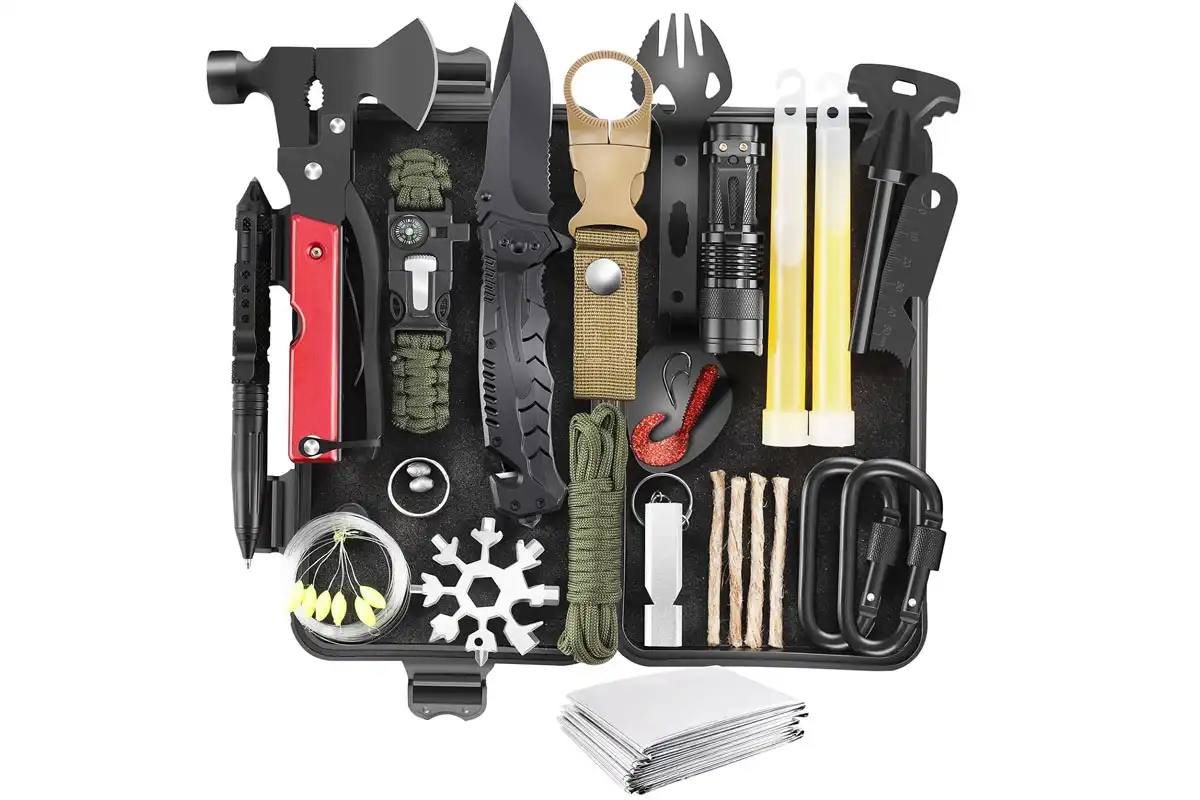
Match the kit to the trip. On a short day hike, tape and a multitool are plenty. On a longer trek, add spare parts for the gear you depend on: tent pole sleeves, a pad patch, or a filter cartridge. One broken buckle on a hip belt can turn a comfortable pack into a miserable one.
6. Fire
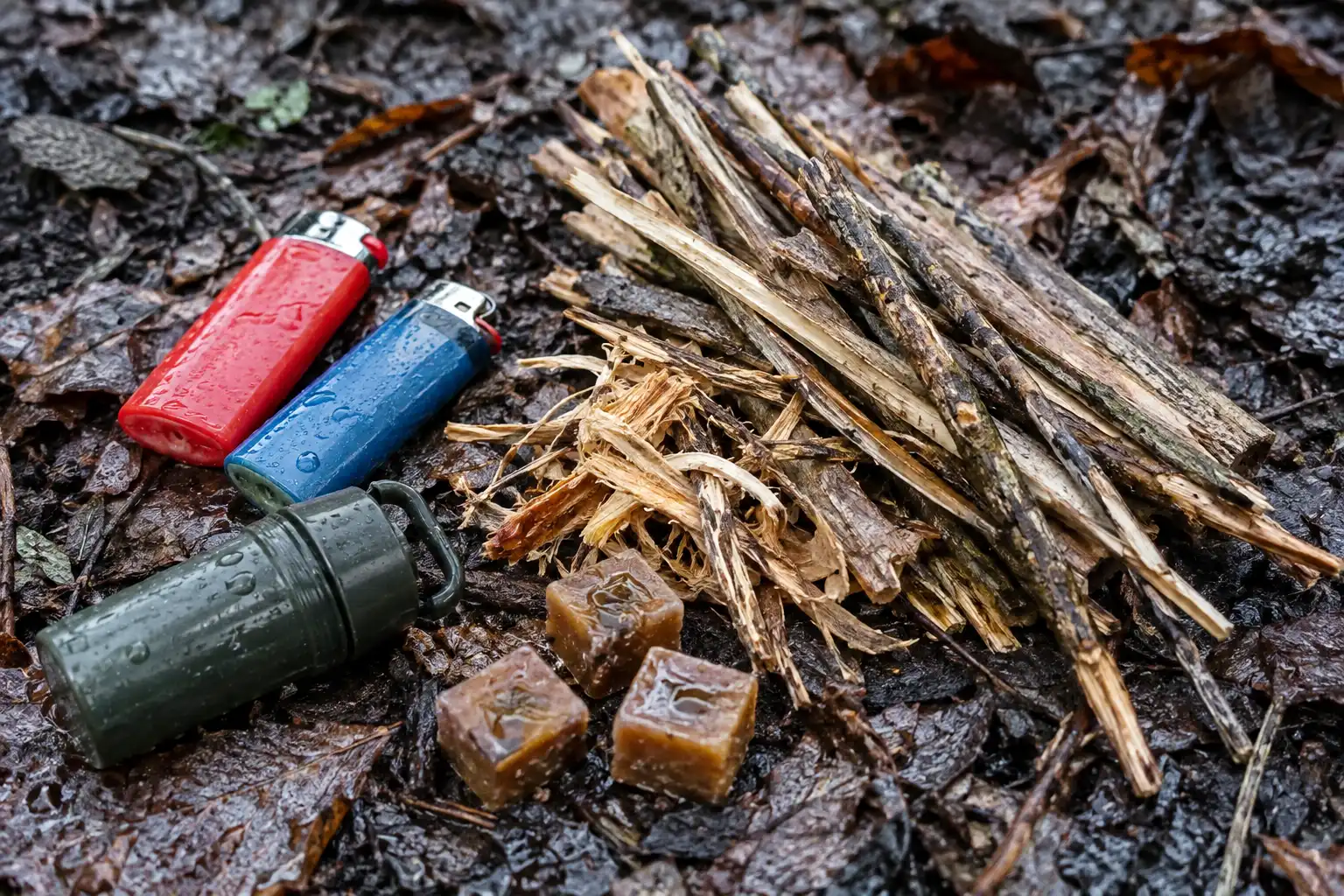
Fire means the ability to start and keep a flame going when you are cold and wet. Two disposable lighters weigh almost nothing, so I bring two rather than one. Waterproof matches in a sealed container work as well.
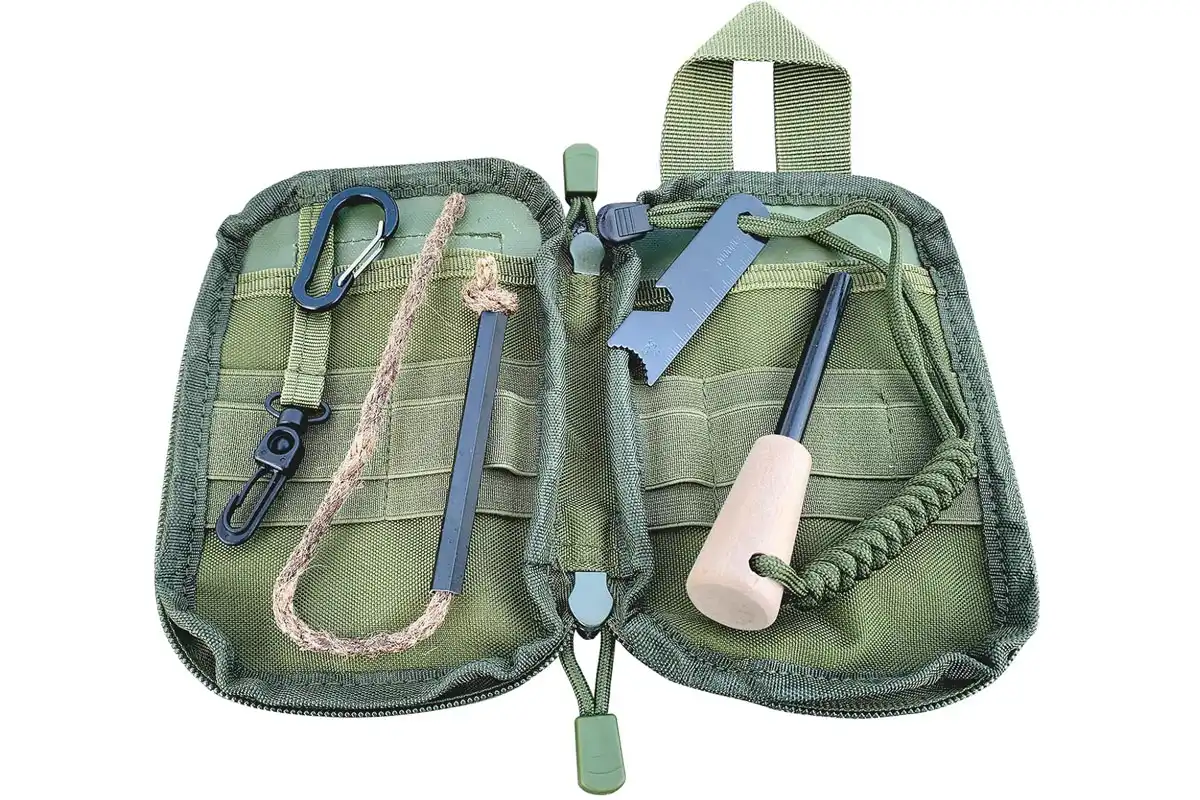
Firestarter is the part people skip. Wet wood will not light from a lighter flame alone. Cotton balls soaked in petroleum jelly, wax coated wood, or commercial heat tabs all buy you the extra seconds you need. Wood selection and build order matter just as much, so practice lighting a fire in wet weather before your life depends on it. Above the treeline, carry a small stove instead, since there is nothing to burn.
7. Emergency shelter
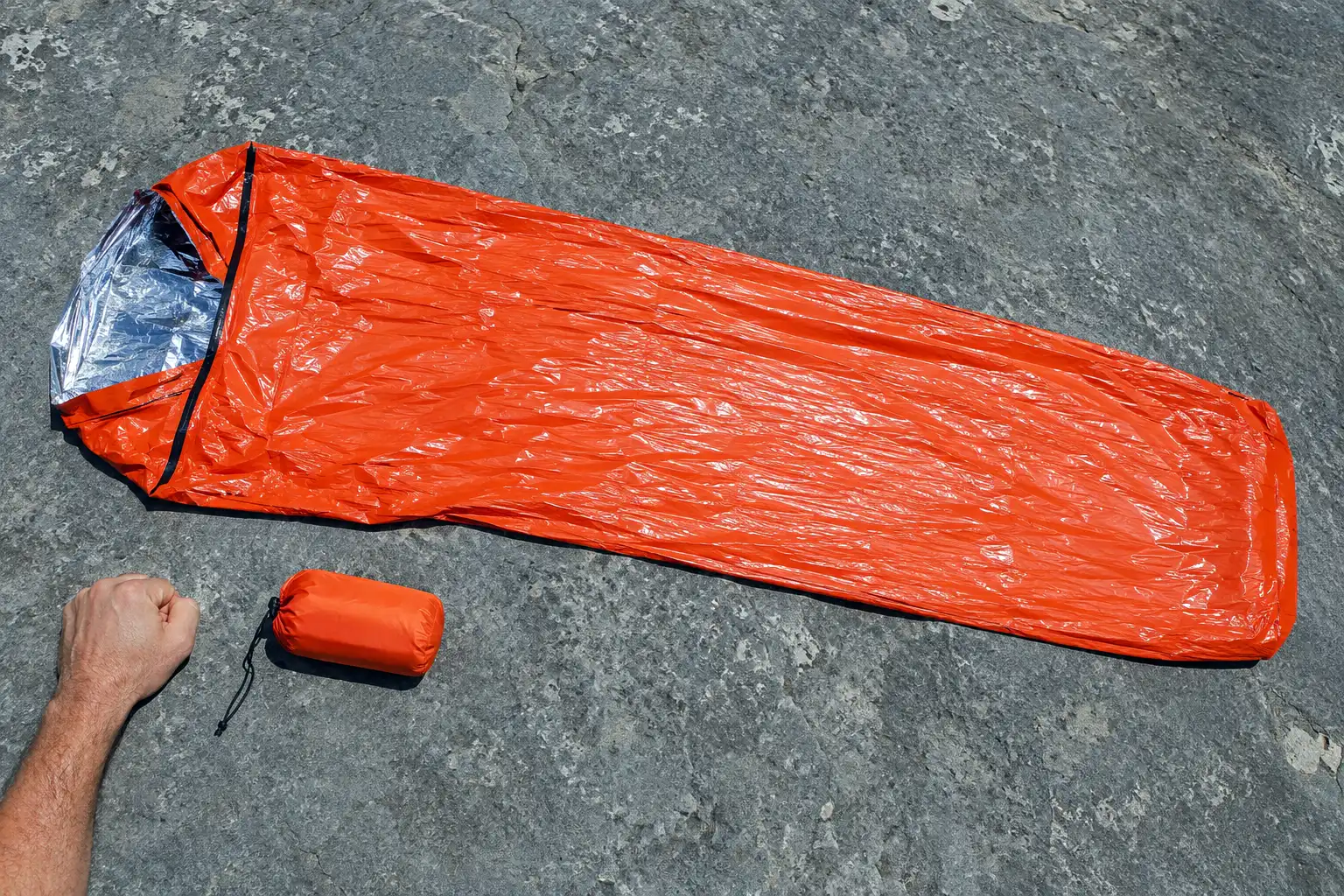
Emergency shelter is anything that blocks wind and rain while holding your body heat in. A single use bivy made of heat reflective polyethylene weighs under four ounces and packs down to the size of a fist. That is the version I keep permanently in my day pack.
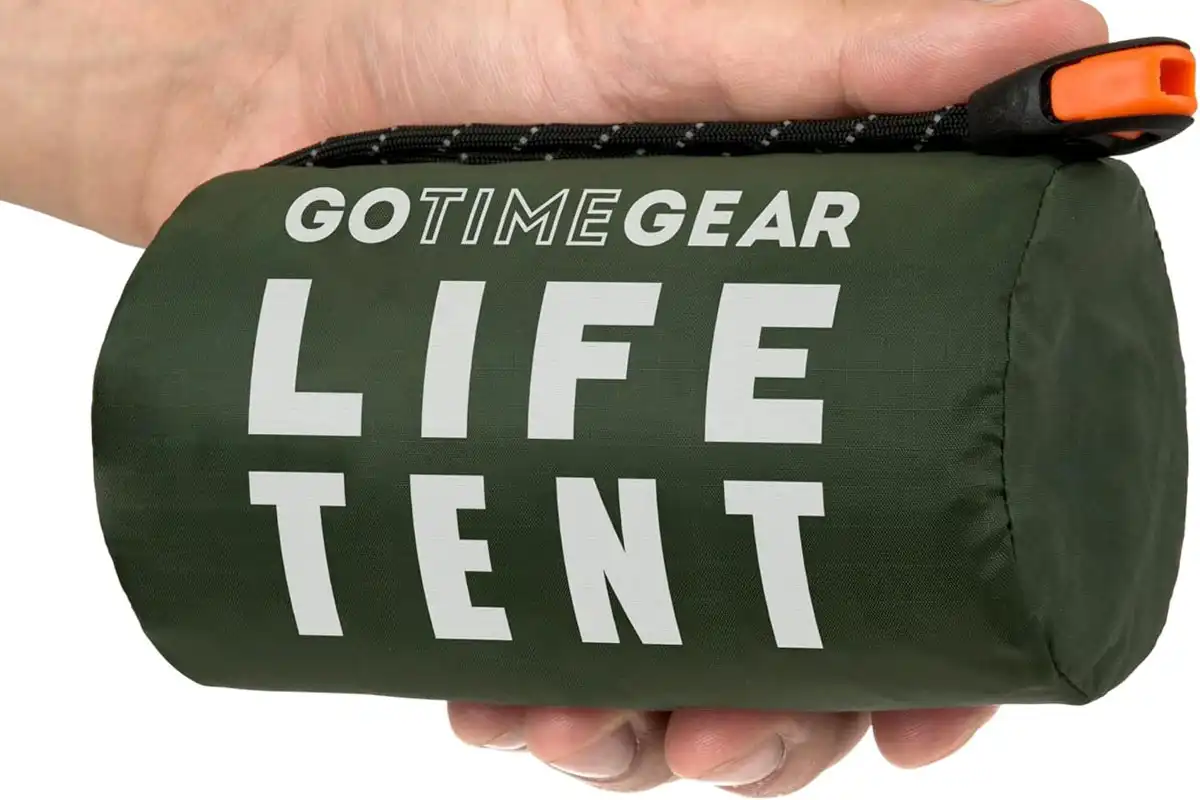
Thin foil emergency blankets are cheap, but The Mountaineers rate them as inadequate against wind, rain, and snow. A jumbo trash bag actually performs better as a wind shell. A tent counts only if it travels with you, so a tent back at camp does not qualify. If you have to improvise instead, putting up a simple shelter when rain arrives comes down to using a tarp and the terrain around you.
8. Extra food
Extra food means a full extra day of calories beyond what you planned to eat. For a day hike that is small, maybe a few bars, nuts, and dried fruit. The food should need no cooking, digest easily, and survive months in your pack without spoiling.
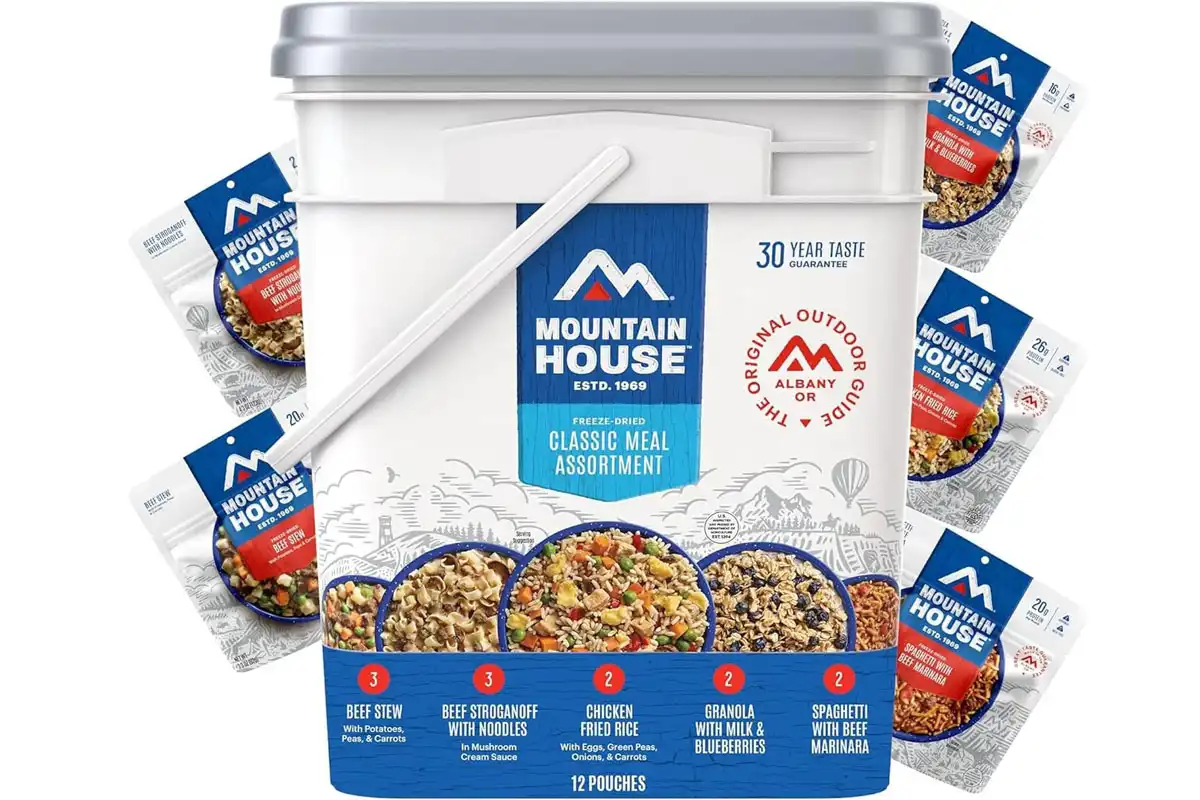
Pick things you will not snack on casually. Salty and simple works best when you are tired and slightly nauseated. Cold also burns calories fast, so extra food doubles as warmth on a chilly night out.
9. Extra water
Extra water means carrying more than you think you need plus a way to treat more. For most people, 1.5 to 3 quarts per day is enough on moderate terrain. In heat or at altitude, though, even 6 quarts can fall short. Wide mouth bottles refill faster and clean up easier than bladders, which leak and stay dirty.
Know your water sources before you start. A ridge walk may have none for hours, while a valley trail crosses streams constantly. Either way, carry a filter, tablets, or the means to boil, because a treatment method weighs far less than the water it replaces. Each option trades speed against weight, so learn how to make wild water safe to drink before you depend on it.
10. Extra clothes
Extra clothes are the layers you would need to survive the inactive hours of an unplanned night, not the ones you hike in. Ask yourself a simple question: what would keep me alive sitting still, in my emergency shelter, in the worst weather this trail could throw at me?
A spare hat or balaclava gives more warmth per gram than anything else you can pack. Beyond that, add a rain shell, an extra insulating layer, dry socks, and gloves in cool seasons. Bright colors help too, since search teams have to spot you. Layering for cold wind on the trail is the part to get right, because you want warmth at rest without cooking yourself while moving.
Which essentials do day hikers actually use?
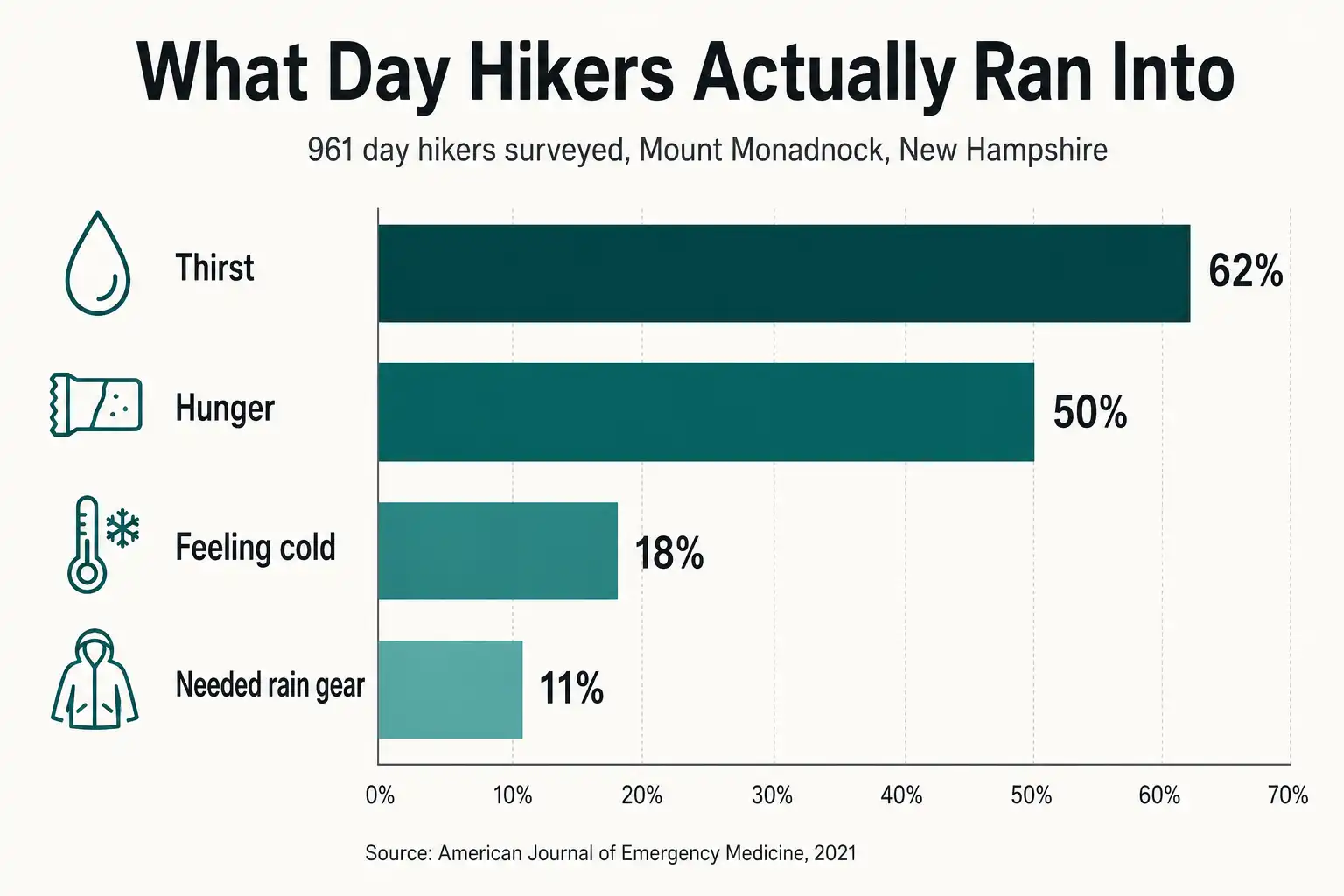
Water, food, and warm layers get used far more than the rest. A 2021 study in the American Journal of Emergency Medicine surveyed 961 day hikers finishing their hike on Mount Monadnock in New Hampshire. Those hikers reported 1,686 problems between them. Thirst came first at 62 percent, then hunger at 50 percent, feeling cold at 18 percent, and needing rain gear at 11 percent.
Hikers said they felt prepared for 89 percent of what happened to them. Search and rescue groups in British Columbia pushed back hard. They argued that the survey design could not measure how the list performs in a true emergency. That criticism has merit. One busy, well traveled peak is not a wilderness sample, and self reported comfort is not the same as survival.
Still, the data is useful in one specific way. It tells you which three categories you will draw on most, so those are the ones to get right first: water, food, and insulation.
Do you need all 10 on a short hike?
On a busy front country trail with cell service, most hikers reasonably carry a partial kit. That said, the reason to carry the full ten is the situation you did not plan for. Weather turns, a knee gives out, or a wrong turn adds four hours. Search and rescue teams keep pushing the list because they see those days regularly.
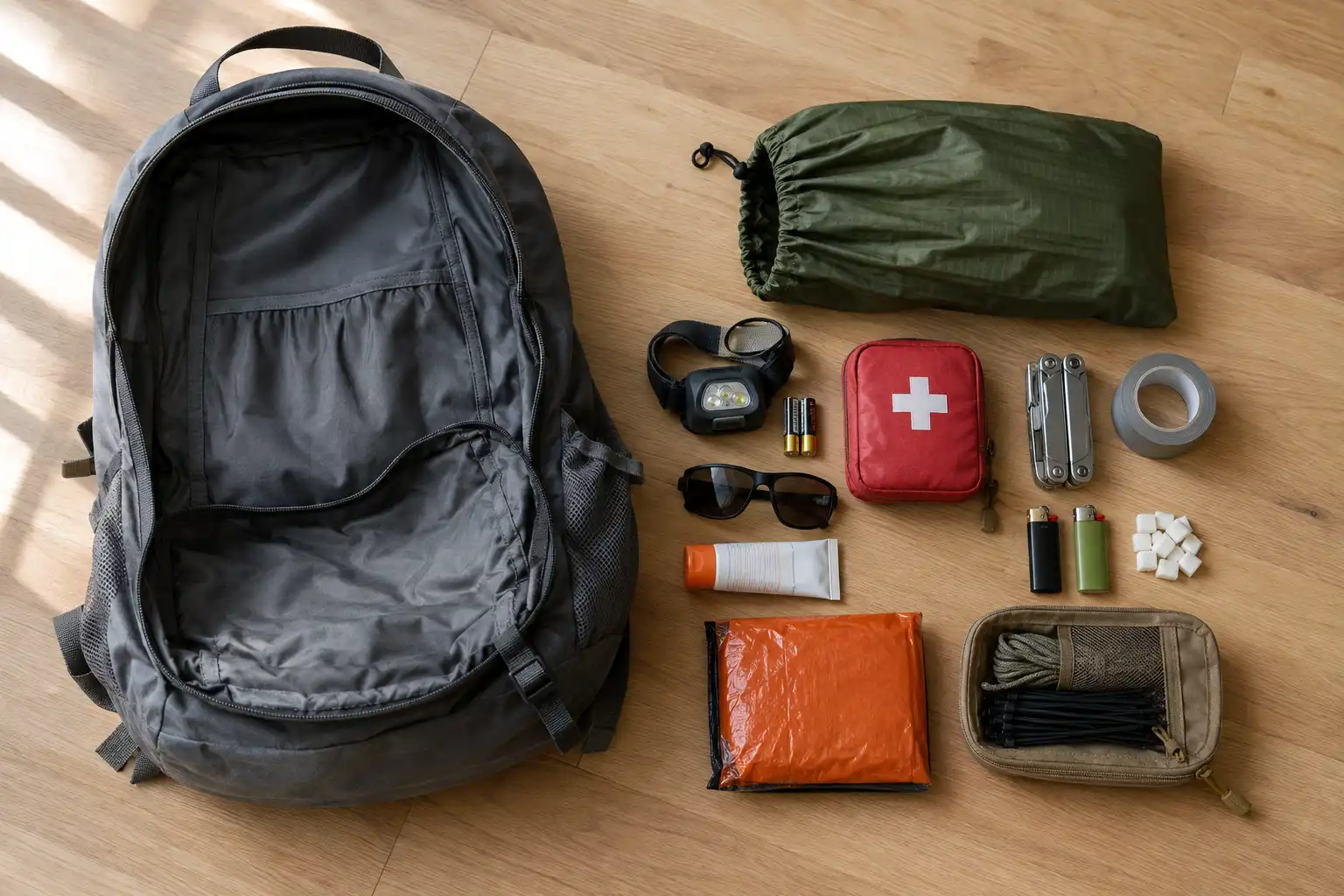
Here is how I handle it. Seven of the ten barely change from trip to trip: headlamp, sun protection, first aid, knife and repair kit, fire, shelter, and a small tool pouch. I keep those seven bundled in one stuff sack that lives in my pack permanently. Then I add the map, food, water, and clothing that suit the specific day. As a result I never rebuild the kit from scratch, and I never forget the compact items.
Scale the rest to the trip. Remoteness, weather, and how far you are from help should drive your decisions, not the length of the trail alone.
How much does the full kit weigh?
The full ten adds a modest amount of weight, and most of it comes from water and clothing. The compact seven fit in a small stuff sack. A single use bivy runs under four ounces, while a reusable bivy sack sits closer to a pound. Water is the heavy part at roughly two pounds per liter, which is exactly why a treatment method beats hauling extra bottles.
Where the weight sits matters as much as the total. Heavy items belong close to your spine and near the middle of your back. In practice, loading a day pack so it rides well is more about placement than total weight.
What the list does not cover
The ten essentials do not include a trip plan, and that omission trips people up. Tell someone your route and your expected return time before you leave. Search teams start with that information, so it shortens the search more than any single item in your pack.
A few other things fall outside the list but still belong in your planning. Check permits and closures, because access rules change. Confirm the weather forecast the morning you leave. Carry a whistle, since it works longer than your voice. Also check trail conditions locally where I hike, as hill routes in the Chittagong Hill Tracts often require a registered guide and check post registration.
FAQs on Hiking Essentials

Is a cell phone one of the 10 essentials?
Can one item cover two essentials?
Do the 10 essentials change in winter?
Are the 10 essentials the same for kids?
Final Words on Hiking Essentials
The 10 hiking essentials are not a shopping list to buy in one trip. They are ten questions to answer before you walk: how will I find my way, see in the dark, treat an injury, start a fire, block the weather, eat, drink, and stay warm. Bundle the seven compact categories into one sack that stays in your pack, then adjust map, food, water, and layers for each hike. Build the kit once, keep it there, and it stops being something you have to remember.