What Is FKT in Hiking? Fastest Known Time Rules

FKT shows up constantly in trail reports, Strava captions, and hiking forums, usually with no explanation attached. This guide covers what the term means, the three styles of attempt, and how a claim gets checked. Then it shows how you could set one near home.
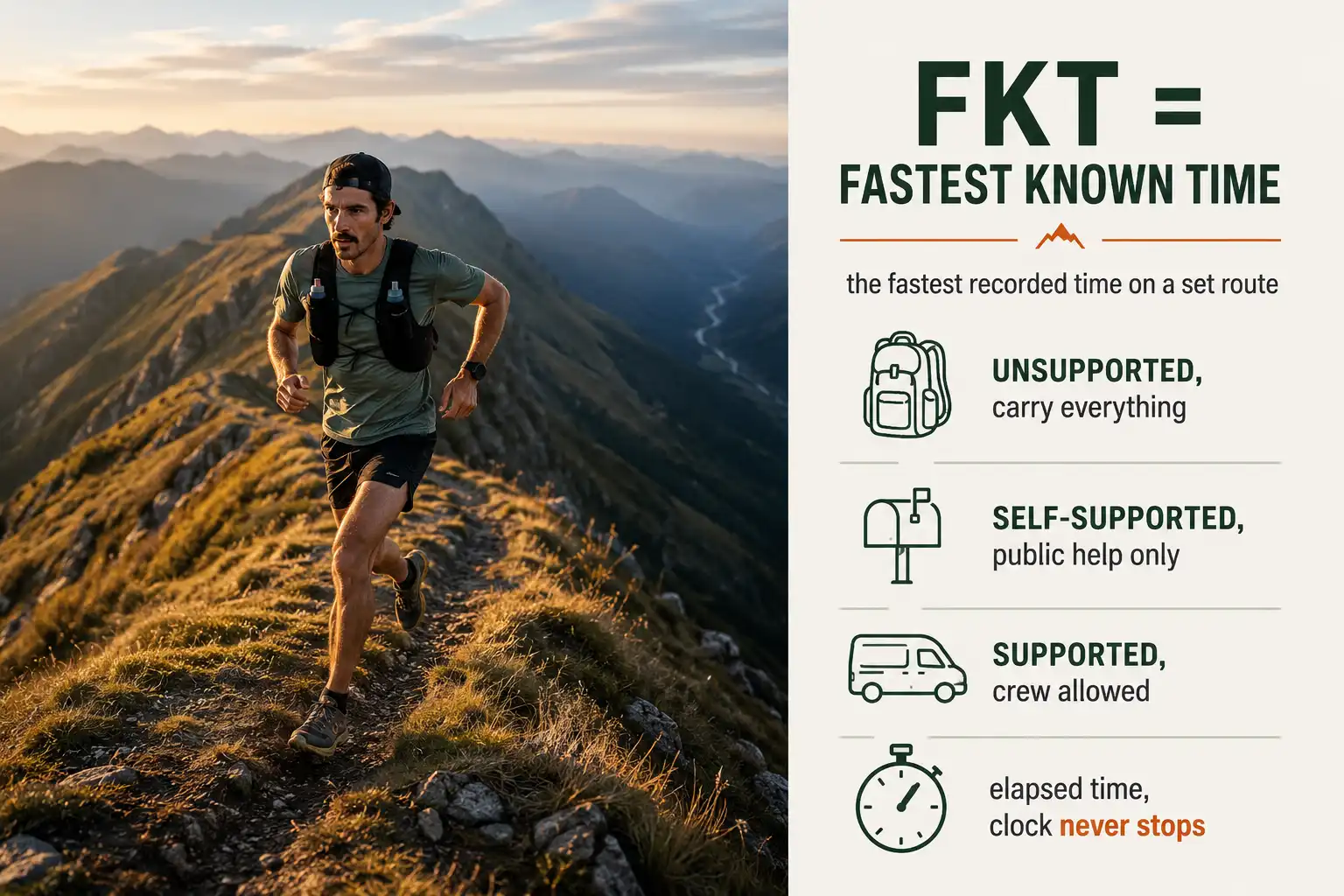
FKT stands for Fastest Known Time. It means the quickest recorded time anyone has covered a specific trail or route. Hikers and runners organize these attempts themselves instead of racing, and every attempt falls into one of three styles: unsupported, self-supported, or supported. The site fastestknowntime.com collects and verifies the times.
What does FKT stand for in hiking?
FKT stands for Fastest Known Time, and it means the fastest documented completion of a named trail or route. Runners Peter Bakwin and Buzz Burrell coined the term in 2000, and they built the website that now gathers these times worldwide. No sanctioning federation sits behind it. Instead, fastestknowntime.com acts as the accepted record keeper, with regional editors who review each claim.
The word “known” matters. People walked trails fast long before GPS watches existed, so nobody can prove today’s time is the fastest ever. It is only the fastest one on record.
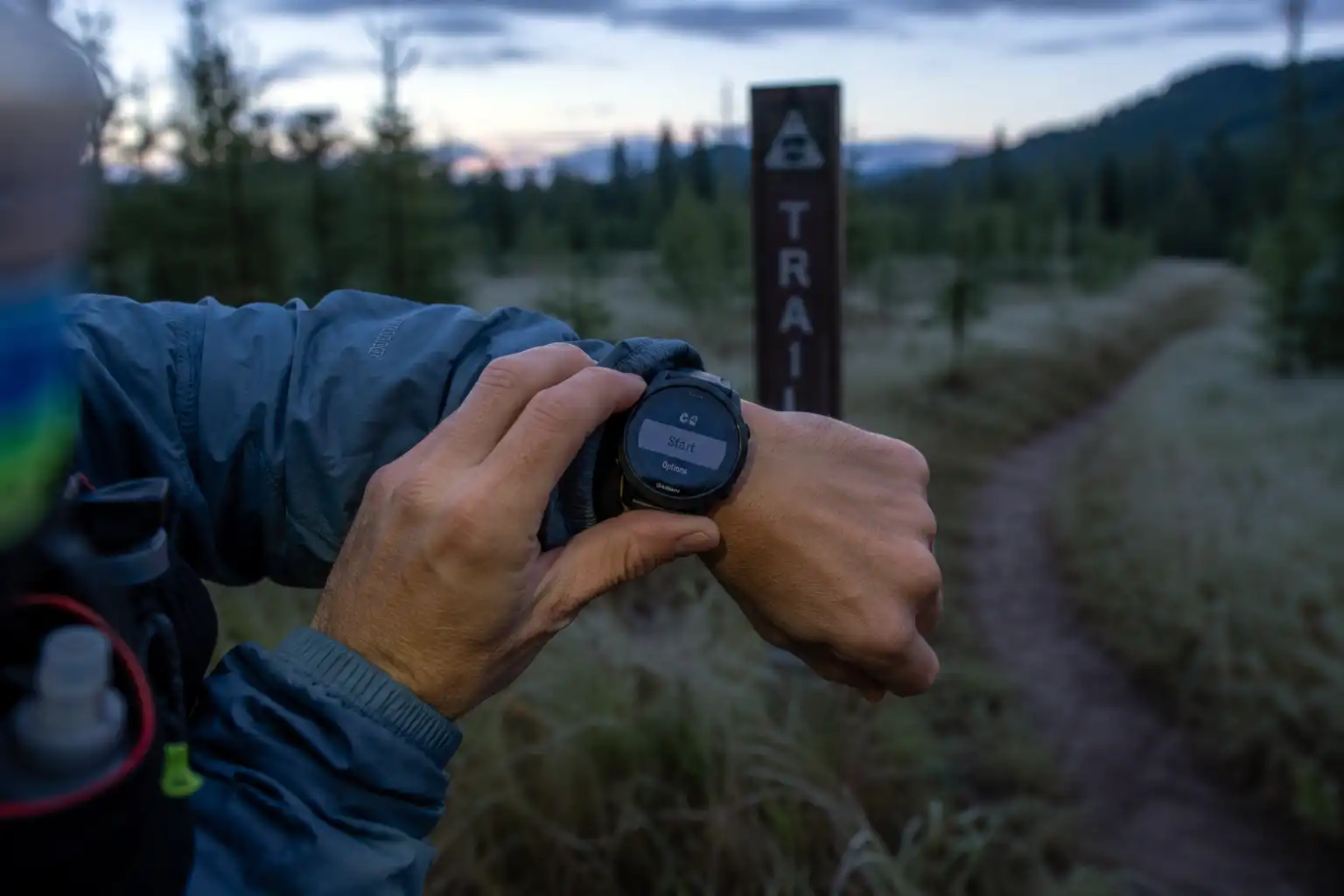
Timing is stricter than most people expect. The clock starts at the beginning of the route and never stops until the finish, so your total counts as elapsed time rather than moving time. Sleep, meals, blister repair, and town stops all add up. Attempts must also follow the route continuously and in order. Therefore, if you step off the trail for any allowed reason, you have to return to the exact spot you left before continuing.
Read next: Top 10 Hiking Essentials
How is an FKT different from a race?
An FKT has no entry fee, no start gun, and no fixed date. You pick the day, the direction, and often the season. Weather becomes your problem alone, and so does safety.
Races publish full results. FKT listings do not. Only the fastest time appears in each category, so there is no leaderboard and no second place. If you finish a route but miss the record, you can post your result in the comments on that route page instead.
One more difference catches people out. A Strava segment is not an FKT. Segments are user created and unmoderated, while routes on the FKT site go through review. You can set a supported FKT during a race, although then you have to beat the existing course record for it to count.
What are the three FKT styles?
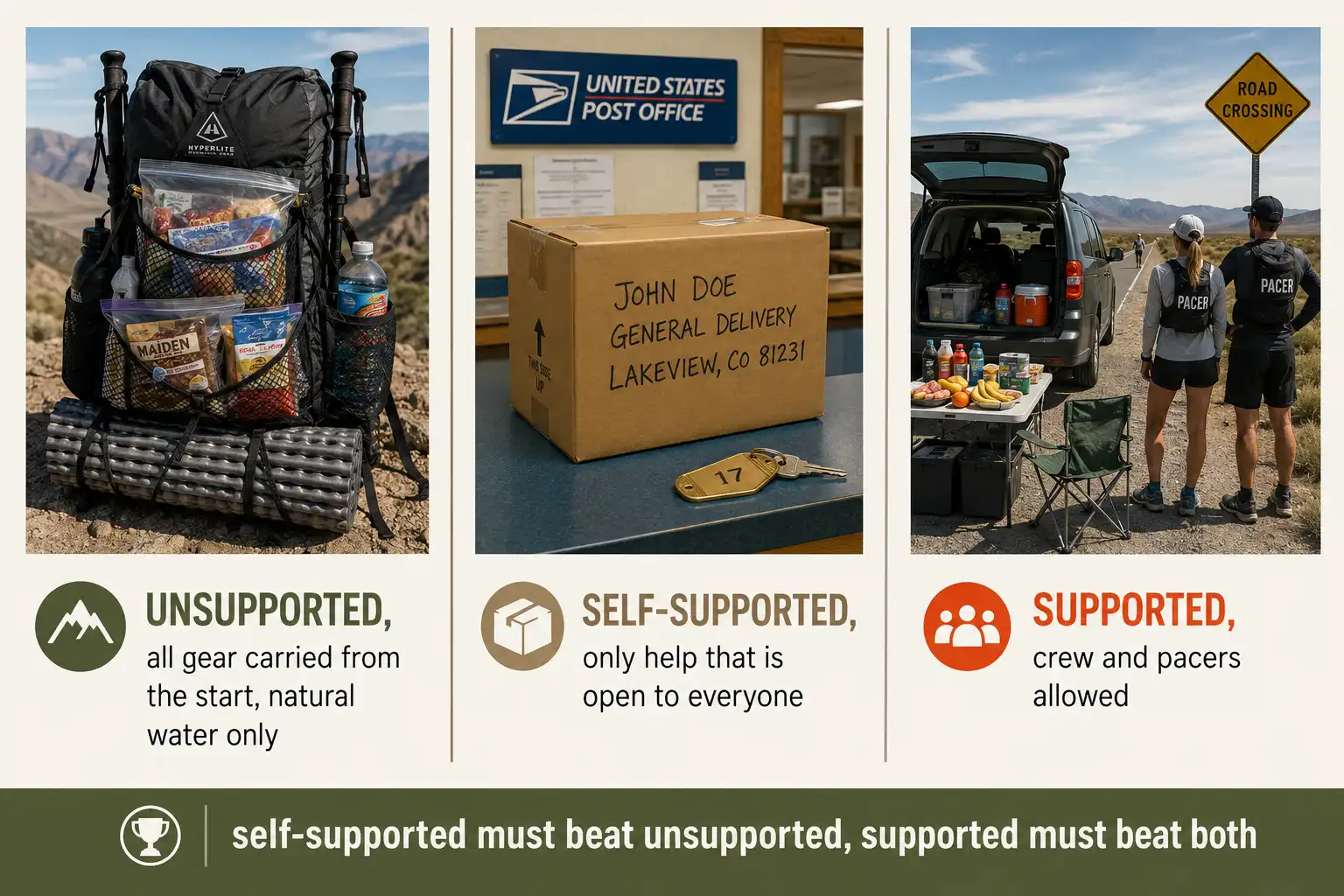
The three styles are unsupported, self-supported, and supported. Every submission has to state which one you used, because the amount of outside help changes what the time means. The site ranks none of the three above the others. However, the rules do stack, and that stacking surprises newcomers.
| Style | Outside help allowed | Extra requirement |
|---|---|---|
| Unsupported | None, beyond water from natural sources and public taps | Carry everything from start to finish |
| Self-supported | Anything equally available to everyone else | Must beat the unsupported time |
| Supported | Any amount, as long as you move under your own power | Must beat both other times |
Unsupported FKT rules
Unsupported means no external help of any kind. You carry all food and gear from the start, then refill only from natural sources or public taps along the way. Water from a commercial source does not qualify, even when it costs nothing. Public toilets are fine, though using them for shelter is not.
Pre-arranged spectators count as support too, including photographers and drone operators, a rule the site added in February 2021. Phone calls and messages, meanwhile, do not count. Because you have to carry every calorie, this style works best on shorter routes.
Self-supported FKT rules
Self-supported means you can use any help that stays equally open to everyone else. So you may cache supplies in advance, buy food in a trail town, or sleep in a motel. You may also pack a resupply box yourself and have somebody mail it later. Camping in a friend’s yard would not count, because the public cannot do that.
Most long thru-hiking routes see attempts in this style. Also worth knowing: a self-supported time only becomes an FKT once it beats the unsupported time on the same route.
Supported FKT rules
Supported allows as much help as you can organize. A crew can meet you at road crossings, pacers can run beside you, and someone else can carry your gear. The one hard limit is that you must move under your own power the whole way. Any help at all, even once, makes the effort supported. To claim it, you also have to beat the self-supported and unsupported times.
A few edge cases sit inside these definitions. Running with a dog is not support. Teams may share gear and still count as unsupported, provided everyone finishes together. Yet if one team member drops out, the finishers move into the supported category, since that person effectively paced them.
What makes a trail eligible as an FKT route?
A route needs to be at least 5 miles long or climb at least 500 feet. Meeting that floor guarantees nothing, though. Editors also want a line that other people will want to repeat, with logical start and finish points. A trailhead, a summit, or the end of a named trail all work.
Every route needs public access, so submissions should not cross private land. If the route requires a permit, the description has to explain how to get one. Road, trail, and off-trail surfaces all qualify. Short scrambling or climbing sections are fine as well, once they connect a sensible line.
Two details trip up new submitters. First, cutting corners gets a submission declined, and that includes shortcutting the switchbacks that steep trails rely on. Second, editors expect you to have scouted the whole route yourself before proposing it. Some regions already have heavy coverage, so the bar there sits higher than in places with few listed routes.
How do you verify an FKT?
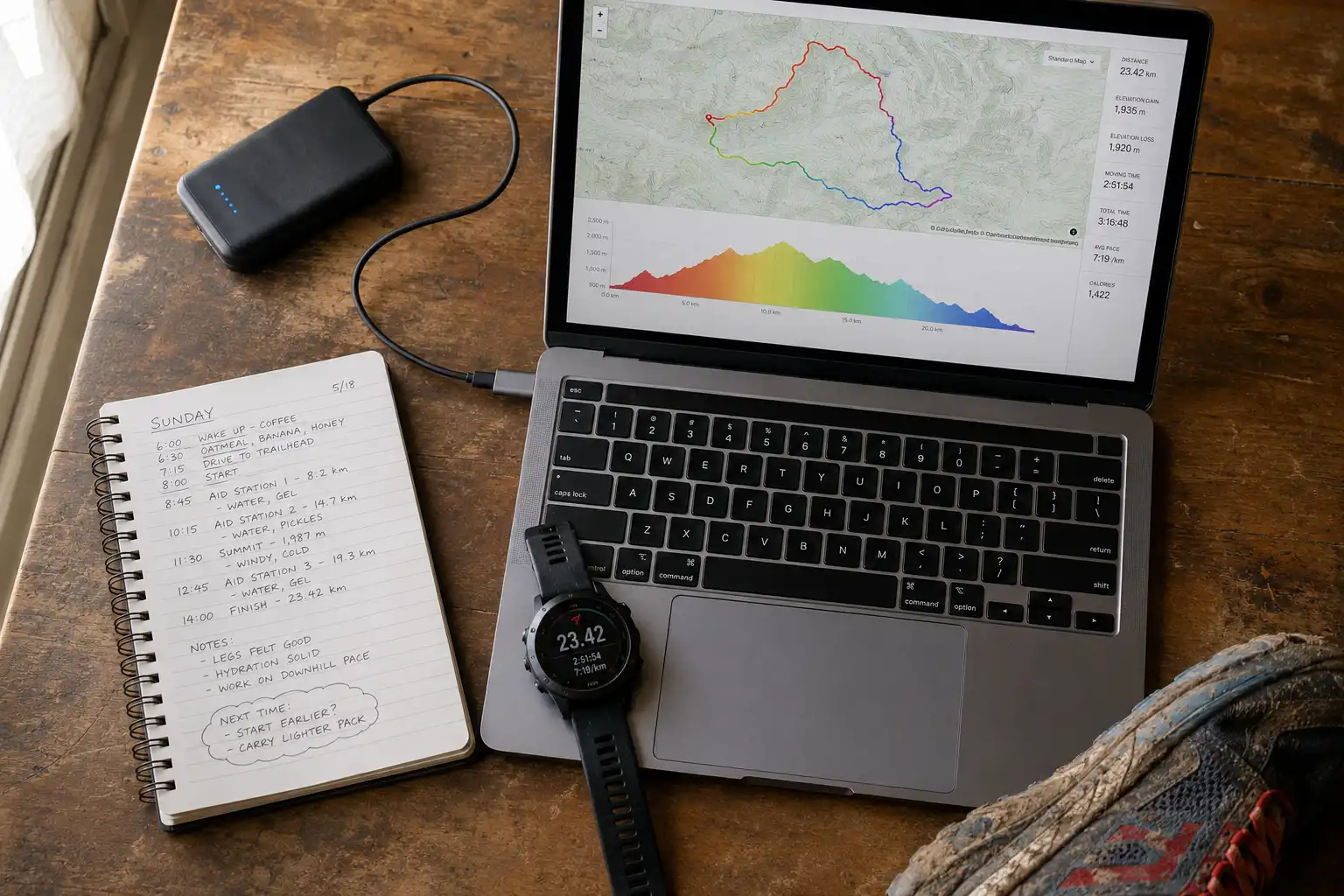
You verify an FKT with GPS data from the effort itself, and verification is mandatory. The site will not publish an unverified time. So you have to supply either the original track file from your device or a link to the activity on Strava, Garmin Connect, or a similar platform. Accepted file formats are GPX, TCX, FIT, and KML. Editors prefer GPX pulled straight from the device or the manufacturer’s software. The team also encourages a written trip report and original photos.
Device failure ruins otherwise successful attempts, so battery planning is part of the job. Low power modes that log fewer points still count. For multi-day efforts, one file per day works fine, and you can switch the device off overnight while it charges.
Two trackers beat one. Tara Dower lost power in her tracker partway through her 2024 Appalachian Trail run, and her watch data saved the record. Canyons and thick forest also block satellite signal, so stepping into the open occasionally helps.
How do you submit an FKT?
Submitting takes two steps. If your route is not already listed, you submit the route first, along with a GPX file or a very good map. Then you submit the time through the FKT form. Emailing the team instead of using the form does not work.
You do not need to announce an attempt in advance on most routes. Even so, posting your plan in the comments on the route page is good practice, and it lets the current record holder know. Live tracking stays optional, and the team only adds it to the Tracking Now page for efforts expected to last longer than 24 hours.
What are Premier Routes?
Premier Routes are the routes the FKT team flags as the most competitive and internationally watched. Selection rests on a history of competition, strong scenery, a clean line, and no unreasonable obstacles to completion. The team actually dropped the Pacific Crest Trail from this list, since annual wildfire closures and reroutes make times hard to compare.
The list runs worldwide. Alongside the Appalachian Trail, the Colorado Trail, and the John Muir Trail, it includes the Bob Graham Round and the Pennine Way in Britain. Mount Fuji, the Namche Bazaar to Everest Base Camp return, and Kilimanjaro appear too. Those last two hit harder once you know the usual walking time to Everest Base Camp. The same goes for how hard the Kilimanjaro climb feels at a normal pace.
Attempts on these routes carry stricter expectations. You should reread the guidelines beforehand, announce your attempt to the FKT team, and plan verification carefully with a backup device. Live tracking used to be mandatory here. Since 2024, the team strongly recommends it instead.
Which FKTs are worth knowing in 2026?
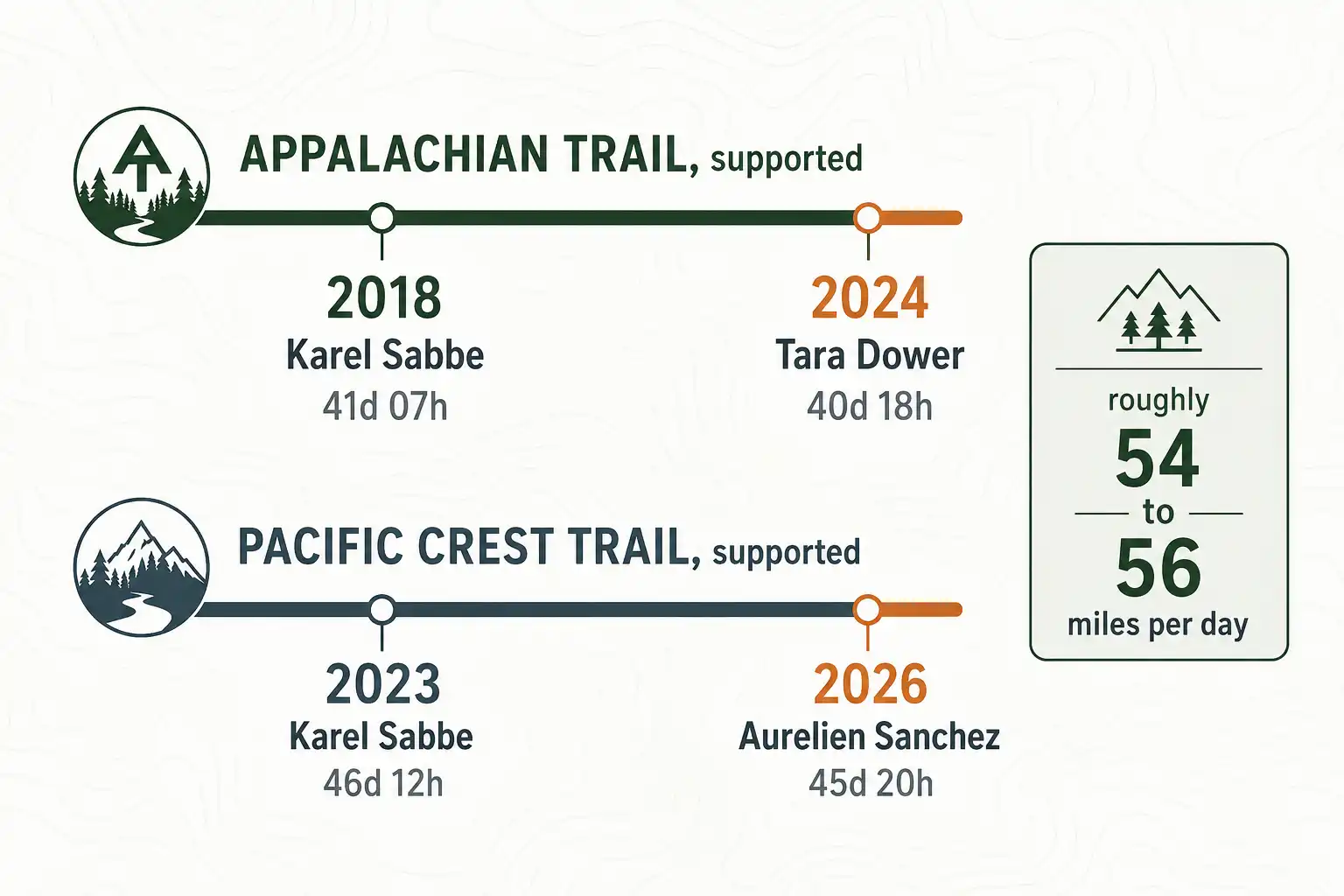
Two marks stand out right now, one on the Pacific Crest Trail and one on the Appalachian Trail. The PCT record changed hands this summer. On July 23, 2026, French ultrarunner Aurélien Sanchez finished the roughly 2,650 mile trail in 45 days, 20 hours, and 15 minutes, supported. That took about 16 and a half hours off Karel Sabbe’s 2023 mark of 46 days, 12 hours, and 50 minutes. Sanchez averaged close to 56 miles per day.
On the Appalachian Trail, Tara Dower set the overall supported time in September 2024. She went southbound from Katahdin in about 40 days and 18 hours, beating Sabbe’s 2018 record by roughly 13 hours. Her time also beat every previous men’s and women’s mark on the trail. For scale, many hikers ask about covering the AT inside three months, and Dower did it in under six weeks.
Joe McConaughy’s 2017 run still shows how the styles stack. He set the self-supported Appalachian Trail time of 45 days, 12 hours, and 15 minutes, which also beat the supported record standing at that moment.
What daily mileage does an FKT actually require?
On the big thru-hiking trails, records now sit near 54 to 56 miles per day for weeks on end. That number sits far beyond normal hiking. Most walkers plan around a daily mileage of 10 to 20 miles, and even strong hikers rarely hold much more day after day.
Short routes tell a different story, and that is where most FKTs actually happen. A 6 mile hill loop or a single summit push can carry a listed time. Checking your own pace per mile shows you quickly whether a local record sits within reach, because plenty of small routes have soft times on them.
How can you try your first FKT?
Start small and local. Here is the sequence I would follow.
- Search the site first. Check the Routes page by name, then by country or state, because the map is not a reliable locator.
- Pick a route you already know. Familiar ground beats a famous trail you have never walked.
- Read the current times. Note the style, the direction, and how much margin you would need.
- Scout the exact line. Walk it once at normal speed, then mark the start and finish points precisely.
- Choose your style honestly. Decide before you go, and do not change the plan mid-effort.
- Sort your tracking. Charge everything, run two devices on long routes, and test the settings.
- Write the report immediately. Do it the same day, while the details stay fresh.
Training matters as much as logistics. Fast trail days punish weak downhill legs and sloppy fueling, so build both before you commit. Sturdy poles help on steep ground too, although only if they can take repeated hard use.
Where FKTs draw criticism
Not everyone supports speed records, and the objections are reasonable. The Appalachian Trail Conservancy, for example, does not recognize any speed records on the trail it manages. It prefers to focus on each hiker’s own experience instead. Land managers elsewhere take similar positions.
Practical concerns come up too. Crews parking at trailheads, pacers in fragile terrain, and shortcutting all cause damage. The FKT team will not accept a route or a time that breaks any law, rule, or policy, so closures and permit conditions still apply mid-attempt. Honesty is the other pressure point. Since claims rest on the athlete’s own data, editors do reject disputed submissions.
I have never chased a listed record myself. Around Kaptai I do time the same hill route now and then, mostly to see how my fitness is tracking. That habit taught me something about the style definitions as well. In the Chittagong Hill Tracts a registered guide walks with you on many trails, and by my reading of the rules that makes the effort supported rather than unsupported.

Frequently asked questions

Is an FKT an official world record?
Do you have to run to set an FKT?
What does OKT mean?
Are there separate categories for men and women?
Final thoughts
FKT simply means the fastest recorded time on a route, tracked by a community rather than a federation. The rules that matter are the three styles, the elapsed time clock, and the verification requirement. Once those click, the rest comes down to planning. You do not need a famous trail either. A short loop near home with a soft time makes a better first target than a thru-hike, and the process teaches you plenty about your own pacing and fueling.