What to Wear Hiking to Stay Dry, Warm, and Blister Free

The first time I climbed to Keokradong, I started in a cotton shirt at 5 a.m. By the ridge it had soaked through. Then the wind hit, and I shook for twenty minutes in 60°F weather. This guide covers what to wear hiking so that does not happen to you.
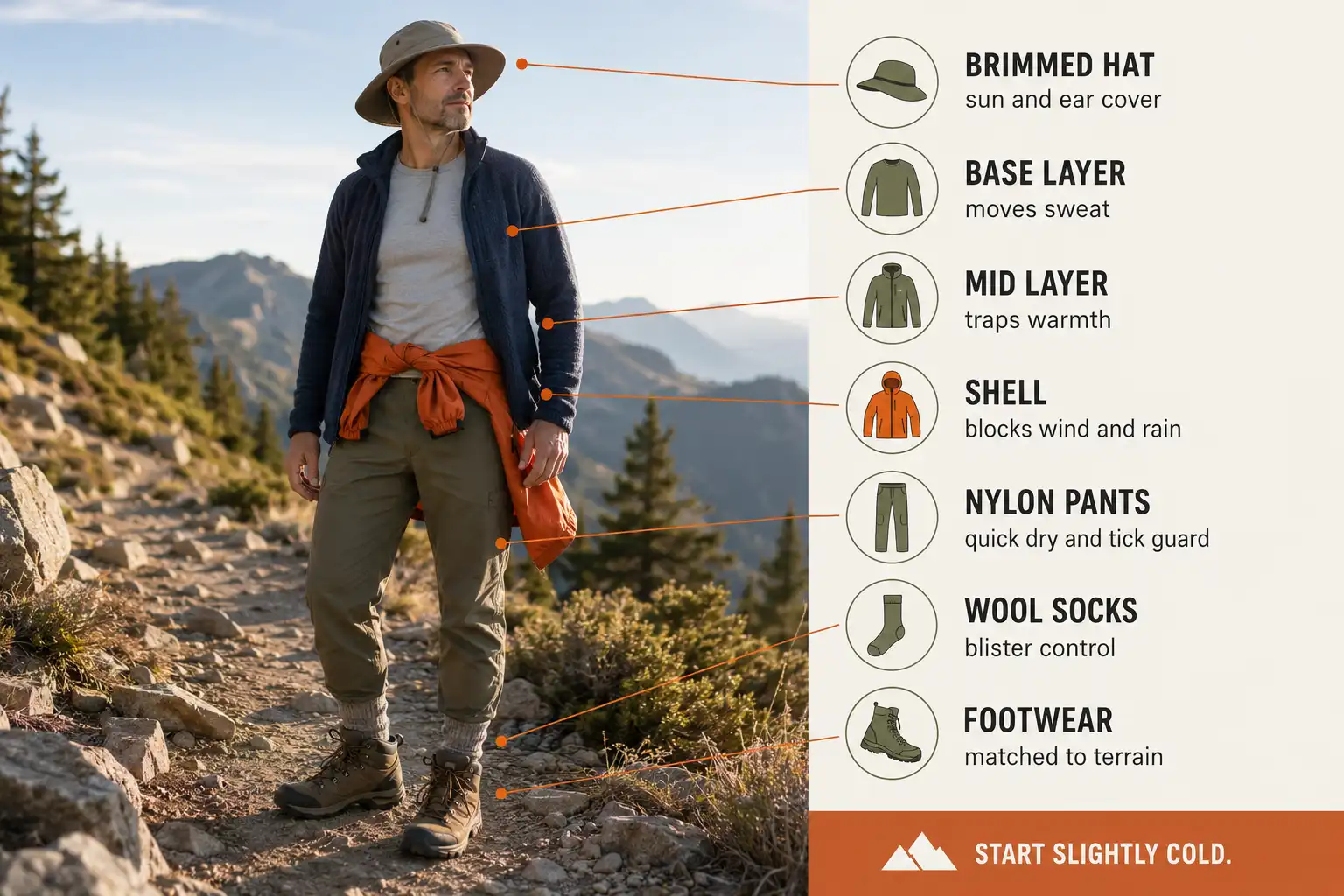
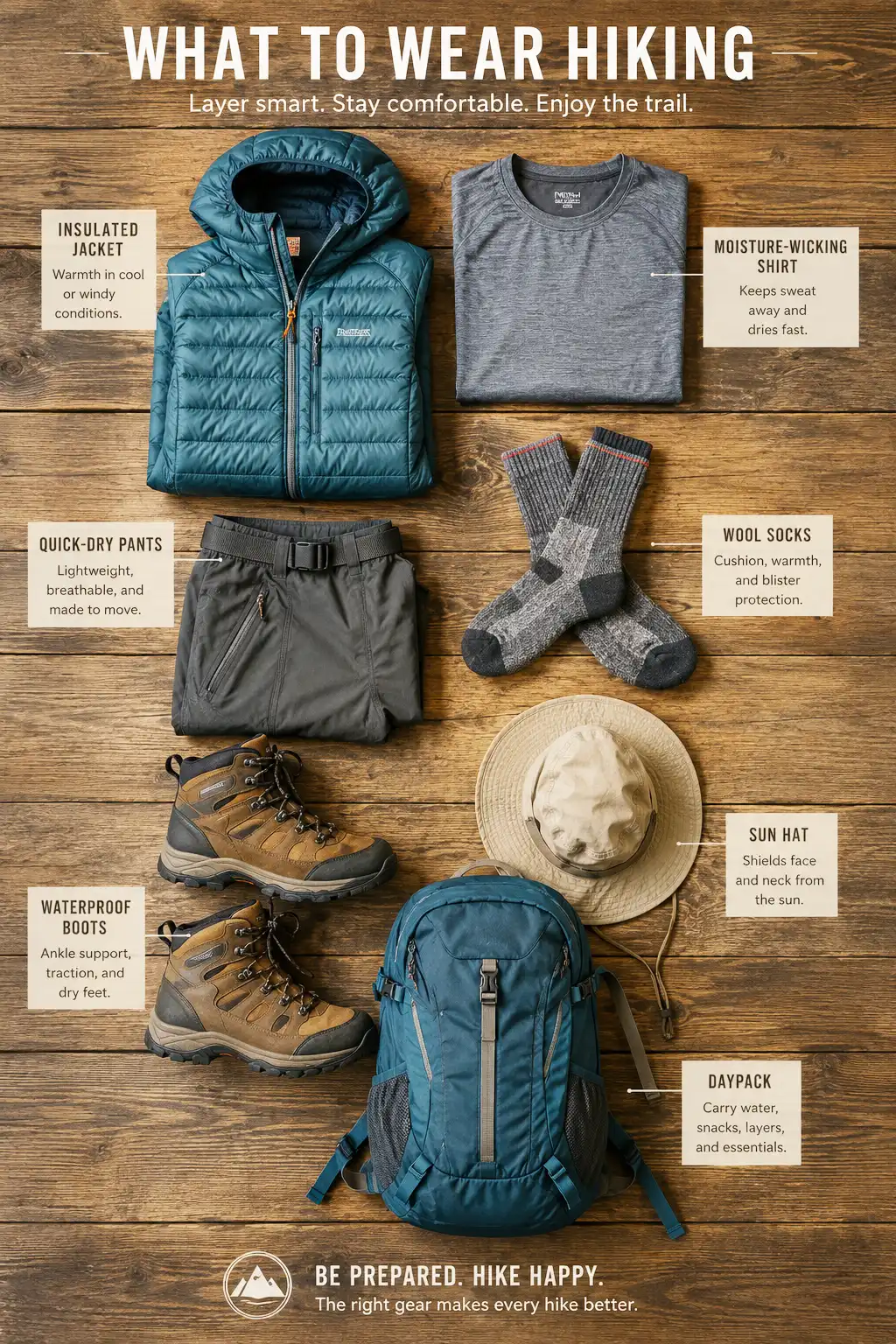
Wear a wicking base layer, an insulating mid layer, and a wind and rain shell you can add or drop. Below the waist, choose quick drying nylon pants and wool or synthetic socks. Skip cotton in cool or wet conditions. Then match the layer count to the temperature and to how hard you plan to work.
The rule that matters more than the gear
Dress for how you will feel ten minutes into the hike, not how you feel at the trailhead. Hikers call this starting cold. You should feel slightly underdressed while standing still, because your body produces a large amount of heat once you start climbing.
Most beginners get this backward. They bundle up at the car, sweat through everything on the first climb, then chill hard at the first rest stop. Wet clothing, not cold air, causes most trail misery.
So the practical habit looks like this:
- Start the hike one layer thinner than feels comfortable.
- Shed a layer the moment you notice sweat, not after.
- Add layers back before you stop moving, not after you cool down.
- Vent first, strip second. Open pit zips and collars before removing a whole garment.
That third point catches people out. Once sweat cools on your skin, adding a jacket traps a damp layer against you. Therefore experienced hikers pull on insulation as they arrive at a viewpoint, not five minutes after sitting down.
Effort matters as much as air temperature. A slow photography walk at 45°F needs more insulation than a hard climb in the same conditions. The chart further down accounts for that.
How does the hiking layer system work?
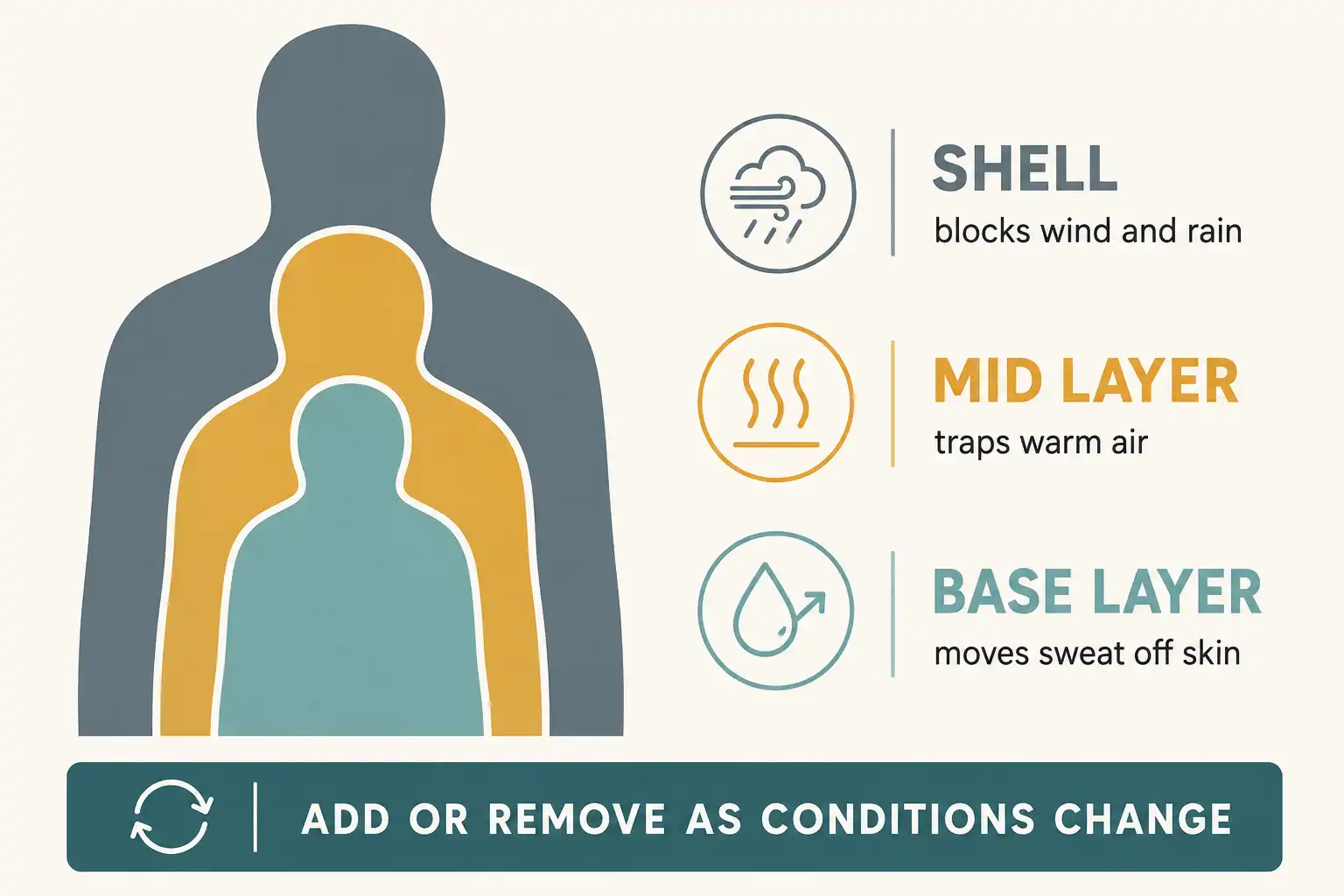
The layer system splits clothing into three jobs: moving sweat off your skin, holding warmth, and blocking wind and rain. Each garment handles one job, so you can adjust as the trail changes instead of carrying a single heavy coat.
| Layer | Job | Good options | When you wear it |
|---|---|---|---|
| Base | Moves sweat off skin | Merino or polyester tee, sun hoodie | Almost always |
| Mid | Traps warm air | Grid fleece, light down, synthetic puffy | When you stop or when it drops below roughly 55°F |
| Shell | Blocks wind and rain | Hooded rain jacket, windbreaker | Rain, wind, or exposed ridges |
A grid fleece deserves a specific mention. The waffle texture on the inside creates air channels, so it insulates while still venting sweat during a climb. Solid fleece traps more heat but breathes worse, which makes it better for camp than for moving.
Down and synthetic insulation split along one line. Down packs smaller and weighs less, but it collapses when wet. Synthetic insulation keeps some warmth when damp, so it suits humid or rainy regions better. In the hills near Kaptai I carry synthetic every time, because nothing stays dry through a monsoon afternoon.
Wind is the layer people skip. A thin windbreaker weighs a few ounces and cuts wind chill dramatically, and it breathes far better than a rain jacket. On dry but exposed ground it beats a hardshell every time, and it pairs well with layering against cold wind once gusts start.
Which fabrics work best for hiking clothes?
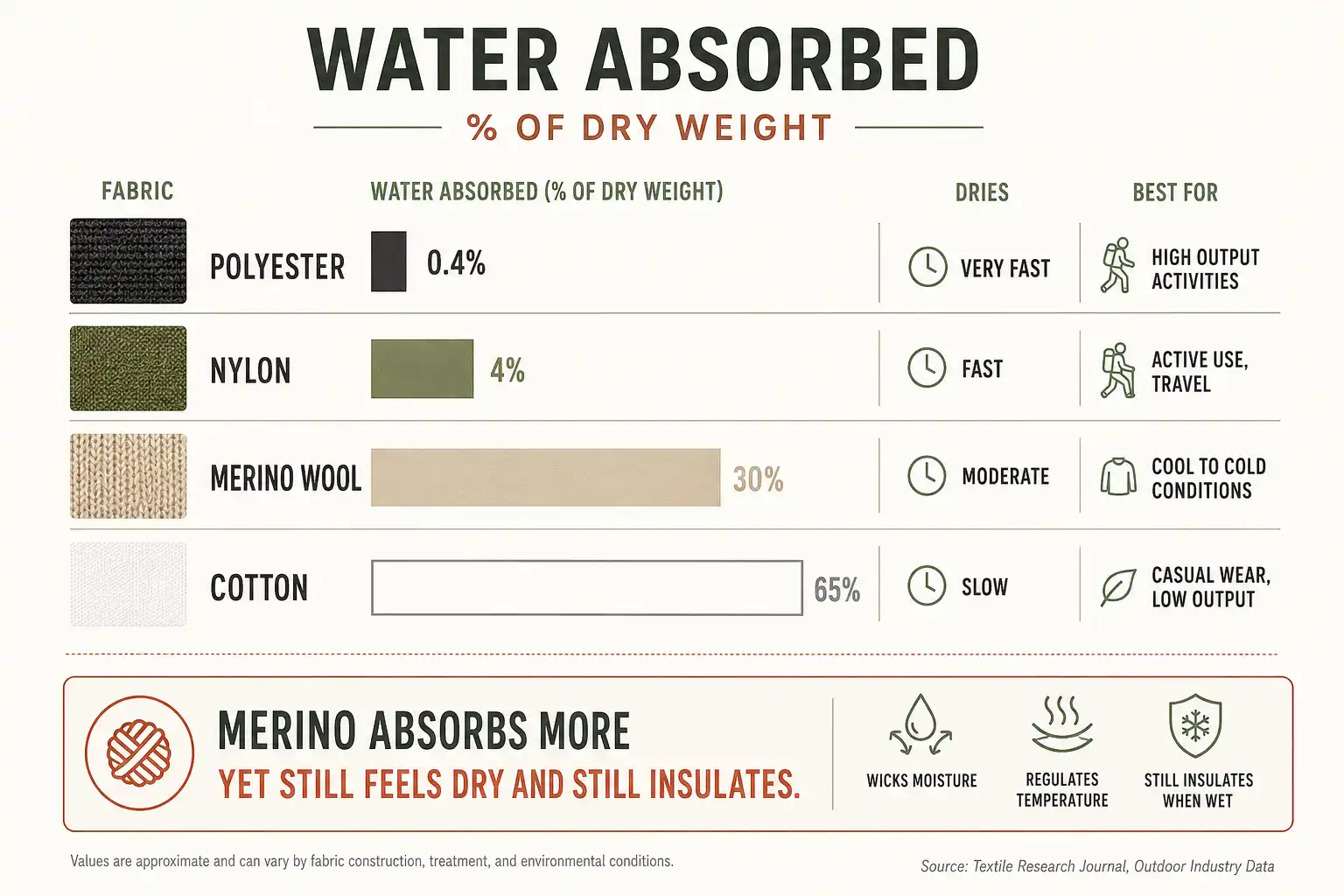
Merino wool, polyester, and nylon work best, since all three manage moisture and dry at a usable rate. The numbers behind them explain the tradeoffs better than any marketing copy does.
| Fabric | Water it absorbs | Dries | Odor | Best for |
|---|---|---|---|---|
| Polyester | Roughly 0.4% of its weight | Fastest | Poor | Hot days, high sweat, short trips |
| Merino wool | Roughly 30% of its weight | Slower | Excellent | Cold, multi day trips, base layers |
| Nylon | Low | Fast | Moderate | Pants, shells, anything that takes abrasion |
| Cotton | High, and holds it | Slowest | Moderate | Dry desert heat only |
Notice the surprise in that table. Merino absorbs far more water than polyester, yet it still feels dry and still keeps you warm. That happens because wool pulls moisture into the core of each fiber while the outer surface stays dry against your skin. Polyester instead repels water and pushes it outward to evaporate, which dries faster but leaves that clammy feeling during hard effort.
Practical takeaway: polyester for hot and fast, merino for cold and long, nylon for anything that rubs on rock. If you want a fuller look at how polyester holds up on trail, the durability side matters as much as the drying speed.
Blends split the difference, and honestly they suit most hikers best. My merino and polyester blend shirts have outlasted pure merino under pack straps. Straps abrade fine wool quickly at the shoulders.
One more label to check. On sun shirts, look for a UPF rating. The Skin Cancer Foundation classes UPF 30 to 49 as very good protection, while UPF 50 blocks about 98 percent of UV. Untreated clothing varies enormously, since tight weaves and darker colors block far more than loose pale fabric.
Is cotton really that bad for hiking?
In cool, wet, or windy conditions, yes. In dry desert heat, no, and this is where most hiking advice gets it wrong.
Cotton soaks up sweat and rain, then stops insulating almost completely. Wet fabric strips heat from your body far faster than dry fabric. Because of that, a damp cotton shirt in cool wind becomes a safety problem rather than a comfort one.
The agency guidance is clear on the risk. The CDC notes that hypothermia can set in above 40°F (4°C) if rain, sweat, or cold water chills you. National Park Service material goes further. It lists 30°F to 60°F (minus 1°C to 16°C) as a hypothermia range once wind or rain enters the picture. Cotton makes that outcome far likelier.
When does cotton actually work for hiking?
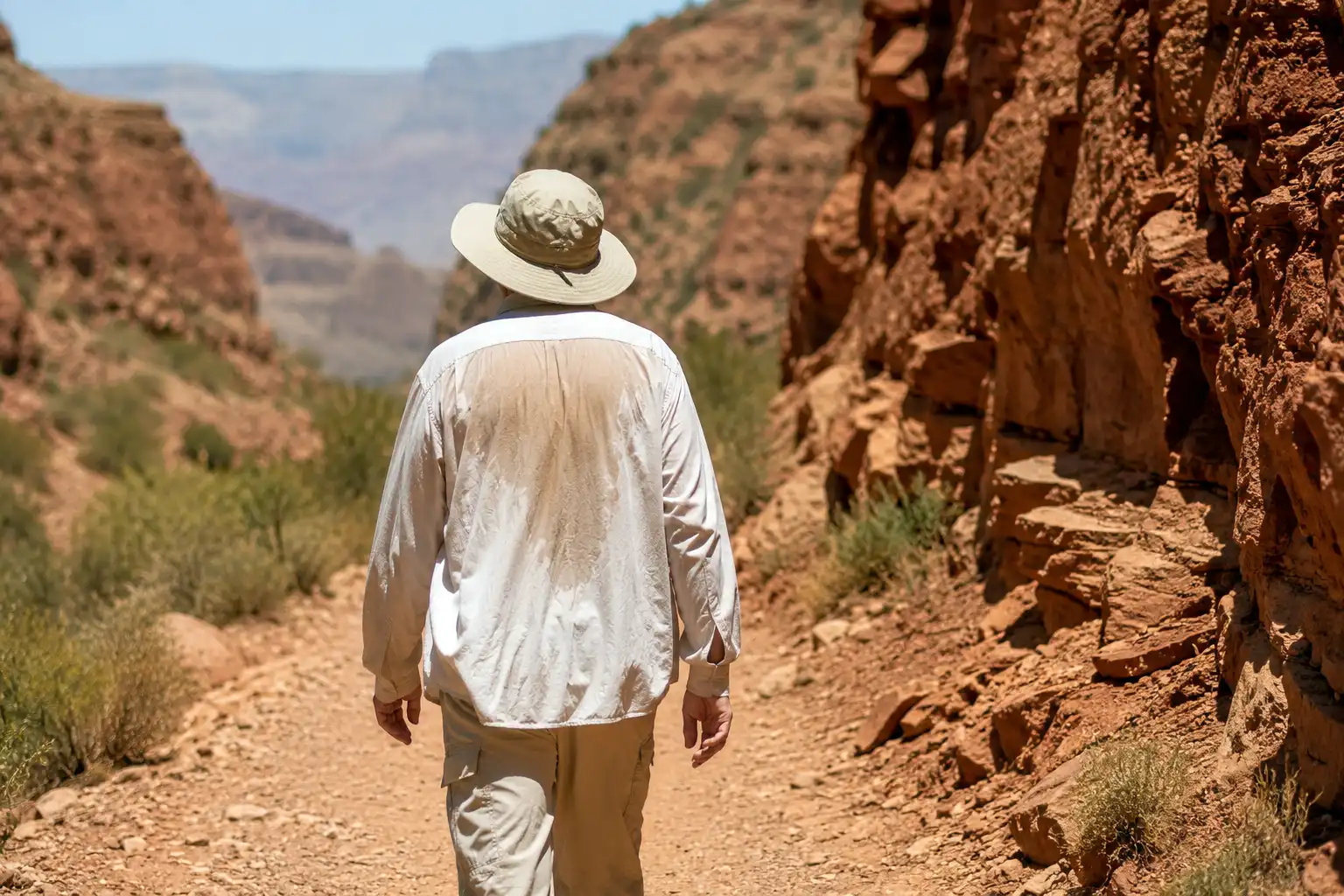
Cotton works in genuinely arid heat, where holding water against your skin cools you down. That single exception is the part almost nobody mentions.
In very hot, very dry air, holding water against your skin is exactly what you want. Sweat evaporates so fast in low humidity that you lose most of the cooling effect. A wet cotton shirt slows that evaporation and cools you for longer.
This is not a fringe opinion. The National Park Service specifically advises Grand Canyon visitors to dress in loose fitting cotton clothing. Its standard heat guidance also tells hikers to get wet to stay cool. Grand Canyon Conservancy puts it more plainly still, recommending clothing that holds water well because cotton suits the desert.
Two limits apply. First, this works only in genuinely arid heat, not humid heat, where cotton just turns swampy. Second, desert nights drop hard, so a damp cotton shirt after dark becomes a hypothermia risk again. Carry a dry synthetic layer to change into.
Cotton socks stay off the list everywhere. They hold sweat against your skin, and damp skin blisters much faster under friction. Denim also stays off the list everywhere, since it restricts movement, chafes, and stays cold for hours once wet.
What should you wear on your legs?
Wear quick drying nylon or nylon blend hiking pants, or shorts in hot bug free conditions. Both shed light rain, dry quickly, and stretch when you step high onto rock.
- Hiking pants cover the most situations. They guard your shins against rock and thorn, block sun, and keep ticks off skin.
- Convertible pants with zip off legs handle big temperature swings. I used both settings in one day on the Keokradong route.
- Shorts suit hot, clear, low tick trails. However, they leave you exposed to sun and scratches.
- Leggings or tights move beautifully and layer under pants in cold. They tear more easily on rock, though.
- Rain pants earn their weight only in sustained cold rain. Otherwise they trap heat.
Two fit details make more difference than the price tag. Look for articulated knees, which are pre bent at the knee so the fabric does not pull tight when you step up. Also look for a gusseted crotch, a diamond shaped fabric panel that removes the four seam junction where most hiking pants split.
Check where seams fall under your pack. Any seam sitting directly beneath a hipbelt will rub after a few hours. That single spot causes plenty of hot spots on long days. Women often find unisex cuts run long in the rise and skimp on usable pockets. Because of that, picking hiking clothes as a woman takes more searching than it should.
Learn more: How to choose a hiking pant
Which socks and footwear should you pick?
Pick merino or wool blend socks, then match your footwear to terrain and pack weight. Socks affect trail comfort more than any other single clothing choice.
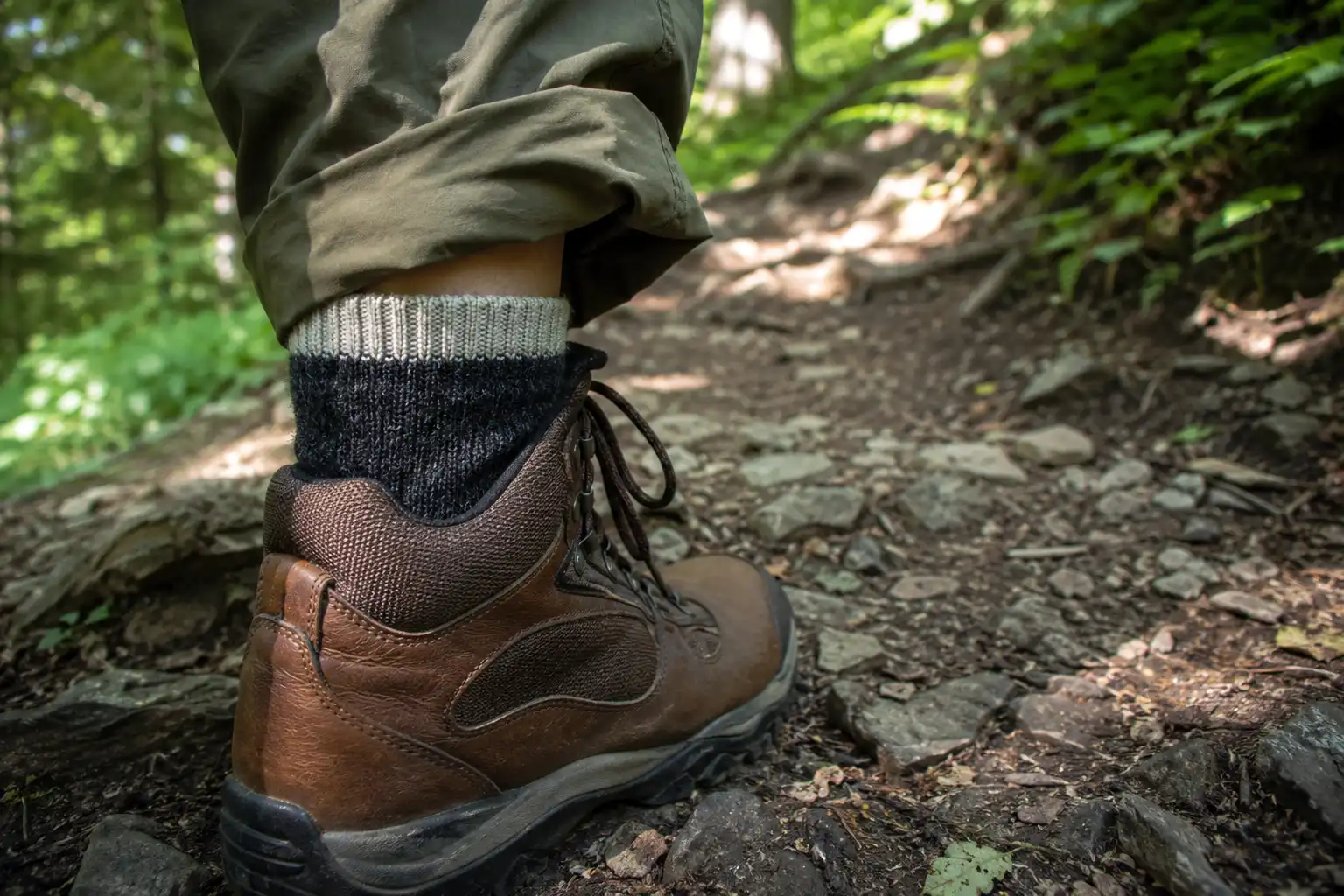
Wool blend socks handle sweat, cushion pressure points, and resist odor across several days. Synthetic socks dry faster and cost less, which suits very wet routes. Either way the sock must sit above your boot collar, because a sock edge below the collar guarantees rubbing. Getting the height and thickness right does most of the work for socks that cut down on blisters.
Carry one spare pair on any hike beyond a few hours. Swapping to dry socks at lunch resets your feet completely, and that habit has saved my toes on river crossings near Kaptai more than once.
For footwear, match the shoe to the load:
| Footwear | Best for |
|---|---|
| Trail runners | Dry maintained paths, light packs, fast pace |
| Hiking shoes | Mixed terrain, day hikes, moderate loads |
| Hiking boots | Rough ground, heavy packs, ankles needing support |
Waterproof membranes divide opinion for good reason. They help in cold rain and shallow mud. In hot humid conditions, though, they trap sweat and take a very long time to dry once water comes in over the collar. On monsoon trails I choose breathable non waterproof shoes that drain and dry instead.
What should you wear on your head, hands, and neck?
Wear a brimmed hat for sun, a warm beanie for cold, and gloves once wind stiffens your fingers. These items weigh almost nothing, yet they change how a whole day feels.
A wide brim hat shades your face, ears, and neck at once. Baseball caps leave ears exposed, so pair one with a neck gaiter or sunscreen. In strong sun, a cap plus a hooded sun shirt covers nearly everything without constant reapplication.
Now a correction worth making. You will often read that you lose 40 or 45 percent of your body heat through your head. That figure does not hold up. Heat loss tracks roughly with how much skin you leave uncovered, and your head simply happens to be the part most people leave bare. A hat still helps a great deal, just not for the reason most articles give.
Gloves come in two useful types. Liner gloves cut wind chill while letting you work zippers and poles. Insulated waterproof gloves belong in genuinely cold or snowy conditions. Let me be straight here. I hike in a subtropical region, so my snow glove advice comes from research and from friends who hike cold ranges, not from personal trips.
A buff or neck gaiter earns its place year round. It works as sun cover, dust filter, sweatband, or thin neck warmer, and it packs down to nothing. Wraparound sunglasses with full UV protection matter most at altitude and near water, since reflected light reaches your eyes from below.
What underwear works best for hiking?
Choose merino or synthetic underwear with flat seams, and leave cotton at home. Damp cotton underwear causes chafing, and chafing ends more hikes than most people expect.
Boxer briefs and briefs both work provided the seams stay flat and the fabric wicks. A little spandex helps, because stretch stops fabric bunching when you climb.
For sports bras, look at strap width and closure position. Wide smooth straps sit better under pack straps, and back closures can dig in painfully under a hipbelt. Racerback or pullover styles usually cause fewer problems with a loaded pack.
Anti chafe balm belongs in your hip belt pocket on hot humid routes. A stick costs very little and prevents a problem that no clothing choice fully solves.
What to wear hiking by temperature and effort
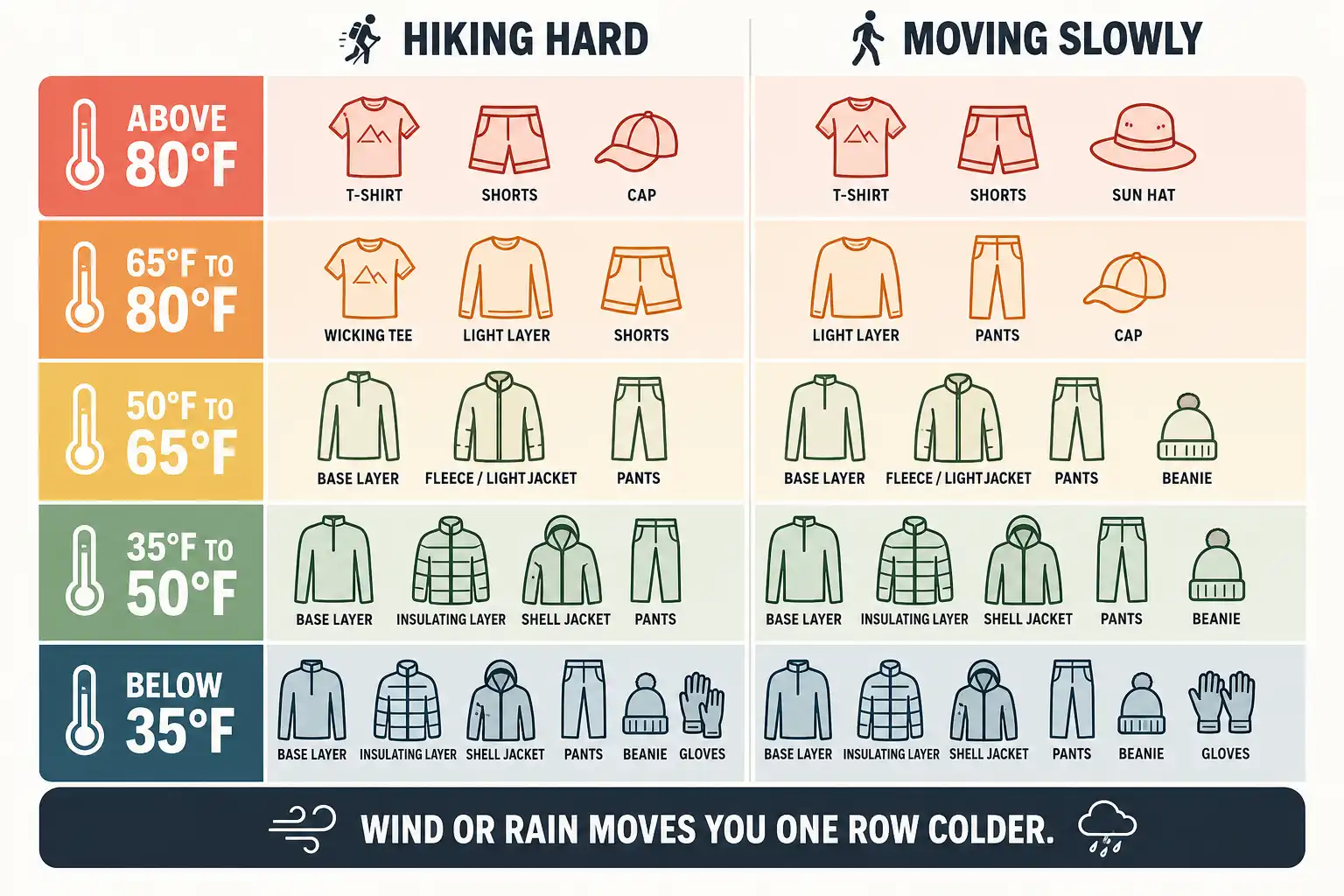
Use temperature as a starting point, then shift one step warmer or cooler based on your pace. Fast hikers generate far more heat, so effort level changes the answer as much as the thermometer does.
| Temperature | Hiking hard | Moving slowly or stopping often |
|---|---|---|
| Above 80°F (27°C) | Light tee or sun hoodie, shorts, brim hat | Same, plus more sun cover and shade breaks |
| 65 to 80°F (18 to 27°C) | Wicking tee, shorts or pants, cap | Add a light long sleeve |
| 50 to 65°F (10 to 18°C) | Long sleeve base, pants, wind shell in pack | Add a light fleece |
| 35 to 50°F (2 to 10°C) | Midweight base, pants, wind shell, liner gloves | Add fleece and beanie |
| Below 35°F (2°C) | Midweight base, fleece, shell, hat, gloves | Add insulated jacket and warmer gloves |
Two adjustments override the table. Wind pushes you one row colder, so a 50°F ridge in strong gusts feels closer to 35°F. Rain does the same, since wet fabric conducts heat away much faster than dry fabric.
Humidity flips the sun advice. In dry heat, covering up with loose light fabric beats stripping down. For a fuller treatment of hot weather hiking clothes, heat brings problems that layering alone will not fix.
Why does your rain jacket still leave you wet?
Usually because the outer fabric has soaked through, not because the jacket is leaking. Gear makers call this wetting out, and it explains most complaints about expensive rain jackets failing.
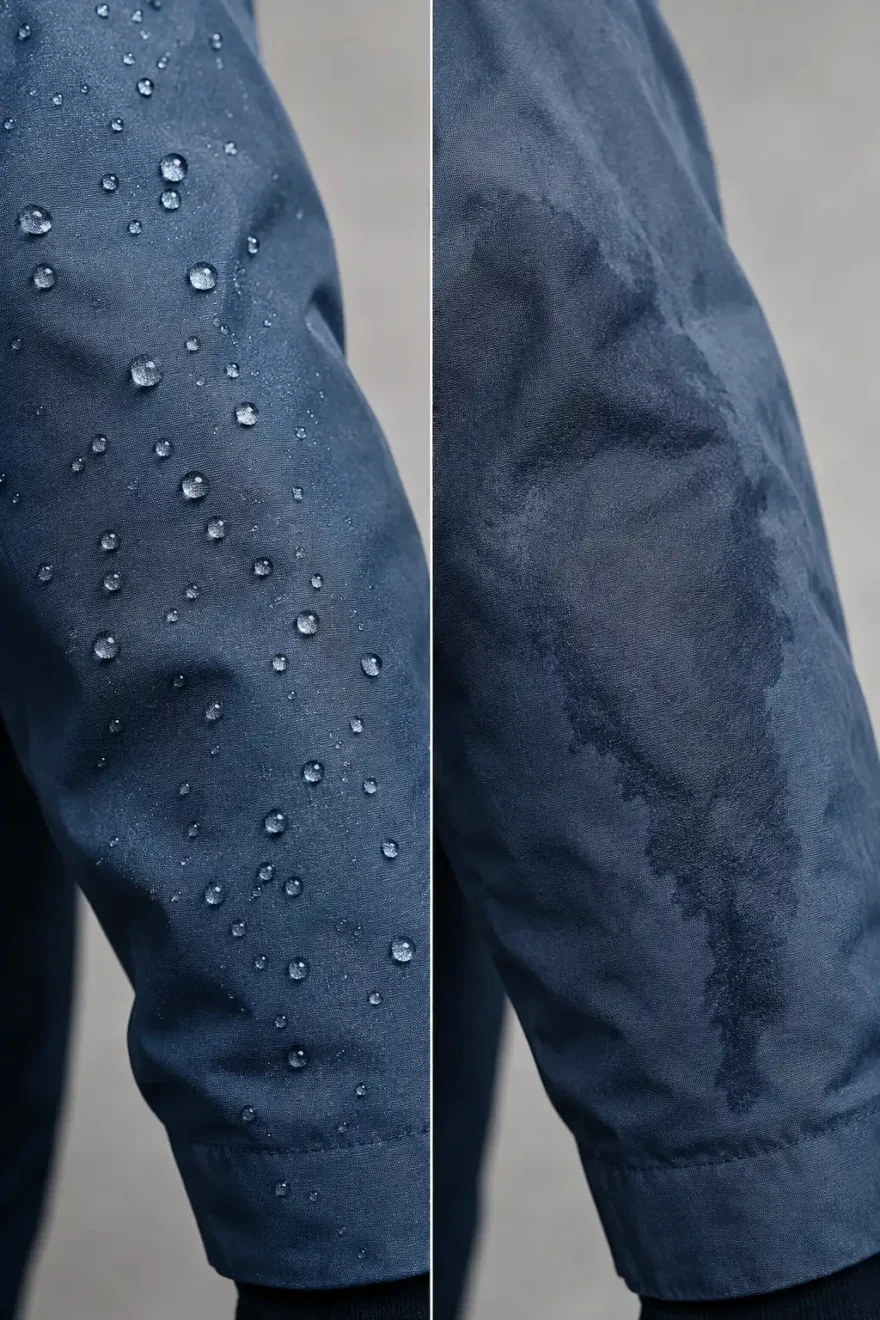
Here is the mechanism. Rain shells carry two separate parts: a waterproof breathable membrane inside, and a durable water repellent finish, or DWR, on the outer face fabric. The DWR makes rain bead and roll off. When that finish wears down, the face fabric saturates instead. The membrane still blocks rain, but soaked outer fabric has no dry air on the far side to accept your sweat vapor. Your own moisture then condenses inside, and you feel wet.
Body oils, sunscreen, dirt, campfire smoke, and pack strap abrasion all break DWR down. Shoulders and cuffs usually fail first.
Test it in thirty seconds. Sprinkle water on the fabric. If it beads and shakes off, the finish is fine. If the fabric darkens and absorbs, it needs attention.
The fix is cheap and most people skip it:
- Wash the jacket with a technical cleaner, never regular detergent, which leaves water attracting residue.
- Tumble dry on low, since gentle heat reactivates existing DWR.
- Reapply a wash in or spray on DWR treatment only if it still fails the bead test after cleaning.
Ventilation matters too. Pit zips let vapor escape as gas, and no membrane can move liquid sweat once it condenses. Opening vents early beats trying to dry out later, and it makes staying dry in rain without overheating far more achievable.
How should you dress to keep ticks and bugs away?
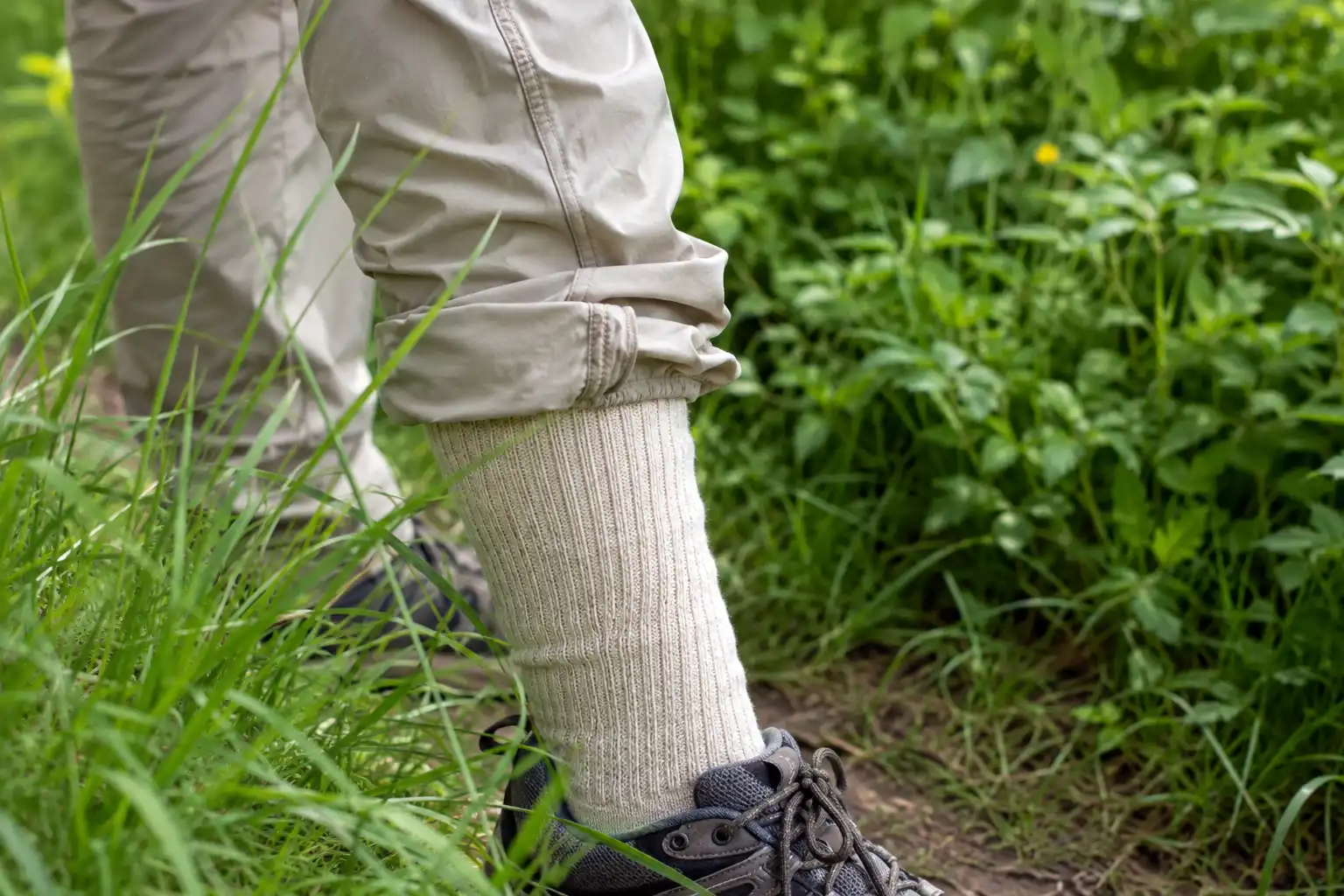
Wear light colored long sleeves and pants, tuck your pants into your socks, and treat clothing with permethrin before the trip. Clothing does most of the work, and skin repellent covers what stays exposed.
The CDC recommends treating clothing and gear with products containing 0.5 percent permethrin, which kills ticks on contact and survives several washings. Never apply it to skin. Always let treated items dry fully outdoors first, and keep them away from cats while wet, since permethrin is highly toxic to them.
Light colors let you spot ticks before they reach skin. Tucking pants into socks looks unfashionable, yet it blocks the route ticks most commonly take up your leg. After the hike, run your clothes through a dryer on high heat for about ten minutes, which kills any ticks riding along on dry fabric.
For mosquitoes, loose weave long sleeves beat tight shirts, because mosquitoes bite straight through fabric stretched against skin.
What if you don’t own any hiking clothes?
Start with socks and footwear, then borrow the rest from clothes you already own. Almost every household has workable substitutes, and buying a full kit before your first hike wastes money.
| Instead of buying | Use what you have |
|---|---|
| Base layer | Any polyester running or gym shirt |
| Mid layer | Fleece pullover or zip up sweatshirt, not cotton |
| Hiking pants | Athletic joggers, track pants, or gym leggings |
| Sun hoodie | Light long sleeve athletic top plus a cap |
| Rain shell | Any packable windbreaker for dry days |
Three things are genuinely worth buying first, in this order: wool blend socks, footwear that fits your terrain, and a rain shell. Socks and shoes prevent the injuries that end hikes. A shell handles the weather that turns a fine day dangerous.
Everything else can wait. Buy off season when rain shells discount in late summer and insulation drops in spring. Secondhand technical clothing also holds up well, since these fabrics usually outlast their first owner’s interest.
What should you never wear hiking?
Avoid cotton in cool or wet conditions, denim anywhere, brand new footwear, and bulky fashion outerwear. Each creates a specific problem once you are hours from the trailhead.
- Denim. Heavy when wet, slow to dry, restrictive on steep ground.
- Brand new boots. Break them in on short walks first, or expect blisters.
- Bulky winter coats. They trap sweat and cannot vent when you heat up.
- Cotton hoodies. Comfortable at the car, miserable once damp.
- Cheap plastic ponchos. They flap in wind, tear on branches, and trap so much sweat that you end up wet anyway.
- Dangling jewelry. It snags on branches and chafes under straps.
Skip the marketing traps too. A very high waterproof rating means little if the jacket has no vents, and antimicrobial finishes on synthetics wear off after repeated washing.
How do you make hiking clothes last?
Wash technical fabrics with the right products, and store them dry and uncompressed. Correct care roughly doubles the useful life of expensive pieces, which matters more than buying the premium version.
- Merino: wash cool on a gentle cycle, and skip fabric softener, which coats fibers and kills wicking. Air dry flat. Wool needs washing far less often than synthetics anyway.
- Synthetics: wash cool and avoid softener for the same reason. Wash them more often, since odor builds fast.
- Rain shells: clean with technical wash, tumble dry low, and reproof when the bead test fails.
- Down insulation: store loose in a large bag, never compressed in a stuff sack, because long compression permanently damages loft.
- Permethrin treated clothing: wash separately from other laundry.
One habit prevents most damage. Never leave technical clothing damp in a pack overnight, since mildew stains permanently and degrades coatings.
FAQs on What Clothes to Wear for Hiking

Can I wear leggings hiking?
Should hiking clothes fit loose or tight?
Do I need a rain jacket on a short hike?
What color clothing is best for hiking?
How do I stop chafing on long hikes?
Final thoughts
Two rules cover nearly everything here. Match your fabric to the conditions, and dress for ten minutes into the hike rather than for the trailhead. Cotton fails you in cold and wet conditions but genuinely helps in dry desert heat. Merino and synthetics handle everything else. Start with good socks and footwear, add a wicking shirt and nylon pants, then carry a shell you have actually tested. After a handful of hikes you will know exactly where you run hot or cold, and you can adjust from there.