What to Wear Hiking for Women: A Head to Toe Trail Checklist

Hiking clothes get confusing fast, because every brand pushes something different. This guide covers what to wear hiking as a woman from head to toe. It also shows you how to adjust for heat, cold, and rain, so you stay comfortable instead of guessing at the trailhead.
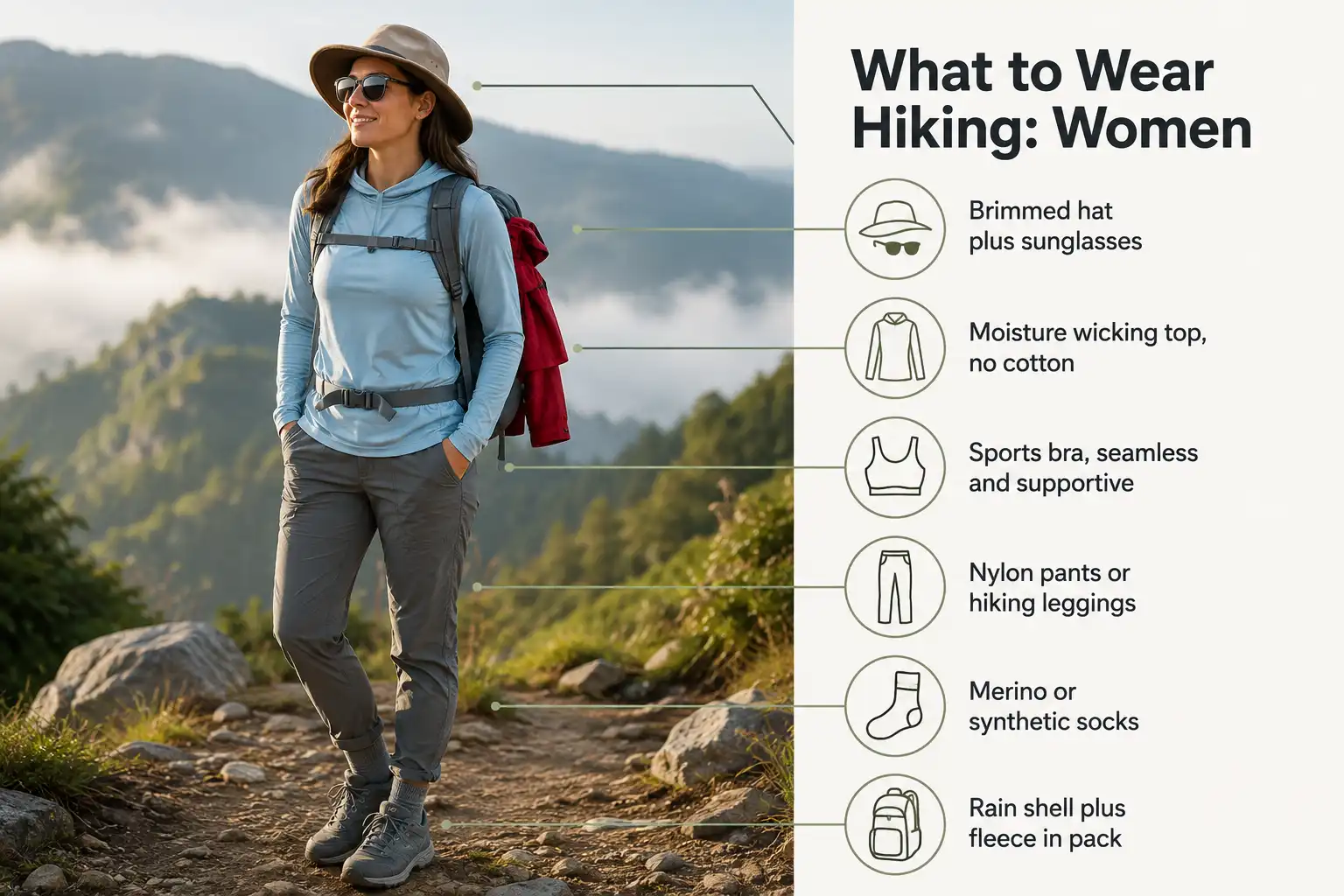
Wear a moisture wicking top, quick drying hiking pants or leggings, a supportive sports bra, wool or synthetic socks, and trail shoes that fit properly. Then pack a fleece and a waterproof shell for changing weather. Also skip cotton, because it holds sweat and stops insulating once it gets wet.
Why I put this guide together
I hike in the Rangamati and Bandarban hills, usually in mixed groups. Most of what follows comes from three places. First, years of watching what works on humid, steep trails. Second, long conversations with the women in my hiking groups about what they wear and why. Third, published guidance from dermatology and outdoor sources on fabric and sun protection. I have not worn a sports bra, so I am not going to pretend otherwise. Instead, I have collected what experienced women hikers keep telling me, then checked the technical claims before writing them down.
Read next: Beginners Hiking Essentials
The three layer system, explained
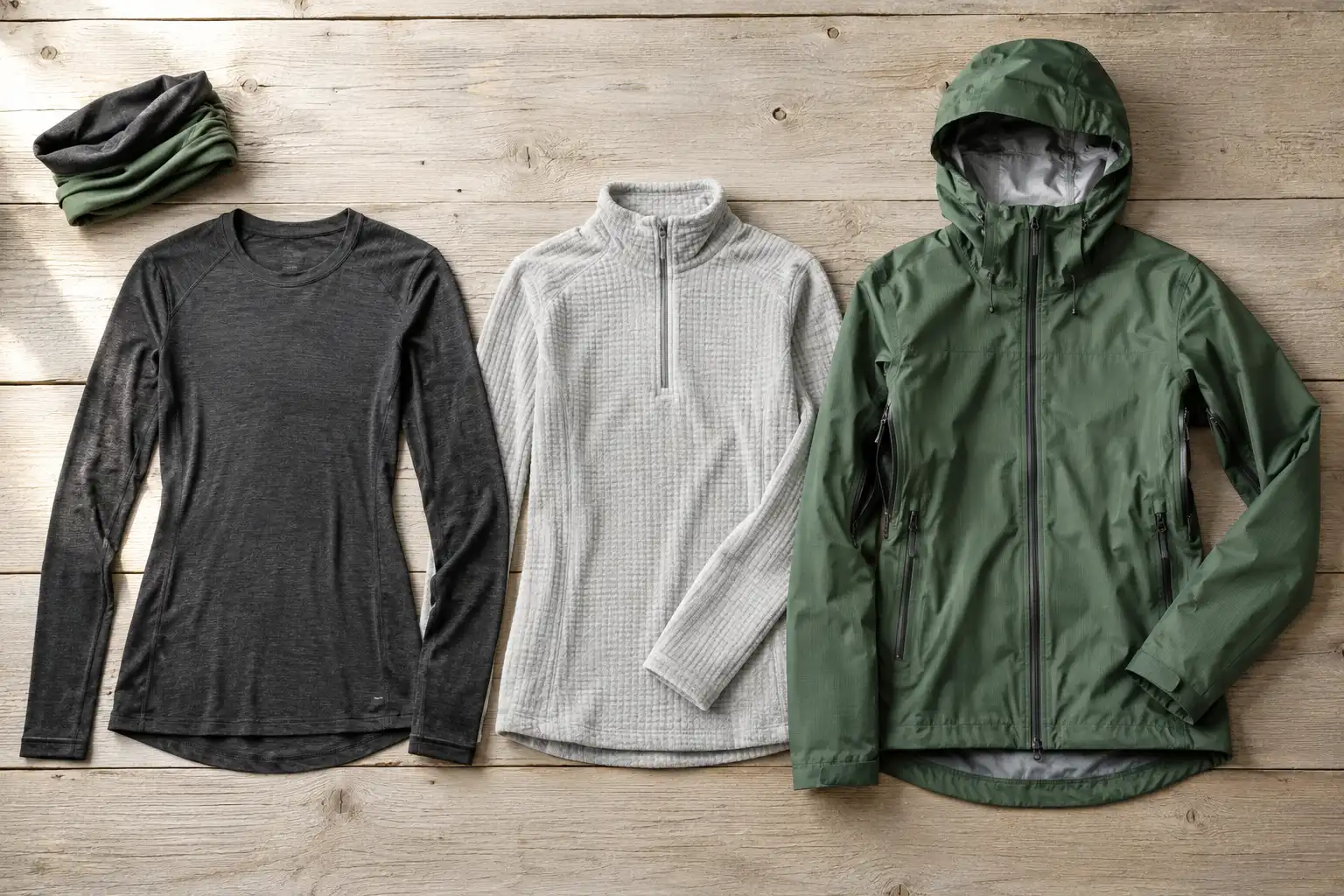
Layering works because you can add or drop pieces as your body heat and the weather change. Instead of one thick jacket, you carry three thinner pieces that each handle one job.
Base layer
Your base layer sits against your skin and moves sweat away from it. Choose merino wool or polyester in a light or midweight thickness. Merino absorbs up to about 30 percent of its weight in moisture before it feels wet, so it stays comfortable on damp days. Polyester dries faster, which helps on hot climbs and river crossings.
Mid layer
Your mid layer traps warm air. A light fleece, a grid fleece pullover, or a thin synthetic puffy all work well. Fleece breathes better while you move. Puffy jackets pack smaller and warm you faster during breaks.
Outer shell
Your shell blocks wind and rain. Look for a waterproof, breathable jacket with pit zips and an adjustable hood. On dry but windy days, a light wind shirt weighs far less and does most of the work.
What fabrics work best for hiking clothes?
Merino wool, polyester, and nylon work best, while cotton fails on every count that matters. Each fabric handles sweat differently, so knowing the difference saves you real discomfort later.
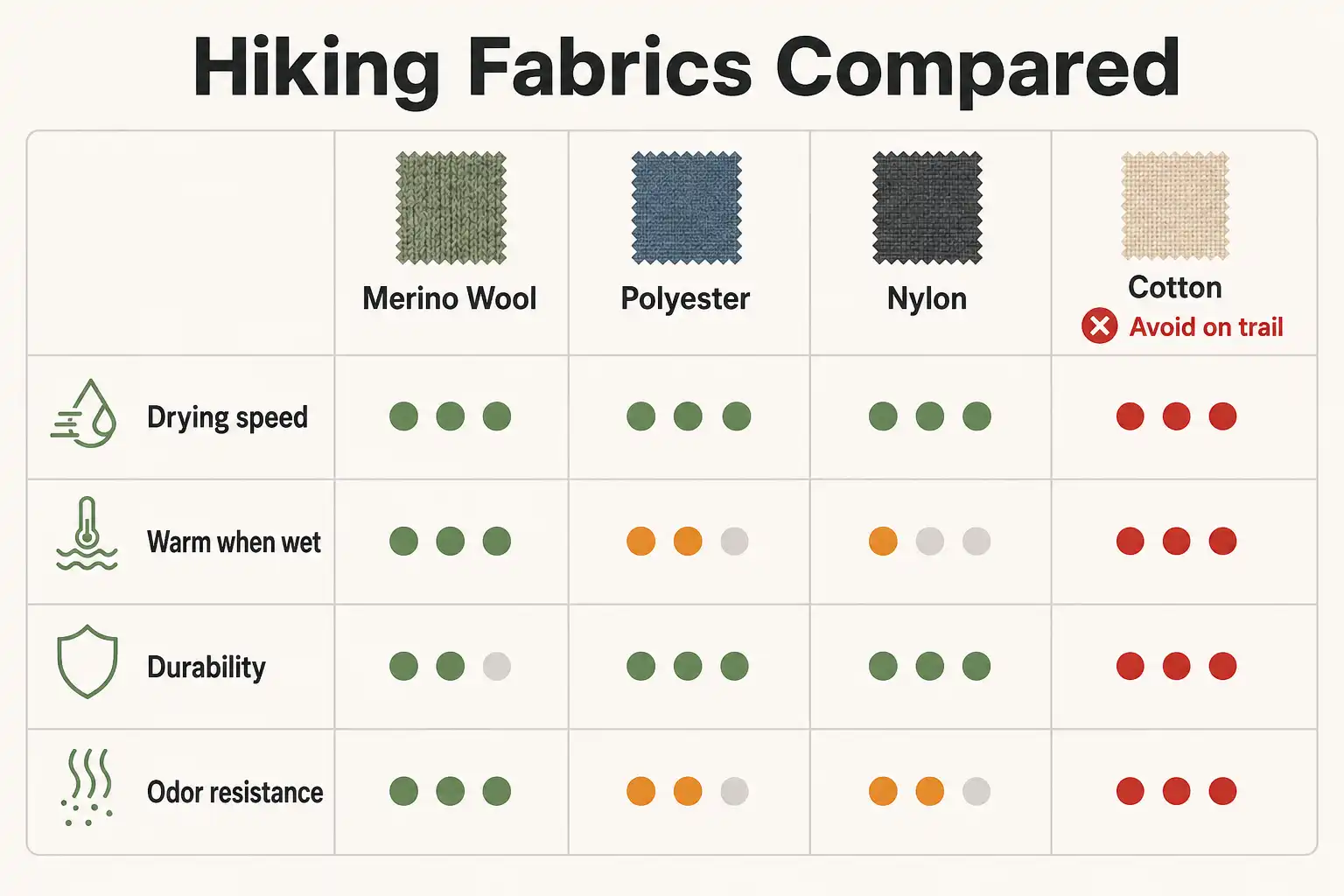
Merino wool. Warm even when damp, naturally odor resistant, soft against skin. However, it dries slower than synthetics and wears out faster under pack straps.
Polyester. Cheap, tough, and quick drying. It also holds odor after a day or two of hard sweating. Many women build a whole kit around it, and polyester performs well on the trail because it takes abuse and keeps working when wet.
Nylon. Stronger than polyester, so brands use it for pants and shorts. Nylon resists abrasion from rocks and thorns.
Spandex blends. A small percentage of spandex adds stretch for high steps and scrambling. Too much spandex slows drying.
Cotton. Avoid it. Cotton soaks up sweat, dries slowly, and stops insulating once wet. On a cold, windy ridge that combination turns into a genuine safety problem, not just discomfort.
Hiking tops for women
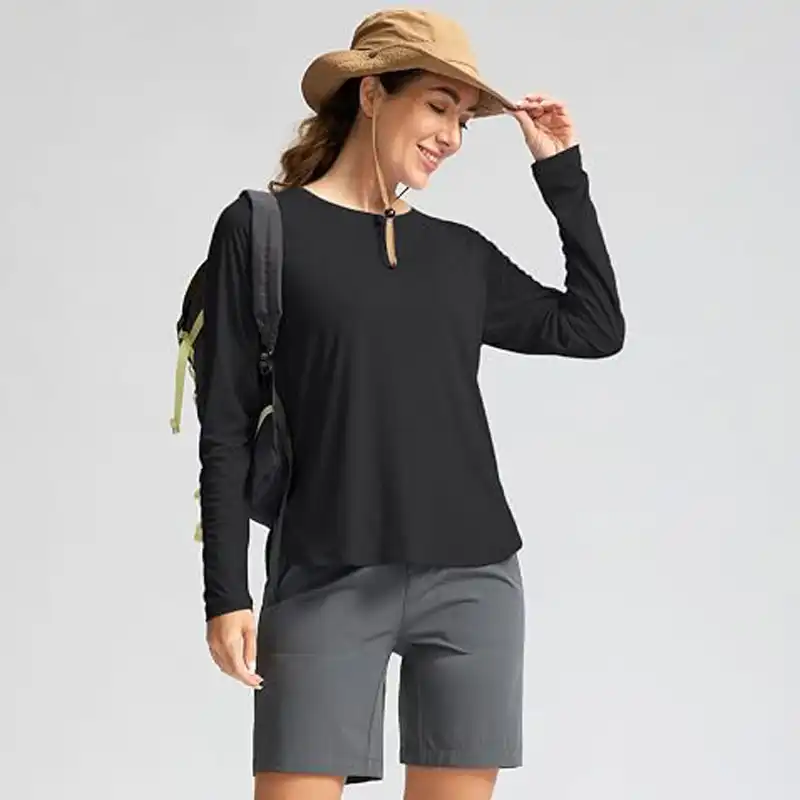
Pick a top that moves sweat, covers what you want covered, and does not rub under pack straps. A long sleeve sun hoody has become the default choice for many women hikers because it protects arms, neck, and hands without sunscreen reapplication.
Flat seams matter more than most people expect. Raised shoulder seams sit exactly where a backpack strap presses, so they rub after a few miles. Therefore, check seam placement before you buy, and lift your arms overhead in the fitting room.
For short sleeves, a light polyester or merino tee works fine on shaded trails. Meanwhile, on open ridges and above the treeline, long sleeves win because you never have to reapply sunscreen or worry about a missed patch.
Hiking pants, leggings, or shorts?
All three work, but each suits different terrain. Your choice depends on temperature, plant cover, and how much you care about scratches.
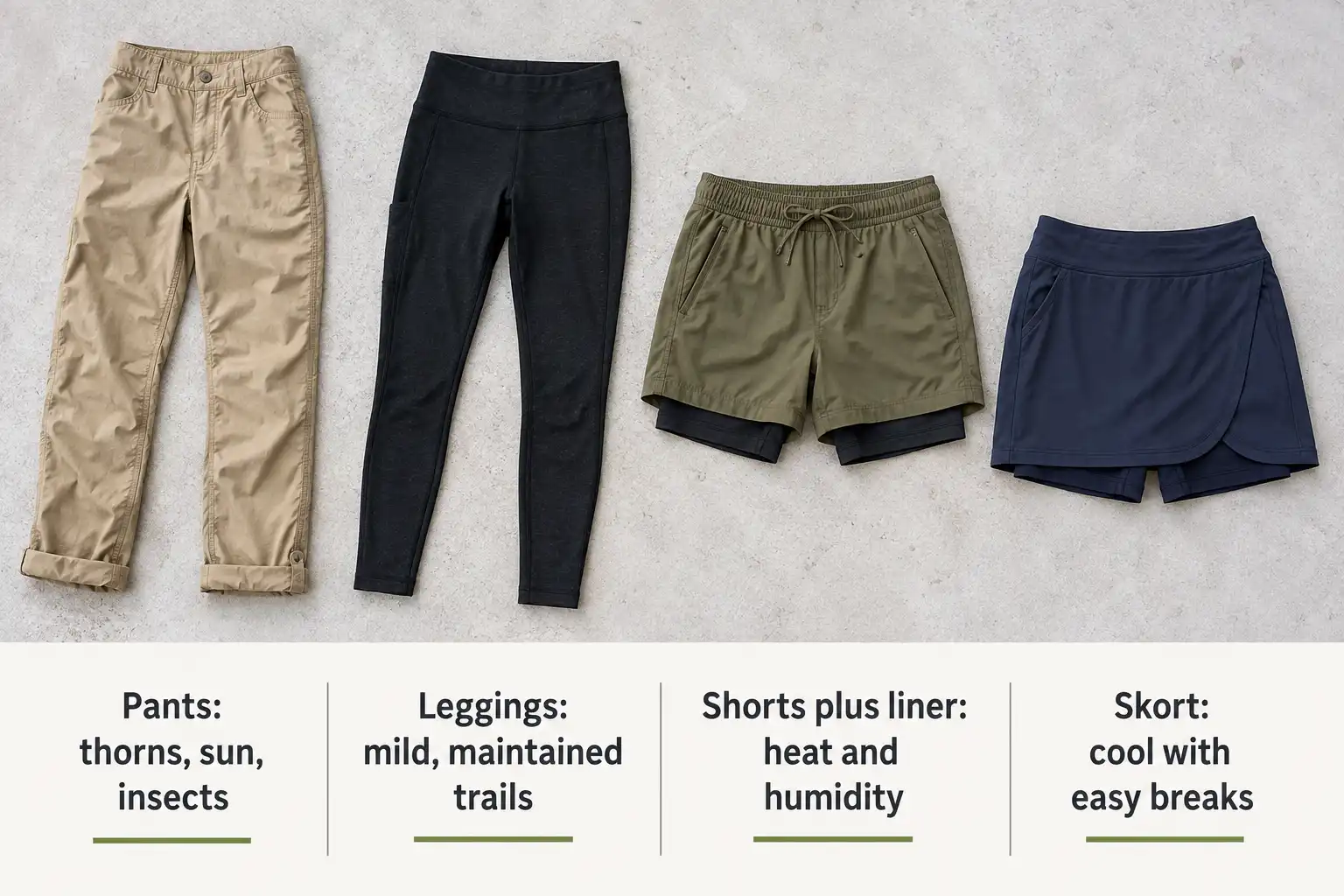
Hiking pants. Nylon pants with a bit of stretch handle almost everything. They shed light rain, block thorns, protect against sun, and keep insects off your legs. Zip off or roll up styles give you shorts when the day heats up.
Leggings. Comfortable, stretchy, and popular for good reason. However, thin leggings tear on rocks and offer almost no protection from thorns or ticks. Choose a thicker hiking specific pair, and avoid cotton blends entirely.
Shorts. Great in heat and humidity. On the other hand, bare legs mean scratches, sunburn, and more insect bites. Many women pair shorts with a liner short underneath to stop thigh rub.
Hiking skirts and skorts. These stay cool and make bathroom breaks simpler. Most include a built in liner short.
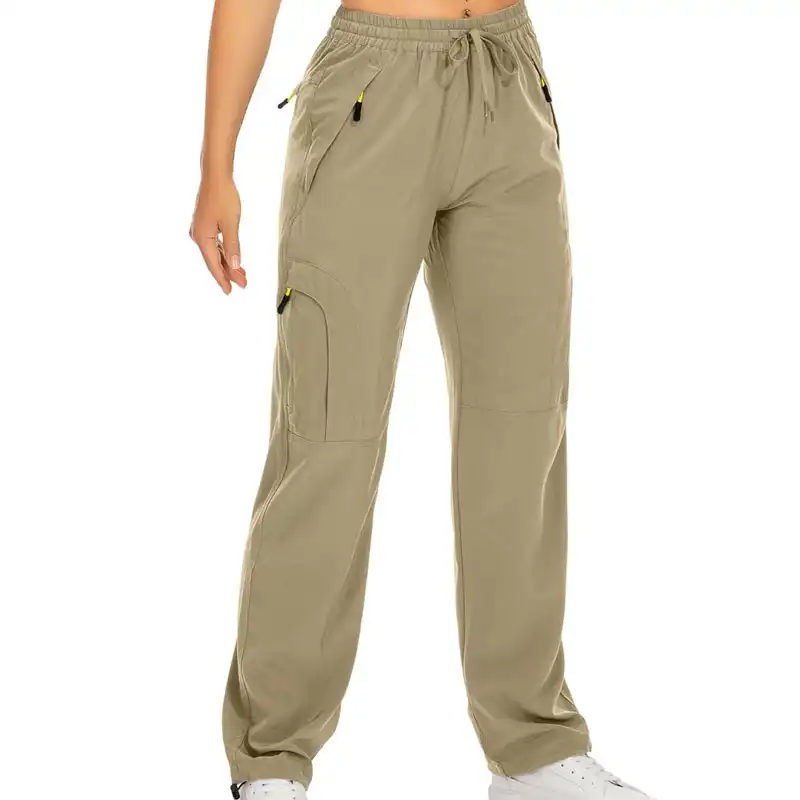
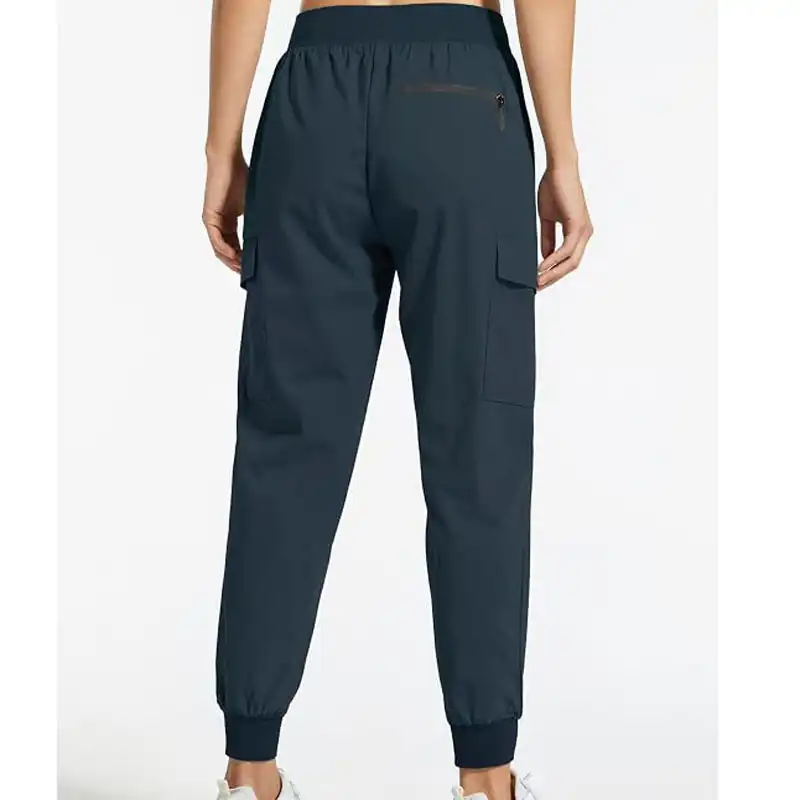
For overgrown trails, I recommend full length pants every time. Our hill trails carry plenty of thorny scrub, and bare legs pay for it.
Sports bra and underwear
Choose a supportive, seamless, synthetic or merino set, then test both on a short walk before a long hike. This layer causes more trail misery than any other piece, and most hiking guides skip it entirely.
For the bra, fit matters more than support level on paper. You should slide two fingers under the shoulder straps comfortably, and the band should stay in place when you raise your arms. Avoid seams and clasps that sit under a backpack strap. Racerback styles often clash with sternum straps, so check that combination with your loaded pack on.
For underwear, synthetic or merino beats cotton. Cotton stays wet, and wet fabric plus friction equals chafing. Seamless styles with a slightly longer leg protect the inner thigh better than bikini cuts. In addition, a barrier balm on the inner thighs and under bra straps prevents most rubbing before it starts.
Pack one spare set for overnight trips. Changing into dry underwear at camp keeps skin healthy and helps you sleep warmer.
Socks and hiking footwear
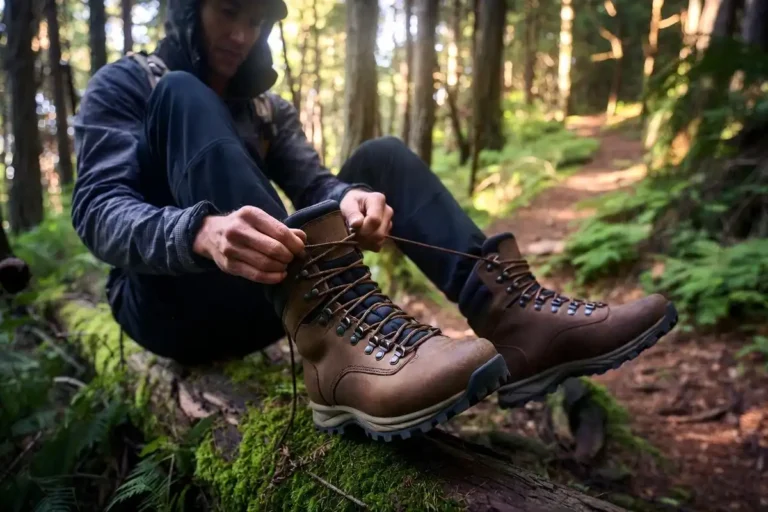
Wear merino wool or synthetic socks with cushioned soles, plus footwear that matches your terrain. Never hike in cotton socks, since they hold sweat against your skin and set up blisters.
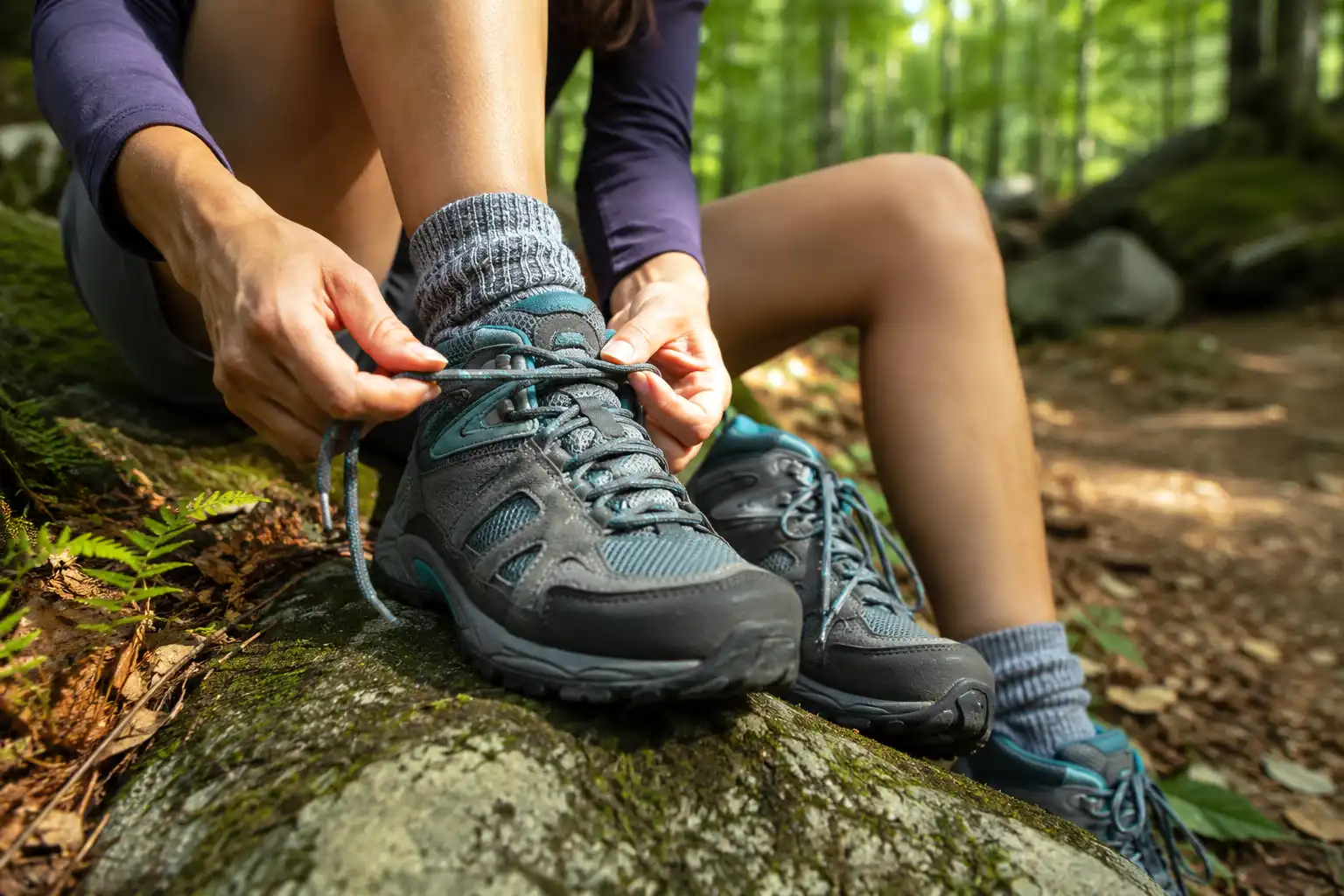
Sock thickness should match your shoes. Thick socks in a snug shoe cramp your toes, while thin socks in a roomy boot let your heel slide. Some women add a thin liner sock under the main sock to cut friction. Choosing socks that cut down on blisters comes down to material and thickness, so test a pair on a short walk first.
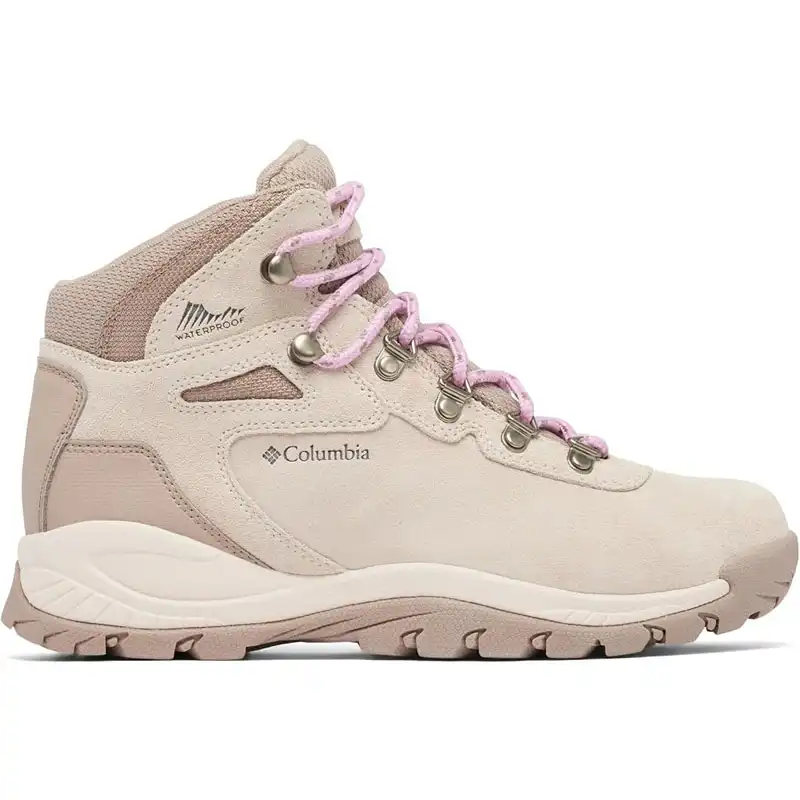
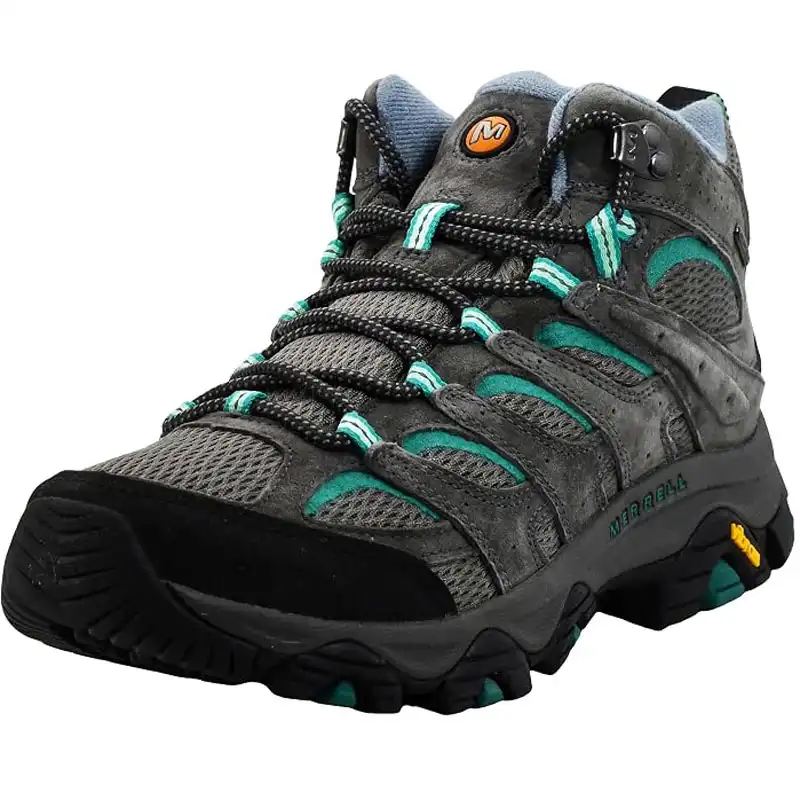
For footwear, trail runners suit dry, well maintained paths and lighter loads. Mid cut hiking shoes add protection and grip for rocky ground. Boots make sense for heavy packs, cold weather, and ankle deep mud.
Size up about half a size from your street shoes, because feet swell on long days. Your toes should never touch the front when you walk downhill. Getting hiking boot fit right prevents more pain than any other gear decision.
Sun protection you can wear
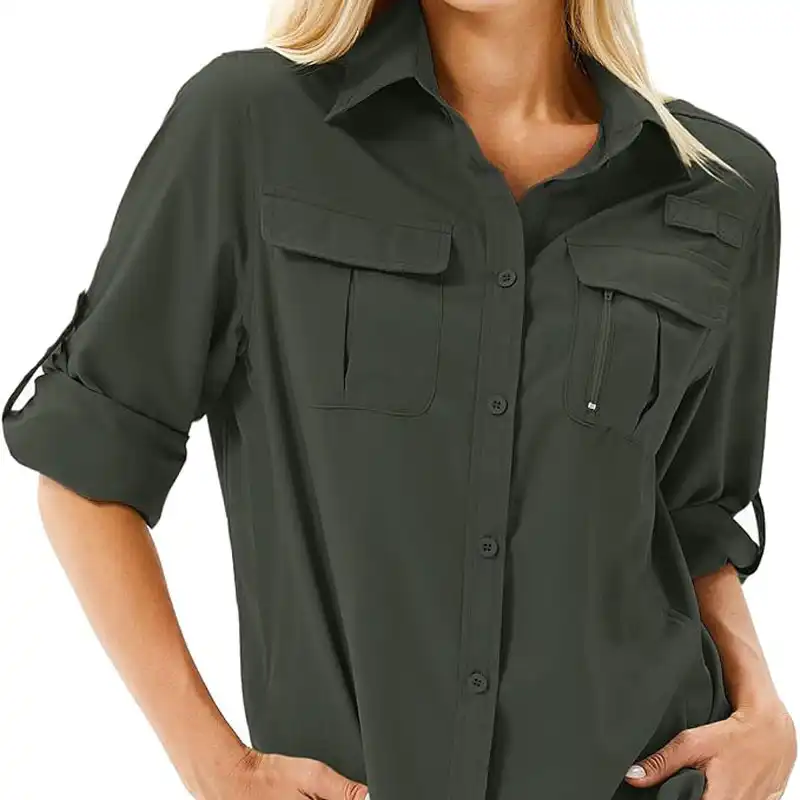
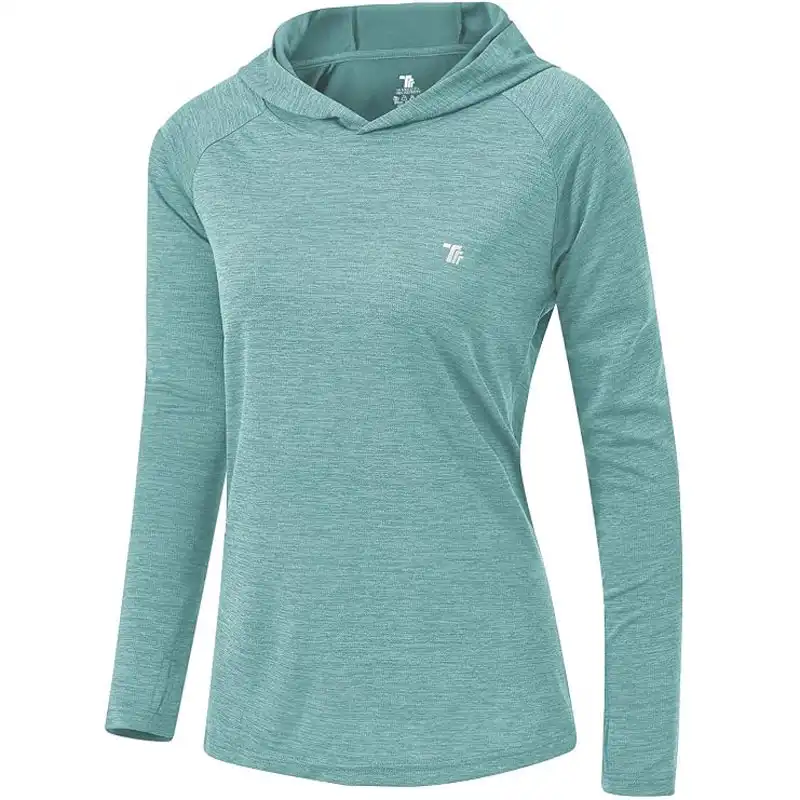

Cover skin with fabric first, then use sunscreen on whatever stays exposed. The Skin Cancer Foundation puts a UPF 50 fabric at blocking about 98 percent of UV rays. A plain white cotton tee, by comparison, rates only around UPF 5 to 7. Soak that same tee and it drops to about 3.
A hat with a brim of at least three inches shades your face, ears, and the back of your neck. Wide brim hats work best in open country, and a cap plus a neck gaiter works better in wind. Sunglasses with full UV protection matter too, especially on water, snow, or bright rock.
Sun sleeves slip over bare arms when a short sleeve day turns bright. They also cool you slightly when damp. Finally, apply sunscreen to your face, ears, hands, and the part in your hair, then reapply every two hours while sweating.
What to wear hiking in hot weather
Wear light colored, loose, quick drying clothing that covers skin without trapping heat. Counterintuitively, a light long sleeve shirt often feels cooler than bare arms in strong sun, because the fabric keeps direct radiation off your skin.
Choose a thin polyester or merino sun hoody, nylon shorts or thin hiking pants, and a brimmed hat. Ventilation beats thickness in heat, so look for loose cuts and mesh panels rather than heavy fabric.
Humidity changes the math. In our hills the air sits heavy from April onward, and nothing dries while you walk. Consequently, I tell everyone in my group to seal one dry shirt in a bag for camp. Sleeping in a soaked shirt makes for a cold night even at warm temperatures. Also expect to sweat through everything, and plan your water accordingly.
What to wear hiking in cold weather
Start with a merino or synthetic base layer, add a fleece, and top it with a windproof shell. Then adjust as you climb, because sweating in cold weather is what makes people cold later.
Add these pieces once temperatures drop near freezing:
- Insulated jacket for breaks and camp
- Fleece lined or softshell pants over a base layer bottom
- Warm hat that covers your ears
- Gloves, plus a spare pair sealed in a bag
- Thicker wool socks, sized so they do not squeeze your feet
Start your hike feeling slightly cold. You warm up within ten minutes, and staying dry matters more than staying warm at the start. On exposed ridges, layering against cold wind needs a windproof outer piece, otherwise your fleece loses most of its warmth.
What to wear hiking in the rain
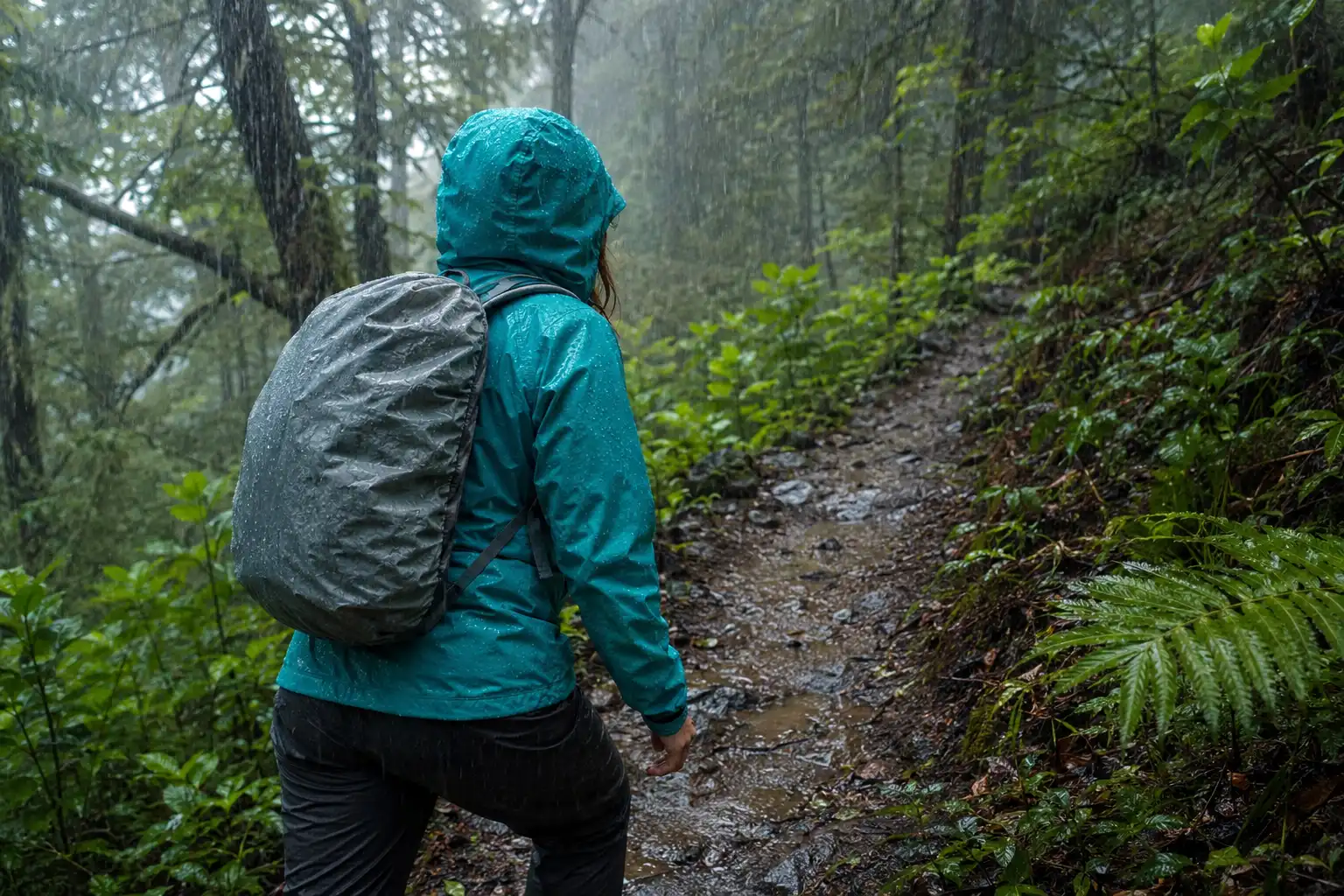
Wear a waterproof breathable jacket over synthetic layers, and accept that your legs will get wet. Rain pants help in cold rain, but in warm rain they turn into a sauna, so many hikers just wear quick drying shorts or pants instead.
Choose a jacket with pit zips, a hood that adjusts, and a hem that covers your hips under a pack. A poncho style cover works in still conditions, though wind makes it awkward.
Waterproof your feet realistically. Gaiters keep water and grit out of low shoes, but on a full day of rain your feet get wet anyway. Therefore, pack dry socks in a sealed bag. Through a full wet season, handling rainy trails without overheating depends on venting as much as on waterproofing.
Extras women often need on trail
Pack a small kit for hygiene and comfort, since a few light items prevent most trail problems. Keep everything in one pouch so you can find it fast.
- Barrier balm or powder for chafe prone spots
- Period products plus a sealed bag for packing them out
- Wet wipes or a small bottle of water for cleanup
- Hair tie and a buff, which doubles as a headband and neck cover
- Blister plasters and tape
- One dry base layer for camp on overnight trips
Menstruation stops nobody from hiking. Cups, discs, and period underwear all reduce waste and work well on multi day trips. Pads and tampons work fine too, as long as you carry them out. Bears and other wildlife notice smells, so seal used products in an odor proof bag.
If you hike solo, clothing choices connect to safety as well. Bright colors help searchers spot you, while some women prefer neutral tones for privacy. Both approaches work, and heading out alone as a woman involves a few other precautions worth planning around.
What not to wear hiking
Skip cotton, denim, brand new boots, and anything with seams that dig in. These four mistakes cause most first hike disasters.
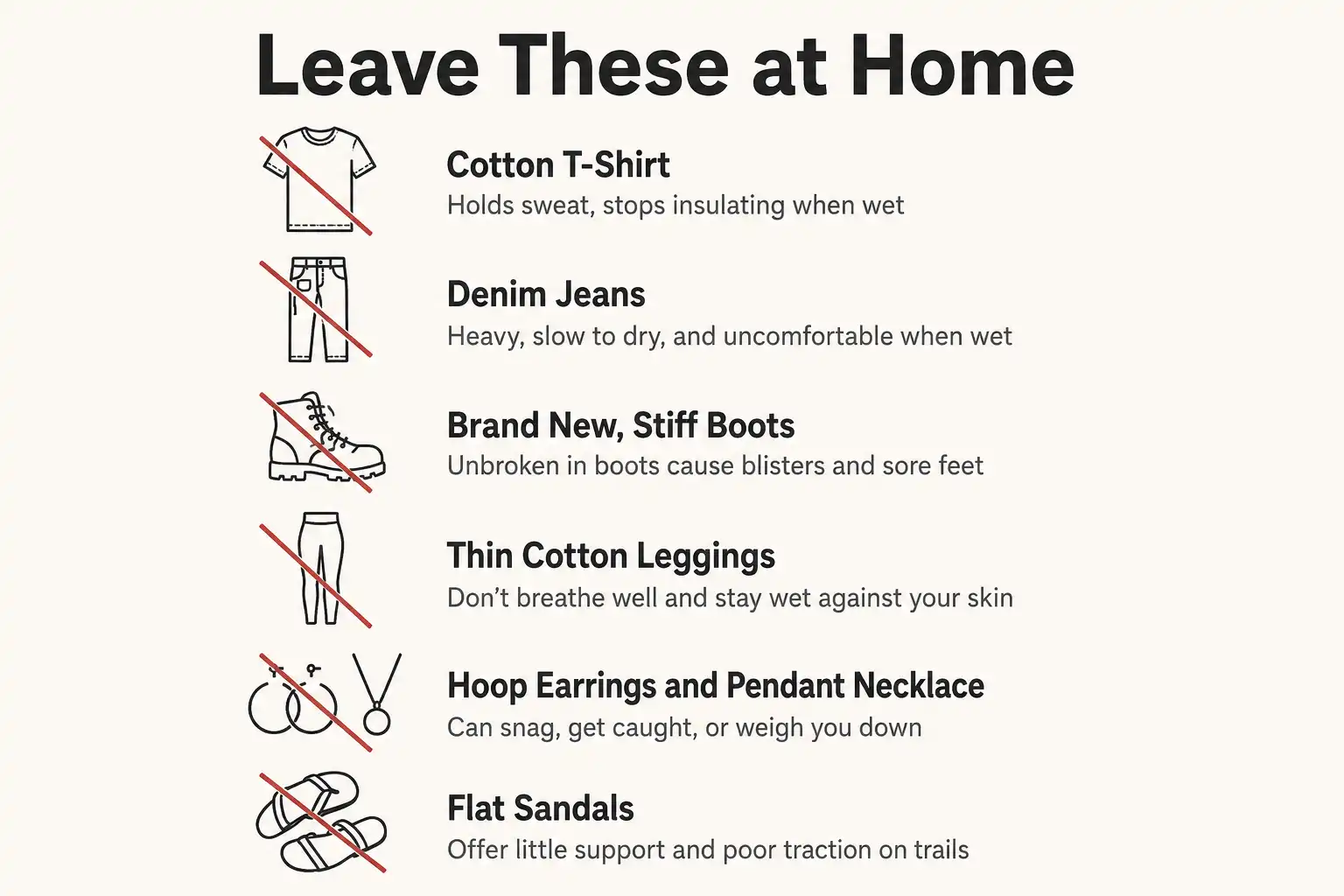
- Cotton anything. Shirts, socks, underwear, and hoodies all fail once they get wet.
- Jeans. Heavy, stiff, slow drying, and cold when soaked.
- New footwear. Break shoes in on short walks first.
- Bulky fashion leggings. Thin cotton blends tear and hold sweat.
- Dangling jewelry. It snags on branches and catches on straps.
- A single heavy jacket instead of layers. You cannot fine tune your temperature with one piece.
- Sandals on rocky terrain. Save them for camp.
Three sample hiking outfits by temperature
These three setups cover most day hikes. Adjust thickness for your own comfort, since some people run warmer than others.
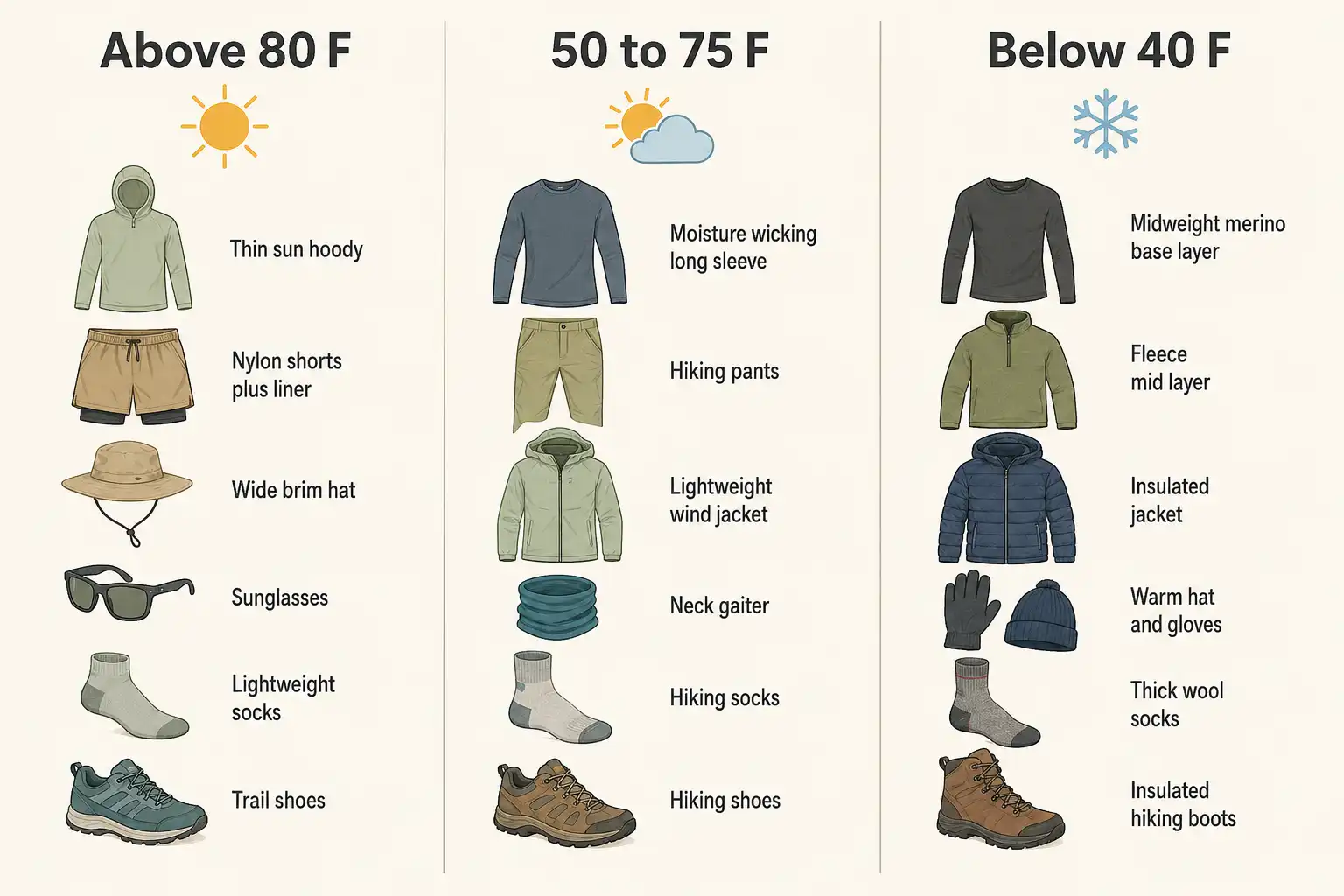
Hot and humid, above 80 degrees Fahrenheit. Thin polyester sun hoody, nylon shorts with a liner, low cut merino socks, trail runners, wide brim hat, sunglasses. Carry a wind shirt if the trail climbs high.
Mild, 50 to 75 degrees Fahrenheit. Merino tee or light long sleeve, nylon hiking pants, midweight socks, hiking shoes, light fleece in the pack, packable rain jacket, cap.
Cold, below 40 degrees Fahrenheit. Midweight merino base layer top and bottom, fleece mid layer, softshell or insulated pants, waterproof shell, insulated jacket for stops, thick wool socks, boots, warm hat, gloves.
For every setup, keep your rain shell and one insulating piece in the pack even when the forecast looks perfect. Mountain weather changes faster than any forecast admits.
Frequently asked questions

Can I wear leggings hiking?
Are jeans okay for hiking?
Do women need women's specific hiking clothes?
What should I wear on my first hike without buying anything?
How many layers should I bring on a day hike?
Final thoughts
Getting hiking clothes right comes down to a few simple rules. Move sweat away from your skin, avoid cotton completely, layer so you can adjust, and protect your skin from sun. Then spend your money on socks and footwear before anything else, because your feet decide whether the day feels good or awful. Start with what you own, add pieces as you learn what bothers you, and test every new item on a short hike before a long one.