How Long Does It Take to Hike Camelback Mountain? 2026 Trail Times

Camelback Mountain looks short on paper. Most people still take far longer than they expect. Below I break down real hike times for both summit trails. You will also see what stretches those times, and how to plan your start so you beat the heat.
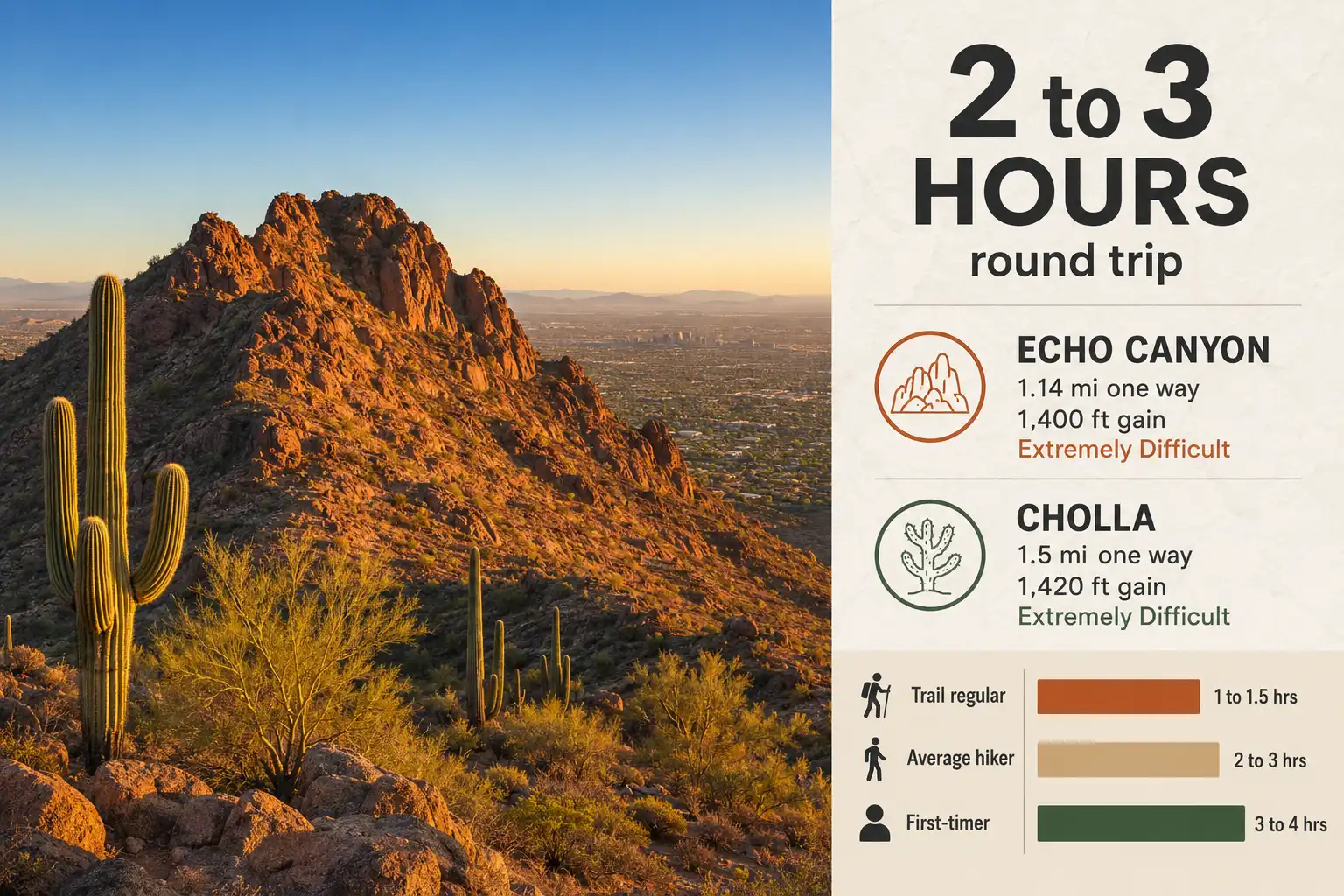
Most hikers summit Camelback Mountain and get back down in 2 to 3 hours. Fit hikers who keep moving finish in 1.5 to 2 hours. Trail regulars sometimes run the round trip in about an hour. First-timers who rest often need 3 to 4 hours.
How long does the Echo Canyon Trail take?
Echo Canyon takes most hikers 2 to 3 hours round trip. The City of Phoenix lists the trail at 1.14 miles one way, with an elevation change of 1,400 feet. Round trip, that comes to roughly 2.3 miles. GPS watches often read closer to 2.5 miles, so do not panic if your app disagrees with the trail sign.
Speed varies a lot here. Fit hikers who climb steadily reach the summit in 45 to 60 minutes. Casual hikers usually need 75 to 100 minutes for the same climb. Meanwhile, the fastest locals treat Echo Canyon like a stair workout and finish the whole thing inside an hour.
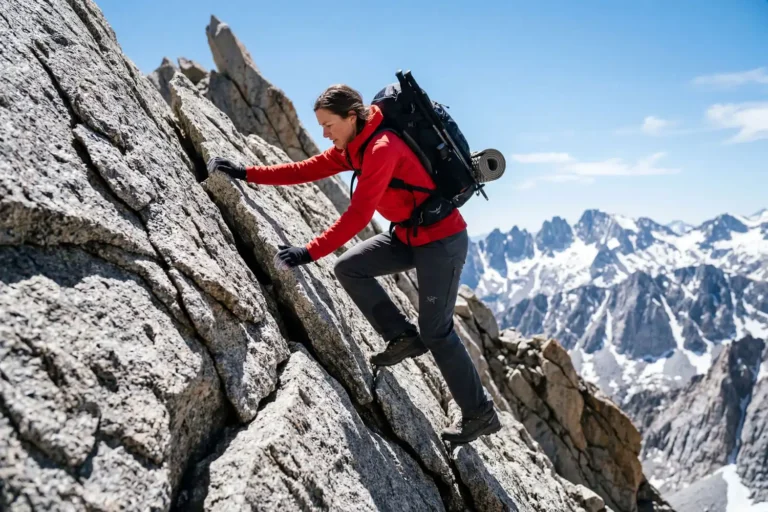
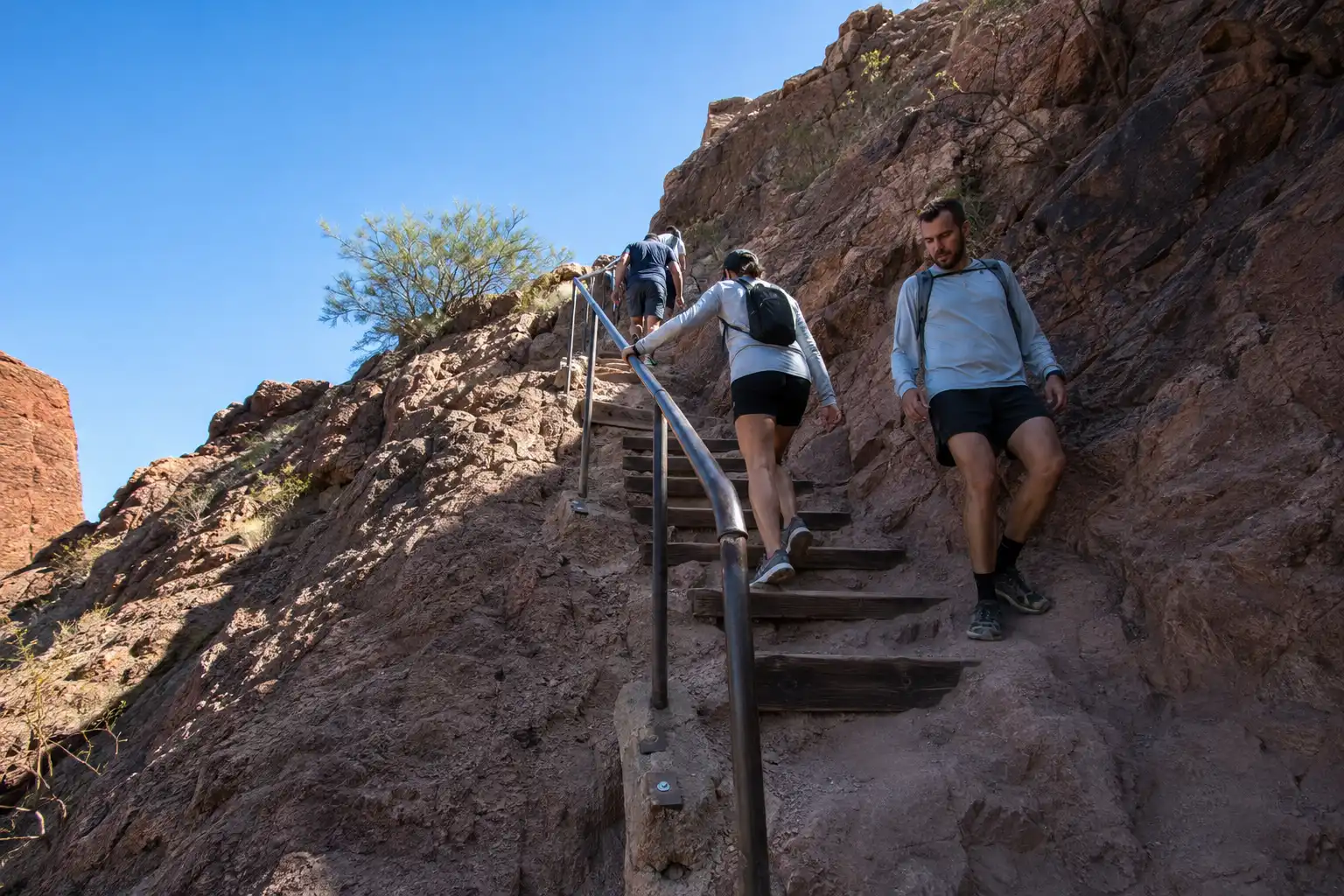
The trail earns its time in three places. First comes the railing section, where steel handrails and railroad ties replace normal switchbacks. Then the grade steepens through a long rock staircase. Finally, the upper third turns into boulder work, and progress slows to a crawl for anyone who is not comfortable using their hands.
Phoenix rates Echo Canyon as Extremely Difficult. The city also warns that even prepared hikers underestimate it and end up needing rescue crews. So treat any published time as a target, not a promise.
Read next: How Long to Hike a Mile
How long does the Cholla Trail take?
Cholla takes most hikers 2 to 3 hours round trip as well, and often a little longer than Echo Canyon. The city lists Cholla at 1.5 miles one way with an elevation change of 1,420 feet. Because the trail is longer, the average grade feels gentler through the first half.
That first half moves quickly. Hikers in good shape often reach the saddle in 40 to 50 minutes. After the saddle, the trail turns steep, rocky, and hard to follow, and the last third slows almost everyone down.
Add walking time to your plan too. Parking sits along Invergordon Road, and reaching the trailhead adds roughly five to ten minutes each way. Therefore, a “1.5 hour” Cholla hike often turns into two hours door to door.
Phoenix also rates Cholla as Extremely Difficult, despite its reputation as the easier option. The saddle makes a sensible turnaround point if the boulder section looks like too much.
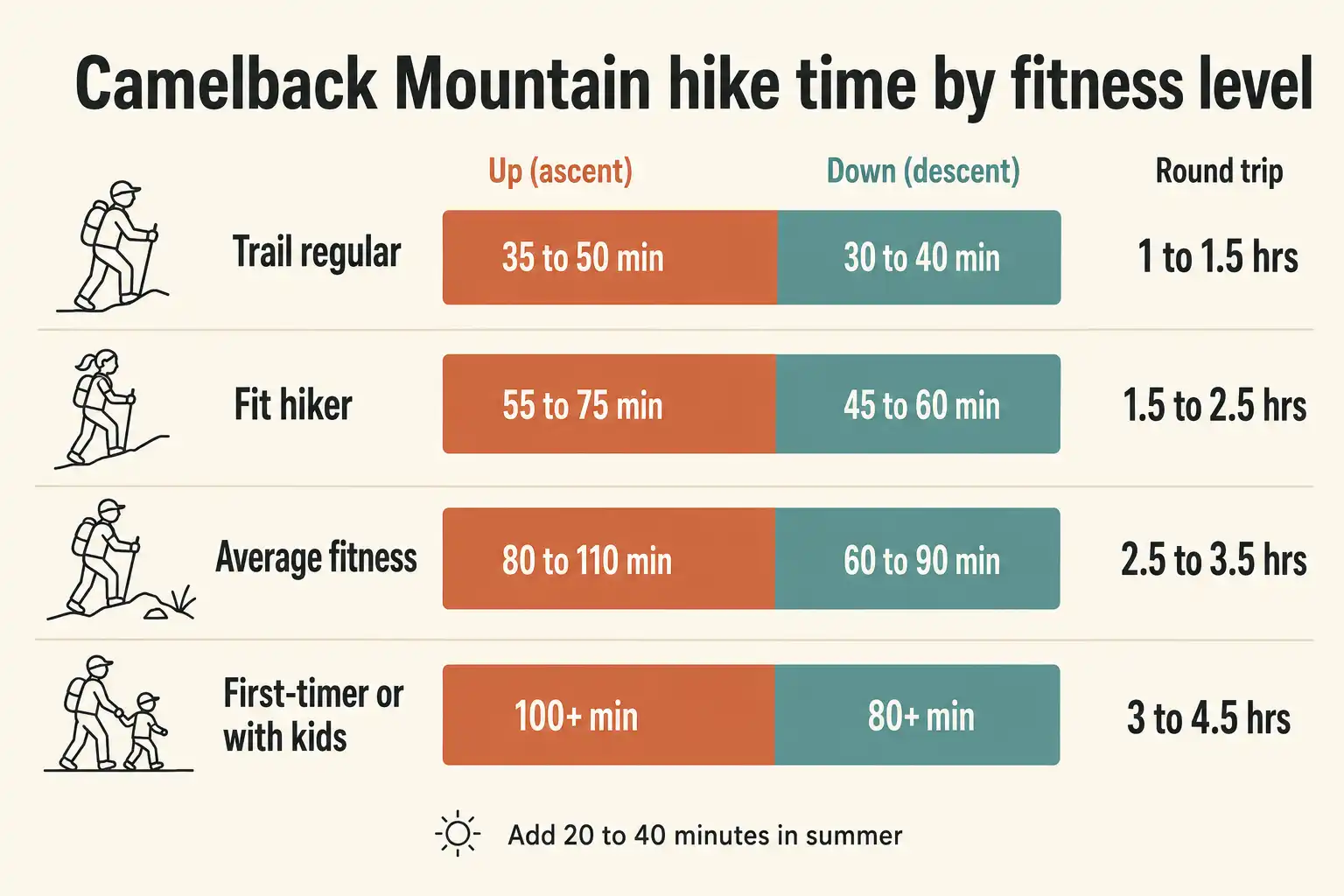
Camelback Mountain hike time by fitness level
Use the table below as a planning baseline. These figures assume cool weather, a normal crowd level, and short breaks only.
| Hiker type | Up | Down | Round trip |
|---|---|---|---|
| Trail regular, runs stairs weekly | 35 to 50 min | 30 to 40 min | 1 to 1.5 hours |
| Fit, hikes a few times a month | 55 to 75 min | 45 to 60 min | 1.5 to 2.5 hours |
| Average fitness, occasional hiker | 80 to 110 min | 60 to 90 min | 2.5 to 3.5 hours |
| First-timer, kids, or frequent stops | 100 min or more | 80 min or more | 3 to 4.5 hours |
Add 20 to 40 minutes in summer. Also add time on weekend mornings, when queues form at the handrails and boulder sections.
Why does such a short hike take so long?
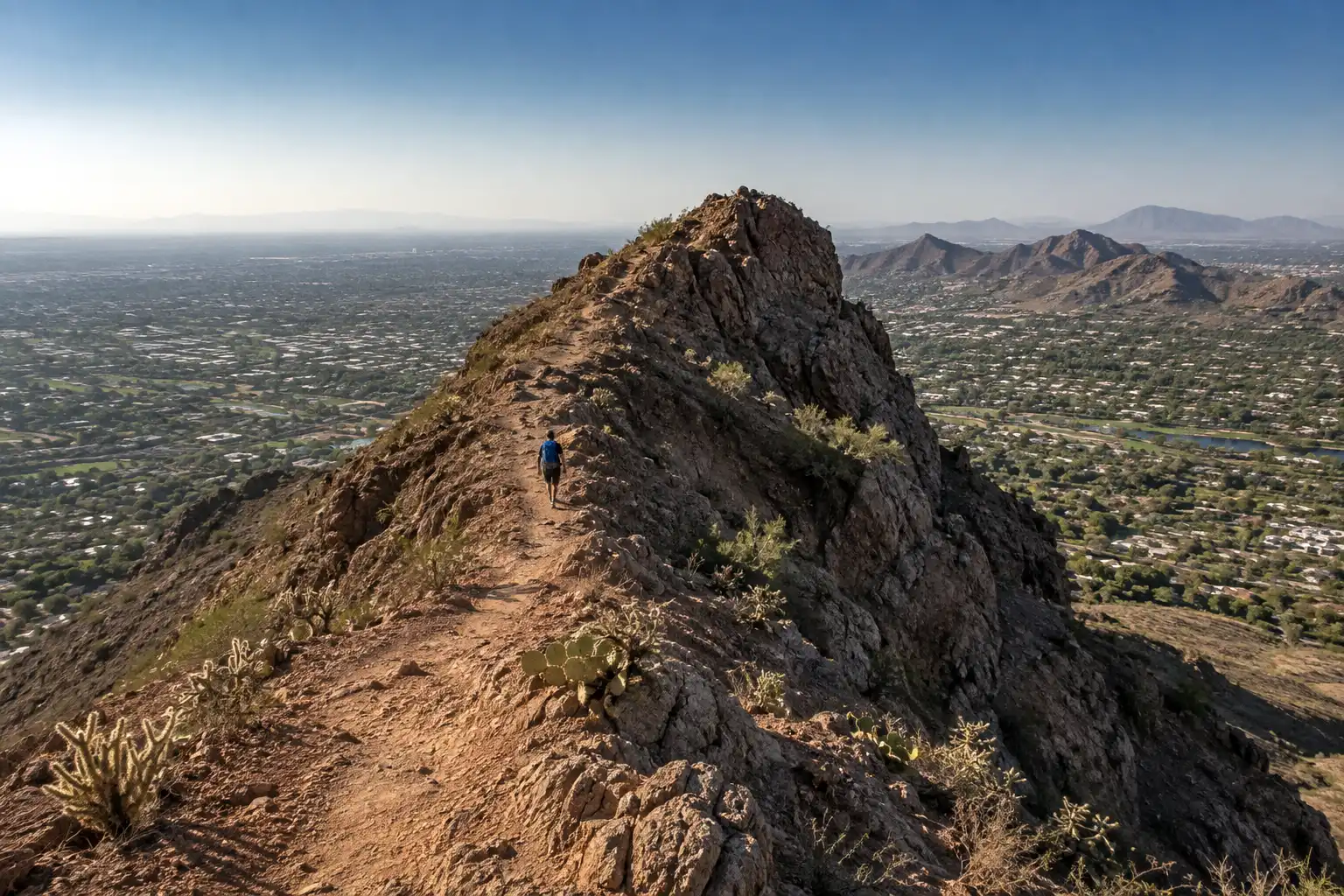
Camelback packs about 1,200 to 1,400 feet of climbing into little more than a mile, which is why the clock behaves strangely. Flat-mile pace means nothing here. Instead, your speed depends on how fast you can climb and how confidently you move over rock.
Most trail time formulas assume you walk. On Camelback you scramble, and hands-on climbing over rock burns time in short bursts of hesitation. Each boulder move takes seconds, but hundreds of small pauses add up.
The elevation profile explains the rest. Gaining more than 1,000 feet per mile puts Camelback well past what counts as heavy elevation gain on a normal day hike. In the Bandarban hills where I hike, climbs with that ratio always take me about twice as long per mile as rolling forest trail. Camelback behaves the same way.
Exposure adds another layer. Neither trail offers real shade, so hikers slow down as body temperature climbs, even in mild weather.
How long does the descent take?
Coming down Camelback usually takes 70 to 100 percent of your climbing time, which surprises people. On gentle trails the descent takes half as long. Here, the same boulders and handrails that slowed your climb force you to downclimb carefully, often facing into the rock.
Loose gravel over slick stone makes the middle section slower still. Many hikers sit and scoot through the steepest steps, especially on the upper Cholla boulders.
Your knees decide the rest. Steep, rocky descents load the joints hard, so plan for knee pain on steep downhill sections if you already feel it on stairs. Shorter steps and a slightly bent knee help more than speed does.
What slows hikers down the most?
Heat, crowds, and footwear cause most of the delays on Camelback. Each one is easy to plan around once you know about it.
Heat. Phoenix summers regularly push past 105°F. In 2024 alone, the city logged 121 days at 105°F or hotter, and 69 of those days topped 110°F. Hot air forces longer breaks, so a two-hour hike easily becomes three.
Crowds. Weekend mornings create bottlenecks at the railing section, where uphill and downhill hikers take turns. Expect a few minutes of waiting at each pinch point.
Footwear. Smooth-soled sneakers slip on polished rock. Consequently, hikers in the wrong shoes move slowly and nervously through exactly the sections that already cost the most time.
Photo stops. The summit views pull people in. Budget 15 to 20 minutes at the top if you plan to rest and take pictures.
What time should you start?
Start at sunrise for the fastest and safest hike. Both trailheads open at sunrise and close at sunset, and rangers clear the mountain at closing time. An early start also solves the parking problem, since the Echo Canyon lot fills by mid-morning and the gate closes once it is full.
Summer changes the math further. On days when the National Weather Service issues an Extreme Heat Warning, Phoenix restricts both Echo Canyon and Cholla from 8 a.m. to 5 p.m. In practice, that leaves a narrow window between sunrise and 8 a.m. for a summer summit. Since a round trip needs 2 to 3 hours, you must be walking within minutes of sunrise to finish legally and safely.
Winter and spring bring the opposite problem. Cooler weather draws heavy crowds, and the Echo Canyon lot often stays full all day on weekends. Arrive before 7 a.m. if you want a straightforward parking experience.
Check trail closures before you drive
Camelback closes more often than most visitors expect, so check the city trail page the night before. Two construction closures are already scheduled for 2026.
- Cholla Trail: closed August 17 to 28, 2026, for a sewer project near the trailhead. Use Echo Canyon during that window.
- Echo Canyon Trail: closed September 2 to 18, 2026.
Longer closures happen too. Echo Canyon shut down in mid-October 2025 after storm erosion loosened three large boulders, and it stayed closed until December 14, 2025. Cholla itself was closed from 2020 to September 2022 during a trailhead realignment.
One more rule catches visitors out. Dogs are prohibited on all Camelback Mountain trails year-round, in every season and at every hour.
How to finish faster without rushing
Steady effort beats bursts of speed on Camelback. Pick a pace you can hold while still breathing through your nose, then hold it. Most people who blow up on this mountain sprint the first quarter mile and pay for it on the rails.
Grip matters more than cushioning. Wear shoes with sticky rubber and a defined edge, because friction is what lets you move smoothly across polished rock.
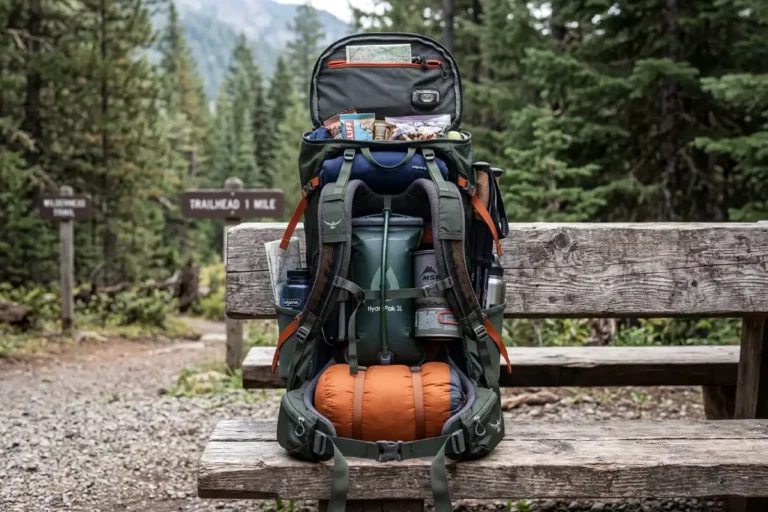
Keep your hands free. Trekking poles help on the lower trail but become a nuisance during the scrambles, so choose a pack that lets you stow them fast. My advice on loading a day pack for a short climb applies well here, since a bouncing pack costs balance and balance costs time.
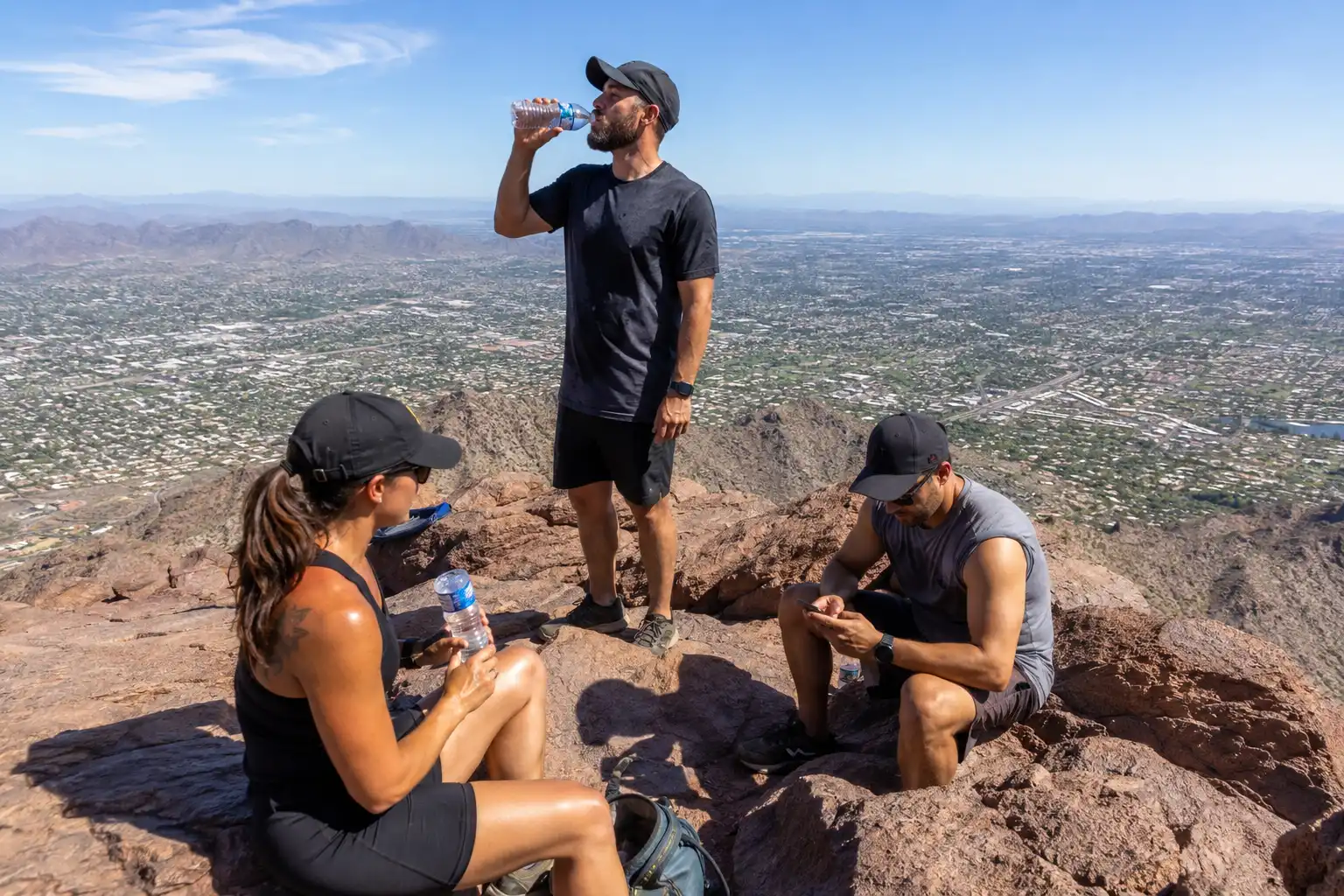
Finally, drink early and often. Waiting until you feel thirsty already means you are behind.
Shorter options if you do not have three hours
Bobby’s Rock Trail gives you a 20 to 30 minute option from the Echo Canyon Trailhead. The loop runs 0.2 miles with only 200 feet of elevation gain, and the city rates it Easy. You still get a solid view of Paradise Valley without committing to the summit.
The Cholla saddle works as a middle option. Turning around there takes roughly 1 to 1.5 hours round trip and skips the hardest boulder section entirely.
Both choices beat the alternative of starting a summit push too late. Rangers close the gates at sunset, and heat exhaustion does not care about your schedule.
What to carry for a 2 to 3 hour Camelback hike
Carry more water than you think you need, then turn back before you finish it. That single rule prevents most Camelback rescues, and Phoenix rescues more than 200 hikers a year across its parks and preserves.
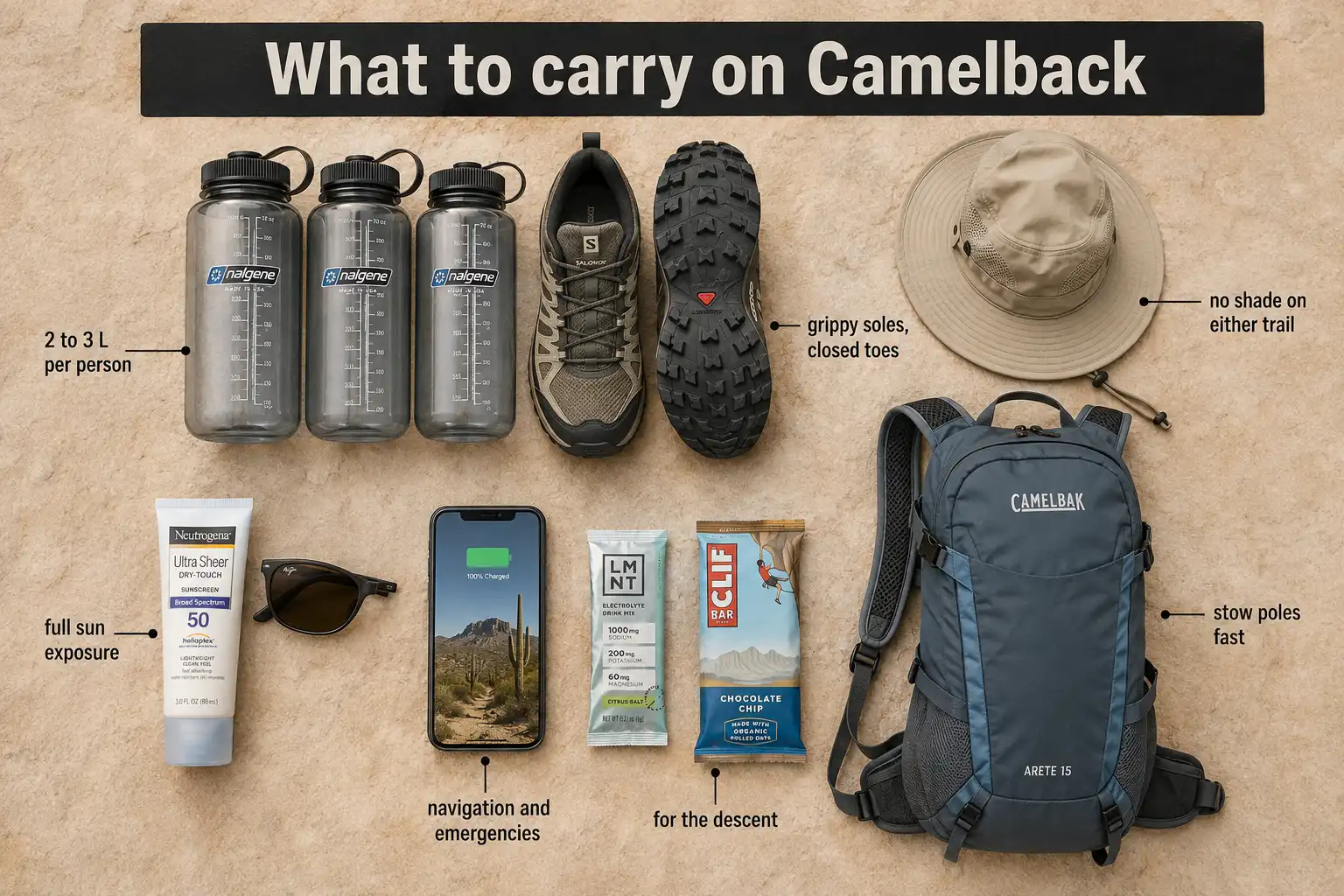
Here is a short list that covers a normal round trip:
- Two to three liters of water per person, plus electrolytes in summer
- Shoes with grippy rubber soles and closed toes
- Hat, sunglasses, and sunscreen, since shade barely exists on either trail
- A charged phone for navigation and emergencies
- A small salty snack for the descent
Echo Canyon Trailhead has restrooms, benches, potable water, and a small shade canopy. Cholla Trailhead offers far less, and city information about water there has been inconsistent, so fill up before you arrive.
If summer is your only option, read up on staying safe when temperatures spike before you commit to a start time.
Frequently asked questions

Is Camelback Mountain harder than it looks?
Can a beginner hike Camelback Mountain?
Which trail is faster, Echo Canyon or Cholla?
How long does it take to hike Camelback Mountain in summer?
Is there water on the trail?
Final thoughts on Camelback Mountain Hike Time
Plan 2 to 3 hours for Camelback Mountain and you will rarely be wrong. Fit hikers finish sooner, and first-timers often need closer to four hours, so judge honestly rather than optimistically. Start at sunrise, check the city page for closures and heat restrictions, and carry more water than the distance suggests. The mountain is barely over a mile to the top, yet it demands the respect of a much longer climb. Go early, move steadily, and you will enjoy the summit view without a rescue story attached.