Can You Hike the Grand Canyon? Permits, Trails and 2026 Rules

Plenty of first-time visitors stand at the South Rim and wonder whether hiking below the edge is even allowed. It is. Below you will find the permit rules, the trails worth your time, the current closures for 2026, and the safety limits that keep hikers out of trouble.
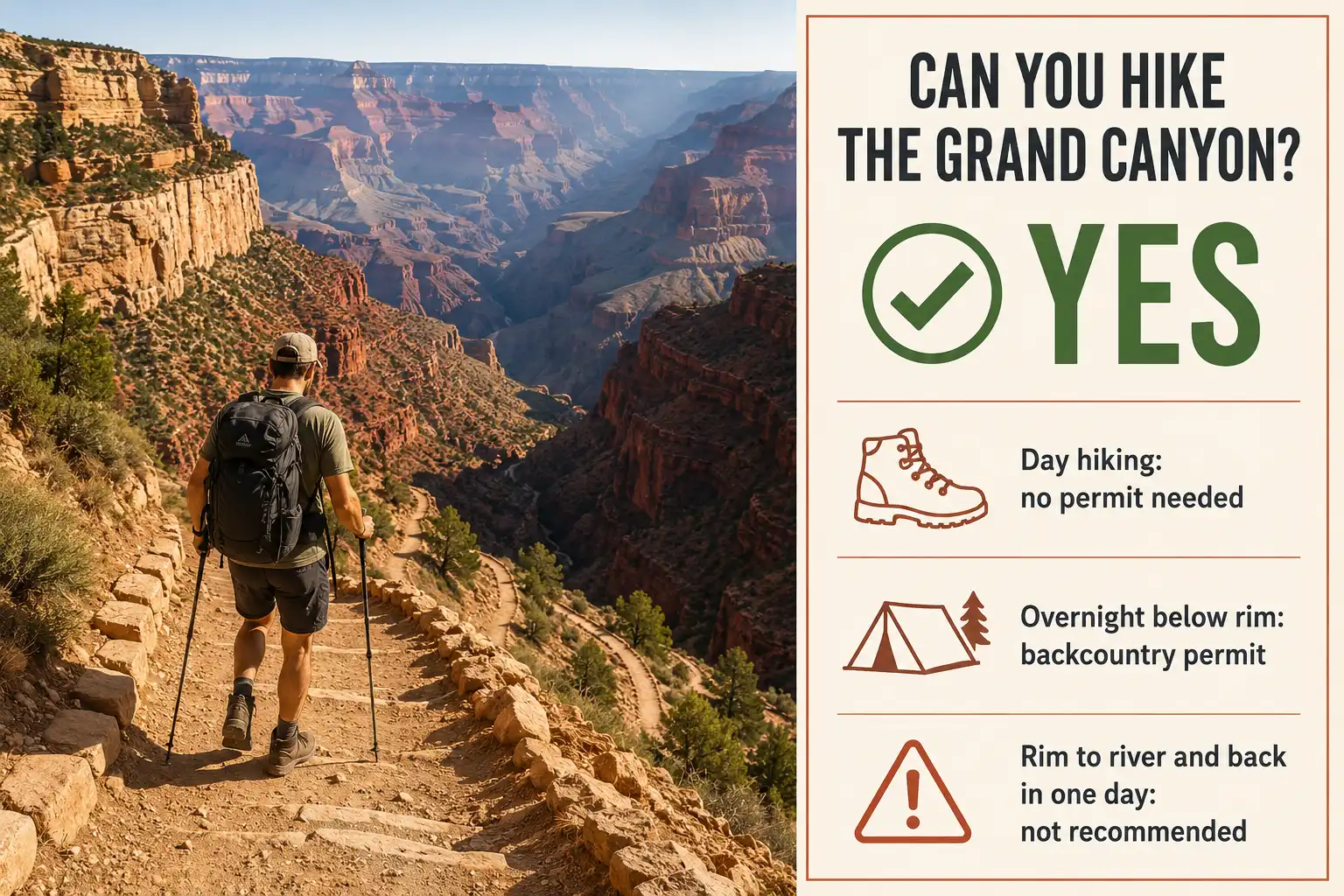
Yes, you can hike the Grand Canyon, and you need no permit for day hiking. You only need a backcountry permit if you sleep below the rim. However, the National Park Service tells hikers never to travel from the rim to the Colorado River and back in one day.
Do you need a permit to hike the Grand Canyon?
You do not need a permit for any day hike at the Grand Canyon, and that includes hikes running into the night. Permits apply only once you sleep below the rim.
A backcountry permit covers overnight camping anywhere outside Mather Campground, Desert View Campground and the North Rim Campground. It also covers any overnight stay on the North Rim between October 16 and May 14. So a rim-to-rim trip with a night at Bright Angel Campground needs one, while the same route hiked straight through does not.
Permits come from Recreation.gov rather than from a ranger at the trailhead. The park runs an early access lottery that opens on the 16th of the month, five months before your start month, then closes at 5 p.m. MST on the 1st, four months out. After that, remaining space opens to everyone.
A few last-minute permits also stay back for walk-ins. Those cover one night only, come in person from the South Rim Backcountry Information Center, and apply to Havasupai Gardens Campground (March 1 to November 30) or Cottonwood Campground (May 15 to October 31). Meanwhile the North Rim backcountry office stays closed, so plan around the South Rim desk.
What does it cost to hike the Grand Canyon?
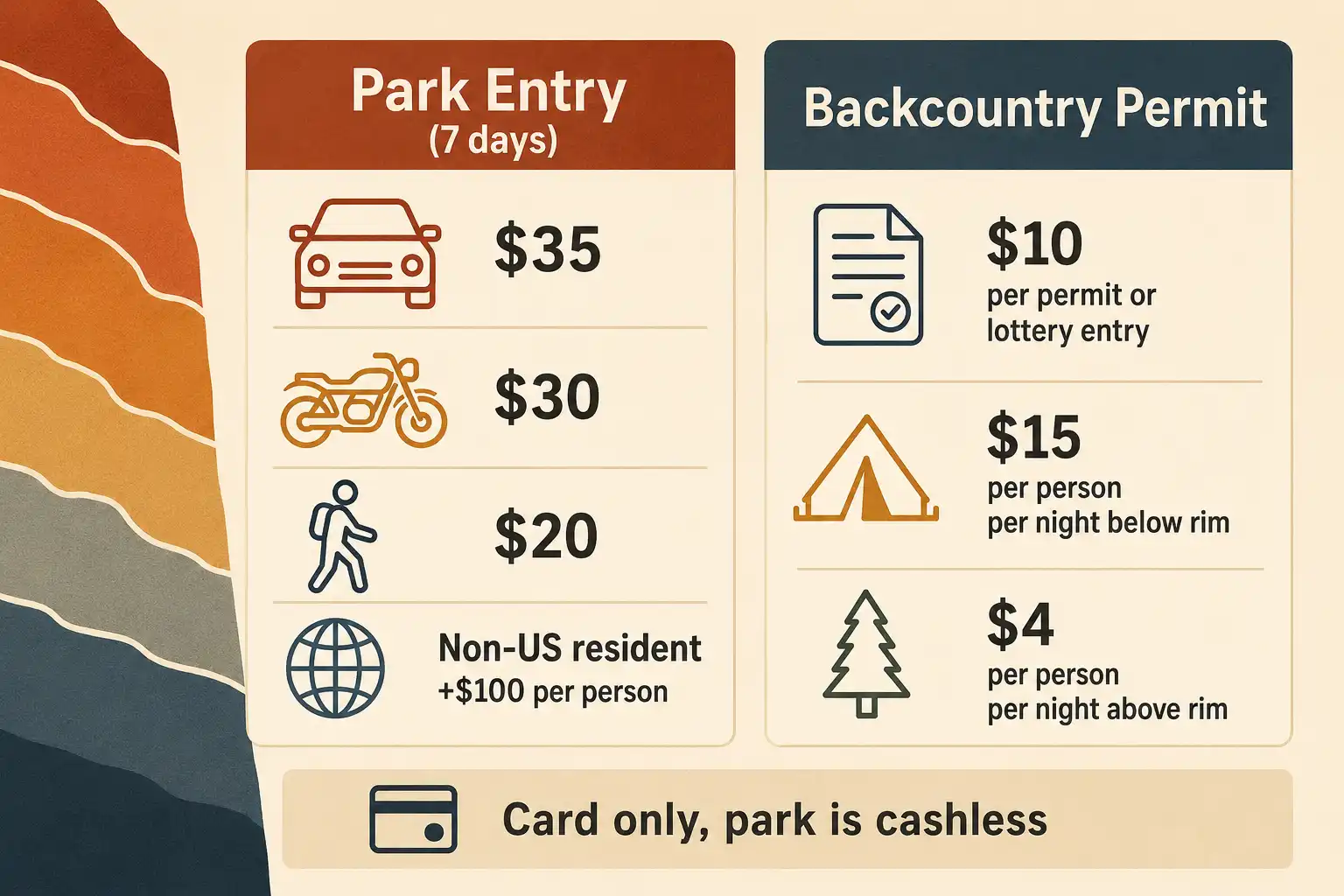
Hiking itself costs nothing once you pay to enter the park. Standard entry runs $35 per private vehicle, $30 per motorcycle, or $20 per person arriving on foot or by bicycle. Each pass stays valid for seven days.
Two extra costs catch people out. First, non-US residents aged 16 and over now pay an additional $100 per person on top of standard entry, unless they arrive with an Annual or America the Beautiful pass. Second, the park went cashless, so bring a card.
Backcountry permits add $10 per permit or lottery application, plus $15 per person per night below the rim and $4 per person per night above it. That $10 charge is non-refundable.
Which Grand Canyon trails can you hike?
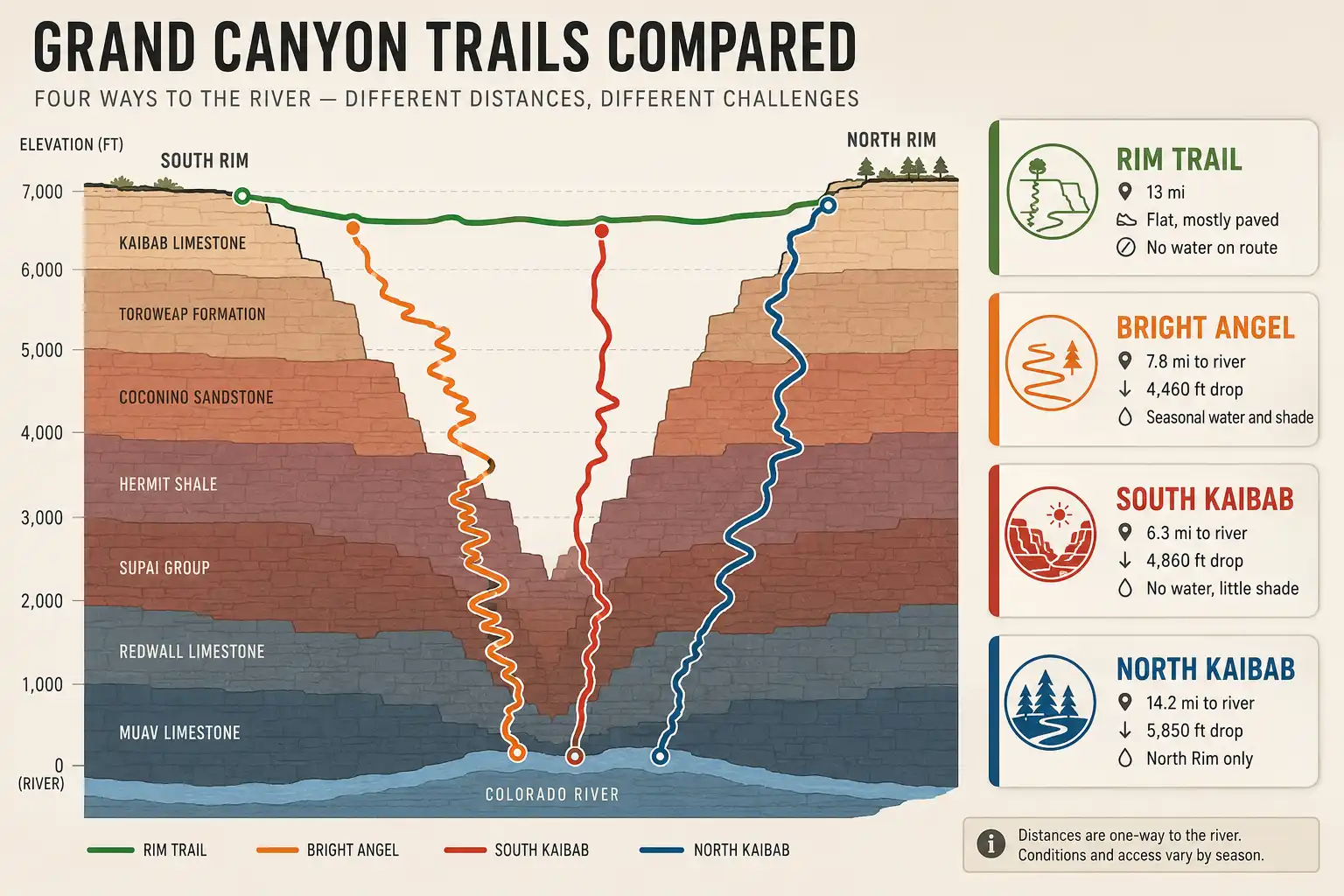
Four maintained trails carry most of the foot traffic, and they suit very different fitness levels.
Rim Trail
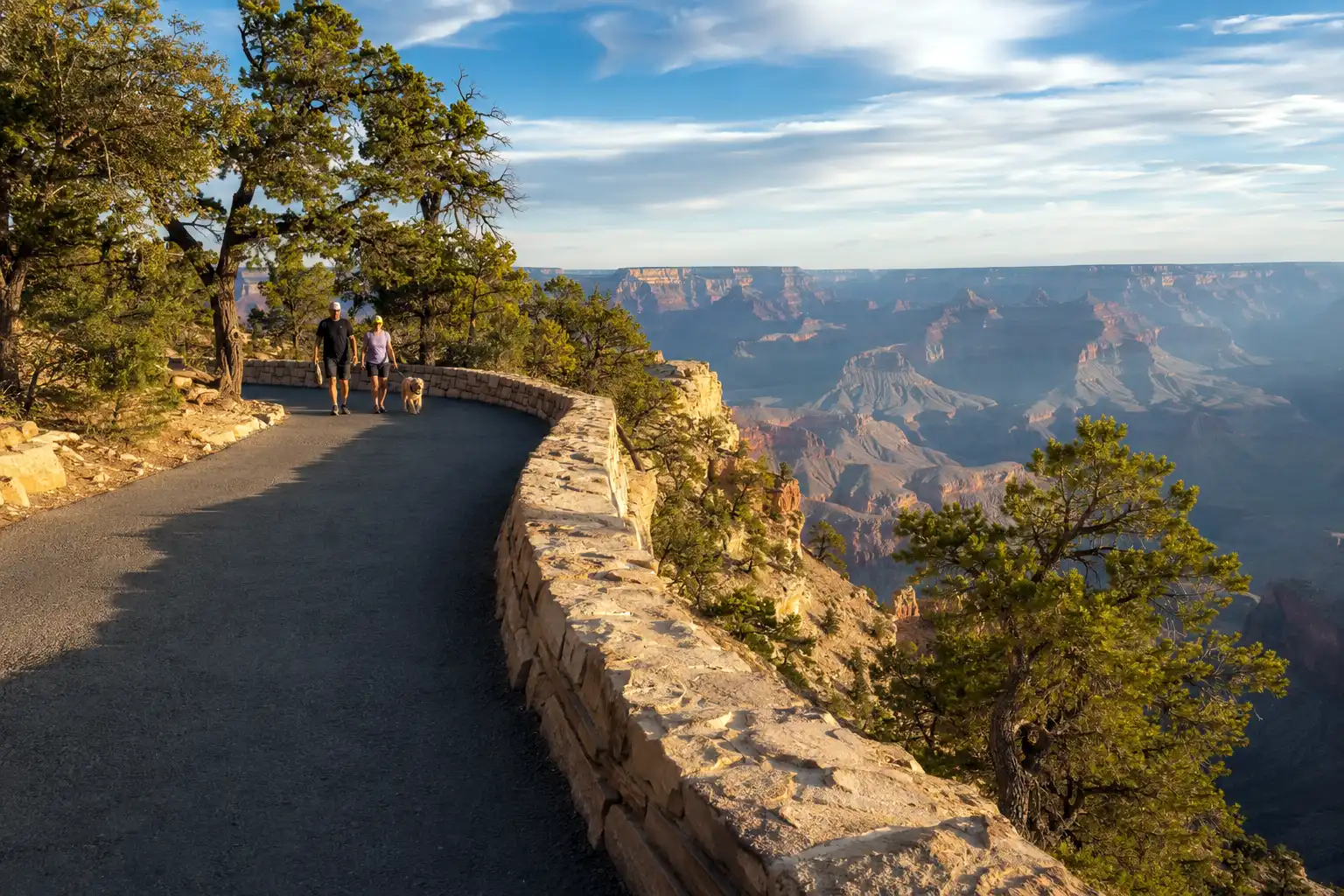
The Rim Trail runs roughly 13 miles from the South Kaibab Trailhead west to Hermits Rest, most of it paved. Elevation change stays minimal, shuttle stops break the route into short pieces, and leashed pets are welcome. However, no water exists along most of it, so fill up in the village first.
Bright Angel Trail
Bright Angel drops 4,460 feet across 7.8 miles from the South Rim to the Colorado River. Rangers favor it for day hikers because of the shade, the toilets and the seasonal water. Mile-and-a-Half Resthouse sits 1.6 miles down, Three-Mile Resthouse at 3.1 miles, and Havasupai Gardens at 4.5 miles.
South Kaibab Trail
South Kaibab runs shorter and steeper, dropping 4,860 feet across 6.3 miles. It also has no water and very little shade. Therefore rangers suggest hiking down South Kaibab and climbing out on Bright Angel. Ooh Aah Point, Cedar Ridge at 1.5 miles and Skeleton Point at 3 miles all make sensible turnarounds.
North Kaibab Trail
North Kaibab remains the only maintained trail into the canyon from the North Rim. It covers 14.2 miles and 5,850 feet to the river. For a day hike, turn around at Supai Tunnel (1.7 miles) or Roaring Springs (4.7 miles) instead.
Can you hike to the bottom of the Grand Canyon in one day?
No. The National Park Service tells hikers not to attempt rim to river and back in a single day, and that warning grows stronger between May and September. Search and rescue teams pull more than 300 people out of the canyon every year.
The reason sits in the shape of the hike. You descend first, which feels easy, then you climb out while tired, hot and low on water. Plan on the climb taking about twice as long as the way down.
Heat compounds the problem. Temperature rises about 5.5°F for every 1,000 feet of descent, and summer highs at Phantom Ranch average around 30°F hotter than the rims. For that reason rangers tell people to stay off the trail between 10 a.m. and 4 p.m. in summer. My guide on hiking safely when temperatures climb covers the warning signs worth learning first.
Still want to reach the river? Then split it across two days with a permit and a night at Bright Angel Campground. Otherwise pick a turnaround and hold to it. Working out how many miles you can cover in a day safely beats improvising halfway down.
How hard is hiking the Grand Canyon?
Harder than most hikes of the same distance, because the climb waits at the end. A mountain hike gives you the ascent while you feel fresh. In the canyon that order flips.
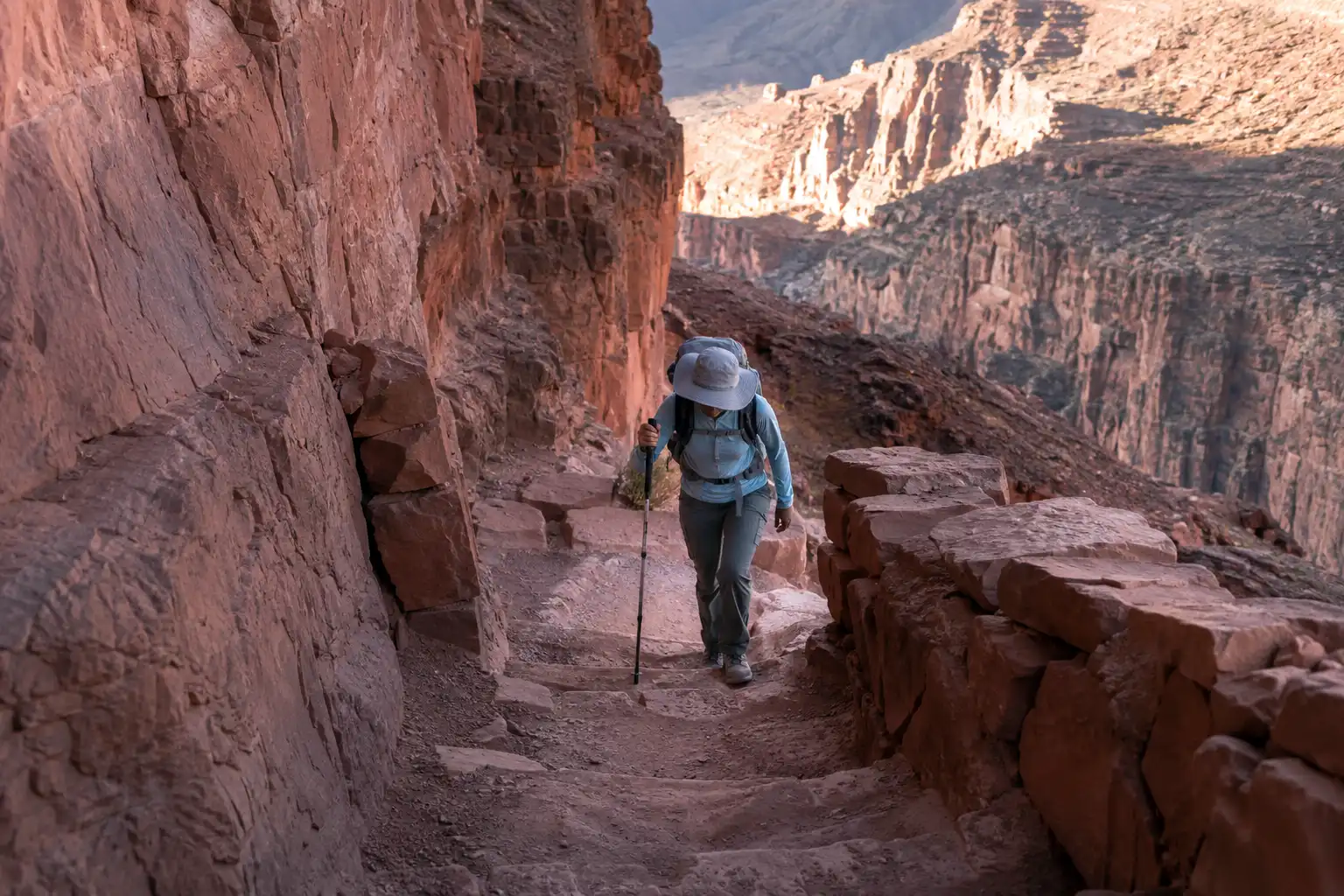
Numbers help here. Bright Angel gains 4,460 feet on the way out, while South Kaibab gains 4,860 feet. For comparison, what counts as serious elevation gain on an ordinary day hike sits well below both figures.
I trek in the Bandarban hills at home, and the pattern feels familiar. Our climbs toward Keokradong punish anyone who burns energy early. The canyon does the same thing, only with far less water and far more heat.
Altitude adds another layer. The South Rim trailheads sit near 6,860 feet and the North Kaibab Trailhead near 8,241 feet, so people arriving from sea level often feel short of breath on day one. Sleeping a night on the rim first helps, and training your legs for altitude beforehand helps more.
Can you still hike rim to rim in 2026?
Yes, but only until mid-October. The park closes the North Kaibab Trail between the Redwall Bridge and the north end of Cottonwood Campground at 11:59 p.m. on October 15, 2026. Traditional rim-to-rim hiking will not be possible from October 16 onward.
For now the full corridor stays open. That includes the entire North Kaibab Trail, South Kaibab down to Phantom Ranch, both river bridges, and Bright Angel out to River Resthouse.
Rim to rim covers roughly 21 to 24 miles depending on your route, and most hikers take two or three days with permits. A shuttle service links the two rims by road, because the drive between them takes over four hours.
One more rule catches organized groups. Any non-commercial group of 12 to 30 people doing rim-to-rim, rim-to-rim-to-rim or extended inner canyon day hikes needs a Special Use Permit. Splitting into smaller parties to dodge that rule is not allowed.
When is the best time to hike the Grand Canyon?
Spring and fall deliver the best conditions, roughly March through May and September through November. Summer brings dangerous inner canyon heat, while winter brings ice on the upper switchbacks of both South Rim corridor trails.
Winter hiking still works with traction devices on your boots. Freeze and thaw cycles turn the top sections of Bright Angel and South Kaibab slick, and rangers flag that hazard every year.
The North Rim runs on a season of its own, mid-May through late fall. It reopened on May 15, 2026 after the Dragon Bravo Fire burned about 145,000 acres in July 2025 and destroyed the historic Grand Canyon Lodge. Services stay limited this year. No lodging operates inside the park on the North Rim, and water currently stays off at the North Rim, the North Kaibab Trailhead, Supai Tunnel and Cottonwood Campground.
Burned ground carries its own hazards too. Falling rocks and trees, plus flash floods and debris flows during storms, affect the stretch between Supai Tunnel and the North Kaibab Trailhead. Therefore check the park’s hiking updates page the same week you travel.
What about hiking to Havasu Falls?
Havasu Falls sits on Havasupai tribal land rather than inside the national park, so a park permit does not cover it. You book through the Havasupai Tribe instead, and day hiking is not allowed at all.
Reservations run four days and three nights. Campground permits cost $455 per person for 2026, while lodge rooms cost $2,277 for up to four people. The tribe dropped its lottery this year and moved to first-come bookings, with an early access window in late January and general sales opening February 1.
The hike measures 8 miles from Hualapai Hilltop to Supai Village, then 2 more miles to the campground. That makes 20 miles round trip at minimum, with no reliable water on the way in.
What to carry on a Grand Canyon hike
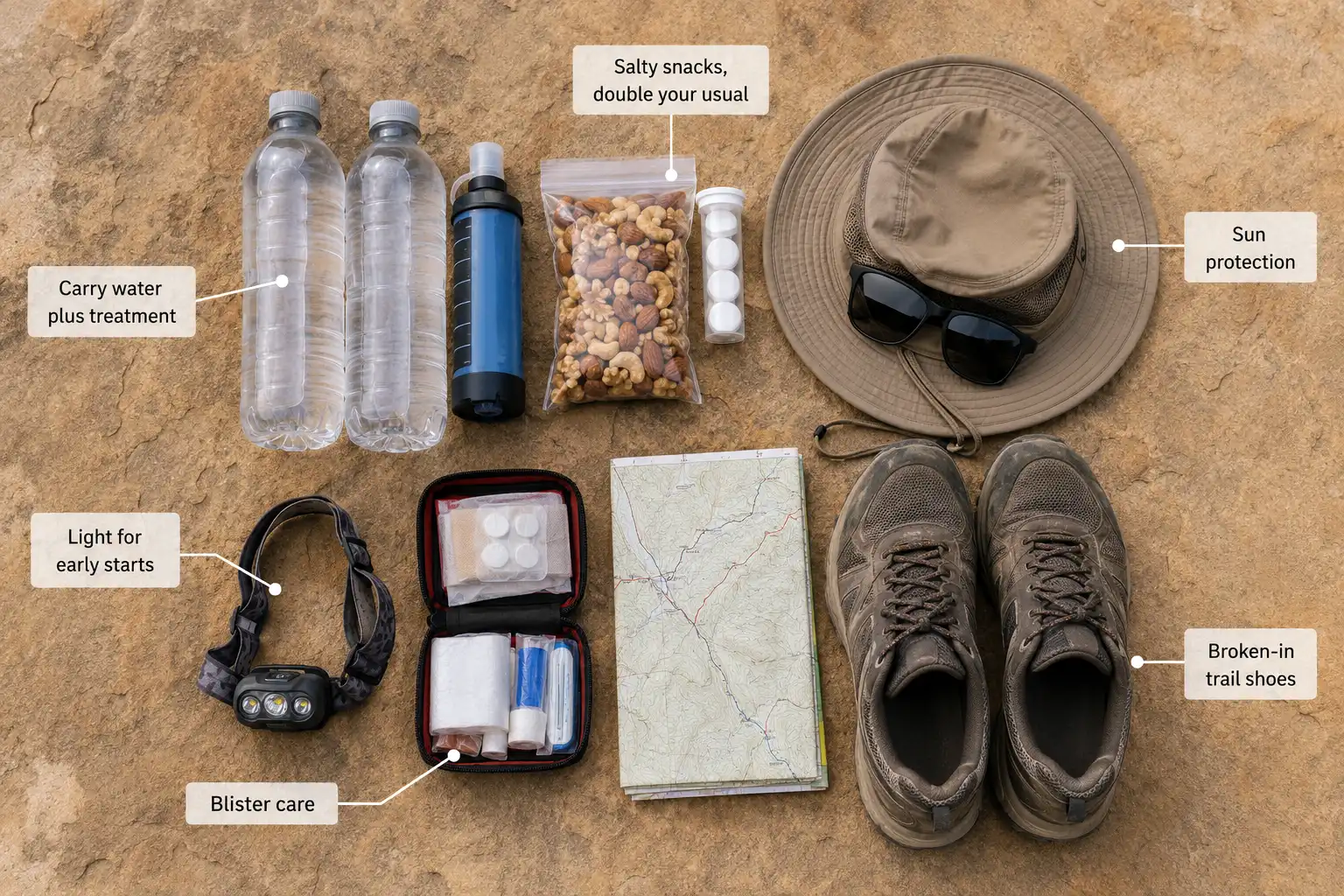
Water comes first, and you should carry your own even on Bright Angel. Pipeline breaks shut off trail spigots without warning, so pack a filter or tablets as backup and check the current water status before you start walking.
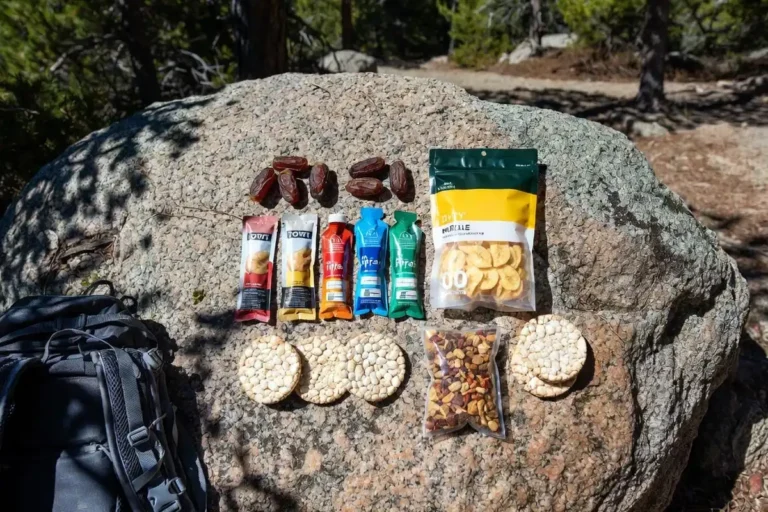
Salty snacks matter just as much. Drinking heavily without replacing salt can trigger hyponatremia, a serious salt-balance disorder, so eat while you drink. Rangers suggest doubling your normal carbohydrate and salt intake on canyon hikes.
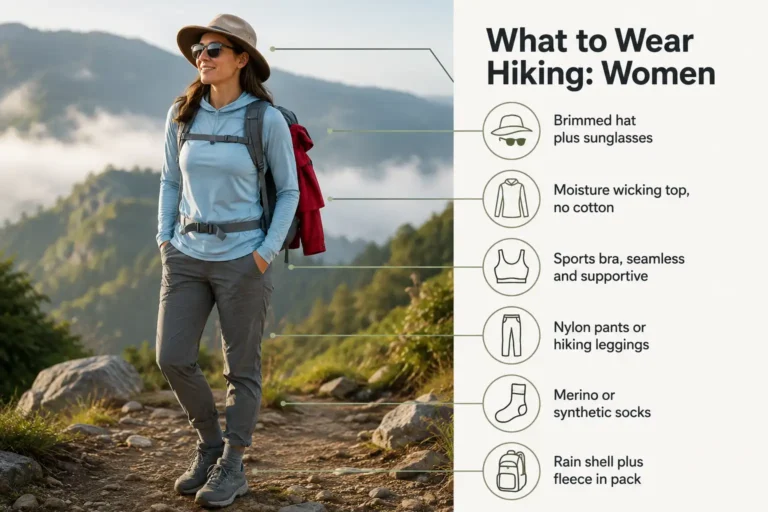
After that, the kit matches any desert day hike: sun hat, sunglasses, sunscreen, layers, headlamp, first aid kit and a map. My list of the ten essentials I carry on every hike covers each item. Broken-in shoes matter too, and stopping blisters before they start can save the climb out from turning miserable.
Rules worth knowing before you go
Dogs cannot go below the rim on any trail. Leashed pets are fine on the Rim Trail, though not on the shuttle buses.
Mules always have right of way. Step to the inside of the trail, stay still and quiet, follow the wrangler’s instructions, then wait until the last mule is 50 feet past.
Camping below the rim happens only at designated campgrounds with a permit. Stays cap at two nights per campground per trip in the corridor, apart from a longer winter allowance.
FAQs about Grand Canyon hiking

Can a beginner hike the Grand Canyon?
Is it free to hike the Grand Canyon?
How long does it take to hike to the bottom?
Do you need a guide to hike the Grand Canyon?
Final thoughts
So the answer stays simple. You can hike the Grand Canyon on any day of the year without a permit, provided you stay inside a day trip and pay your entrance fee. Sleeping below the rim takes planning months ahead instead. Start with a rim walk or a short descent, turn around earlier than feels necessary, carry more water than you expect to drink, and check the park’s closure page before you travel. That last step matters more than usual in 2026.