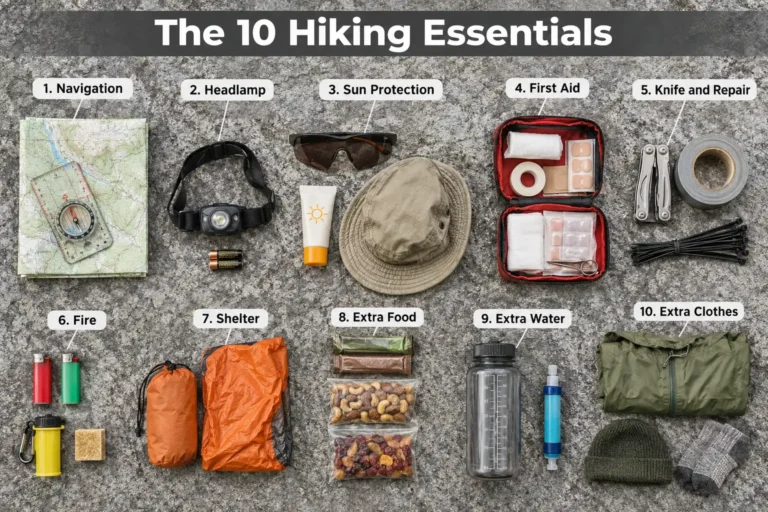
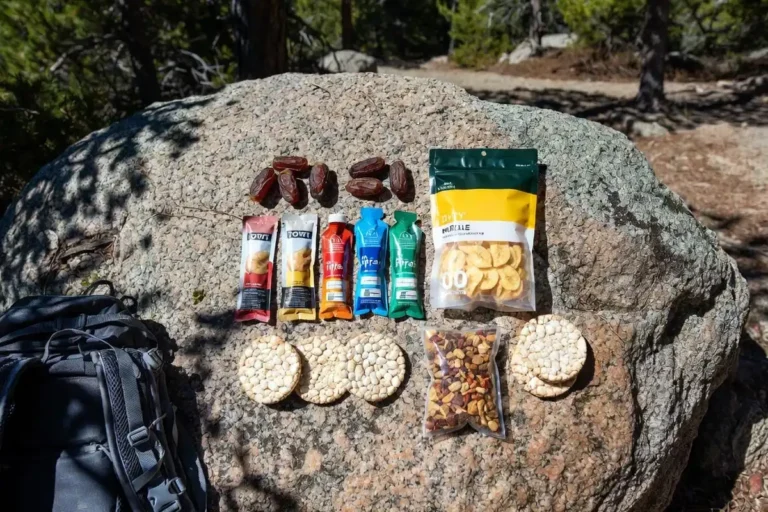
How to Train for High Altitude Hiking: A Complete Plan

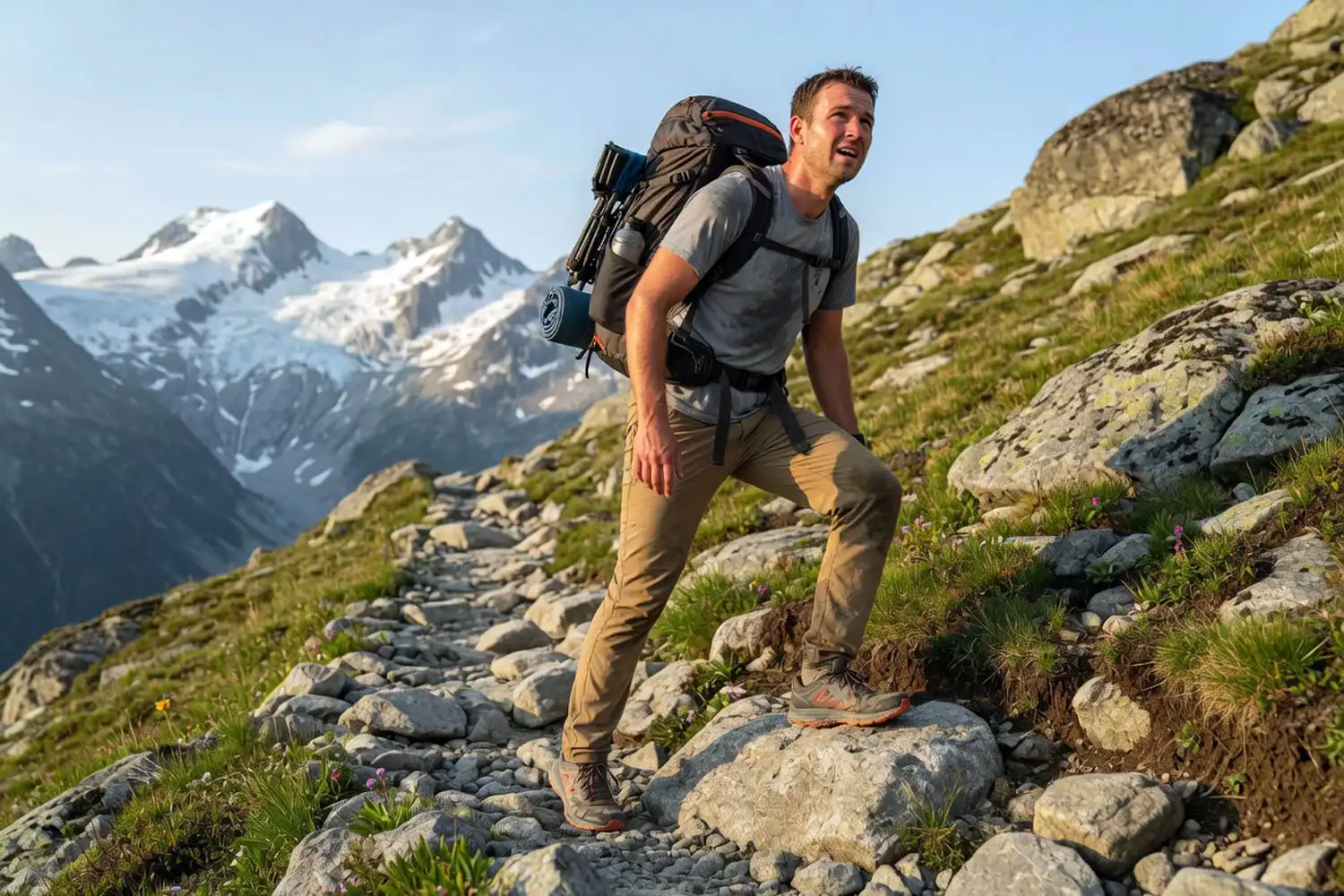
High altitude hiking puts your body under stress most weekend hikers never feel. Thin air, steep climbs, and long days under a loaded pack all test your cardio, your legs, and your willpower. So if you’ve signed up for a trek that crosses 8,000 feet or higher, you need a training plan that truly prepares you for that load. In this guide, I’ll walk you through how to train for high altitude hiking step by step, from cardio and strength to pack carries, recovery, and the final taper before your trip.
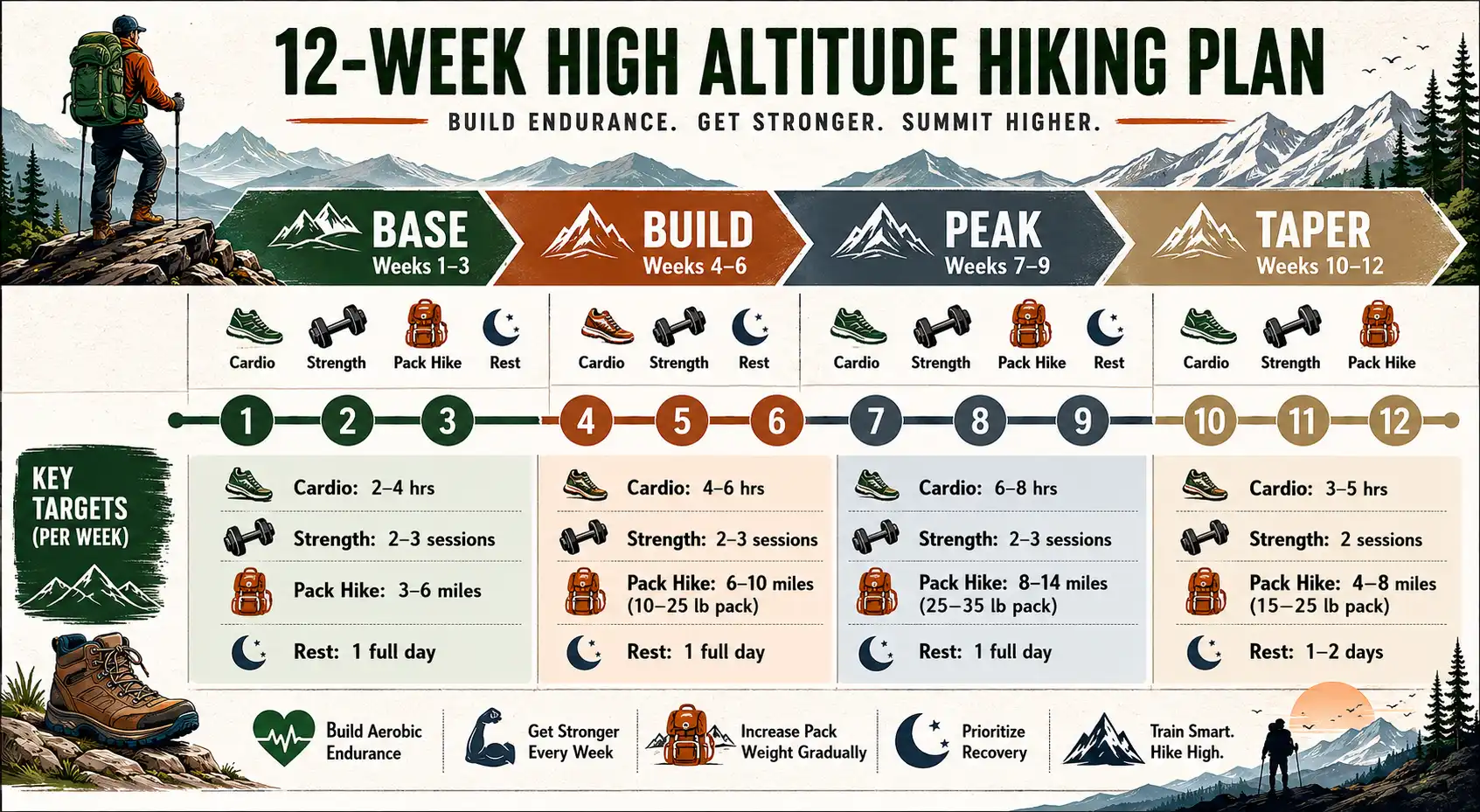
To train for high altitude hiking, start at least 12 weeks before your trip. Build base cardio four days a week, add two strength sessions for legs and core, do one long pack-weighted hike every weekend, and ramp up elevation gain gradually. Then taper hard in the final week and arrive rested.
Know more: Base Camp Trekking in Nepal: Costs, Permits, Routes
How long should you train for high altitude hiking?
Most hikers need about 12 to 16 weeks of focused training before a high altitude trip. If you already hike regularly and have solid cardio, eight weeks can work. But for beginners or anyone coming off a sedentary stretch, 16 weeks is safer. Above 8,000 feet, oxygen drops fast, so your body needs a strong aerobic base just to keep moving comfortably. Therefore, the longer your runway, the more gradually you can build mileage and strength without injury.
Also, training time matters more than training intensity. Steady weekly progress beats short bursts of hard effort. I’ve watched friends try to cram fitness into three weeks before a trek, and most of them suffered badly on the trail. For a better sense of where you stand, my piece on the fitness level you need for multi-day backpacking gives a useful baseline.
Build a strong cardio base first
Cardio is the foundation of altitude fitness. Your heart and lungs work much harder when oxygen is thin, so a stronger aerobic engine means less suffering up high. For the first six weeks, focus on steady, low-intensity sessions you can hold a conversation through.
Zone 2 sessions
Spend most of your cardio time in zone 2, which sits around 60 to 70 percent of your max heart rate. This is the pace where you can talk in full sentences but still feel real effort. Aim for three to four zone 2 sessions a week, each between 45 and 90 minutes. Walking on an incline treadmill, brisk hiking, easy cycling, and slow jogging all work well.
Interval work for VO2 max
After your base is solid, add one or two interval sessions per week. For example, try 4 by 4 minutes at hard effort with 3 minutes easy in between. These intervals push your VO2 max, which is the maximum amount of oxygen your body can use. A higher VO2 max means you’ll climb easier and recover faster at altitude. However, never do intervals on back-to-back days. Keep them spread out so your legs stay fresh for the weekend’s long hike.
Strength training for legs, core, and stability
Strength training protects your knees, supports a loaded pack, and keeps your steps stable on uneven trail. Two sessions per week are plenty. Focus on compound movements that target your legs and core together.

Key exercises to include
Squats and split squats build the quad and glute strength you need for big elevation gain. Step-ups onto a tall box mimic the actual motion of climbing rocks and stairs. Deadlifts strengthen the posterior chain that carries a heavy pack, while planks and side planks protect your lower back on long days. Calf raises help with downhill control, and downhill control matters because most hikers hurt their knees on the descent, not the climb. For more on that, I have a separate guide on managing knee pain on long descents.
Train with a weighted pack
Pack-weighted hikes are the single most useful training tool for altitude trips. Carrying weight teaches your shoulders, hips, and feet what the trail will actually feel like. Start with about 15 pounds and add 2 to 3 pounds every two weeks until you’re carrying close to your expected trail load.
Every weekend, do one long hike with that pack. Pick local trails with steady climbs and aim for 4 to 8 hours of moving time. If you live in a flat area, find a stadium, a parking garage, or a steep neighborhood hill and do laps. Stair machines also work, but real trail is always better because the uneven surface trains the small stabilizer muscles you simply cannot hit in a gym.
Practice serious elevation gain
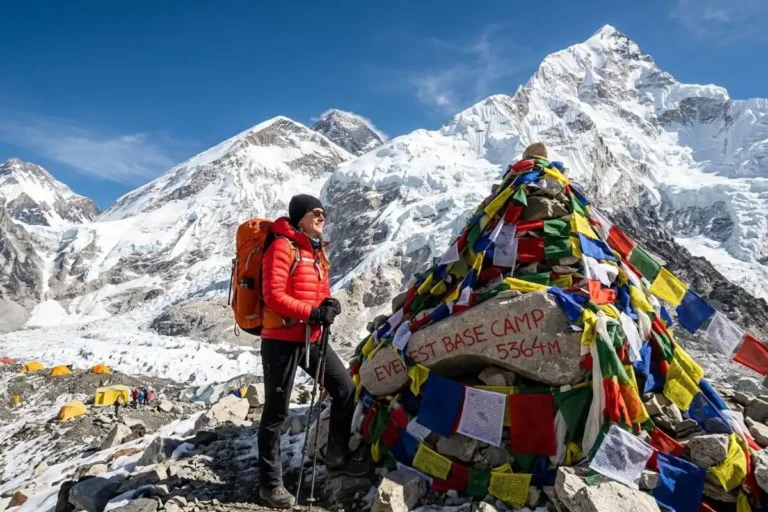
You cannot fake elevation gain. The closer your training elevation matches your trip elevation, the better your legs will respond on summit day. Aim for at least 2,000 feet of vertical gain in your weekly long hike, and push it toward 3,500 to 4,000 feet in the final month. If you’re heading somewhere like the Khumbu region, even 4,000 feet a day on the trail won’t feel easy at first. I wrote about Everest Base Camp elevation in detail if you want to see what you’re heading into.
Train your lungs and breathing
Lung training won’t fully replace real altitude exposure, but it does help. Practice nasal breathing on easy runs and hikes to teach your body to use oxygen efficiently. Box breathing, which means inhaling, holding, exhaling, and holding again in equal counts, can lower your resting heart rate and improve breath control under stress.
Some hikers also use altitude masks or hypoxic chambers. From what I’ve gathered from other trekkers, the masks don’t truly simulate altitude because they restrict airflow rather than oxygen concentration. However, they do strengthen breathing muscles, which can still help. If you have access to a real hypoxic chamber, that’s a much better option, though it’s expensive.
The final two weeks before your trip
In the final two weeks, taper your training and let your body recover. Cut total volume by about 40 percent, keep one or two short easy hikes, and drop heavy strength work entirely. The fitness is already in the bank by then. Pushing hard now only adds fatigue.
Also, sort out your gear in this window. Break in your boots on local trails so they don’t blister you up high. I have a guide on breaking in stiff hiking boots properly if your pair still feels rough. Test your layers, your pack fit, and your sleeping setup before you fly.
Recovery matters more than you think
Recovery is when your body actually adapts to training. Sleep 7 to 9 hours every night, eat enough protein (around 0.7 grams per pound of body weight), and take one full rest day each week. After your long pack hikes, foam roll your quads, calves, and hips. Then stretch your hip flexors because tight hips mess up your stride on long climbs.
Hydration also matters. Drink water consistently through the day, not just during workouts. At altitude, dehydration sneaks up faster, so going in well-hydrated makes acclimatization easier.

Altitude-specific tips for summit day
A few things only matter once you’re on the mountain. Climb high, sleep low when possible. Hike slow on the first two days to let your body adjust. Watch for headaches, nausea, and dizziness, which are the early warning signs of altitude sickness. If symptoms worsen, drop elevation immediately. Sun is also brutal up high, so I’d point you to my piece on picking sunscreen for thin-air sun exposure before you pack.
Pacing makes or breaks a high altitude day. Start slow, slower than you think you should. Most hikers blow up because they walk the first hour at normal speed, then crash by hour three. Instead, set a rhythm you can hold for the full day. For more on that habit, my guide on pacing yourself across a long hiking day goes deeper. Eat small amounts often, sip water steadily, and don’t skip breaks.
Final thoughts
Training for high altitude hiking takes time, patience, and consistency. Twelve to sixteen weeks of mixed cardio, strength, pack hikes, and elevation work will set you up to enjoy the trip instead of grinding through it. Recovery and gear fit also matter just as much as the workouts themselves. Show up rested, hydrated, and well-prepared, and the mountain becomes a place you climb with confidence, not a wall you fight against.