Is Polyester Good for Hiking? What It Does Well and Where It Fails

Polyester sits in almost every hiking shirt, fleece, and base layer on the shelf. So it makes sense to ask whether the fabric earns that spot. I have hiked in polyester through humid Bandarban hills and rinsed it at camp more times than I can count.
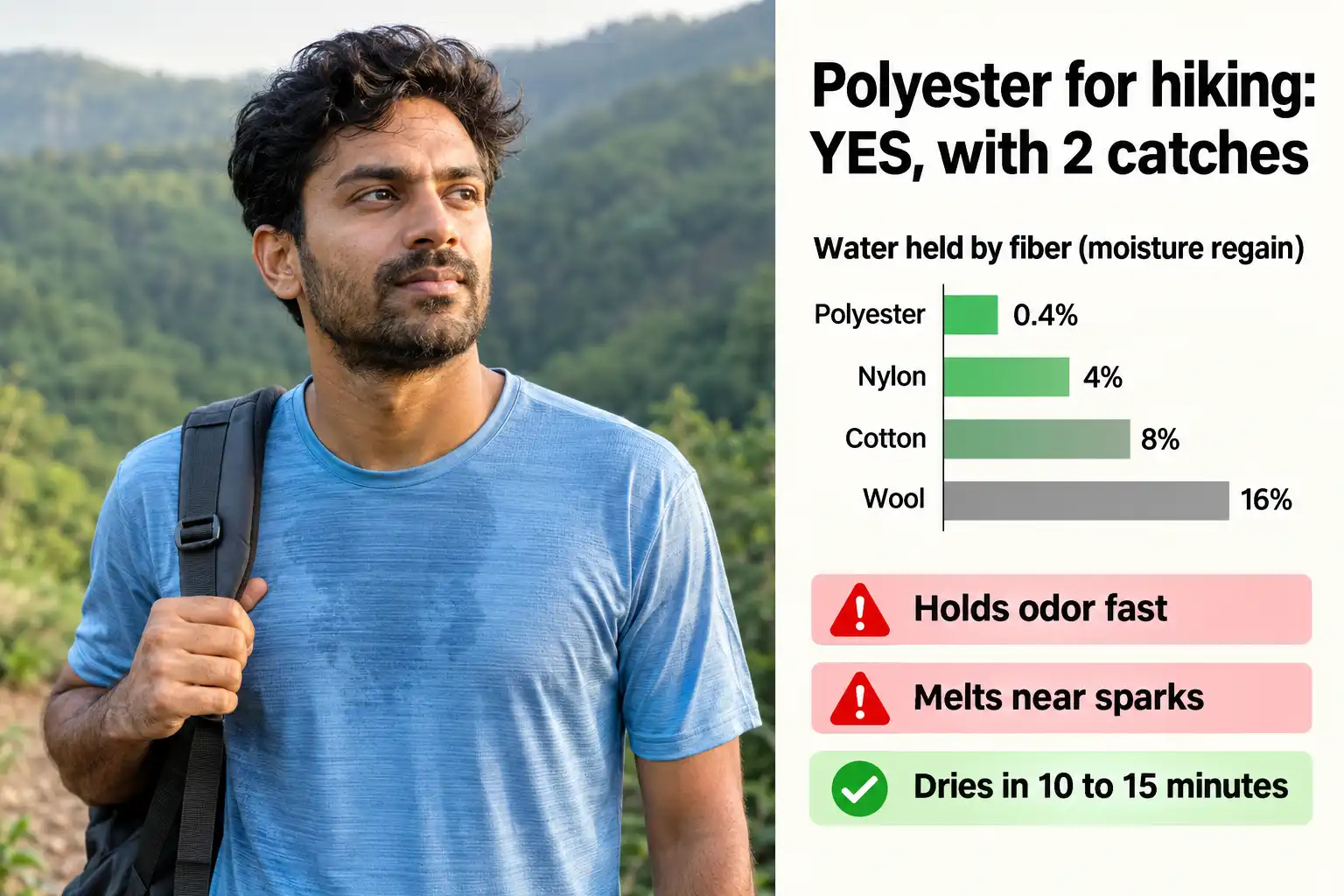
Yes, polyester is good for hiking. It holds almost no water, dries faster than cotton or wool, blocks more sun, and costs far less than merino. However, it traps body odor within hours and melts near sparks. For most hikes, those two flaws stay manageable.
What makes polyester work on the trail?
Polyester barely absorbs water, and that single property drives nearly every advantage it has. Textile engineers call this moisture regain, meaning the water a fiber holds at normal room conditions. Polyester sits at roughly 0.4%.
| Fiber | Moisture regain |
|---|---|
| Polyester | 0.4% |
| Nylon | 4% |
| Cotton | 8% |
| Wool | 16% |
Because the fiber stays dry inside, sweat has nowhere to soak in. Instead, it moves along the narrow gaps between fibers, spreads across the surface, and evaporates. That process is wicking, and it comes from fabric construction rather than the fiber pulling water in.
So your shirt stays light when you sweat hard. A cotton shirt of the same weight gains water, sags, and then keeps chilling your skin for hours. On a windy ridge that difference gets serious.
Polyester also holds its shape. It resists shrinking and stretching, takes dye well, and shrugs off UV better than nylon does. Add the low price, and you get a fabric that works for beginners who cannot spend much on clothing yet.
How fast does polyester dry?
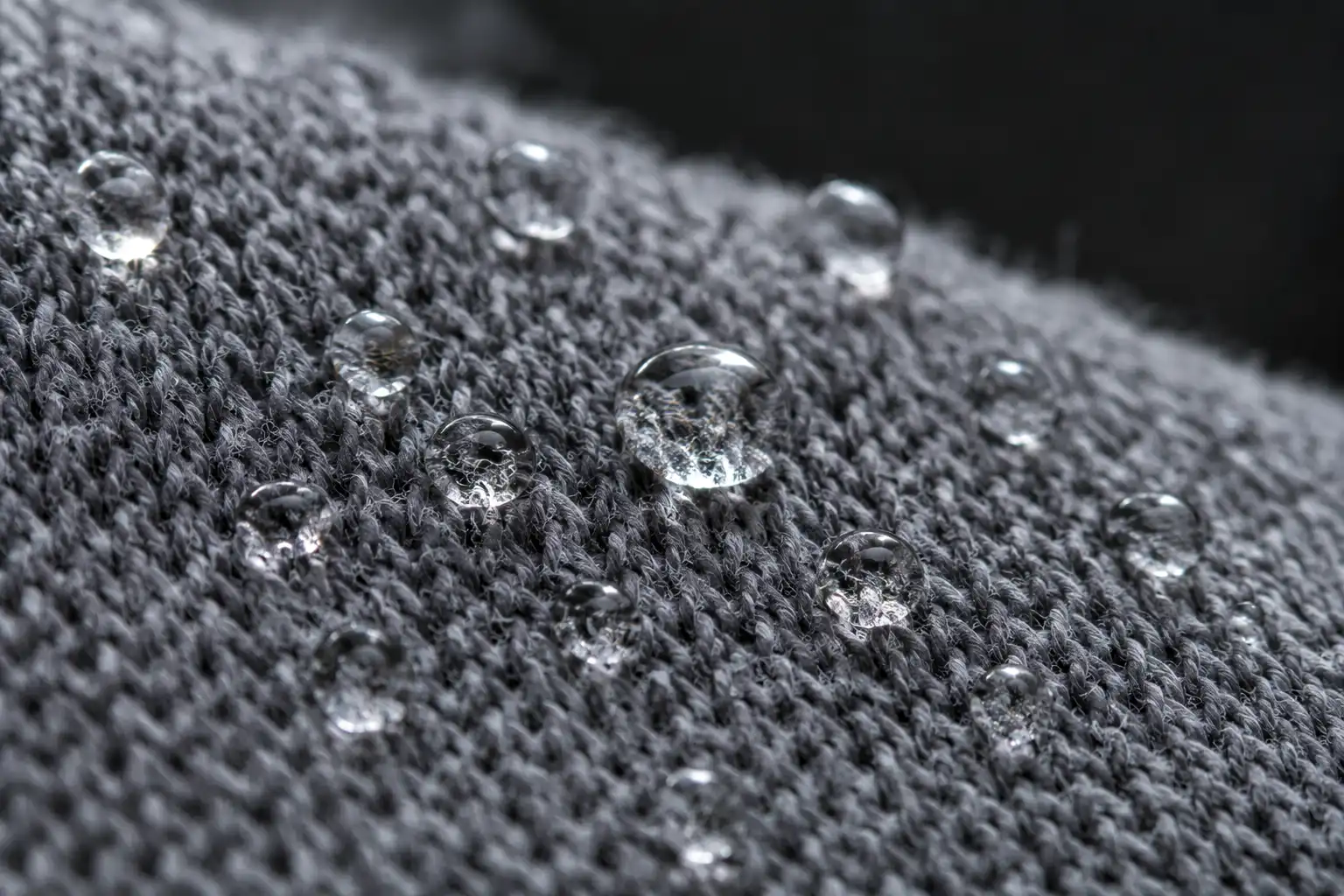
Polyester dries faster than any common hiking fabric, often in 10 to 15 minutes for a thin shirt in moving air. Nylon usually needs longer because it absorbs about ten times more water. Cotton can stay damp for hours.
That speed changes how you pack. Two polyester shirts cover a week, since you can rinse one in the evening and wear it dry by breakfast. Meanwhile a cotton spare just adds weight.
Fast drying also helps when rain catches you mid-climb. Once the shower passes, the fabric sheds water quickly instead of holding a cold layer against your ribs. I still carry a shell, though, because no shirt replaces a barrier when hiking in rain without overheating becomes the real problem.
At camp, hang polyester where air moves rather than near the fire. A breeze does more than heat does, and the same principle applies to drying wet gear fast at a campsite.
Does polyester protect you from the sun?
Yes, considerably better than cotton. Polyester molecules contain benzene rings that absorb UVB light, so the protection comes from the fiber itself and never washes out. A plain white cotton t-shirt rates only about UPF 5 to 8, which lets a fifth of UV through.
Wetness matters here too. When cotton soaks, water fills the air gaps and more UV passes, so a wet cotton tee protects even less. Polyester repels water, therefore its structure barely shifts when damp and its rating holds up.
One caution: fiber alone does not guarantee coverage. Weave density, weight, and color all count, so a thin light polyester shirt can still burn you. Look for a tested UPF number on the label instead of assuming.
Where does polyester let you down?
It smells fast
Polyester holds body odor worse than cotton or wool. Researchers at Ghent University had 26 people wear cotton and synthetic shirts through a hard spin class, then incubated the shirts for 28 hours. An odor panel judged the polyester shirts more intense and less pleasant. The team also found Micrococcus bacteria, a known odor producer, almost exclusively on the synthetic shirts.
On a three-day trek, that means a shirt turning unpleasant by the second afternoon. Airing it out at lunch helps a bit. Rinsing it each evening helps far more, because polyester dries overnight without trouble.
It melts near fire
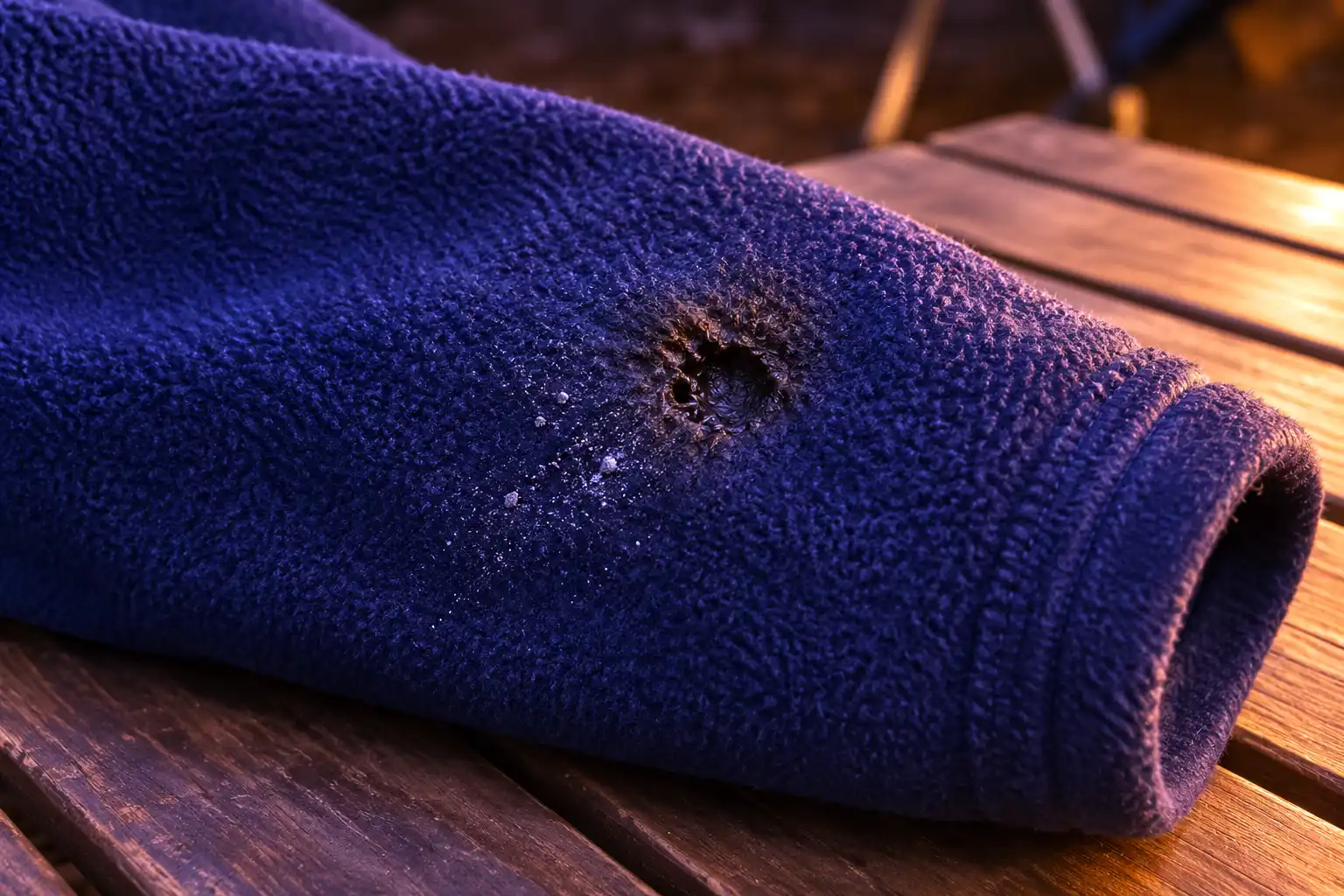
Polyester melts at roughly 480°F (250°C) and drips while it melts. One ember from a campfire burns a hole through fleece before you can flick it away. Molten fiber also sticks to skin, so burns run deeper than with cotton, which chars and falls off. I sit upwind of the flames for that reason and stay careful about keeping heat under control while cooking on a campfire.
It can feel clammy in humid heat
Polyester stores no moisture inside the fiber, so when humidity climbs the sweat has nowhere to evaporate. Then the fabric sticks to damp skin and feels sticky rather than cool. Wool copes better since it absorbs vapor internally.
During monsoon around Kaptai, I switch to a loose thin polyester shirt with a bit of mesh instead of a snug one. Ventilation beats fiber choice in that weather, and the rest of hiking safely when the heat spikes matters more than the label on your collar.
It sheds microplastics
Every wash releases tiny plastic fibers. A UC Santa Barbara study funded by Patagonia found synthetic fleece jackets shedding roughly 1.7 grams of microfibers per wash. Top-loading machines shed over five times more than front-loaders, and aging jackets shed nearly twice as much as new ones. Cotton and wool shed fibers too, though those break down in water. Washing less often, using a front-loader, and buying a filter bag all reduce the load.
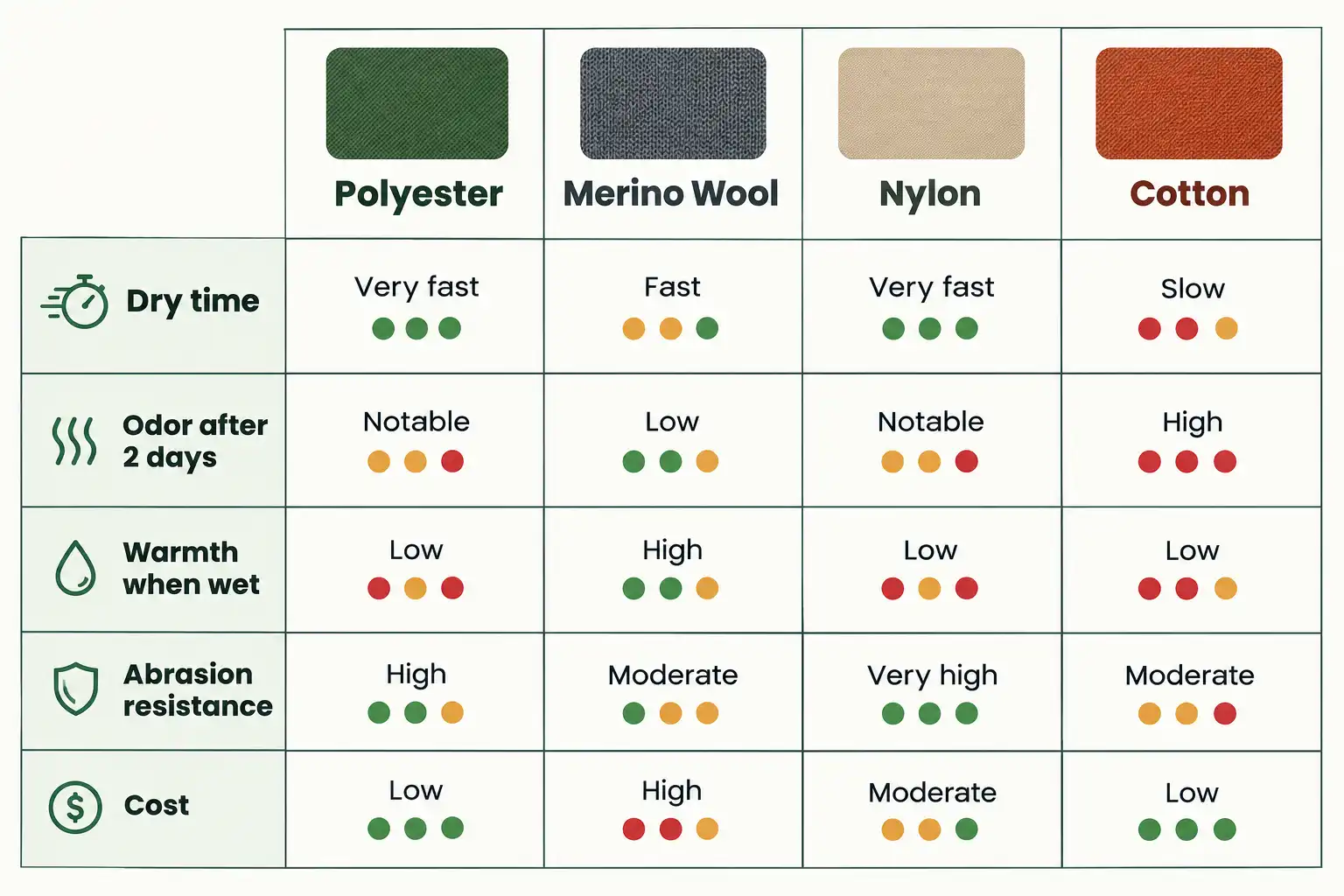
Polyester vs merino wool for hiking
Polyester wins on price, dry time, and toughness. Merino wins on odor control, comfort against skin, and warmth once damp.
| Factor | Polyester | Merino wool |
|---|---|---|
| Dry time | Fastest | Slower |
| Odor after 2 days | Strong | Barely any |
| Warmth when wet | Poor | Still insulates |
| Durability | High | Wears through sooner |
| Price | Low | High |
Wool holds warmth when wet because its crimped fibers keep air pockets even after soaking. Polyester loses most of that once the fabric soaks through, so a wet synthetic base layer chills you until it dries.
My rule is simple. Hot, hard, sweaty days call for polyester. On cold trips, long treks, and any hike where washing is not possible, merino goes on first. Blends around 50/50 give you both, and they hold up better than pure wool while smelling far better than pure polyester.
Warmth also depends on what goes over the base layer, which is why layering for cold wind on trail deserves more thought than the fiber itself.
Polyester vs nylon for hiking
Nylon is stronger and more abrasion resistant, while polyester dries faster and resists sun damage better. That split explains what brands use where.
Nylon tests higher on abrasion cycles and tensile strength, so it goes into hiking pants, pack fabric, and shell faces that scrape rock and brush. Polyester absorbs about ten times less water, therefore it goes into shirts, base layers, and fleece where drying speed rules. It also keeps more strength after long UV exposure, whereas nylon weakens and fades sooner in strong sun.
For a shirt, choose polyester. Pants that meet bamboo, thorns, and granite do better in nylon with a little elastane.
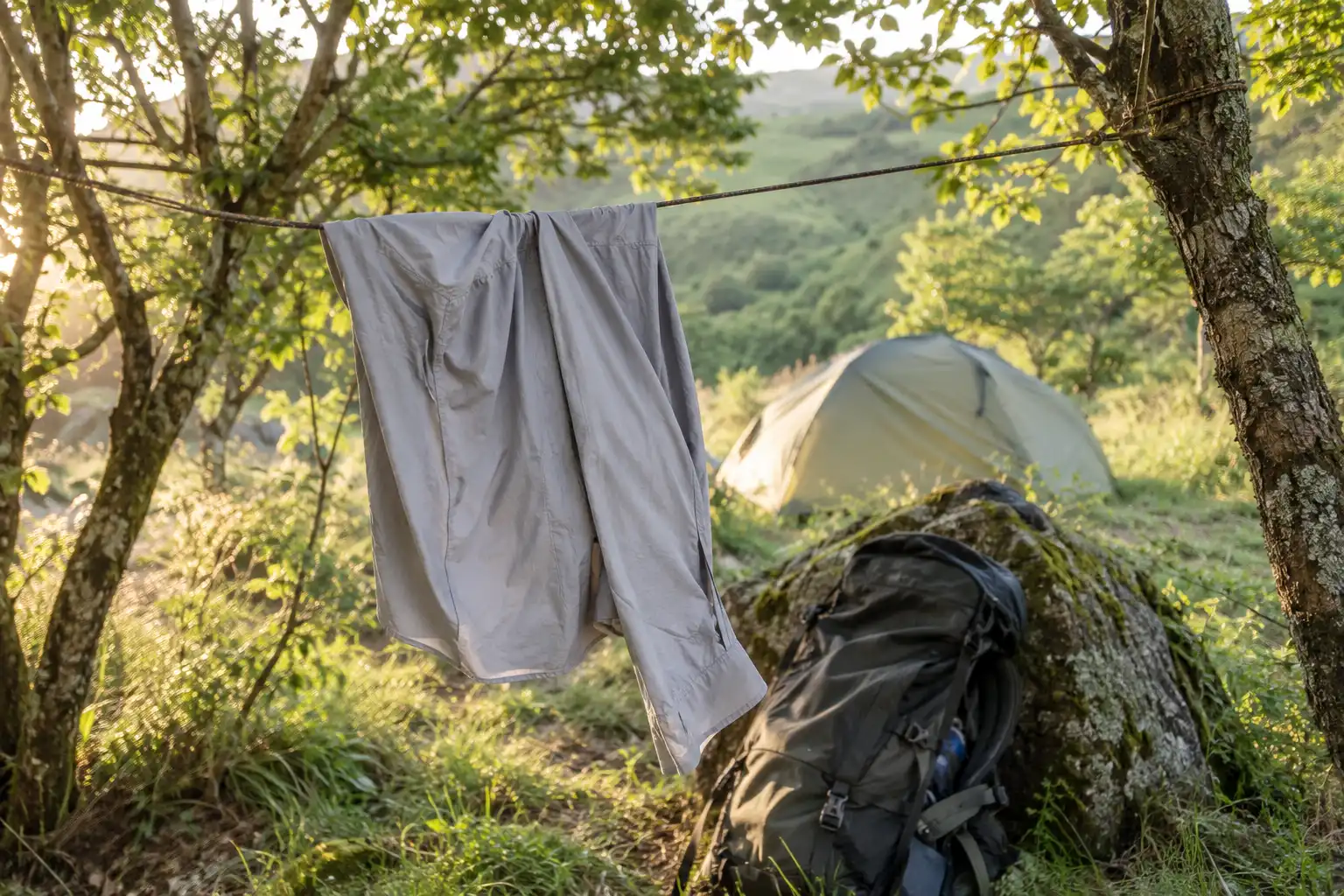
Is polyester better than cotton for hiking?
Yes, in nearly every situation. Cotton absorbs roughly twenty times more water than polyester, dries slowly, and pulls heat away as that water evaporates. Cold and wet cotton has caused plenty of hypothermia cases on easy trails.
Cotton does have two narrow uses. In dry desert heat, a damp cotton shirt cools you on purpose. Around camp on a warm evening, cotton feels pleasant and never melts near sparks. Otherwise, keep it out of your hiking kit, especially in the mountains.
Which hiking clothes should be polyester?
Base layers, sun shirts, and fleece mid layers are where polyester performs best. Those pieces sit close to the skin, get soaked with sweat, and need to dry fast.
- Sun shirts and t-shirts: polyester, ideally with a tested UPF rating.
- Base layers: polyester for high output, merino or a blend for cold and long trips.
- Fleece mid layers: polyester, since nothing matches it for warmth per dollar.
- Synthetic insulation: polyester fill keeps some warmth when damp, unlike down.
- Pants: nylon usually wins, though polyester blends work fine on maintained trails.
- Socks: avoid 100% polyester. Merino blends with nylon and a little elastane manage moisture and friction better, which ties directly into whether hiking socks really matter for blister prevention.
- Underwear: polyester or nylon blends, never cotton.
What to check on the label before buying
Read the fiber content and the fabric weight first, because those two numbers predict how a garment behaves.
Look for 5 to 15% elastane if you want stretch. Check the gsm figure: around 100 to 150 gsm suits hot weather shirts, while 200 gsm and up belongs in cold weather base layers. A tested UPF 30 or UPF 50 number beats a vague sun protection claim.
Odor treatments such as Polygiene or HeiQ help, though they fade over years of washing. Recycled polyester performs about the same as virgin polyester, so pick it when the price matches. Finally, check the seams. Flat seams under pack straps prevent more misery than any fabric feature.
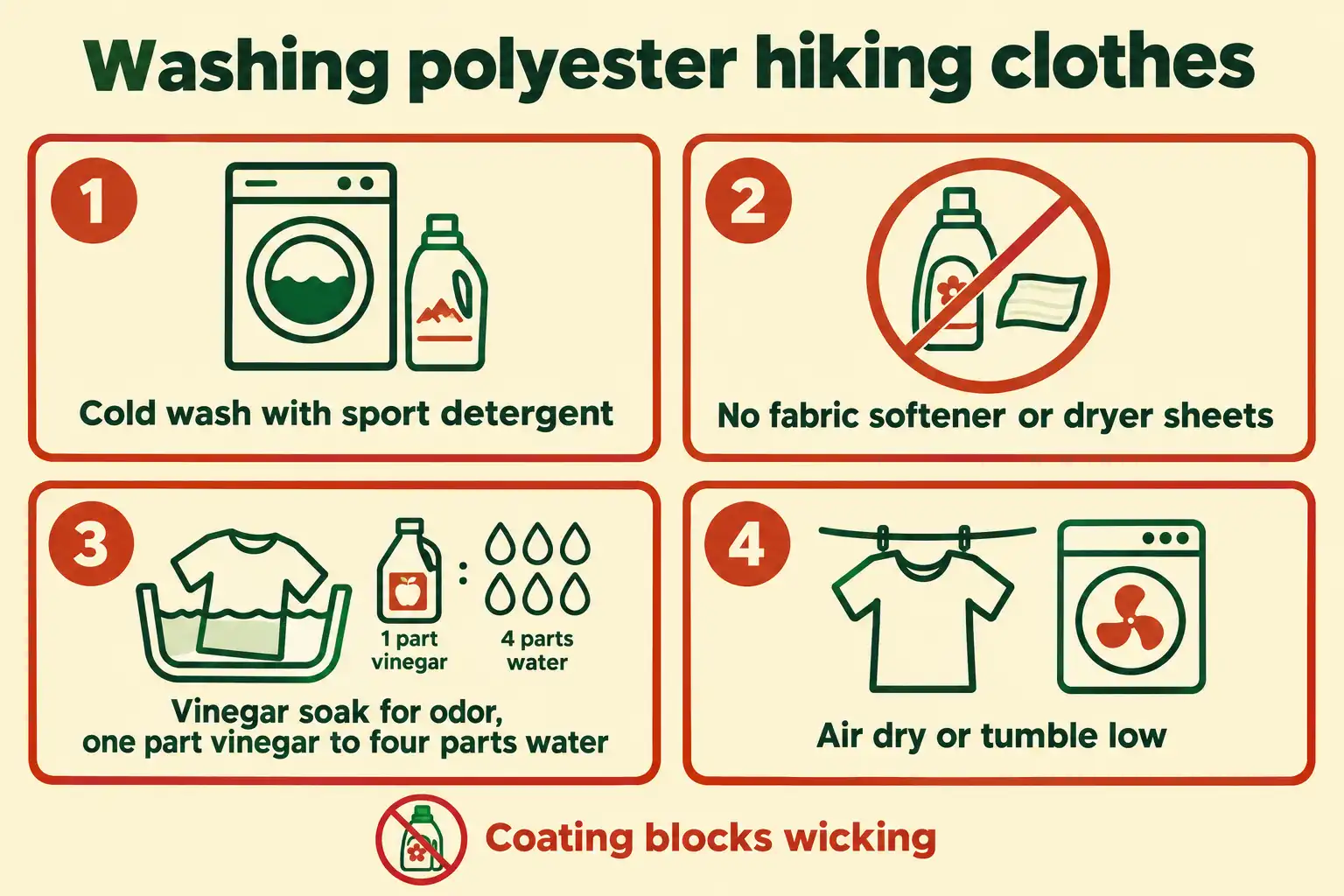
How to wash polyester hiking clothes
Wash cold, skip the fabric softener, and dry on low or hang it up. That routine keeps wicking intact for years.
Fabric softener and dryer sheets leave a waxy coating that blocks the capillary channels moving sweat through the fabric. Once clogged, the shirt stops wicking and starts holding smell instead. Use a sport detergent, or a plain one without softeners built in.
Turn garments inside out so the sweat side faces the water. For stubborn odor, soak the piece in a mix of one part white vinegar to four parts cold water for 30 minutes before washing. High dryer heat can distort polyester fibers, so tumble low or air dry.
FAQs on Polyester for Hiking

Is 100% polyester good for hiking?
Does polyester keep you warm when wet?
Can you wear polyester hiking in winter?
Does polyester cause chafing?
Final thoughts
Polyester earns its place in a hiking kit. It holds nearly no water, dries in minutes, blocks UV better than cotton, and costs little, which makes it the sensible default for shirts, base layers, and fleece. Accept the two real weaknesses. It smells by day two, so rinse it often, and it melts, so keep it away from embers. Pick merino for long cold trips, nylon for pants that take abuse, and polyester for everything sweaty in between.