What to Bring on a Day Hike: The Complete Packing List

Day hiking needs far less gear than most people think. Still, a missing layer or an empty bottle turns a good morning into a long walk back. So here is what to bring on a day hike, how much water and food to plan, and what changes with weather.
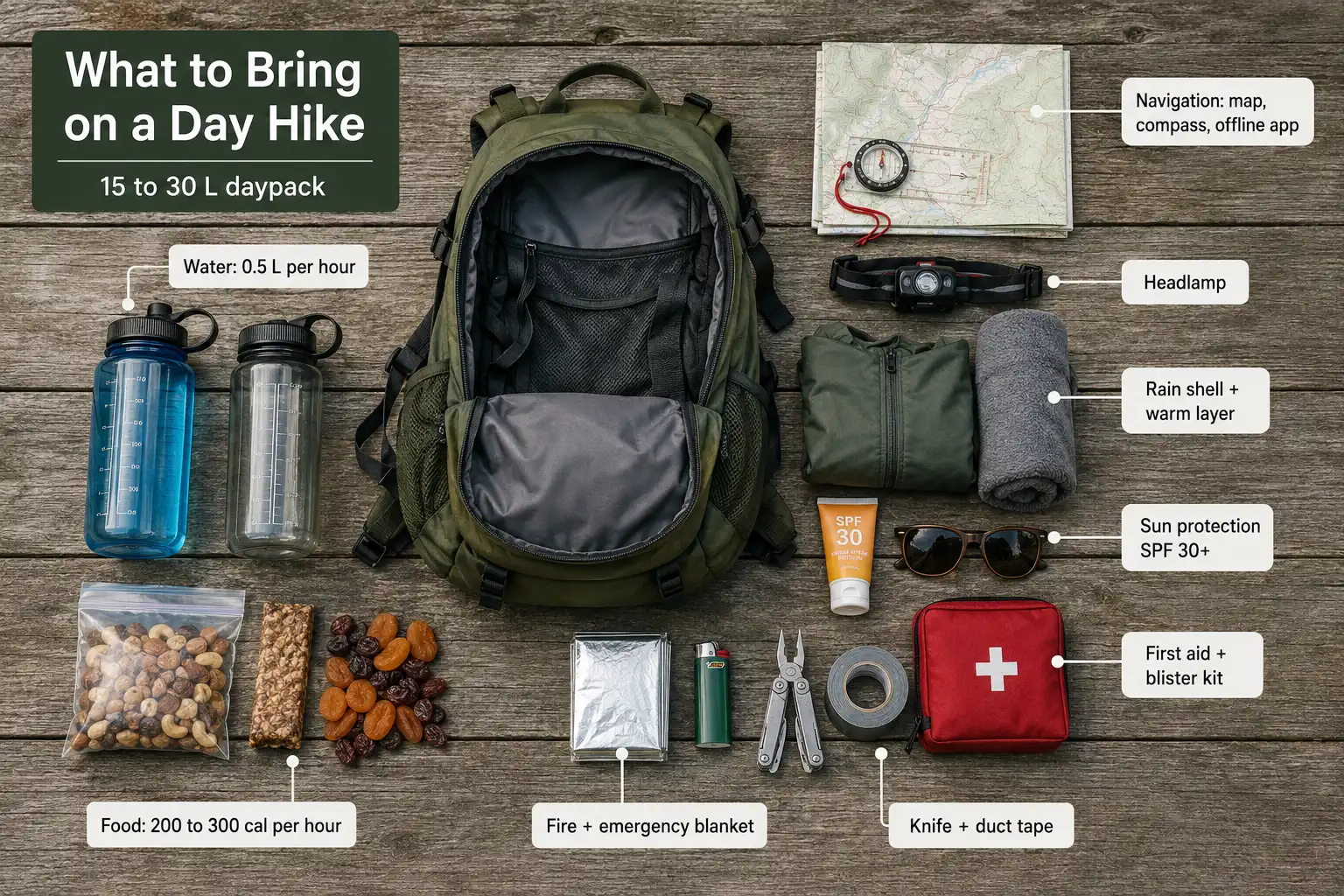
Carry the ten essentials, about half a liter of water per hour, 200 to 300 calories of food per hour, one warm layer, a rain shell, and a headlamp. Pack it in a 15 to 30 liter daypack. After that, adjust for heat, cold, and how far the trail sits from help.
The quick day hike packing list
Here is the whole kit in one place, split into what you carry, what you wear, and what you add for conditions.
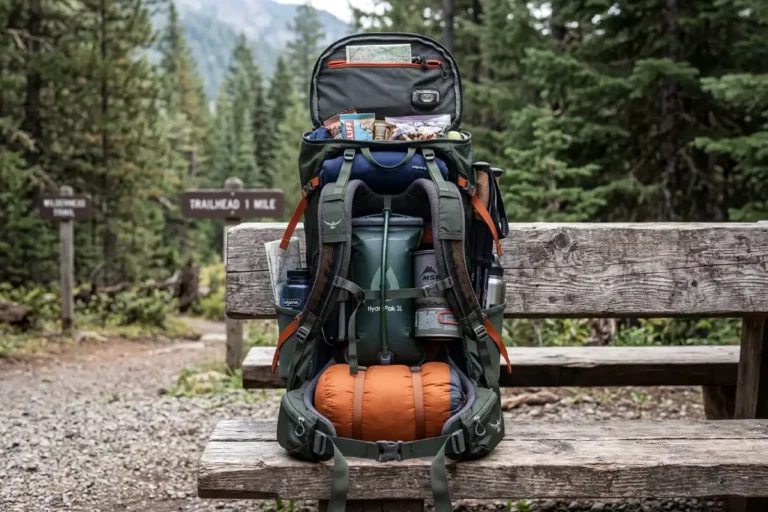
Always in the pack:
- Water (0.5 liter per hour, plus a spare half liter)
- Food and snacks (200 to 300 calories per hour)
- Map and compass, plus a downloaded offline map on your phone
- Headlamp with fresh batteries
- Sunscreen SPF 30 or higher, sunglasses, lip balm with SPF
- Small first aid kit with blister supplies
- Insulating layer (fleece or light puffy)
- Rain shell
- Knife or multitool, plus a few feet of duct tape
- Lighter and a fire starter
- Emergency blanket or bivy
- Phone, power bank, ID, cash, permit
- Trash bag for your wrappers
- Toilet paper, hand sanitizer, and a zip bag to pack it out
Worn or carried in hand:
- Trail shoes or hiking boots, already broken in
- Wool or synthetic socks
- Quick-drying shirt and pants or shorts
- Sun hat or cap
- Watch
- Trekking poles, if you use them
Added by conditions:
- Extra water and electrolytes in heat
- Warm hat and gloves above treeline or in shoulder season
- Bug repellent, gaiters, microspikes, or a water filter
- Satellite messenger where there is no cell coverage
Learn more: What to Wear Hiking in Hot Weather to Stay Cool and Avoid Sunburn
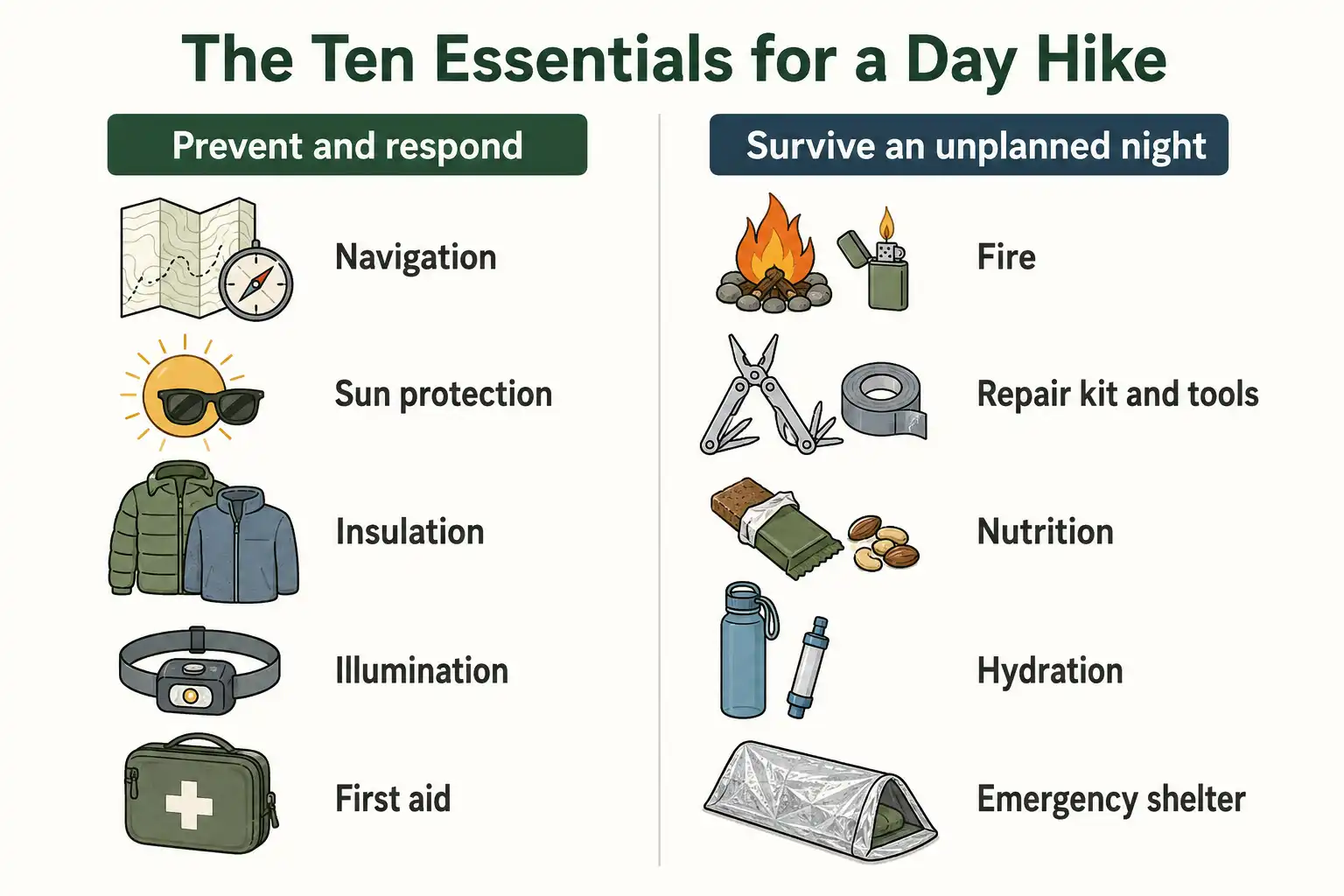
The first five essentials, and what they do
The first five essentials help you avoid trouble and handle it early. Every major outdoor group organizes them as systems rather than fixed products, so you scale each one to the trip. The National Park Service and The Mountaineers both use this framework, and it holds up well on a single-day trail.
Navigation. Carry a paper map of the area and a simple compass. Also download the route offline in a hiking app before you leave the road, because coverage disappears fast in valleys. Batteries die and screens crack, so the paper backup earns its weight.
Sun protection. Pack broad-spectrum sunscreen at SPF 30 or higher, sunglasses, and a hat. Dermatologists recommend reapplying every two hours outdoors, and more often once you start sweating hard. Sun shirts with long sleeves cut how much you have to reapply.
Insulation. Bring one warm layer and one rain shell, even in summer. Temperatures drop as you climb, and a soaked shirt at a windy summit chills you quickly. My rule is simple: pack for the coldest, wettest hour of the day, not the average.
Illumination. A headlamp belongs in the pack on every hike, including short ones. Hikes run late, and phone flashlights drain the battery you may need for a call. Around 200 to 350 lumens handles most trail walking. Higher output drains batteries faster, so picking headlamp brightness depends on how long you expect to walk after dark.
First aid. Keep a small kit with adhesive bandages, gauze, tape, tweezers, painkillers, and any personal medication. Then add blister supplies, since blisters end more day hikes than anything else.
The second five essentials
The second five essentials exist for one reason: they keep you safe if you end up outside longer than planned. Most days you will not touch them. On the day you need them, nothing else substitutes.
Fire. Carry a lighter plus a backup, and add a fire starter such as a wax-soaked cotton pad. Wet wood will not light from a spark alone.
Repair kit and tools. A small knife or multitool handles most gear failures. In addition, wrap a few feet of duct tape around a trekking pole or a water bottle. Tape has saved a torn shoe, a bent pole tip, and a leaking bladder on my trips.
Nutrition. Pack the food you plan to eat, then add one extra bar or packet you will not touch unless something goes wrong. Choose salty, easy snacks that need no cooking.
Hydration. Carry your water plus a way to treat more. On short, well-known trails you can skip treatment. However, on anything remote, a filter or a few purification tablets weigh almost nothing and remove the worst outcome. Filters, tablets, and boiling each have limits, so learn which method makes wild water safe before you rely on a stream.
Emergency shelter. An emergency blanket or a lightweight bivy sack costs little and weighs a few ounces. It traps heat if you get stuck after dark or have to wait with an injured partner. Each system also scales up or down, and what belongs in each essential system shifts with season, remoteness, and group size.
How much water should you bring on a day hike?
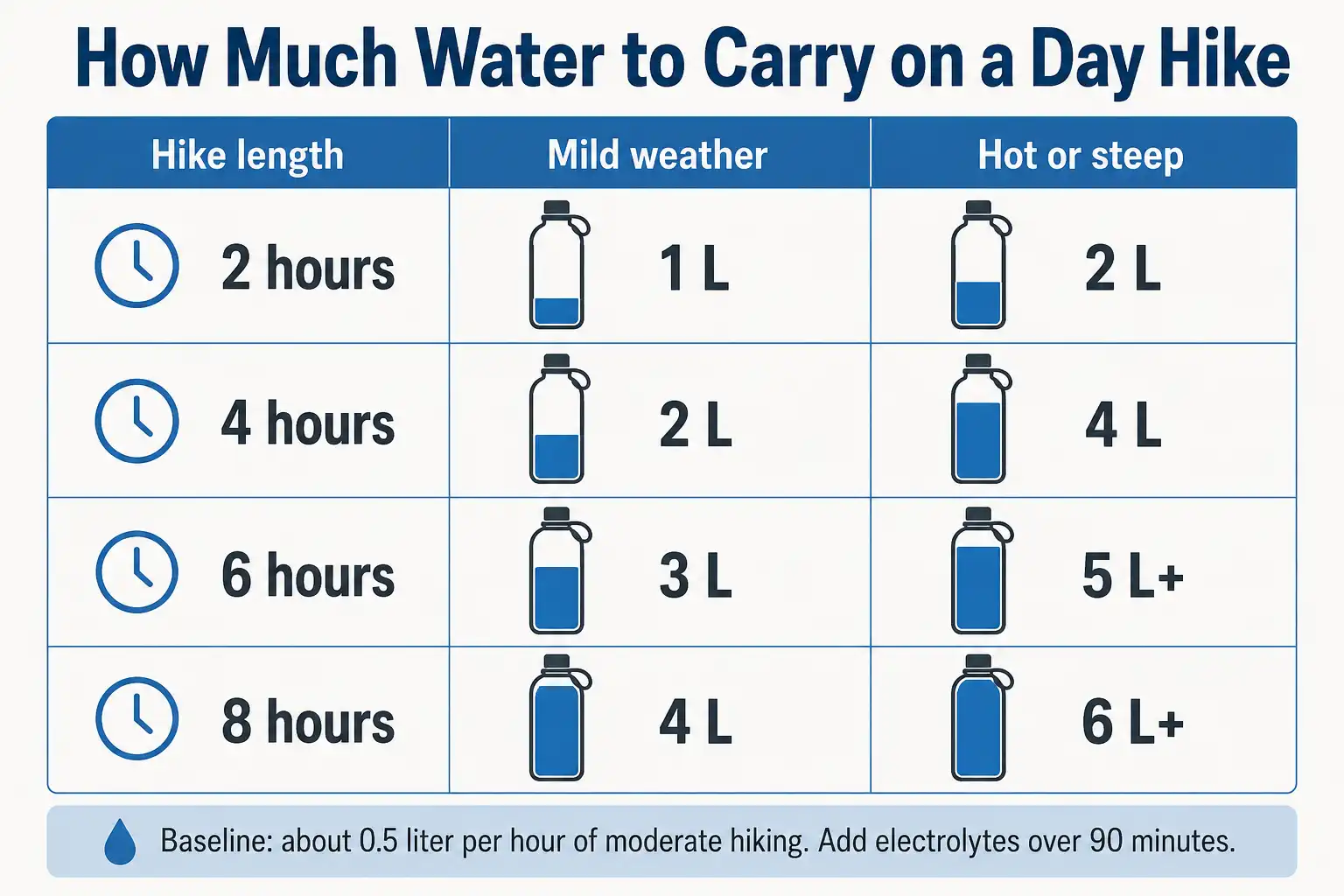
Plan on about half a liter of water per hour of moderate hiking in moderate temperatures. REI uses that figure as a baseline, and it matches what I drink on shaded hill trails at home. Therefore a four-hour hike works out to roughly two liters per person.
Heat and effort push that number up fast. On steep climbs in high heat, a liter per hour is realistic. Meanwhile cold weather blunts thirst, so you still need to sip on a deliberate schedule instead of waiting for the signal.
A few practical notes:
- One liter of water weighs about 2.2 pounds, so plan refills rather than hauling six liters
- Add a spare half liter beyond your estimate, because hikes run long
- Pair water with salty food or an electrolyte tab on hikes over 90 minutes, since plain water alone dilutes your sodium
- Check trail reports for reliable water sources before you count on them
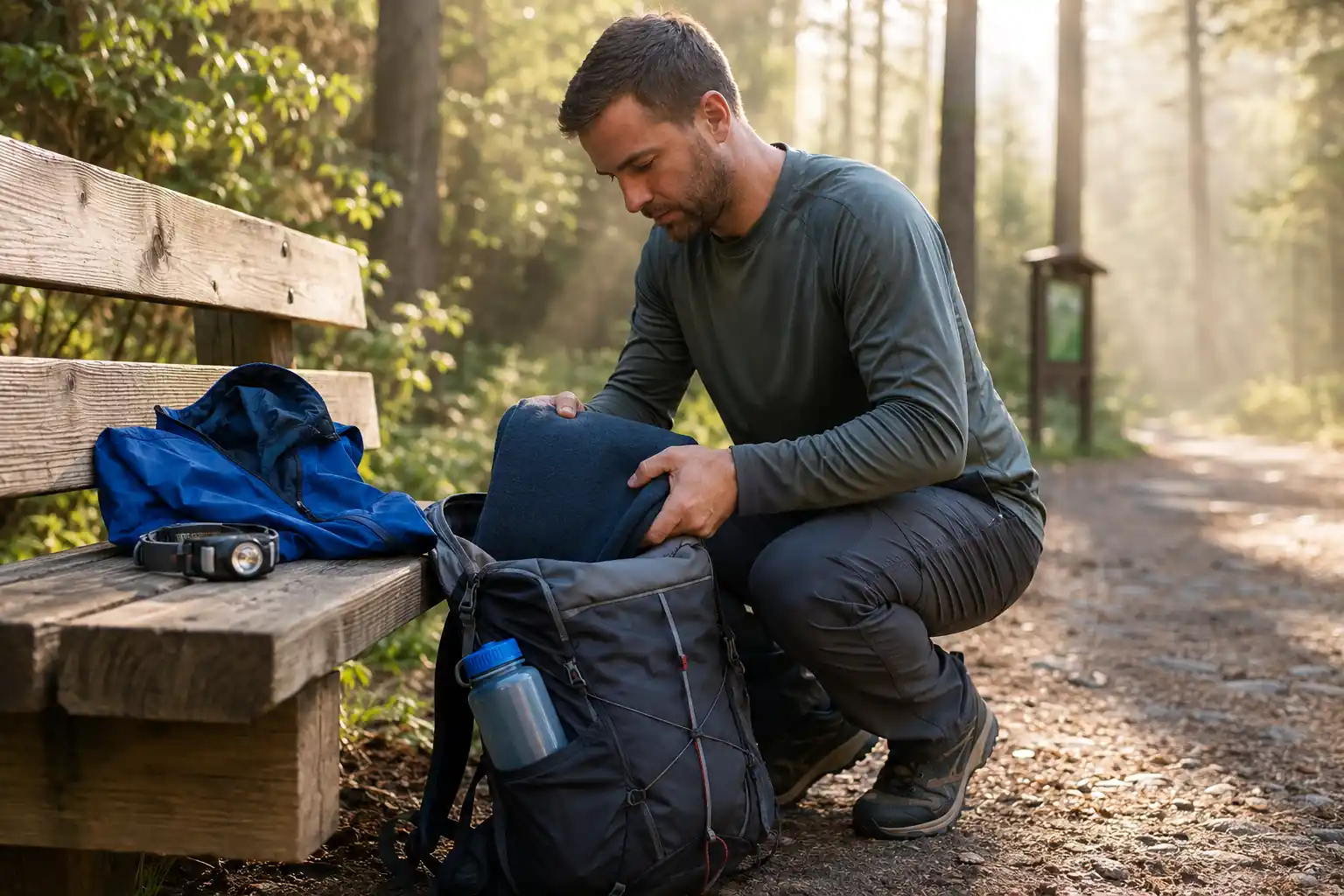
Keep at least one bottle where you can reach it without stopping. A side pocket or a hose beats a bottle buried under your rain jacket, and you will drink more often as a result.
What food should you pack for a day hike?
Aim for 200 to 300 calories per hour of hiking, in food you can eat while walking. That means bars, nuts, trail mix, dried fruit, jerky, crackers, cheese, and a sandwich for the halfway break. Salty snacks matter more than sweet ones once you start sweating.
Split your food into two piles. First, the food you plan to eat, portioned by hour. Second, one emergency item you leave sealed unless the day goes wrong.
Things I avoid on day hikes:
- Anything that melts into a mess in a warm pack
- Bulky containers that waste space
- New energy gels you have never tried, since your stomach may object
- Fresh food that spoils by afternoon in humid heat
Real meals beat gels for most people on a day hike. Timing counts as much as quantity, because eating well before a long trail day changes how you feel three hours in. Also pack out every wrapper, including the crumbs at the bottom of your pocket.
What should you wear on a day hike?
Wear quick-drying synthetic or wool layers, and skip cotton entirely. Cotton holds sweat, stays wet for hours, and pulls heat out of you when the wind picks up. Wool and synthetics dry while you walk.
Footwear matters most. Trail runners work well on maintained paths, while boots help on rocky ground or with a heavier load. Either way, break them in before a long day, and pair them with wool or synthetic socks. Blisters start from friction and moisture, so a good sock does as much work as the shoe. Beyond that, stopping blisters before they form comes down to lacing, sock changes, and taping hot spots early.
Build your clothing in three parts:
- Base: a quick-drying shirt, long sleeves if the sun is strong
- Mid: a fleece or light puffy for breaks and summits
- Shell: a rain jacket that also blocks wind
Add a sun hat for exposed trails. Meanwhile, a warm hat and thin gloves belong in the pack from fall through spring, since summits run colder and windier than the parking lot.
What size pack do you need for a day hike?
A 15 to 30 liter daypack fits almost every day hike. Short local trails need 15 to 20 liters. Longer or more remote days need closer to 30 liters, because extra water, layers, and food take real space.
Look for these features:
- A padded hip belt that moves weight onto your hips
- Side pockets you can reach while walking
- A rain cover, or a dry bag inside for your insulation layer
How you load the pack changes how it feels. Heavy items ride close to your spine near the middle of your back, while light bulky items go at the bottom. Get the loading order in a day pack right and 15 pounds stops pulling on your shoulders.
What you can leave at home
Skip full-size anything. Beginners often carry a heavy multitool, a big first aid case, and spare clothes they never wear. Three liters of water on a two-hour trail falls in the same category. All of it adds weight without adding safety.
Common items worth cutting:
- Camp chairs, cookware, and stoves on a normal day hike
- Full-size toiletries and towels
- Denim, cotton hoodies, and cotton socks
- Two knives when one small blade does the job
- Heavy tripods and camera bodies you will not use
On the other hand, never cut the headlamp, the rain shell, the first aid kit, or the emergency blanket to save a few ounces. Those four cover the situations that actually hurt people.
How the list changes with conditions
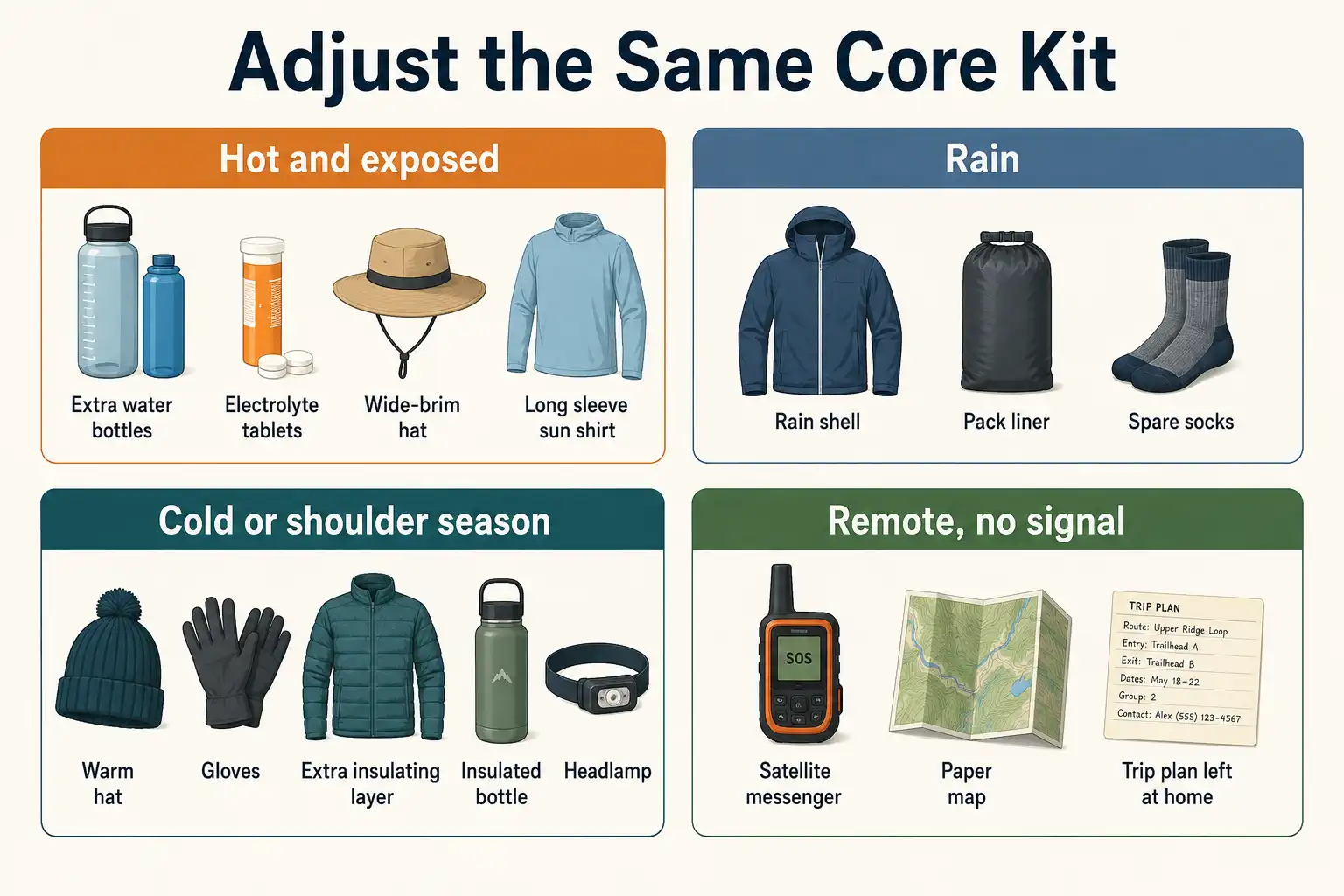
Adjust the same core list instead of building a new one for every trip.
Hot and exposed trails. Double your water, add electrolytes, and start early. Long sleeves and a wide-brim hat beat sunscreen alone for all-day coverage.
Rain. A proper shell plus a pack liner keeps your insulation dry. Also bring a spare pair of socks, because wet feet blister fast.
Cold or shoulder season. Add a warm hat, gloves, an extra insulating layer, and a hot drink in an insulated bottle. Days are shorter too, so the headlamp becomes likely rather than optional.
Remote trails with no signal. Carry a satellite messenger if you hike alone, and leave your route and return time with someone at home. That one habit costs nothing and shortens any search.
Bugs and vegetation. Repellent, a head net, and gaiters solve most of it. In leech and tick country, tuck your pants into your socks.
What I carry on a day hike at home
My kit in the Chittagong Hill Tracts looks slightly different, because heat and humidity drive everything here. I carry three liters instead of two on hill trails around Kaptai, since sweat losses climb quickly in this air. On top of that, an extra shirt rides in the pack for the trip home, along with oral saline sachets rather than fancy electrolyte tablets.
Rain shapes the rest. Trails near Bandarban turn slick within minutes, so I keep everything soft inside a dry bag and treat my rain shell as a daily item, not a summer extra. My headlamp stays clipped in the lid pocket year round, because dusk arrives faster in steep valleys than the sky suggests.
FAQs on Day Hike Packing List

Do I need all ten essentials on a short hike?
How heavy should a day hike pack be?
Can I just use my phone for navigation?
Should I bring trekking poles on a day hike?
Final thoughts
Day hiking rewards a small, well-chosen kit. Start from the ten essentials, add water and food by the hour, then adjust for weather and remoteness. Weigh your pack once, note what you never touched, and trim it next time. After a few hikes the list becomes automatic, and packing takes ten minutes instead of an hour. The gear that matters most stays boring. Dry layers, a working light, safe water, and enough food will get you back to the trailhead.