How Hard Is the Mount Kilimanjaro Hike? An Honest Breakdown

People call Kilimanjaro a walk-up mountain. That label misleads a lot of first-timers. This guide covers how hard the hike really is, where the difficulty sits, why roughly one in three climbers turns back, and what you can do to give yourself a much easier climb.
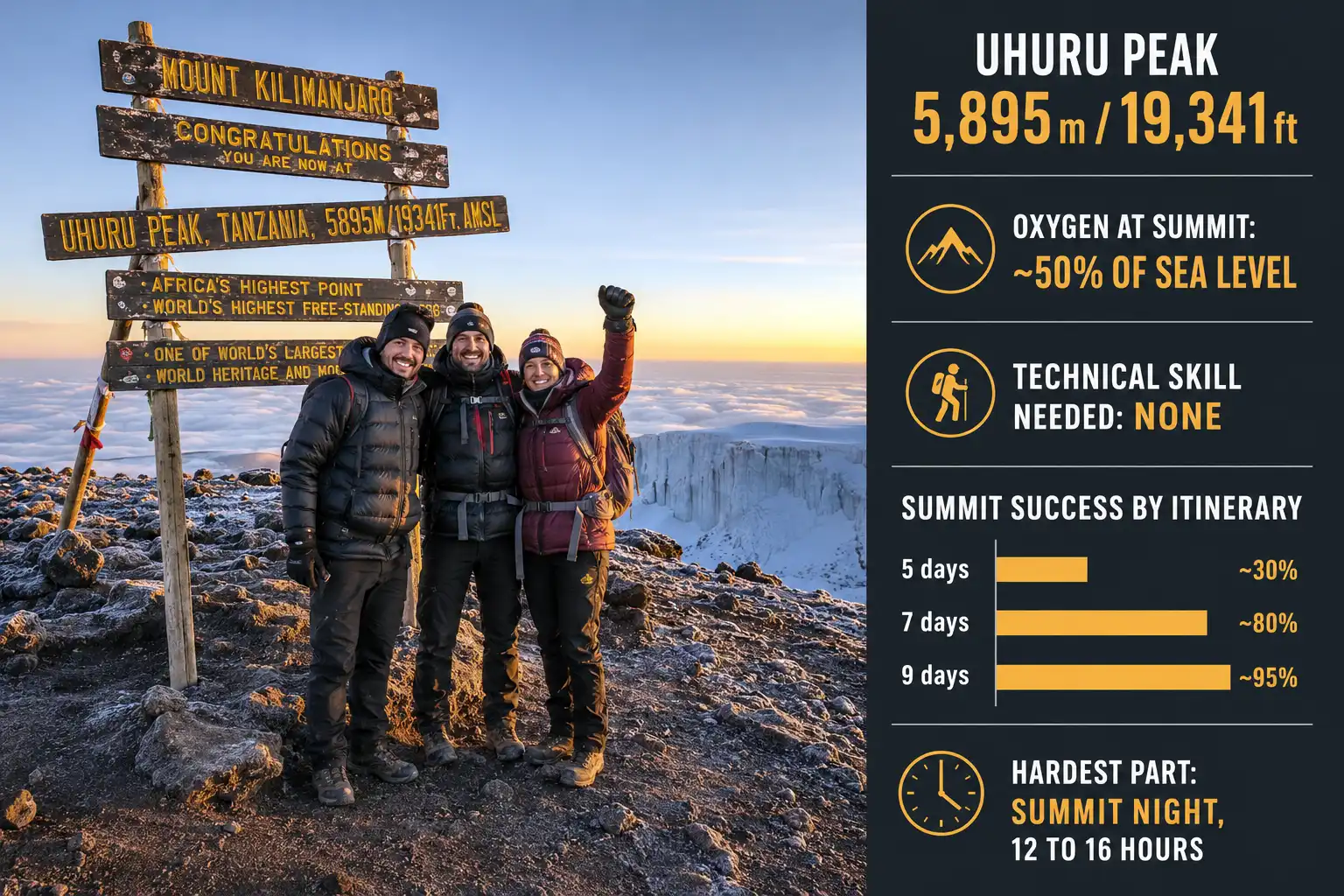
Kilimanjaro is a demanding multi-day trek at extreme altitude, but it is not a technical climb. You need no ropes, no ice axe, and no climbing skill. Around 65% of all climbers reach Uhuru Peak at 5,895 m (19,341 ft). On 8 and 9-day itineraries that figure rises above 85%, while some 5-day itineraries drop closer to 30%.
Here is how the difficulty breaks down:
- Technical difficulty: very low. Walking trails and one short scramble.
- Physical difficulty: moderate to high. Five to nine days of sustained walking.
- Altitude difficulty: very high. Half the oxygen of sea level at the top.
- Hardest single stretch: summit night, without question.
- Main reason people fail: altitude sickness, not fitness.
So the honest answer sits in the middle. Most reasonably fit adults can do it. Yet plenty of very fit people still fail, because lungs and legs are not what decide this mountain.
Read next: Is Hiking a Good Workout or Not
What makes the hike hard?
Four things account for almost all of the difficulty.
Thin air. Oxygen availability drops about 40% by 3,500 m and roughly 50% at the summit. Your body can adapt, though adaptation needs days, not hours.
Summit night. You start near midnight, climb 1,200 m or more in the dark, then descend over 2,500 m the same day.
Consecutive days. One hard hiking day is manageable for most people. Six or seven in a row, on broken sleep and a reduced appetite, wears you down in a different way.
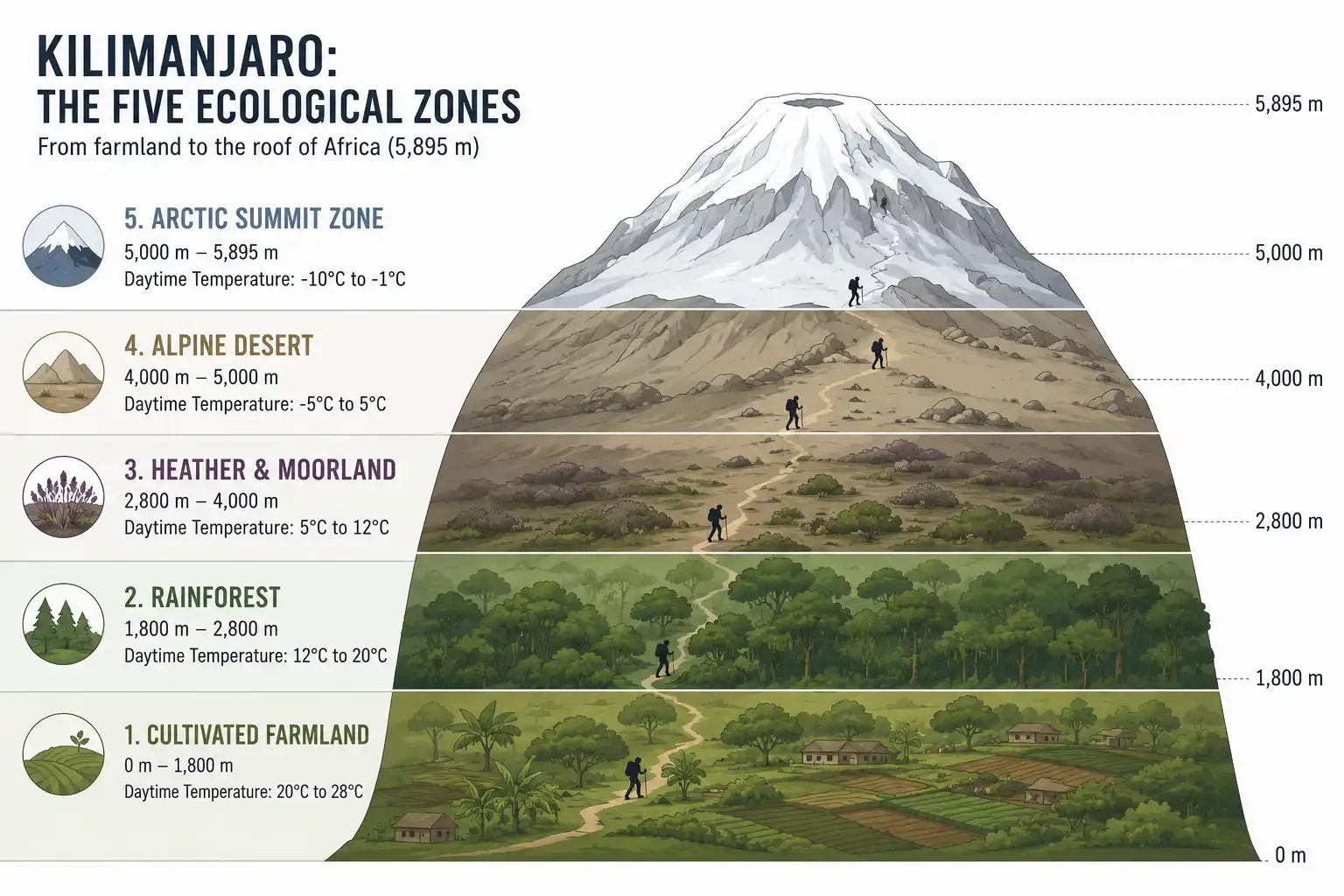
Cold. Summit temperatures usually sit between -10°C and -20°C (14°F to -4°F). Then wind chill pushes the effective temperature lower still.
What makes it easier than people expect
Several things work in your favor, and they matter as much as the hard parts.
Porters carry the group gear, so you walk with a daypack of about 5 to 8 kg holding water, layers, snacks, and a camera. Trails are wide, well used, and clearly marked. Guides set a deliberately slow pace, often reminding you to walk pole pole, which is Swahili for slowly. Cooks prepare hot meals at camp, so you never cook after a long day. On the Marangu route you sleep in huts with bunk beds instead of tents.
In short, the walking itself is easier than on many rugged mountain trails at home. Thin air is what raises the difficulty.
How hard is the altitude on Kilimanjaro?
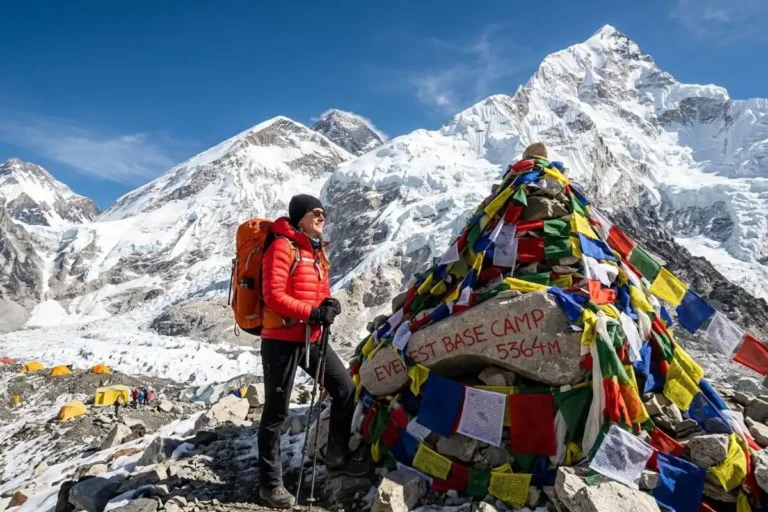
The altitude is the hardest part of the whole hike, and the numbers back that up. Uhuru Peak stands about 530 m higher than the elevation at Everest Base Camp, yet most Kilimanjaro itineraries reach the top in six or seven days instead of twelve. That compressed schedule is exactly why altitude sickness is so common here.
Published studies show how common. Research on 4 and 5-day Marangu ascents found acute mountain sickness in 75% to 77% of trekkers. A later study of a 6-day Rongai ascent found 52.6% affected, with 88% reaching the summit. The pattern is consistent: fewer days means more sickness and fewer summits.
Expect at least mild symptoms. Headache comes first for most people, followed by poor sleep, fatigue, loss of appetite, and nausea. Mild acute mountain sickness is uncomfortable but manageable, and it usually eases with rest, fluids, and a slow ascent.
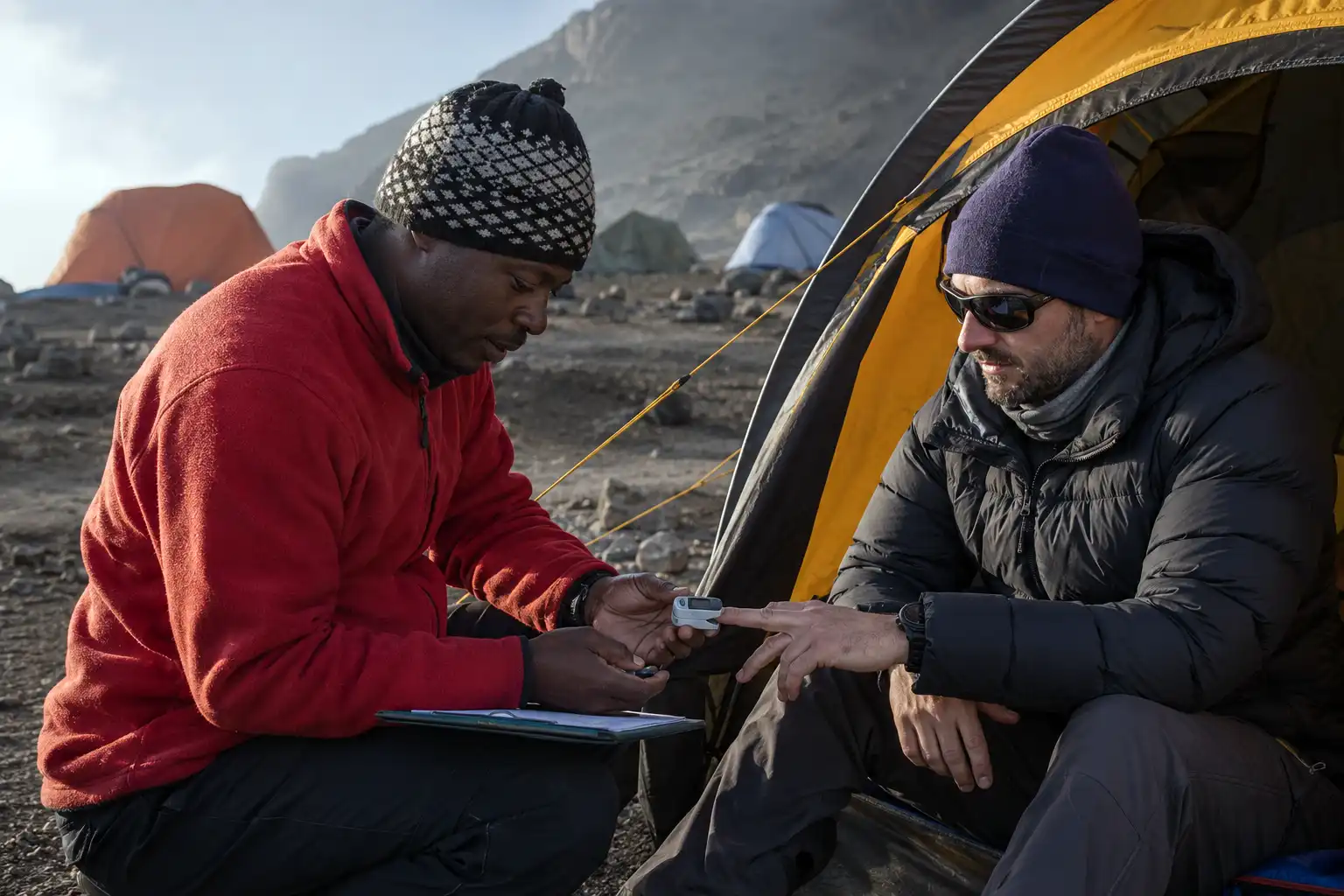
Two severe forms matter more. High altitude pulmonary edema puts fluid in the lungs, while high altitude cerebral edema causes brain swelling, confusion, and loss of balance. Both are rare, and both demand immediate descent. Good guides check oxygen saturation twice a day and watch for these signs, because early detection saves lives here.
How hard is summit night?
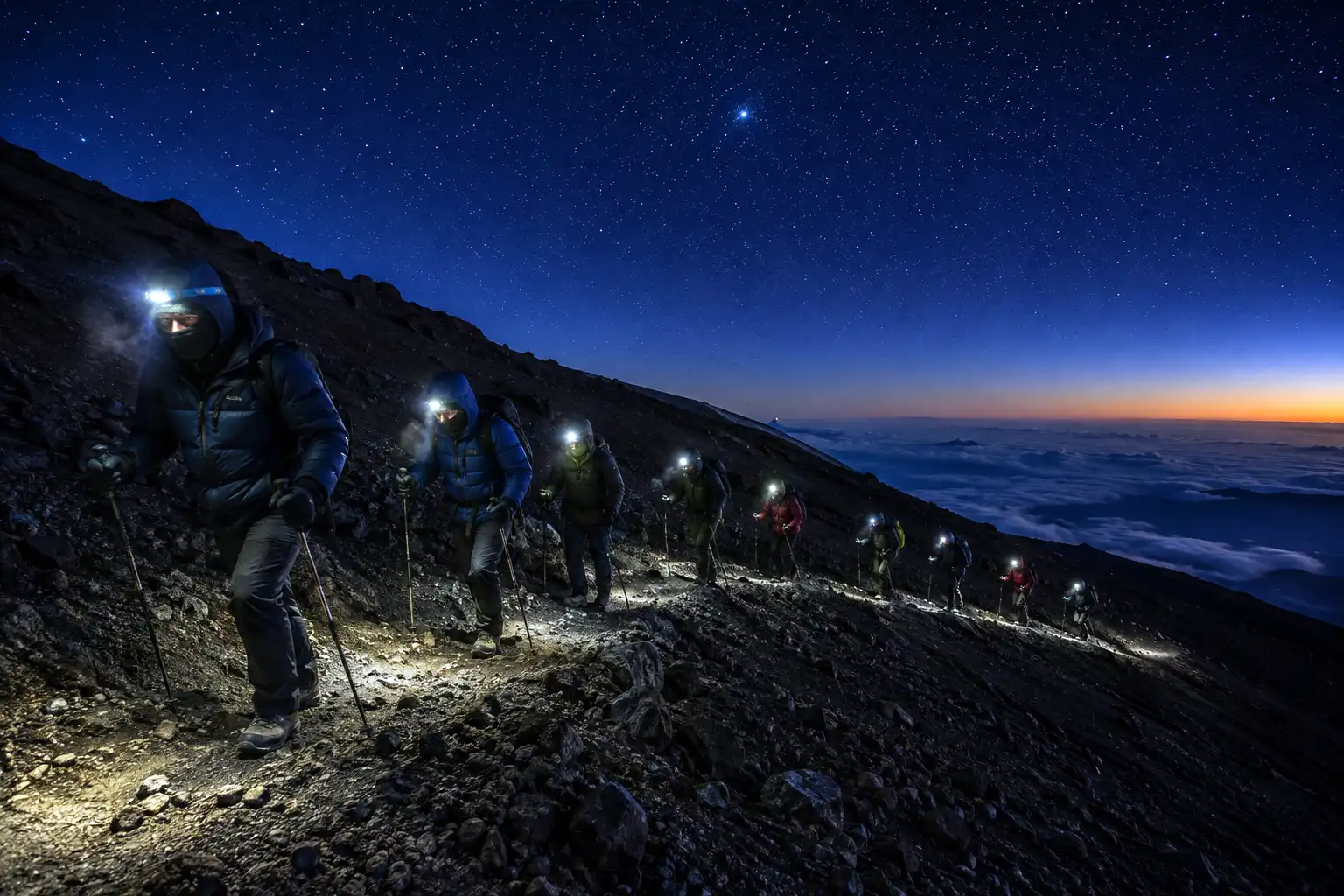
Summit night is the hardest single stretch of the climb for almost everyone. Your guide wakes you around 11 pm or midnight at Barafu Camp (4,673 m) or Kosovo Camp (4,900 m). After hot tea and biscuits, you set off by headlamp.
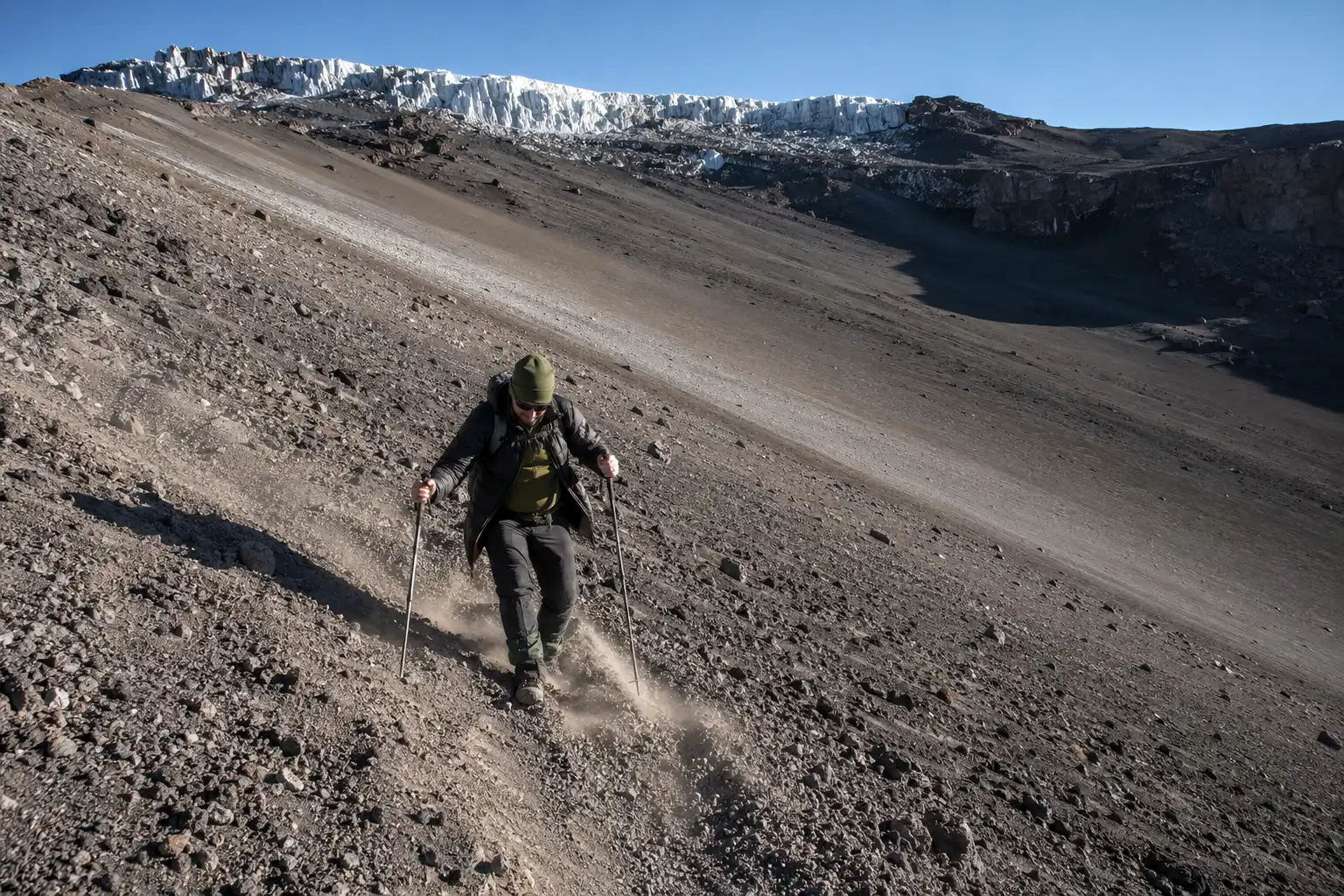
The climb covers roughly 5 km with 1,200 m to 1,300 m of gain, almost all of it on loose volcanic scree in switchbacks. Most groups take six to eight hours to reach the crater rim, arriving at Stella Point (5,756 m) or Gilman’s Point (5,681 m) near sunrise. From Stella Point, Uhuru Peak sits another 45 to 60 minutes along the rim. Climbers who top out at Gilman’s Point on the Marangu and Rongai routes need closer to two hours.
Then comes the part few people plan for. After summit photos, you descend to Barafu for lunch and keep going down to around 3,100 m. Total time on your feet often runs 12 to 16 hours.
Three things make this stretch brutal. Sleep deprivation hits first, since you have already slept badly for days. Cold follows, especially on hands and toes during the pre-dawn hours. Finally, the scree descent hammers your quads and knees, which is where poles take real pressure off your knees and save your legs for the walk out.
How hard are the days before summit night?
Most days before the summit push are moderate, not hard. Typical walking time runs four to seven hours, covering 5 km to 15 km with steady, gradual gradients. Nothing feels steep by mountaineering standards, so your legs generally cope fine.
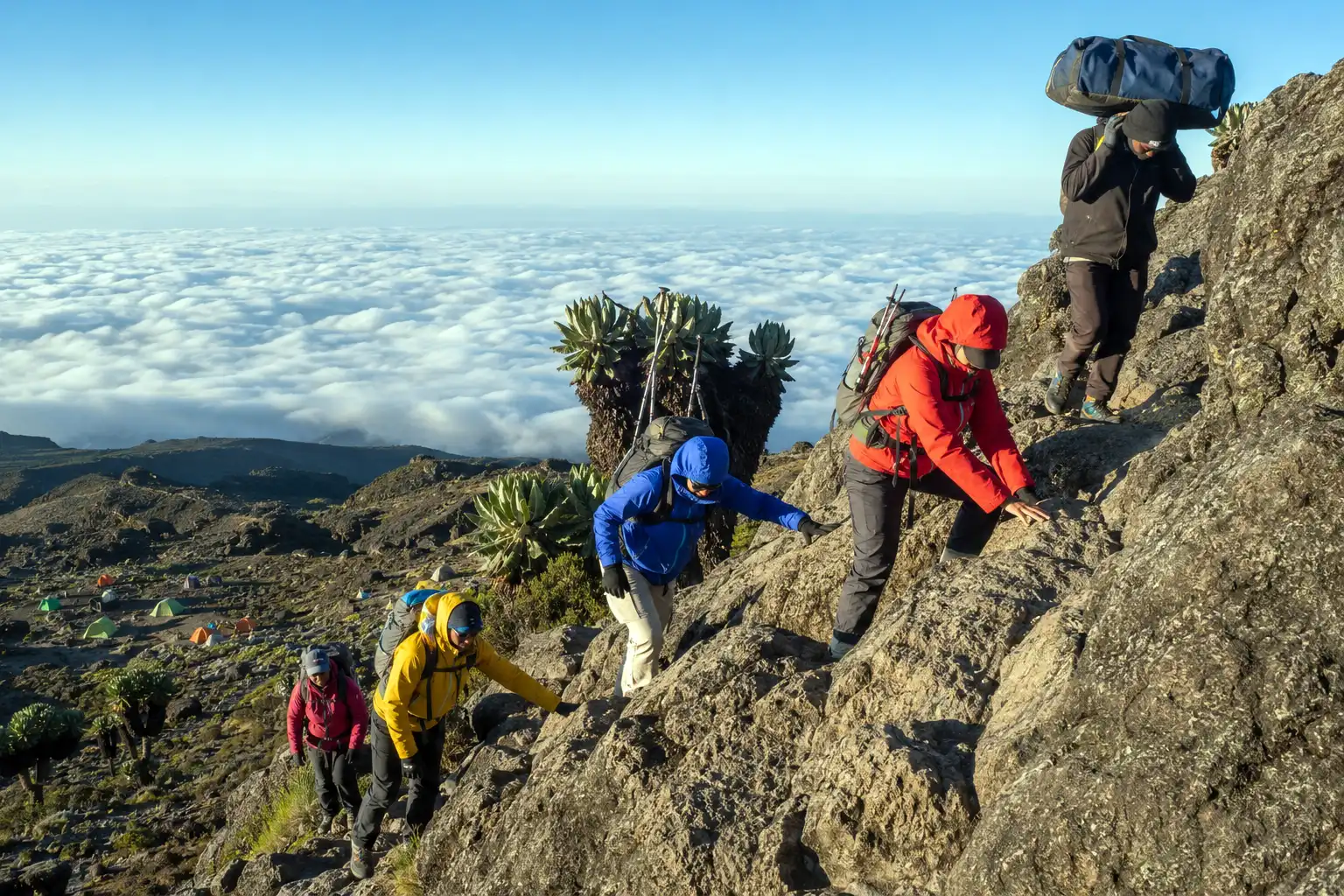
Two sections stand out on the southern routes. The Barranco Wall is a 257 m rock face that needs hands-on scrambling in a few spots. You use no ropes, though you should stow your poles and keep your hands free. Most groups clear it in 60 to 90 minutes, and many rate it the most enjoyable hour of the trek. After that, the Karanga Valley drops steeply and climbs straight back out, which tires legs more than the distance suggests.
The other challenge is mental. Walking slowly for hours, day after day, tests patience more than strength. Because pace control matters so much at altitude, the same habits that help with pacing yourself on a long hike apply directly here.
Which Kilimanjaro route is hardest?
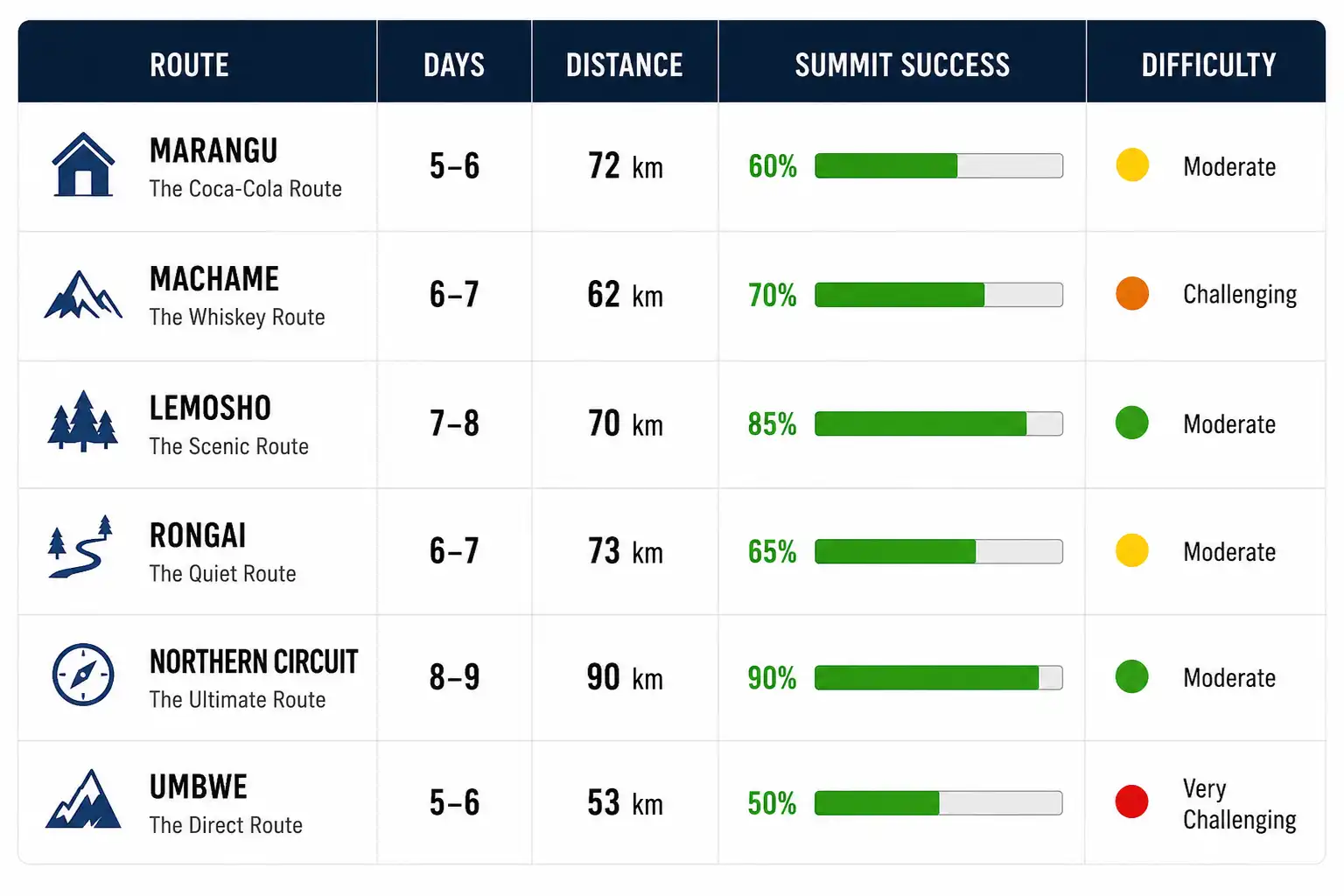
Umbwe is the hardest route, and Marangu on a 5-day schedule is the most likely to end in failure. Those two facts are separate, and understanding why matters.
| Route | Days | Distance | Summit success | Difficulty notes |
|---|---|---|---|---|
| Marangu | 5 to 6 | 64 to 72 km | 27% to 55% | Huts, fastest ascent, long rim walk from Gilman’s Point |
| Machame | 6 to 7 | 49 to 62 km | 65% to 85% | Steep start, Barranco Wall, busy in peak season |
| Lemosho | 7 to 8 | 66 to 70 km | 85% to 90% | Strong acclimatization profile, quieter early days |
| Rongai | 6 to 7 | 65 to 73 km | 65% to 80% | Gentlest gradient, drier, harder summit night |
| Northern Circuit | 8 to 9 | 66 to 98 km | 90% to 98% | Longest walking, easiest on the body, fewest crowds |
| Umbwe | 6 | 37 to 53 km | Low | Steepest and most direct, experienced climbers only |
Figures vary between operators, so treat these as ranges rather than fixed numbers.
Notice the pattern. Longer routes cover more ground yet produce far more summits, because each extra night above 3,000 m gives your body more time to adapt. Operators commonly report that a single added acclimatization day lifts success rates by a wide margin.
One route deserves a warning. The Western Breach carries genuine rockfall risk, so most reputable operators no longer sell it.
How does Kilimanjaro compare with other hikes?
Kilimanjaro sits between a hard multi-day trek and a high-altitude expedition. The walking is gentler than a rugged alpine scramble, but the altitude exposure is far more severe.
Compared with the Everest Base Camp trek, Kilimanjaro reaches higher yet takes about half the time, so each day asks more of your body. Set against a big single-day summit like Mount Whitney, it is far longer but also slower and less steep. Summit night alone gains more elevation than many people climb in a full weekend of hiking.
I have not climbed Kilimanjaro myself. My own high country is the Chittagong Hill Tracts, where our tallest summits sit near 1,000 m, so I know multi-day trekking well and altitude barely at all. What I have done is compare notes with climbers who summited and cross-check their accounts against the published research. Everyone said the same thing: the walking surprised them by being easy, and the altitude surprised them by being hard.
How fit do you need to be?
You need enough fitness to walk five to seven hours on consecutive days over hilly ground while carrying a light pack. That standard is achievable for most healthy adults with three to four months of preparation.
A sensible training block looks like this:
- Cardio, three times a week. Brisk walking, cycling, running, or stair work for 45 to 60 minutes.
- One long hill hike weekly. Build from three hours up to six or seven, carrying 6 to 8 kg.
- Back-to-back weekends. Hike hard on Saturday, then hike again Sunday on tired legs.
- Legs and core, twice a week. Squats, step-ups, lunges, and calf raises protect you on the descent.
- Stairs with a loaded pack. This mimics the scree climb better than flat cardio does.
Structured training for high altitude conditions helps, though remember that no training at sea level fully prepares your body for thin air. Fitness gets you up the trail comfortably. Acclimatization gets you to the summit.
Why do people fail on Kilimanjaro?
Most failures trace back to preventable choices rather than bad luck. Here are the common ones.
- Too few days. The single biggest factor by a wide margin.
- Climbing too fast. Strong hikers often outpace their own acclimatization.
- Dehydration. You need three to four liters daily, and altitude suppresses thirst.
- Under-eating. Appetite fades above 4,000 m, yet the body needs the calories.
- Ignoring early symptoms. Hiding a bad headache from your guide removes your best safety net.
- Budget operators. Rushed itineraries, weak safety kit, and inexperienced guides show up clearly in success rates.
- Cold gear failures. Thin gloves and a poor summit jacket end more attempts than people admit.
Roughly 1,000 climbers are evacuated from the mountain each year, so the risk is real even though most cases resolve with a descent.
How dangerous is Kilimanjaro?
The fatality rate is low, at roughly 0.03%. Between 30,000 and 50,000 people attempt the mountain annually, and reported deaths run between 3 and 10 per year. Everest, by comparison, sits in the range of 4% to 6%.
Severe altitude illness causes most deaths. After that come cardiac events in climbers with existing heart conditions. Falls account for a smaller share and cluster on the pre-dawn descent, when climbers are exhausted and hypoxic on loose ground. Hypothermia accounts for a smaller share again.
None of this should scare you off. It should, however, push you toward a longer itinerary and an operator with trained guides, oxygen, a portable altitude chamber, and twice-daily oxygen saturation checks.
What makes Kilimanjaro easier?
These steps shift the odds more than anything else you can control.
- Book 8 or 9 days. Nothing else raises your chances as much.
- Choose Lemosho or the Northern Circuit. Both are built around gradual ascent.
- Vet your operator. Ask about guide certification, oxygen, and published summit rates.
- Walk slower than feels natural. If you are not slightly bored, you are going too fast.
- Drink three to four liters a day. Set a schedule instead of waiting for thirst.
- Eat even without appetite. Calories drive the acclimatization process.
- Discuss acetazolamide with your doctor. Many climbers use it, though it is not a substitute for extra days.
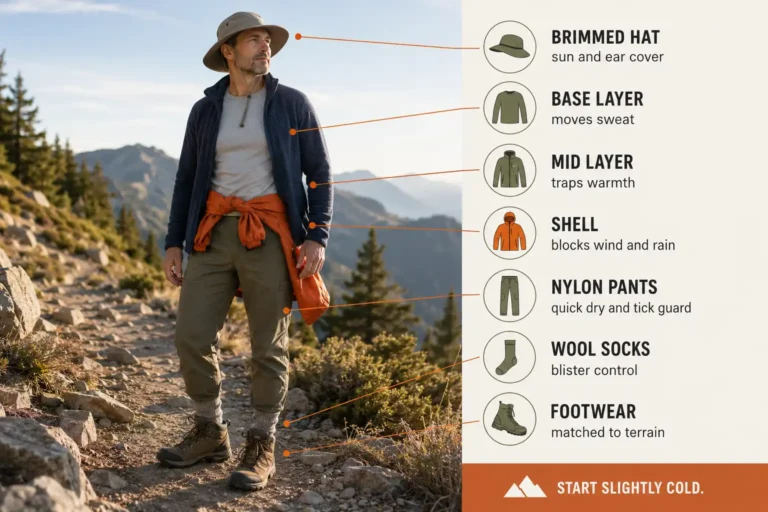
- Sort out your cold-weather layers. The same principles behind layering for cold wind on trail apply on summit night, only with warmer pieces.
- Wear boots you already trust. Give yourself weeks to break in new boots before a long trail rather than days.
- Report symptoms early. Guides can act on a headache. They cannot undo a collapse.
Who can climb Kilimanjaro?
TANAPA sets the minimum age at 10 years and applies no upper limit. Climbers in their seventies and eighties summit regularly, though older climbers and anyone with heart, lung, or blood pressure conditions should get medical clearance first.
Solo climbing is not allowed. Since 2019 every climber must be with a licensed guide booked through a registered operator, and rangers verify that at the gate and again at camps.
What does it cost, and why does cost affect difficulty?
Park fees alone make Kilimanjaro expensive. The conservation fee runs about $70 per person per day, camping adds around $50 per night, and huts on Marangu cost less. On top of that come a one-time rescue fee, entry fees for your guides and porters, and 18% VAT. Confirm current rates with your operator, since TANAPA adjusts them periodically.
Complete packages generally start near $2,000 and climb past $4,500 for longer routes with strong safety support. Here is why that matters for difficulty: the cheapest quotes are almost always the shortest itineraries, and short itineraries are the hardest way up this mountain. Paying a few hundred dollars more for two extra days buys you the biggest single improvement in your odds.
FAQs on Mount Kilimanjaro Difficulty and What to Expect

Is Kilimanjaro harder than the Everest Base Camp trek?
Do you need climbing experience?
How many hours a day do you hike?
Can you turn back partway up?
Is the descent hard?
Final thoughts
Kilimanjaro asks for patience more than power. The trails stay walkable, porters handle the heavy gear, and the skills involved stay ordinary. What the mountain really tests is your willingness to go slowly, spend enough days on the route, eat and drink when you feel like doing neither, and speak up when your body starts complaining. Get those four things right and your odds improve dramatically. Rush the schedule to save money and you join the third who turn back short of the top.