Approach Shoes vs Hiking Boots for Climbing: Which to Wear

Climbers ask me this a lot. The walk to the rock is rarely a clean trail, so footwear decides how the day goes. Here I compare approach shoes and hiking boots for climbing, and I show you which pair suits your route, your pack weight, and your terrain.
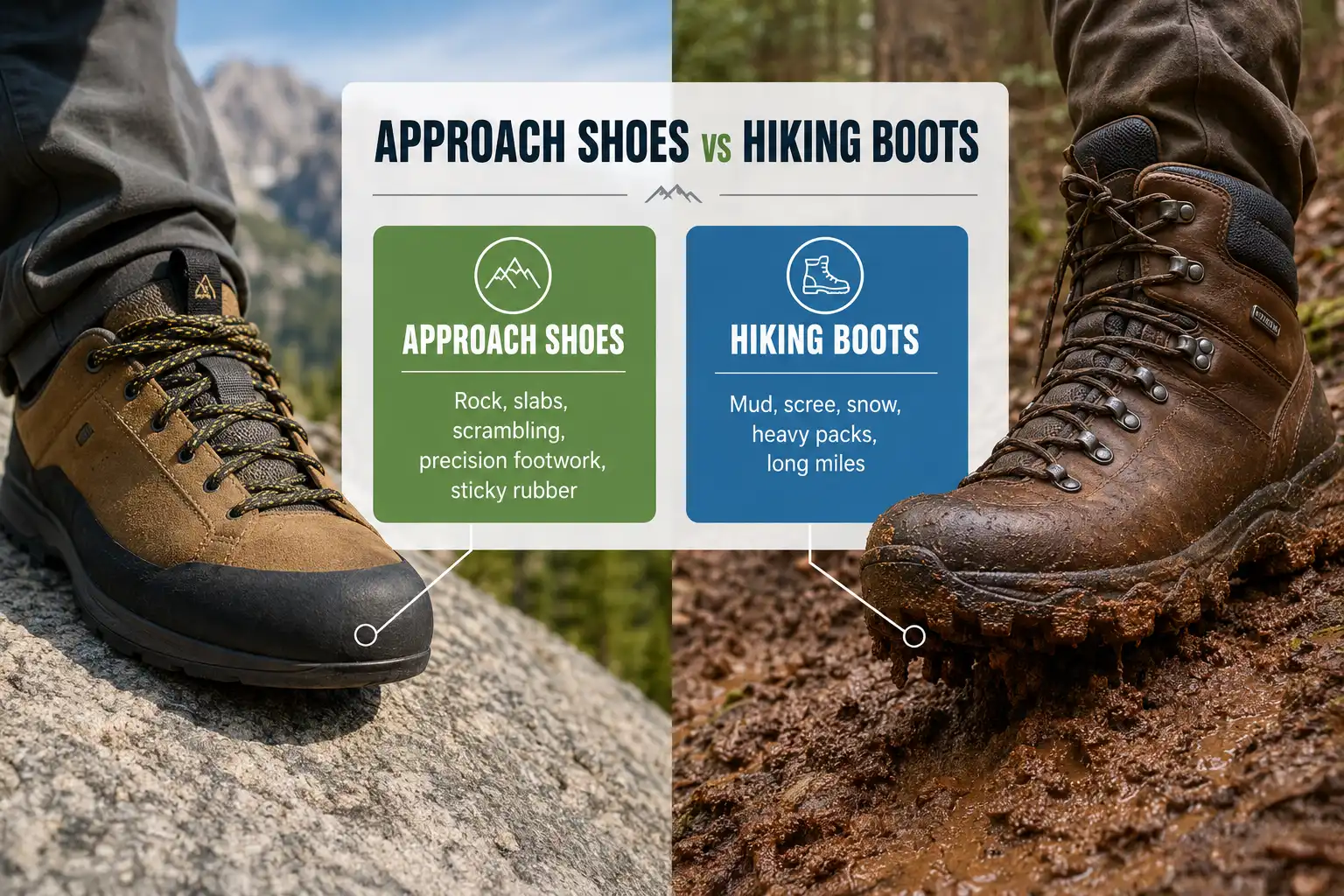
Wear approach shoes when the ground turns to rock and you need grip and precision. Wear hiking boots when the walk is long, muddy, or loaded with a heavy pack. Approach shoes climb better because of sticky rubber and a smooth toe zone. Boots carry weight better and shed mud.
What is an approach shoe?
An approach shoe is a low cut shoe built for the ground between the trailhead and the base of a climb. It takes sticky rubber from climbing shoes and puts it on a hiking style upper.
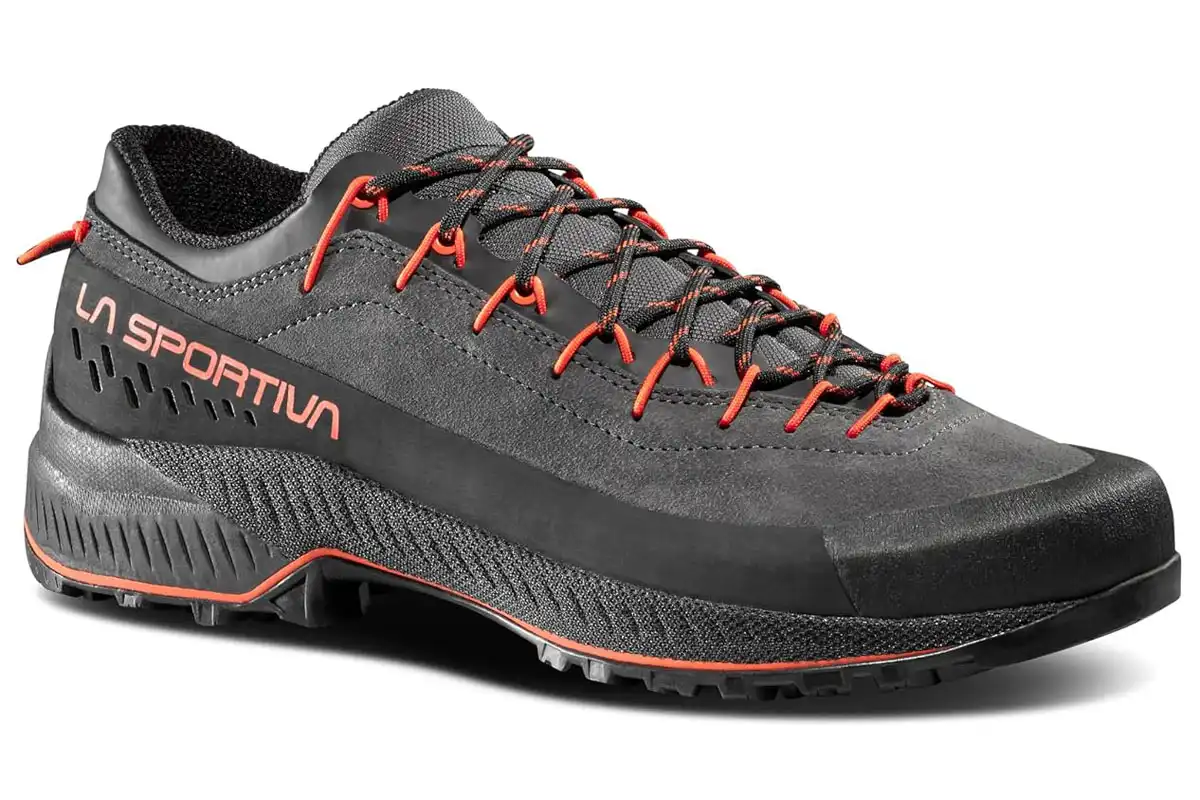
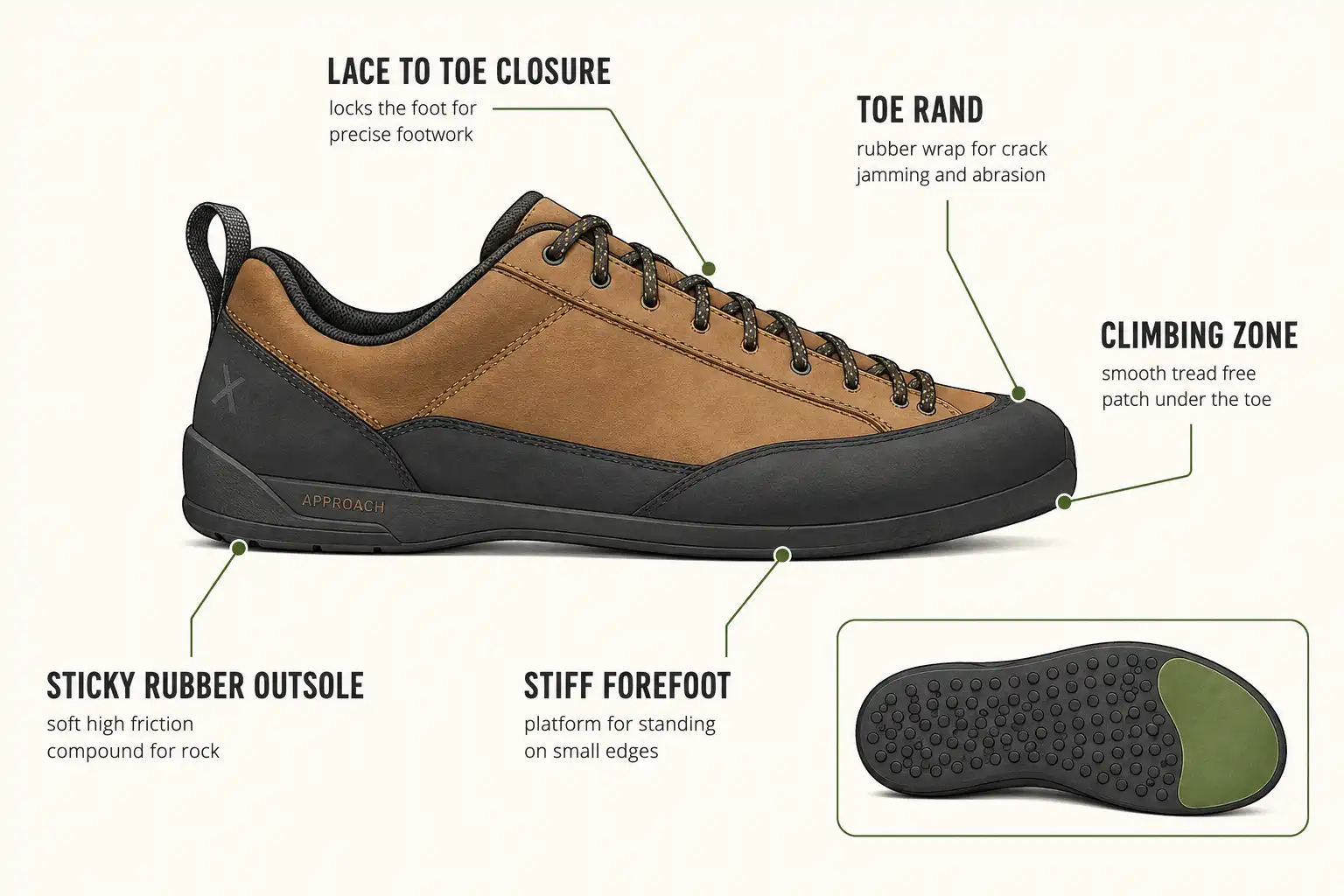
Four features define the category:
- Sticky rubber outsole. Makers use soft, high friction compounds such as Vibram Megagrip or Five Ten Stealth. These compounds grip stone far better than the hard rubber on a walking boot.
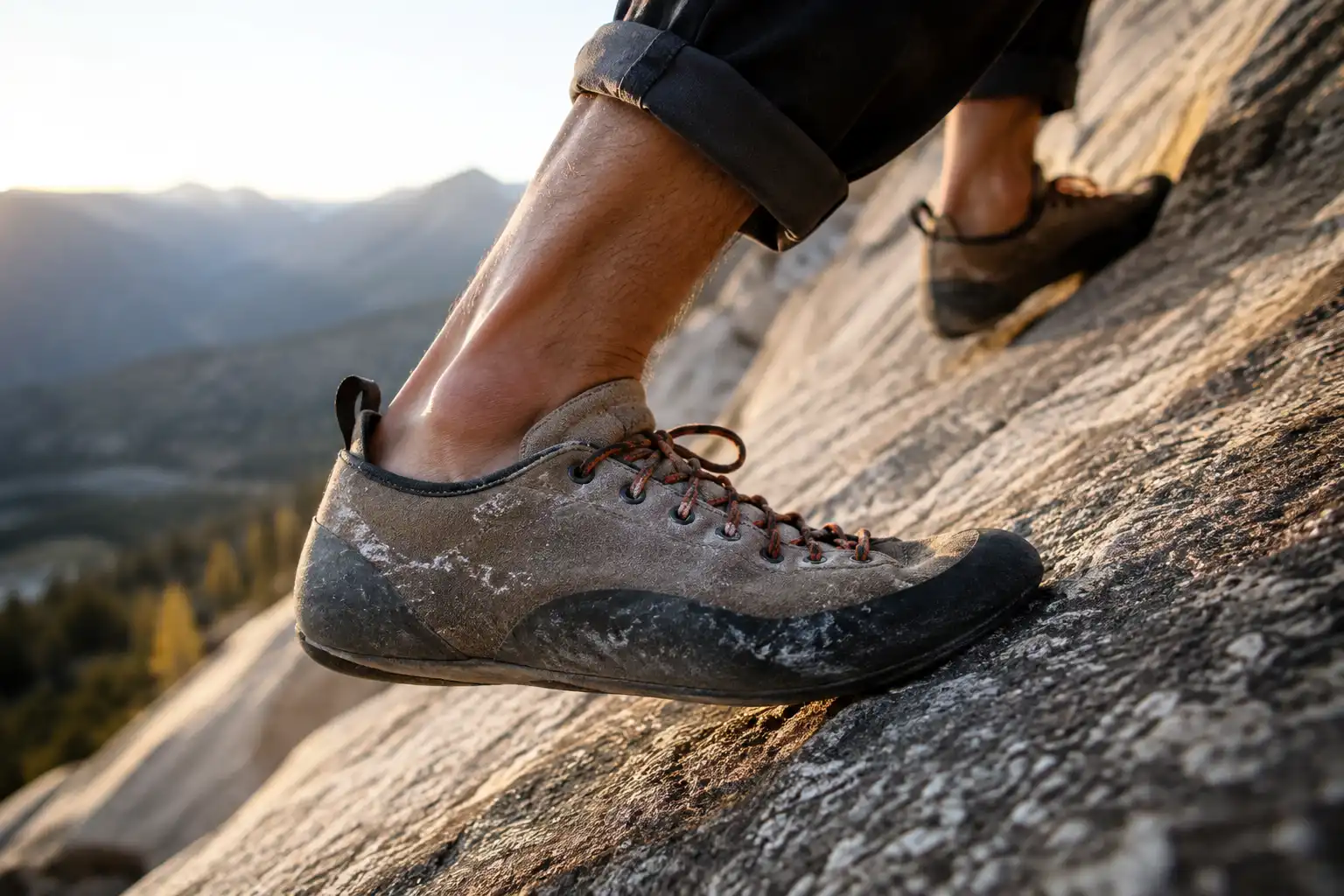
- Climbing zone. A smooth, tread free patch of rubber sits under the toe, so more rubber touches the rock.
- Toe rand. A rubber wrap covers the toe and often the sides, which protects the upper and lets you jam into cracks.
- Lace to toe closure. Laces run almost to the toe box, so you can lock your foot down for precise footwork.
Because the sole sits low and thin, you also feel the ground under you. That feedback matters when you place a foot on a small edge.
What is a hiking boot?
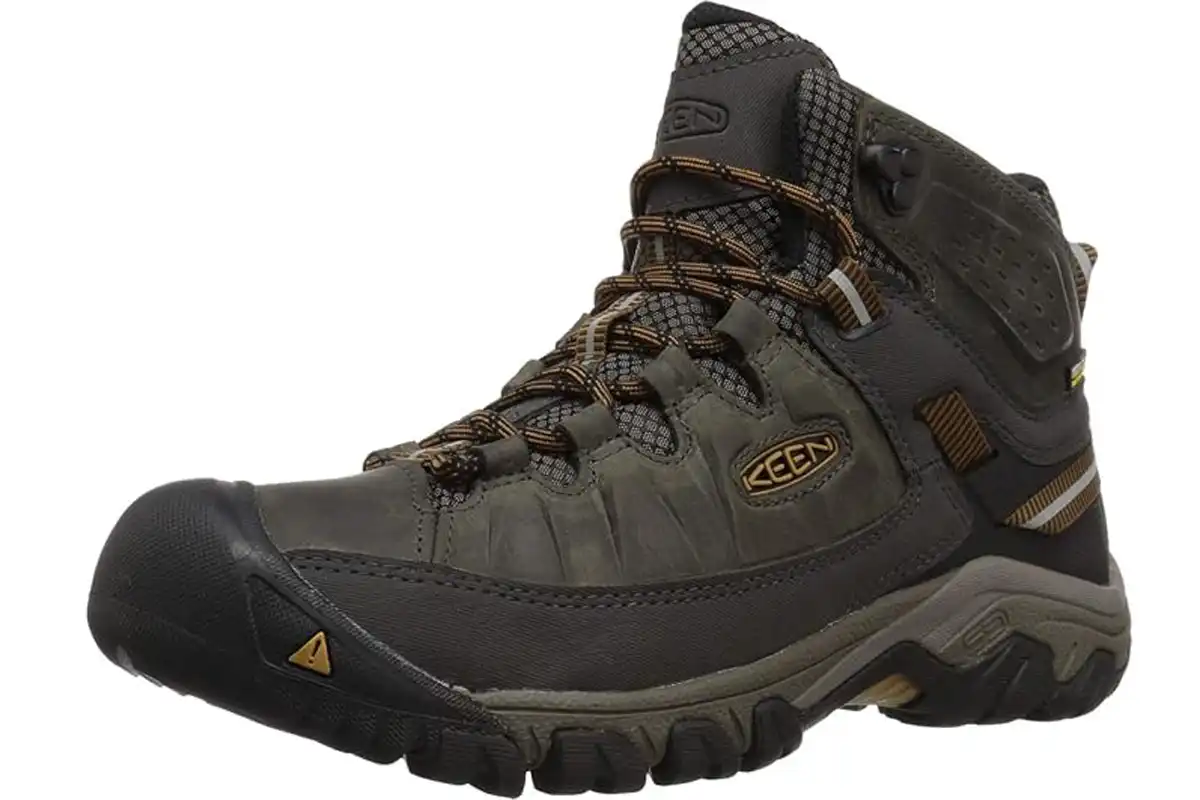
A hiking boot is a mid or high cut boot built to move weight over distance. Instead of chasing rock grip, it chases support, cushioning, and durability.
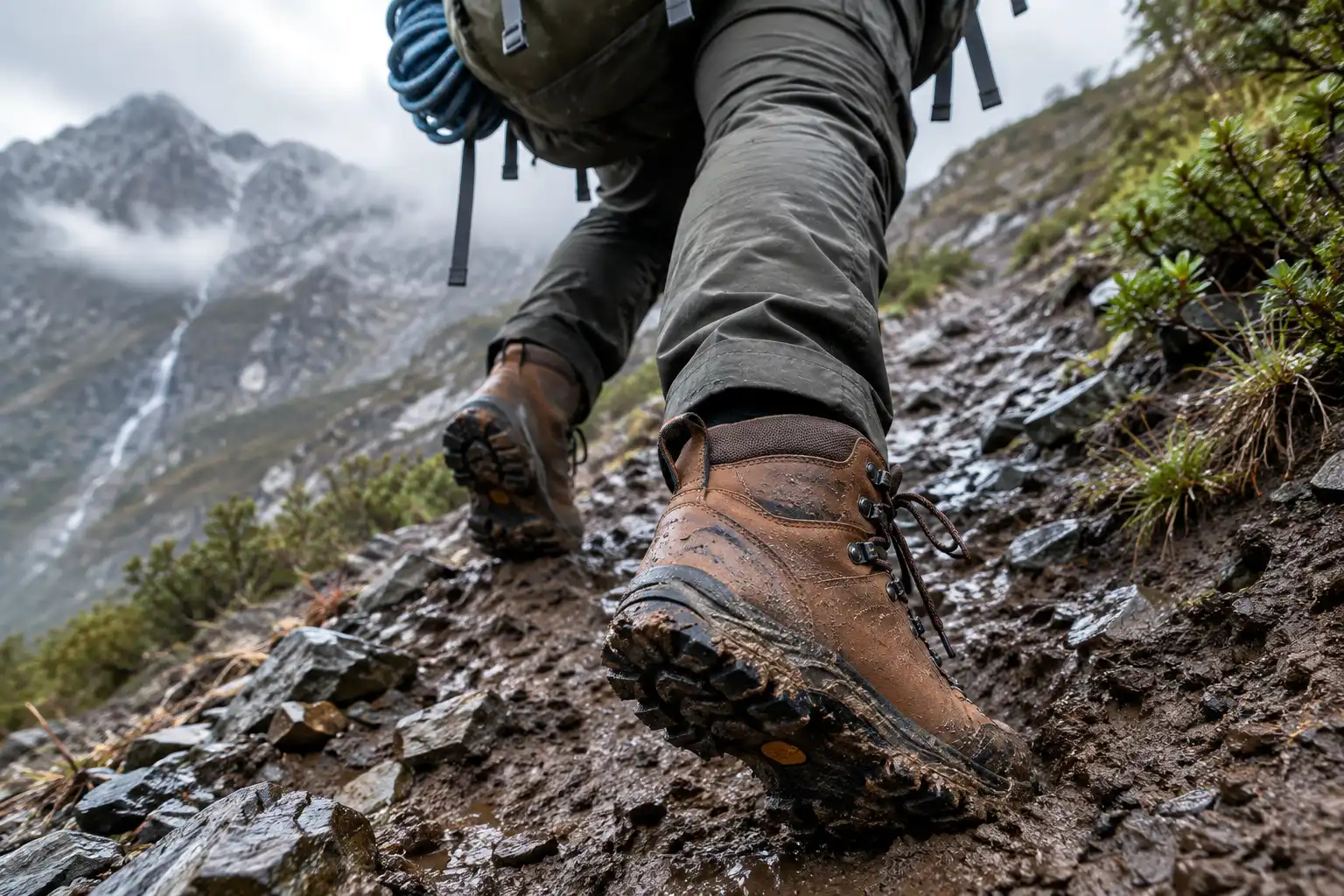
Boots use harder rubber with deep lugs that bite into mud, soil, and loose gravel. The midsole runs thicker, so sharp rocks stay off your foot. Many models add a waterproof membrane and a taller collar that keeps grit and water out. Therefore boots feel steadier under a loaded pack, though they also feel clumsy the moment the ground turns technical.
Approach shoes vs hiking boots at a glance
| Feature | Approach shoes | Hiking boots |
|---|---|---|
| Cut | Low, occasionally mid | Mid to high |
| Outsole rubber | Soft and sticky | Hard and hard wearing |
| Lug depth | Shallow, sometimes dots | Deep and aggressive |
| Climbing zone | Yes, smooth toe patch | No |
| Toe rand | Full rubber wrap | Small bumper or none |
| Midsole | Thin and stiff for edging | Thick and cushioned |
| Lacing | Runs close to the toe | Starts near the instep |
| Weight per pair | Roughly 650 to 800 g in current gear tests | Often close to double |
| Best ground | Rock, slabs, scrambles, via ferrata | Mud, forest trail, scree, snow |
| Weak spot | Mud, deep water, sole wear | Smooth rock, precise footwork |
Which grips better on rock?
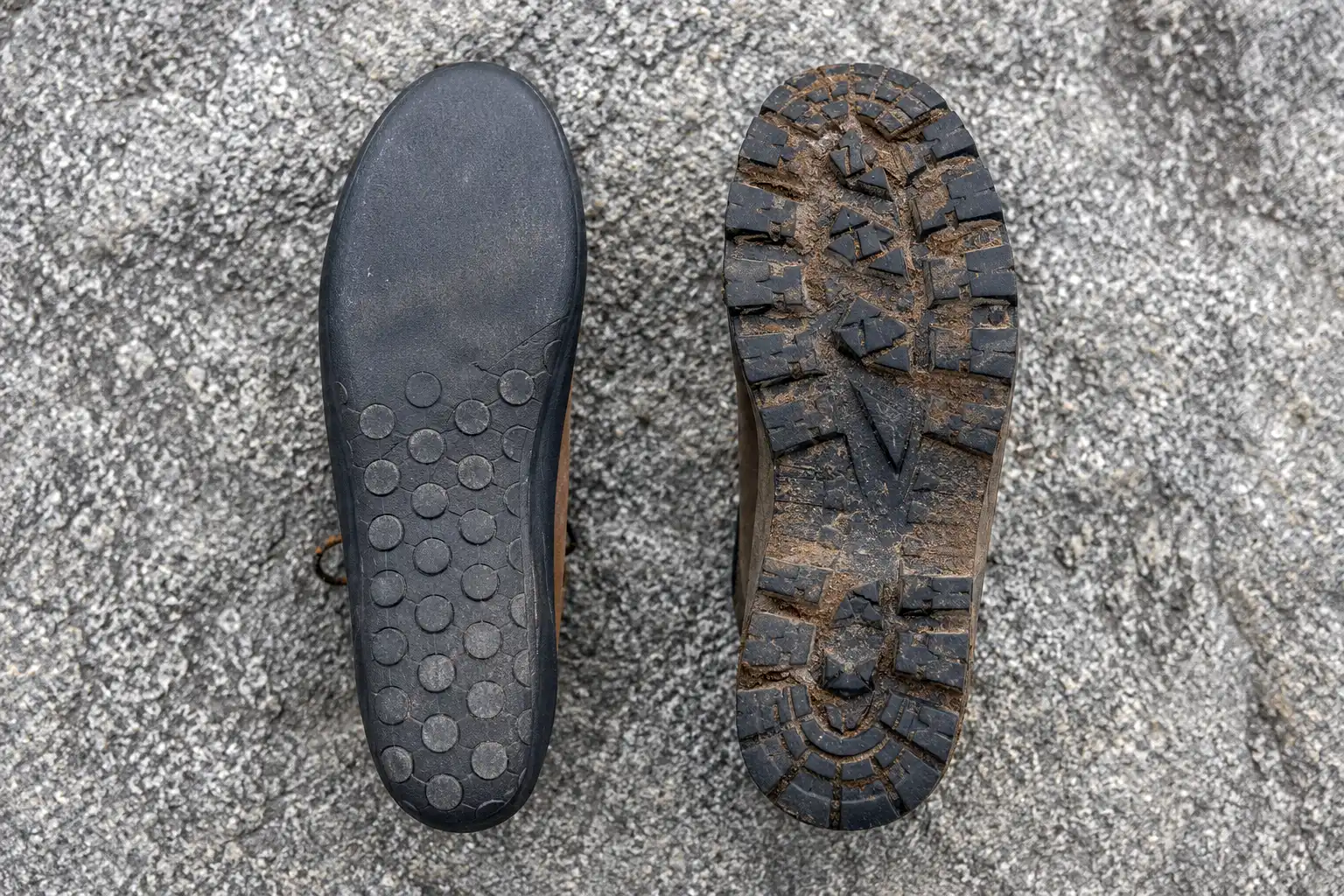
Approach shoes grip better on rock, and the gap is not small. Soft rubber deforms around tiny crystals and ripples in the stone, so friction climbs. Shallow lugs then let more of that rubber sit flat against the surface.
Deep boot lugs work against you here. Each lug lifts the sole off the rock, so contact area drops and the boot skates on slab. Meanwhile the harder compound never bonds to the stone the way sticky rubber does.
Flip the surface, though, and the result flips too. On wet mud, loose soil, and grass, boot lugs cut through the top layer and hold. Approach shoes slide instead, because there is nothing for shallow tread to dig into. So the honest answer depends on what is under your feet, not on which shoe costs more.
What does the climbing zone actually do?
The climbing zone gives you a flat, tread free rubber pad under the toe that maximizes contact with rock. It handles two moves: smearing and edging.
Smearing means pressing the sole flat against low angle rock and trusting friction alone. More rubber on stone equals more hold, so the smooth patch matters. Edging means standing on a foothold a few millimeters wide. For that you need a stiff forefoot plus a clean rubber edge, which lugs would ruin.
Hiking boots have neither. As a result, a boot toe rolls off small edges and skates on slab.
Do you need ankle support for climbing approaches?
Probably less than you think. The idea that a high collar prevents sprains does not hold up well in the research. Reviews of the evidence suggest the protection a high top offers may not be enough to cut sprain risk meaningfully, and in some cases it can hurt performance or even raise risk for certain people. One study on landing kinematics found high top shoes could delay and weaken the muscles that fight ankle roll, which works against stability rather than for it.
That said, a taller boot still earns its place in specific conditions. It keeps snow, scree, and grit out. The extra material also insulates in cold weather. Compression from a taller collar helps too if you are coming back from an injury. Under a heavy multi day load, it also spreads pressure better.
For most single day climbing approaches, though, ankle strength and balance work matter more than collar height. Calf raises, single leg balance, and slow controlled descents build the stability that footwear alone cannot.
Which pair handles a heavy pack better?
Hiking boots handle heavy packs better. A stiffer shank and thicker midsole spread the load, so your arches and forefoot take less punishment over the miles.
Approach shoes have a thin, firm midsole tuned for precision, not for cushioning under 20 kg of gear. After a few hours you feel every rock through the sole. Burly models such as leather approach shoes cope with moderate loads, yet none of them match a proper backpacking boot for all day comfort under weight. If your climbing day starts with a long carry, boots keep your feet fresher for the actual climbing.
Which is better for scrambling?
Approach shoes win for scrambling, especially once you leave easy ground. Understanding what counts as a scramble on a hiking route helps you decide how far up the scale you plan to go.
On simple hands out of pockets scrambling, either pair works. Once you reach steeper rock where you use your hands often, sticky rubber and a low profile give you control that a boot cannot. Via ferrata routes lean the same way, since you spend hours standing on rungs and small ledges.
When hiking boots win on a climbing day
Boots make more sense than approach shoes in these cases:
- Long, muddy, or forested approaches. Deep lugs beat sticky rubber in wet soil every time.
- Snow, slush, or cold. A tall collar plus a membrane keeps your feet usable.
- Heavy multi day loads. Cushioning and torsional stiffness protect your feet.
- Loose scree and steep dirt. Lugs bite where flat rubber slips.
- You climb in rock shoes anyway. If your approach footwear never touches technical rock, sticky rubber buys you nothing.
If you mostly hike and only occasionally scramble, the same logic behind picking boots or low cut hikers as a beginner applies here too.
Can you climb in hiking boots?
Yes for easy scrambling, no for anything technical. A boot handles blocky terrain where you place whole feet on wide holds. Beyond that it runs out of ability fast.
Three things hold boots back. The sole is thick and rounded, so it rolls off small edges. Hard rubber then slides on slab instead of sticking to it. A bulky toe box also refuses to fit into cracks or thin footholds. Boots also swallow your feedback from the rock, which makes committing moves feel worse than they are.
Fit and sizing differences
Approach shoes fit snugger than hiking boots, and that is deliberate. You want minimal dead space around the heel and midfoot so your foot does not shift while edging. Aim for firm and close without crushed toes, closer to a comfortable sneaker fit than a painful climbing shoe fit.
Boots go the other way. Leave about a thumb width in front of your longest toe, because feet swell and descents push toes forward. Getting the heel and volume right in a boot prevents most of the pain people blame on the brand.
Either way, heel lift is the enemy. Once your heel slides, friction builds, and friction turns into blisters. Good lacing and proper socks do most of the work to keep blisters off your feet on long days.
Durability and cost
Approach shoes wear out faster, and the reason is simple physics. Soft, sticky rubber trades lifespan for friction, so the climbing zone smooths off with use. Rough talus and crack jamming speed that up further.
Better models fight back with resoling. Several current approach shoes use resole friendly platforms, so a cobbler can refresh the rubber instead of you buying a new pair. Prices move around, but as of 2026 the well known technical models sit near the 160 to 190 US dollar mark, and boots cover a similar spread. Check current retail before you buy, since these figures shift each season.
Boots simply last longer on dirt. For a sense of the timeline, see how many miles a pair of boots usually gives you before the midsole goes flat.
How I choose in the Bandarban hills
Around Rangamati and Bandarban, I reach for lugs far more often than sticky rubber. Our approaches run through wet clay, leaf litter, stream crossings, and bamboo slopes. In that mix, deep tread beats friction rubber by a wide margin.
Dry season changes the calculation. On exposed rock near waterfalls and on the steep upper slabs, a sticky sole would have saved me some nervous moments. On the climb up Saka Haphong, the last sections are exactly where an approach shoe earns its money.
I should be straight with you about one thing. I own boots and grippy trail shoes, not a dedicated approach shoe, since they are hard to buy locally. So the climbing specific notes here come from published gear testing plus conversations with climbers who use these shoes weekly. I would rather tell you that than pretend otherwise.
Which should you buy first?
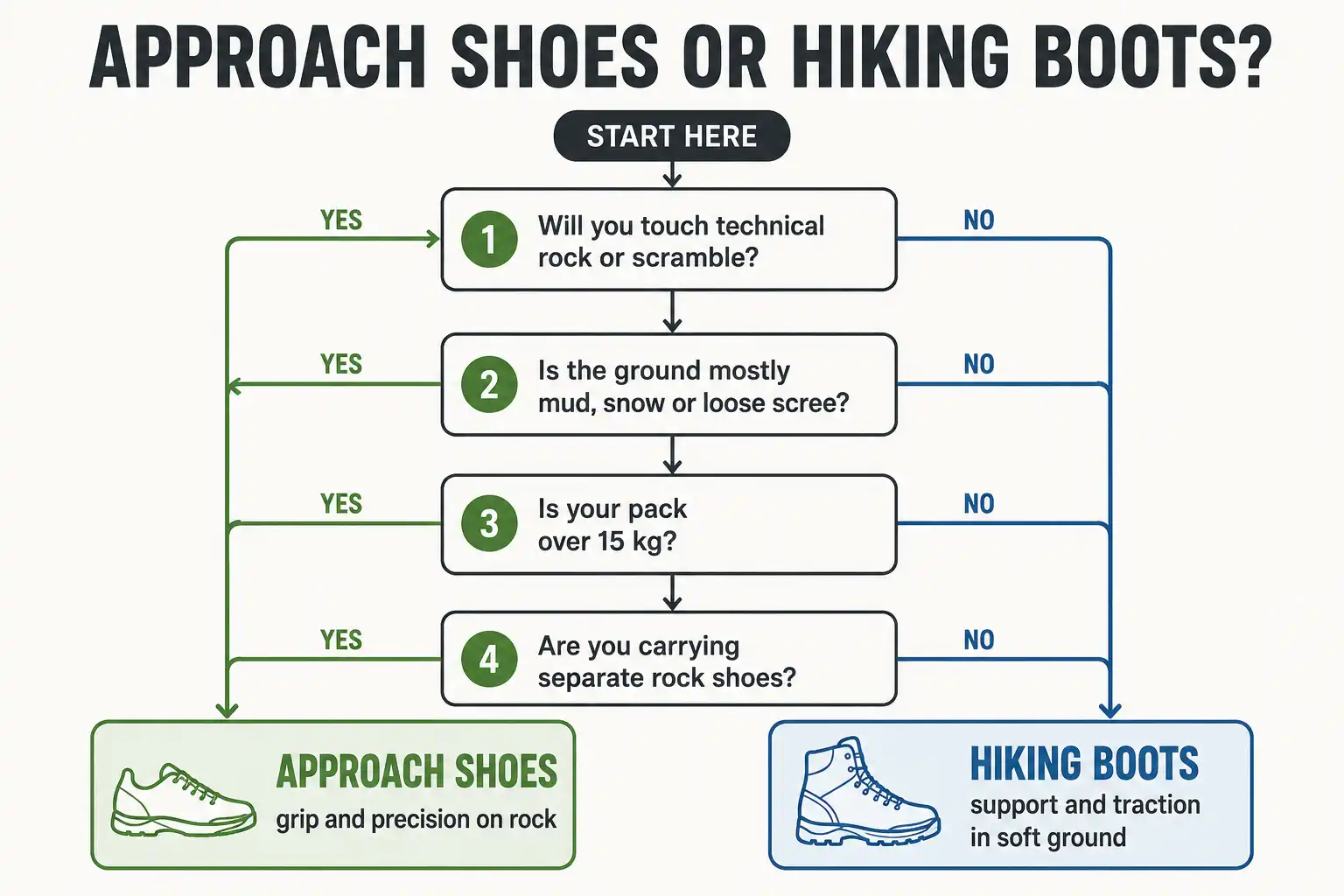
Buy the pair that matches most of your days, not your best day.
- Mostly trail miles, occasional scramble: buy hiking boots first.
- Mostly cragging with short technical approaches: buy approach shoes first.
- Alpine days that mix long walking with fourth class rock: buy a burly leather approach shoe.
- Heavy multi day trips with climbing at the end: buy boots and carry rock shoes.
FAQs on Approach Shoes Vs Hiking Boots for Climbing

Can approach shoes replace hiking boots?
Are approach shoes good for everyday hiking?
Do approach shoes work in the rain?
Can you use crampons with approach shoes?
Should you size down in approach shoes?
Final thoughts
Approach shoes and hiking boots solve different problems on a climbing day. Sticky rubber, a smooth climbing zone, and a low profile make approach shoes the better tool once you touch rock. Deep lugs, cushioning, and a taller collar make boots the better tool for mud, snow, and heavy loads. Match the pair to the ground you will actually cross, not to the hardest twenty meters of the day. Get that call right, and your feet stop being the reason you turn around.