Should Hiking Shoes Be Tight or Loose? Fit Guide

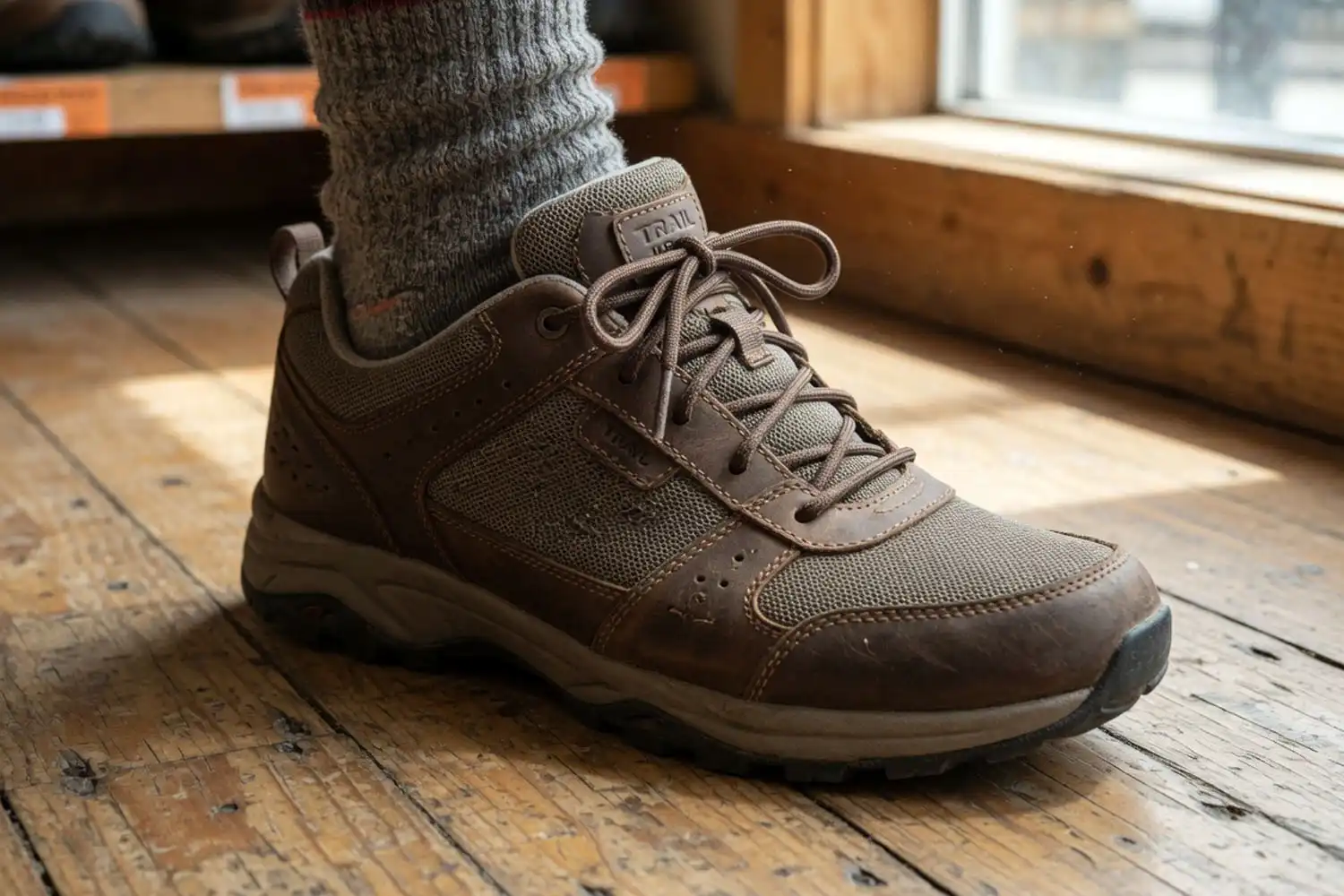
Hiking shoe fit confuses a lot of new hikers. Some buy them tight thinking the shoe will stretch. Others go a size up because their feet “need room.” Both choices cause problems on the trail. After years of hiking in the Bandarban hills and around Kaptai, I’ve learned that getting the fit right matters more than the brand on the side. Here’s exactly how your hiking shoes should feel, where they should be snug, where they need room, and how to test the fit before you commit to a pair.
Hiking shoes should fit snug but not tight. Your heel should sit locked in place, your midfoot should feel secure without any pinching, and your toes should have about a thumb’s width of space in front when standing. Loose shoes cause blisters from friction. Tight shoes cause bruised toenails, numbness, and pain on long descents.
The snug-not-tight rule
Snug means the shoe holds your foot in place without squeezing it. Think of it like a firm handshake, not a clenched fist. Your foot should not slide forward when you walk downhill. Also, the laces should pull the shoe closed without you cranking them as tight as they go.
Most fit problems come from one of two extremes. Either the hiker chose their everyday sneaker size, which is usually too small for swollen trail feet, or they bought a size too big to “play it safe.” Neither approach works. Hiking shoes need a fit that accounts for movement, swelling, and varied terrain.
Learn more: What Goes in a Day Pack for Hiking
How each part of the shoe should fit
Heel
Your heel must stay locked. After lacing up, lift your foot. If the heel slips more than a quarter inch, the shoe is too loose. Heel slippage shreds skin and creates blisters within a few miles. So if you’re already worried about that, my guide on stopping foot blisters before they start covers the prevention side in detail.
Midfoot
The midfoot should feel hugged, not pinched, not loose. When you flex your foot, the shoe should bend with you, not against you. Also, your arch should feel supported without any sharp pressure points.
Toe box
Your toes need wiggle room. Stand with the shoes laced, then press the tip of the shoe. There should be about a thumb’s width between your longest toe and the front of the shoe. Toes should never touch the front of the shoe, especially when standing still.
If your toes feel cramped in the store, they will feel ten times worse three hours into a hike. For hikers with broader feet, choosing footwear built for wide feet solves most of these toe-box issues from the start.
Why your feet swell on the trail
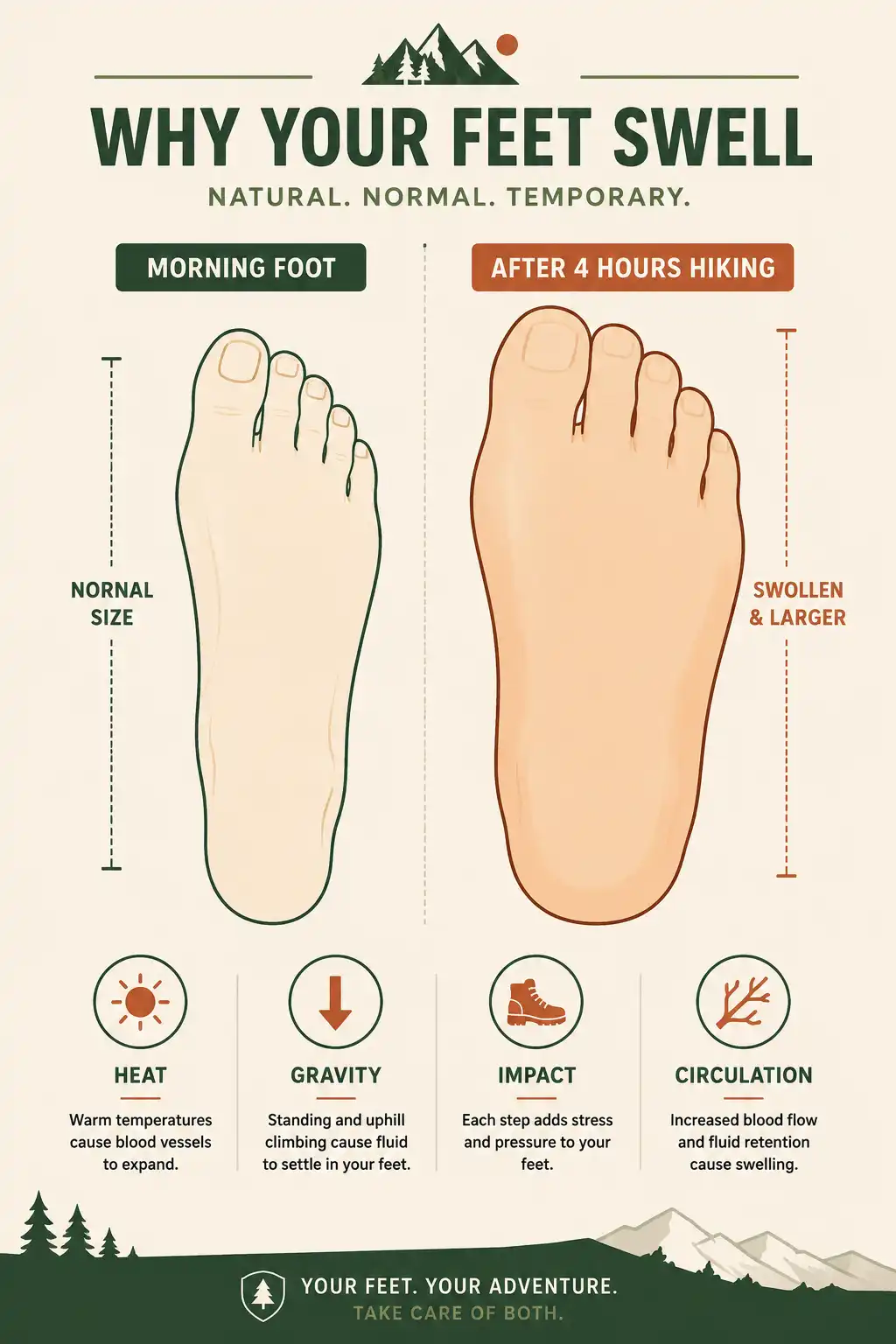
Feet swell during long hikes because of heat, gravity, impact, and circulation changes. After a few hours on the trail, your feet can grow up to half a size larger. Therefore, a shoe that fits perfectly in the morning may feel tight by afternoon.
This is why fitting hiking shoes in the late afternoon works better than fitting them first thing in the morning. Your feet at 4 PM are closer to your trail-foot size than your feet at 9 AM.
Sock thickness changes everything
Wear the exact socks you plan to hike in when you try on shoes. Thin liner socks and thick wool socks produce very different fits in the same shoe. I learned this the hard way on a Keokradong trip when I packed thicker socks than I’d fitted with. My toes paid for it that day.
If you switch sock styles often, the right pair of socks made to reduce blister risk can buy you a small fit margin in either direction.
Common hiking shoe fit mistakes
So many hikers make the same fit errors. Here are the ones I see most often:
- Buying the same size as street shoes. Hiking shoes usually run a half size larger than your everyday size.
- Assuming the shoe will stretch. Modern hiking shoes barely stretch. What you feel in the store is what you get.
- Ignoring downhill behavior. A shoe that feels great on flat carpet may pinch your toes the moment you go down a slope.
- Tightening laces unevenly. Loose at the bottom and tight at the top causes hot spots. Keep tension balanced.
- Skipping the break-in period. Even a good fit needs a few short walks first. Breaking in new trail boots properly avoids most early-trip pain.
The store fit test
Before buying, do these checks:
- Try the shoes on with your hiking socks.
- Lace them fully and stand still for two minutes. Feel for any pinch points.
- Walk on a flat surface. The heel should not slip.
- Find a slope (most outdoor stores have a ramp). Walk down it. If your toes hit the front, the shoes are too small.
- Walk up the same ramp. Your heel should stay put without rubbing.
If you can’t visit a store, order two sizes and return the one that fails these tests at home.
Signs your hiking shoes are too tight
Watch for these warning signs:
- Numb toes after thirty minutes of walking
- Pinching across the top of your foot
- Bruised or black toenails after a hike
- Sharp pain in the ball of the foot
- Sides of the shoe bulging outward
Tight shoes cut off circulation. Long hikes in tight footwear lead to lasting nail damage and nerve pain.
Signs your hiking shoes are too loose
Now the other side:
- Heel lifts when you walk
- Foot slides forward on downhills
- Blisters on the back of the heel or sides of the toes
- Shoelaces won’t stay tight even after double-knotting
- Ankle wobble on uneven ground
Loose shoes cause more blisters than tight ones, in my experience. Also, they offer less ankle stability, which raises the risk of rolled ankles on rocky trails. If you do twist one, my notes on handling a sprained ankle on the trail cover what to do next.
How tight should hiking shoes lace?
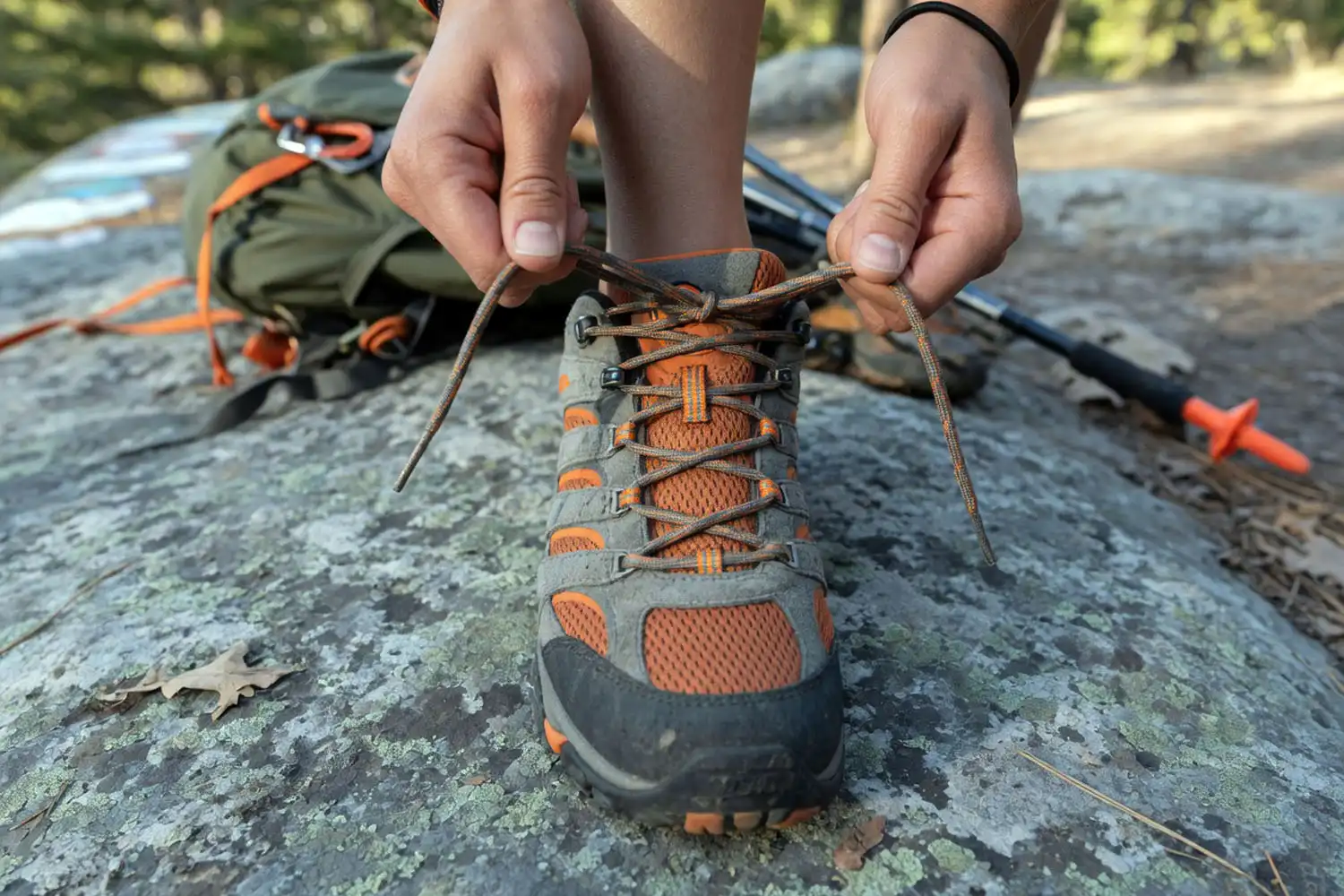
Laces should hold the shoe against your foot without pressure spots. Use a gentle lace from the toe box up to the instep, then a slightly firmer lace from the instep to the ankle. This locks your heel without strangling your forefoot.
For downhills, retighten the upper laces and leave the lower section a bit looser. This stops your foot from sliding forward without crushing your toes.
Should hiking shoes feel tight in the store?
Hiking shoes should feel snug but never tight in the store. If they pinch on day one, they will hurt by mile three. So trust your feet. If something feels off in the showroom, it’s not going to “break in” into the right shape.
Hiking boots vs hiking shoes fit
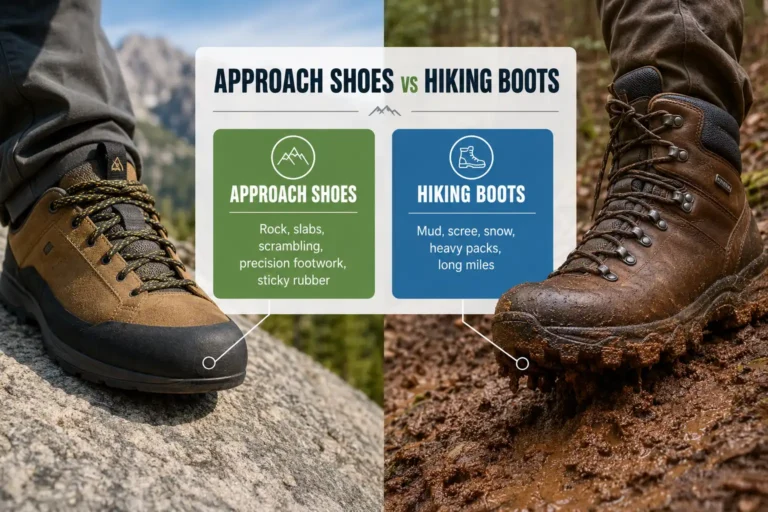
Boot fit and shoe fit follow the same rules, but boots need extra heel lock because of their taller cuff. If you’re stuck between the two, my breakdown comparing boots and trail shoes for new hikers walks through the trade-offs.
FAQs on Hiking Shoe Fit

How much room should be in the toe of a hiking shoe?
Should I size up for hiking shoes?
Do hiking shoes stretch over time?
Can hiking shoes be too tight in the toe but fine elsewhere?
Final thoughts
Snug heel, secure midfoot, free toes. Get those three right and most hiking shoe problems disappear. Try them on in the afternoon, wear your hiking socks, test them on a slope, and trust what your feet tell you in the first minute. So good fit isn’t about luck or brand loyalty. It’s about knowing what to feel for before you reach the trailhead.