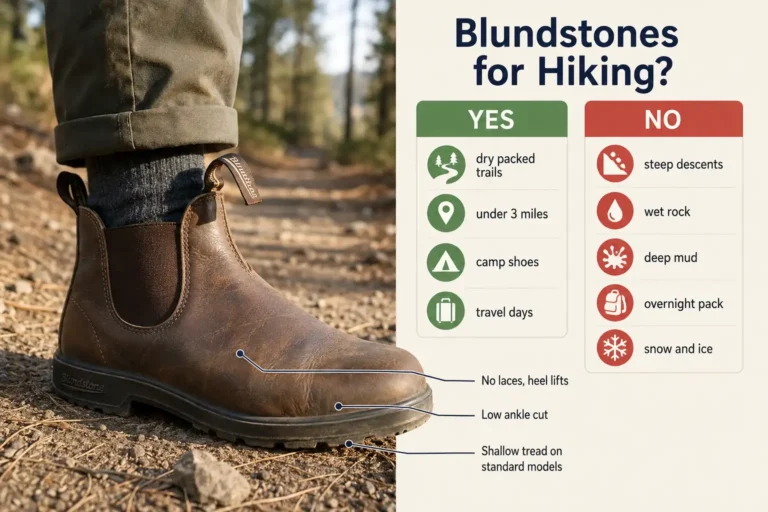
Are Hiking Boots Good for Walking? What the Research Shows

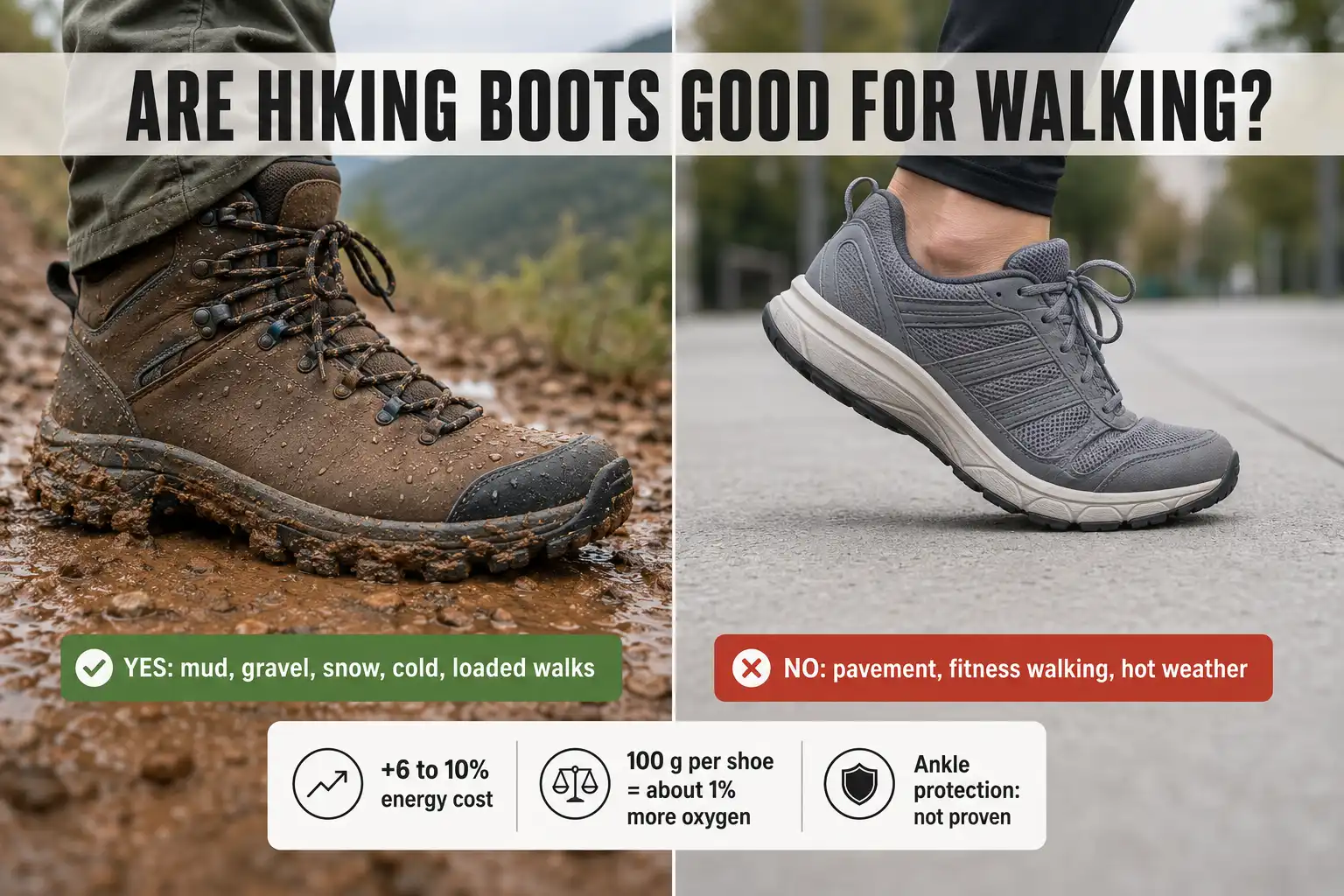
Plenty of people buy hiking boots for the trail, then wear them for daily walks too. Sometimes that works well. Other times, though, it leaves you with tired legs and hot, damp feet. Below I cover where hiking boots help your walking, where they hurt it, and what the research actually measured.
Hiking boots are good for walking on wet, loose, uneven, or cold ground. On flat pavement, though, they are a poor pick. Boots grip and protect well, but they weigh far more than walking shoes, and that extra weight on your feet raises your energy cost with every step you take.
What hiking boots are actually built to do
Hiking boots handle one job: moving a loaded foot over rough ground without injury. So every design choice follows from that.
- Stiff midsole. A firm shank stops the sole from folding over sharp rocks and roots. It also spreads pressure so your arch holds up under pack weight.
- High collar. Besides covering your ankle bone, the extra height blocks grit, mud, and water.
- Deep lugs. Aggressive tread bites into soft dirt, wet clay, and gravel, so you keep traction where smooth soles slide.
- Reinforced toe and heel. Rubber caps take the hits when you kick a rock.
- Waterproof membrane. Most mid and full-height boots also include one.
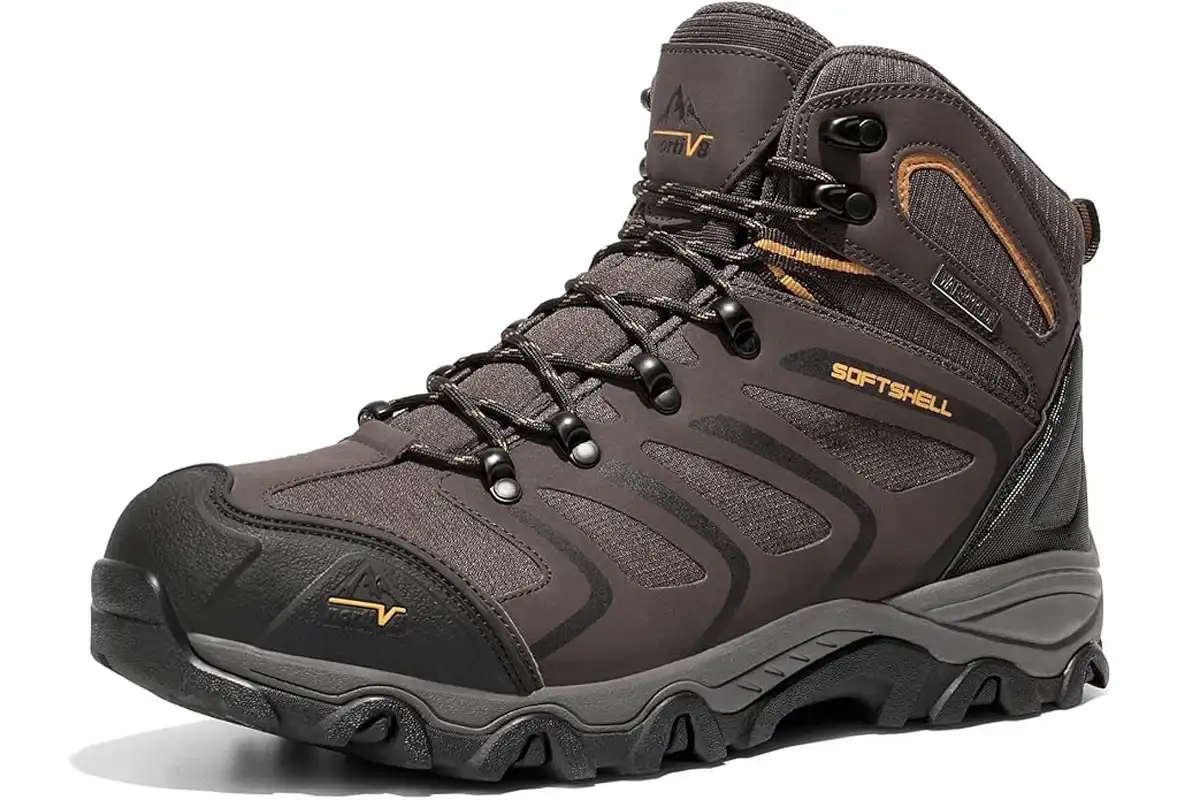
Every feature on that list adds weight, stiffness, or both. On a trail, the trade pays off. Walk a sidewalk, however, and you carry the cost while collecting none of the benefit. Since walking and hiking put different loads on your feet, footwear that shines in one place can drag in the other.
Read next: Top Ten Hiking Essentials
When are hiking boots good for walking?
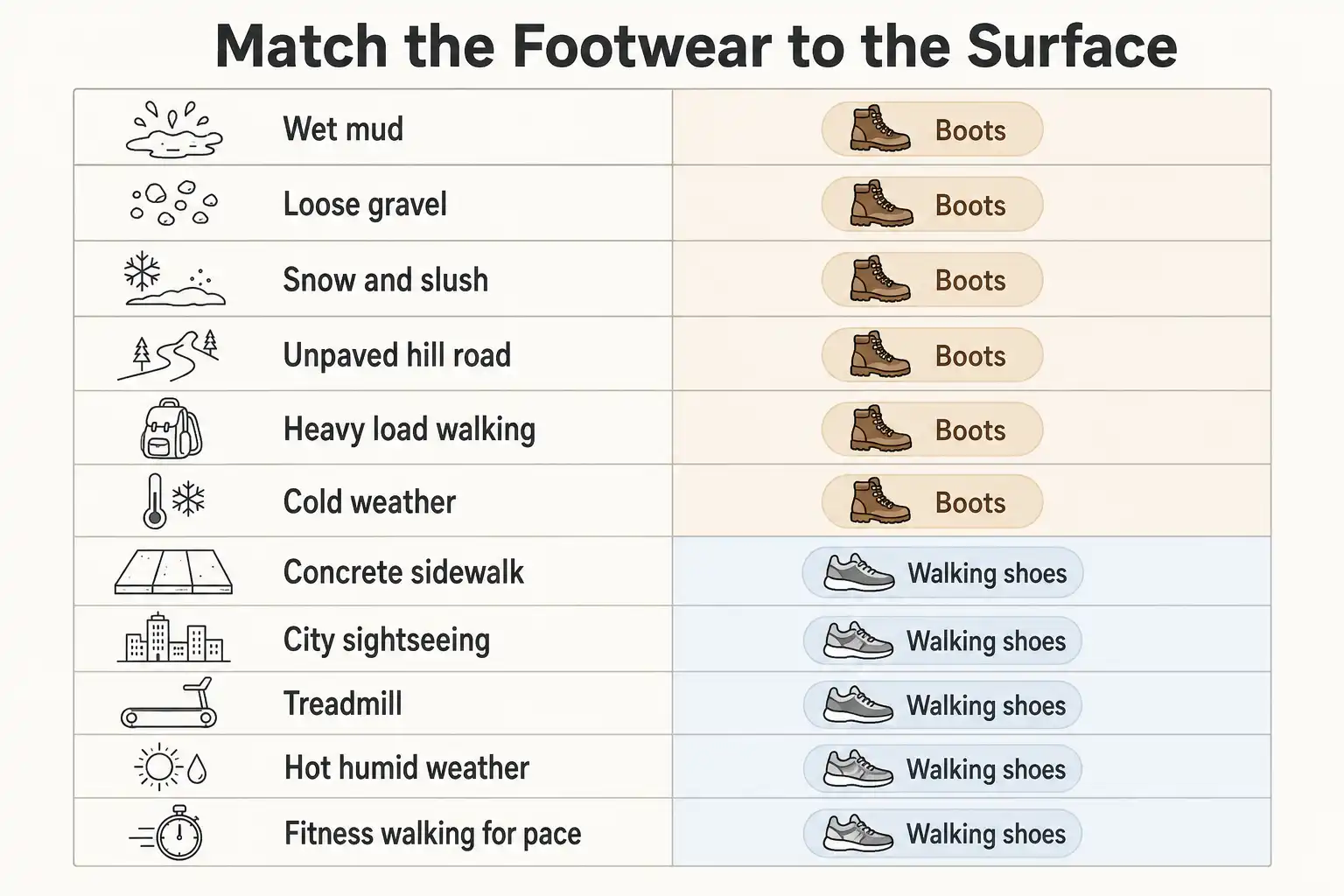
Hiking boots are good for walking any time the ground turns wet, loose, rocky, or cold. In those conditions the added weight buys you protection you can feel.
Reach for boots when you face:
- Muddy or waterlogged paths. Deep lugs shed mud instead of packing solid.
- Gravel tracks and farm roads. Plus, a stiff sole stops stone bruising under the ball of your foot.
- Snow and slush. Waterproof uppers plus grippy tread cut your slip risk.
- Unpaved hill roads. Because loose surfaces shift underfoot, a boot that bites keeps you steady.
- Walking with a heavy load. A supportive sole then handles the pressure better than thin foam.
- Cold mornings. Boots hold warmth far better than mesh shoes, so cold feet stop being an issue.
- Field and undergrowth dog walks. Since thorns, ticks, and standing water all turn up out there, full coverage earns its keep.
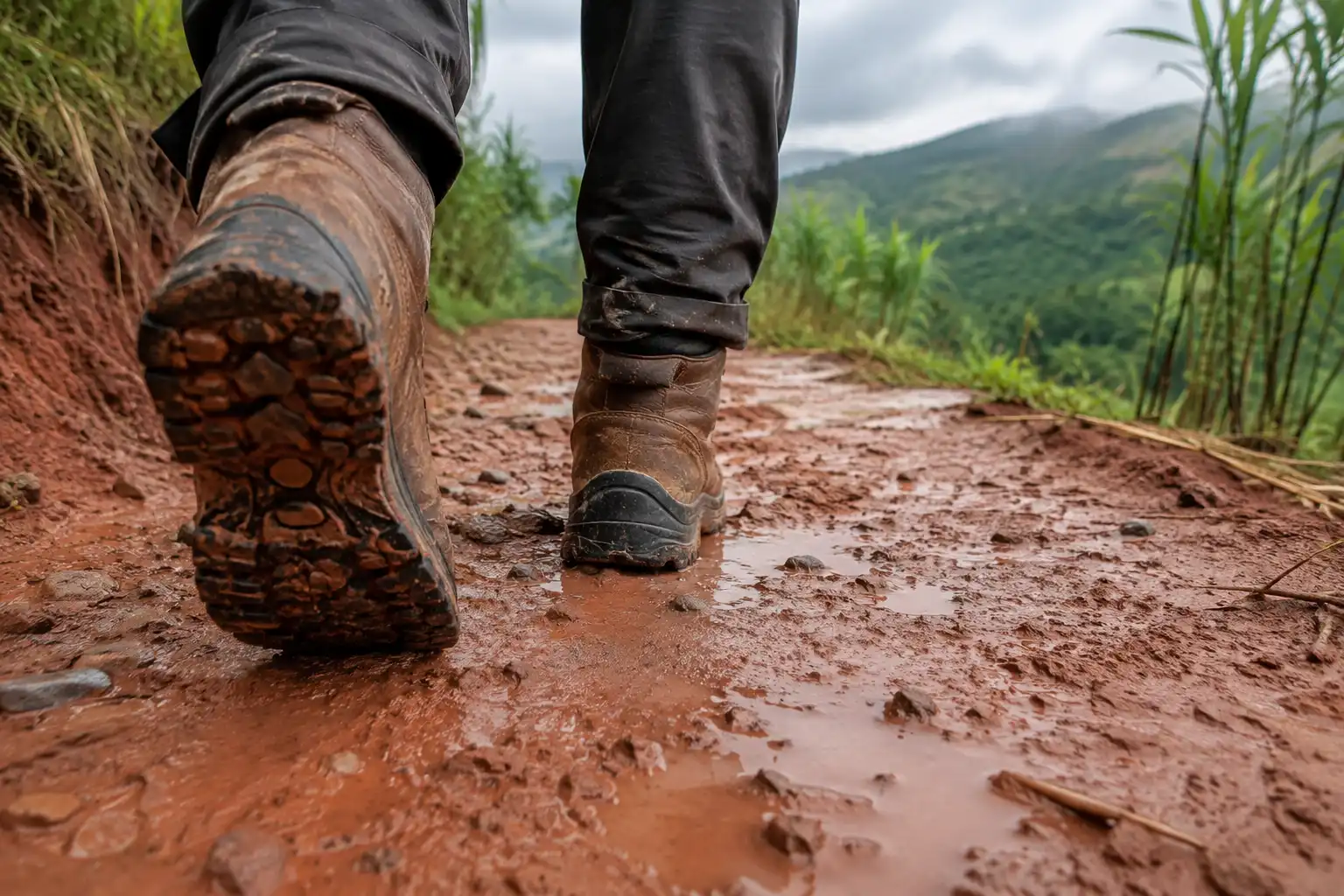
I walk the hill roads around Kaptai most weeks. After rain, the red clay goes slick as soap, and low-cut shoes slide out from under me on the smallest slope. Boots stay planted. So for that ground I lace up boots every time, even for a short walk down to the bazaar.
When hiking boots are a poor choice for walking
Hiking boots turn into the wrong tool the moment the surface goes flat and hard. Pavement asks for cushioning and flex, while boots deliver stiffness and grip.
Leave the boots at home for:
- Fitness walking. Stiff soles fight the smooth toe roll that a brisk pace depends on.
- Hot, humid weather. Waterproof linings then hold sweat against your skin.
- Long sightseeing days. Concrete punishes a rigid sole hour after hour, and low-cut hikers on city sidewalks handle that job much better.
- Treadmill sessions. Lugs grip nothing on a belt, and the belt sands them down.
- Walking with knee or hip pain. Because weight on the feet raises the work in every stride, sore joints notice it quickly.
How much harder do hiking boots make walking?
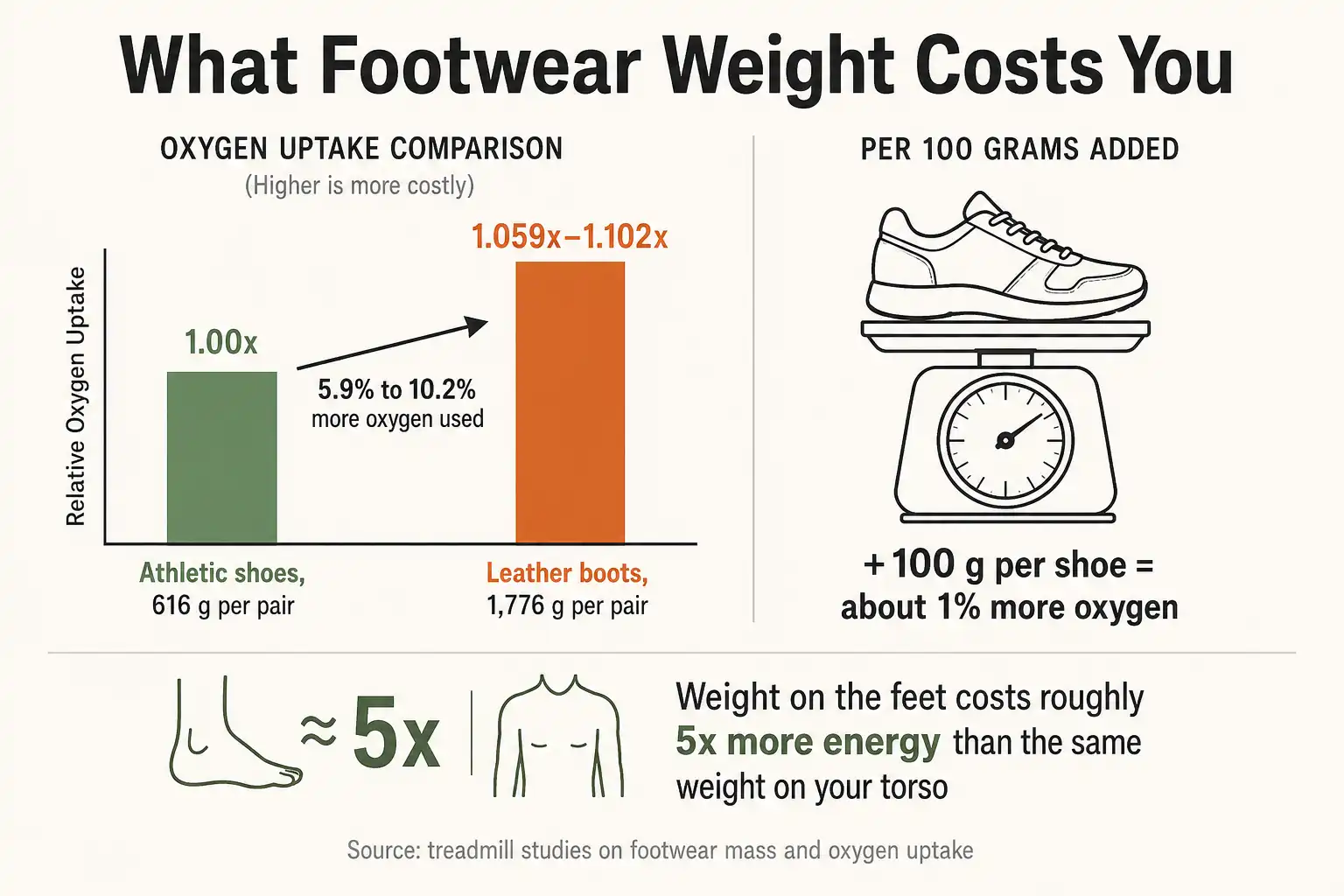
Hiking boots raise the energy cost of walking by roughly 6% to 10% at most speeds. Researchers measured that gap directly.
A study in the journal Ergonomics tested fourteen men walking and running on a treadmill in two kinds of footwear: athletic shoes averaging 616 grams per pair, and leather military boots averaging 1,776 grams per pair. Oxygen uptake in boots came out 5.9% to 10.2% higher at every tested speed except the slowest walk. In addition, footwear weight by itself explained roughly half to two thirds of the increase.
Other research points the same way. Across many studies, adding just 100 grams per shoe pushes oxygen uptake up by about 1%. Work by Soule and Goldman is widely cited for a related finding: weight carried on your feet costs around five times more energy than the same weight carried on your torso.
Here is what those numbers mean day to day:
- Short walks. You will barely notice the difference.
- An hour or more. Your legs then fade sooner than they would in shoes.
- Daily walking. You may quietly cut your distance and never work out why.
One detail matters, though. At the slowest walking speed the researchers found no meaningful difference. So a gentle stroll in boots costs you almost nothing. Pick up the pace, and the penalty grows.
Do hiking boots protect your ankles while walking?
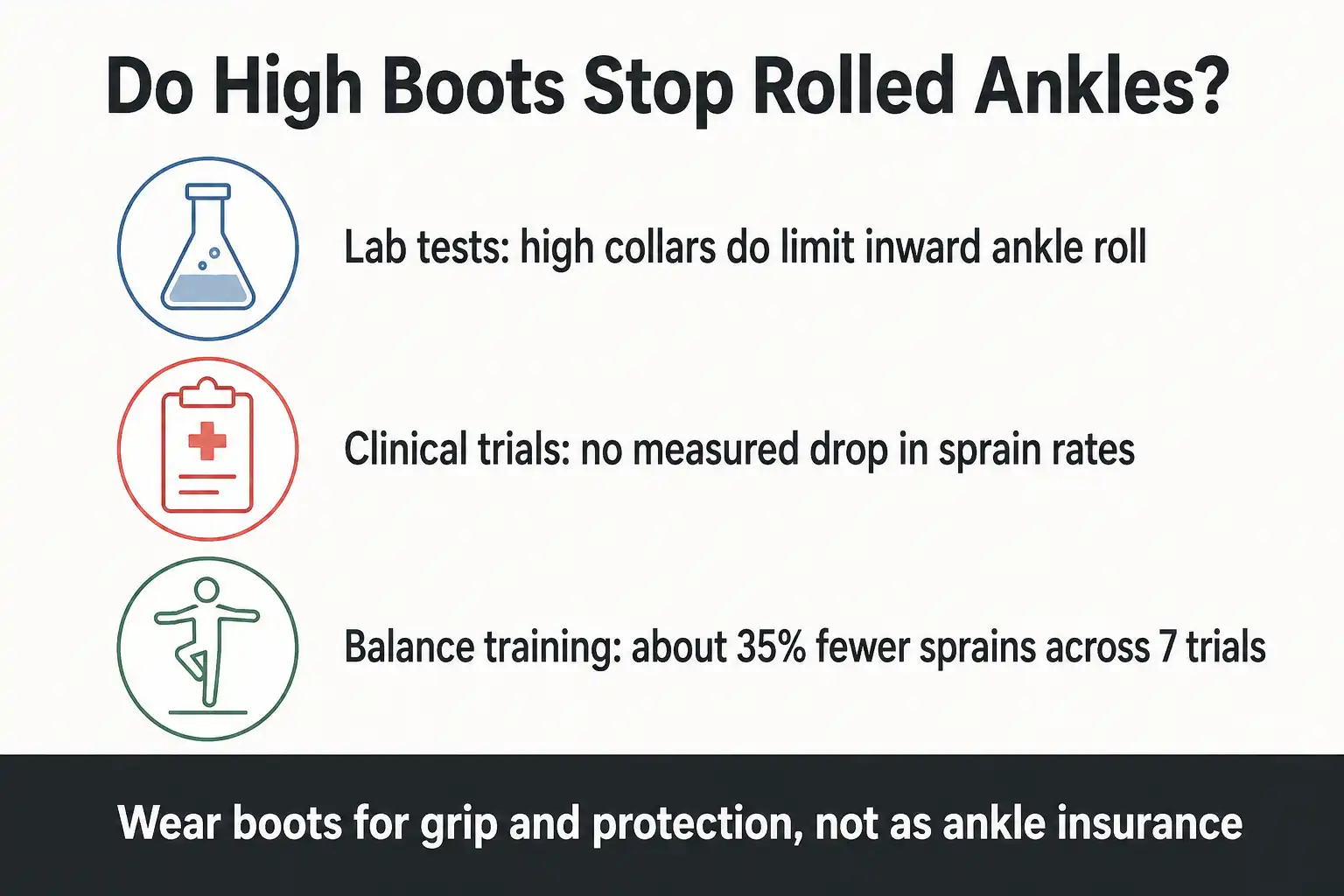
Boots protect your ankles less than most people assume. Lab work does show that a high collar limits how far the ankle rolls inward. Clinical trials, however, have not turned that into fewer sprains.
One randomized study followed 622 college intramural basketball players and found no drop in sprains among the high-top wearers. A Cochrane review of randomized trials reached much the same verdict on footwear, while confirming that braces and orthoses do help. Another study measured muscle activity during landings and found high-top shoes delayed the firing of the muscles that catch a rolling ankle, cutting pre-landing activity in one stabilizer by about 37%.
Balance work, meanwhile, has a far stronger record. A meta-analysis of seven randomized trials covering 3,726 people found that proprioceptive training cut ankle sprain rates by roughly 35%.
So wear boots for grip, warmth, and protection from rocks. Do not treat the tall collar as insurance. Strong ankles and good balance guard you better than a cuff of leather does.
Hiking boots vs walking shoes
| Feature | Hiking boots | Walking shoes |
|---|---|---|
| Weight per pair | Heavy | Light |
| Sole flex | Stiff | Flexible |
| Grip in mud | Excellent | Poor |
| Grip on wet pavement | Fair | Good |
| Cushioning on concrete | Firm | Soft |
| Breathability | Limited, especially with a membrane | High |
| Ankle coverage | Above the ankle | Below the ankle |
| Best surface | Trails, mud, gravel, snow | Sidewalks, tracks, treadmills |
| Break-in period | Often needed | Rarely needed |
If most of your walking happens on hard, flat ground, walking shoes beat boots on nearly every line that counts. Boots only pull ahead once the surface turns rough, wet, or cold. For anyone still weighing the two families of footwear, my comparison of boots and low-cut hikers covers the middle ground in more detail.
Can you wear hiking boots every day?
You can wear hiking boots every day, though rotating two pairs treats your feet and your boots better. Three problems show up with constant wear.
Sweat builds up. Feet rank among the sweatiest parts of the body, and a waterproof membrane also slows vapor escape. That venting depends on a temperature and humidity gap between the inside of the boot and the outside air. In hot, humid weather the gap nearly disappears, so almost nothing vents. Damp linings then start to smell.
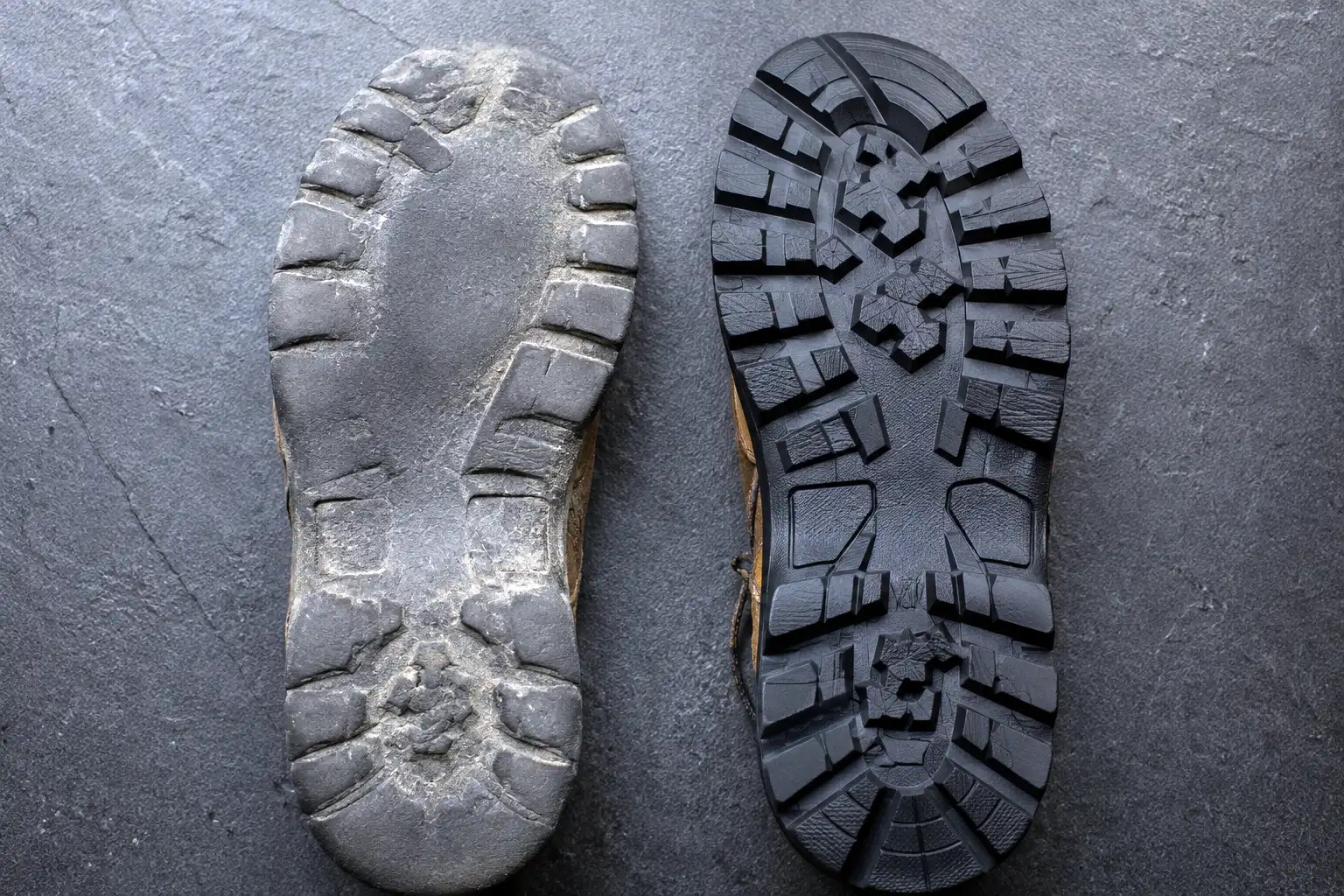
Soles wear out faster. Pavement grinds soft trail rubber much quicker than dirt does. Lugs round off, and grip fades right when you need it back on the trail. Since boots cost real money, it helps to know how many miles a pair usually gives you before the tread goes.
Your feet do less work. A permanently stiff sole means the small muscles in your foot stay idle. Some podiatrists also call bulky boots too heavy for all-day casual wear and tie them to muscle fatigue.
My own habit is simple. Boots go on for trail days and monsoon walks, and light shoes handle everything else. Both pairs then last longer, and my feet get some variety.
How to make hiking boots more comfortable for walking
A few small adjustments change how boots feel on flat ground.
- Size for swelling. Leave about a thumb’s width of space in front of your longest toe, because feet swell over a long day. Getting boots to fit your foot shape matters more than any other factor here.
- Rework the lacing. Skipping an eyelet across a high instep relieves pressure fast, and a heel lock stops your foot sliding forward. My guide to lacing boots to stop sore toes walks through both.
- Swap the insole. Stock footbeds run thin. So a cushioned aftermarket insole softens the ride on concrete.
- Wear the right socks. Merino and synthetic blends move sweat outward, while cotton just holds it.
- Skip the membrane in dry heat. Non-waterproof boots breathe better, so your feet stay drier when rain is not the problem.
- Choose a lighter model. A light nubuck mid weighs far less than a full-grain backpacking boot, and it walks much more naturally.
- Loosen the upper cuff. Keep the forefoot snug, then leave the ankle section looser on flat ground so your ankle flexes freely.
Who should think twice before walking in hiking boots?
Anyone managing a foot or joint condition should get advice before switching to boots for daily walking. A stiff sole eases some problems and aggravates others.
- Plantar fasciitis. Firm support helps many people, though the raised collar irritates some. Responses vary a lot.
- Knee or hip arthritis. Extra weight on the feet adds work to every stride, so lighter footwear usually feels better.
- Diabetic neuropathy. Reduced sensation plus a heavy, stiff boot raises the risk of blisters and ulcers going unnoticed. Therefore daily foot checks become essential.
- A history of ankle sprains. Strengthening and balance training protect you more reliably than a high cuff.
- Children. Growing feet generally do better in light, flexible shoes for everyday walking.
I am a camper, not a clinician. So for anything painful or persistent, talk to a podiatrist before you change your footwear.
FAQs on Hiking Boots for Walking

Are hiking boots good for walking on concrete?
Are hiking boots good for long distance walking?
Do hiking boots hurt your feet?
Are waterproof hiking boots good for daily walking?
Are hiking boots good for walking workouts?
Final thoughts
Hiking boots earn their place on rough, wet, and cold ground, where grip and protection outweigh their weight. For flat pavement, fitness walking, and hot weather, lighter shoes serve you better on almost every count. Match the footwear to the surface instead of buying one pair for everything. If you own boots already, save them for the trail and the wet season, then keep a light pair by the door for daily walking. Your feet and your boot soles will both last longer.