Are Hiking Shoes Good for Snow? What Works and What Fails

Snow changes the job your footwear has to do. This guide covers when hiking shoes handle snow safely, when they put your feet at risk, and how to widen their range with a few cheap add ons. You will also see the exact point where a winter boot becomes the smarter pick.
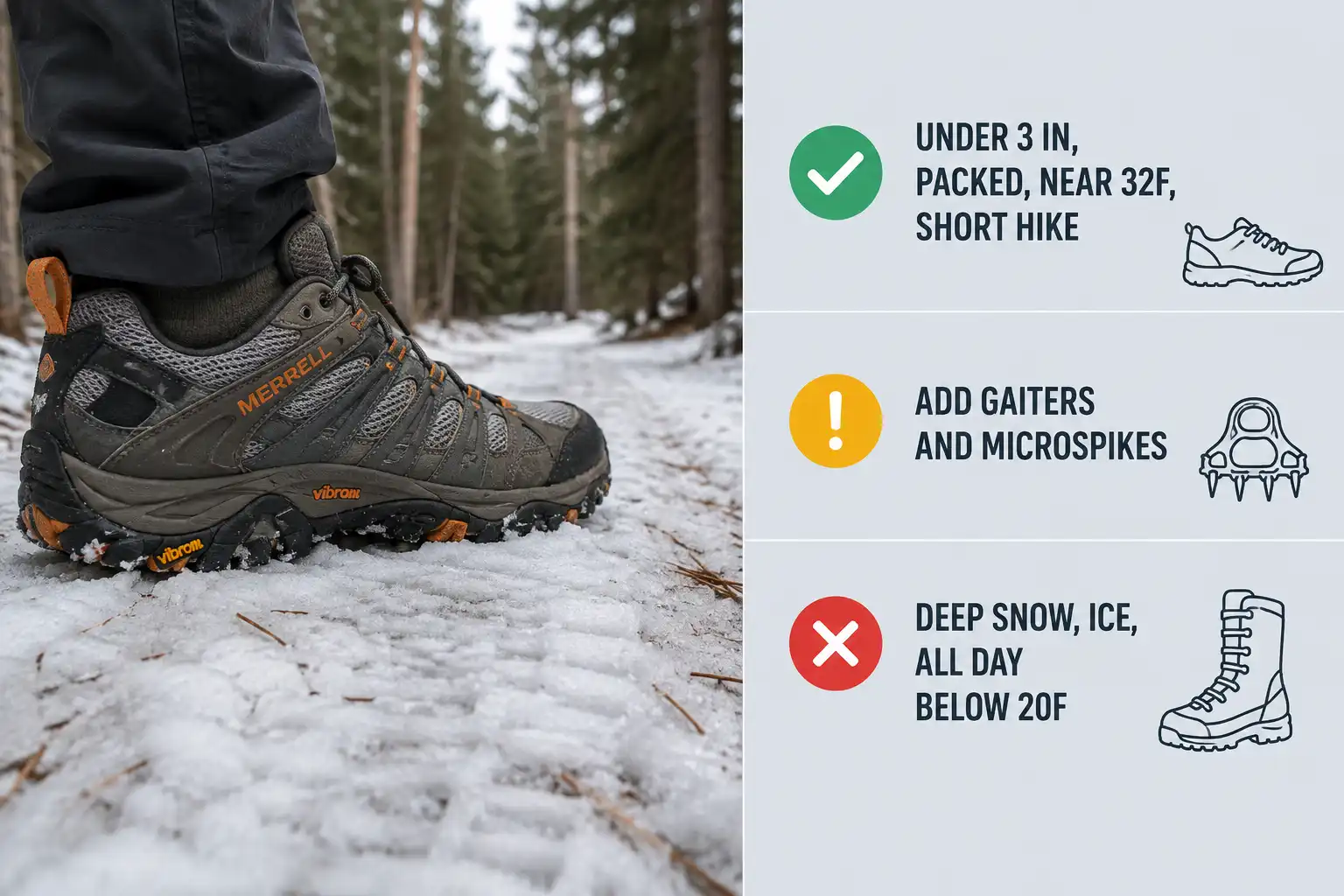
Hiking shoes work in snow that stays shallow, packed, and cold rather than slushy, on hikes short enough that your socks stay dry. However, they fail in deep powder, hard ice, and all day cold. Snow depth, temperature, and trip length decide the answer, not the shoe by itself.
When do hiking shoes work fine in snow?
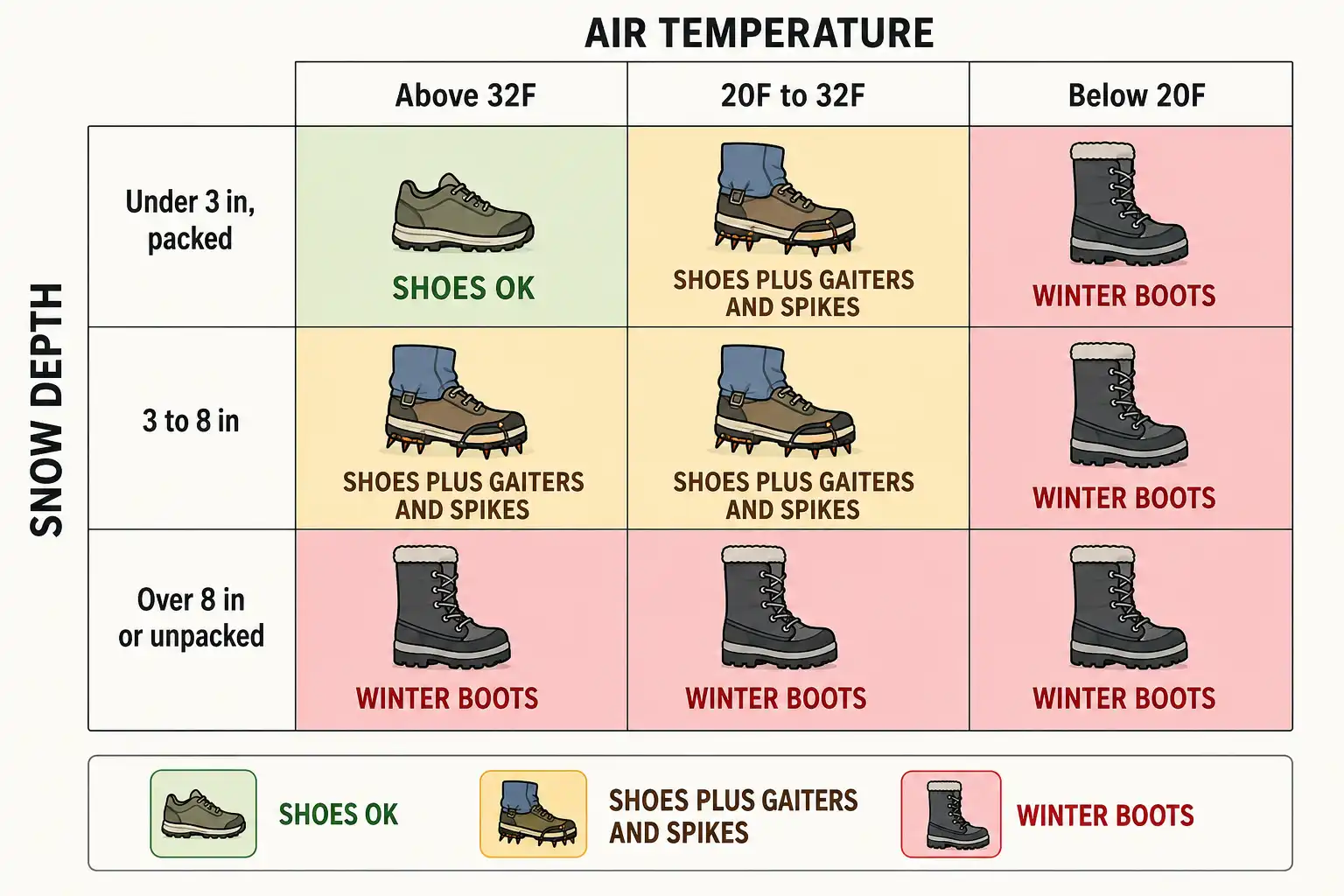
Hiking shoes work fine in snow whenever the surface stays firm, the layer stays thin, and the trip stays short. Specifically, they hold up in these conditions:
- Packed trail under roughly 3 inches of snow. Foot traffic compresses the surface, so your feet ride on top of it.
- Temperatures near or slightly below freezing. Dry snow brushes off instead of soaking through.
- Short outings of about two to three hours. Socks stay dry long enough to keep your toes warm.
- Steady movement without long stops. Working muscles push warm blood down to your toes.
- No stream crossings and no drifts. Otherwise water enters over the collar and the shoe becomes useless.
Also worth knowing: fresh dry snow at 20°F causes fewer problems than slush at 35°F. Slush carries liquid water, and water pulls heat from skin far faster than cold air does. Therefore a mild, wet winter day can chill your feet harder than a colder, drier one.
Also know: Running in Hiking Shoes
When are hiking shoes the wrong choice?
Hiking shoes become the wrong choice as soon as snow gets deeper than the collar or the day gets long. Leave them home when any of the following apply:
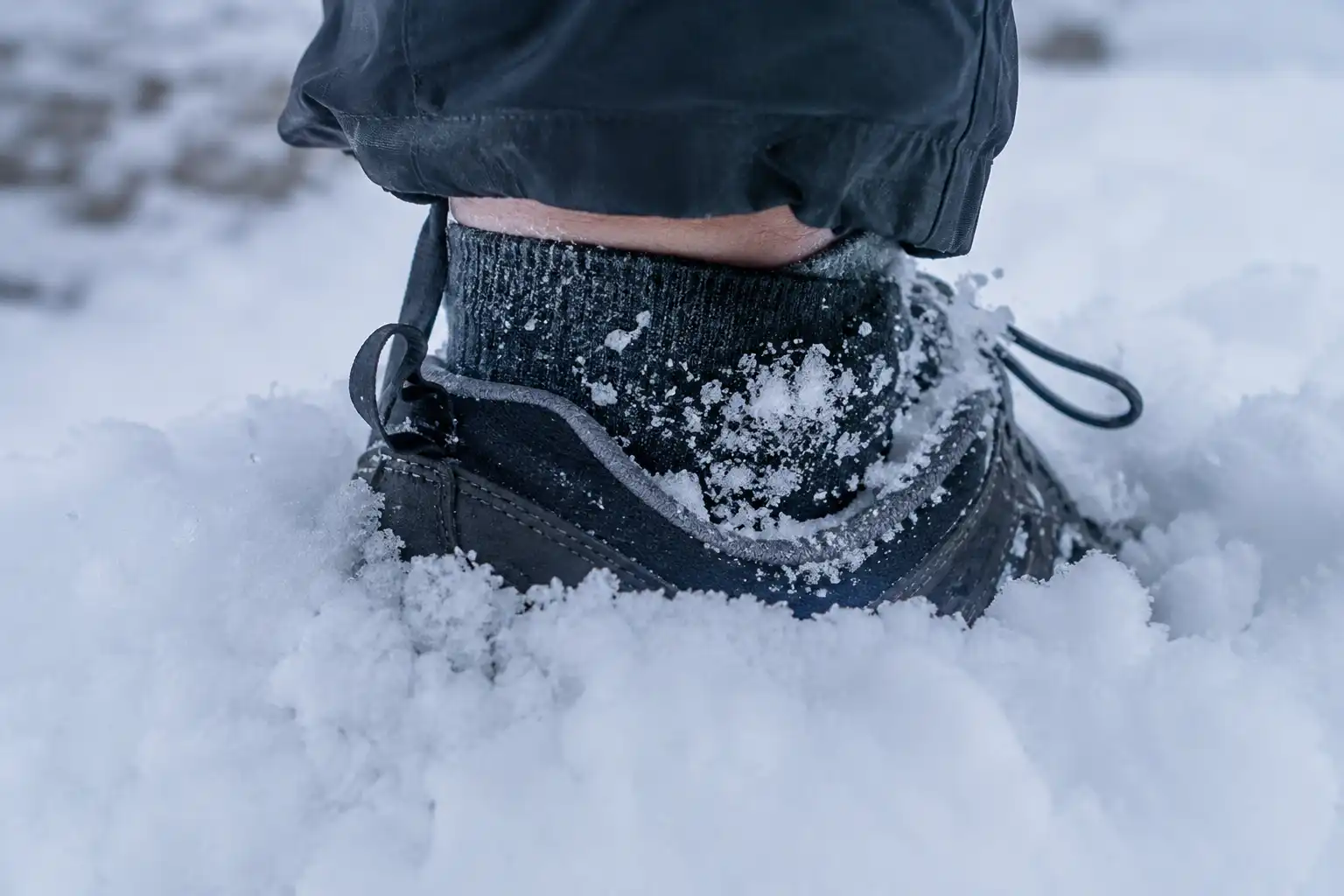
- Snow deeper than the shoe cuff. Once snow spills over the top, wet socks follow within minutes.
- Soft snow that you sink into. Postholing buries your whole foot on every step.
- Full day trips below freezing. Uninsulated shoes have nothing to slow heat loss across six or eight hours.
- Glare ice on any slope. No hiking outsole grips polished ice reliably.
- Terrain that needs snowshoes. Deep snow means constant snow contact around your ankles.
- Stop and start days. Photo breaks, summit snacks, and long lunches all let feet cool fast.
What hiking shoes lack in winter
Height above the ankle
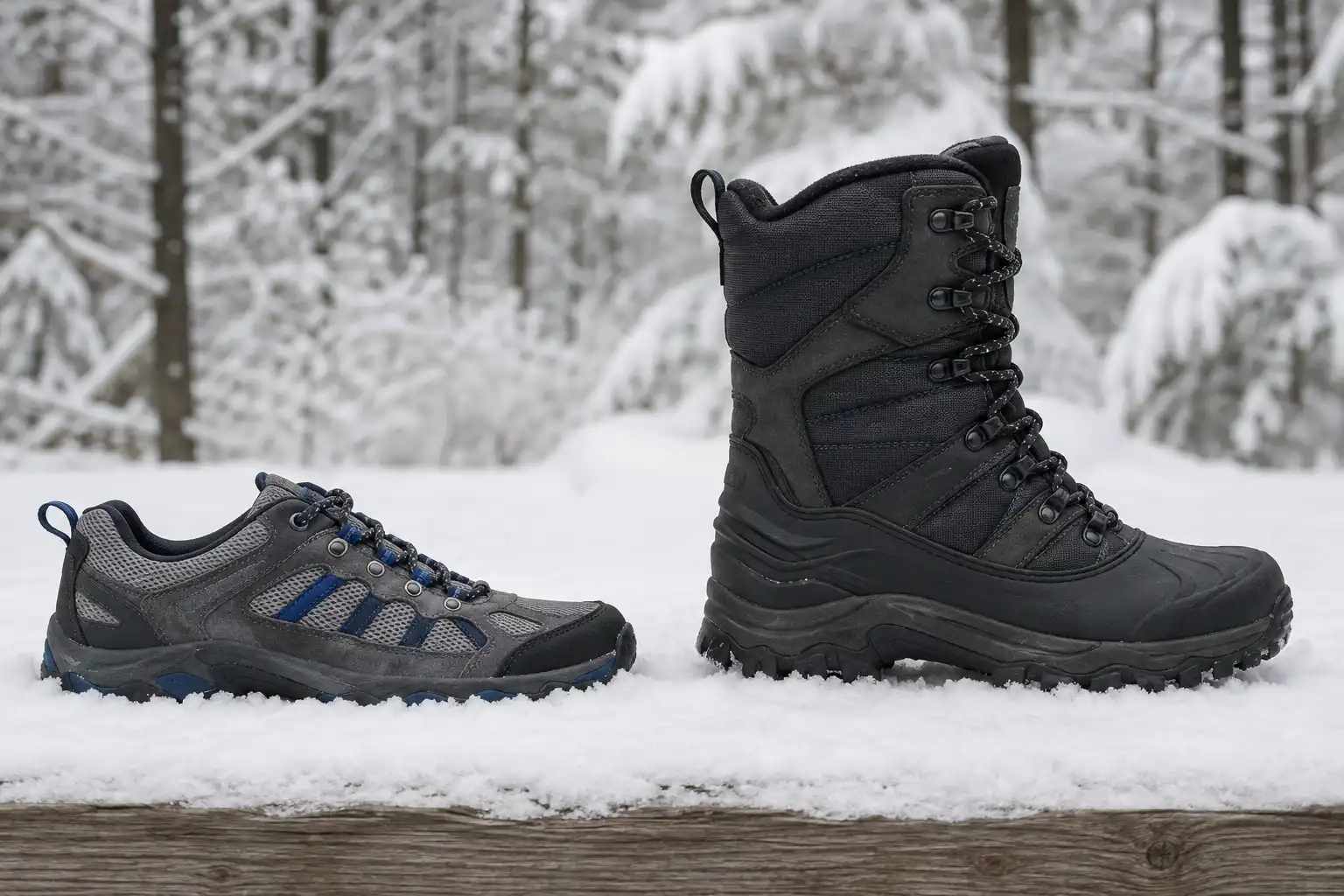
Height is the biggest gap. Hiking shoes sit at or below the ankle bone, so the opening sits only a few inches off the ground. Winter hiking boots run 8 to 10 inches tall for exactly this reason. Once you step into snow deeper than your cuff, the shoe collects snow directly against your sock, and body heat then melts it into cold water.
Insulation
Hiking shoes carry no insulation at all. Winter boots add synthetic fill measured in grams, usually 200g or 400g per square meter. Gear testers generally put 200g boots at comfortable down to roughly 10°F while you keep moving, with 400g reserved for colder air or slower days. A three season shoe has none of that, so its warmth comes entirely from your sock and your circulation.
Cold weather rubber
Standard hiking rubber grips wet rock well, but manufacturers tune it for three season use rather than ice. Vibram sells separate cold compounds for this exact reason, such as Icetrek for dry cold and Arctic Grip for wet ice. Reviewers who tested Arctic Grip on ice found it clearly better than normal treads, yet still no replacement for spikes. Consequently, tread pattern alone will not save you on a frozen descent.
Room for real winter socks
Most people try to fix cold feet by stuffing thicker socks into their usual shoe. Unfortunately, that squeezes the foot and cuts circulation, which makes toes colder rather than warmer. If you plan to hike snow in shoes, size up about half a size so a thicker sock fits without pressure. The same rule about how much room your shoes need matters even more in the cold.
How cold is too cold for hiking shoes?
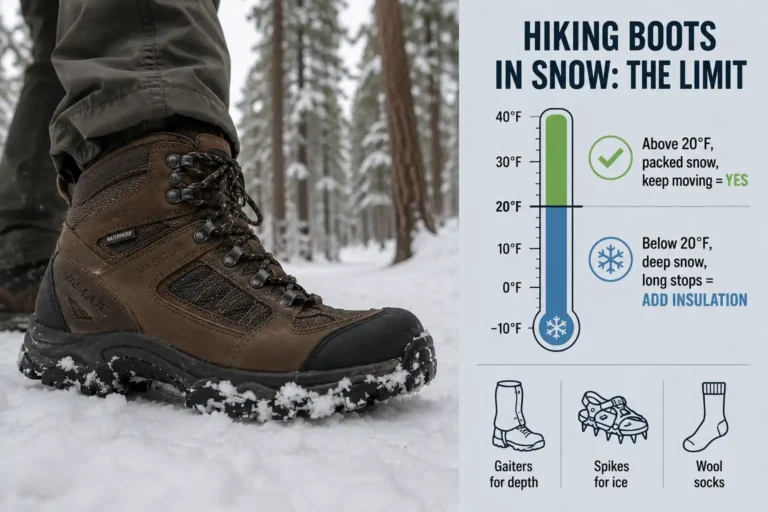
Around freezing is the practical limit for uninsulated hiking shoes on a moving hike, and lower than that only for short distances. Below roughly 20°F, most people lose feeling in their toes long before the hike ends.
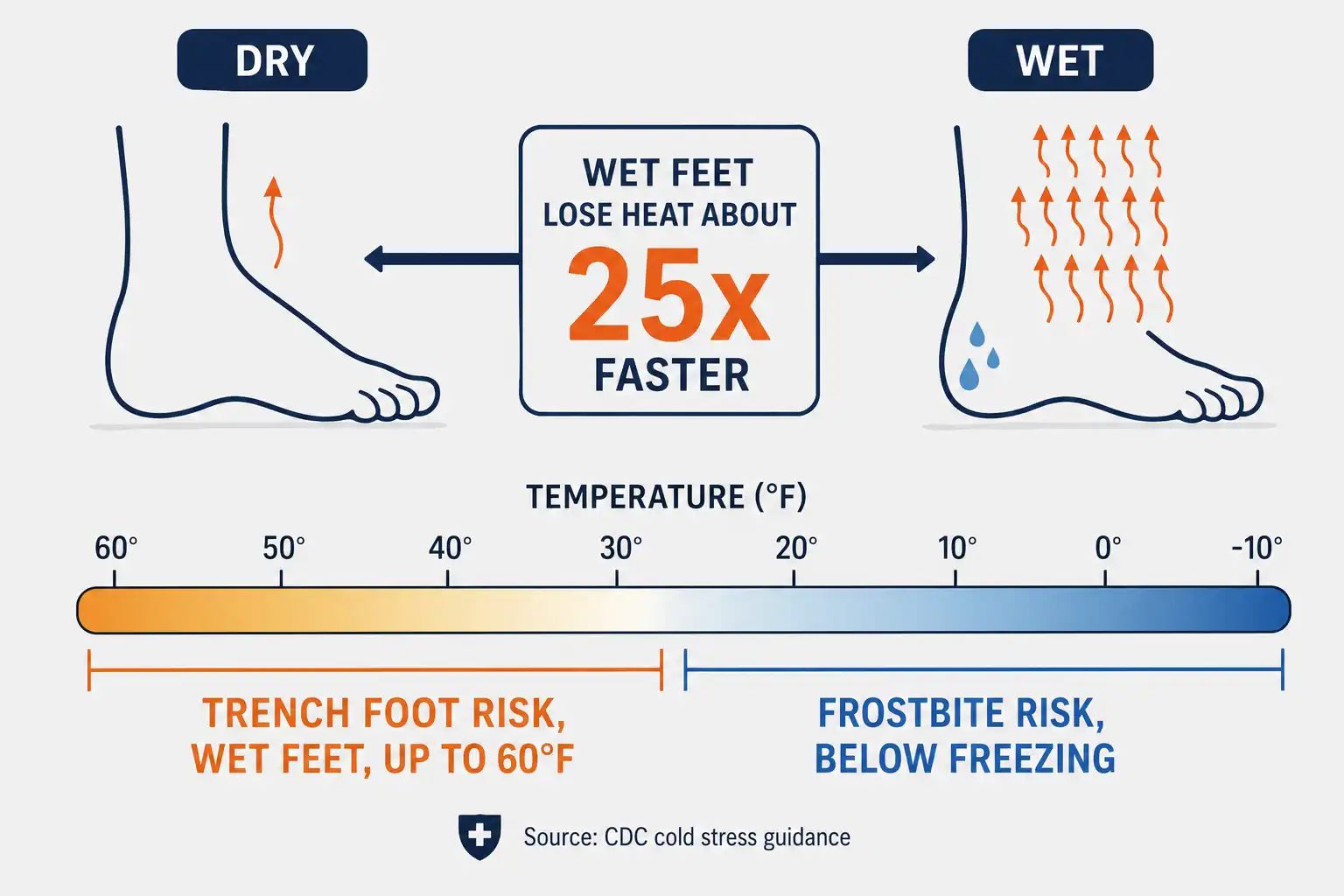
Wetness matters more than the thermometer, though. The CDC reports that trench foot, a non freezing cold injury, can develop at temperatures as high as 60°F when feet stay wet, and that wet feet lose heat about 25 times faster than dry feet. Wilderness medicine guidance for these injuries centers on staying active, eating well, and changing into dry socks at least once a day.
I take that seriously because of monsoon treks here in the Rangamati hills. After six hours in soaked shoes at 70°F, my feet came out pale and wrinkled with no feeling in the toes. Nothing froze, obviously. Still, the same mechanism that damages feet in a cold trench was already working. Snow just adds cold air on top of it.
Do waterproof hiking shoes keep snow out?
Waterproof hiking shoes keep snow out only up to the collar, which is the whole problem. A Gore-Tex or similar membrane blocks slush splash and shallow wet snow well. Above the cuff, however, the membrane has nothing left to protect.
Two further limits are worth knowing. First, a membrane adds almost no warmth, since it blocks liquid rather than trapping heat. Second, once meltwater gets inside, the same membrane slows drying badly, so a soaked waterproof shoe stays soaked all day. Because of that, I would rather pair a breathable shoe with a waterproof sock than count on the shoe alone. If your footwear has leather panels, keeping leather uppers water repellent helps the outer surface shed water instead of soaking it up.
How to make hiking shoes work in snow
Follow these steps in order before any snowy hike in low cut shoes.
- Check depth and surface first. Read recent trip reports or the park conditions page. Packed and shallow means shoes are fine; deep or fresh means boots.
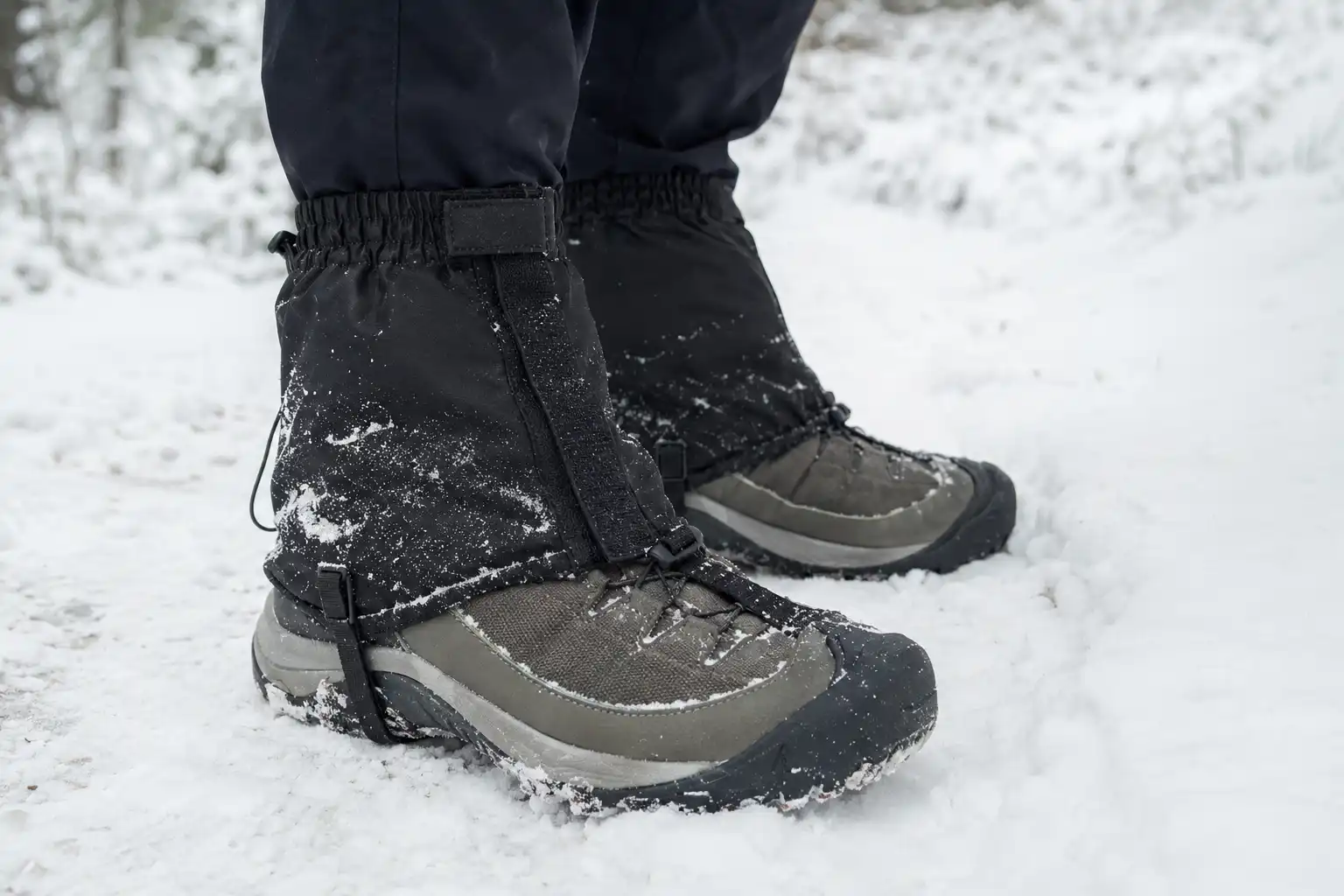
- Add gaiters. Low or mid height gaiters with an instep cord seal the gap at the collar. Furthermore, they cost far less than a winter boot and weigh almost nothing.
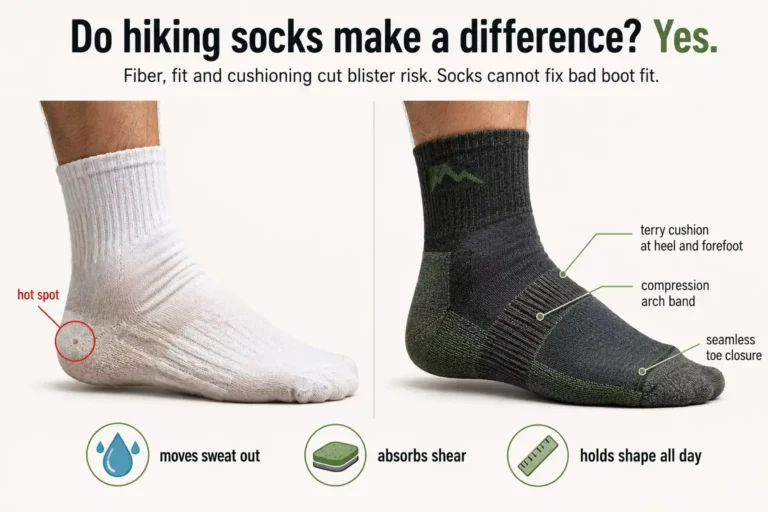
- Build a sock system. Use a thin liner next to skin, then a merino or wool blend sock over it. Because what good hiking socks actually do is manage moisture, keep a dry spare pair in a zip bag too.
- Consider a waterproof or vapor barrier sock. These block meltwater from outside and keep your insulating sock dry from the inside. Plenty of long distance hikers use them with low cut shoes.
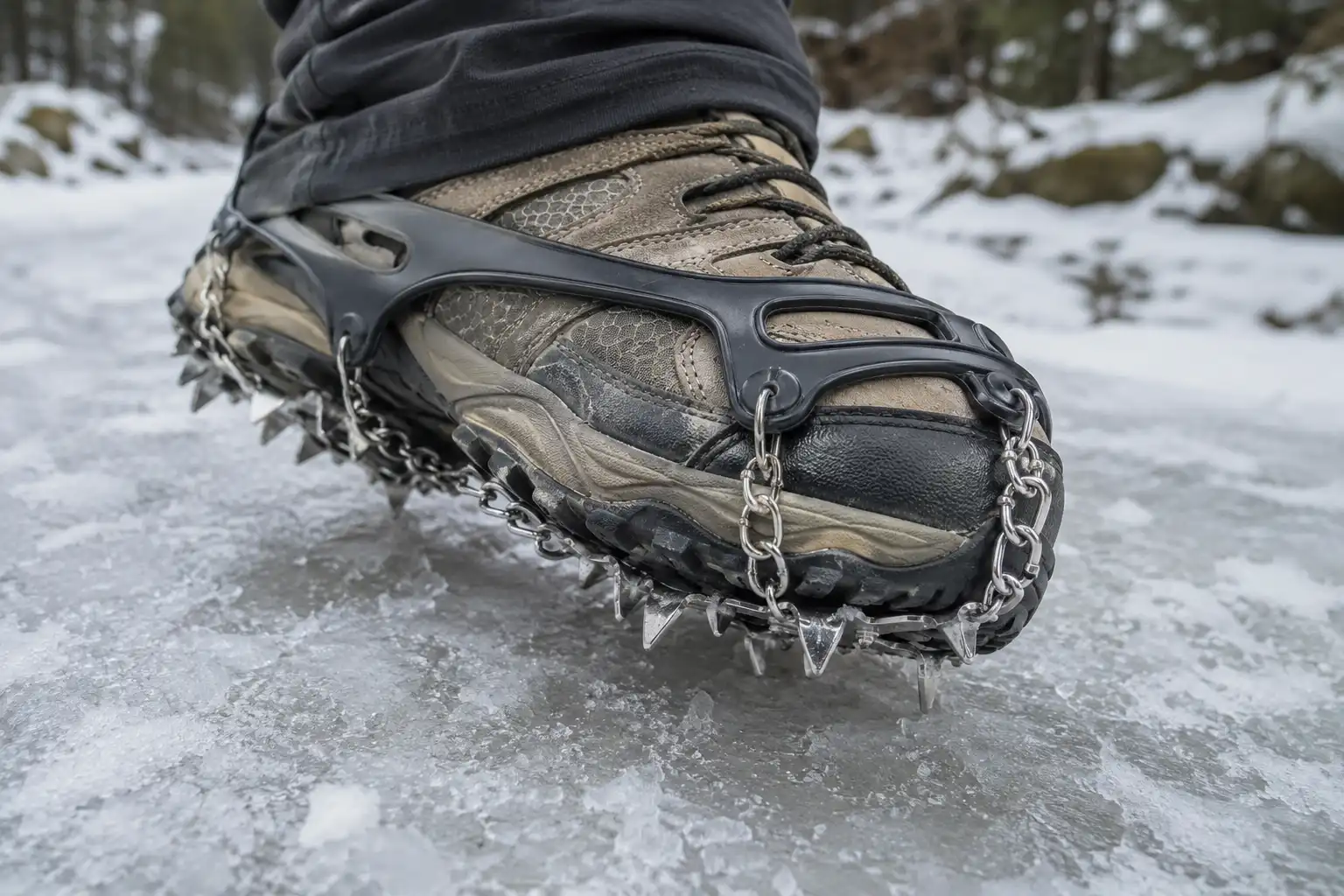
- Carry microspikes. Flexible spike harnesses stretch over soft soled footwear, unlike mountaineering crampons, which need a rigid boot.
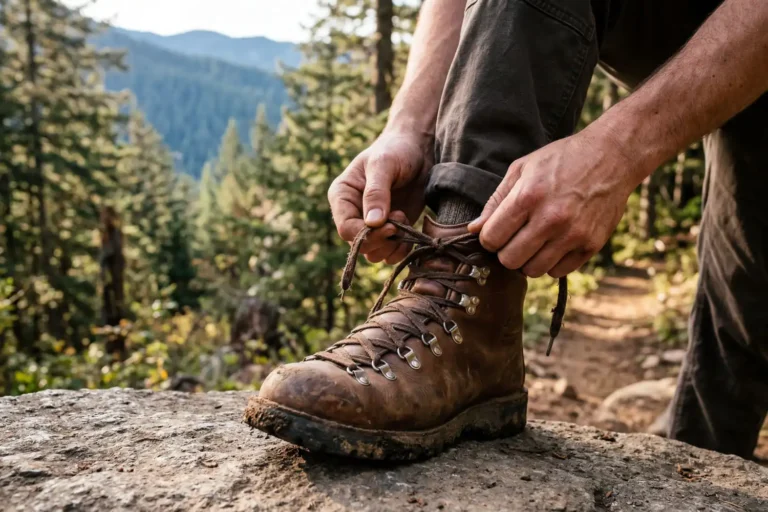
- Lace firmly but not tight. Circulation keeps toes warm, so pressure on the top of the foot works against you.
- Keep moving and eat regularly. Heat production drops when you stall or run low on fuel.
Which traction device pairs with hiking shoes?
Microspikes pair best with hiking shoes. Their elastic harness fits soft soles, and the short spikes, roughly three eighths of an inch, bite well into packed snow and moderate ice on low angle ground. Above about 25 degrees of slope, or on real water ice, they stop being enough.
Here is how the other options compare:
- Nanospikes and coil traction. Fine on frozen sidewalks and pure ice, but weak in snow of any depth.
- Mountaineering crampons. These demand stiff or fully rigid soles, so hiking shoes rule them out.
- Snowshoes. Bindings do fit low cut footwear. In practice, though, any snow deep enough to need flotation will bury your ankles anyway, so boots make more sense.
Hiking shoes vs winter boots in snow
| Factor | Hiking shoes | Insulated winter boots |
|---|---|---|
| Best snow depth | Under about 3 inches, packed | Deep and unpacked |
| Temperature range | Freezing and above, while moving | Well below freezing |
| Insulation | None | Typically 200g or 400g |
| Snow entry point | Low collar, enters easily | 8 to 10 inch shaft blocks it |
| Weight | Light and quick on rolling ground | Heavier, slower stride |
| Traction devices | Microspikes yes, crampons no | Microspikes, snowshoes, some crampons |
| Drying after a soak | Slow with a membrane, faster without | Slow, insulation holds water |
What about trail runners in snow?
Trail runners work in snow for hikers who move fast and manage moisture carefully. Thru hikers cross early season snowfields in them every year, usually with gaiters, waterproof socks, and microspikes. Speed is what makes it work, since a fast pace generates heat and shortens exposure.
That approach fails for most day hikers, however. Casual winter hiking involves slow pacing, viewpoint stops, and group waits, all of which let feet cool. Trail runners also drain heat quickly through thin, breathable uppers. So treat the thru hiker setup as a specialist choice rather than general advice.
When should you turn back or change footwear?
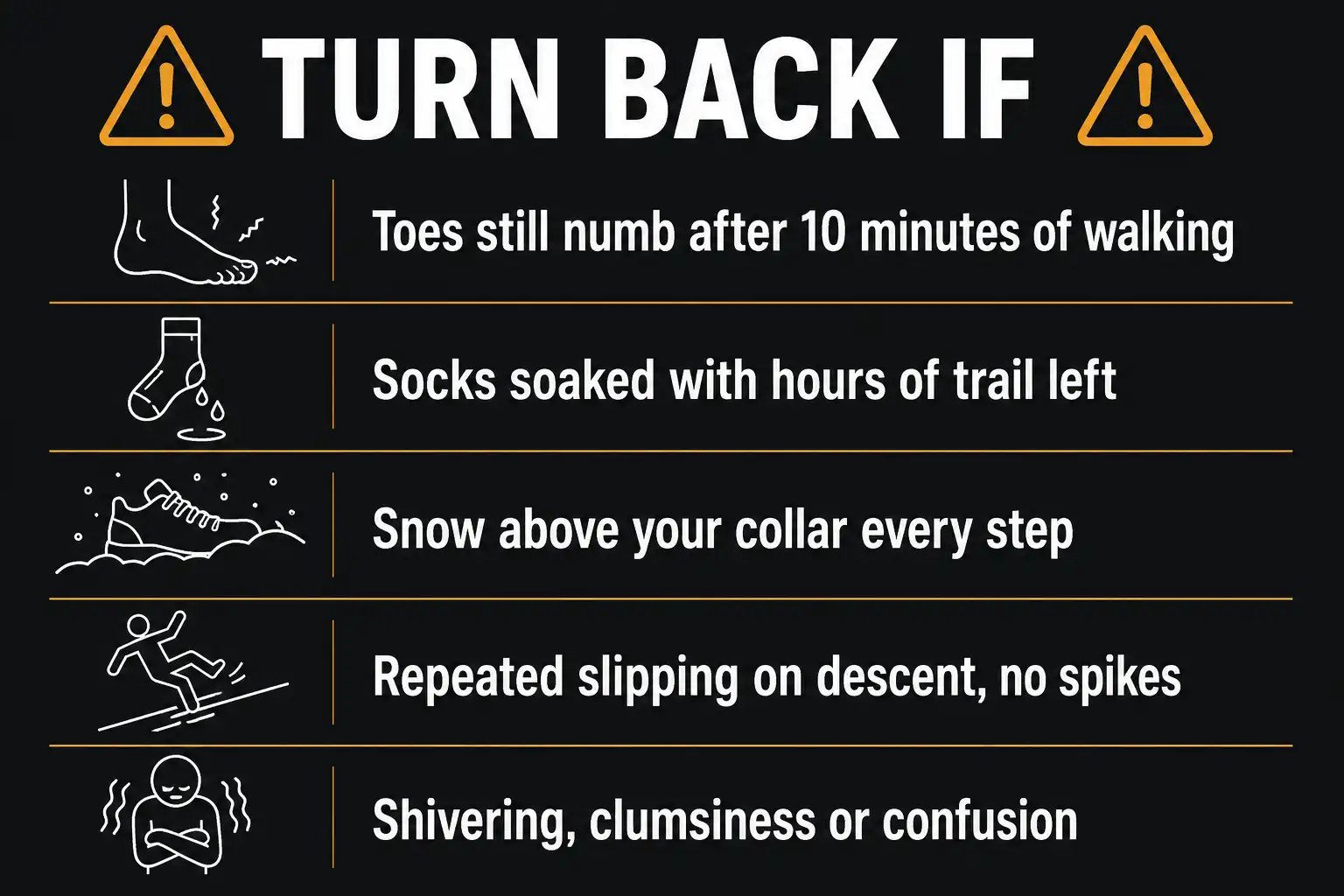
Turn back when your feet stop recovering on their own. Watch for these specific signals:
- Numb toes that stay numb after ten minutes of steady walking.
- Socks fully soaked while hours of trail remain ahead.
- Snow depth rising past your cuff on every step.
- Slipping repeatedly on a descent with no spikes in your pack.
- Shivering, clumsiness, or confusion, which point toward the early signs of hypothermia rather than a foot problem alone.
Cold feet are the first domino, not the last one. Wet, chilled feet drag your core temperature down too, so layering right for cold wind protects your toes as much as your chest does. Once numbness sets in and will not clear, end the hike.
Where this advice comes from
I hike the hills around Kaptai, Bandarban, and Rangamati, and none of them ever see snow. So this article rests on published research, gear testing from winter hikers, and CDC and wilderness medicine guidance on cold injuries, not on my own snow miles. My direct experience covers the wet foot half of the problem, which monsoon trekking teaches you fast. For the cold half, I stick to what testers and cold weather hikers report rather than inventing trail stories. The three season version of this question, boots or shoes for a first pair, comes down to a different set of tradeoffs entirely.
FAQs on Hiking Shoes in Snow

Can you wear regular hiking shoes in snow?
Are hiking shoes warm enough for winter hiking?
Do you need microspikes if your shoes have deep lugs?
What snow depth means you need boots?
Should you size up hiking shoes for snow?
The bottom lines
Hiking shoes handle snow within a narrow window: shallow, packed, cold, and short. Push past that window and the low collar, missing insulation, and three season rubber all work against you at once. Fortunately, three cheap items widen that window a lot. Gaiters block snow at the cuff, microspikes handle packed snow and ice, and a wool sock plus a dry spare manages moisture. Beyond those limits, buy the boots. Wet, numb feet ruin a winter day faster than any other gear failure, so decide before the trailhead rather than two miles in.